-
-
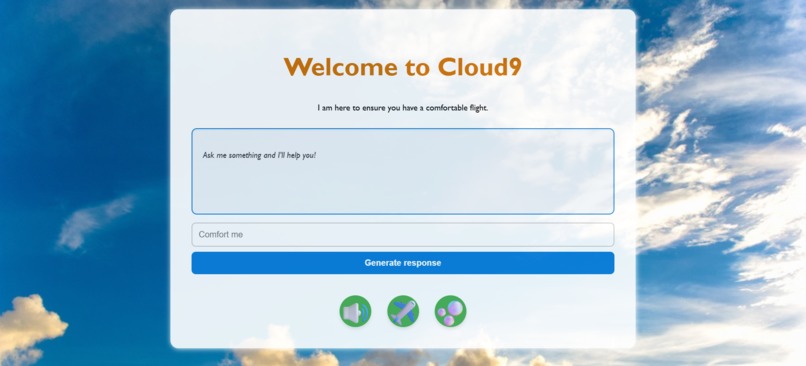
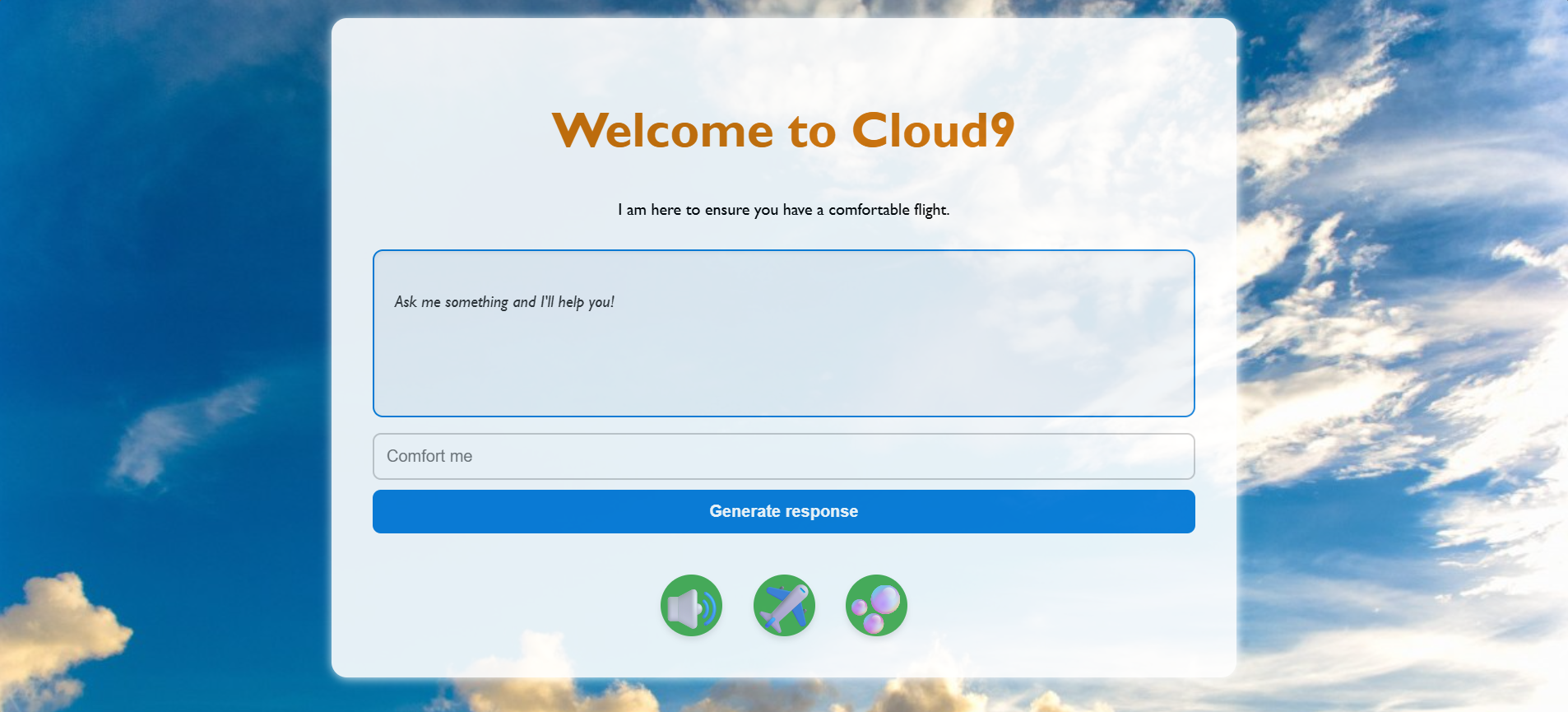
Cloud9 Homepage - Desktop
-
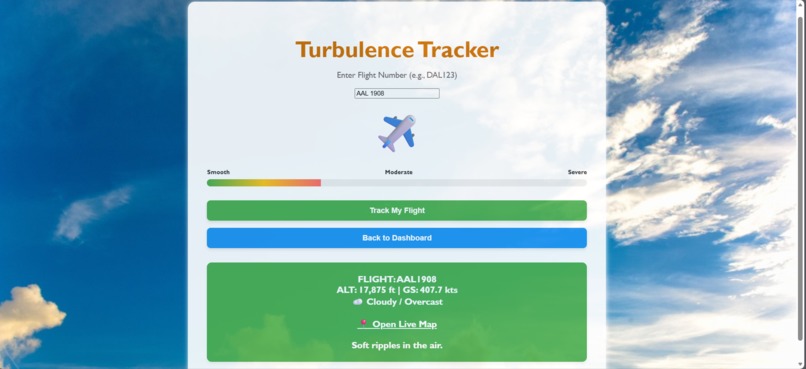
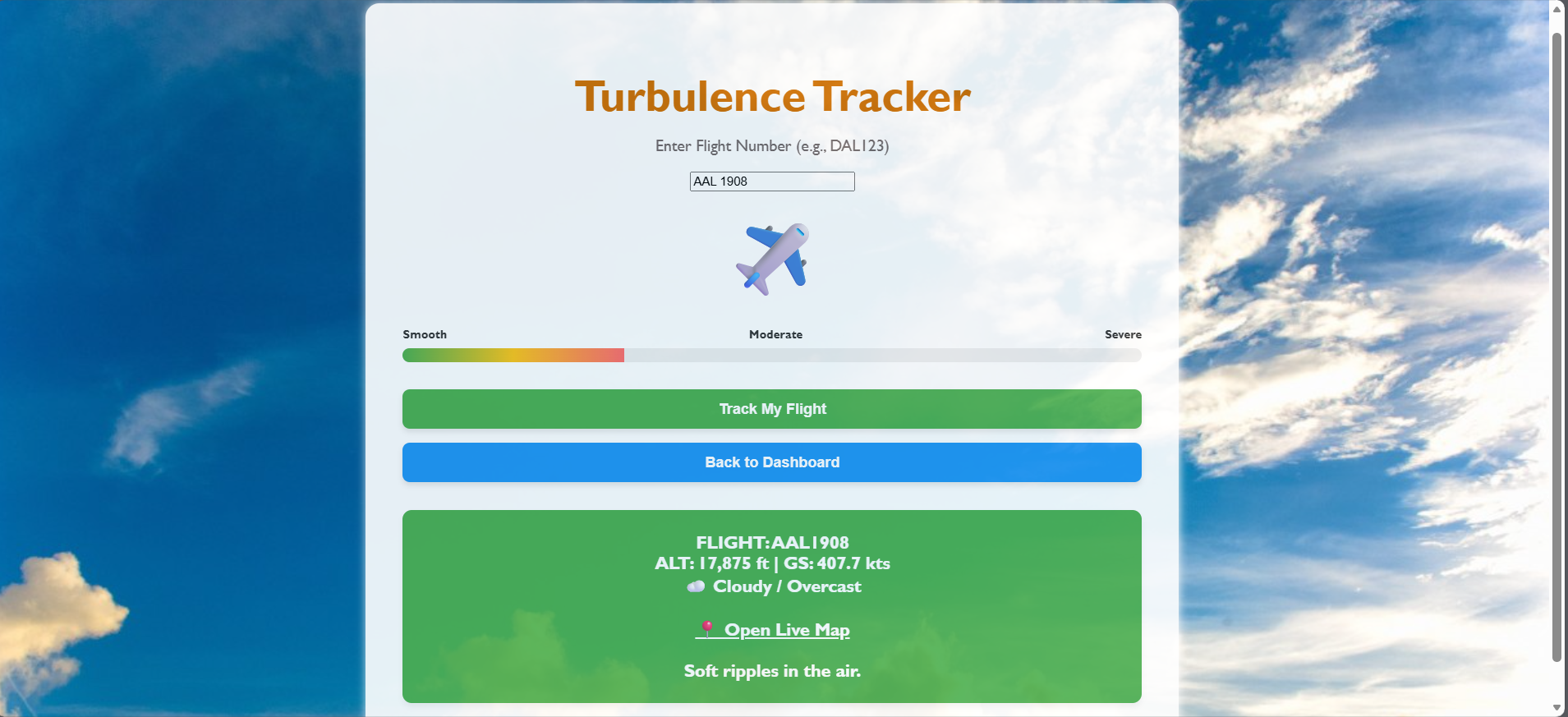
Flight Tracker - Desktop
-
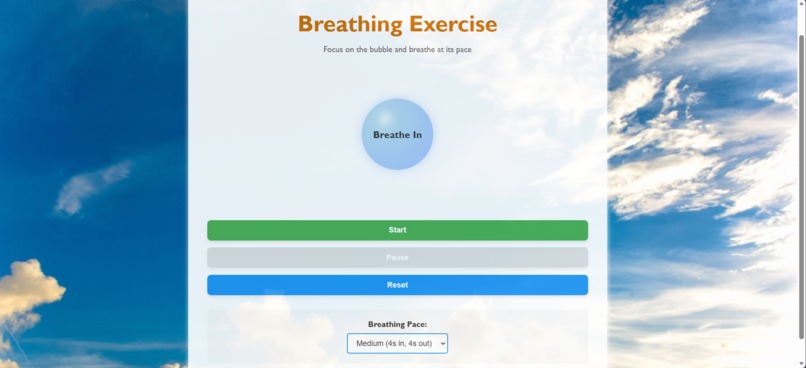
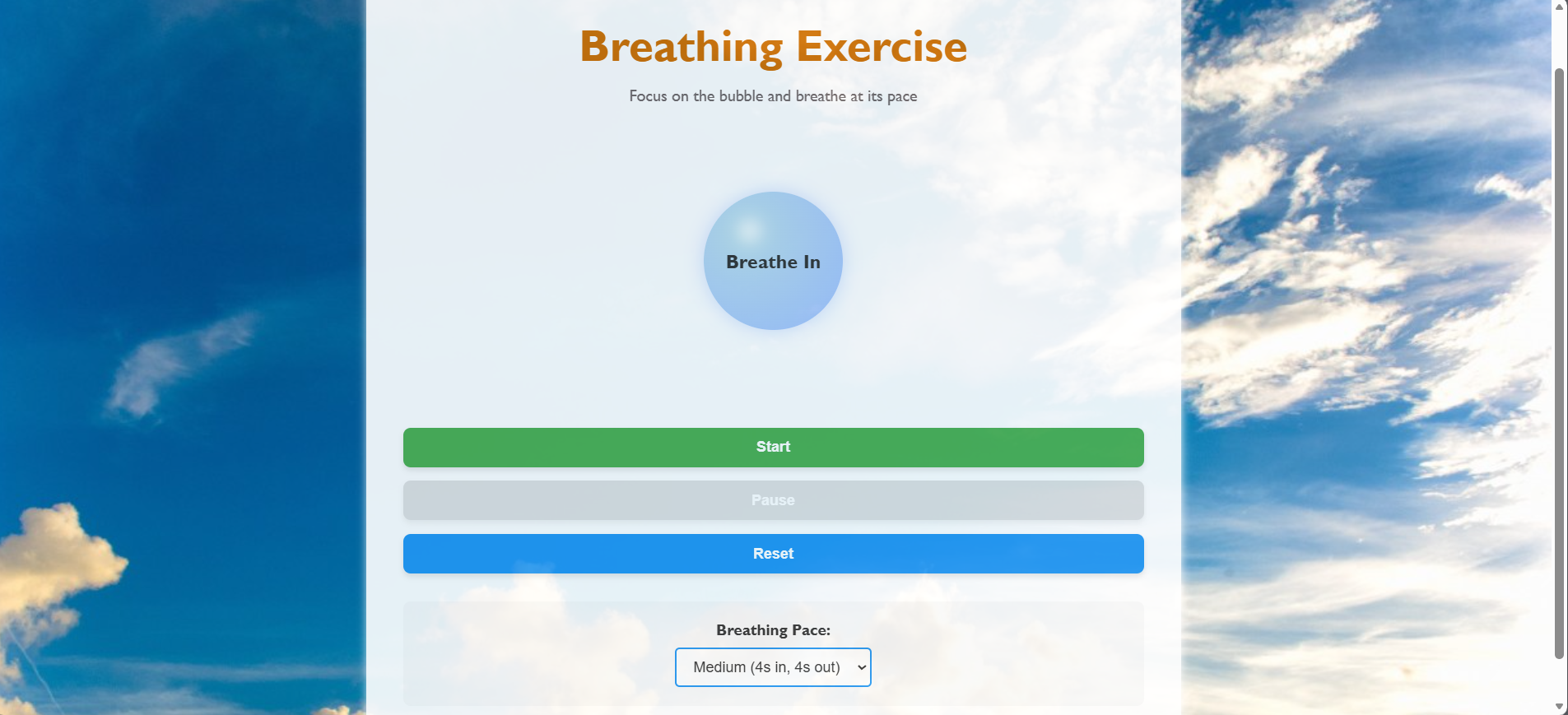
Breathing Exercise page - Desktop
-
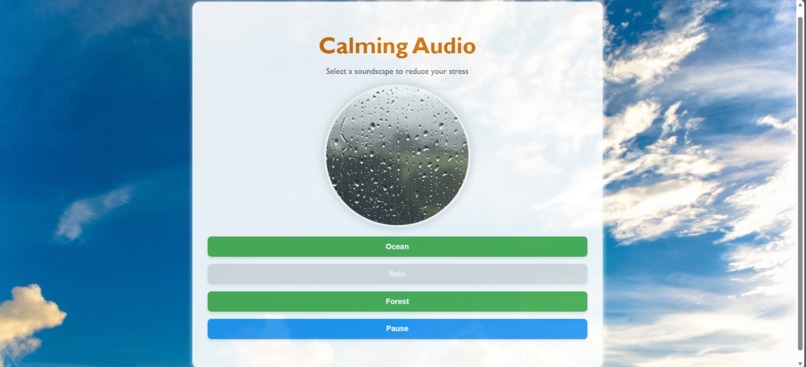
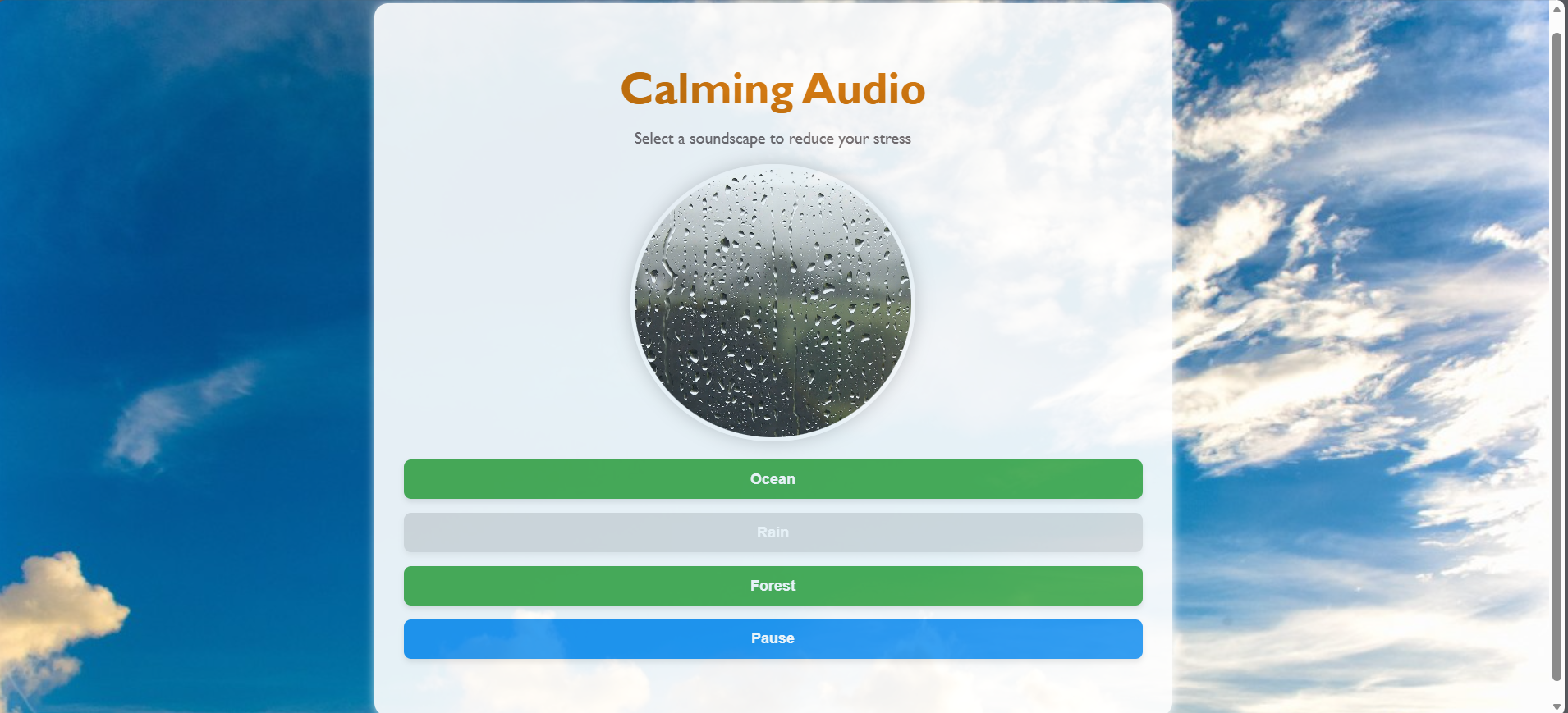
Calming Audio - Desktop
-
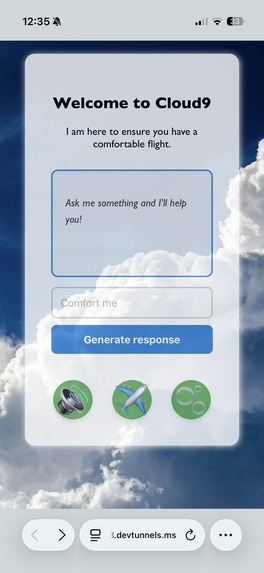
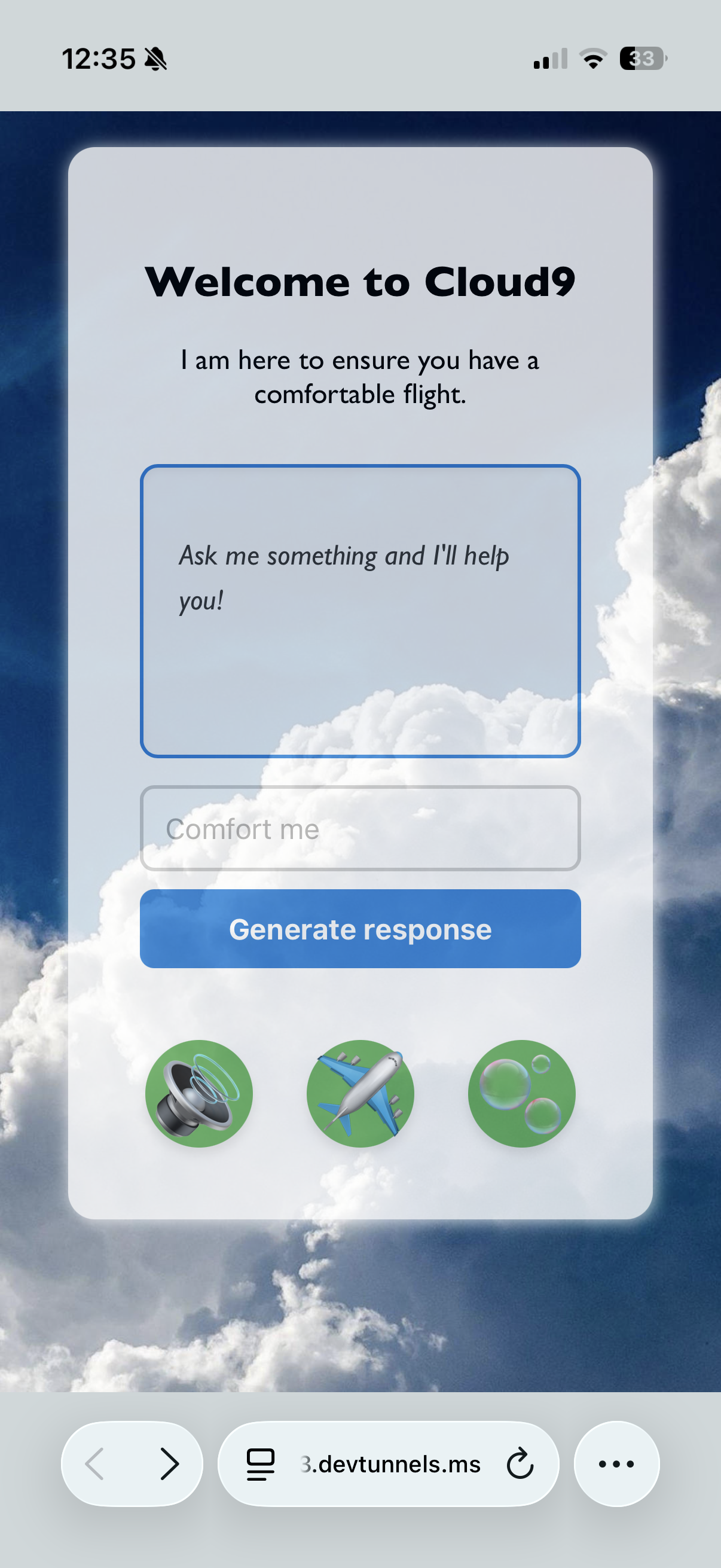
Cloud9 Homepage - Phone
-
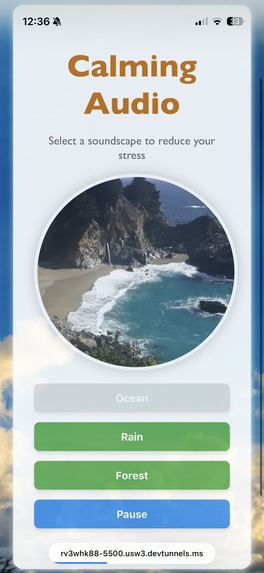
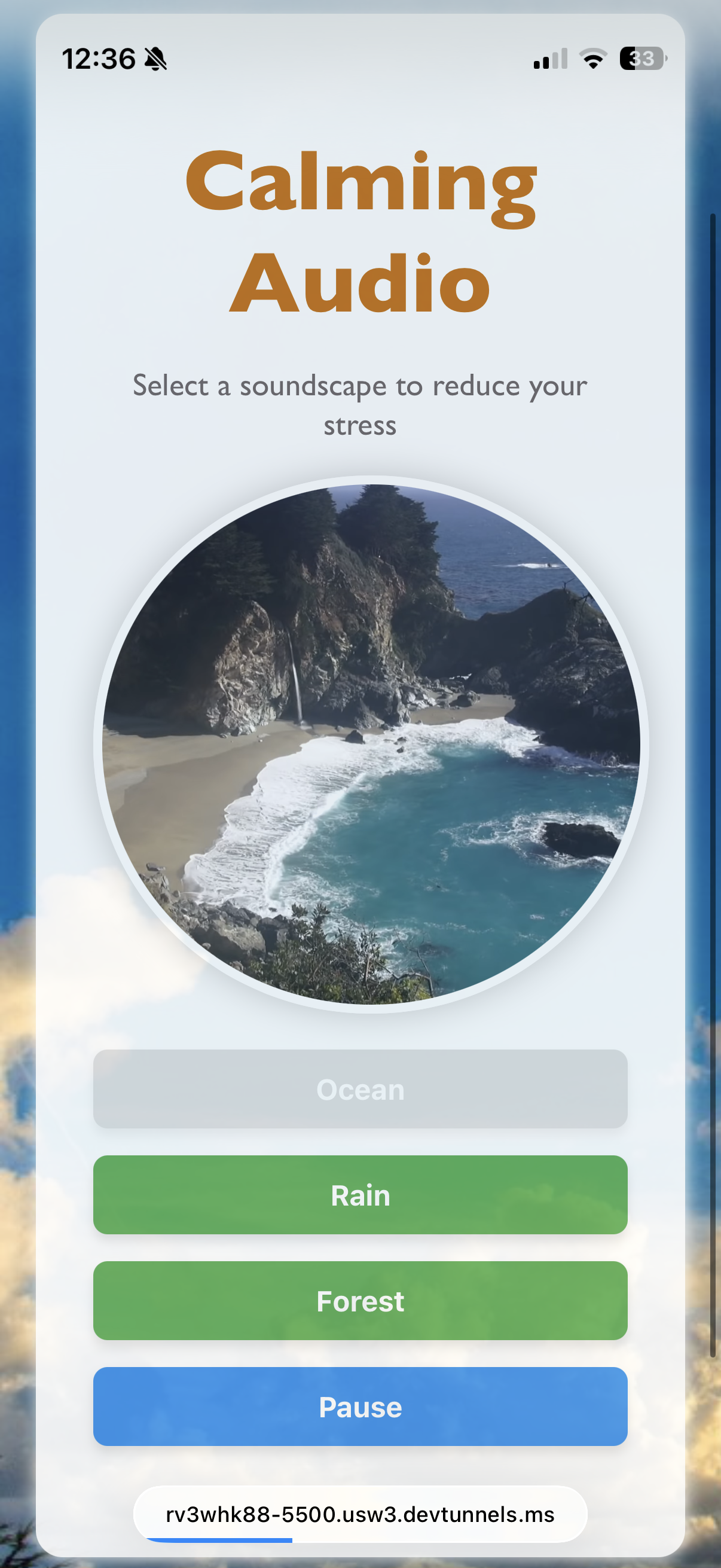
Calming Audio page - Phone
-
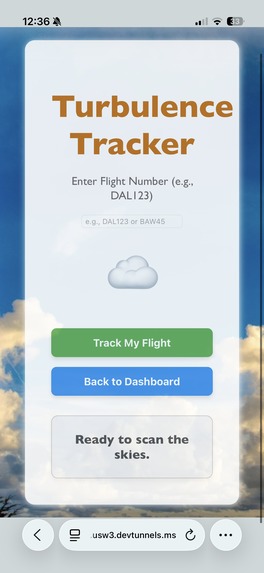
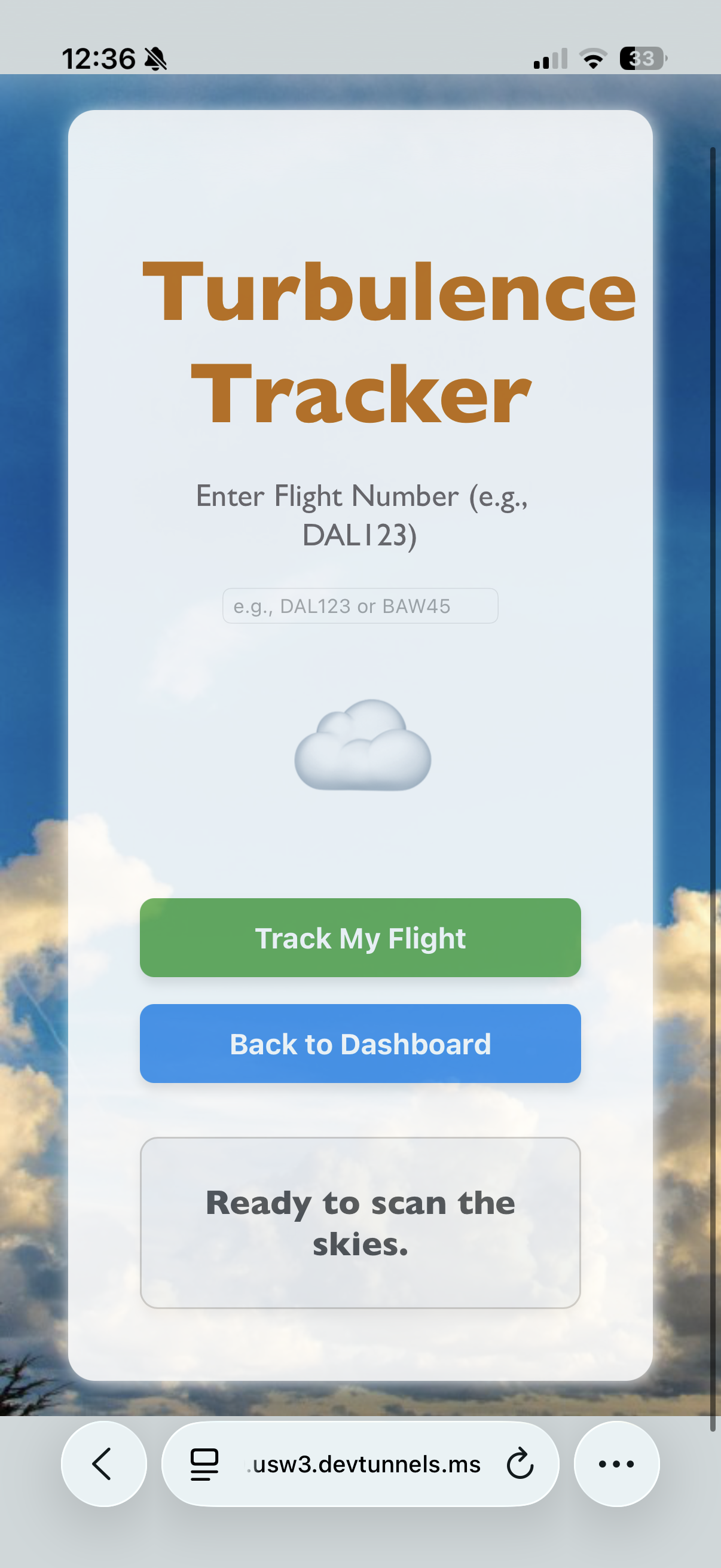
Flight Tracker page - Phone
-
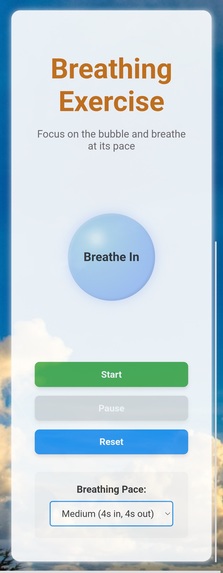
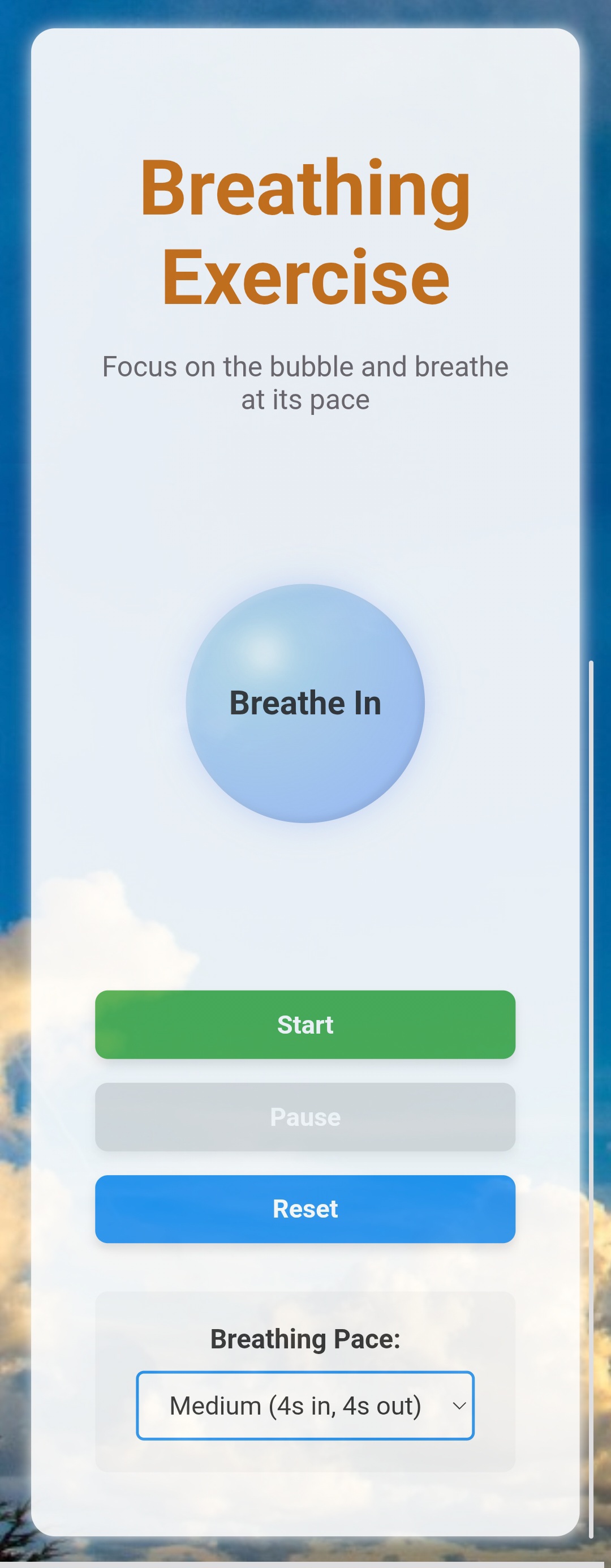
Breathing Exercise page - Phone
Inspiration
More than 25 million Americans have a fear of flying, yet the most common advice they receive is simply to “get over it.” However, it's not that easy when every flight brings to mind countless things that could go wrong. Cloud9 eases these fears with an AI assistant that helps users manage their worries, complemented by soothing music and calming breathing exercises. Through interactive features and reassurance at every step of the journey, Cloud9 helps passengers feel confident, calm, and ready to fly. After all, everyone deserves to be on cloud nine- especially with American Airlines.
What it does
Cloud9 uses a variety of destressing mechanisms to soothe our users. Our main feature is the chat bot which has been tailored to excel in calming people’s nerves. This is accompanied by the turbulence tracker which has been designed to analyze the flight path in advance, predicting areas that the client will likely encounter instability. This serves to prepare the person for heightened anxiety, making our app not just reactive but proactive. In addition, we offer relaxing audio and video experiences to transport users into a world of serenity. Moreover, the Breathing Bubble allows users to follow controlled breathing exercises to release physical tension and fully unwind, restoring their sense of calm.
How we built it
Since we are majority first time hackers, we opted for a more conventional approach in our development. We handcrafted the majority of our HTML and CSS elements to promote a strong foundation of our understanding. We leveraged the Claude Haiku 4.5 to implement the Gemini API chat bot functionality. We accessed ADS-B API to gather real-time flight data to make prediction on the prediction.
Challenges we ran into
The largest problem we faced was actually accessing the Gemini API. We had no experience with generative ai webapps, so we had to walk through the entire activation process. This led us to gain insight into adjacent programming areas like cloud computing. Moreover, it was a struggle trying to connect our front end and backend and so we had to use node.js to connect the two. Accessing the flight API was also difficult, because we could only access flight data from a specific receiver, ADS-B. Unfortunately, due to the storms across America, the ADS-B data disappeared from the ADS-B.lull for a few hours, which made it difficult to troubleshoot.
Accomplishments that we're proud of One of our proudest accomplishments was the completion of the Cloud9 flight assistant. As we mentioned previously, we had no idea how to do it in the start, and so we had been on the phone with support for over 3 hours trying to debug. We’re also proud of the Turbulence tracker, as we had to process lots of complex and different flight information, and so we learned a lot about the process of turbulence.
What we learned
- How to access the Gemini API
- How to use Node.js
- How to use the AllOrigins API
- How to import audio & video clips from the internet to our website
What's next for Cloud9
- Improve the user interface for a more user-friendly experience
- Enhance turbulence predictions with more accurate machine learning models
- Develop Cloud9 as a mobile app
- Make the Cloud9 Assistant usable offline, as some flights may not have Wi-Fi


Log in or sign up for Devpost to join the conversation.