
HealMate
Introduction
HealMate is an AI-powered virtual therapist designed to provide personalized mental health support and resources to users seeking to improve their well-being. By combining interactive features with user customization, HealMate aims to create a safe and engaging environment for mental health assistance. We plan to enhance the experience further by incorporating audio responses, allowing the virtual therapist to communicate verbally with users.
Features
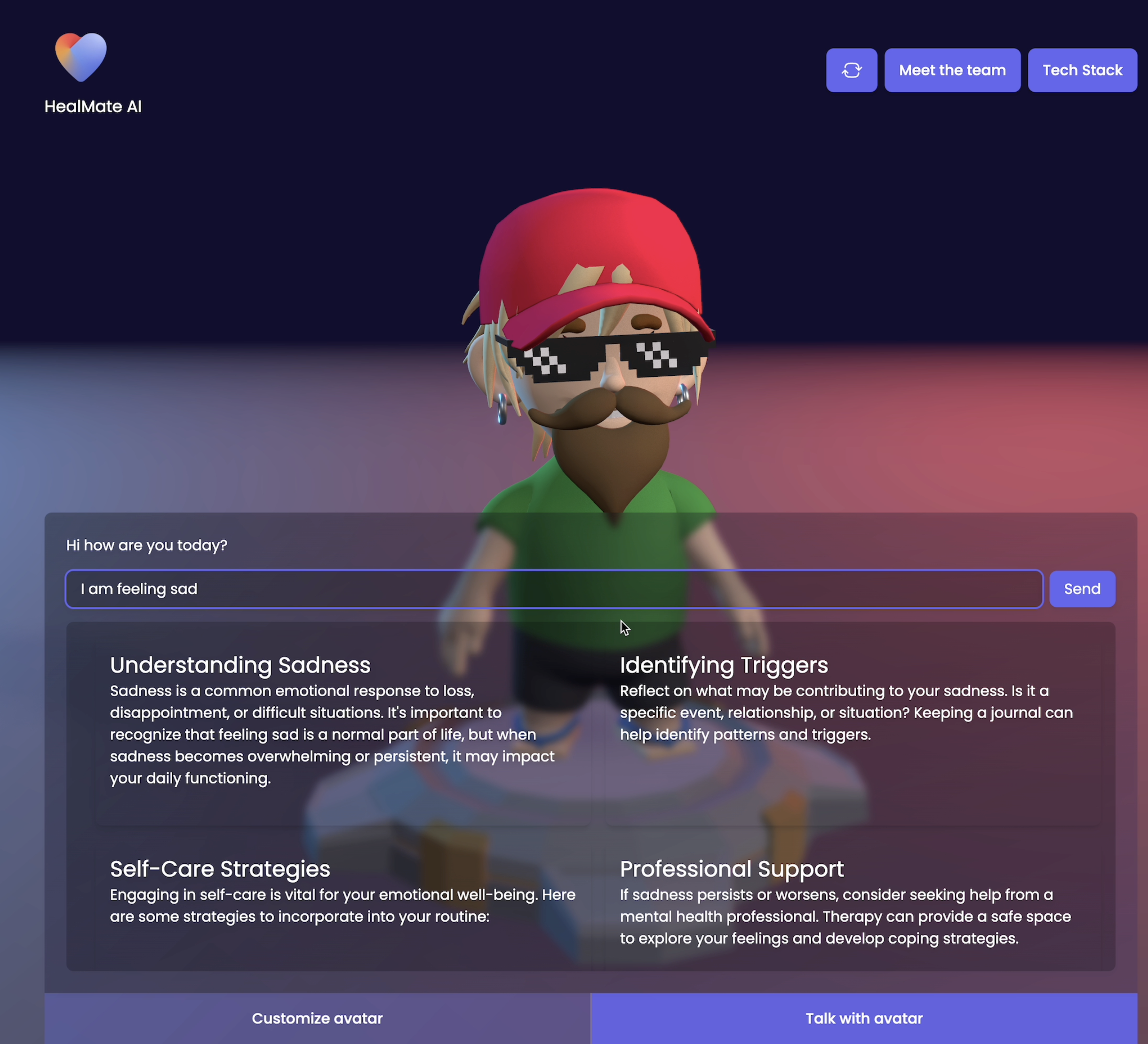
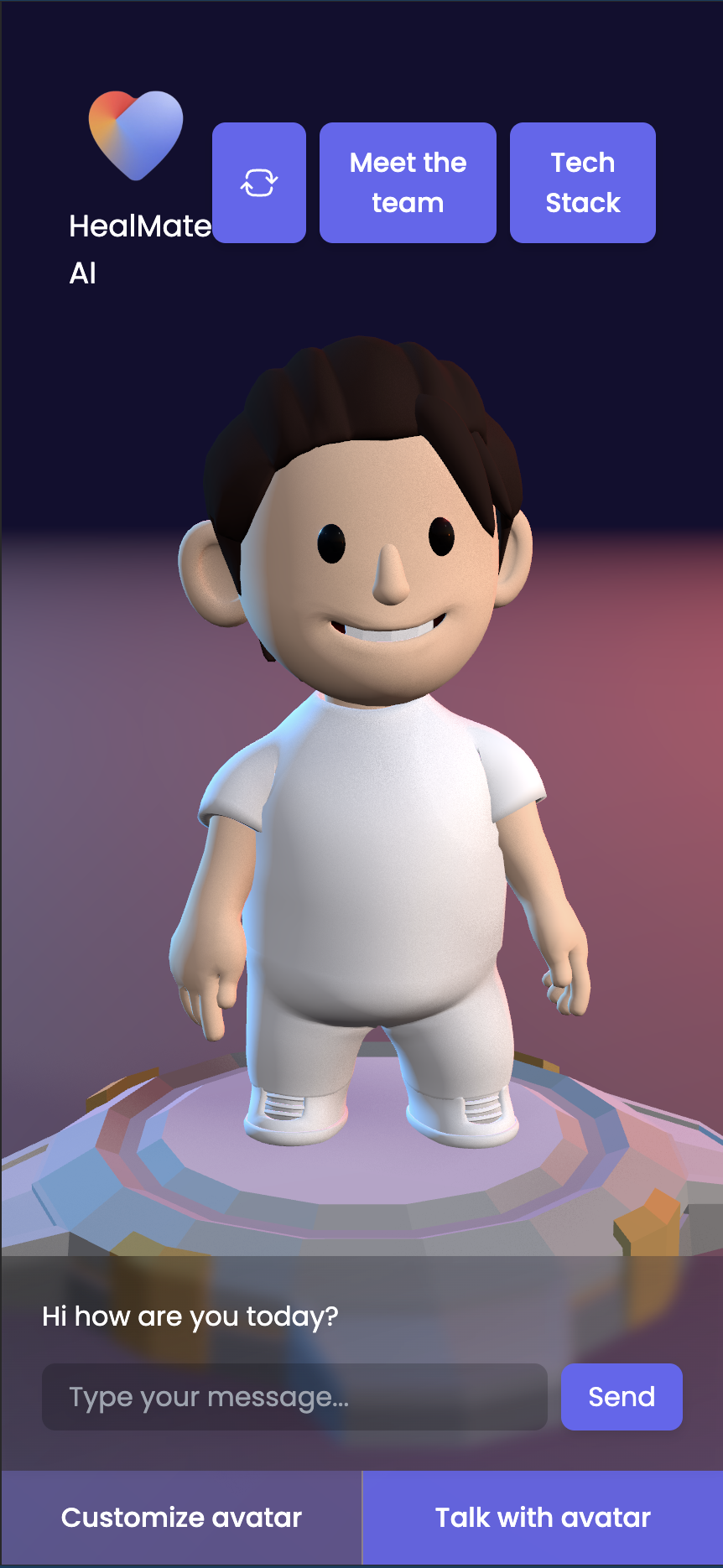
- Virtual AI Therapist: Engages users in empathetic conversations, offering coping strategies, emotional support, and therapeutic guidance. The virtual therapist can respond in various ways to cater to individual needs, with plans to add audio responses for a more immersive experience.
- Mood Journaling: Allows users to log and track their emotions over time, helping identify patterns and triggers.
- Resource Library: Offers articles, breathing exercises, relaxation techniques, and other resources to manage stress, anxiety, and other mental health concerns.
- Emergency Contacts: Quick access to helplines and counseling services for urgent support.
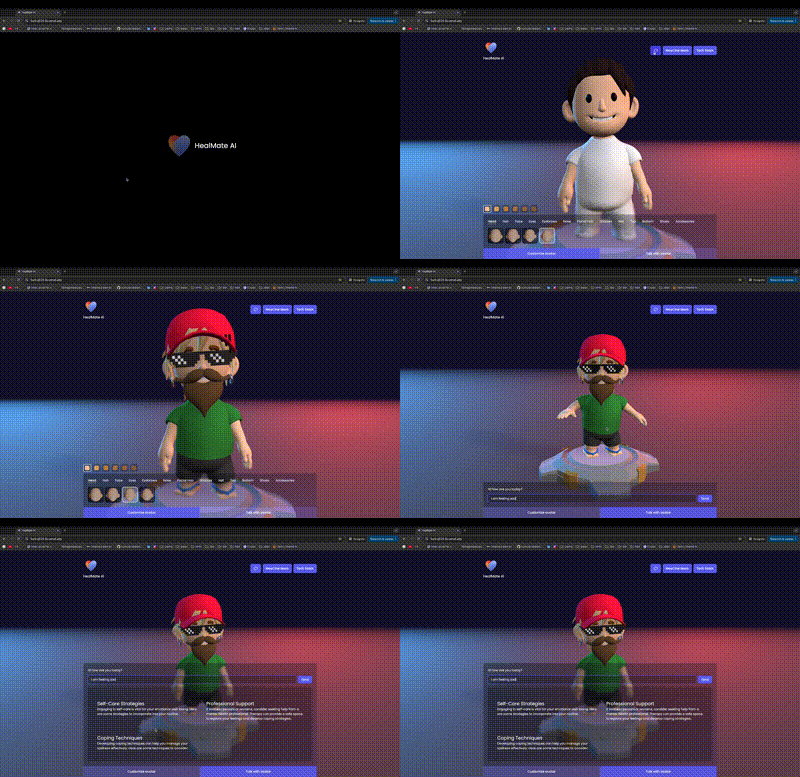
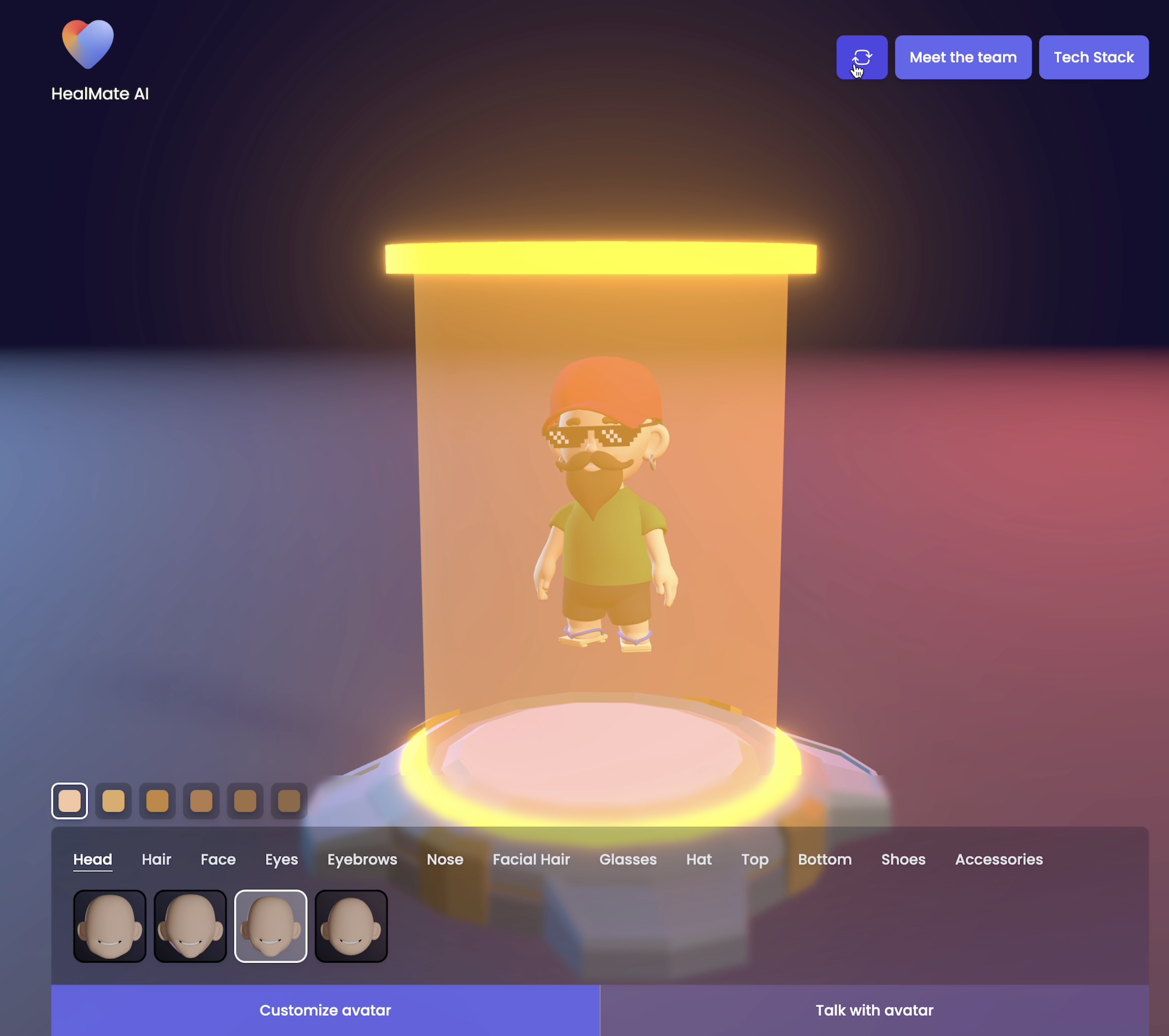
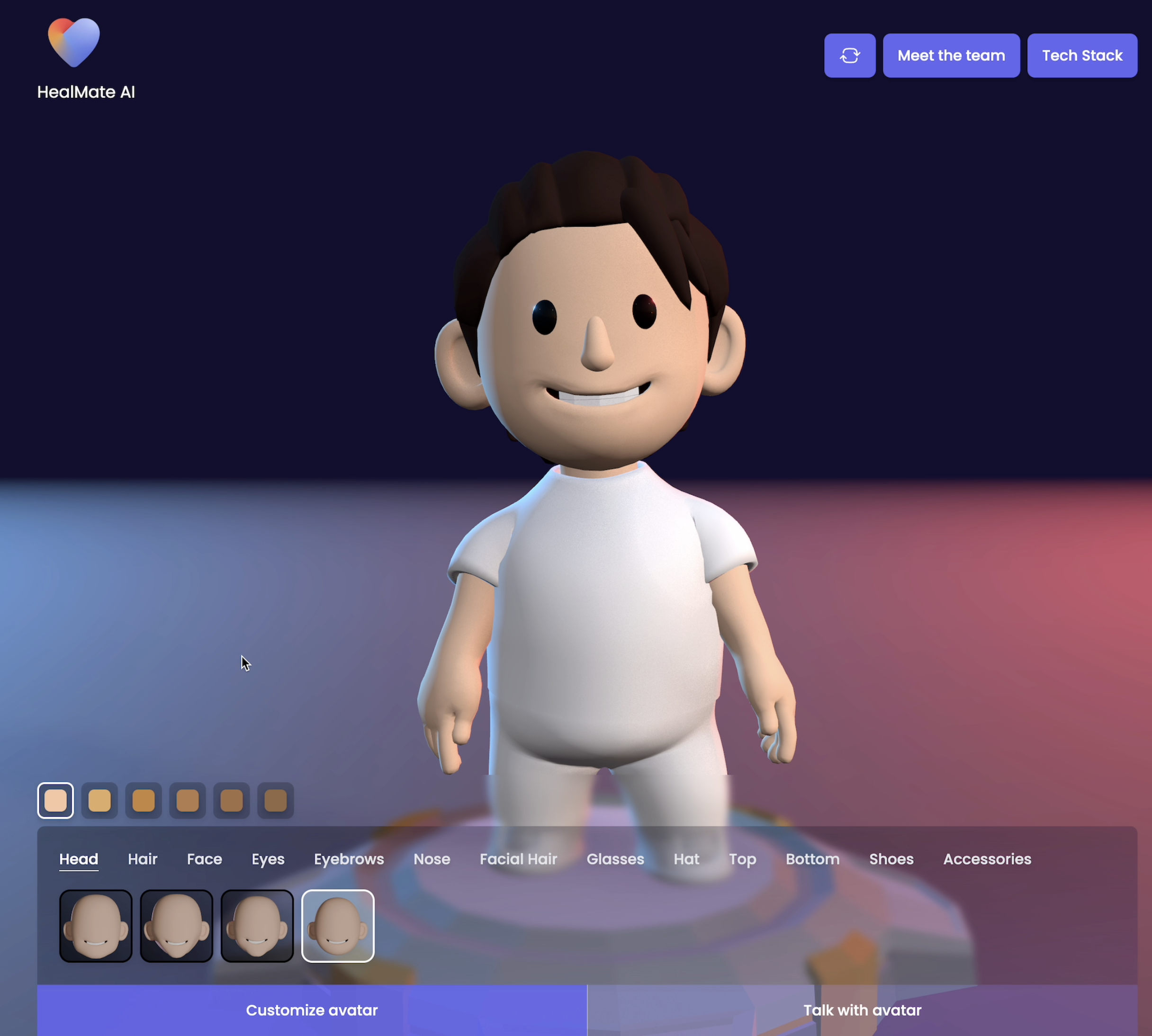
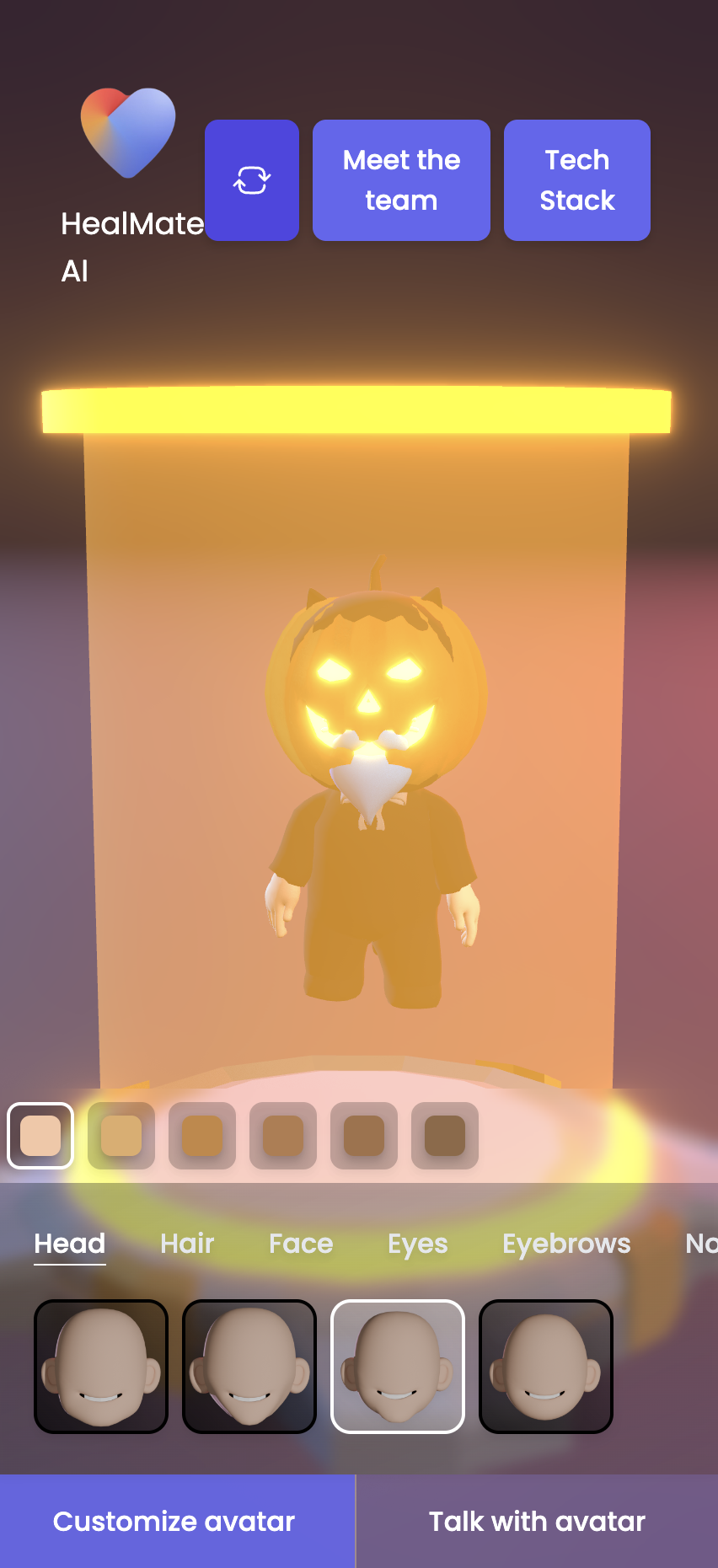
- Customizable Therapist Avatar: Users can personalize the virtual therapist's appearance using interactive 3D models and custom assets, making interactions more engaging and relatable.
- Adobe Creative Assets: Integrated custom stickers and icons from Adobe Explore Add-ons to enhance user experience, aiding in presentations and data visualization, especially useful for marketing and e-commerce roles.
Inspiration
The rising mental health challenges faced by individuals worldwide inspired us to create HealMate. We recognized that many people hesitate to seek help due to stigma, accessibility issues, or lack of personalized resources. Our goal was to develop a platform that provides empathetic support and encourages proactive mental health management. The idea of a virtual AI therapist emerged from the need to simulate a real therapeutic experience, offering users the comfort and confidentiality they might not find elsewhere. By integrating AI technology with interactive features and custom visuals, we aimed to create a tool that feels personal, engaging, and supportive.
How We Built It
Frontend
- React and Vite: For building a fast and responsive user interface.
- Three.js: Utilized for rendering 3D graphics, allowing users to customize the virtual therapist avatar.
- @react-three/fiber and GLTF Transform: For seamless integration of 3D models and real-time rendering.
- TailwindCSS: Employed for rapid and responsive styling.
- Leva: Used to create intuitive control panels for customization options.
- Zustand: Implemented for efficient state management across components.
- Adobe Explore Add-ons: Integrated custom assets like stickers and icons to enhance user engagement and visual appeal.
Backend
- FastAPI and Uvicorn: Chosen for building a high-performance API to handle requests efficiently.
- LangChain and LangGraph: Integrated for advanced AI capabilities, enabling complex conversational experiences with therapeutic context.
- Pydantic and pyhumps: Used for data validation and serialization, ensuring data consistency.
- WebSockets: Implemented for real-time communication between the client and server.
- External Knowledge Sources: Leveraged APIs like Wikipedia and Tavily Python to enrich the virtual therapist's responses.
Deployment and DevOps
- Terraform: Employed for infrastructure as code, automating the deployment process to Vercel.
- GitHub Actions: Set up for continuous integration and deployment (CI/CD), automating testing and deployment workflows.
- Docker and DockerHub: Containerized both frontend and backend applications for consistent deployment across environments and published images to DockerHub.
Tools
- GLTF Transform: Used for optimizing 3D models, ensuring smooth performance in the browser.
- PocketBase: Implemented as a lightweight backend solution for data storage and real-time updates.
Challenges We Faced
- Complex Integration: Merging AI capabilities with interactive 3D customization required bridging multiple technologies and ensuring they worked seamlessly together.
- Therapeutic Response Generation: Crafting AI responses that are empathetic and therapeutically appropriate was challenging, requiring careful tuning and testing.
- Performance Optimization: Rendering complex 3D models without compromising application performance was a significant challenge.
- Deployment Automation: Setting up Terraform with GitHub Actions for seamless deployment to Vercel involved a steep learning curve but was crucial for efficient development.
- Containerization: Ensuring our Docker images were optimized and worked consistently across different environments posed several challenges.
- Audio Integration Planning: Designing the system to accommodate future audio features added complexity to our architecture.
Accomplishments We're Proud Of
- Seamless Integration: Successfully created a smooth integration between the AI virtual therapist and the interactive frontend components.
- Therapeutic Engagement: Developed an AI that can provide empathetic and therapeutically appropriate responses, enhancing user support.
- Automated Deployment: Implemented a robust CI/CD pipeline using Terraform and GitHub Actions, streamlining our development and deployment process.
- User Engagement: Enhanced user experience through customizable avatars and the integration of Adobe Creative Assets.
- Containerization: Successfully dockerized the application, facilitating consistent and efficient deployment.
- Performance Improvements: Optimized 3D rendering to ensure smooth performance across devices.
What We Learned
- Therapeutic AI Development: Gained insights into creating AI models that can deliver therapeutic conversations responsibly.
- Technology Integration: Gained valuable experience in integrating AI technologies with interactive web applications.
- DevOps Practices: Learned how to automate deployment processes using Terraform and GitHub Actions.
- Containerization Skills: Improved our ability to create and manage Docker containers for application deployment.
- 3D Graphics Optimization: Enhanced our understanding of rendering 3D graphics efficiently in a web environment.
- Asset Management: Learned how to create and integrate custom assets using Adobe Explore Add-ons.
Future Enhancements
- Audio Responses: Implement audio capabilities for the virtual therapist, allowing it to respond verbally for a more immersive experience.
- Advanced Personalization: Implement machine learning algorithms to adapt responses based on user interactions.
- Mobile Applications: Develop native mobile apps for iOS and Android to increase accessibility.
- Community Features: Introduce forums or group sessions to foster community support among users.
- Localization: Add support for multiple languages to cater to a global audience.
- Wearable Integration: Incorporate data from wearable devices to provide more personalized support.
- Enhanced Analytics: Implement analytics dashboards for users to track their mood patterns and progress over time.
Built With
Frontend
- React, Vite, Three.js, @react-three/fiber, GLTF Transform
- TailwindCSS, Leva
- Zustand
- Adobe Explore Add-ons
Backend
- FastAPI, Uvicorn, Pydantic, pyhumps, python-multipart, WebSockets
- LangChain, LangGraph
- Wikipedia API, Tavily Python
Deployment & DevOps
- Terraform, GitHub Actions, Docker, DockerHub
- Vercel
Database
- PocketBase
Tools
- GLTF Transform
Acknowledgments
We thank the hackathon organizers for providing this opportunity and our peers for their support and feedback throughout the development process.
Additional Information
HealMate is more than just a project; it's our commitment to making mental health support accessible and engaging. We believe technology can play a pivotal role in breaking down barriers and providing personalized assistance to those in need. By evolving the virtual AI therapist to include audio responses, we aim to simulate a more lifelike therapeutic experience, helping users feel heard and supported. Through HealMate, we hope to contribute positively to the well-being of individuals and communities.
Thank you for considering our submission!
Built With
- adobe-express-add-ons
- docker
- dockerhub
- fastapi
- github-action
- gltf
- langchain
- langgraph
- leva
- pocketbase
- pydantic
- react
- react-three/fiber
- tailwindcss
- terraform
- three.js
- uvicorn
- vite
- websockets
- zustand


Log in or sign up for Devpost to join the conversation.