
Inspiration
What it does
How we built it
Challenges we ran into
Accomplishments that we're proud of
What we learned## Inspiration
Hard Days grew out of a problem I know personally: sometimes the day asks for more than you have available.
The original project began as Tide, a grief-support app designed around difficult dates, loved ones, daily check-ins, journaling, personalized care tools, and signals that might help someone prepare for grief spikes before they arrive. As I developed it, I realized the underlying problem was much broader than grief.
People have hard days for all kinds of reasons: caregiving, burnout, chronic illness, neurodivergent overload, major transitions, loss, exhaustion, or simply having too many things demanding attention at once.
Most productivity tools assume you have a normal amount of capacity and help you organize everything you should do.
Hard Days starts from the opposite assumption: what if you simply cannot do all of it today?
The product also grew naturally out of my broader Gracefully Glitching work, including my book and the practical, compassionate philosophy behind the brand: meeting people where they actually are instead of demanding perfect productivity.
What Hard Days Does
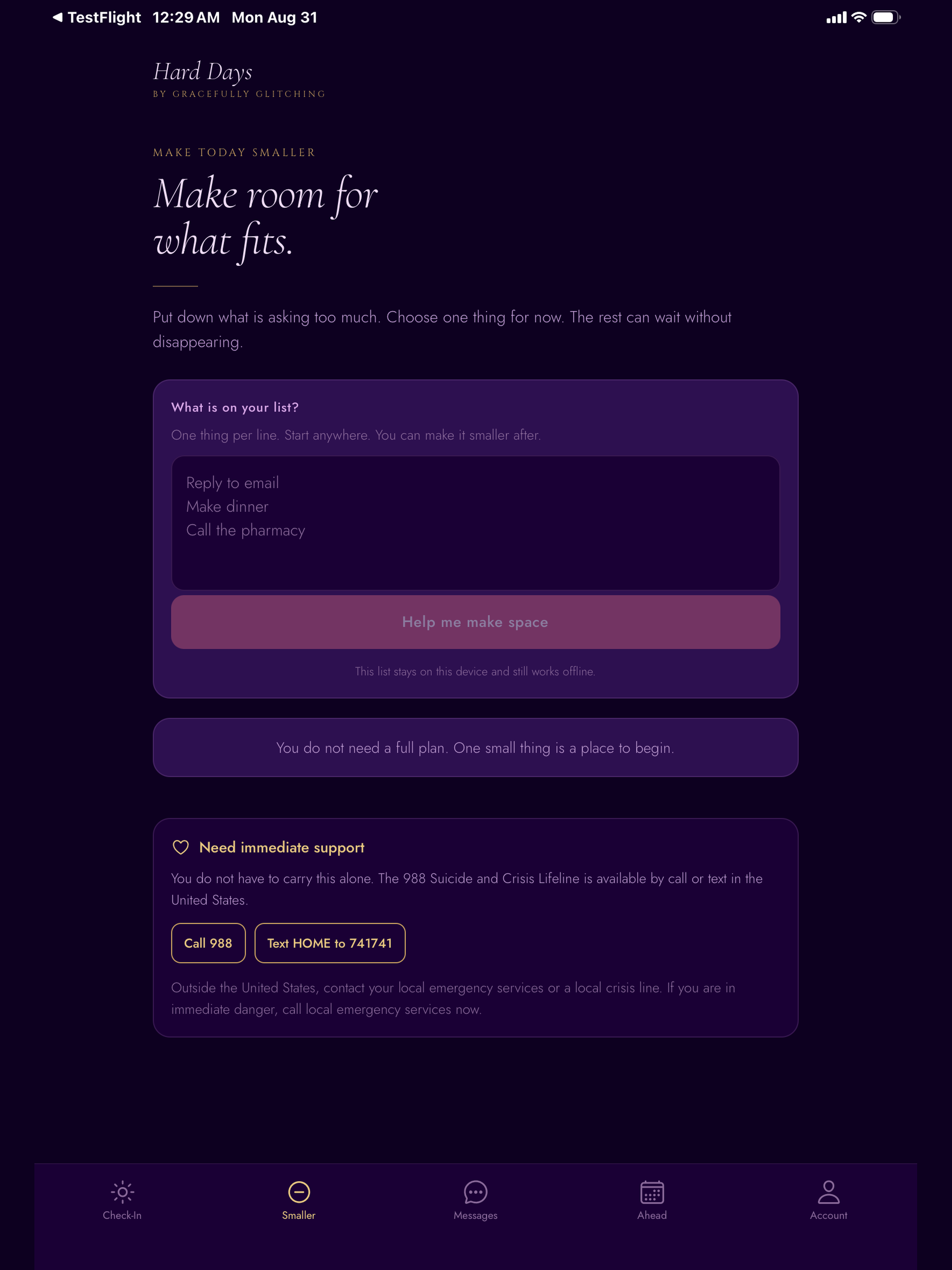
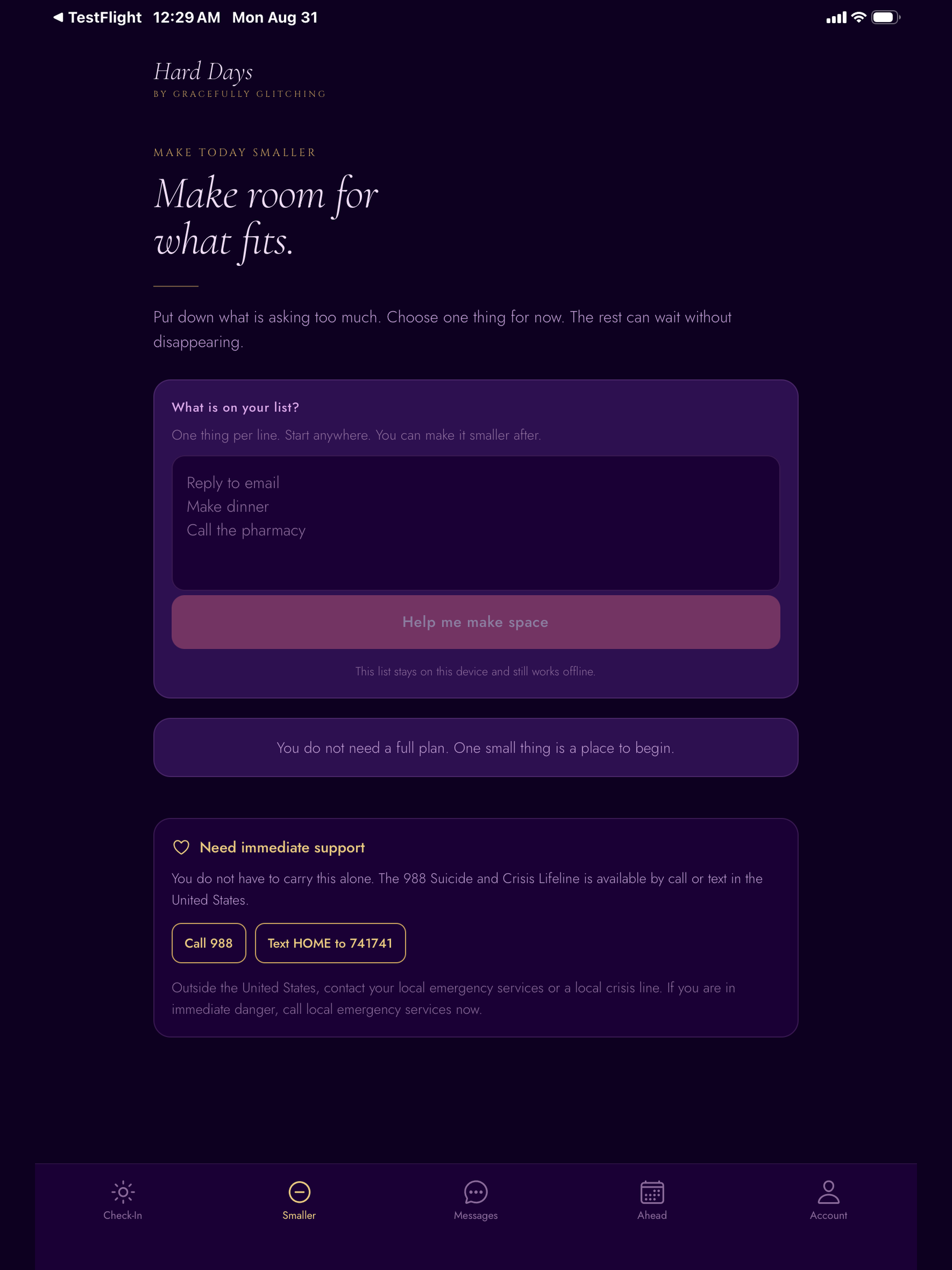
Hard Days helps users make an overwhelming day smaller.
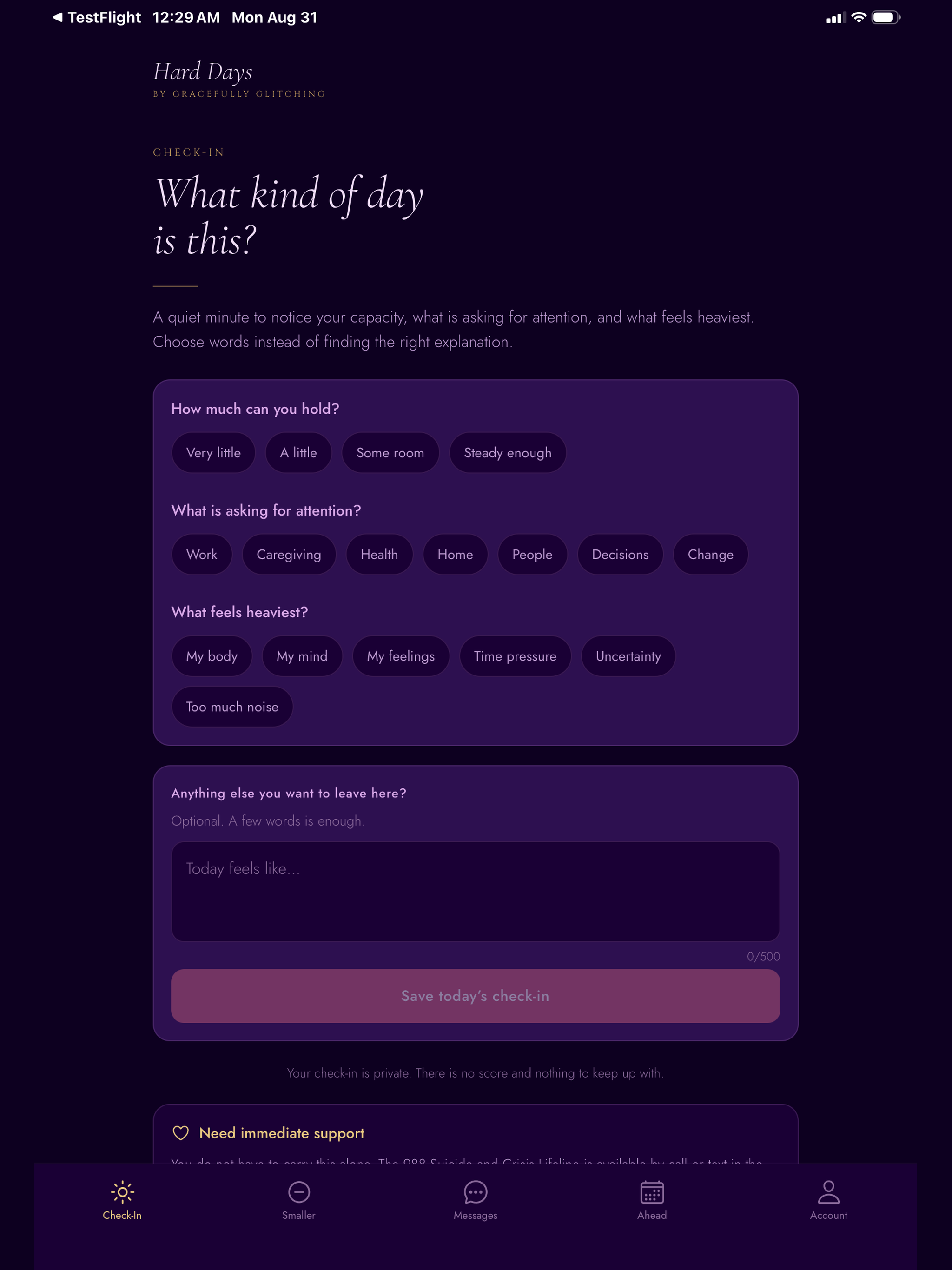
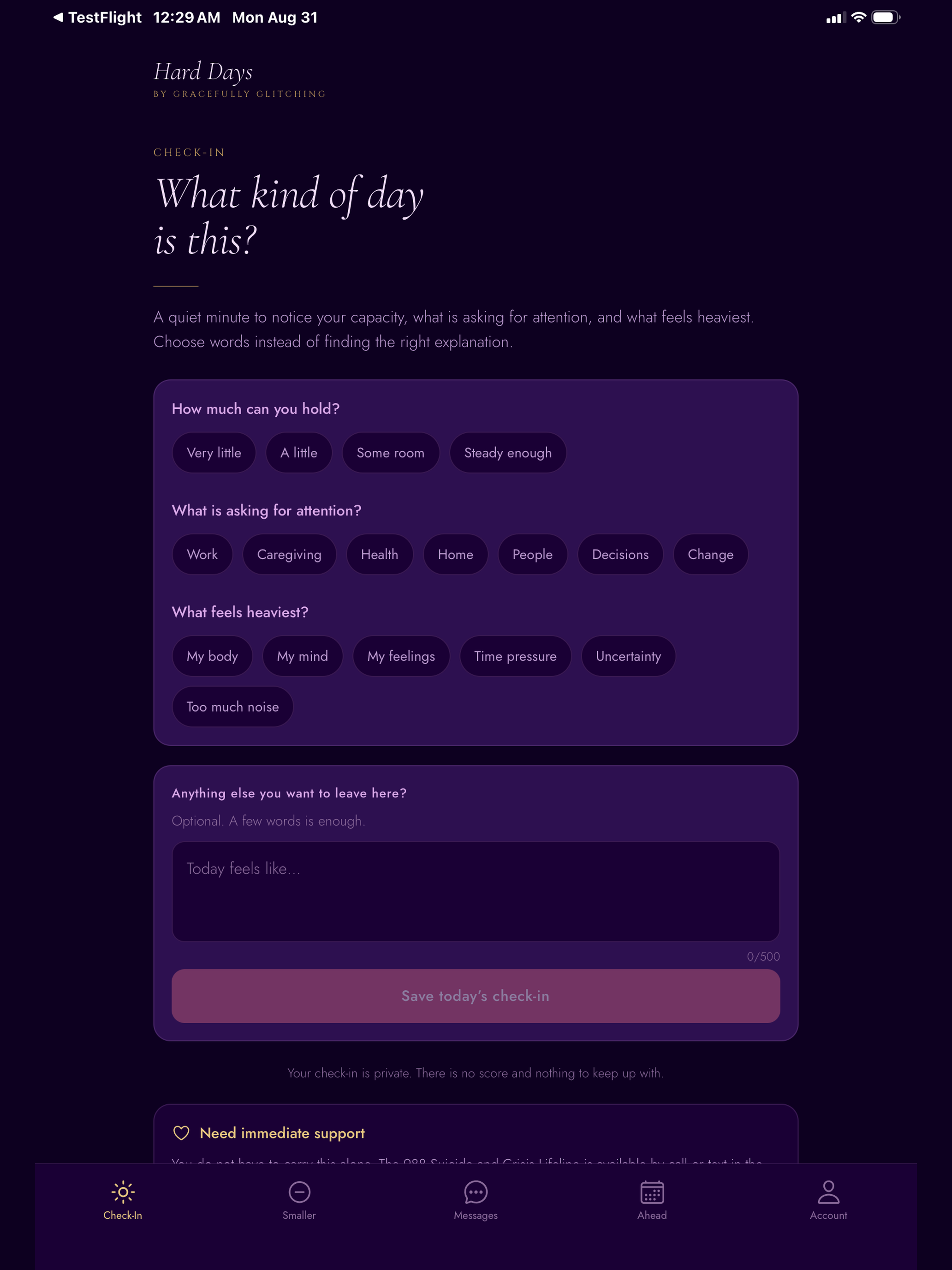
A quick check-in asks about current capacity, what is competing for attention, and what feels heaviest. From there, Hard Days helps turn the day into something more manageable:
- One Now — what deserves attention first
- One Later — what can wait until the hardest part of the day passes
- Not Today — what can be deferred, delegated, cancelled, or simply released
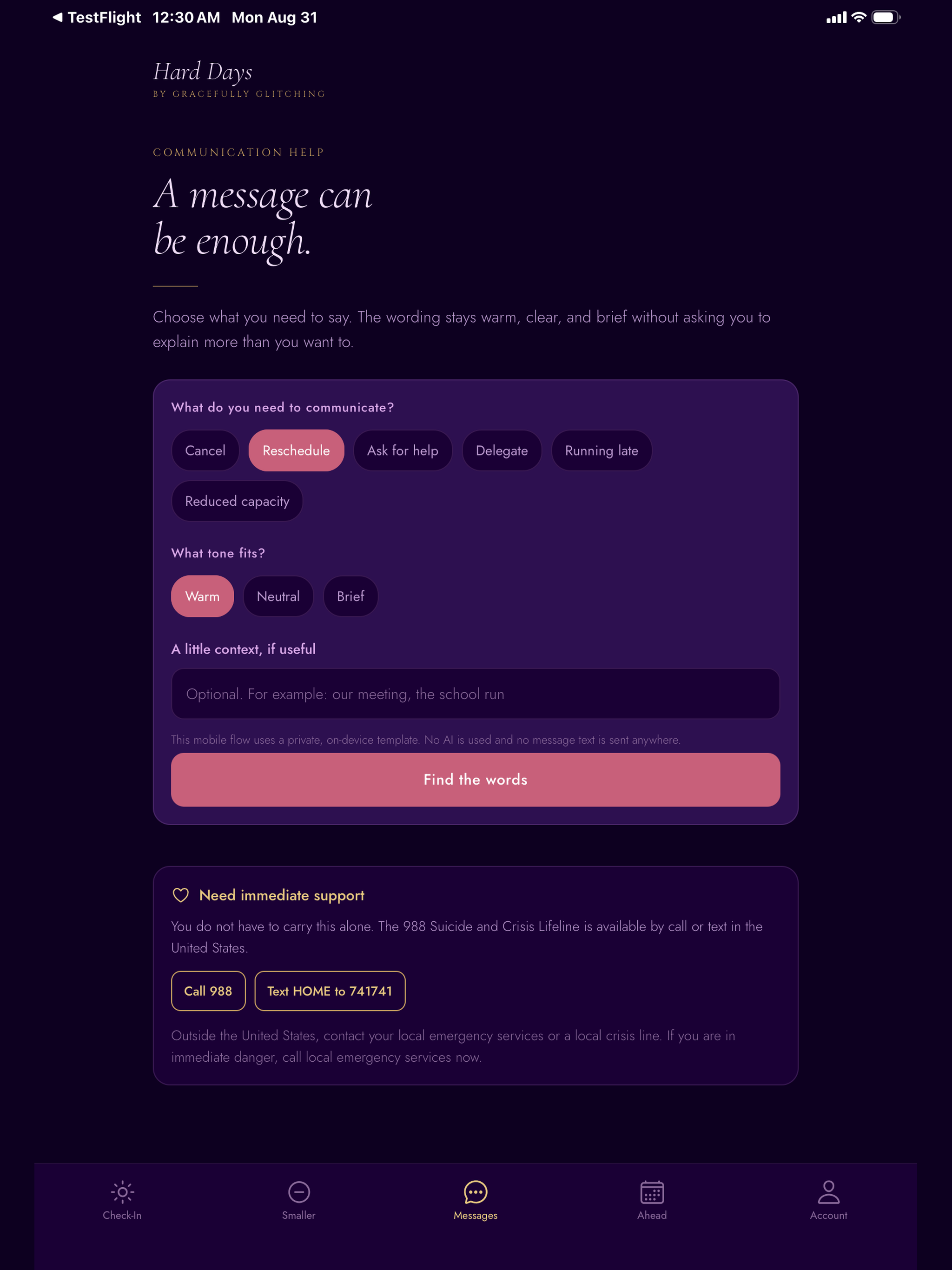
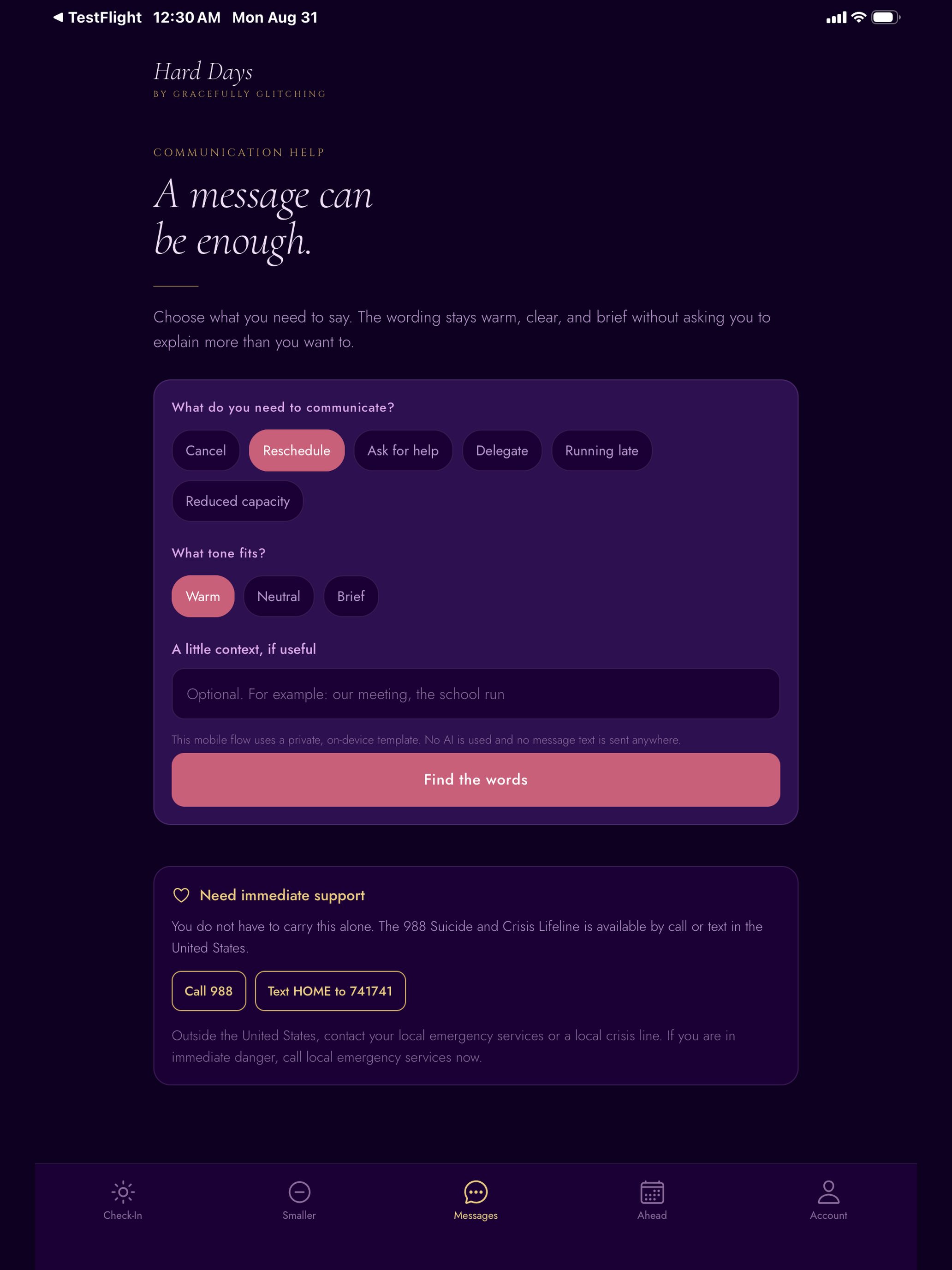
One of the hardest parts of reducing a day is often communicating about the things you cannot do. Hard Days can also help draft short, human messages for rescheduling, cancelling, asking for help, delegating, or giving someone a heads-up without requiring the user to find the words themselves.
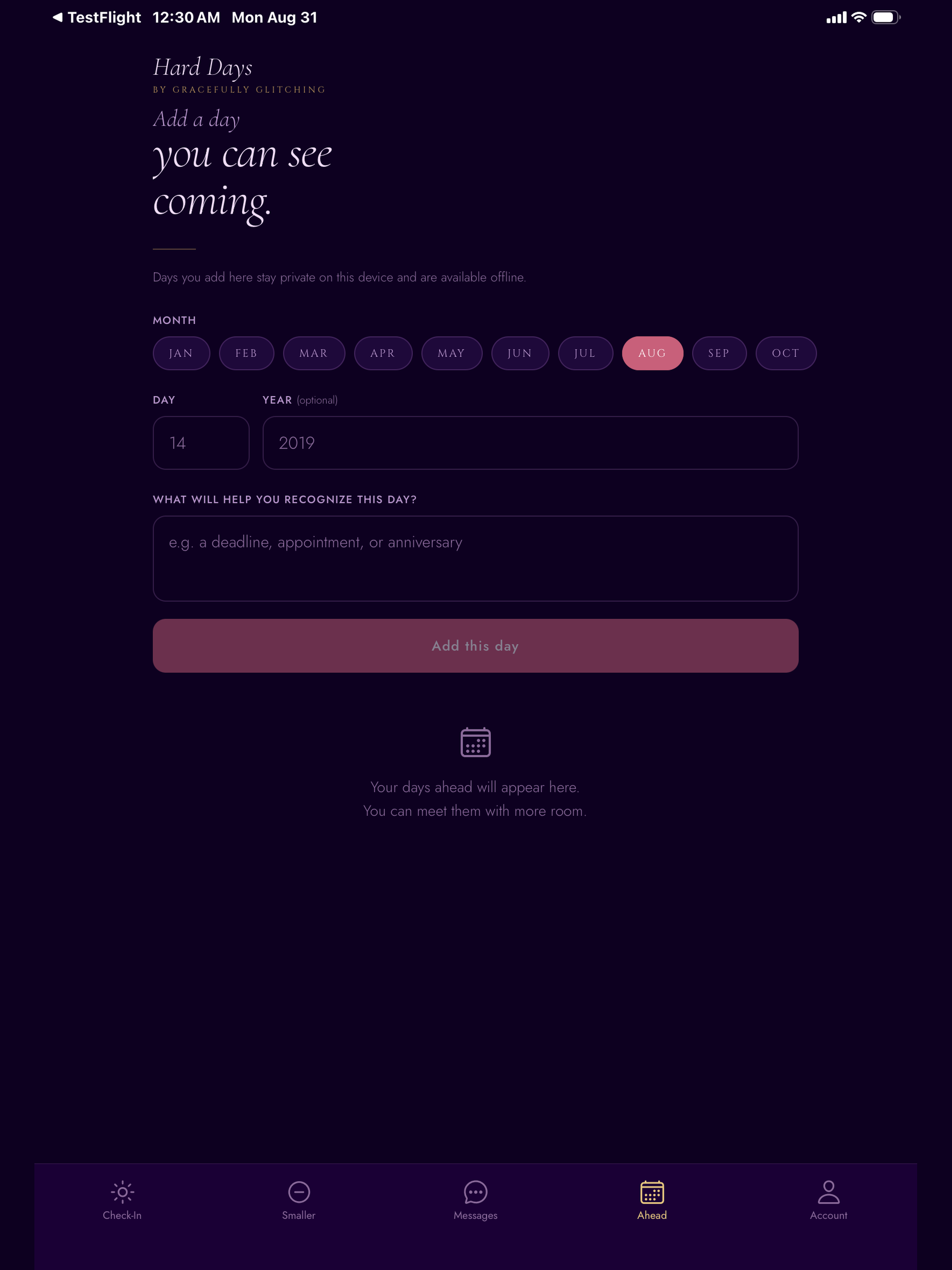
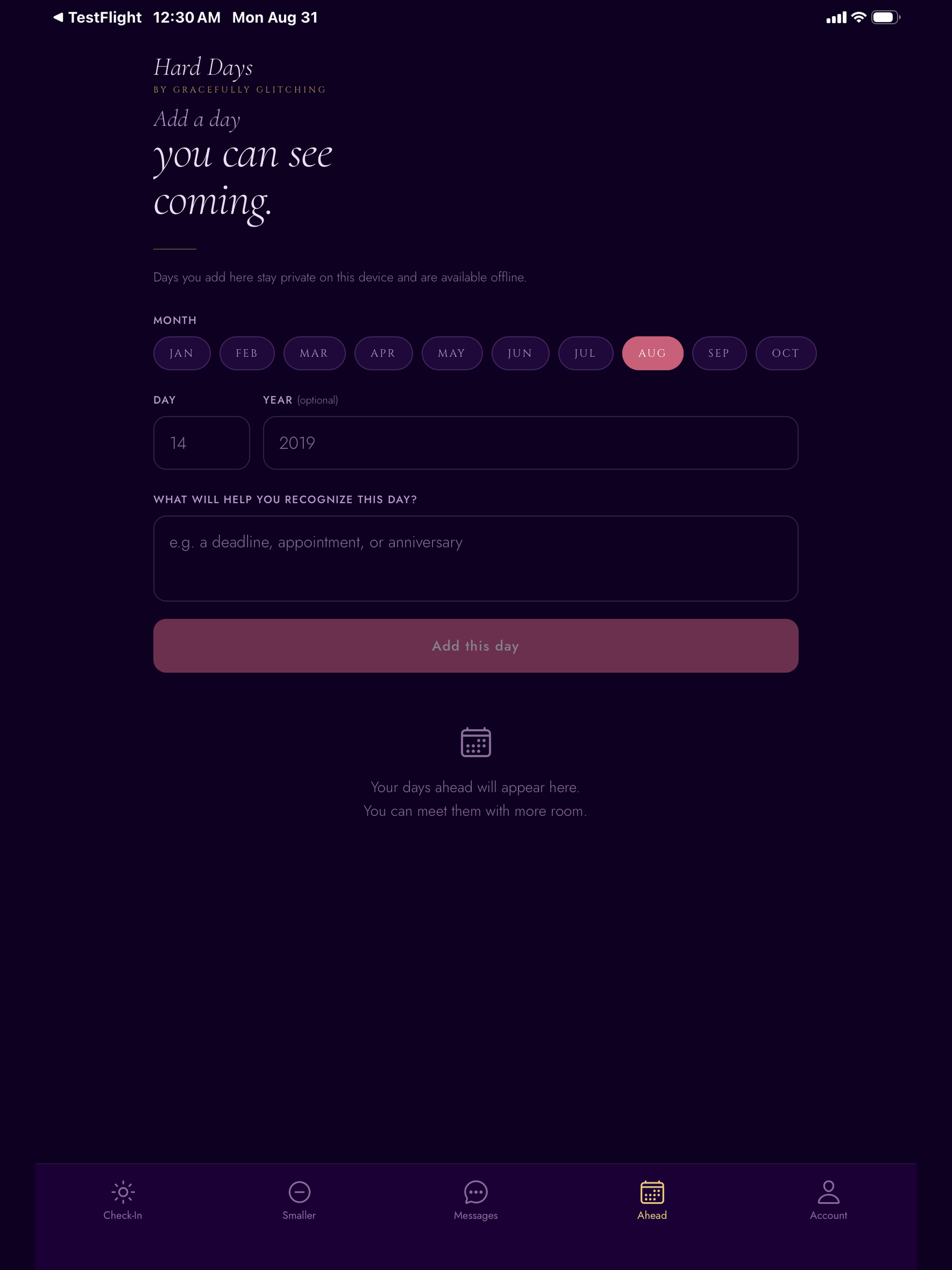
Hard Days is also designed for the difficult days users can see coming. The product is incorporating Tide's existing important-date and prediction capabilities so users can prepare for grief anniversaries, holidays, appointments, major events, and other personally meaningful dates before they arrive.
How I Built It
Hard Days is being built with Replit as the primary web development and execution platform.
Rather than starting from zero, I am evolving an existing mobile application that already included significant functionality such as:
- daily check-ins
- loved-one and important-date tracking
- grief-date prediction
- journaling with text, photo, and video
- personalized care tools
- notifications
- cloud synchronization
- encrypted data handling
- health-device integrations
- backup and export functionality
The challenge has been to preserve the depth of that earlier work while rebuilding and expanding it into a more accessible, web-first Hard Days experience.
Replit is being used for the live application, backend functionality, integrations, analytics, experimentation, and rapid iteration. The product is also being prepared for iOS and Android release.
I am integrating RevenueCat for cross-platform subscription and entitlement management, with Stripe supporting web payments and Apple/Google purchases supporting the mobile applications. Founding users will help validate whether people are willing to pay for deeper history, personalization, preparation tools, and other premium functionality.
What I Learned
One of the biggest lessons has been that building more features is not the same as building a better product.
Tide already had substantial engineering behind it, but the OneDay challenge forced me to ask a different question:
What would make someone experiencing a genuinely hard day get value within the first few minutes?
That changed the center of the product.
Instead of leading with prediction technology or a long feature list, Hard Days now leads with immediate relief from cognitive load.
I also learned how important it is to design evidence collection into the product from the beginning. We are measuring not only visits, but whether people start and finish check-ins, return on later hard days, use communication assistance, refer other users, and ultimately pay.
That distinction matters. Interest is useful, but behavior is stronger evidence.
Challenges
One major challenge has been combining two different product directions without losing what made either one valuable.
Tide was originally highly focused on grief and proactive prediction. Hard Days broadens the problem considerably while preserving grief as an important use case.
Another challenge has been technical migration. The existing mobile product contains mature functionality and significant security work, while the new product needs to move quickly enough to gather meaningful customer evidence during a 30-day challenge.
That required making deliberate tradeoffs between what should be migrated immediately, what should be adapted for the web, and what can remain mobile-specific for now.
Finally, Hard Days deals with personal and potentially sensitive information. Building something useful without becoming intrusive, diagnostic, guilt-driven, or exploitative has been a core design constraint.
There are no streaks, badges, or punishment for disappearing.
Some days, opening the app at all is enough.
What's Next
During the challenge, I am focused on proving that Hard Days is not only meaningful, but viable.
That means launching the web experience, releasing the mobile apps, testing Founding Access, collecting real user feedback, measuring repeat use, and iterating based on what people actually do rather than what I assume they want.
The long-term vision is simple:
Some hard days surprise you. Some you can see coming. Hard Days helps with both.
One day. One moment. One breath.
Built With
- anthropic
- expo.io
- native
- react
- replit
- resend
- revenuecat
- stripe
- typescript
- vite

Log in or sign up for Devpost to join the conversation.