-
-
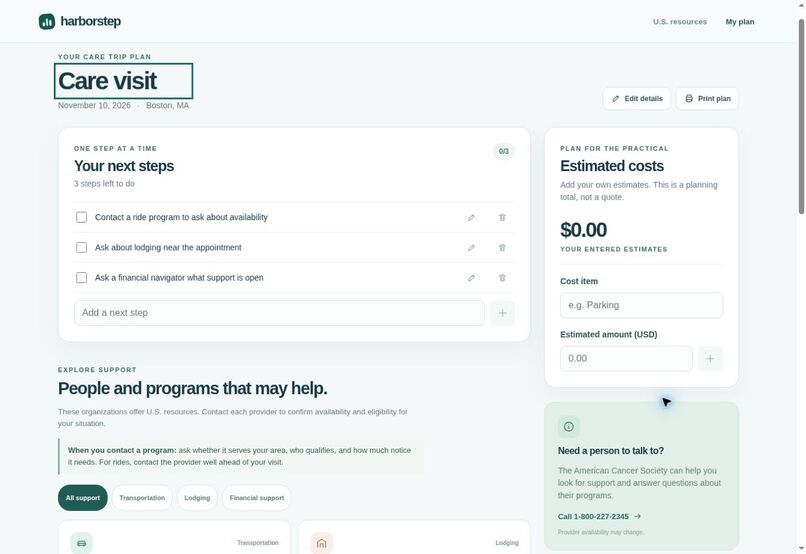
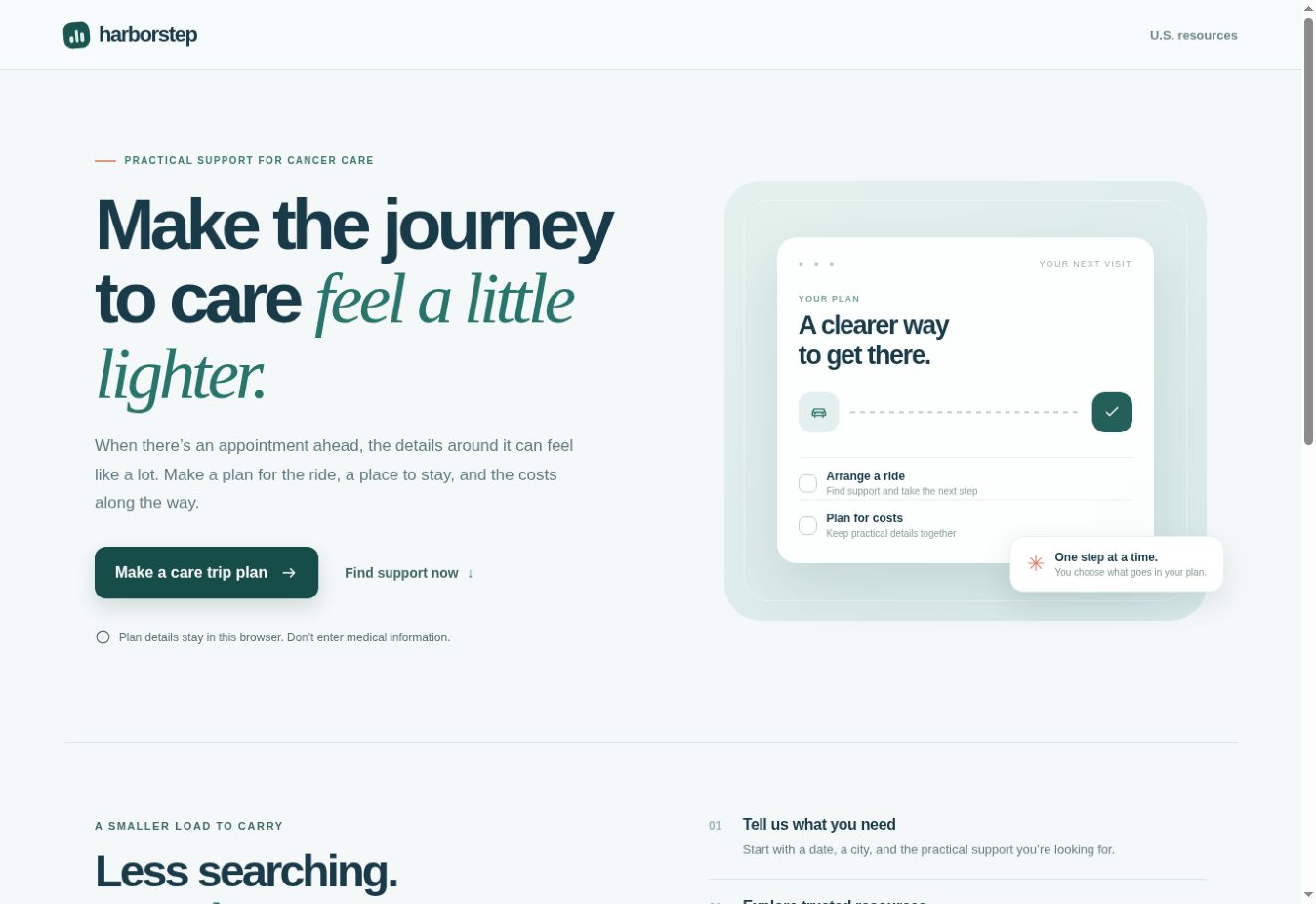
Harborstep helps patients and caregivers plan the practical journey to cancer care.
-
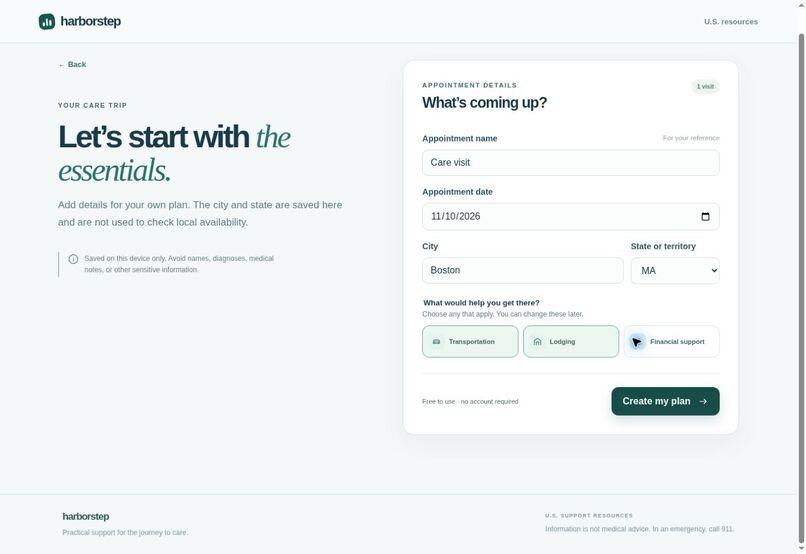
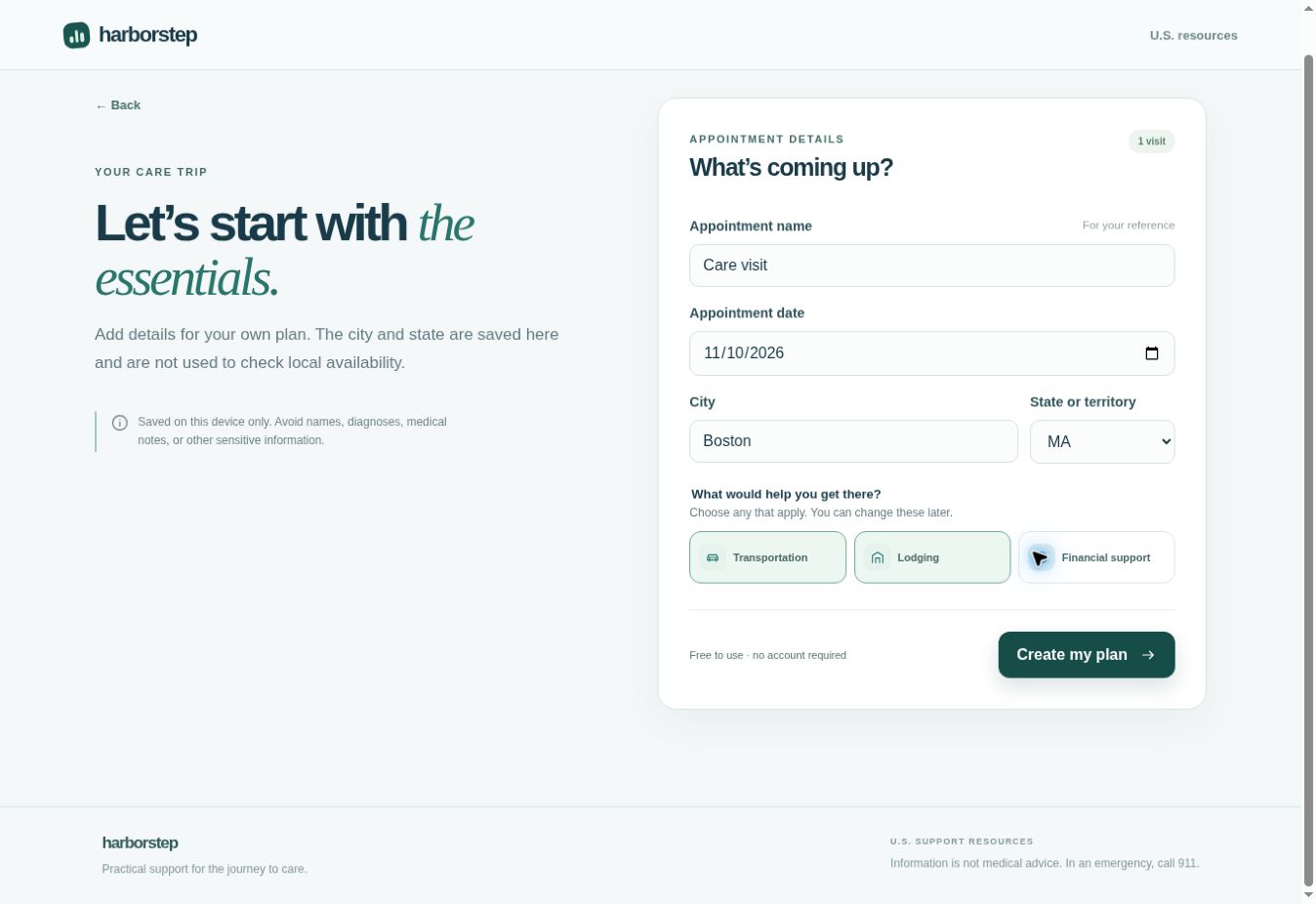
Choose a visit date and the support needs you want to explore.
-
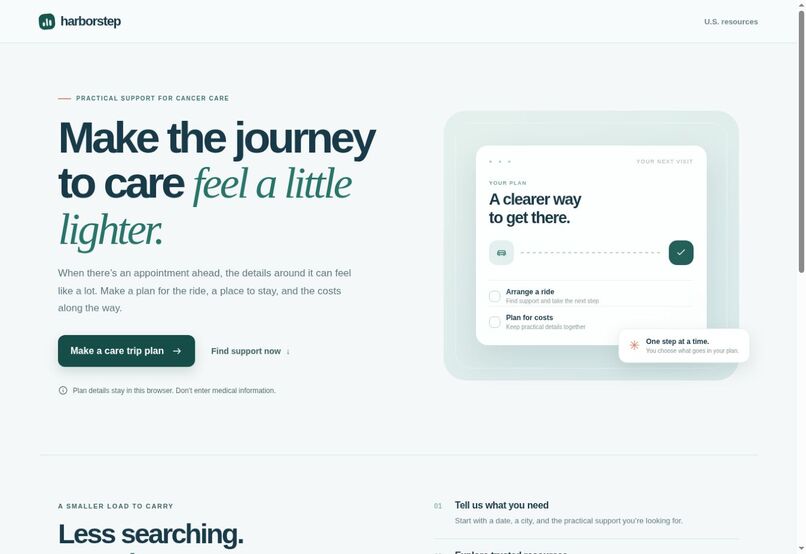
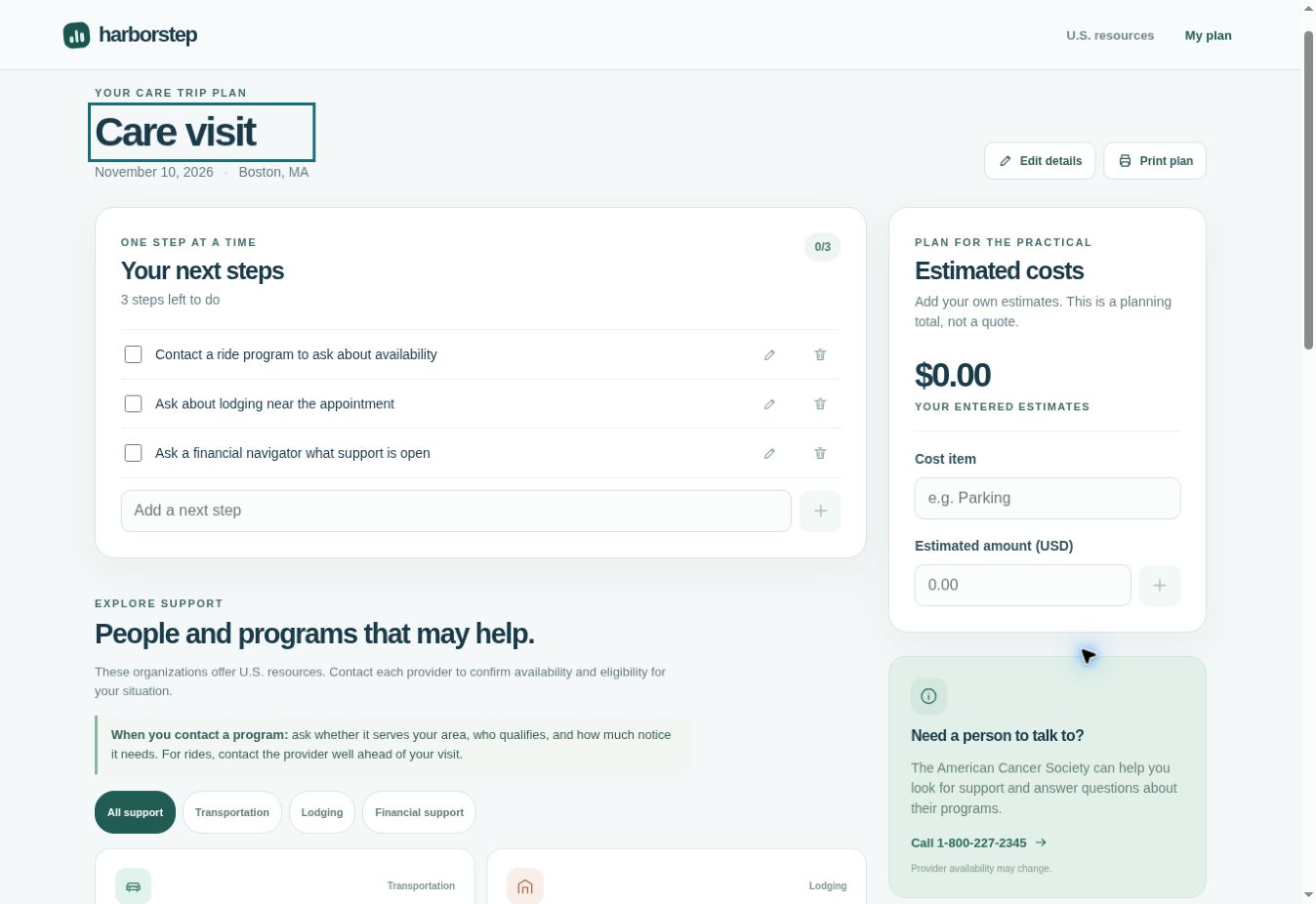
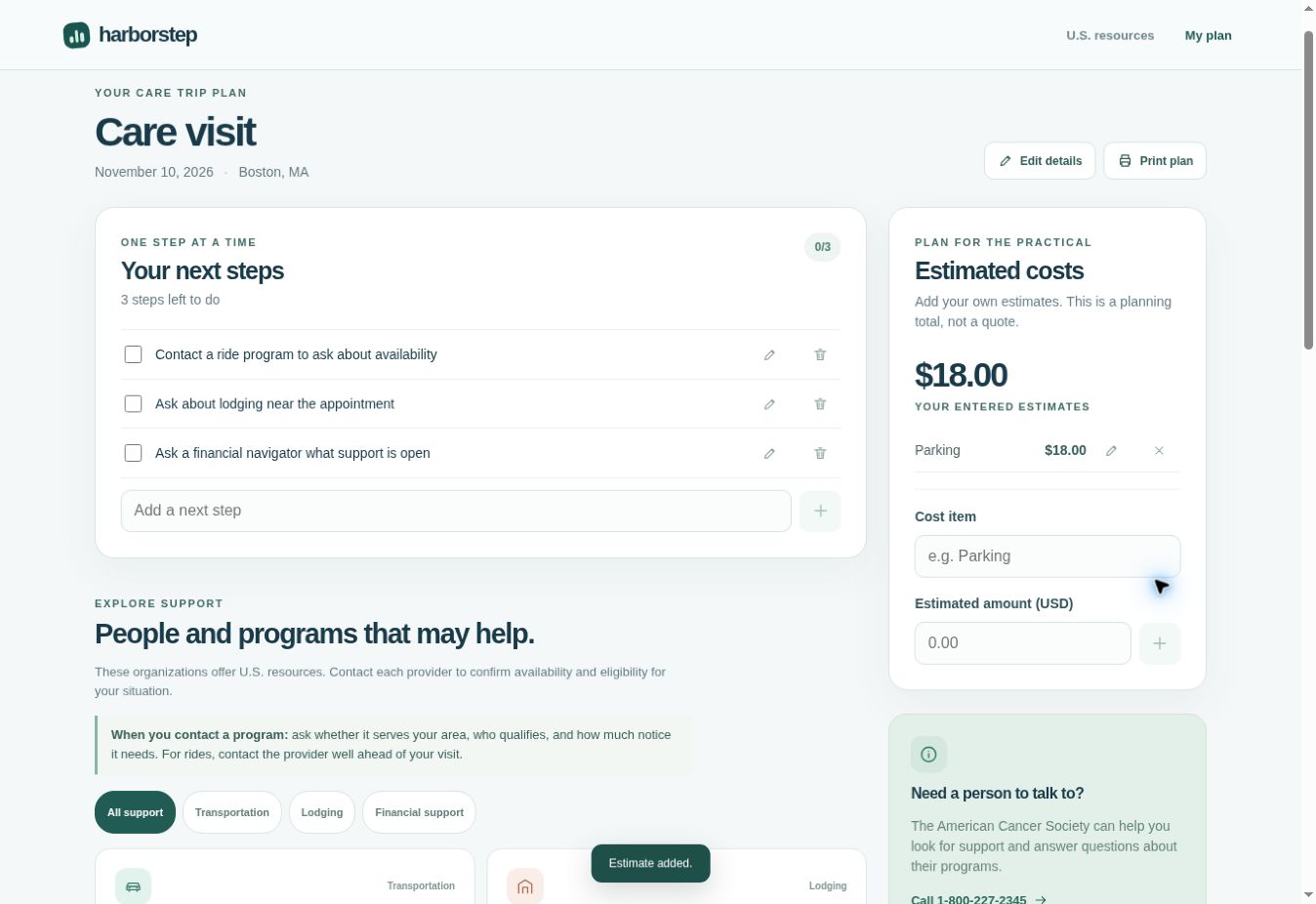
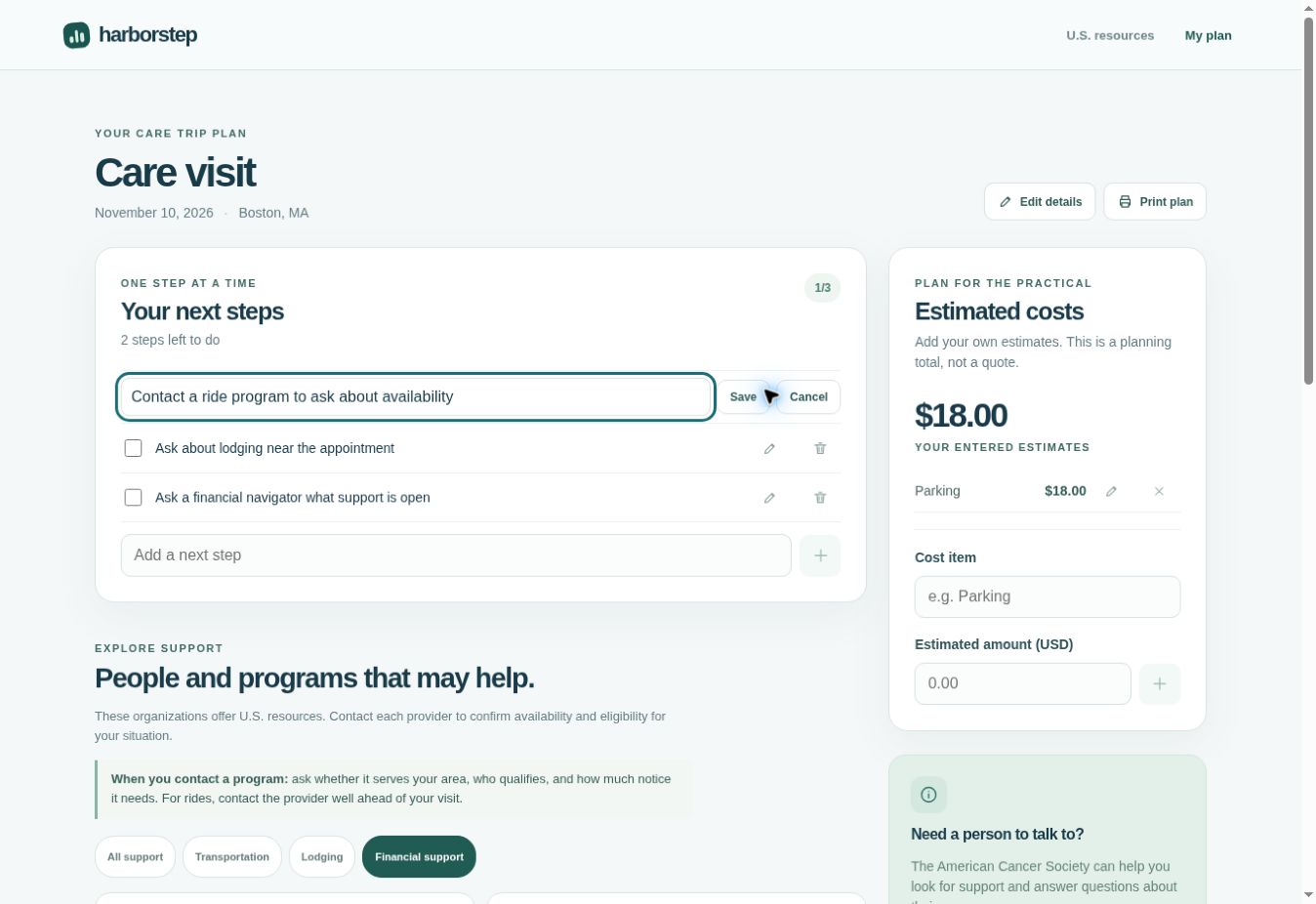
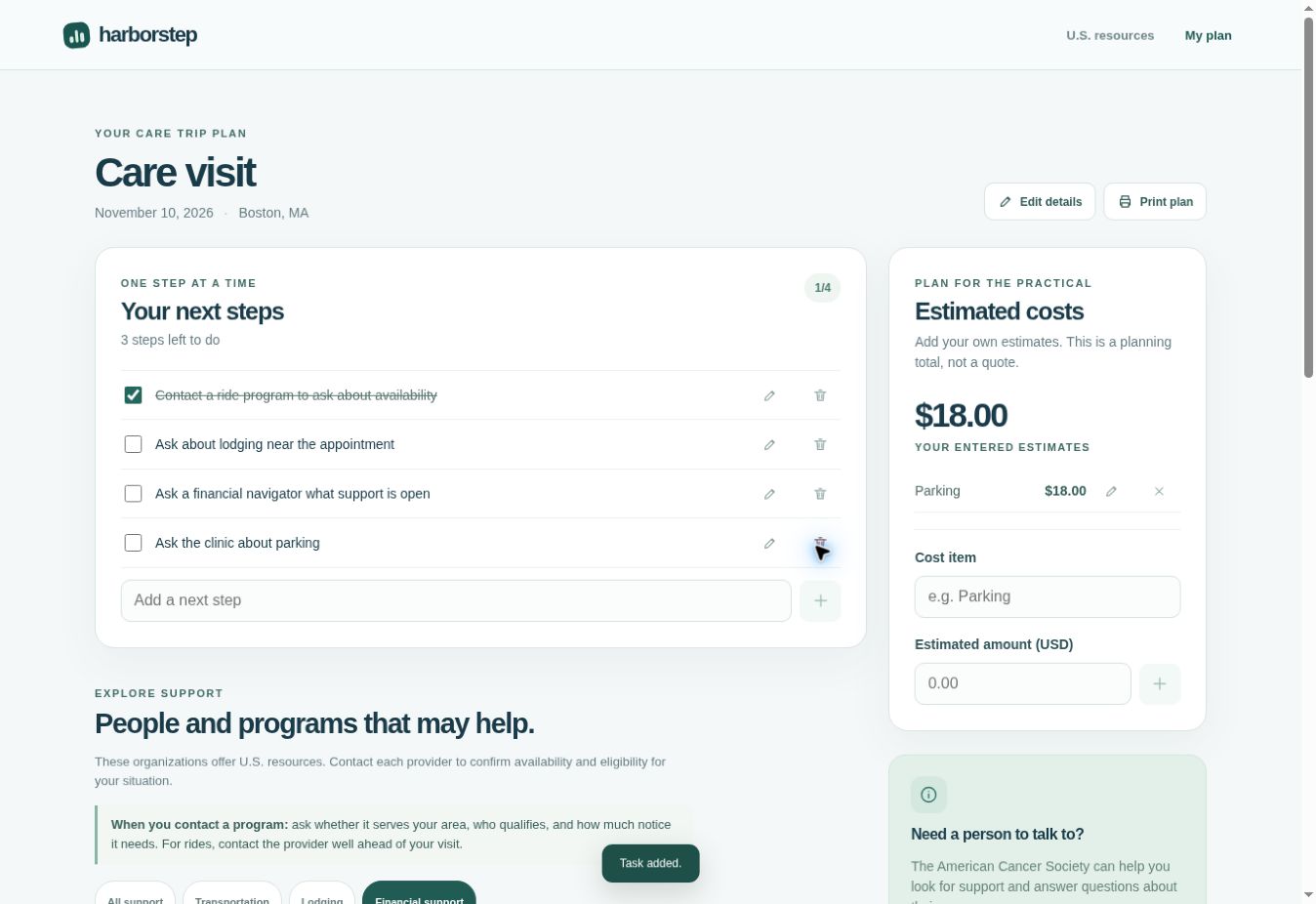
A visit plan brings practical next steps and estimated costs together.
-
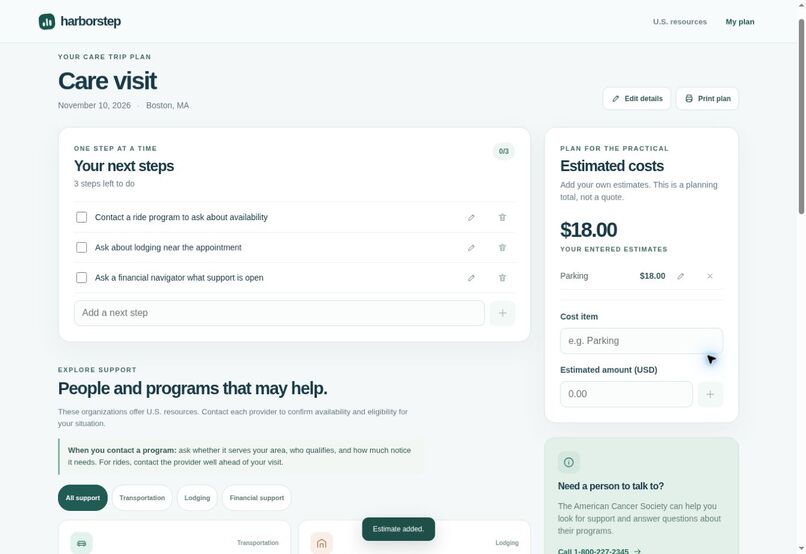
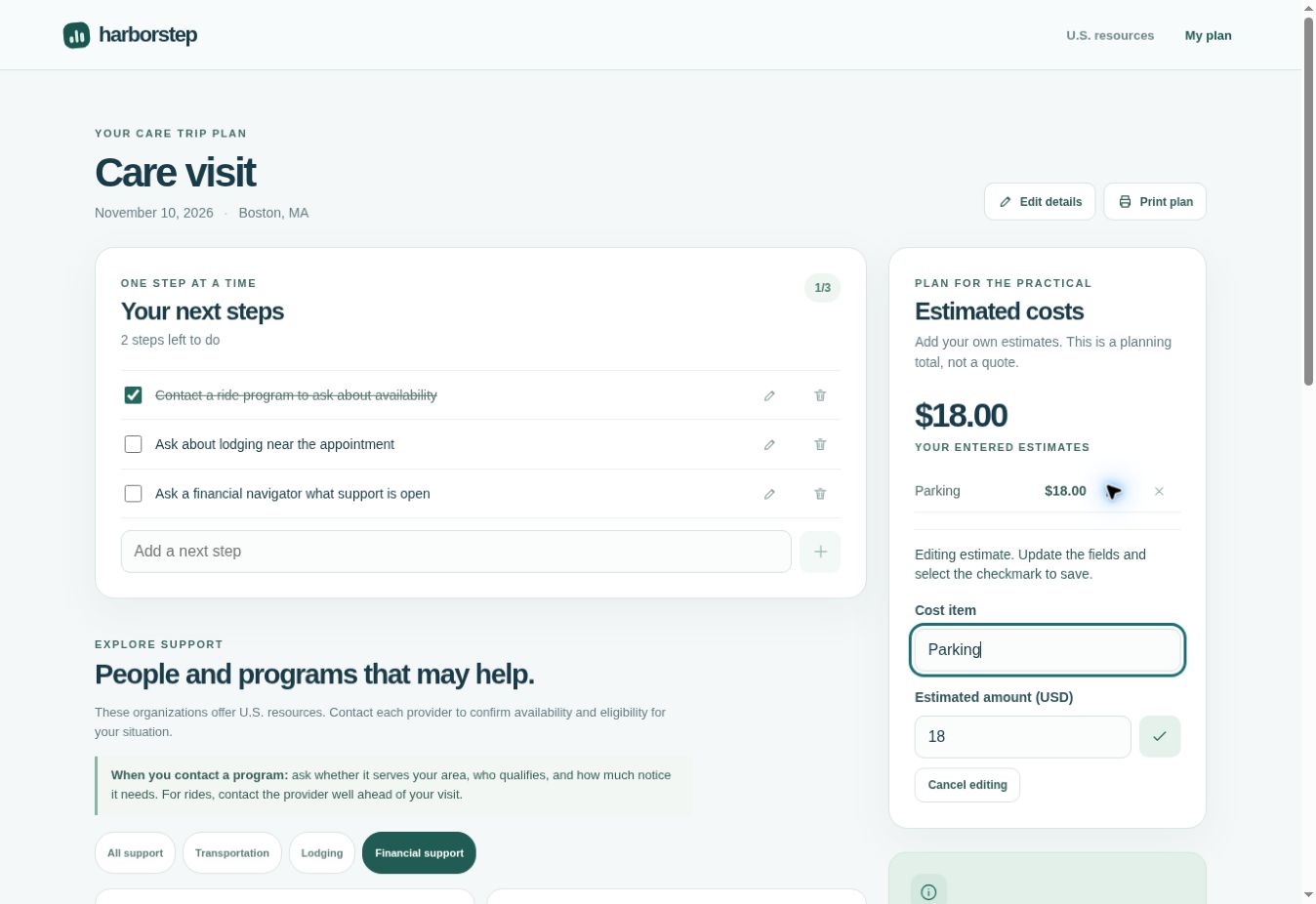
Add personal cost estimates, including parking, to plan for the visit.
-
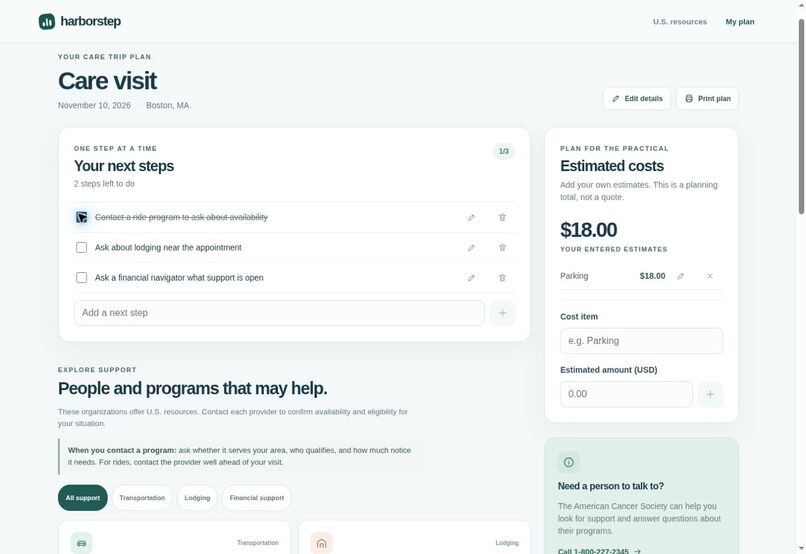
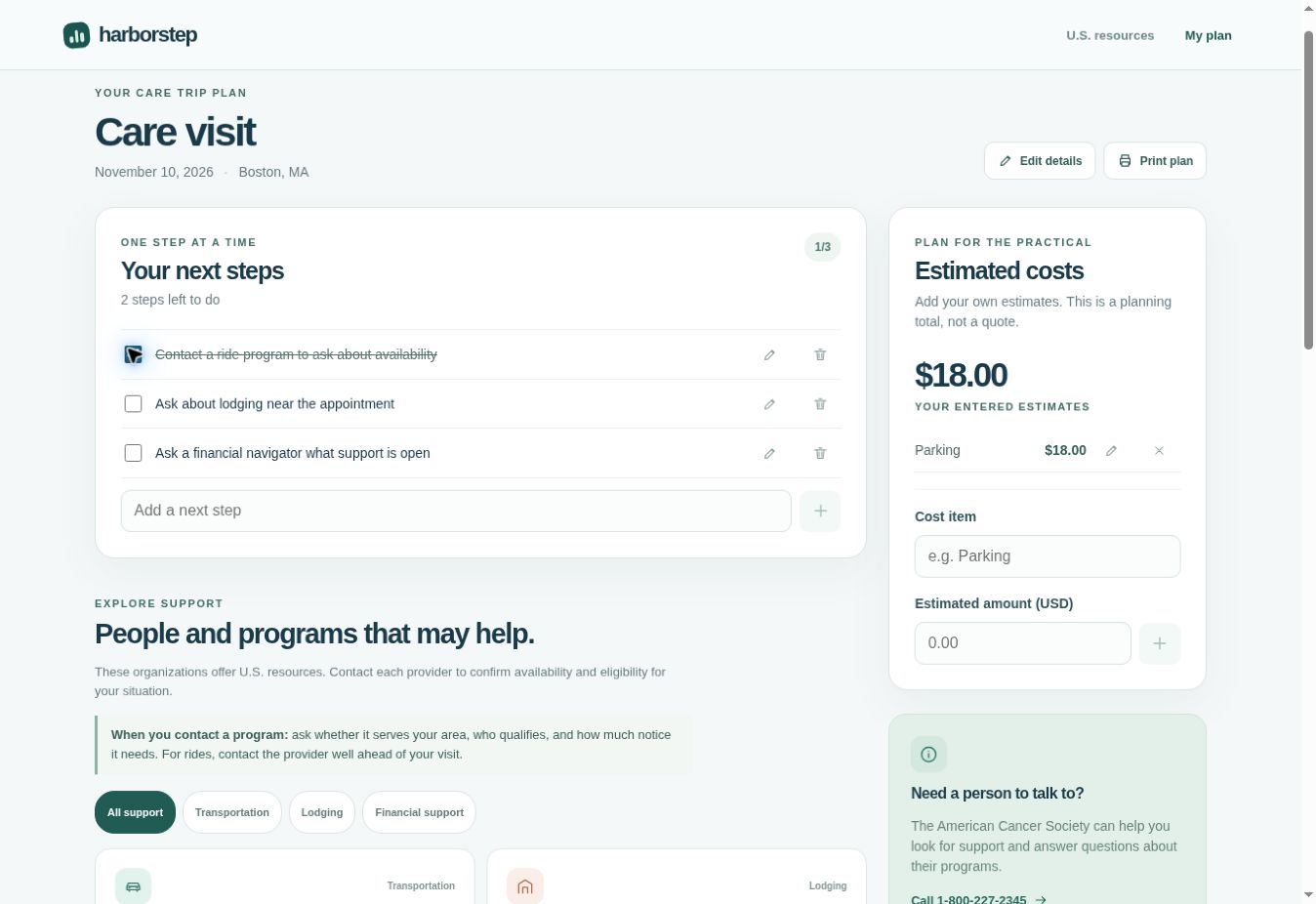
Mark a next step complete and see progress on your plan.
-
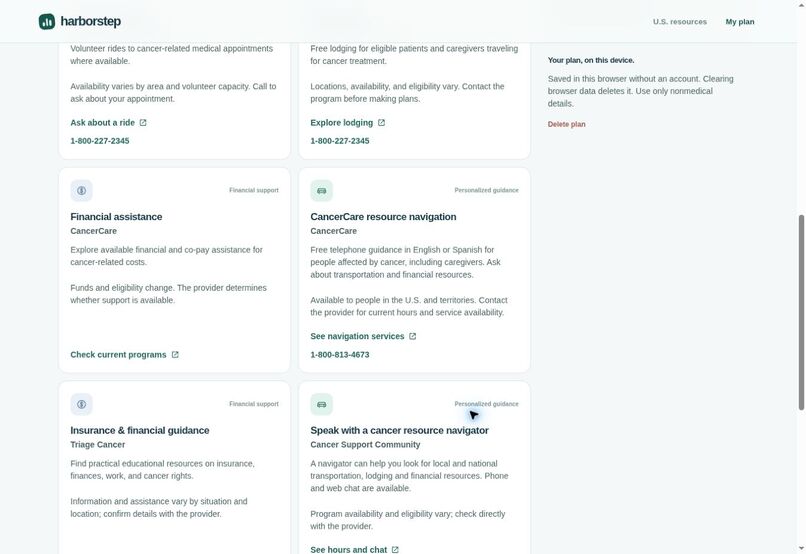
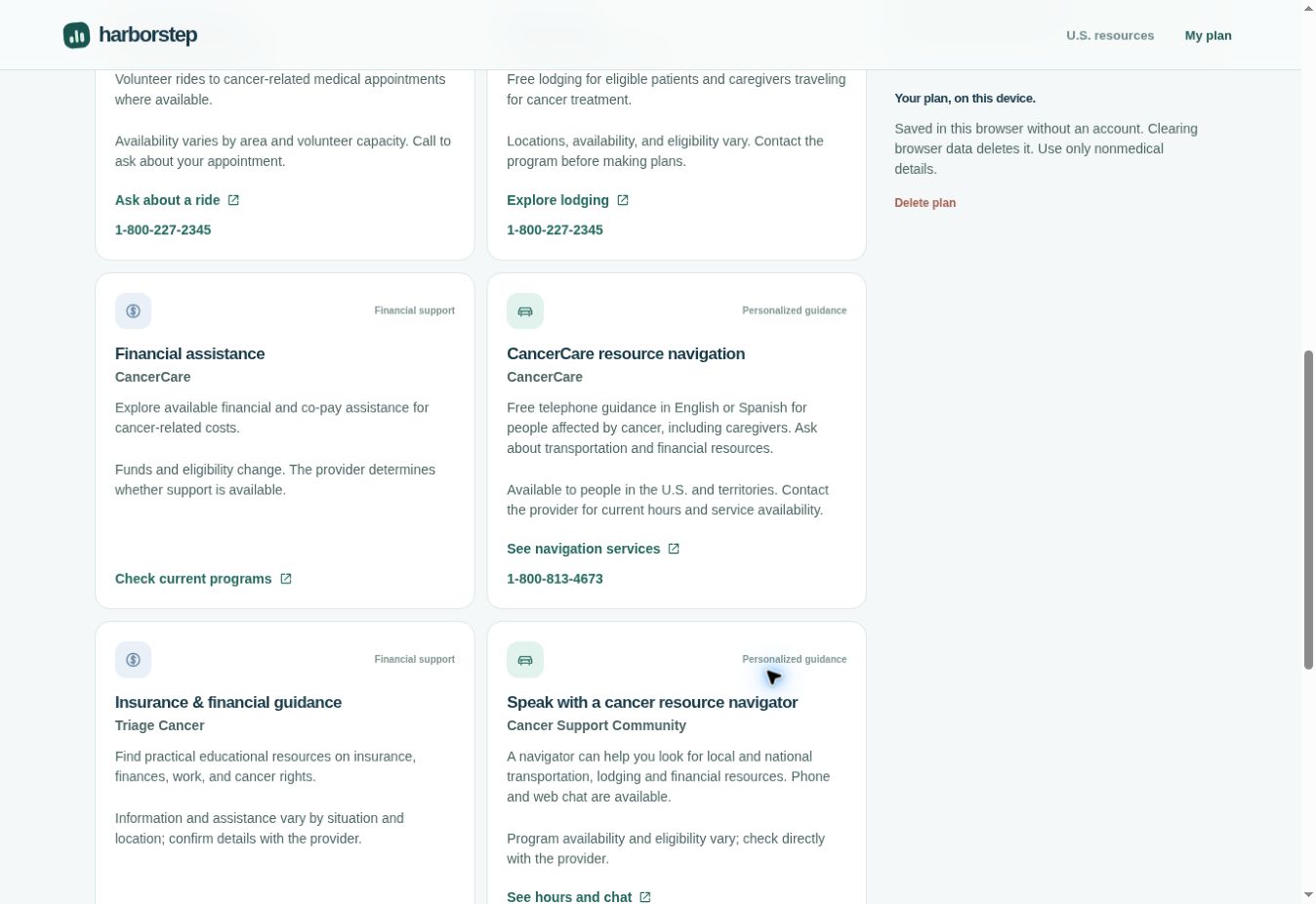
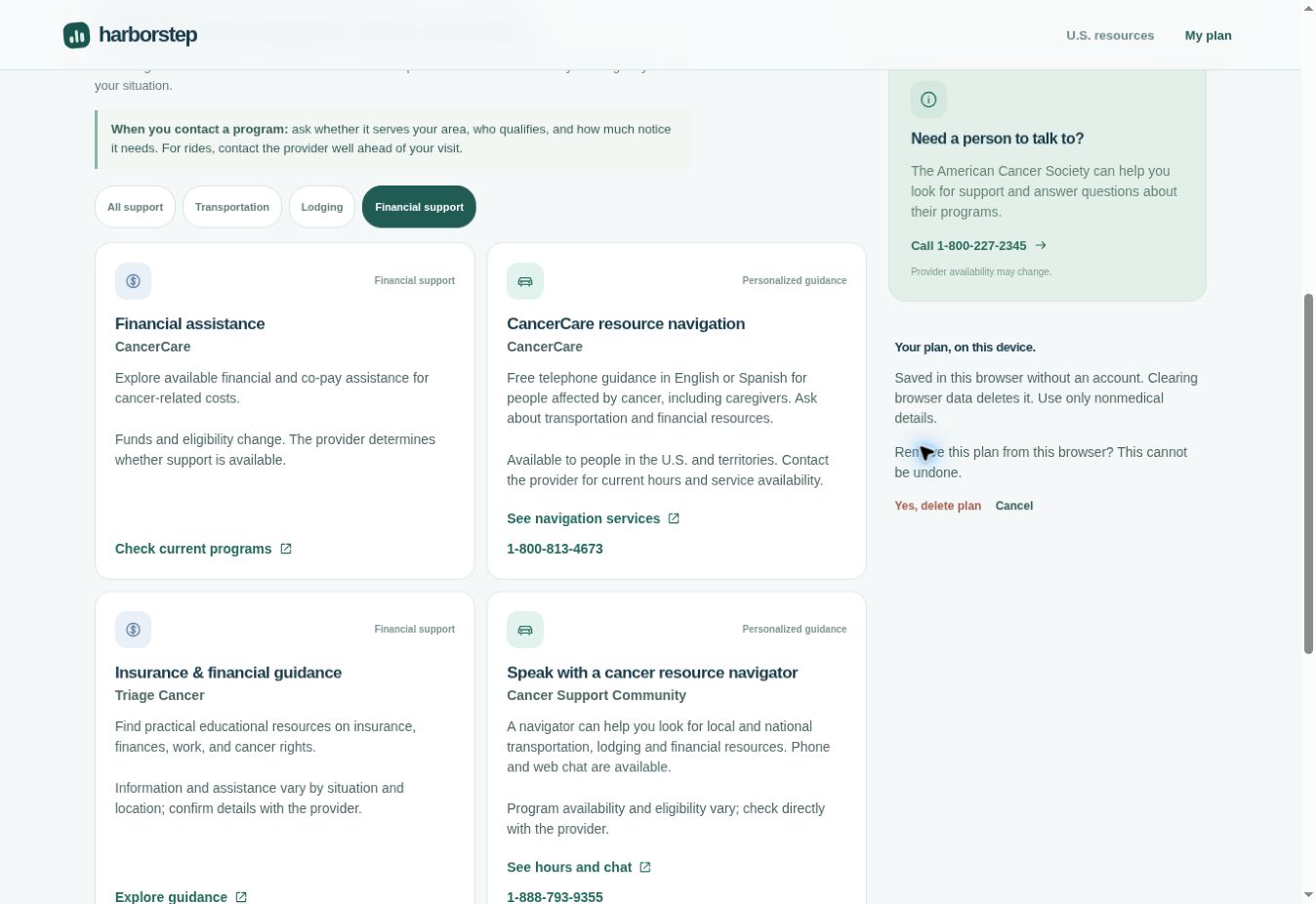
Explore financial assistance and personalized navigation from established organizations.
-
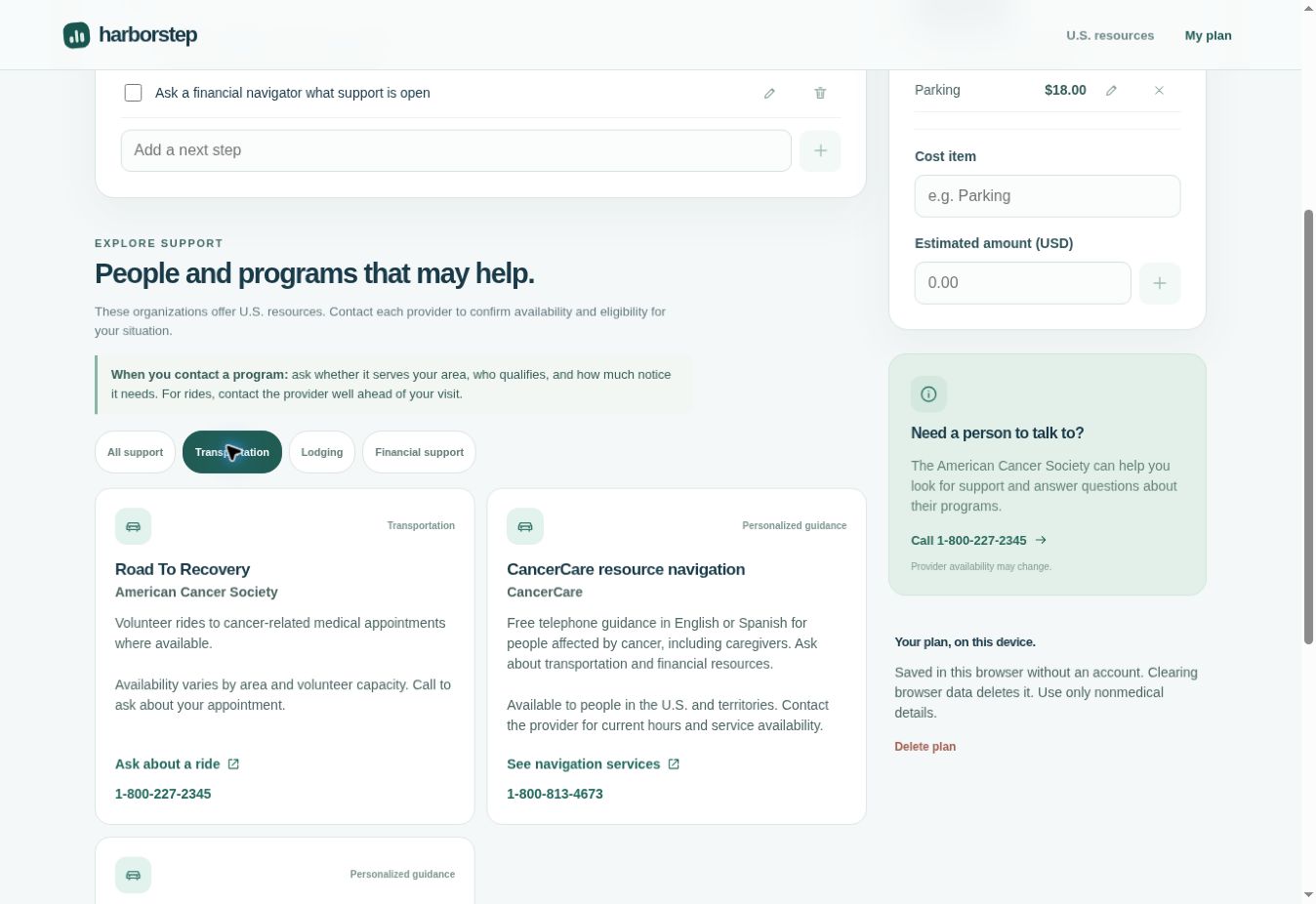
Filter transportation options and contact programs to check availability.
-
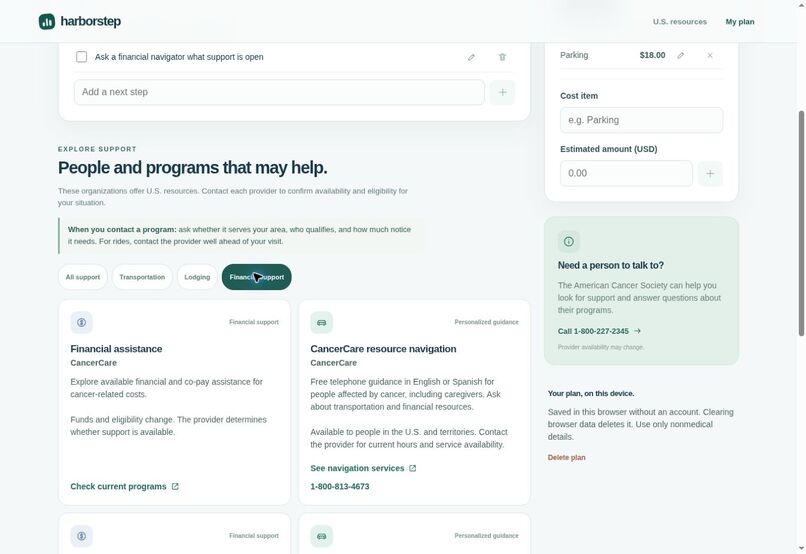
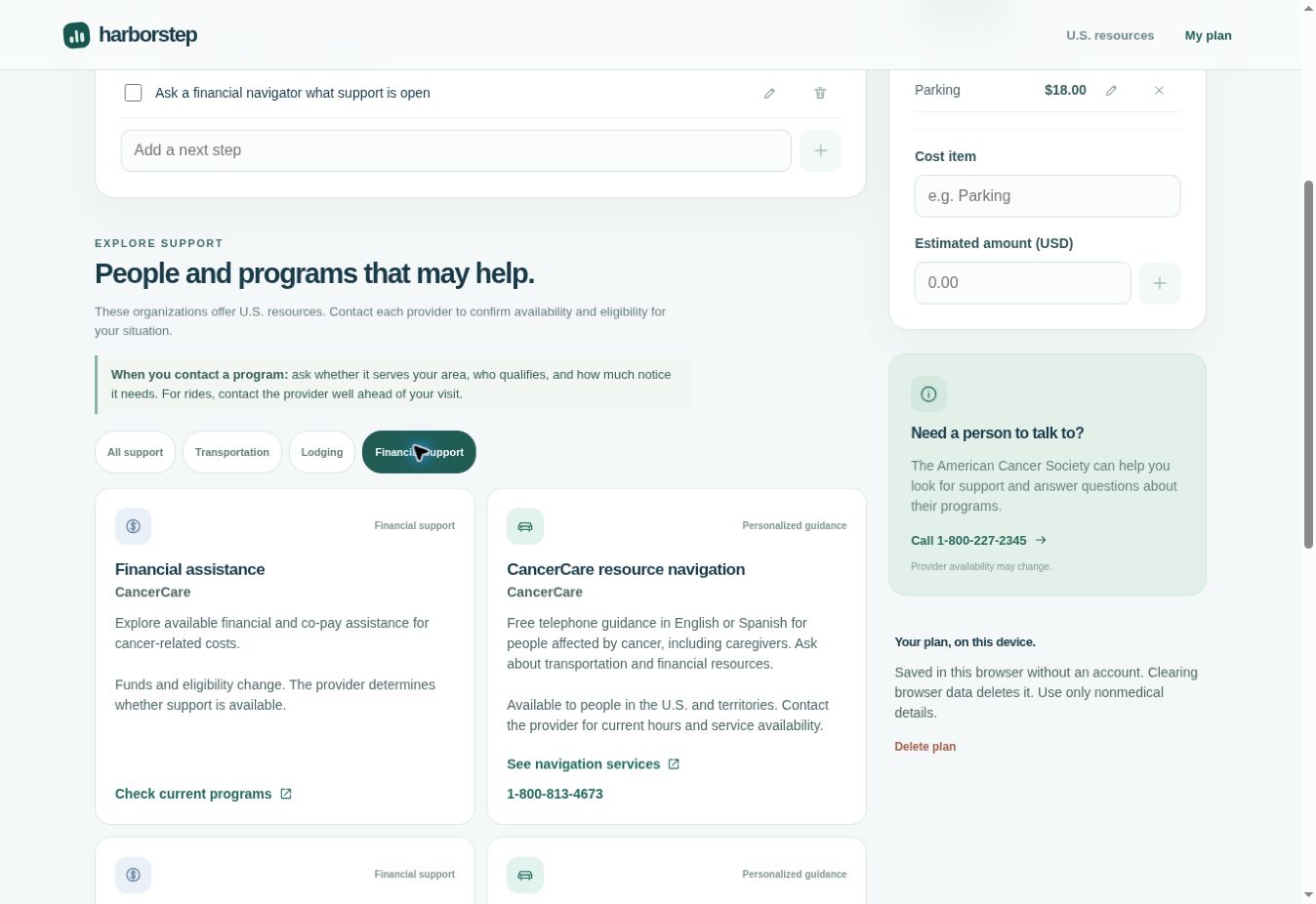
Review financial assistance and resource navigation options.
-
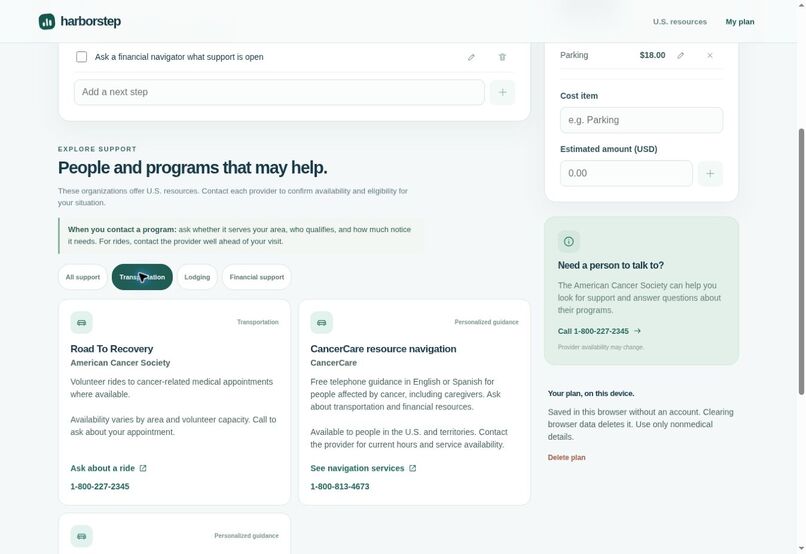
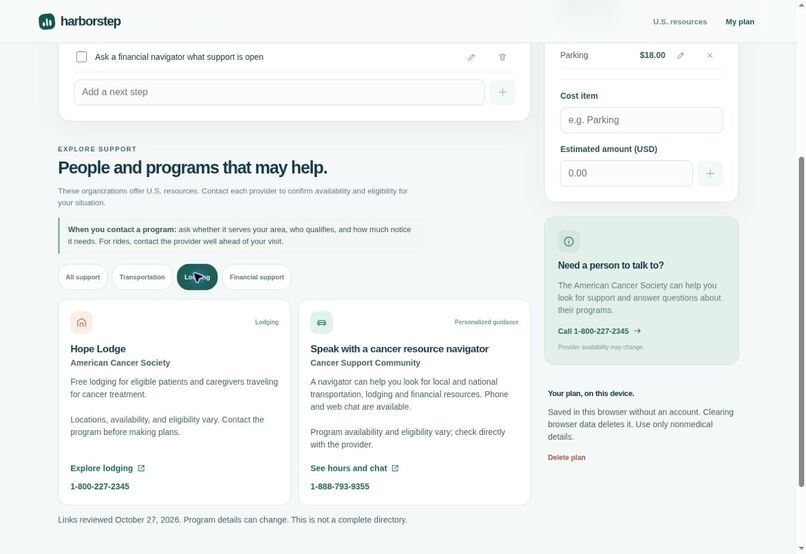
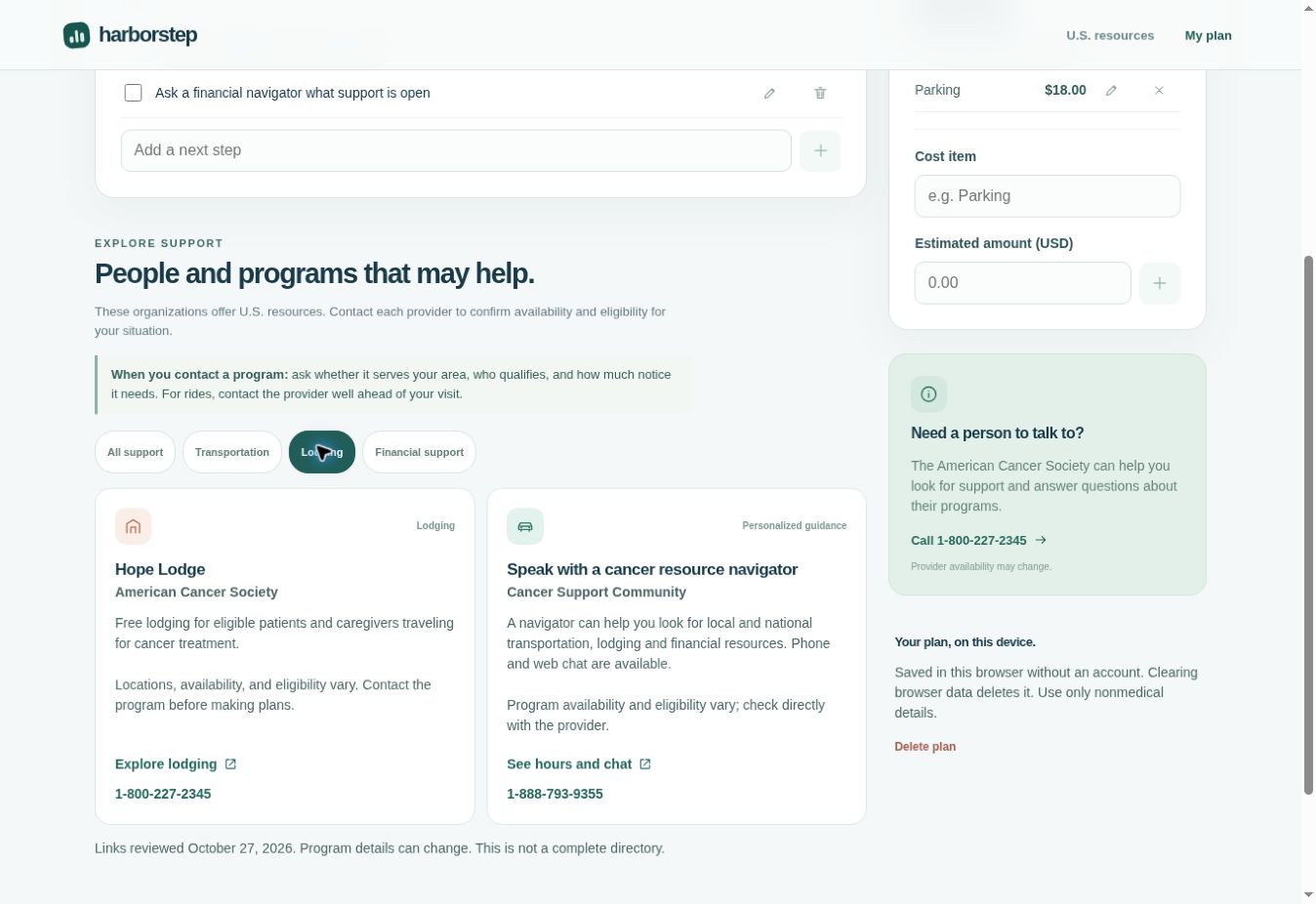
Explore lodging resources and contact a navigator for guidance.
-
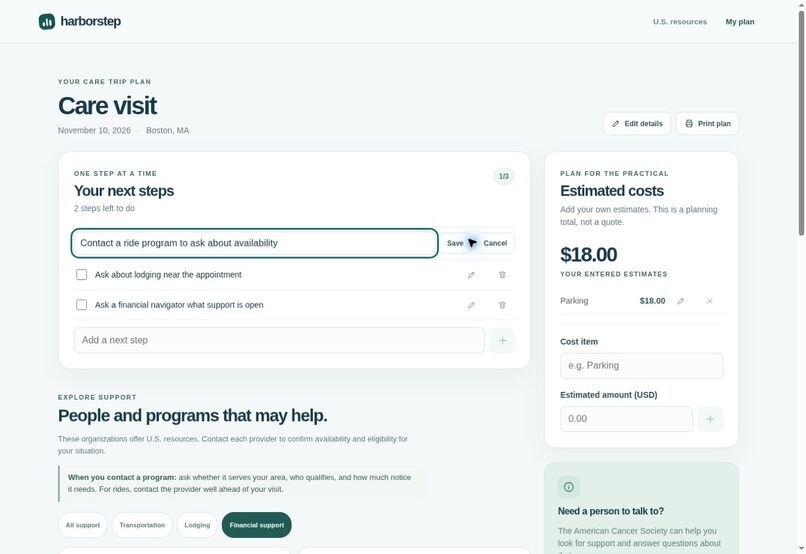
Edit a next step to fit the practical arrangements for your visit.
-
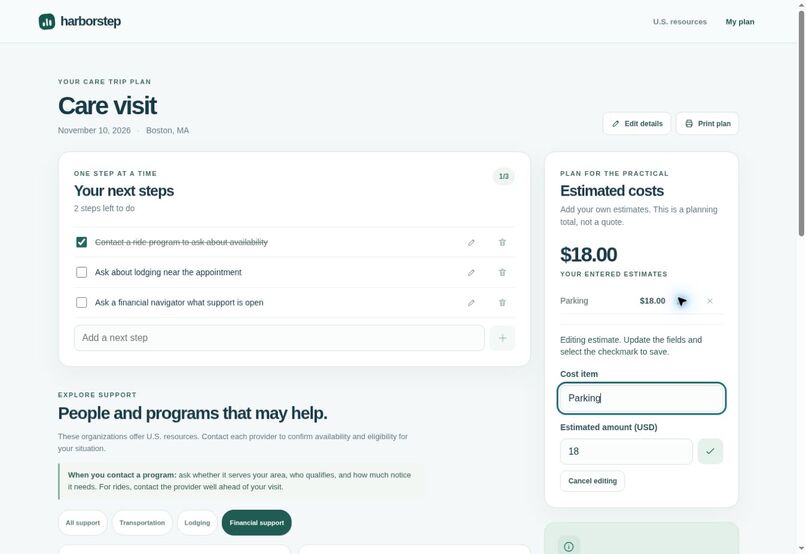
Update a cost estimate as your travel plans change.
-
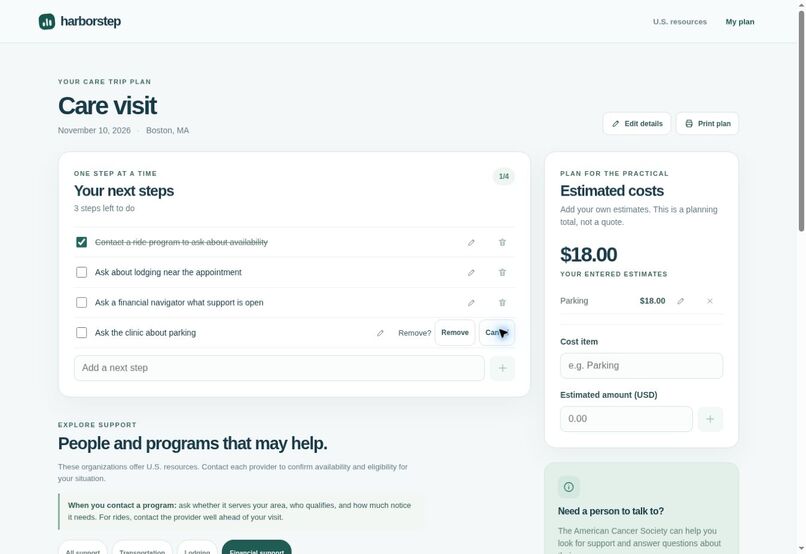
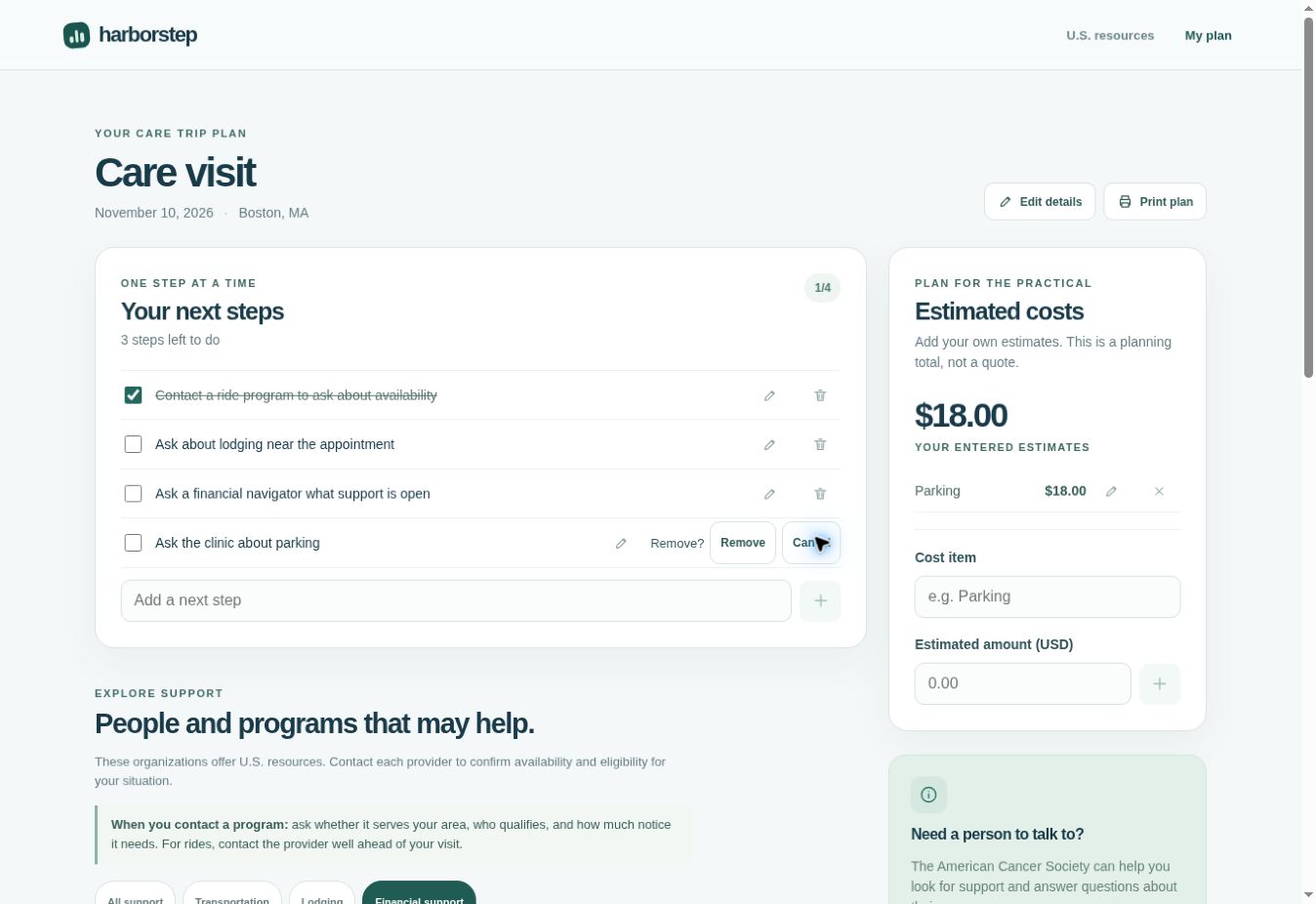
Add your own practical next steps to the visit plan.
-
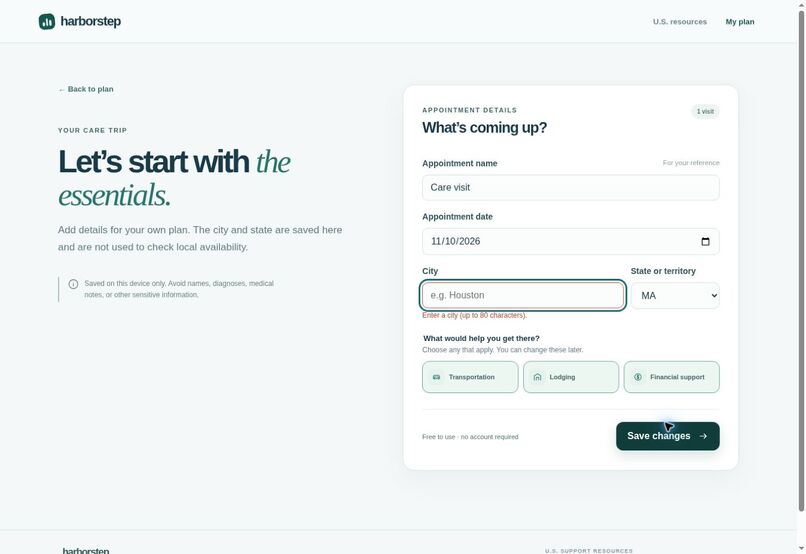
Confirm before removing a next step from your plan.
-
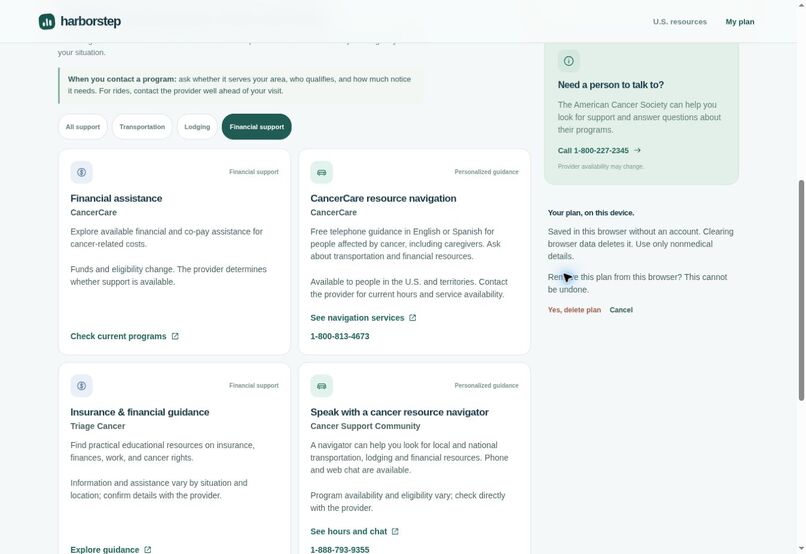
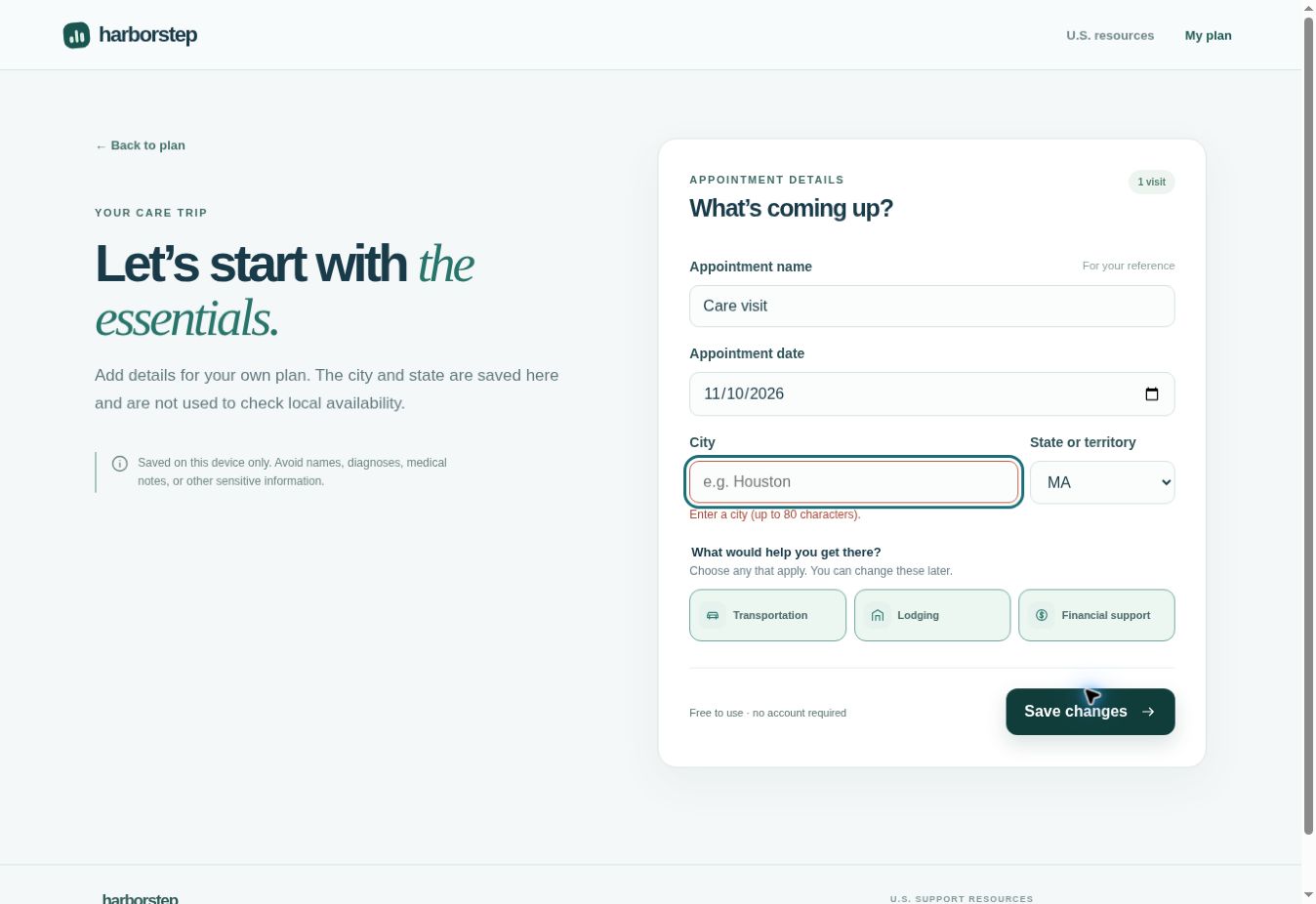
Clear validation messages help identify missing appointment details.
-
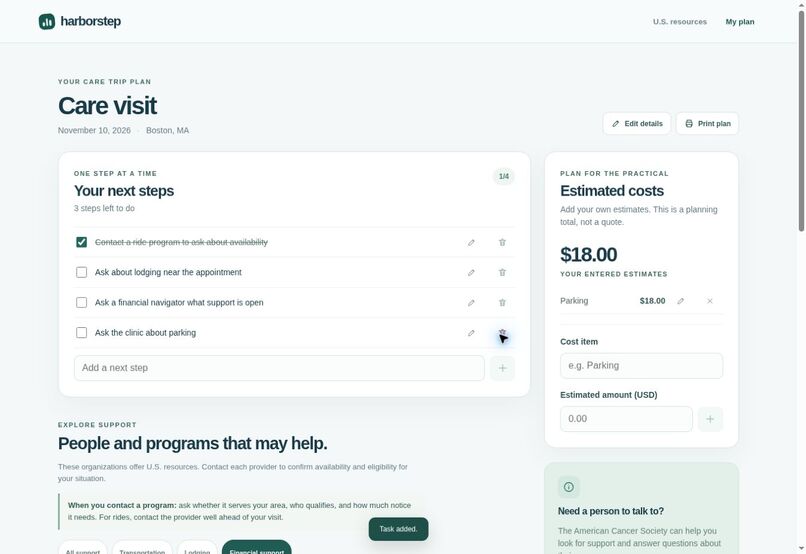
Review on-device storage and confirm before deleting your plan.
Inspiration
A cancer-care appointment requires more than a date on a calendar. Patients and caregivers also need to arrange transportation, find lodging, and plan for costs. Information exists across different organizations, but finding a contact is only the beginning. People still need to turn that information into practical next steps.
What Harborstep does
Harborstep helps people organize the practical side of a U.S. cancer-care visit.
Users can explore support contacts immediately, without creating an account or entering appointment details. They can also create a visit plan, select transportation, lodging, or financial-support needs, and track their next steps.
Cost estimates are editable and totaled automatically. Adding a new support need adds a suggested task while preserving existing work. Users can print their plan and choose whether to share it.
How we built it
Harborstep uses React and Vite, deployed on Vercel. Its curated resources link directly to organizations including the American Cancer Society, CancerCare, Cancer Support Community, Triage Cancer, and United Way 211.
Plans stay in browser storage. Because that storage is unencrypted, users are asked not to enter medical or identifying information.
Challenges and lessons
We focused on making the next action clear without promising services we cannot provide. Harborstep does not book transportation, assess eligibility, or guarantee funding. Providers remain authoritative.
Testing also shaped the product: we added validation, unreadable-data handling, deletion confirmations, keyboard focus management, and warnings when another tab changes a saved plan.
What’s next
Test with patients, caregivers, and navigators, measure task completion and usability, and investigate secure optional syncing. Patient outcomes have not yet been measured.
Built With
- react
- vite

Log in or sign up for Devpost to join the conversation.