-
-
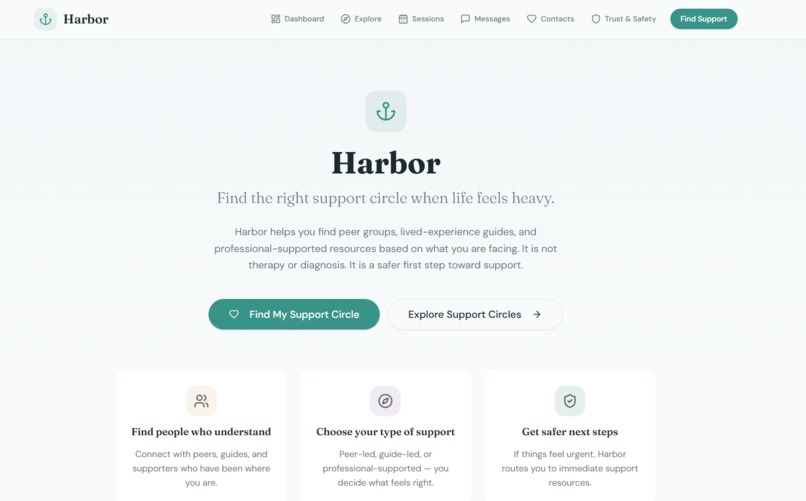
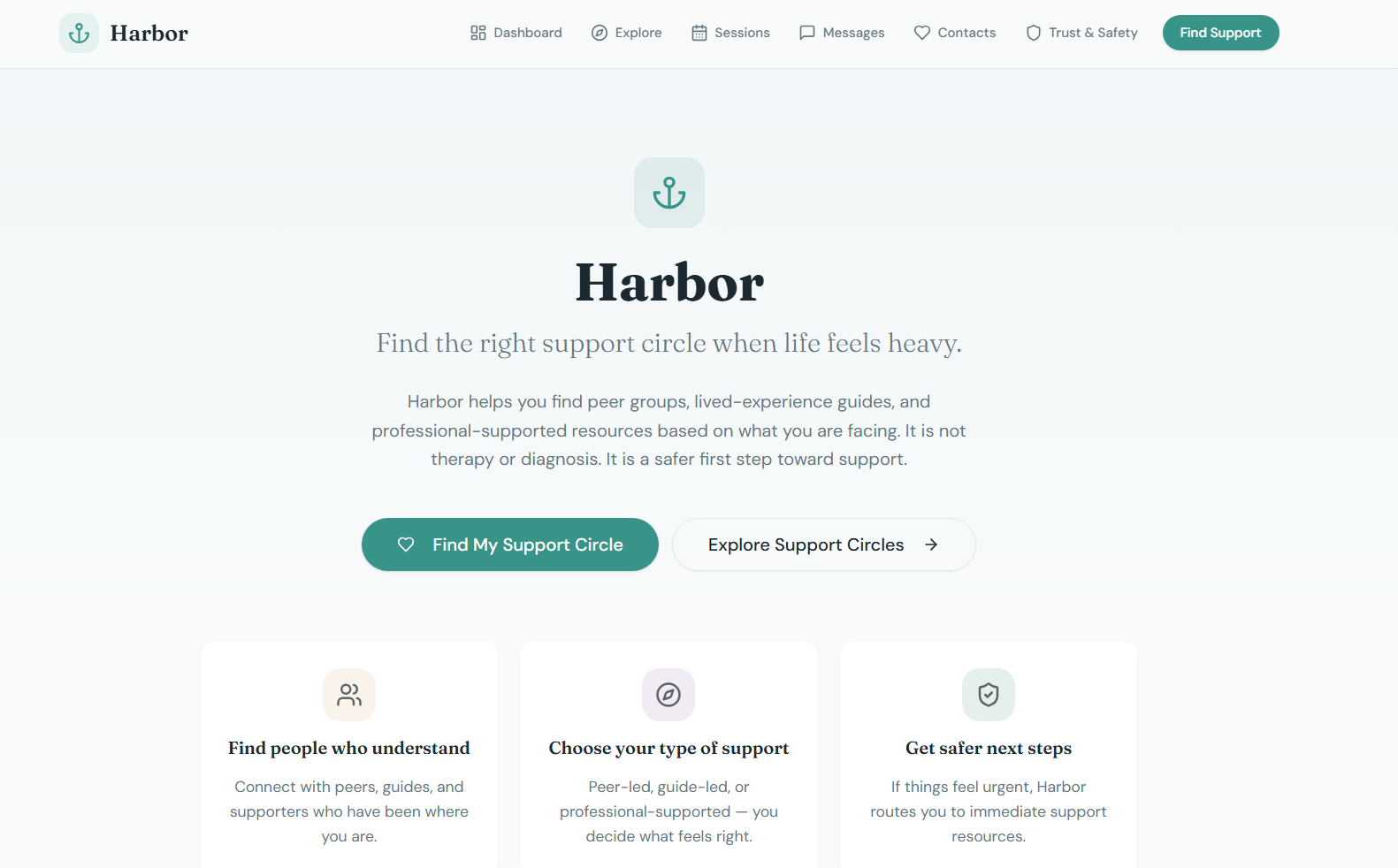
Home page
-
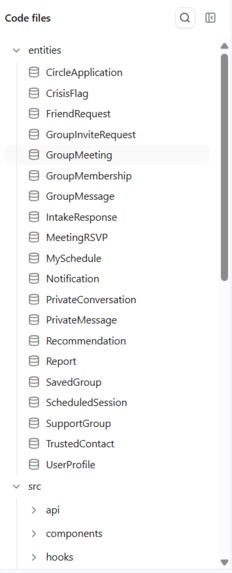
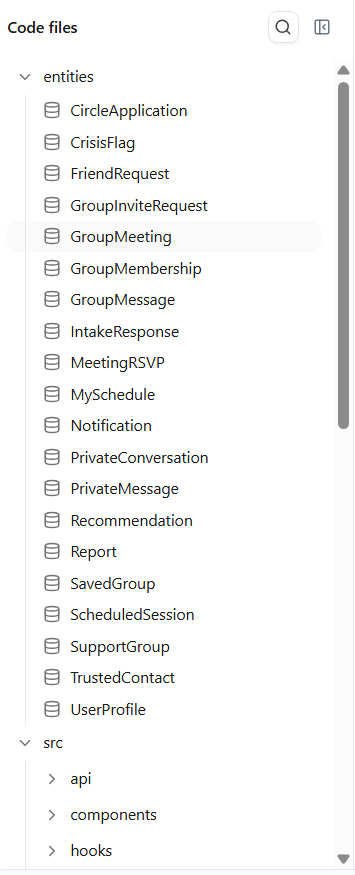
Entities in code
-
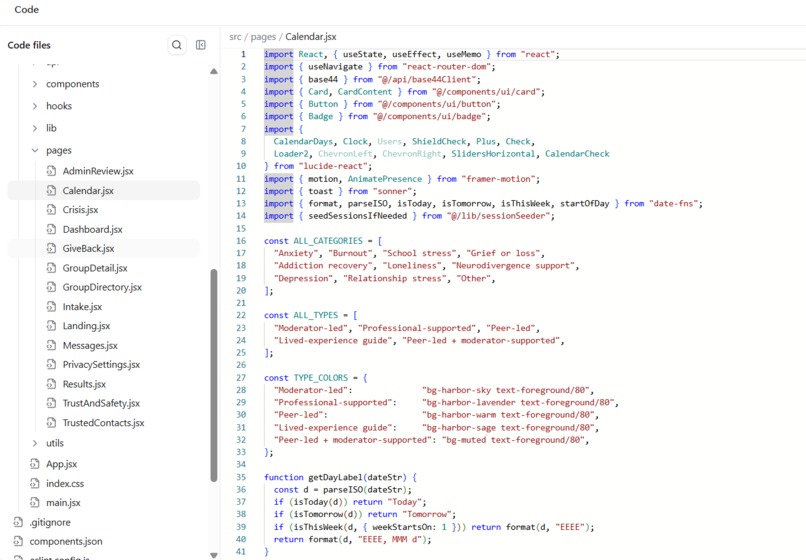
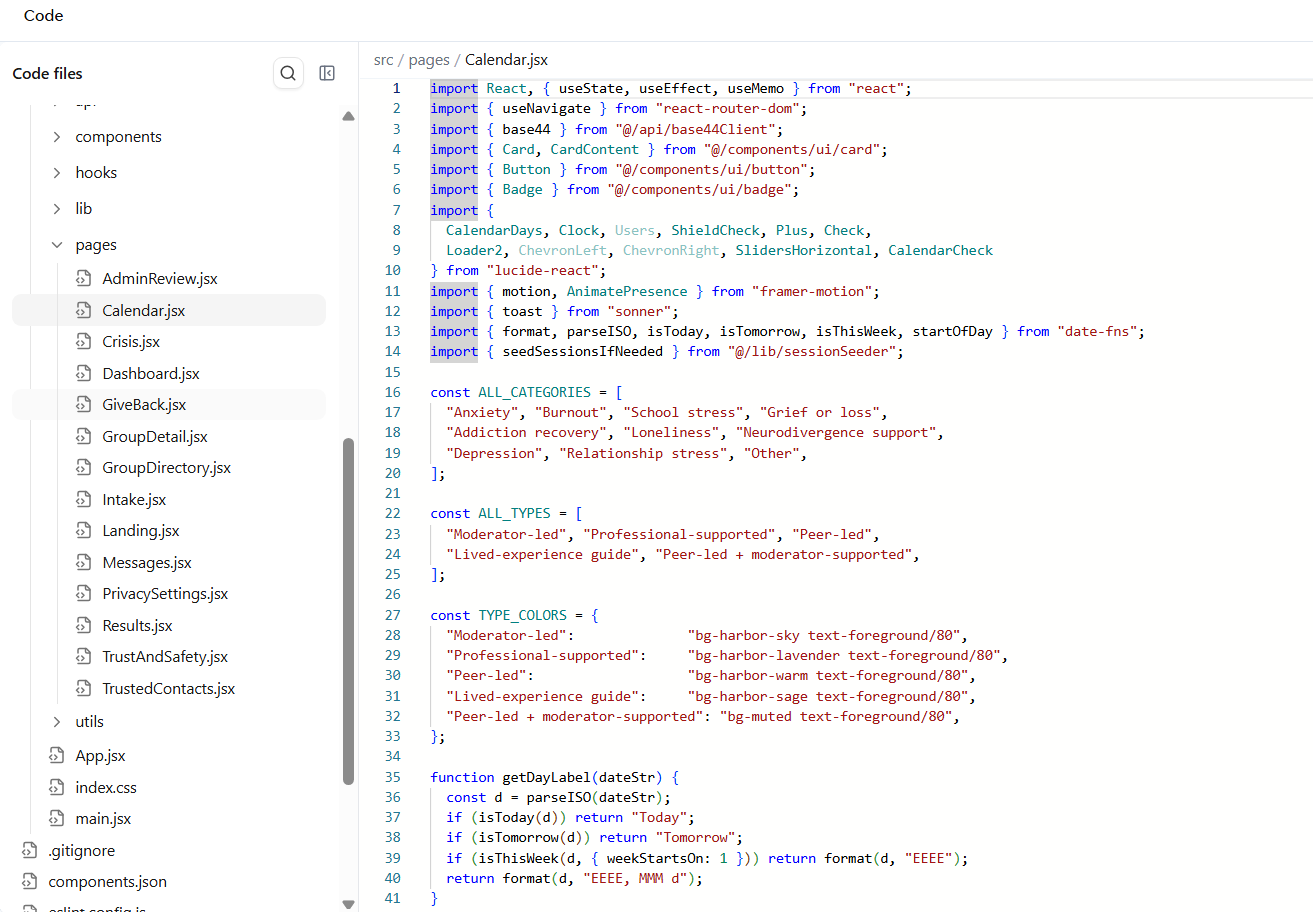
Code for Calander page
Inspiration
Mental health support is often expensive, confusing, and intimidating. Many people know they need help, but they do not know where to start. Therapy can be hard to access, support groups can be difficult to find, and people often end up navigating difficult moments alone.
We built Harbor because we believe the first step toward support should feel less scary. Nothing replaces human connection, and Harbor is designed to help people find the right kind of human support faster.
What It Does
Harbor is a mental health and wellbeing support-navigation app. Users complete a short intake about what they are going through, what kind of support they want, how urgent the situation feels, and any privacy or community preferences they have.
Based on those answers, Harbor recommends support circles such as peer-led groups, lived-experience guides, moderated spaces, or professional-supported resources.
Harbor does not diagnose users, provide therapy, or replace professional care. Instead, it helps users take a safer first step by showing them support options, clear next steps, and crisis resources when urgent help may be needed.
Our goal is simple: make the first step toward mental health support less confusing, less isolating, and more human.
How We Built It
We built Harbor as a full-stack MVP using Base44. The app includes a calm landing page, a support intake form, rule-based matching logic, support circle recommendation cards, group detail pages, saved groups, invite requests, a circle creation application flow, privacy settings, and crisis-aware routing.
The matching system uses the user’s selected issue, support type, urgency level, and preferences to recommend relevant support circles. For example, a student dealing with burnout may be matched with a student burnout circle, while someone seeking anonymous anxiety support may be guided toward a private or professional-supported option.
We also added safety logic so that if a user indicates immediate danger, self-harm, or urgent crisis, Harbor does not show normal group recommendations. Instead, it routes the user to immediate support resources such as emergency services, 988 in the U.S., and trusted people nearby.
Challenges We Faced
The biggest challenge was balancing usefulness with safety. Mental health is sensitive, so we had to make sure Harbor did not sound like a diagnosis tool or therapy replacement. We focused on careful language, clear disclaimers, crisis routing, and trust-first design.
Another challenge was keeping the MVP realistic for a short hackathon. A full version of Harbor could include live groups, verified moderators, professional partnerships, and deeper privacy controls. For this prototype, we focused on the most important flow: helping someone go from feeling lost to finding a safer starting point for support.
What We Learned
We learned that building for mental health requires more than just features. It requires trust, privacy, and emotional safety. Small wording choices matter. The app should not pressure users, rank people, or turn support into a popularity contest.
We also learned that a strong MVP does not need to solve the entire healthcare system. It just needs to solve one meaningful first step. For Harbor, that first step is helping people find the right support circle when life feels heavy.
What’s Next
In the future, Harbor could add verified support group leaders, partnerships with licensed professionals, stronger moderation tools, anonymous group chat, campus-specific support circles, and culturally sensitive matching.
The long-term vision is to make support easier to find before someone reaches a breaking point. Harbor is not meant to replace professional care. It is meant to help people feel less alone and find the right path toward help.
Built With
- app
- base44
- css
- database
- development
- full-stack
- html
- javascript
- no-code/ai
- react
- responsive
- web

Log in or sign up for Devpost to join the conversation.