Inspiration
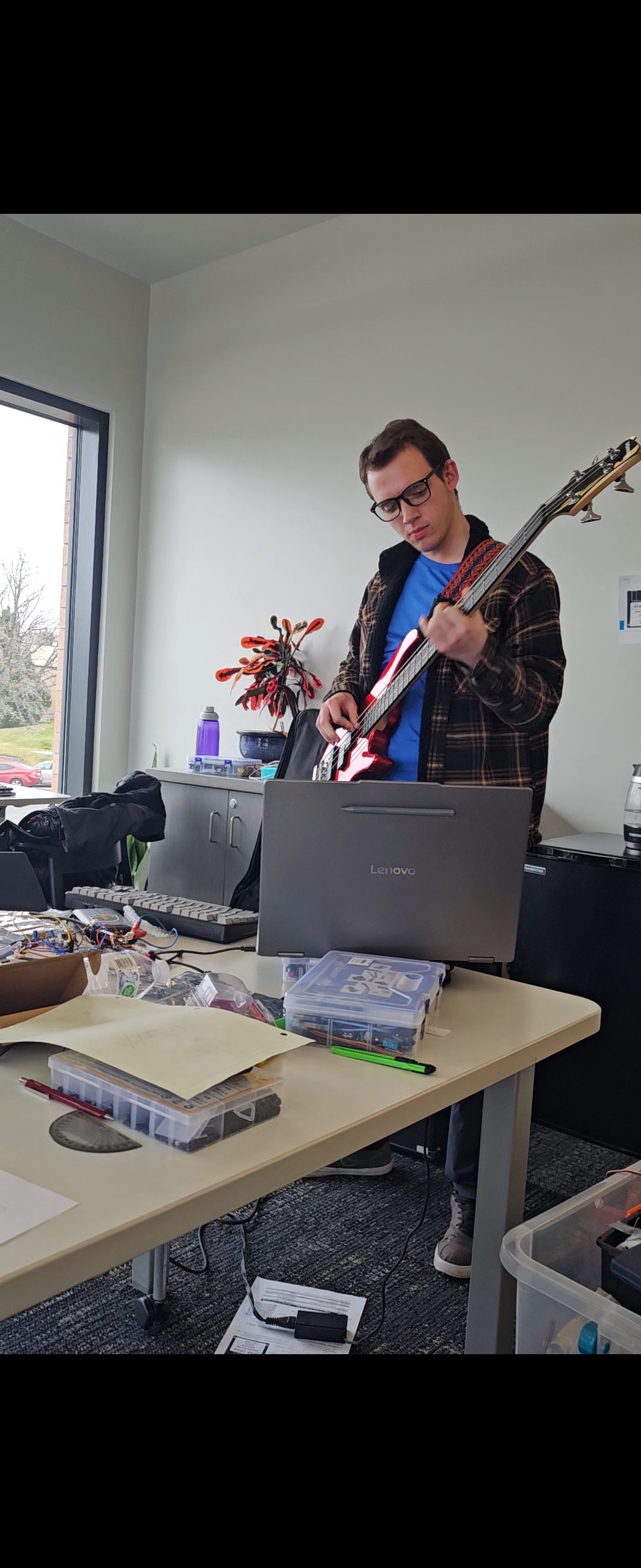
A few members in the group play electric guitar so we did something related.
What it does
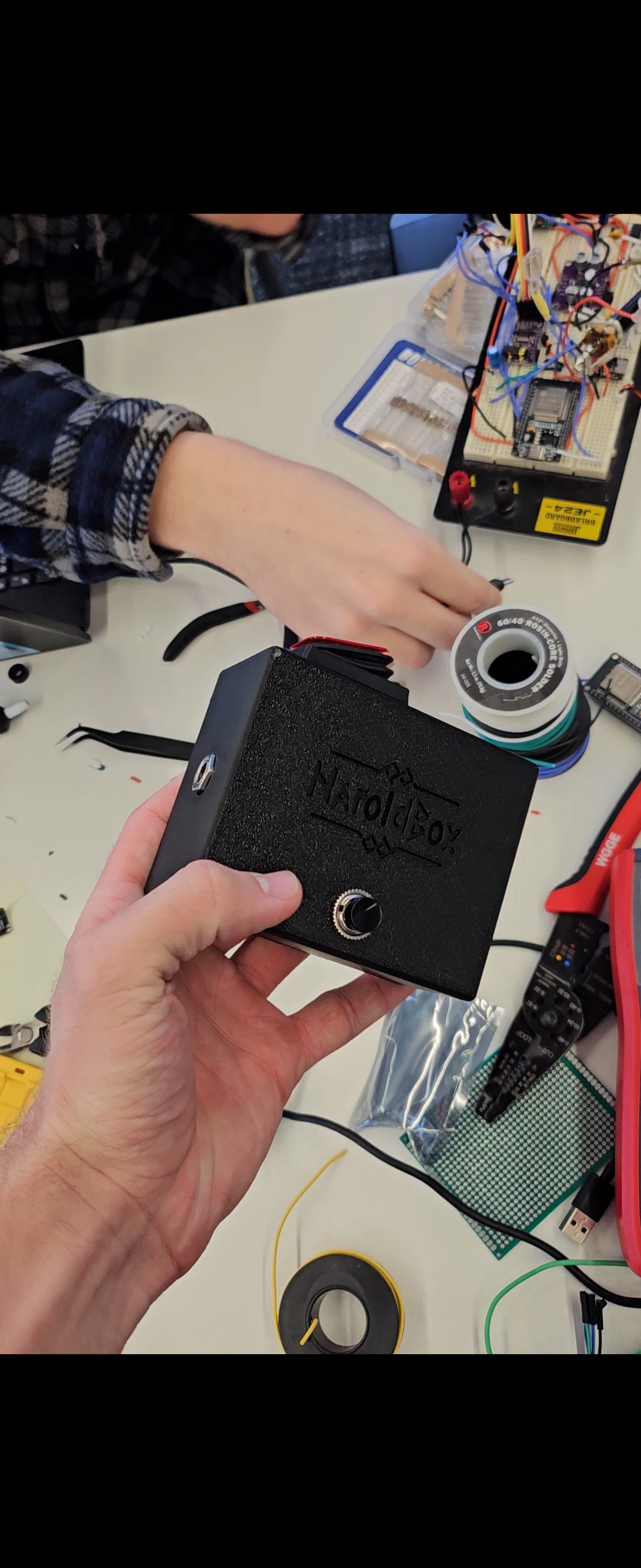
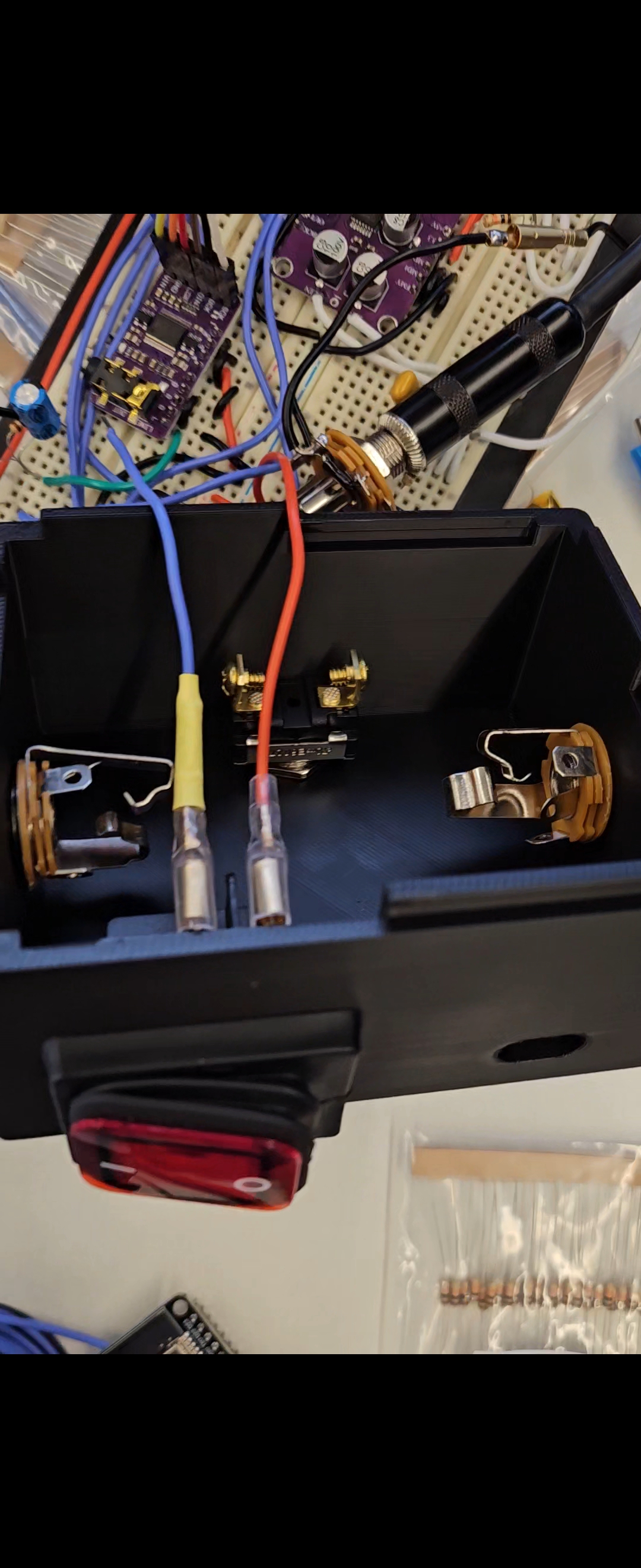
The pedal takes in an AC signal and converts it into a signal to apply desired effects. The drive raises the gain of the signal and caps out at a certain point, the tone rounds out the wave signal with a tangential function and the wah acts like a moving band pass filter creating a funky sound. The signal came in and went through a buffer, an ADC to convert the signal to digital, esp32 applies effects and connects to Bluetooth UI, a DAC converts the signal back to an analog signal which then goes through a buffer again to bring it to the right voltage. A button turns the signal on or off according to user desire.
How we built it
We took an esp32 and programmed it using a language called FAUST. FAUST is a domain specific, functional programing language meant for real-time audio. A lot of the code was written by AI as none of us had ever heard of FAUST or used Bluetooth in a device. However, even though a lot of the code was written by AI, there were several design components which we created to instruct the AI.
Challenges we ran into
There was a single wire which we forgot to connect to ground along with a lot of external noise that we could not get rid of. This was resolved by adding capacitors and a single wire to ground that specific node.
Accomplishments that we're proud of
We are proud that we managed to get the pedal to work after many hours of troubleshooting to find the problems. It was also satisfying to see our code working as intended for the digital filters.
What we learned
We learned how to program using FAUST and convert it to C++ code that could be exported to the esp32. We also learned a lot about efficiency in wiring by connecting each of the pin outs correctly
What's next for HaroldBox
Have a bigger microprocessor that can mange both a left and right channel and more effects to use at the same time (pedals can be expensive and this would be significantly cheaper for a very similar output).
