-
-
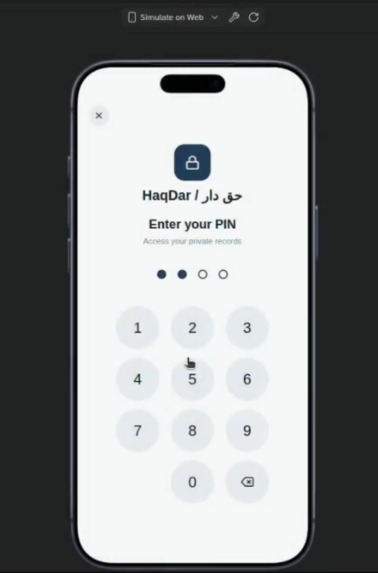
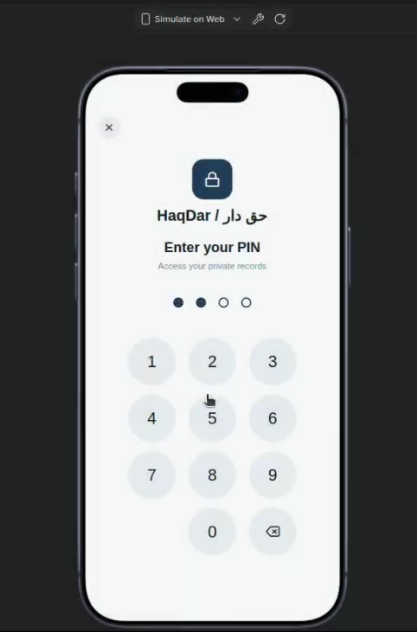
Entry point
-
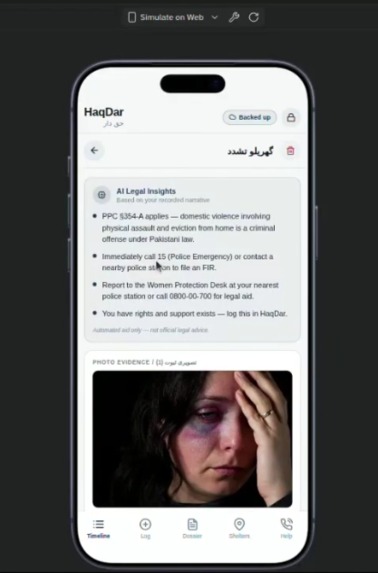
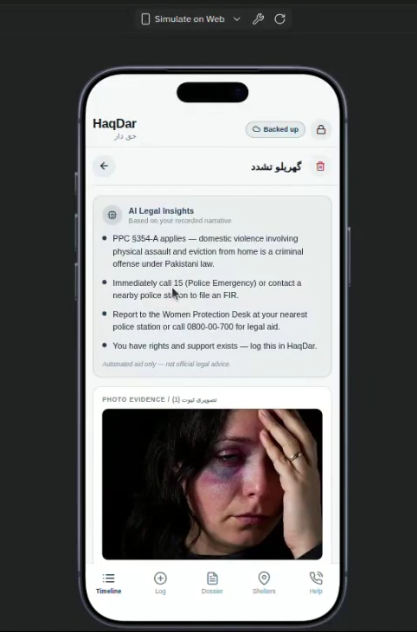
Evidence
-
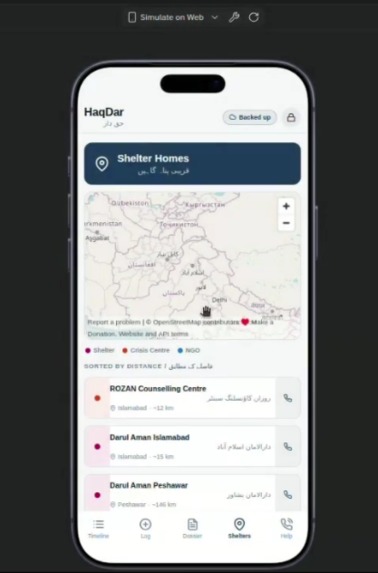
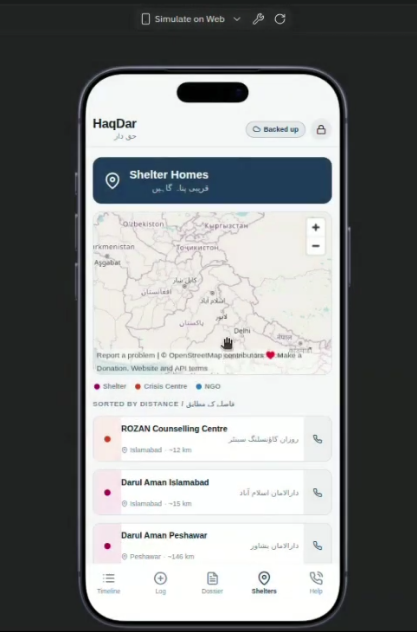
Help centers
-
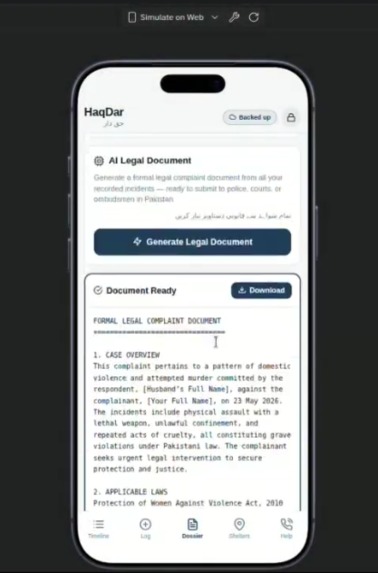
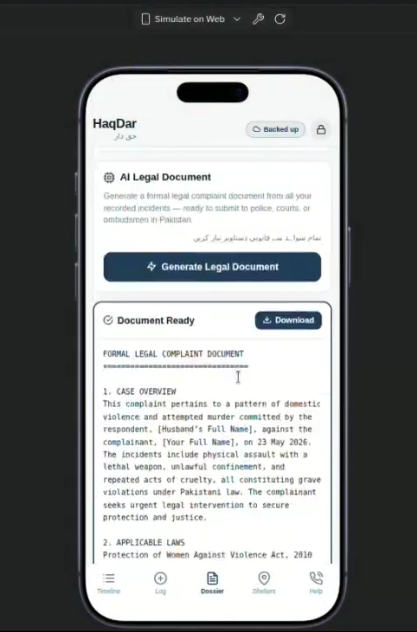
Legal Dosier
Inspiration
The motivation behind HaqDar was the realization that Pakistan’s legal system is failing survivors of abuse due to a staggering "evidence gap." While robust laws like the Prevention of Electronic Crimes Act exist, the reality is that perpetrators systematically police survivors' devices, deleting screenshots and messages to erase proof before cases can even be filed. We were driven by the need to dismantle this cycle of impunity, aiming to build a tool that prevents abusers from destroying the evidence of their own crimes.
What it does
HaqDar is a stealth, privacy-first mobile safety platform disguised as a functional, everyday calculator to protect users from device surveillance. By entering a secret code, survivors unlock a hidden, encrypted vault where they can securely log incidents of harassment or domestic abuse using text, photos, or natural Urdu voice dictation. The app automatically secures every piece of data with unique cryptographic fingerprints to ensure its validity in court and provides users with an instant, one-tap "panic wipe" feature that destroys all evidence to ensure their physical safety if they are ever discovered. Similarly, it also allows you to call helplines right through your calculator.
How we built it
We developed the application using Expo and React Native to ensure robust cross-platform accessibility The core functionality relies on cryptographic hashing (SHA-256) to ensure data integrity, making evidence tamper-evident for legal proceedings. For accessibility, we integrated the Deepgram Nova-3 API to convert conversational Urdu into precise text, while a localized AI engine maps these logs against specific statutes like the Pakistan Penal Code. The entire architecture is wrapped in a layer that mimics a standard arithmetic calculator to maintain absolute stealth. ReplitAI was used for building the project quickly.
Challenges we ran into
The biggest issue which got us thinking was what if a victim was being harassed and they were calling the police. The perpetrator would obviously see that, so after a lot of thinking and discussion we thought to hide it, so we build almost everything within a calculator.
Accomplishments that we're proud of
Integrating GoogleMaps for the closest help center and the hiding the entire app within a calculator (we thought of it as impossible). Similarly, developing a functional, offline-capable legal dossier generator that empowers non-literate survivors to document their trauma in their own language was a major achievement.
What we learned
Most of the effective privacy tools must be invisible to be truly safe in high-risk environments. The process taught us that technical perfection is meaningless if it lacks cultural empathy, leading us to focus heavily on bilingual accessibility and offline functionality to serve users in areas with poor internet connectivity. Ultimately, we discovered that providing survivors with a secure way to hold onto their truth is the single most important catalyst for them to feel empowered enough to engage with the justice system.
What's next for HaqDar 2.0
In the next phase i.e the onsite hackathon, we want to expand the calculator feature, adding more hidden details, as well as a way to guide victims to previous victims of similar stories without exposing them.
Built With
- deepgram
- expo.io
- mistral
- reactnative
- replitai
- supabase


Log in or sign up for Devpost to join the conversation.