-
-
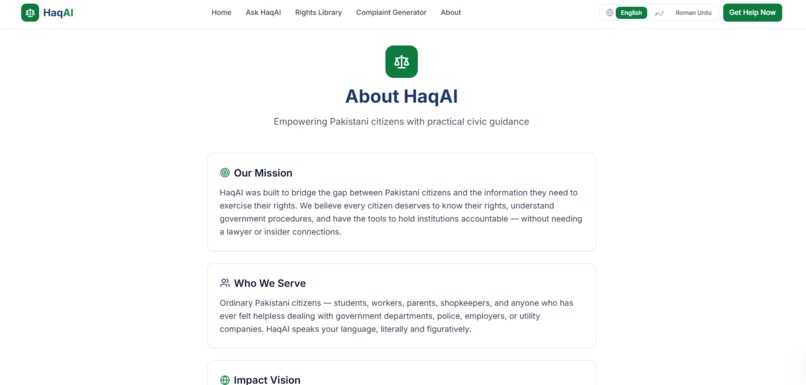
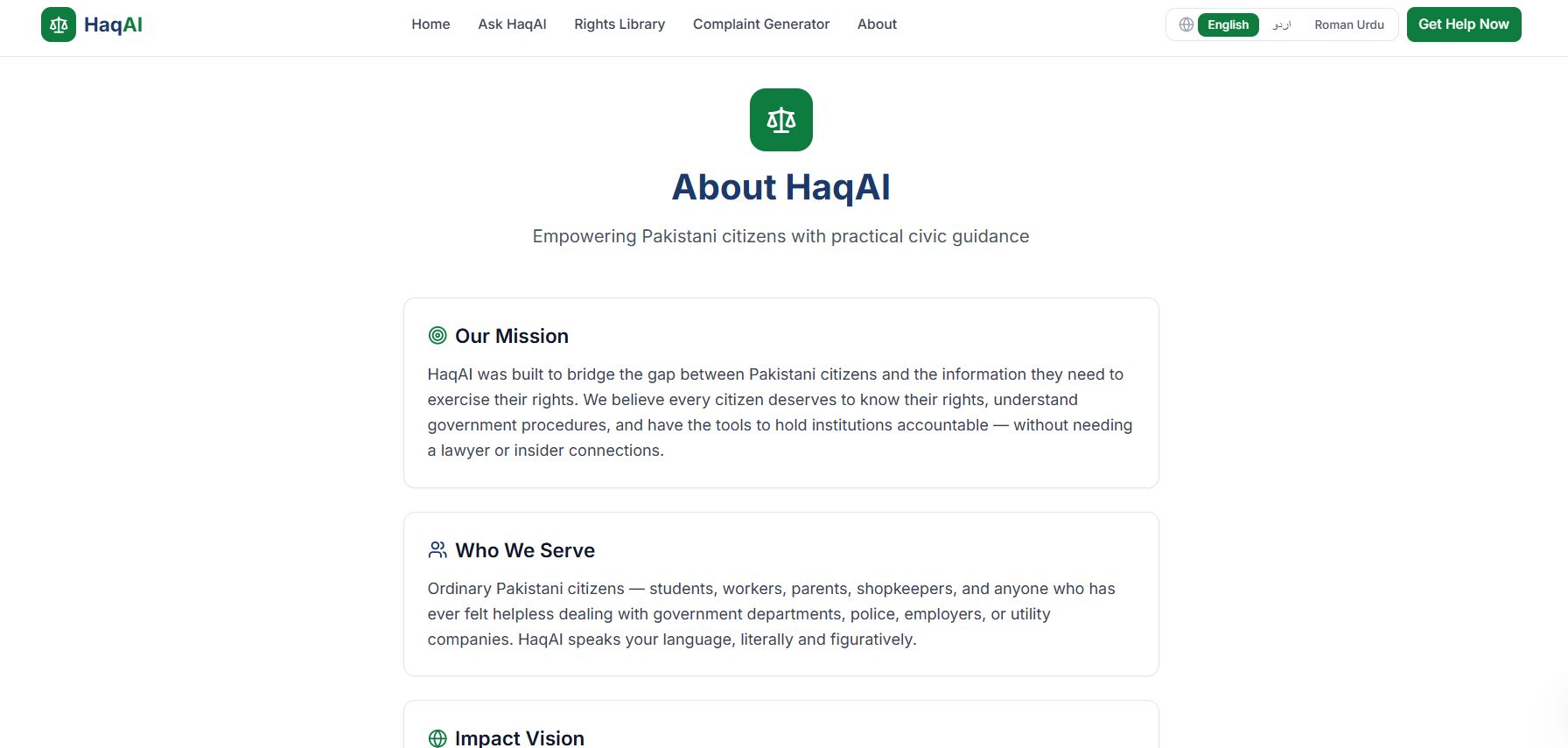
About Page
-
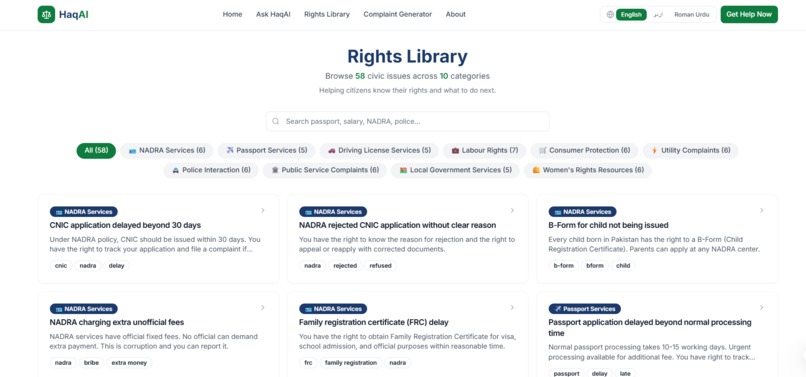
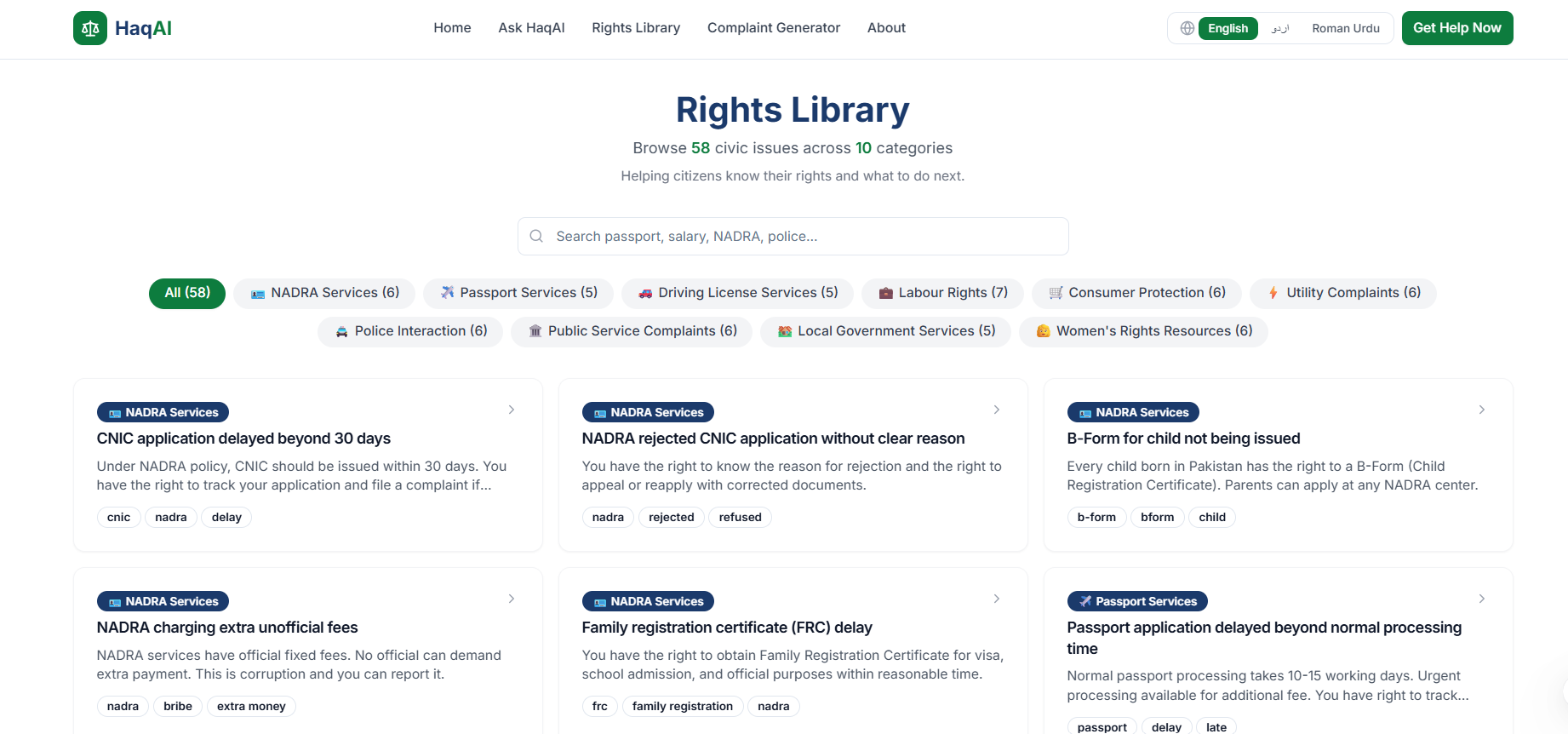
Knowledge Base
-
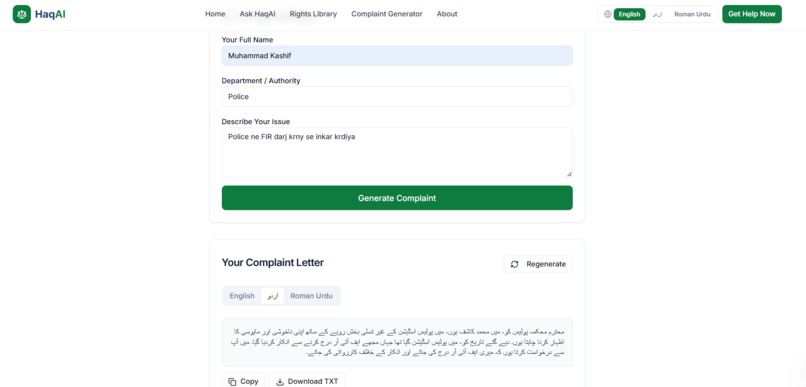
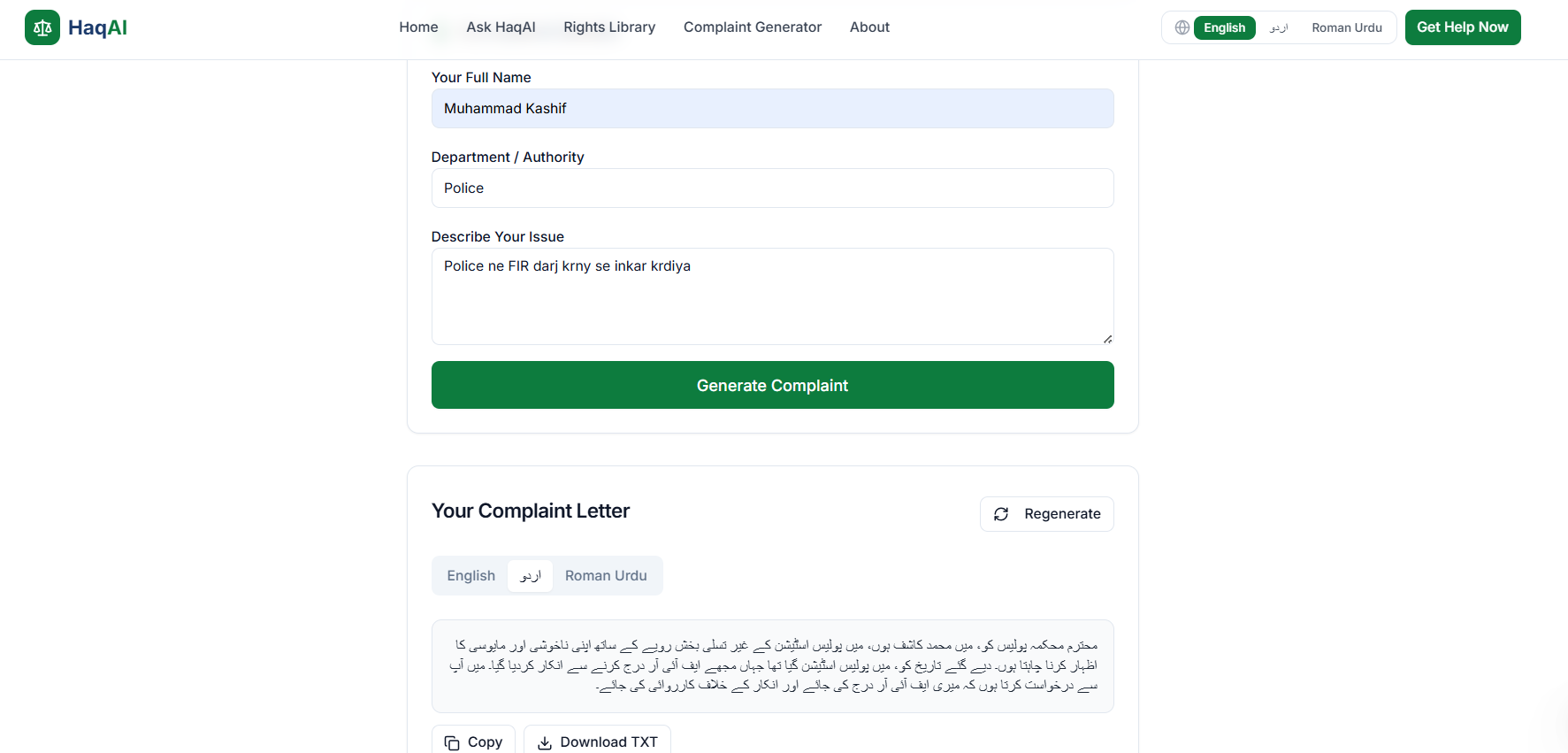
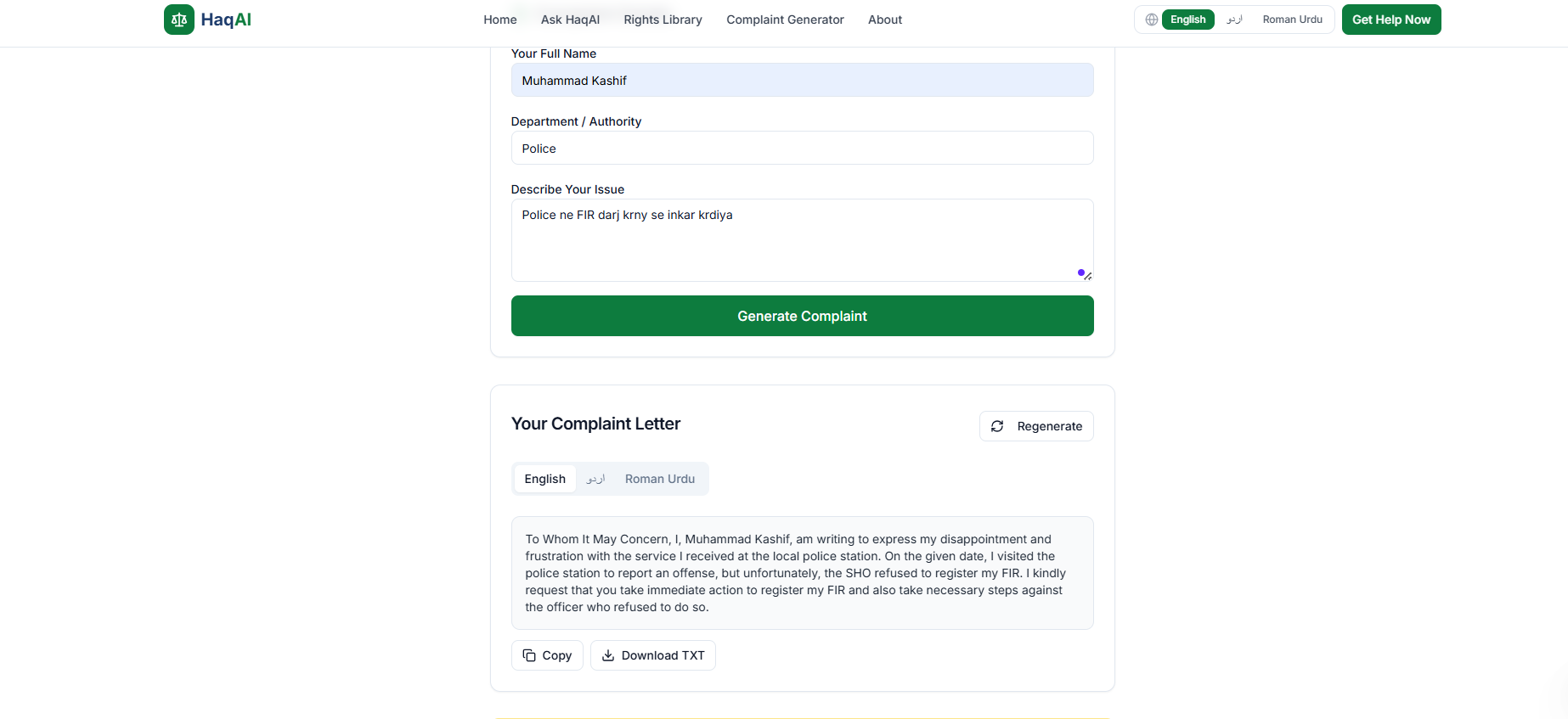
Complaint Generated
-
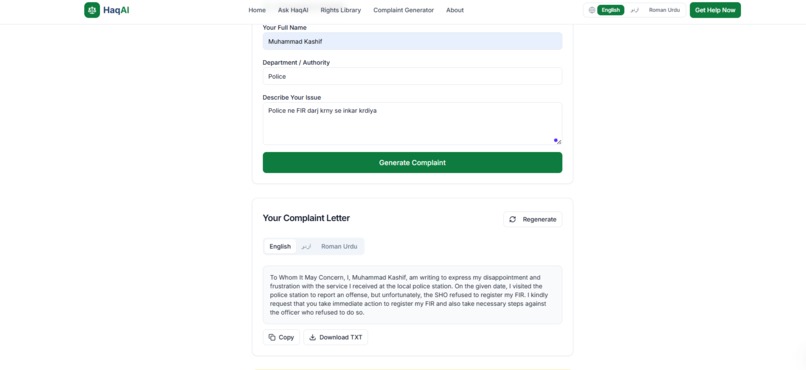
Complaint Generator
-
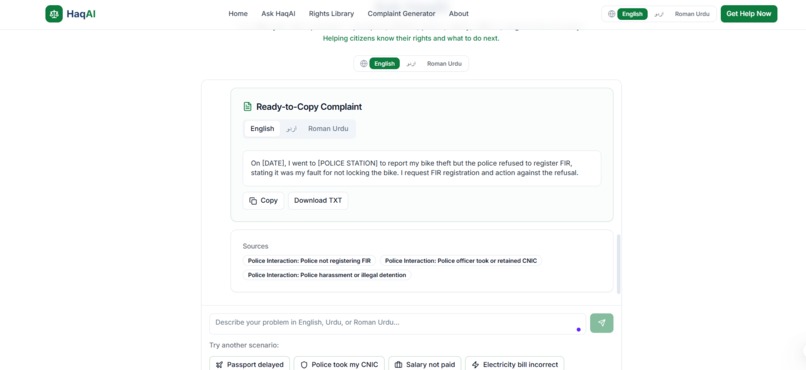
AI suggestion
-
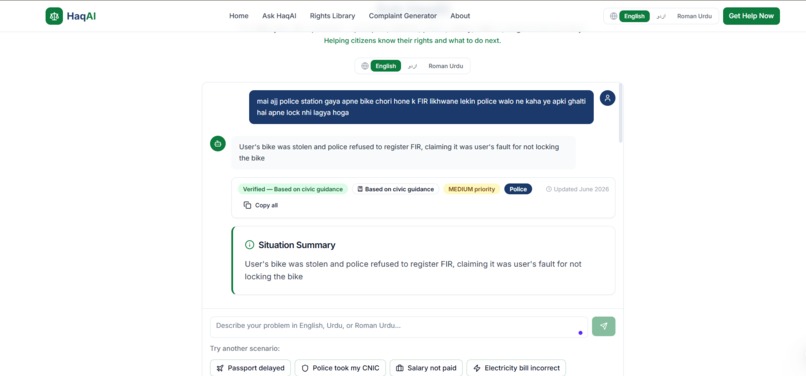
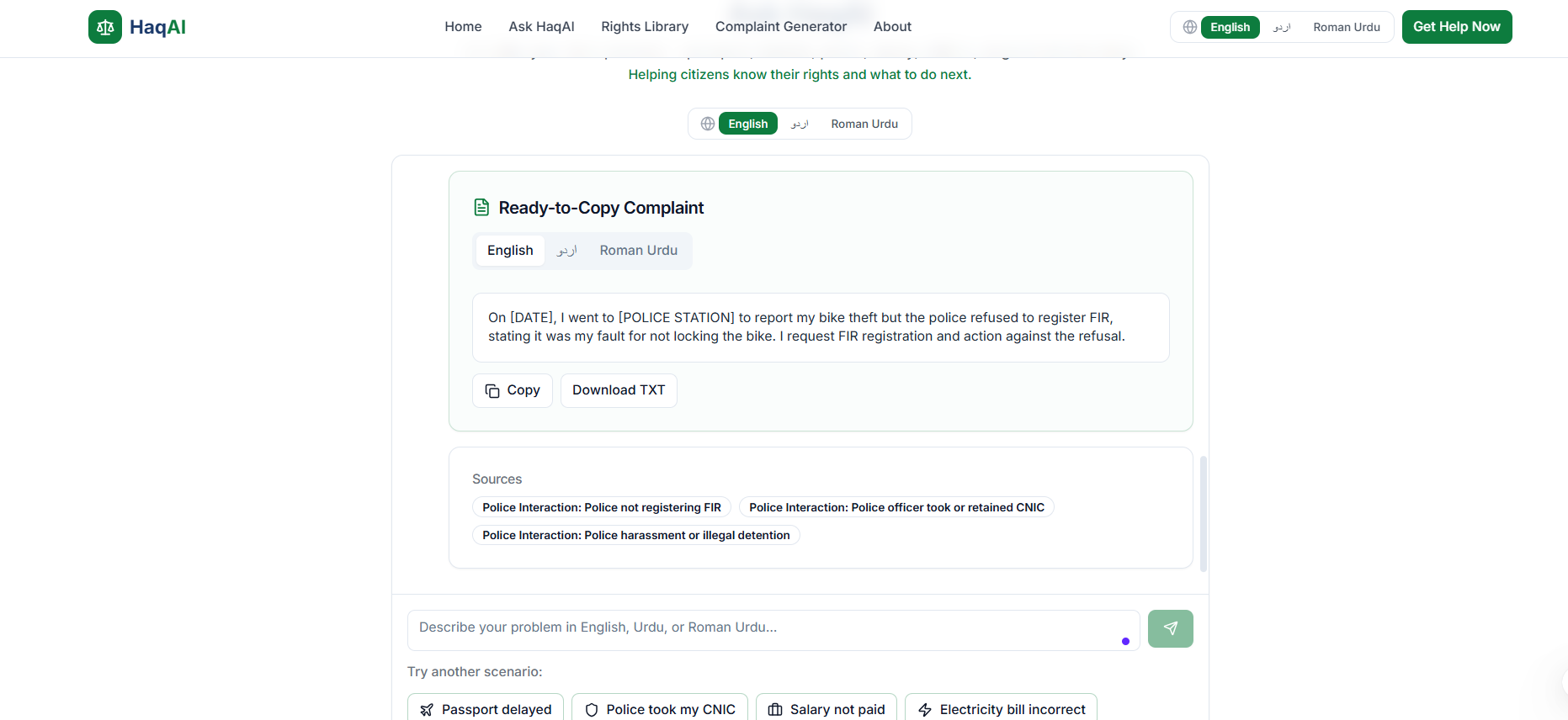
AI Chat
-
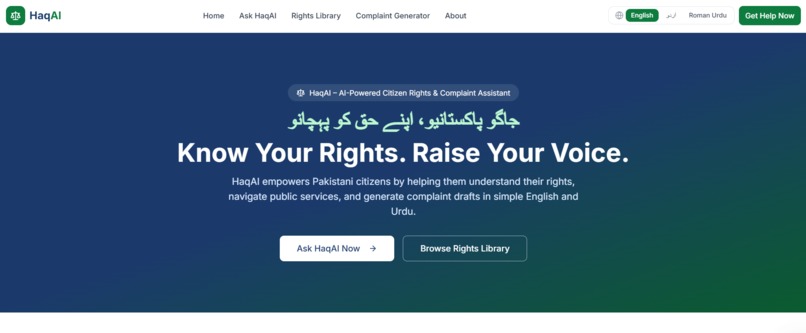
Homepage
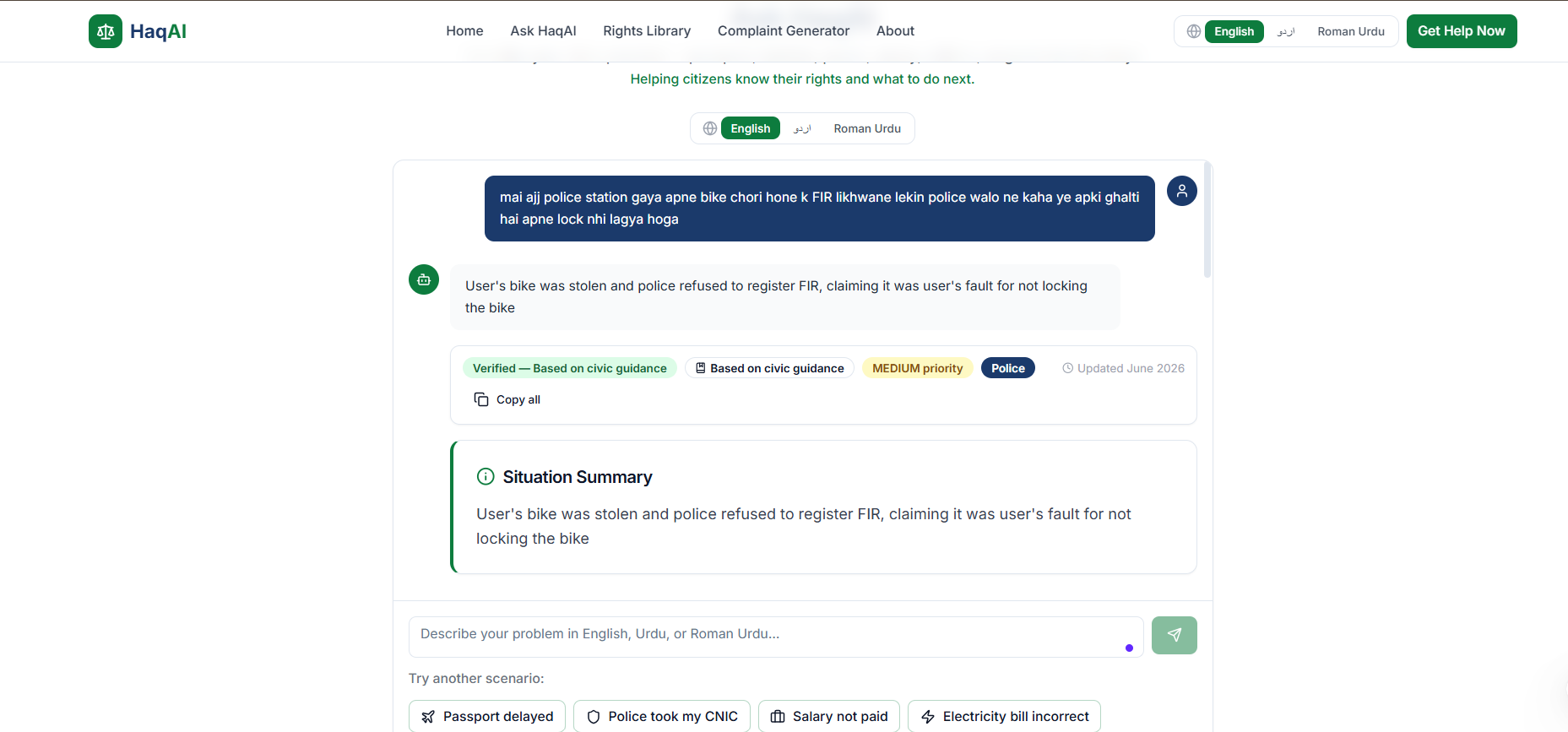
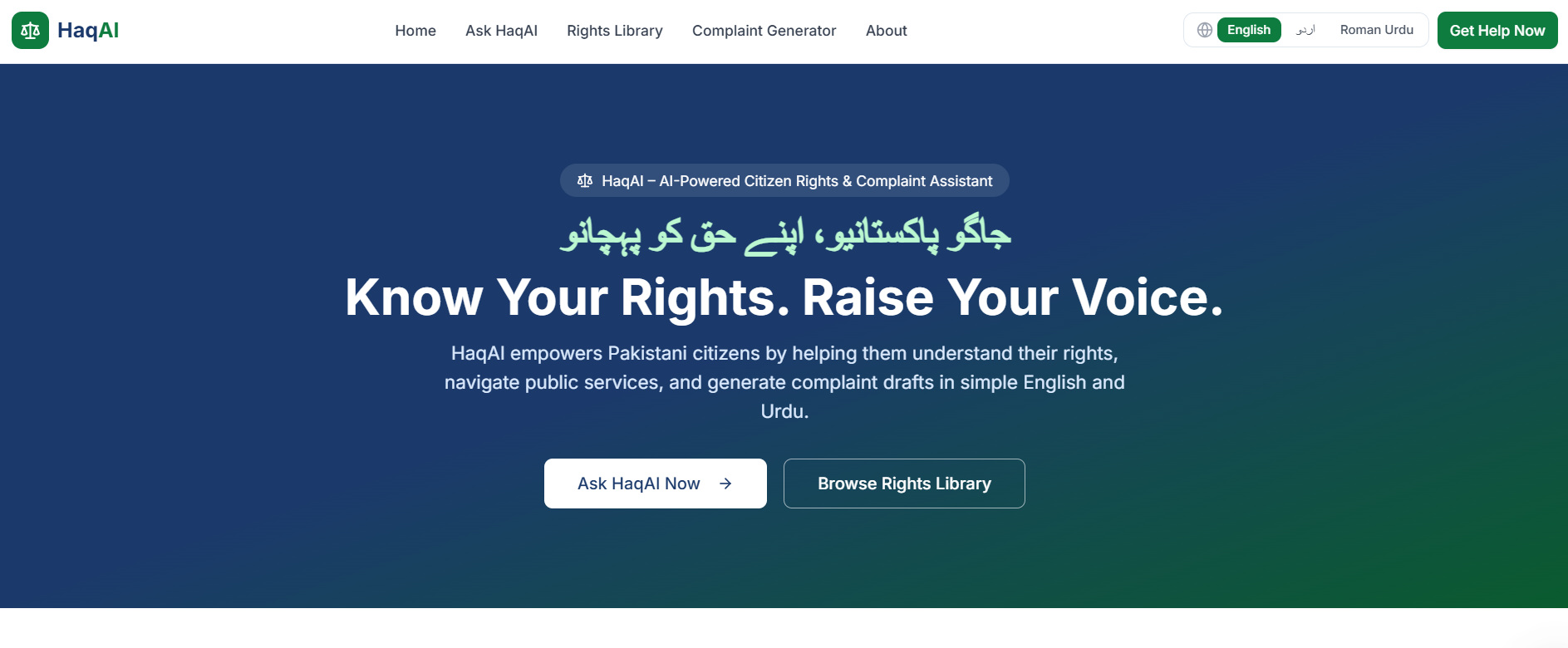
HaqAI - AI-Powered Citizen Rights & Complaint Assistant
Inspiration
The idea for HaqAI came from a simple but common problem in Pakistan: many people don't know their rights or the correct way to deal with government offices and public services. Whether it's a delayed passport, an issue with NADRA, unpaid salaries, or an unfair experience at a public office, citizens often struggle because they lack clear and trustworthy information.
We wanted to build something that empowers ordinary people. Instead of searching through complicated documents or relying on word of mouth, citizens can ask HaqAI in plain English or Urdu and receive practical guidance on what to do next.
Our goal is not to replace lawyers or government departments, but to make civic information easier to understand and more accessible for everyone.
What it does
HaqAI is an AI-powered assistant that helps Pakistani citizens:
- Understand their rights in everyday situations.
- Get step-by-step guidance on common civic issues.
- Learn which department or authority is relevant to their problem.
- Generate complaint drafts that can be copied and used as a starting point.
- Access information in simple English and Urdu.
Example use cases include:
- Passport application delays
- Police interactions
- Labour and salary disputes
- Consumer complaints
- Government office delays
- Utility-related issues
How we built it
We built HaqAI as a modern web application using AI and retrieval based techniques.
The frontend provides an intuitive chat interface and rights library, while the backend processes user queries and retrieves relevant civic information before generating structured responses. The application is designed to be modular so that new knowledge sources and categories can be added over time.
Our focus during the hackathon was to build a practical prototype that demonstrates how AI can simplify access to civic information rather than trying to solve every legal problem.
Challenges we ran into
One of the biggest challenges was making sure responses remain helpful without encouraging users to treat AI as a substitute for professional legal advice.
Another challenge was narrowing the scope. Civic rights cover a huge range of topics, so we focused on common scenarios that ordinary Pakistanis face and designed the platform around practical guidance rather than exhaustive legal interpretation.
Balancing usability, trustworthiness, multilingual support, and limited hackathon time was also an important consideration.
What we learned
Throughout this project we learned that the biggest impact often comes from solving one problem well instead of trying to solve everything.
We also gained experience in designing AI systems that prioritize clarity, responsible guidance, and user trust. Building HaqAI reinforced the importance of combining modern language models with curated knowledge and thoughtful product design.
What's next for HaqAI
Future versions could include:
- A larger verified civic knowledge base.
- Voice interaction in Urdu and regional languages.
- Integration with official government resources.
- Personalized complaint workflows.
- Mobile applications.
- Accessibility improvements for underserved communities.
- Partnerships with NGOs and public service organizations.
Our long-term vision is to make HaqAI a trusted digital companion that helps every Pakistani better understand their rights and confidently navigate public services.


Log in or sign up for Devpost to join the conversation.