-
-
-
-
-
-
-
-
-
-
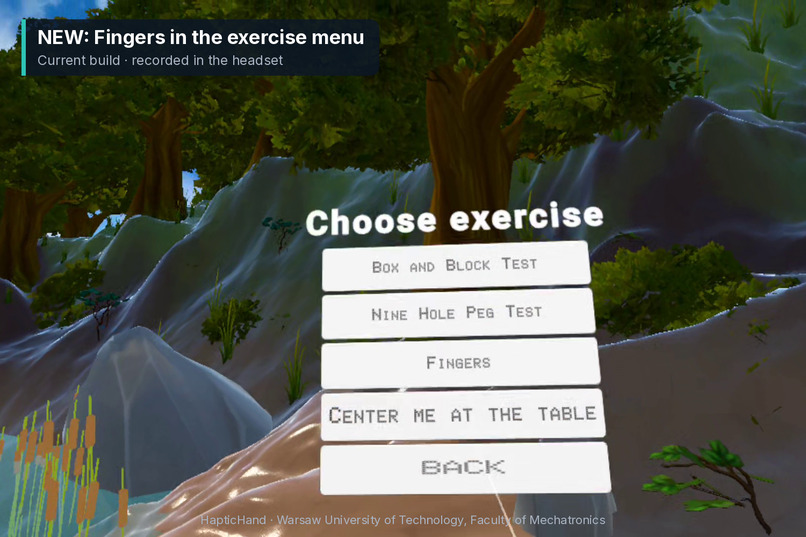
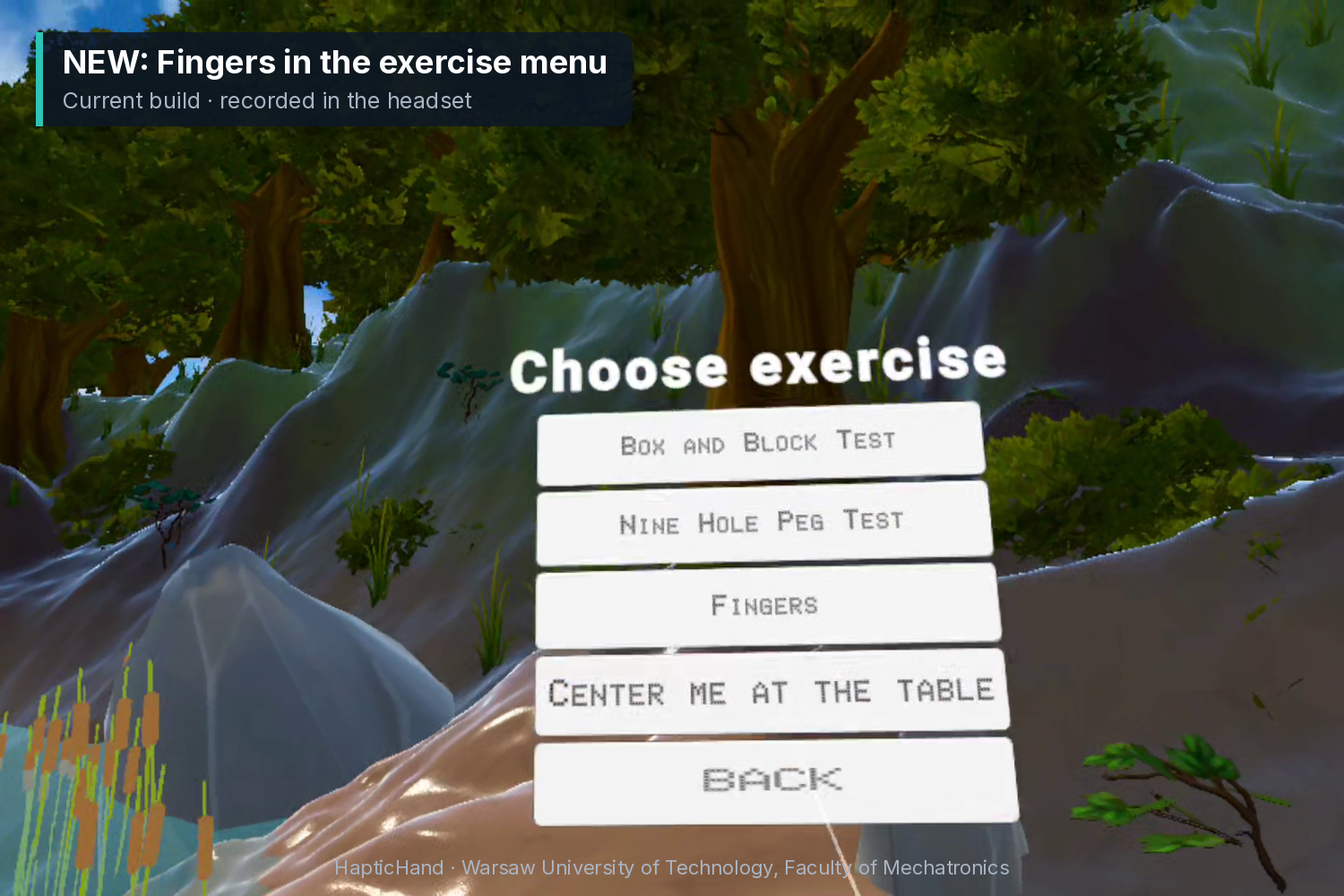
New exercise menu with the Fingers (thumb opposition) exercise, captured on Meta Quest 3S.
-
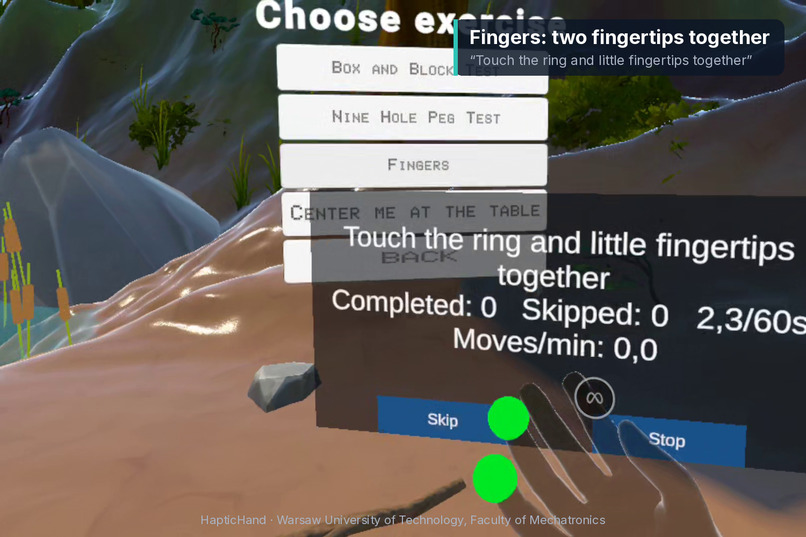
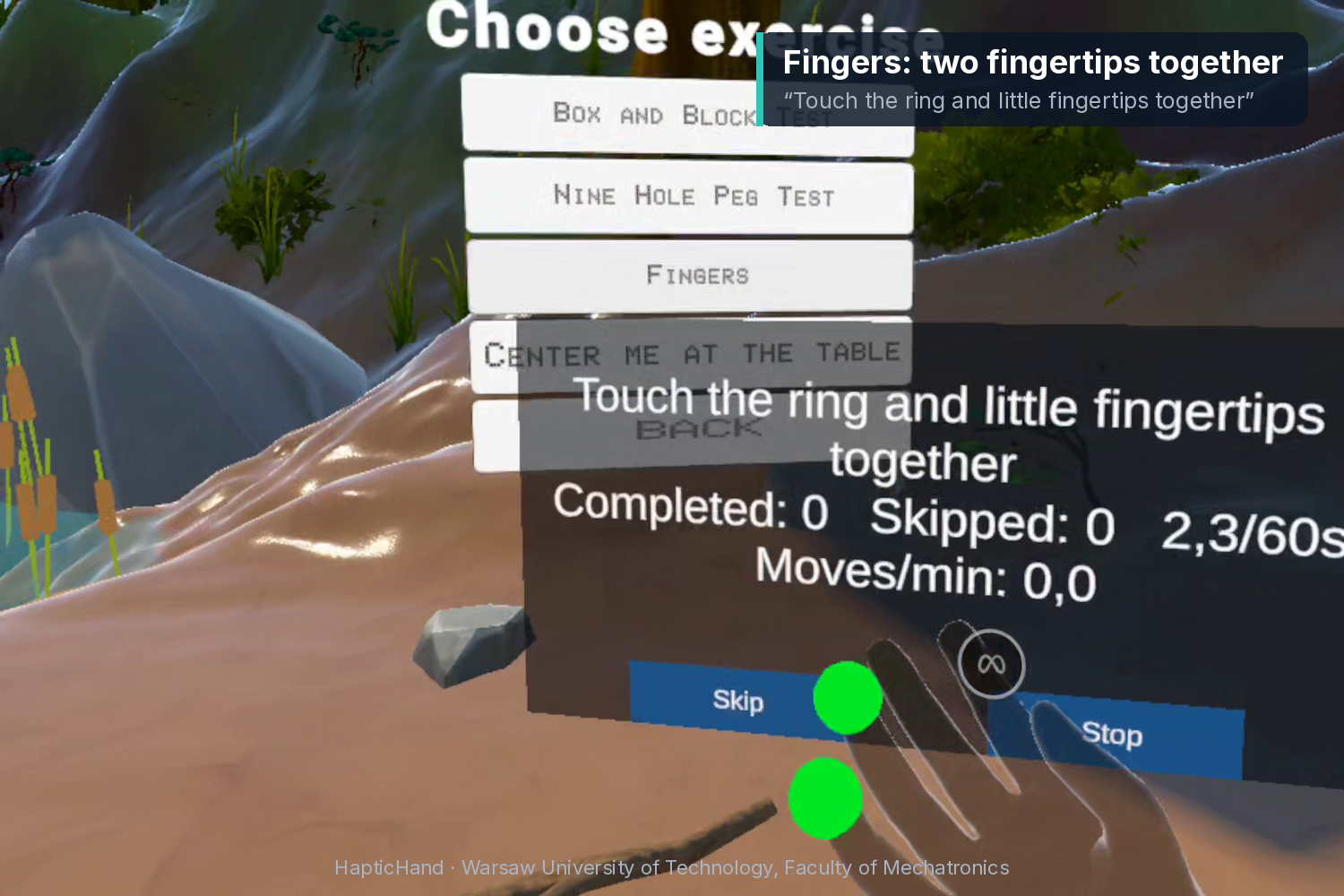
Fingers exercise: the prompt asks to touch two fingertips together, with green target markers.
-
-
-
-
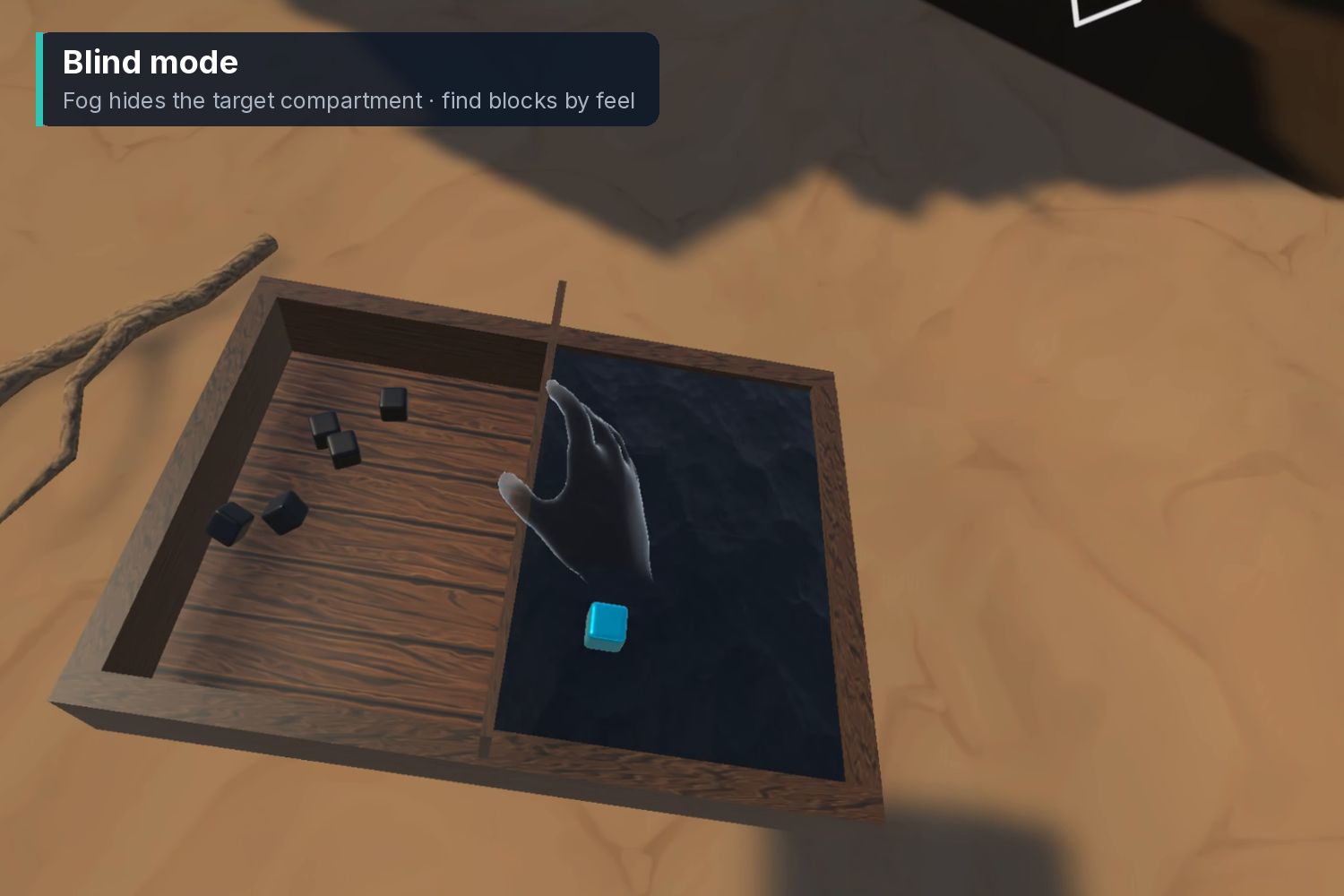
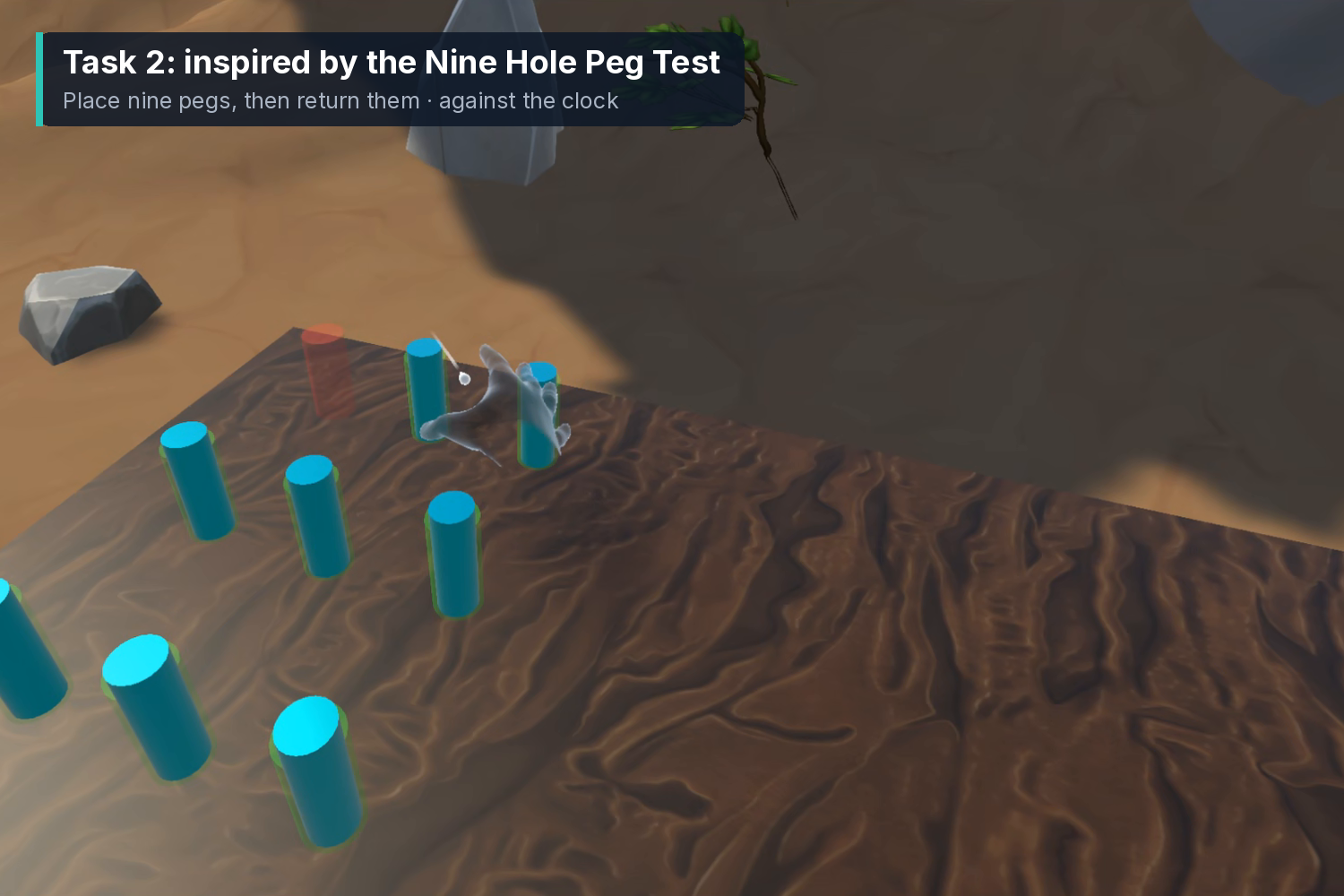
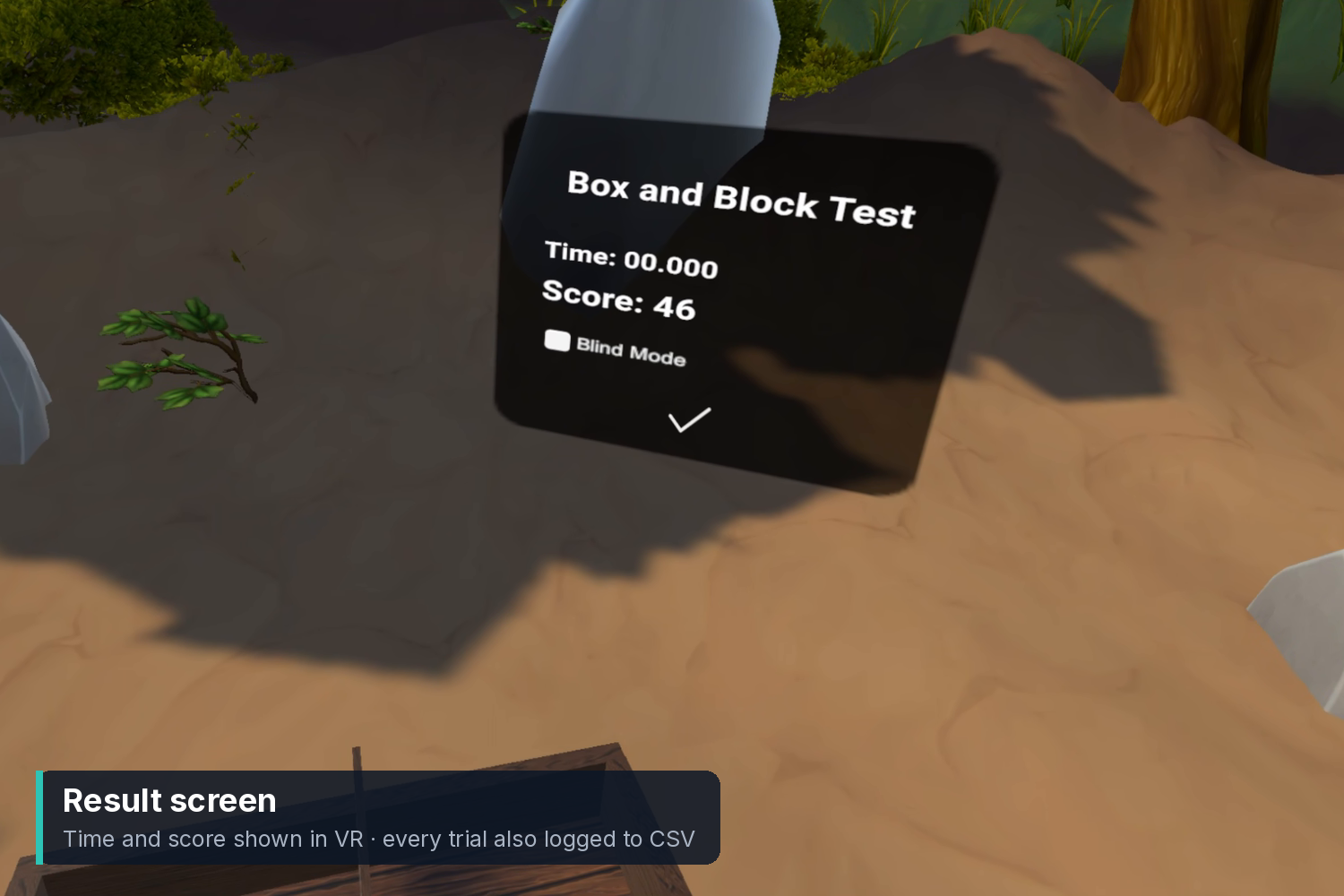
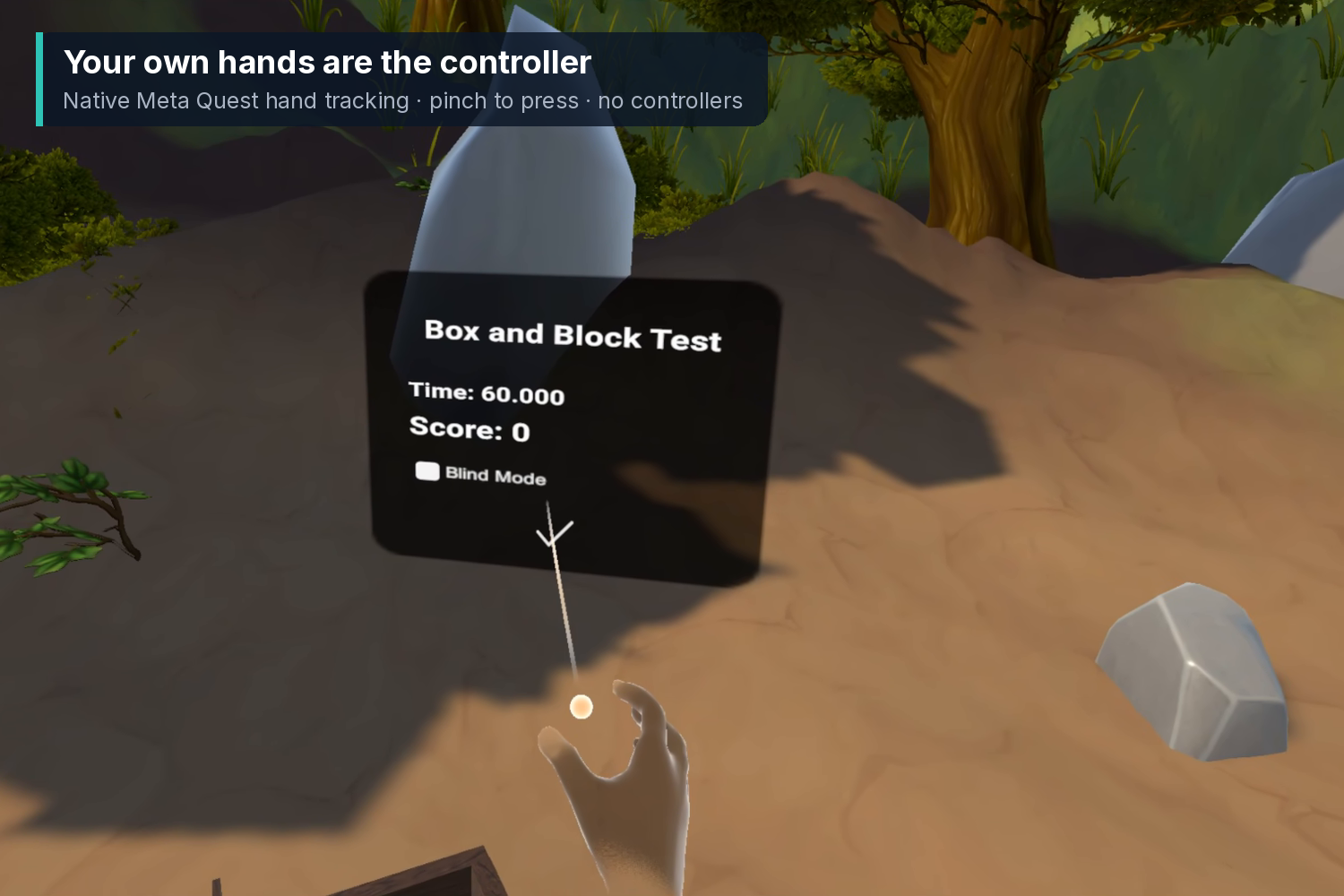
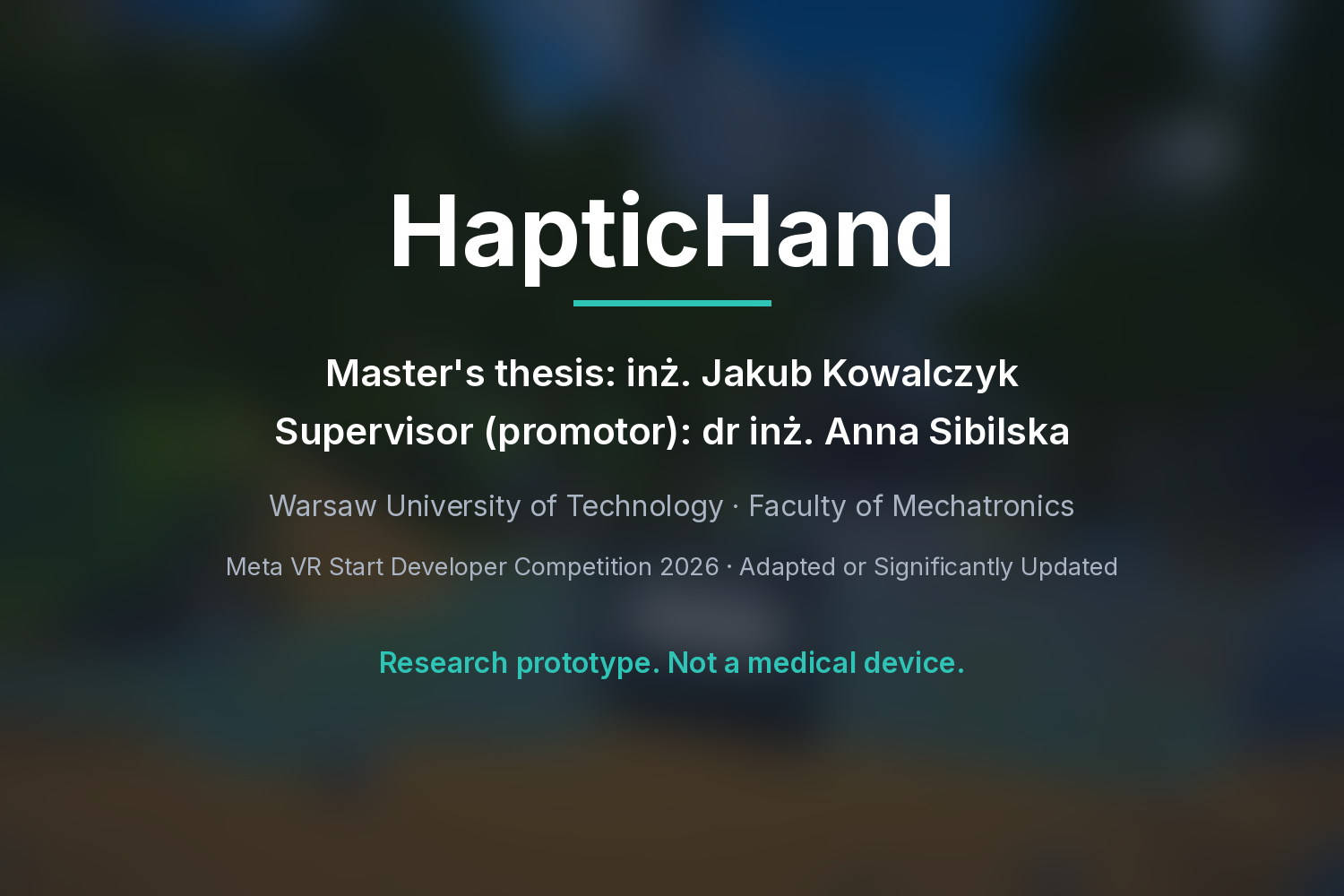
HapticHand grew out of a master's thesis at Warsaw University of Technology (Politechnika Warszawska) by inż. Jakub Kowalczyk, supervised by dr inż. Anna Sibilska, head of the VeReePW team. It was built for hand rehabilitation, including motor recovery after stroke.
Its scientific basis is our peer-reviewed article Evaluation of markerless hand-tracking accuracy in VR application designed for hand range-of-motion measurement and rehabilitation, Journal of NeuroEngineering and Rehabilitation (2026).
Inspiration
Hand exercises after a stroke or neurological injury are repetitive and usually need a therapist present the whole time, so motivation drops. VR makes the same exercises engaging, repeatable and automatically recorded. Our earlier study showed that Meta Quest hand tracking is accurate enough for this. HapticHand takes the next step, from measuring the hand to training it, with no controllers at all.
What it does
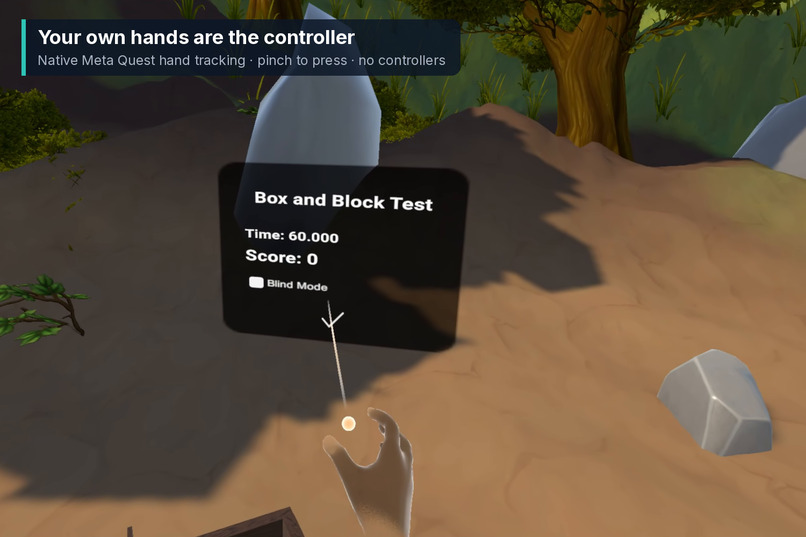
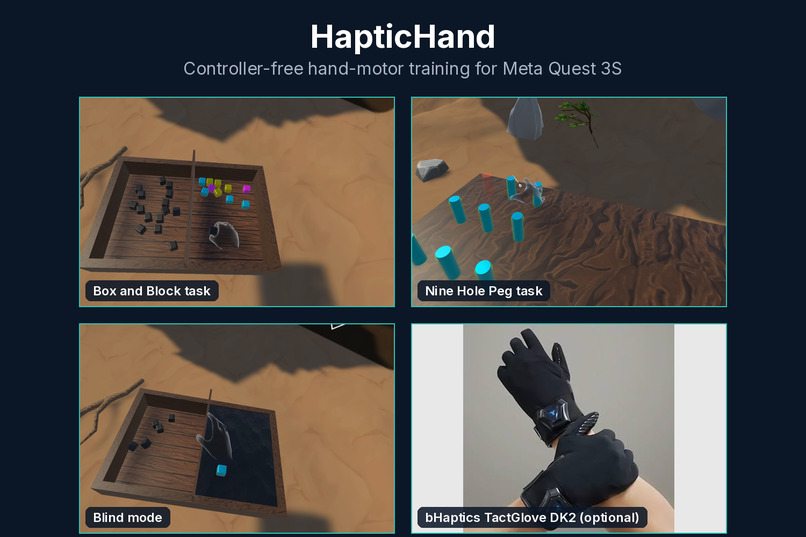
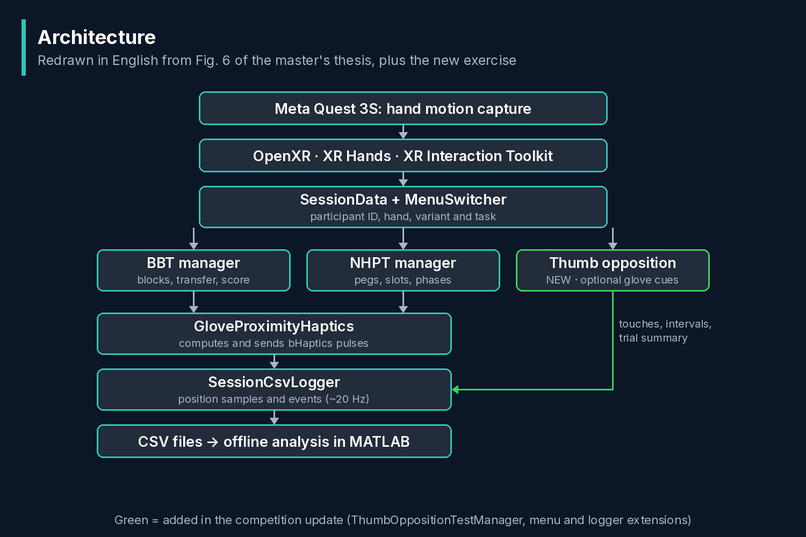
HapticHand offers three hand exercises, all done with your own tracked hands:
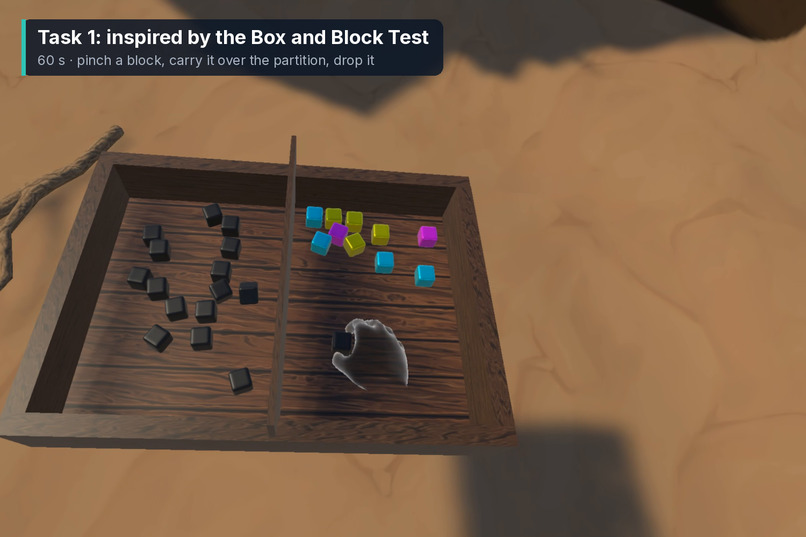
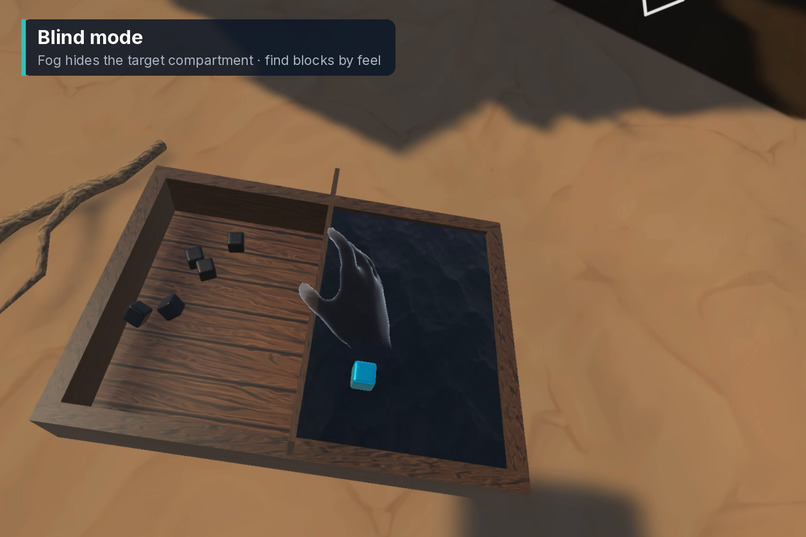
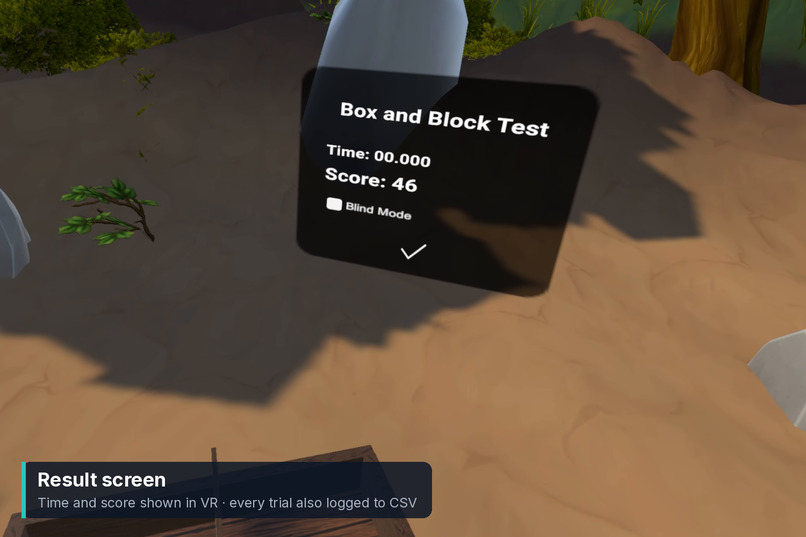
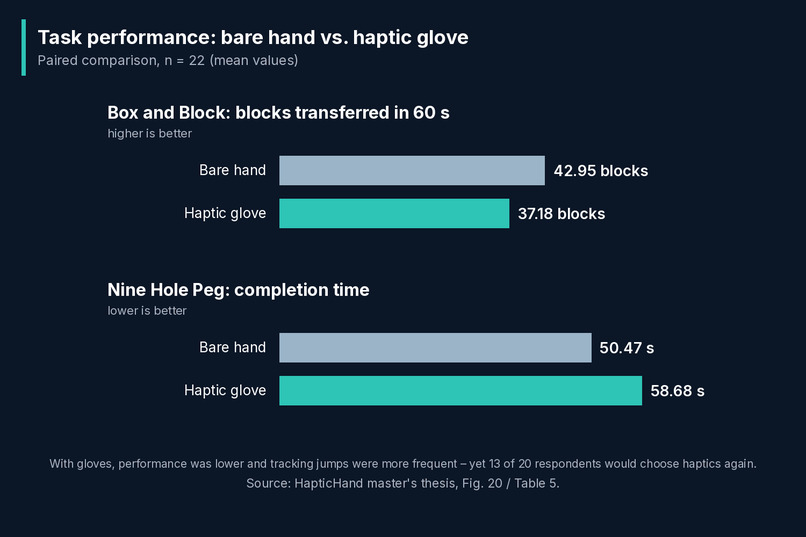
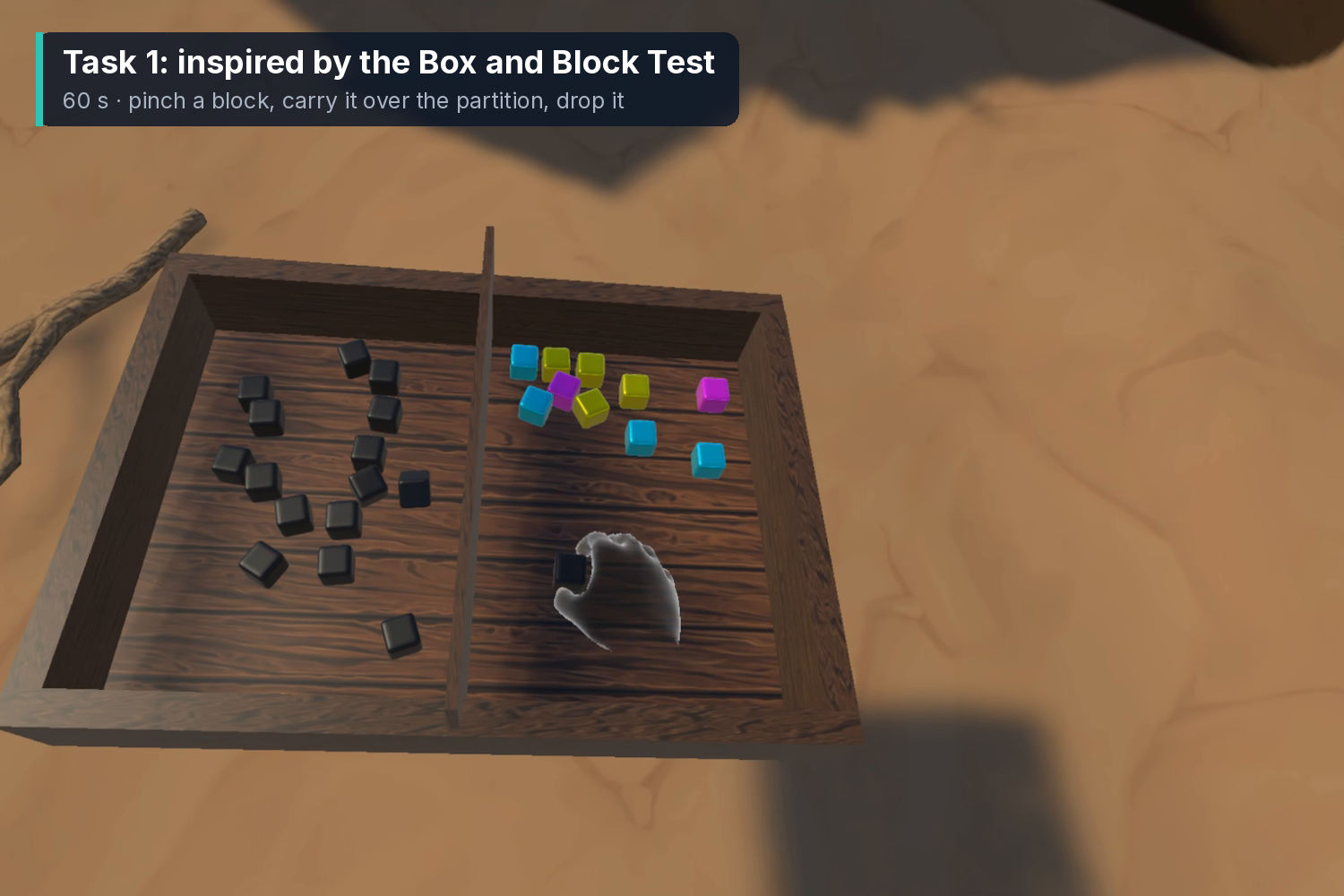
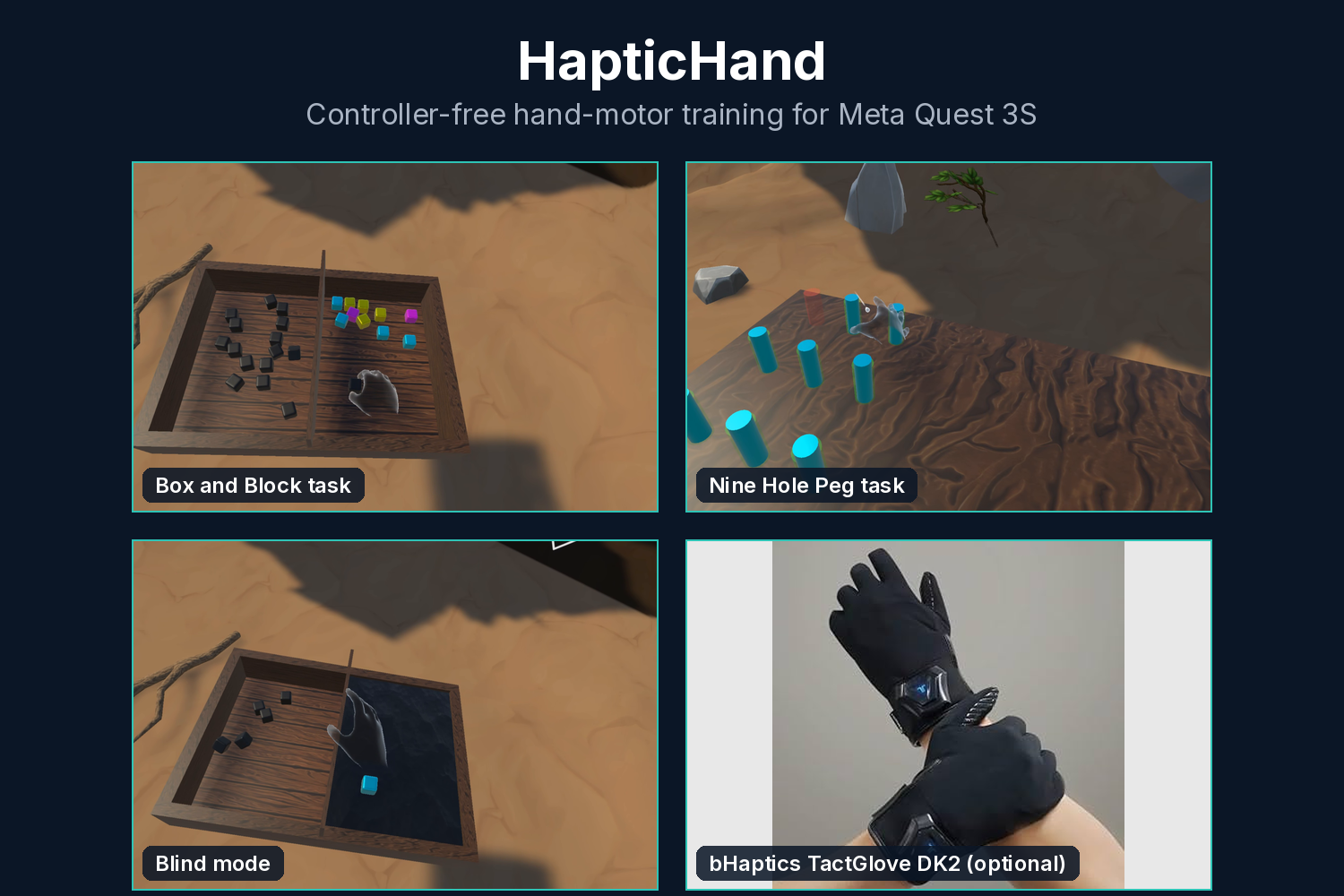
- Block transfer (inspired by the Box and Block Test): move as many blocks as you can over a partition in 60 seconds.
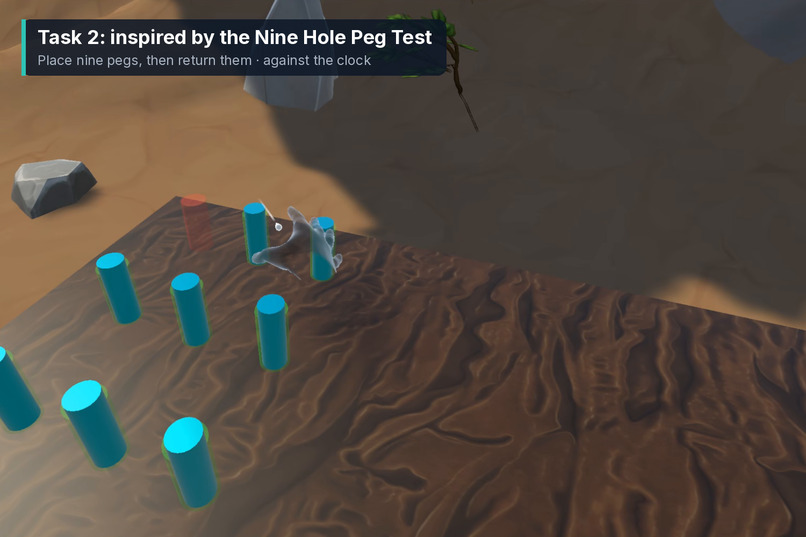
- Peg board (inspired by the Nine Hole Peg Test): place nine pegs in their holes and take them out again, against the clock.
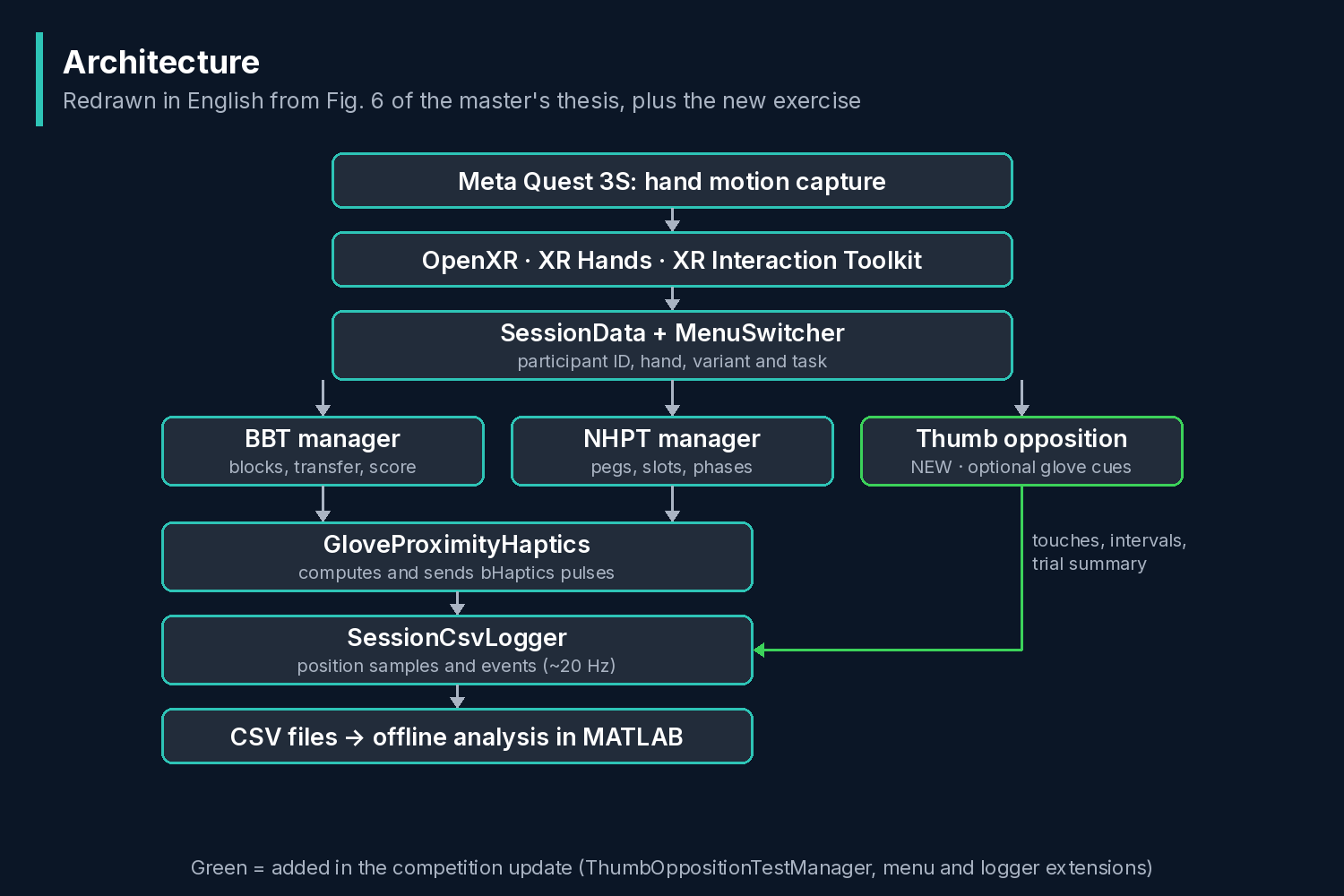
- Paluszki (Fingers): touch two highlighted points on your hand, a fingertip to another finger's tip, middle or base, as many times as you can in 60 seconds. The app counts movements per minute.
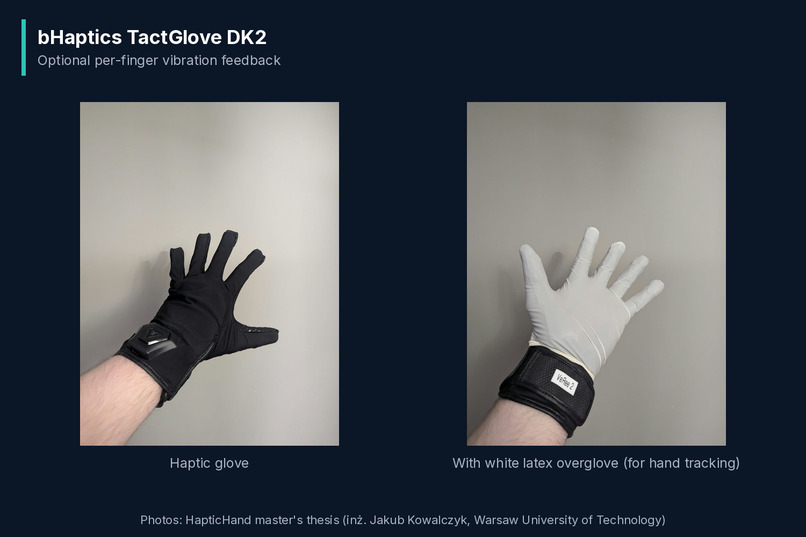
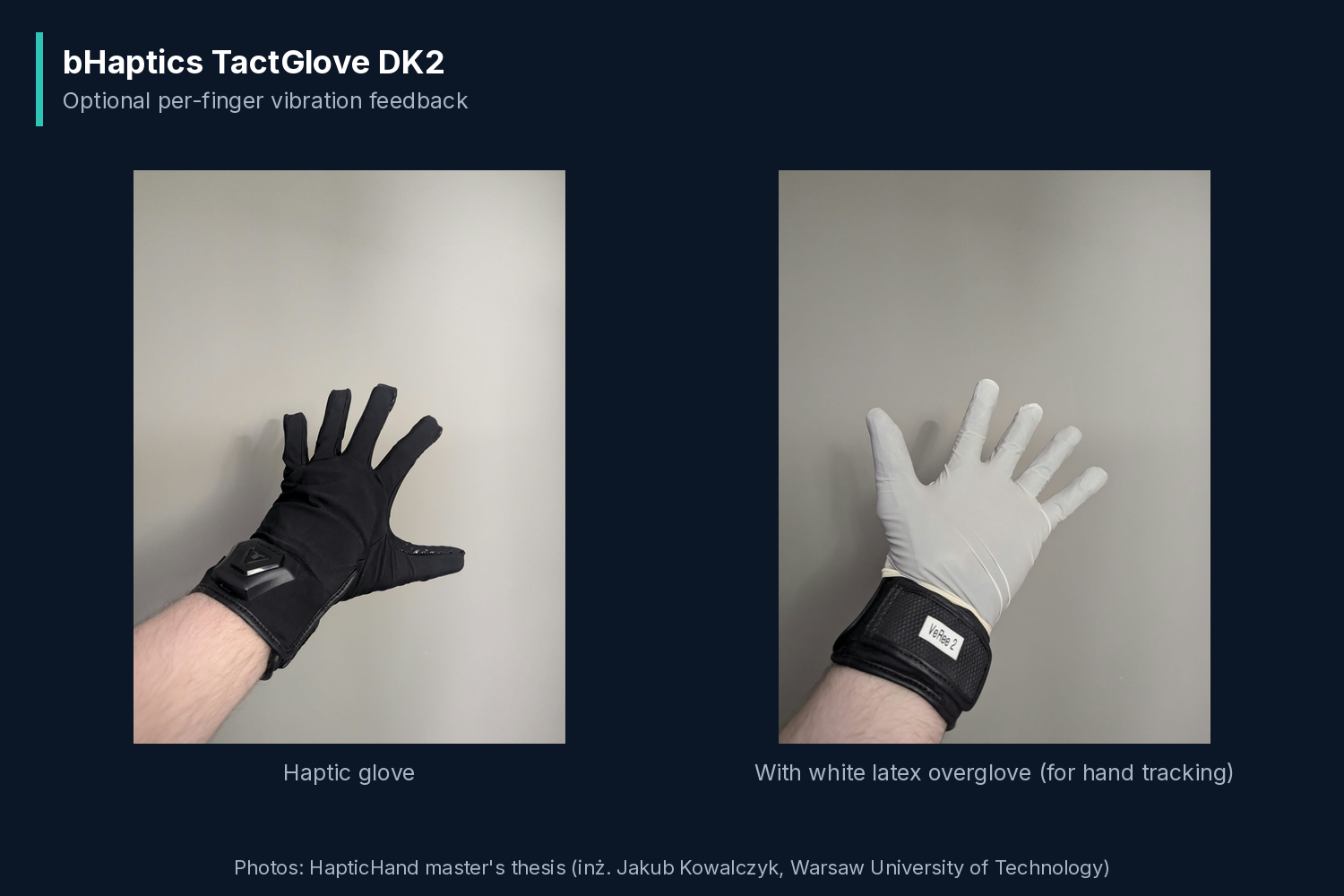
Optional bHaptics gloves add gentle vibrations when your fingers approach and hold an object. Every session is saved to a file for later analysis, under a selectable session name. The interface is available in Polish and English.
HapticHand is a research prototype, not a medical device.
How we built it
Unity 6 with OpenXR hand tracking on Meta Quest, with optional bHaptics haptic gloves.
Challenges we ran into
Dark haptic gloves made fingers harder for the headset cameras to see. A thin white glove worn over them helped. We also had to design every interaction without controllers and without gestures reserved by the Quest system.
Accomplishments that we're proud of
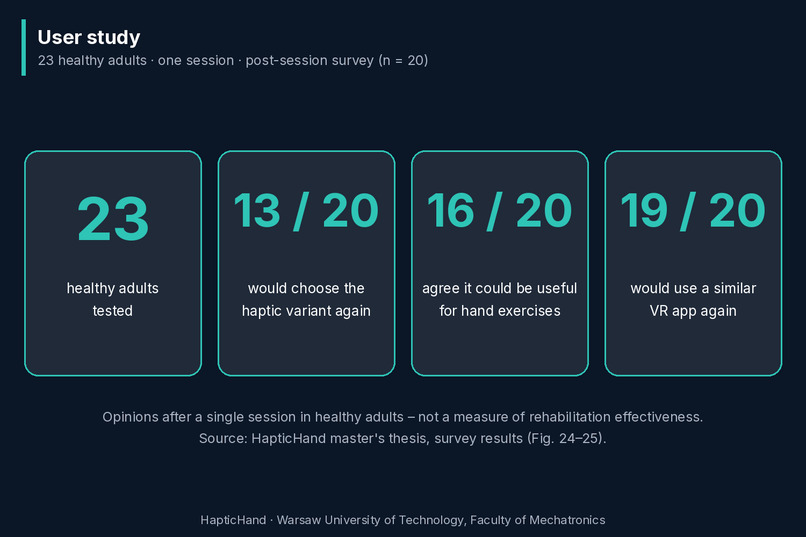
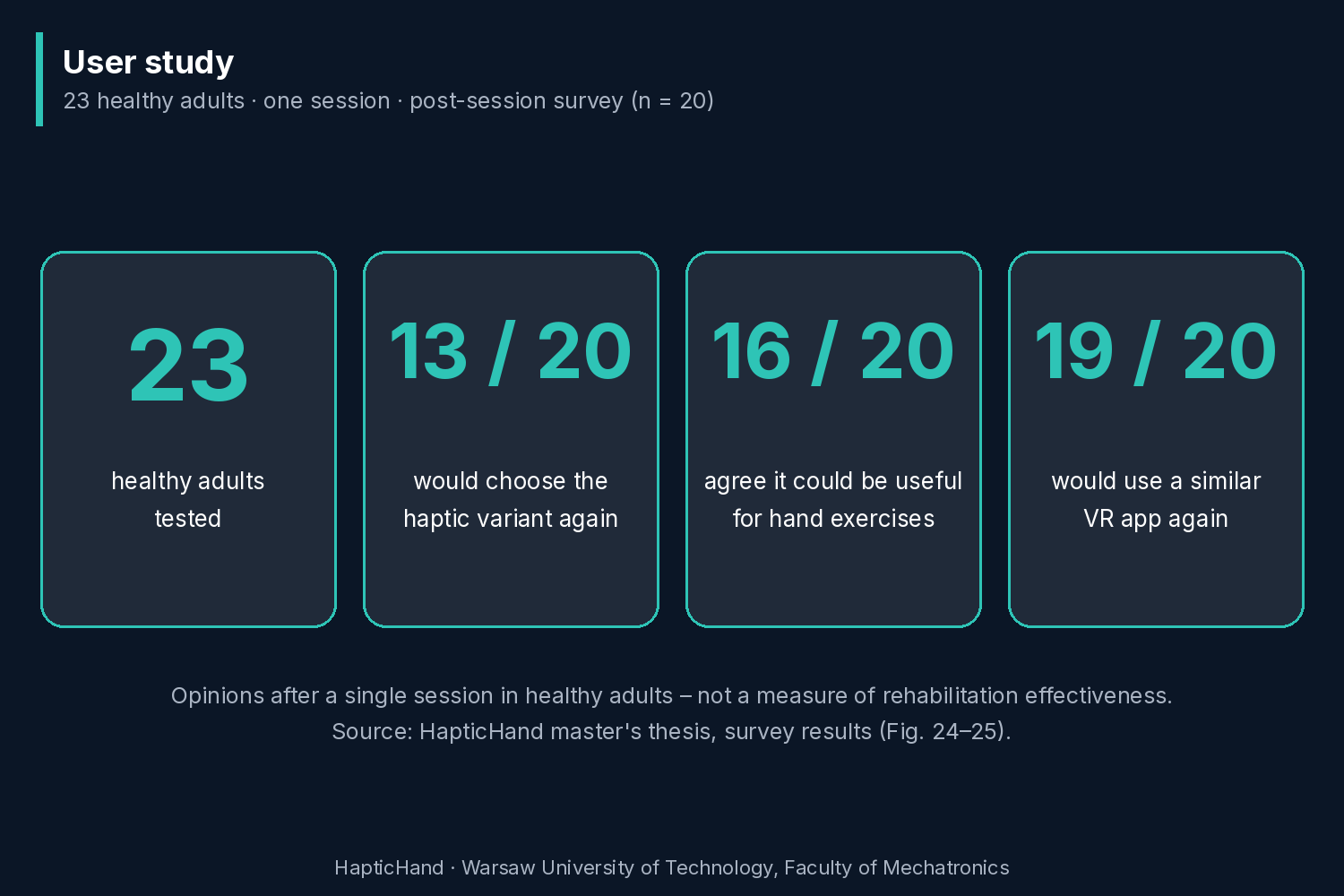
We ran an ethics-approved user study with 23 adults. Most participants found the app engaging and would use a similar VR app again, and two neurological physiotherapists saw it as a useful complement to therapy, mainly for increasing the number of repetitions.
What we learned
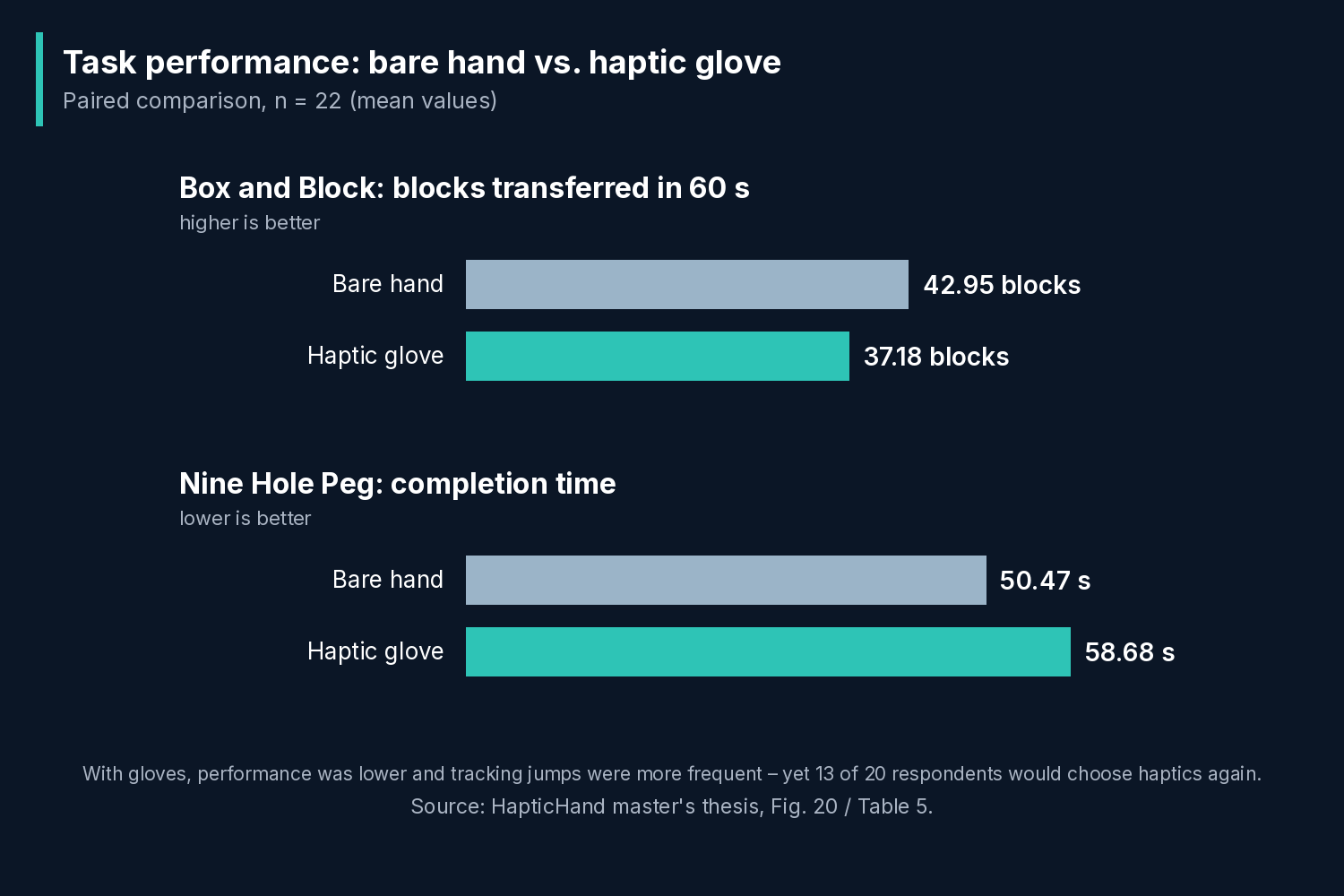
How an exercise feels and how well people score can differ, and haptics must be designed together with hand tracking.
What's next
The master's thesis behind HapticHand is scheduled to be defended at Warsaw University of Technology in December 2026. In 2027 the application will be tested at Opole University of Technology (Politechnika Opolska) with seniors from local residential care homes (DPS), under the direction of Dr. Żaneta Grzywacz.

