
Inspiration
We recently began working for the university at Buffalo's cafeteria and retail facilities. I was also surprised to learn that a large portion of their leftover food is just thrown away at the end of the day. This occurs not only at CDS, but throughout the country. Every year, the United States throws away more food than any other country on the planet: about 40 million tons (80 billion pounds) of food, which is believed to represent 30-40% of the total US food supply.
On the other side, 10.5 percent of American families, or 13.8 million people, were food insecure at some point in 2021. From 10.5 percent in 2020, nothing has changed.
What it does
In order to handle these issues, we devised a clever approach in which one problem solves the other.
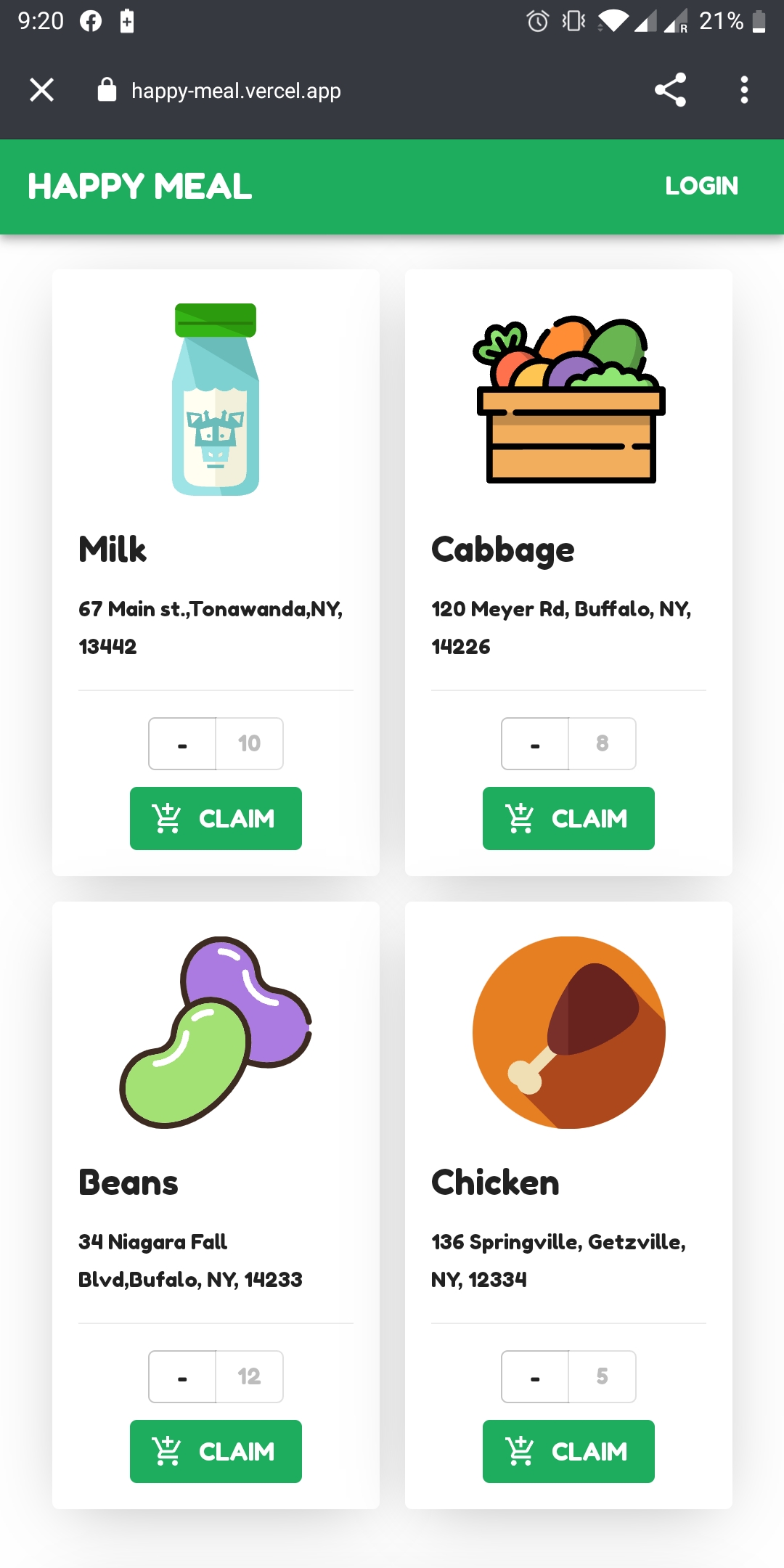
We present to you Happy Meal, an inventive AI-based system that links those in need with those who can help. Our solution primarily has three use cases: the restaurant owner or donor, the needy who will receive the contribution, and an AI module that uses previous data to anticipate the quantity of food that will be left over for a certain restaurant.
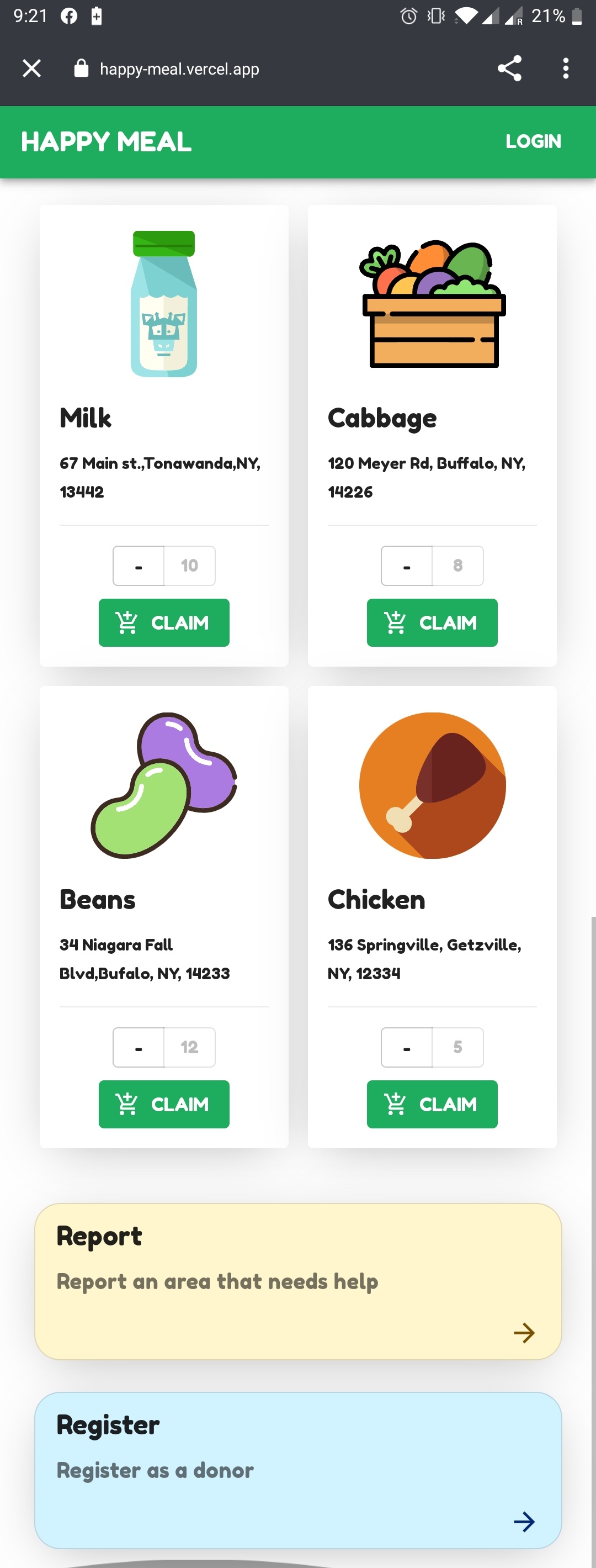
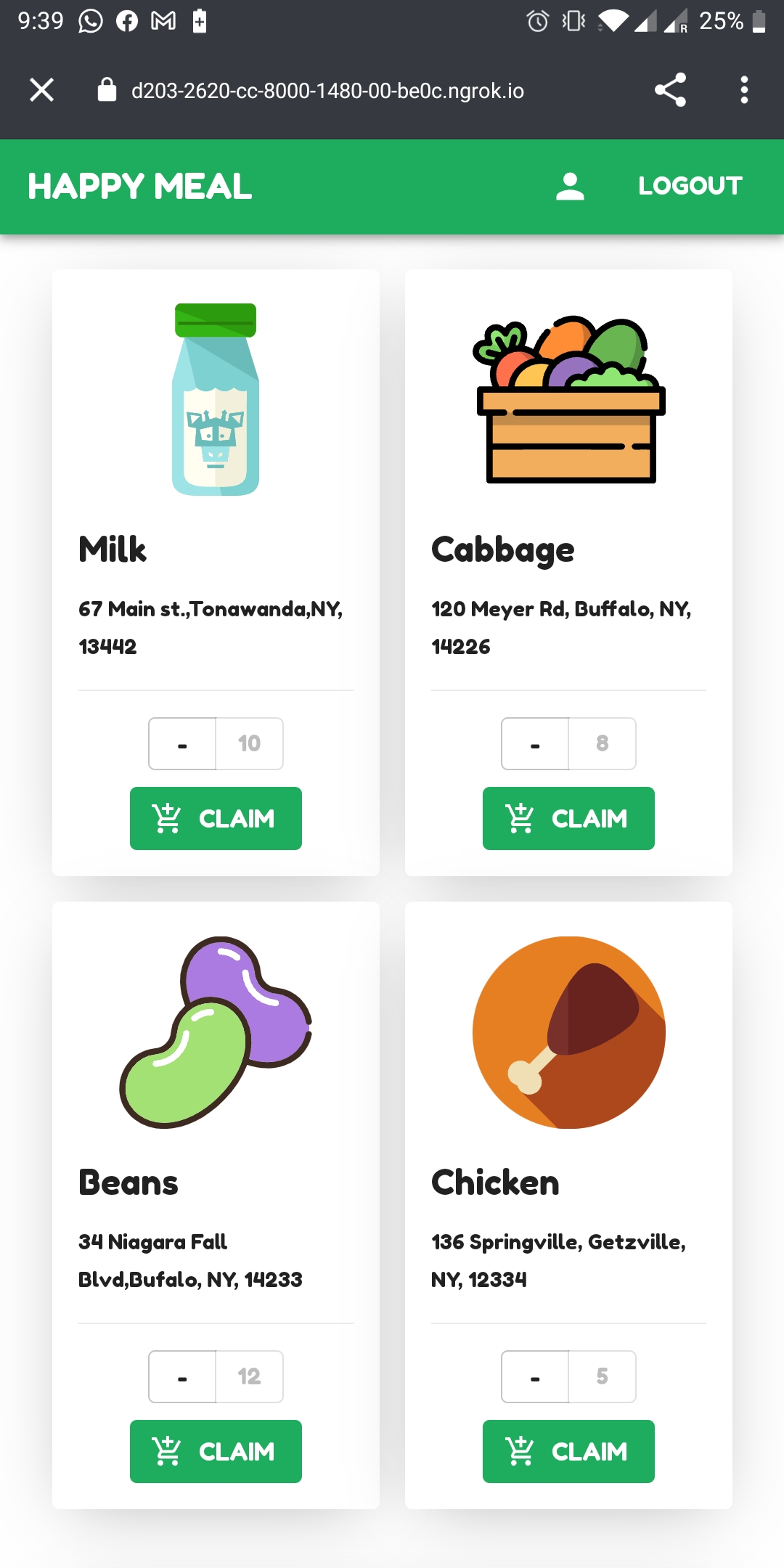
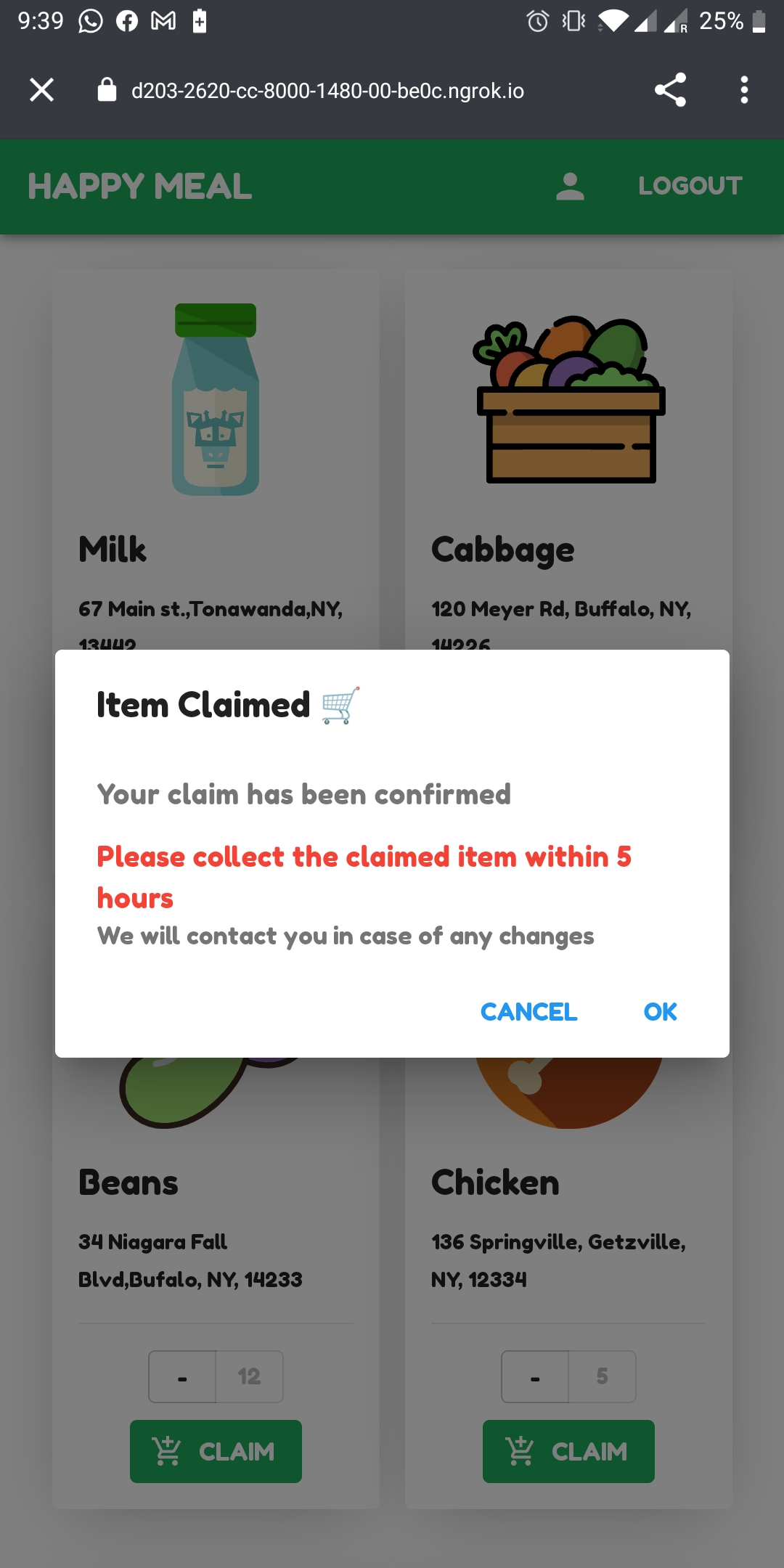
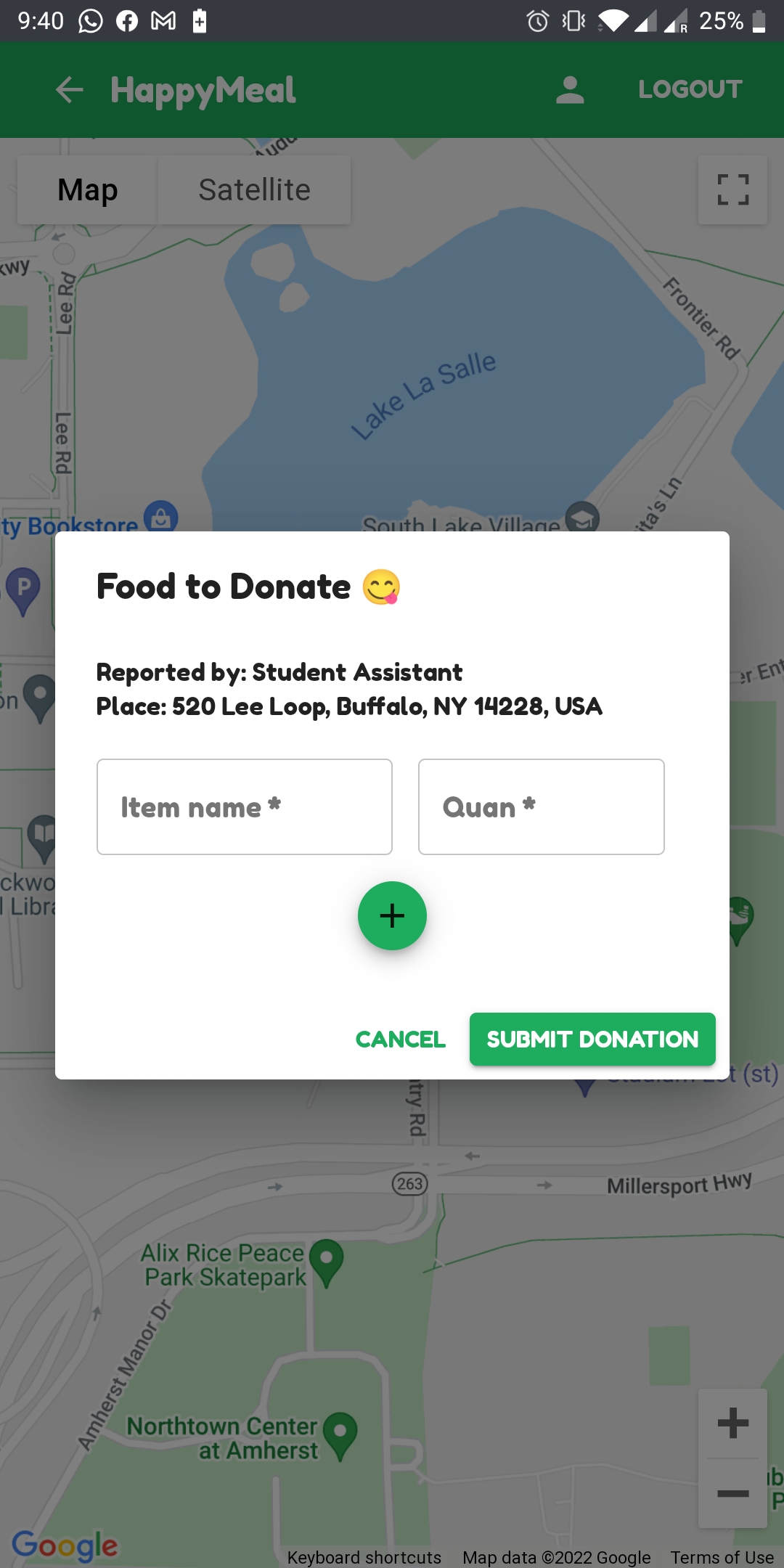
Features: Donate Food: This feature is for restaurant or household owners who have leftover food and would like to donate it to someone in need. They only need to choose the donation location as well as the type and quantity of leftover food. All nearby users will be alerted in real-time, based on their preferences, and will be given the choice to reserve the amount of food they desire to collect.
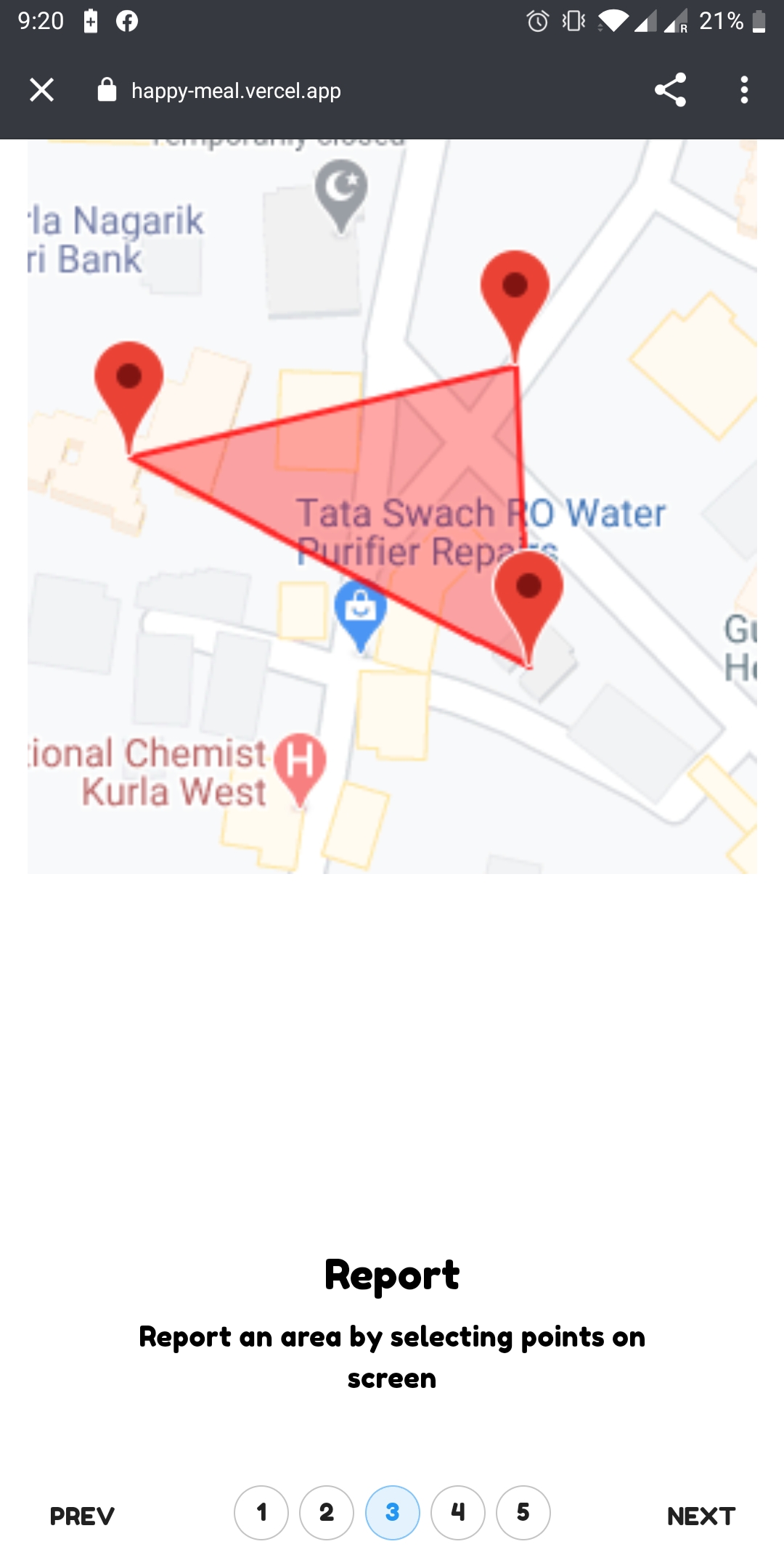
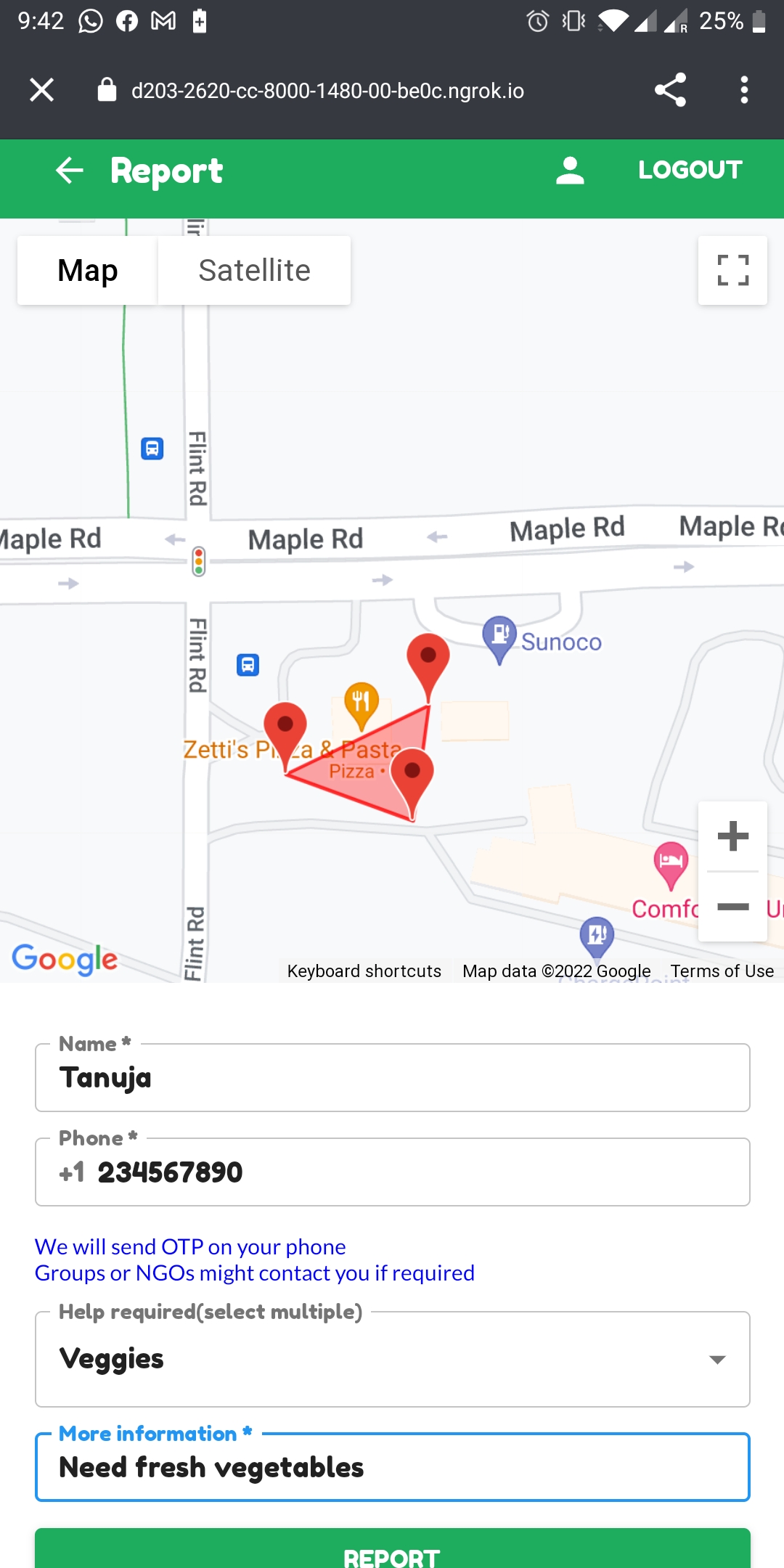
Request for assistance: Using this feature, a person in need can ask for assistance by indicating his region and the sort of food he would want to receive. For example, a beverage, vegetables, or meat.
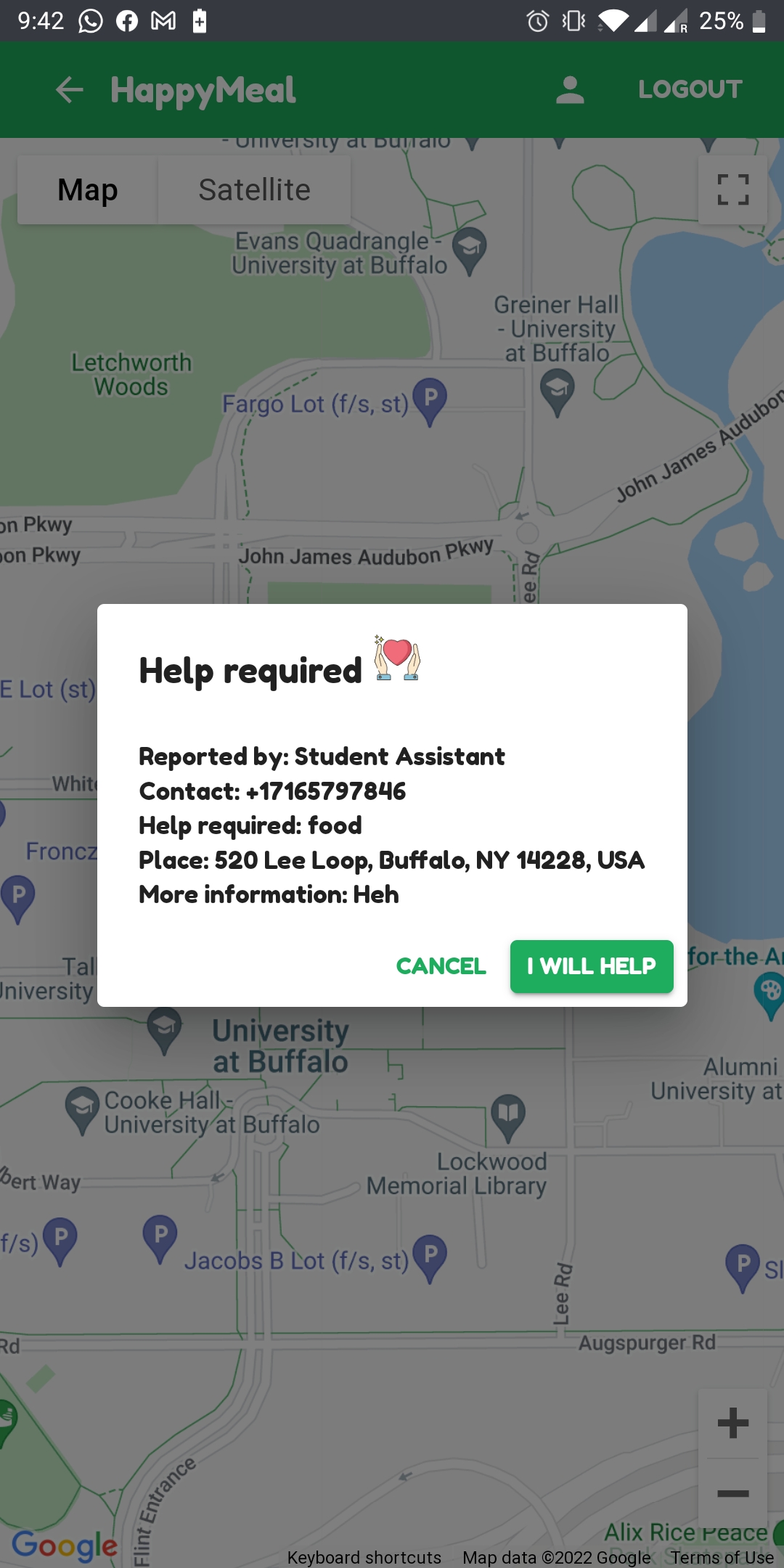
Helper: These are those who don't have any leftovers but nevertheless want to contribute by making a donation. They can accomplish this by looking at the locations that have sought assistance and notifying them of their desire to assist.
Predict waste: This feature would inform restaurants and families about how much food they are likely to prepare in excess of what is necessary and how much would be wasted. Users can potentially utilize this information to limit the amount of food they create each day.
How we built it
Python for AI/ machine learning. We have used React.Js to develop the UI application which is supported by Python and Node.Js on the backend. We have used firebase for user authentication, Amazon S3 & MongoDB to store images and other relevant information. We have used google developer API to display google maps in real-time. Used web3 modules in JS and Python(Flask) to perform all blockchain related functions. Deployed onto Heroku & GCP Cloud Shell.
Challenges we ran into
We had to brainstorm on how exactly would we connect the needy and the donor, Even after figuring that out, we had to figure out what would be the best user interface design that would be favorable for the illiterate too. We faced some development issues while integrating with Google developer API’s as well as with Amazon S3 since we were new to it. We also had to browse through papers and do some research to select the best algorithm for leftover food prediction.
Accomplishments that we're proud of
We are very excited and happy to have built a beautiful user-friendly web as well mobile application We have proudly made our application multilingual to be used by all classes of people. Our AI model achieved an accuracy of 86.75% to most accurately predict the leftover food of the upcoming day for a given restaurant. We successfully develop and full-stack Web/Mobile Application including machine learning component.
What we learned
While developing the minimum viable product for the solution we learned the importance of robustness and achieving minimal latency in developing real time systems that a huge number of people rely on. We also realized the importance of developing clean and accessible UIs to enhance the experience of every individual.
Built With
- ai
- blockchain
- keras
- machine-learning
- node.js
- python
- react
- tensorflow


Log in or sign up for Devpost to join the conversation.