-
-
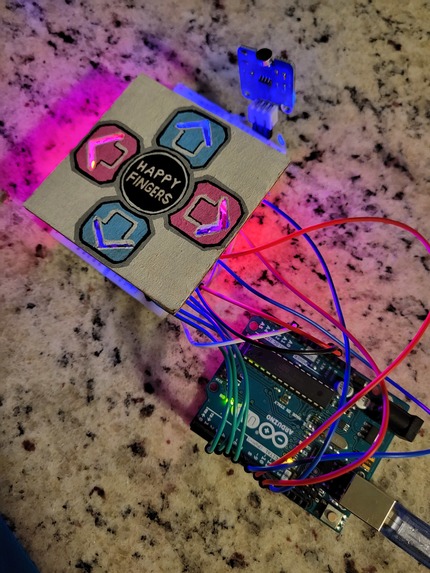
Overall setup
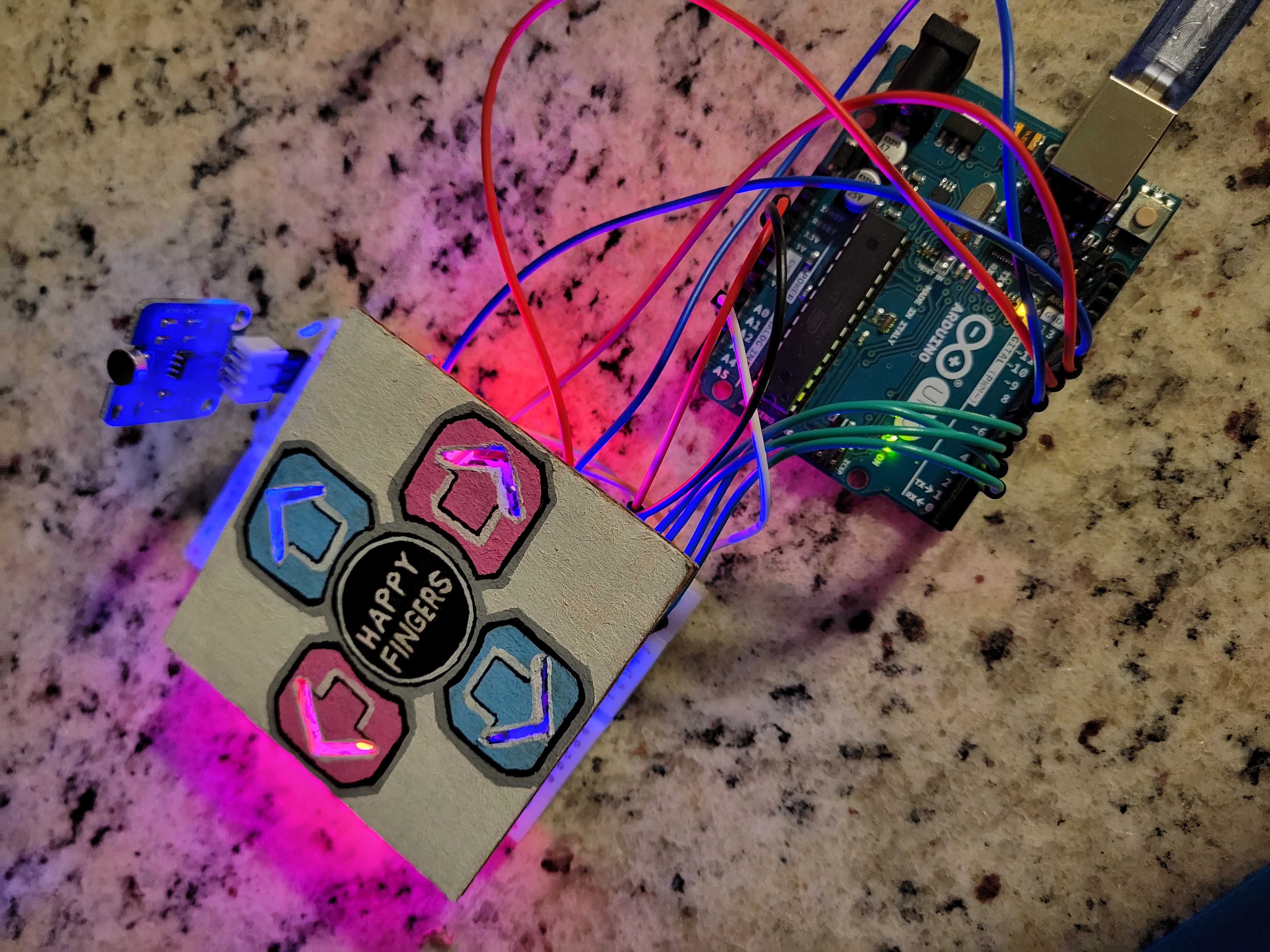
Inspiration
We were inspired by our shared love of dance. We knew we wanted to do a hardware hack in the healthcare and accessibility spaces, but we weren't sure of the specifics. While we were talking, we mentioned how we enjoyed dance, and the campus DDR machine was brought up. We decided to incorporate that into our hardware hack with this handheld DDR mat!
What it does
The device is oriented so that there are LEDs and buttons that are in specified directions (i.e. left, right, top, bottom) and the user plays a song they enjoy next to the sound sensor that activates the game. The LEDs are activated randomly to the beat of the song and the user must click the button next to the lit LED.
How we built it
The team prototyped the device for the Arduino UNO with the initial intention of using a sound sensor as the focal point and slowly building around it, adding features where need be. The team was only able to add three features to the device due to the limited time span of the event. The first feature the team attempted to add was LEDs that reacted to the sound sensor, so it would activate LEDs to the beat of a song. The second feature the team attempted to add was a joystick, however, the team soon realized that the joystick was very sensitive and it was difficult to calibrate. It was then replaced by buttons that operated much better and provided accessible feedback for the device. The last feature was an algorithm that added a factor of randomness to LEDs to maximize the "game" aspect.
Challenges we ran into
There was definitely no shortage of errors while working on this project. Working with the hardware on hand was difficult, the team was nonplussed whether the issue on hand stemmed from the hardware or an error within the code.
Accomplishments that we're proud of
The success of the aforementioned algorithm along with the sound sensor provided a very educational experience for the team. Calibrating the sound sensor and developing the functional prototype gave the team the opportunity to utilize prior knowledge and exercise skills.
What we learned
The team learned how to work within a fast-paced environment and experienced working with Arduino IDE for the first time. A lot of research was dedicated to building the circuit and writing the code to make the device fully functional. Time was also wasted on the joystick due to the fact the values outputted by the joystick did not align with the one given by the datasheet. The team learned the importance of looking at recorded values instead of blindly following the datasheet.
What's next for Happy Fingers
The next steps for the team are to develop the device further. With the extra time, the joystick method could be developed and used as a viable component. Working on delay on the LED is another aspect, doing client research to determine optimal timing for the game. To refine the game, the team is also thinking of adding a scoring system that allows the player to track their progress through the device recording how many times they clicked the LED at the correct time as well as a buzzer to notify the player they had clicked the incorrect button. Finally, in a true arcade fashion, a display that showed the high score and the player's current score could be added.
Built With
- arduino
- breadboard
- button
- ide
- led
- sensor


Log in or sign up for Devpost to join the conversation.