Inspiration
I planned my wedding throughout 2025, and the major web apps most others probably use weren't for me. I used them to list the vendor/service categories I wanted to include, and then created and managed my own spreadsheets while planning. I wanted the freedom to make choices based on what I knew would fit us and the conditions we wanted to uphold for our wedding, and I spent too many hours analyzing various service/vendor options before booking them. I would've loved if I could've had vendors and services ranked by how well they fit our personalities and needs instead of just the best established web presences near our venue.
The partner of my business partner/teammate on this project has many years of experience directly working on the wedding planning side of the industry, and she knows very well pain points that wedding planners experience as well as common pain points most couples planning their wedding encounter. Her expertise has been very helpful in guiding us to target those and alleviate that pain with the help of AI.
What it does
After registration, Happily will guide a user to enter information about their style, desired guest experience, budget trade-offs, and other preferences specific to their wedding without providing any private personal details. The user can also copy a prompt to paste into the LLM they use most that will likely have a good idea of the user's preferences and style.
After entering personal preferences manually, or confirming and pasting their favorite LLM's response about them, Happily will utilize a Gemini model via Vertex AI to prefill wedding-specific survey questions as accurately as possible to match the user's personality. While the responses are being prefilled for the user, the user will be brought to their planning dashboard.
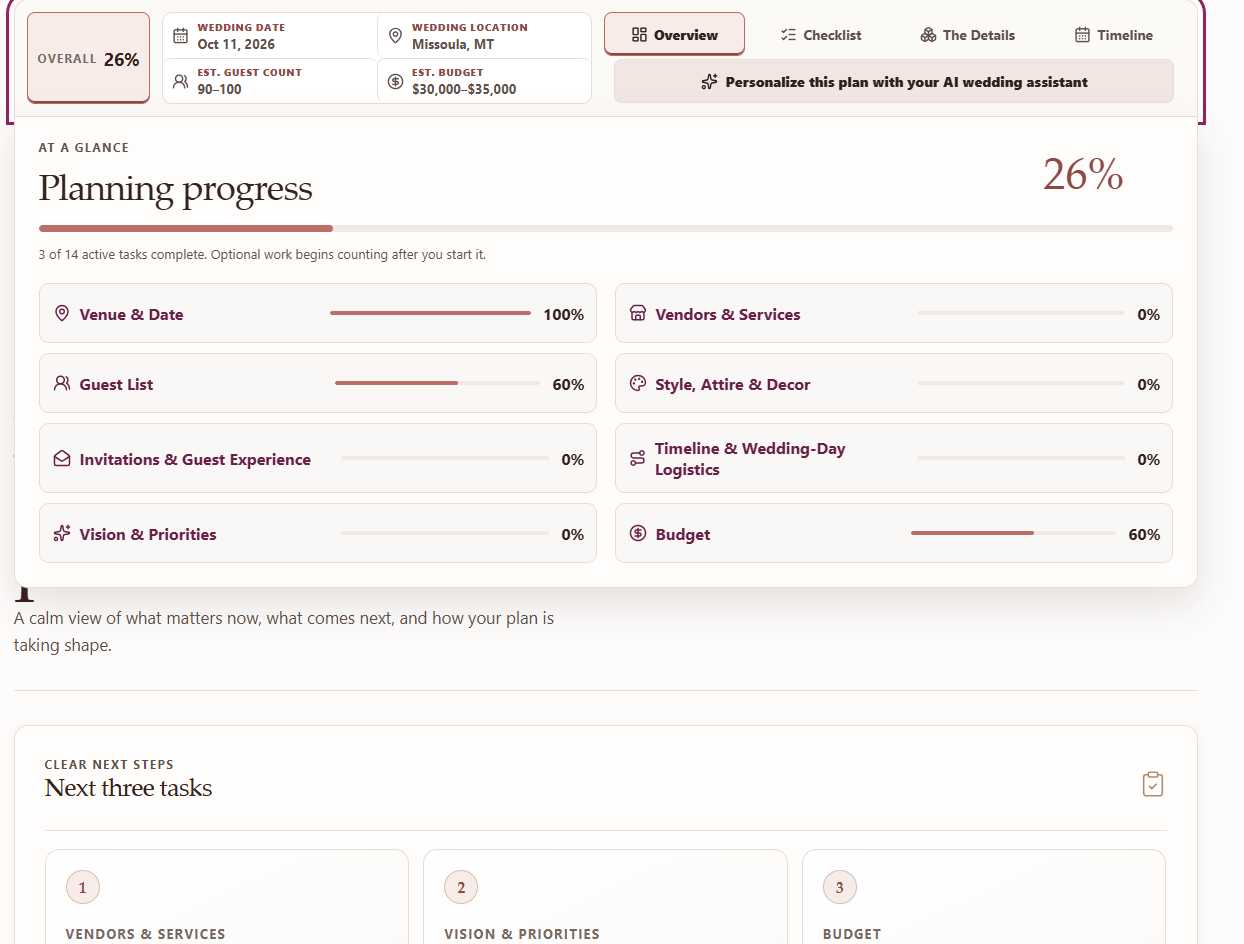
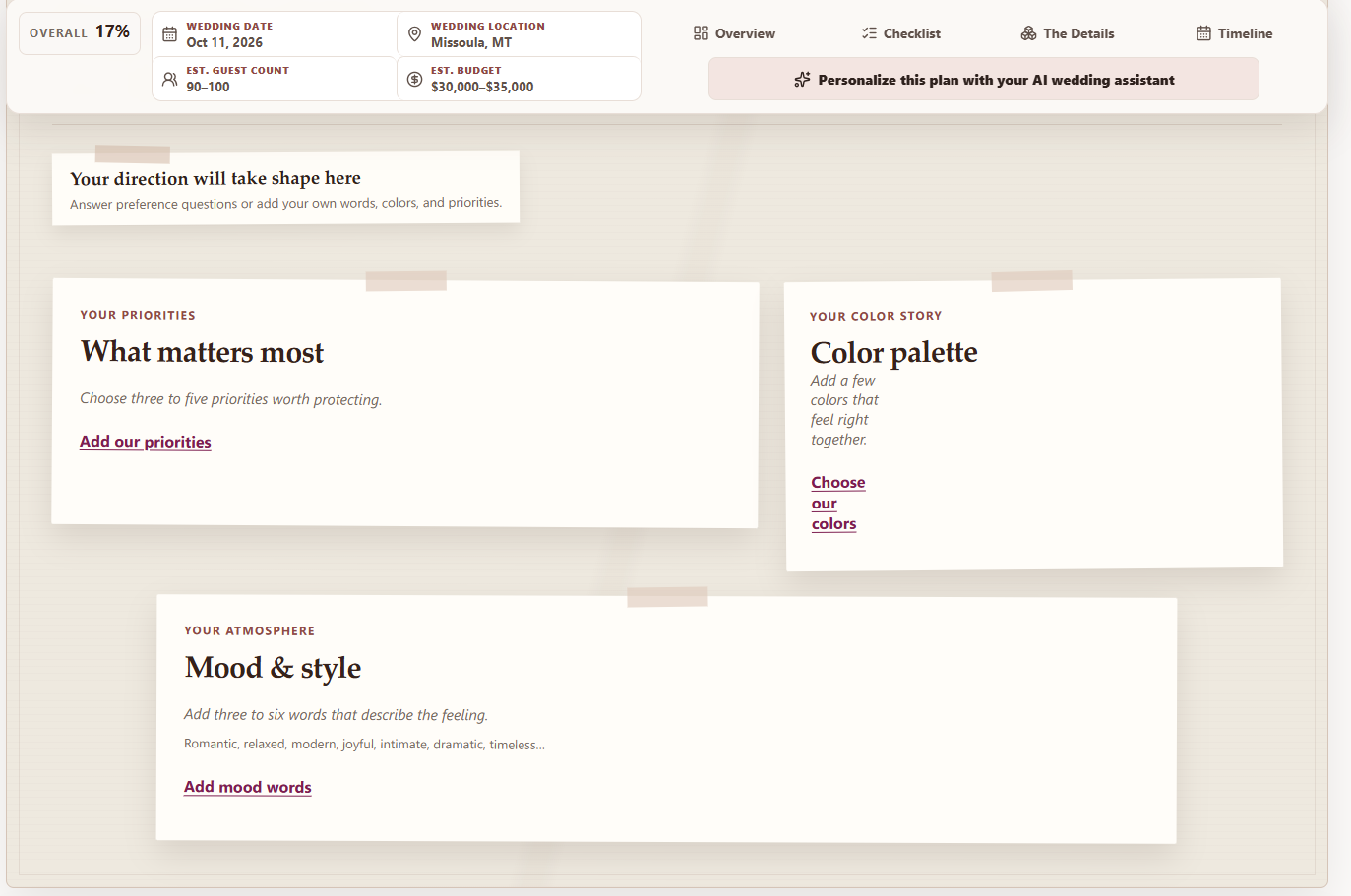
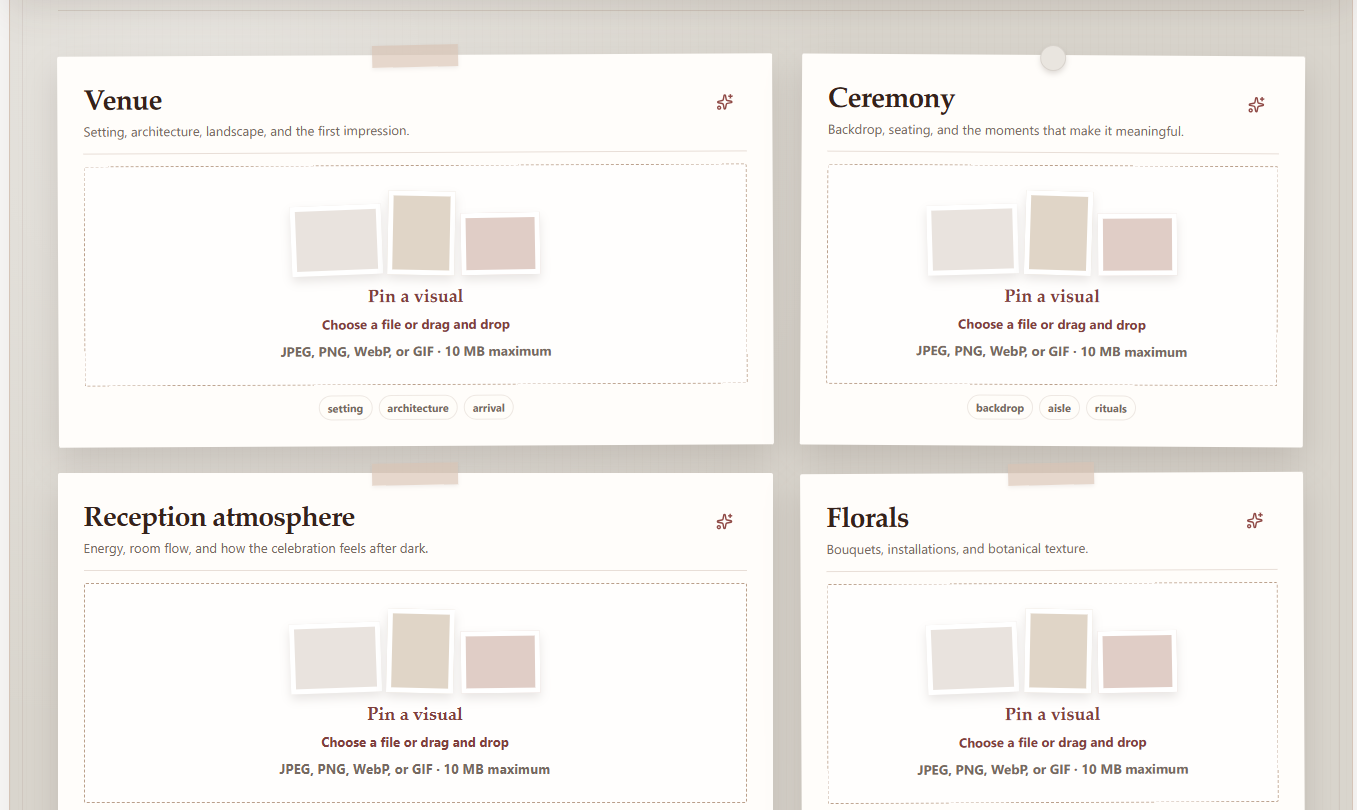
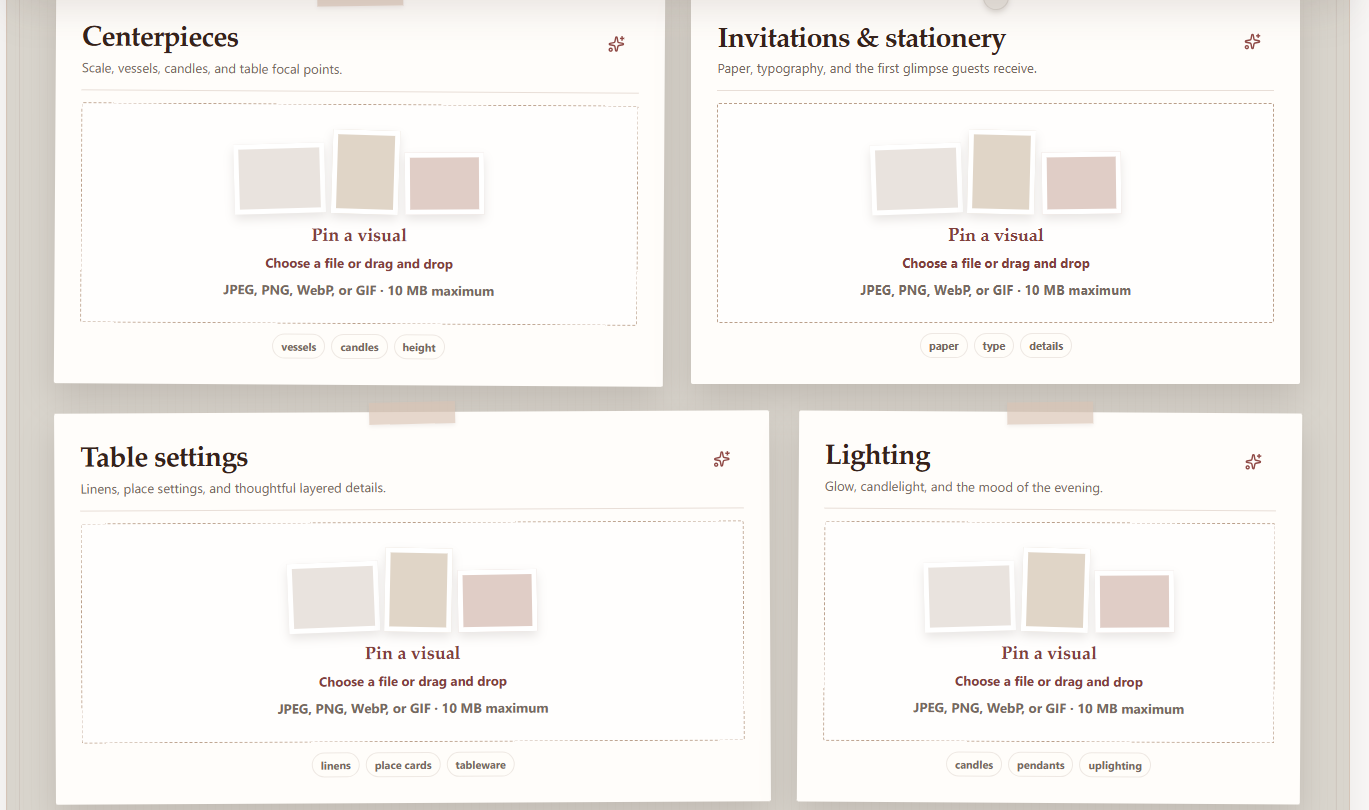
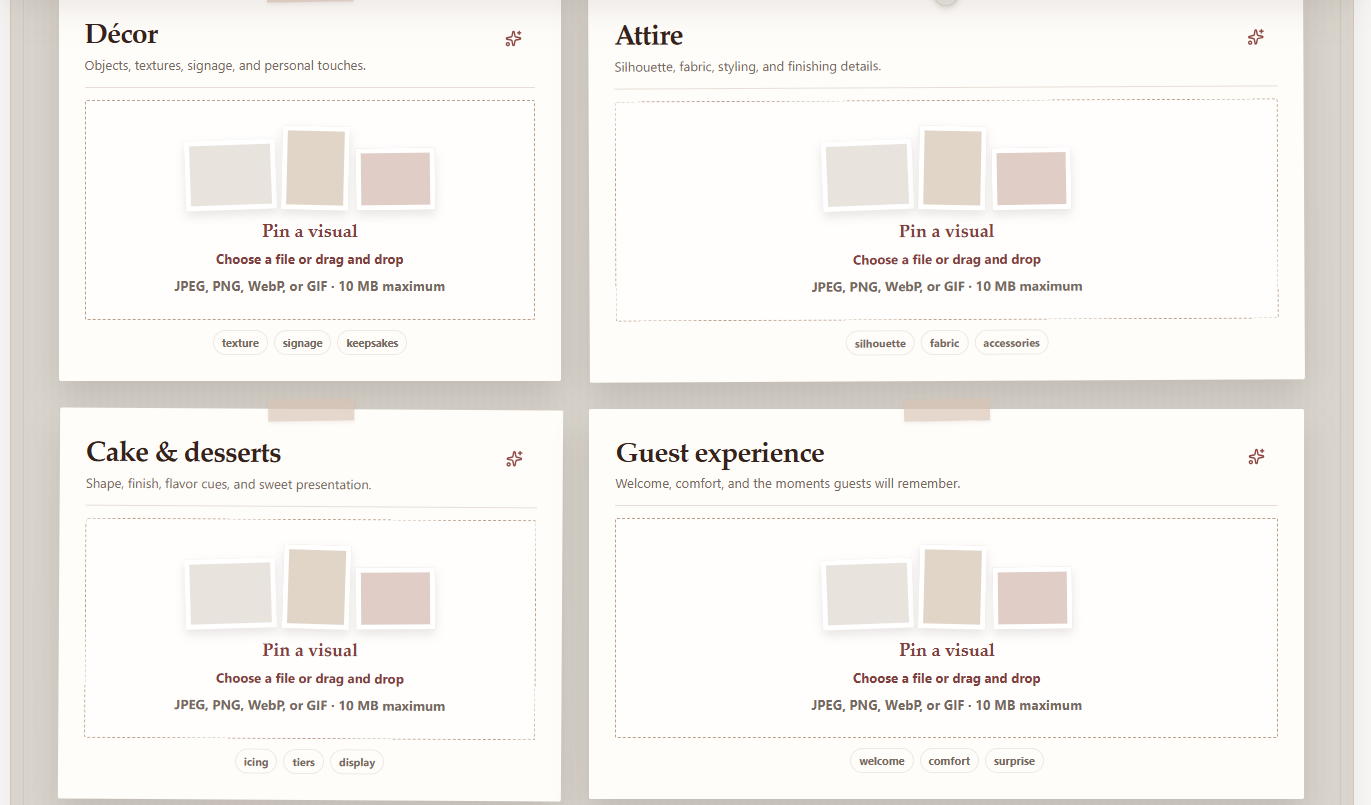
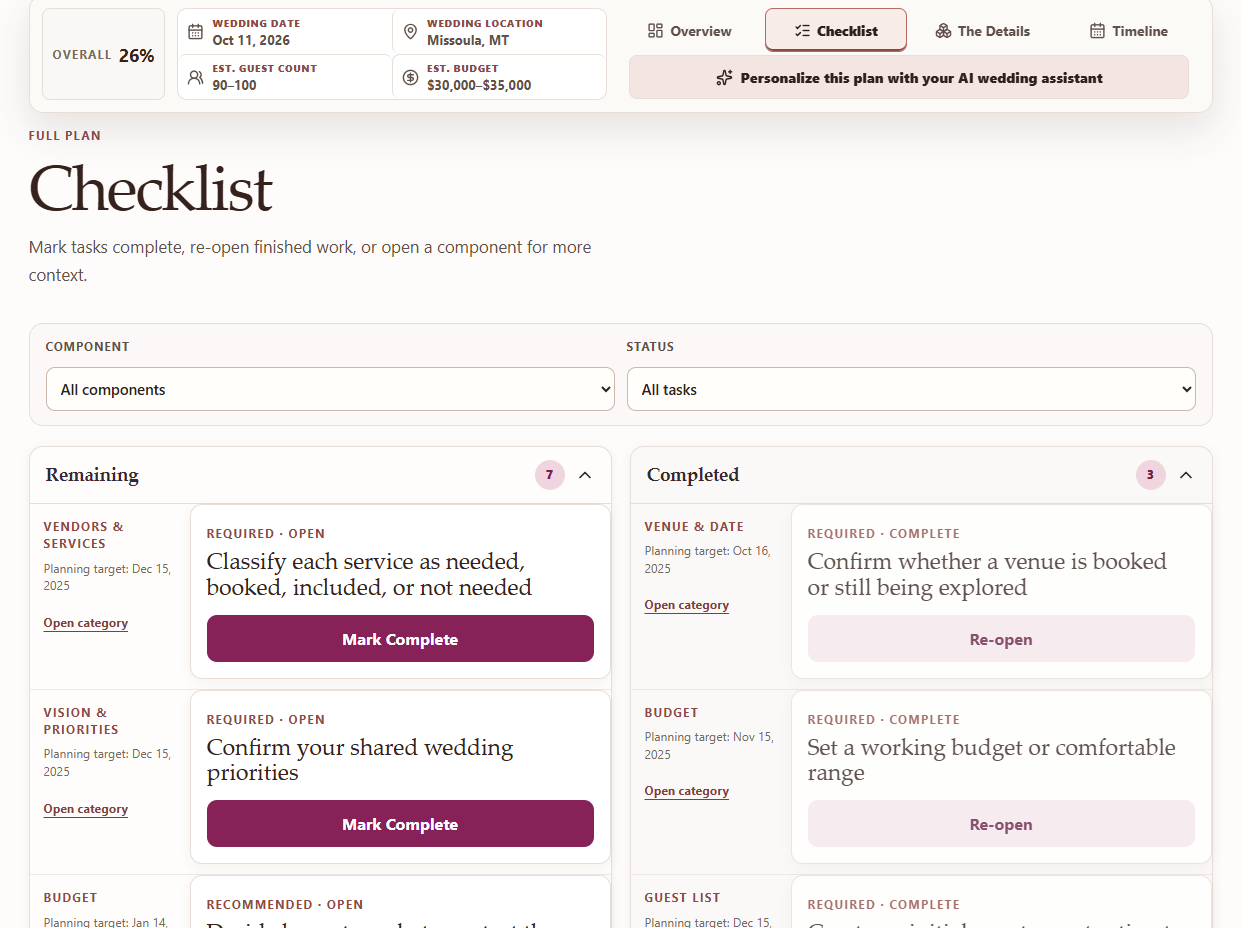
The planning dashboard will walk the user through next steps on a direct path clearly displaying progress and without overwhelming them. The planning vision board will first be generated (by a Gemini model) from the personality and persona of the user and the details they've shared about their partner. The user can then update their vision board to improve upon the initial AI generation.
How we built it
We outlined what we wanted to build, and on July 11th, we started the Git repo and added the first documentation and scaffolding code. We utilized Codex as a coding assistant to build the web app using React, Node/Express, Firebase, and GCloud services. Docker containers are deployed to Google Cloud Run for remote build testing. Firebase Auth provides Google sign-in, Firestore is our current DB. The AI layer is designed around Gemini through Vertex AI and the Google Gen AI SDK. Each team member works on individual features on a separate Git branch, and merges back to main when the update is complete and tested.
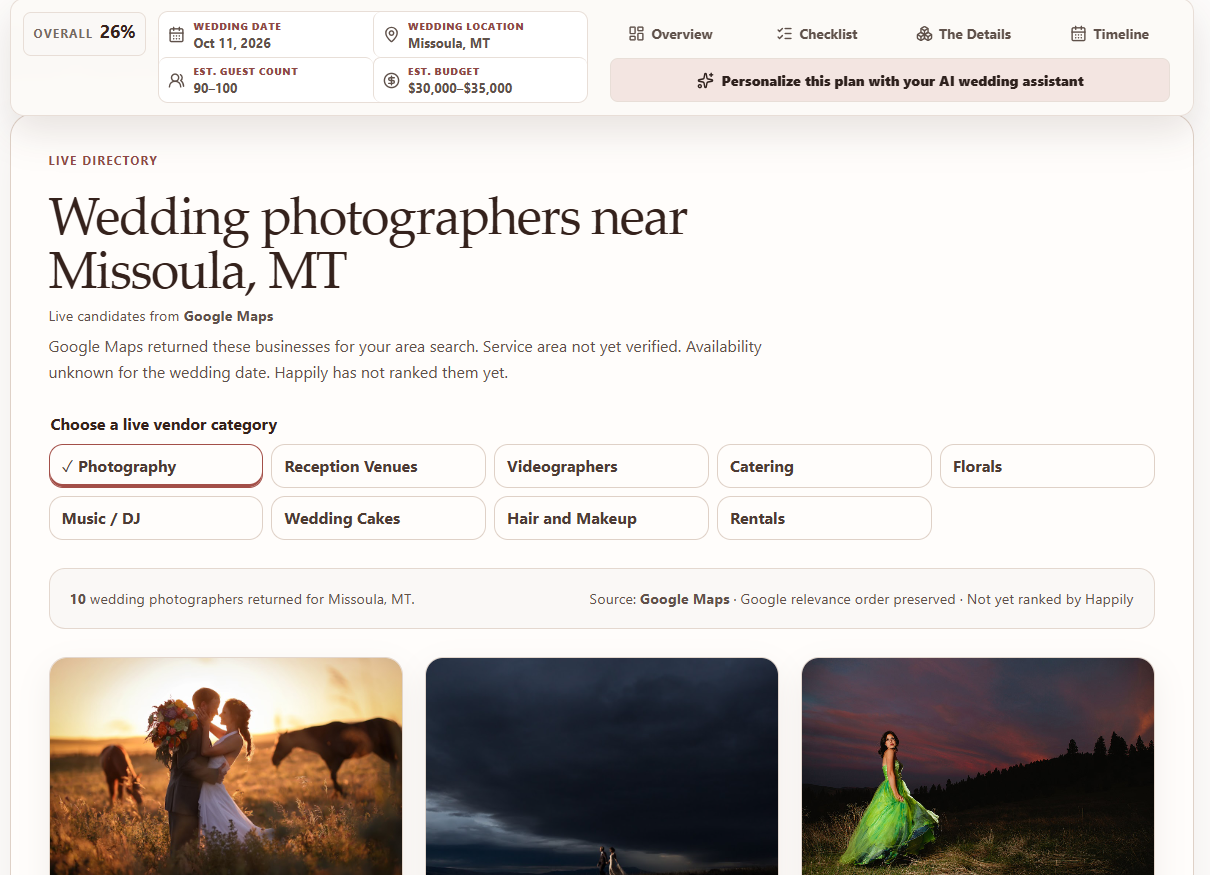
Happily currently fetches and displays vendor options utilizing Google Places API, and we intend to work directly with vendors helping them opt-in if they'd like, and eventually build our directory that can be sorted with our Gemini model to both fit vendors wedding planners want and clients vendors work best with.
Challenges we ran into
To evaluate fit for wedding vendors and services that could serve the venue location, we had intended to fetch existing web resources like Google Businesses via API, then let our integrated Gemini model sort them based on the user's personality and preferences.
Accomplishments that we're proud of
In one month, we've developed far more than I thought possible at this speed before utilizing coding agents to assist development.
What we learned
We learned better processes for multiple developers working with Codex (or another coding agent) to simultaneously develop on a rapidly evolving codebase. We learned that a directory of opted-in wedding vendors and services is high value data, and isn't easy to legally acquire. Professional wedding planners, couples planning their own wedding, and wedding vendors/services all have pain points that AI can greatly alleviate if applied properly.
The existing big sites may have developed a robust directory, but we think they're too focused on featured listings, variety, and extracting payments from vendors or users to nail the use of AI to find the perfect fit and solve pain points they haven't fixed yet. We'll do the hard parts that most other devs trying to apply AI to wedding planning won't; the stuff that won't scale, like personally contacting vendors to both develop our directory and discover how we can serve them best where the big sites don't. And we'll beat the established sites to a better AI implementation.
What's next for Happily
After submission, we'll clone the repo to a new Alpha production repo and migrate to a new GCloud/Firebase project. We'll continue developing until we reach the Alpha build and test with friends/family and acquaintances with expertise in the wedding industry. When it's working as intended, and we've polished the UI/UX to a point we're proud of, we'll be working hard on getting all vendors in our city the chance to opt-in. We'll eventually have the remote Alpha build loading at the URL: planhappily.com and progress beyond this submission can be viewed there.
If we can solve the pain for couples planning weddings near us and vendors/services and professional wedding planners near us, and all of them are very impressed with the value we provide them, we'll work as quickly as possible to expand to other US cities.
Built With
- codex
- docker
- express.js
- firebase
- gcloud
- gemini
- javascript
- node.js
- react
- vertex-ai
- vite

Log in or sign up for Devpost to join the conversation.