-
-
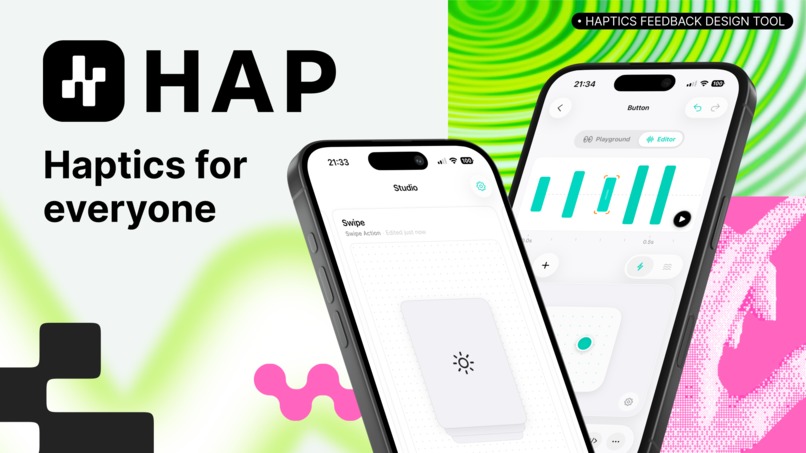
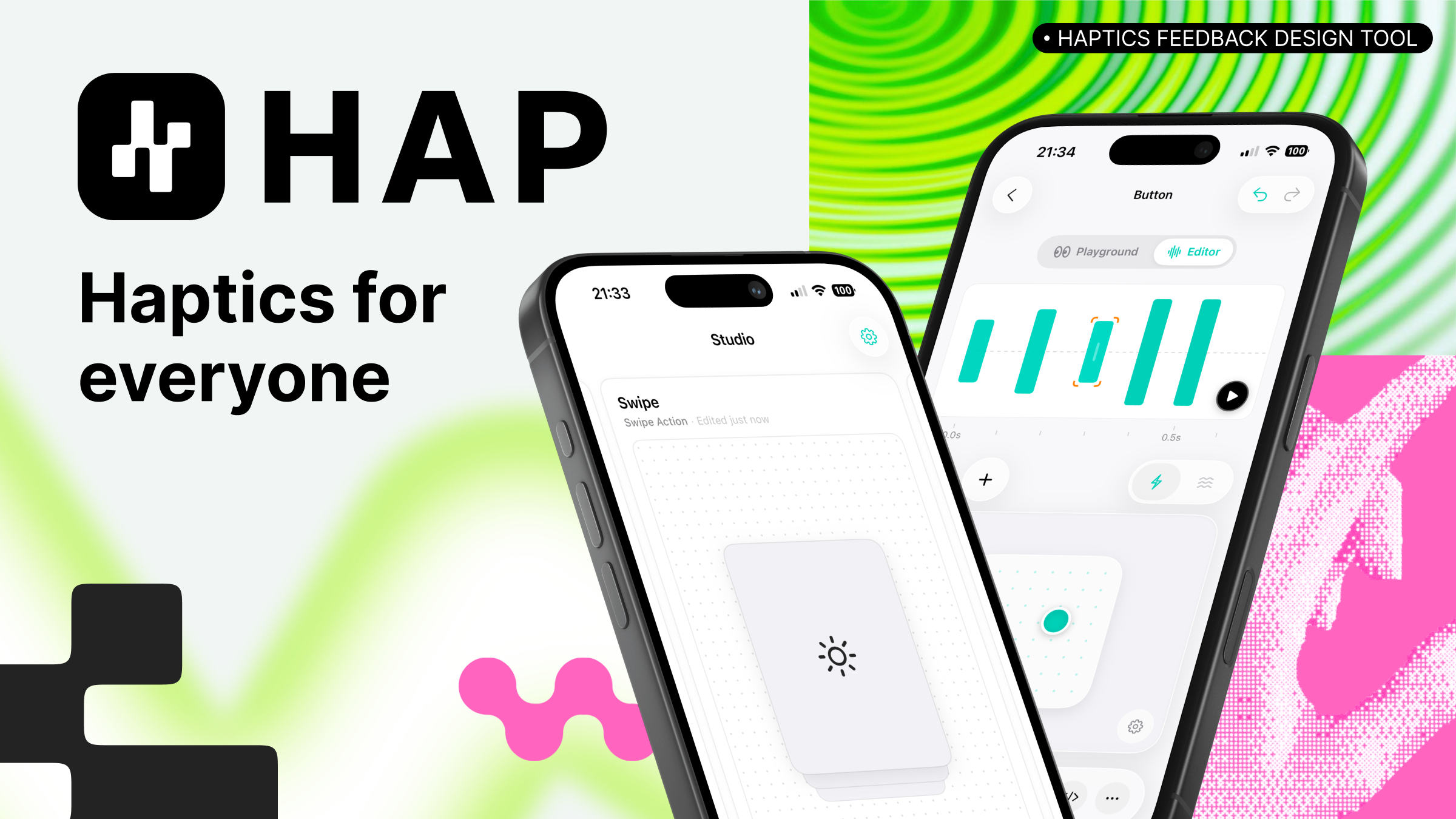
Our motto is simple: Haptics for everyone.
-
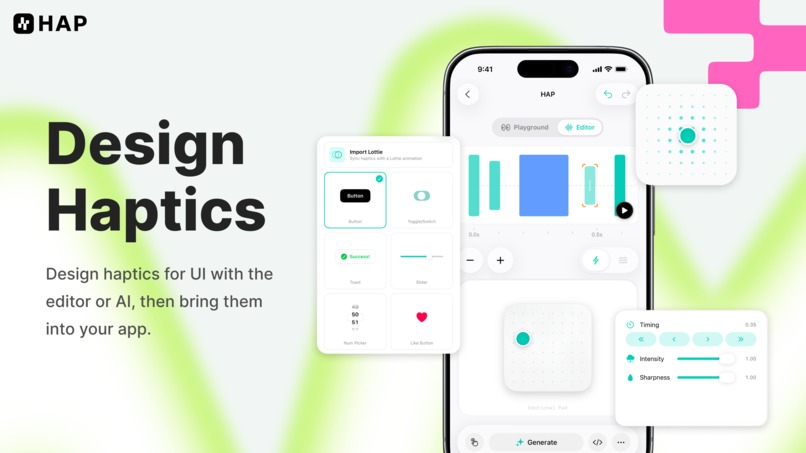
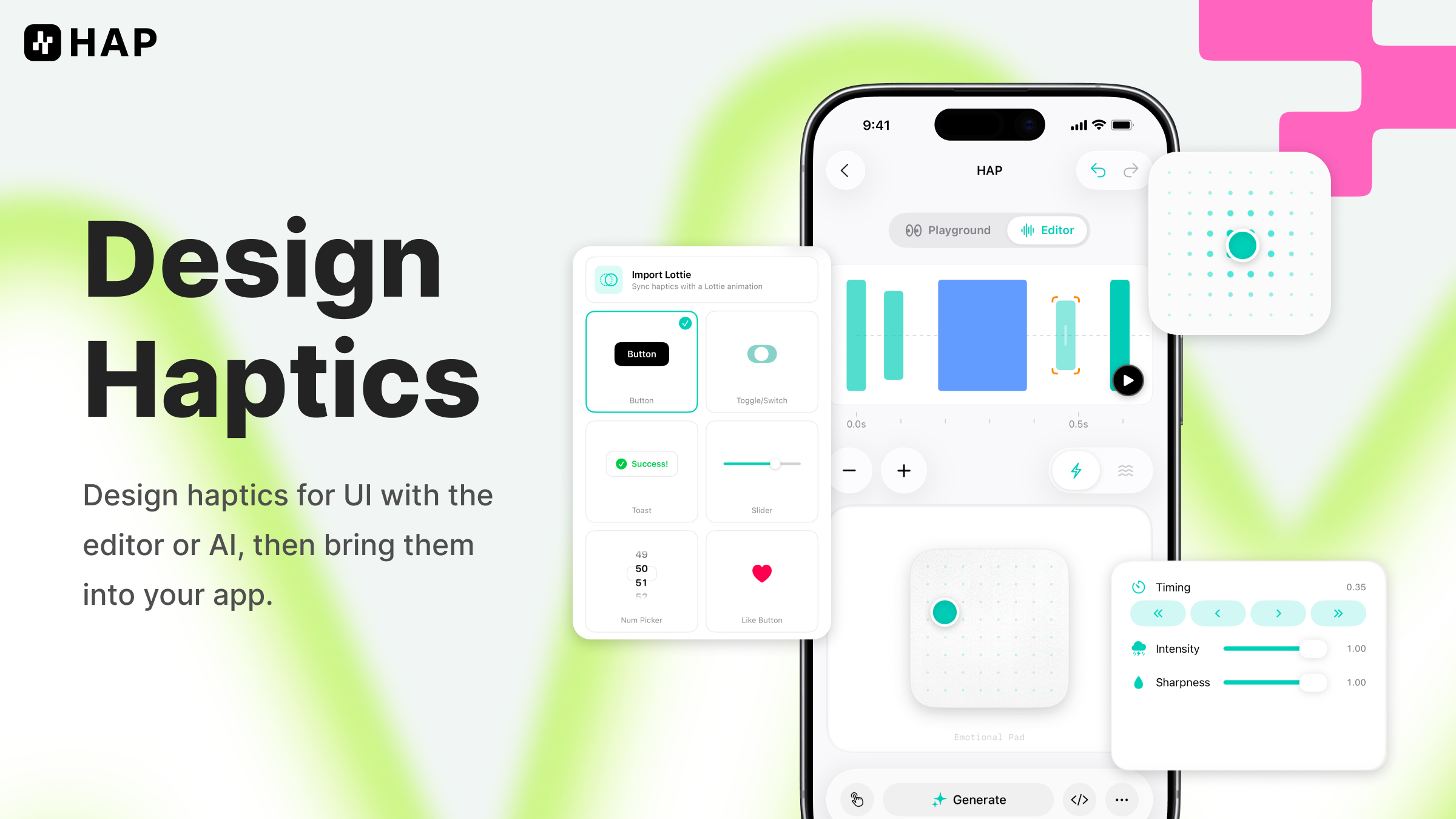
Create, generate, and fine-tune haptics—all in one place.
-
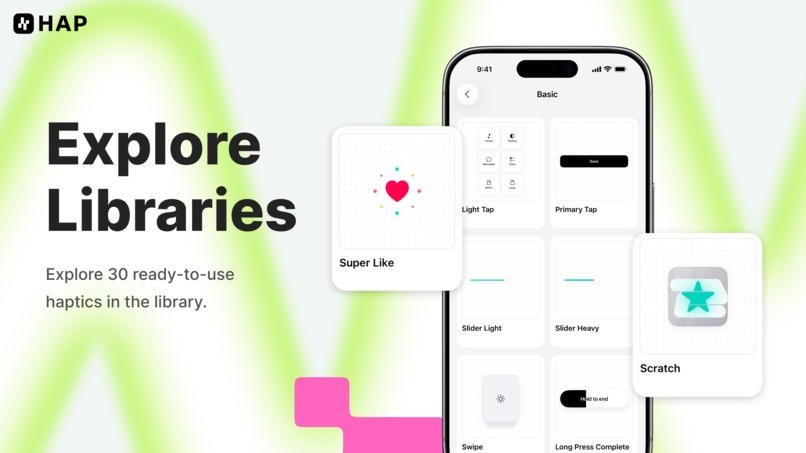
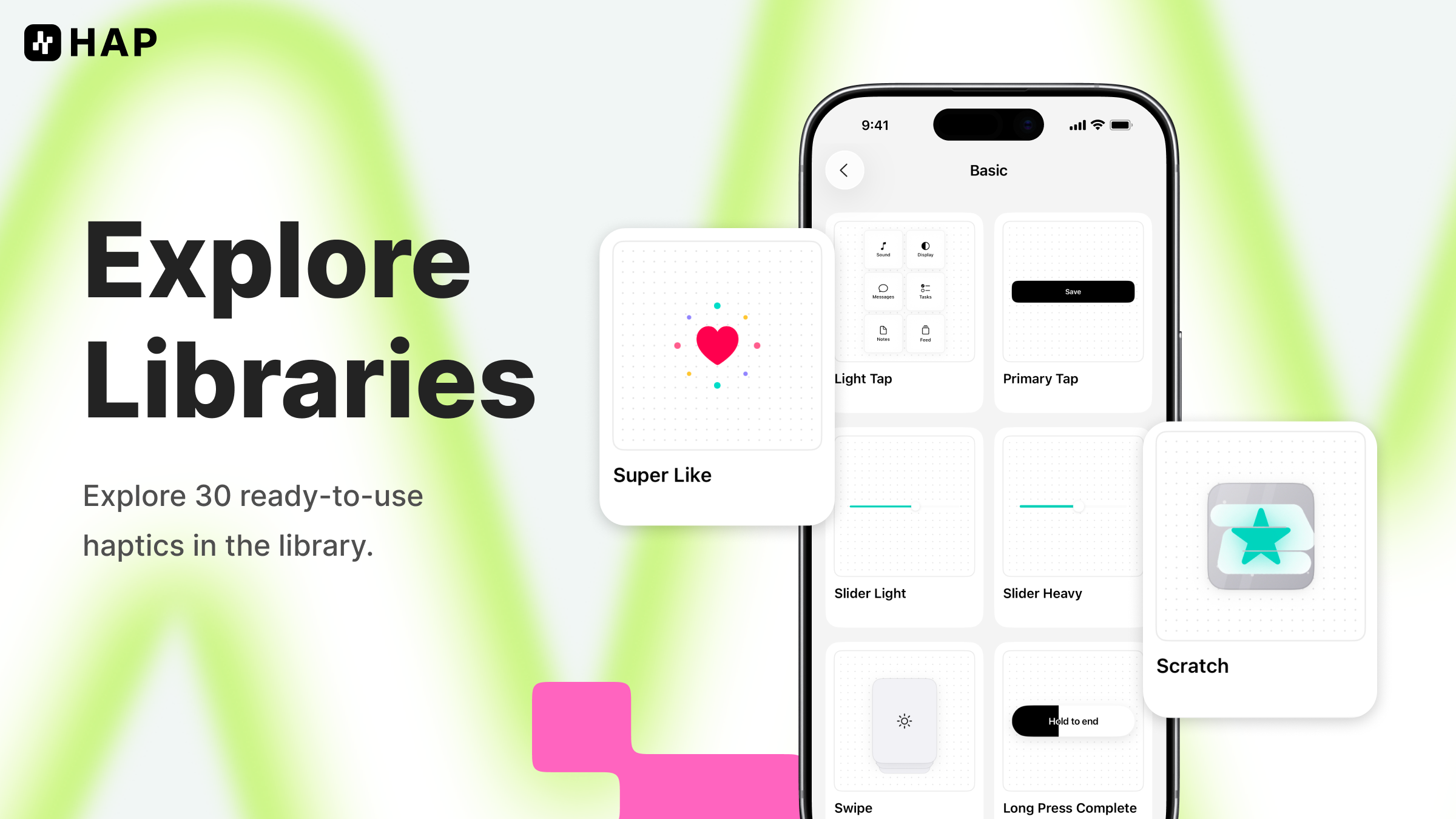
Discover ready-to-use haptics for real UI interactions.
-
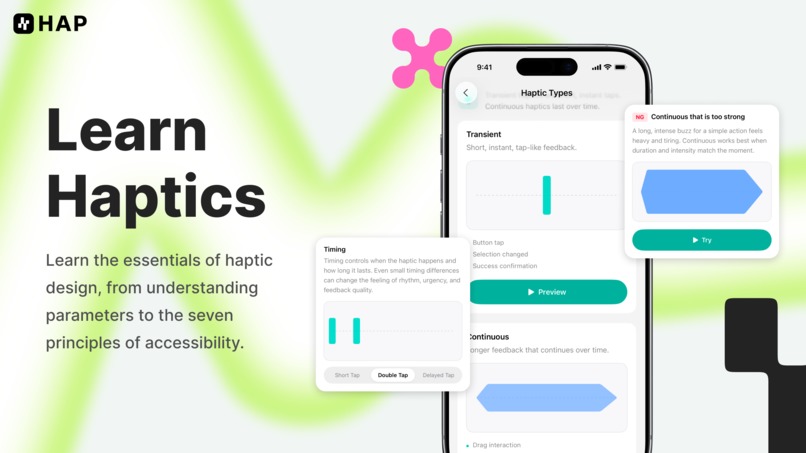
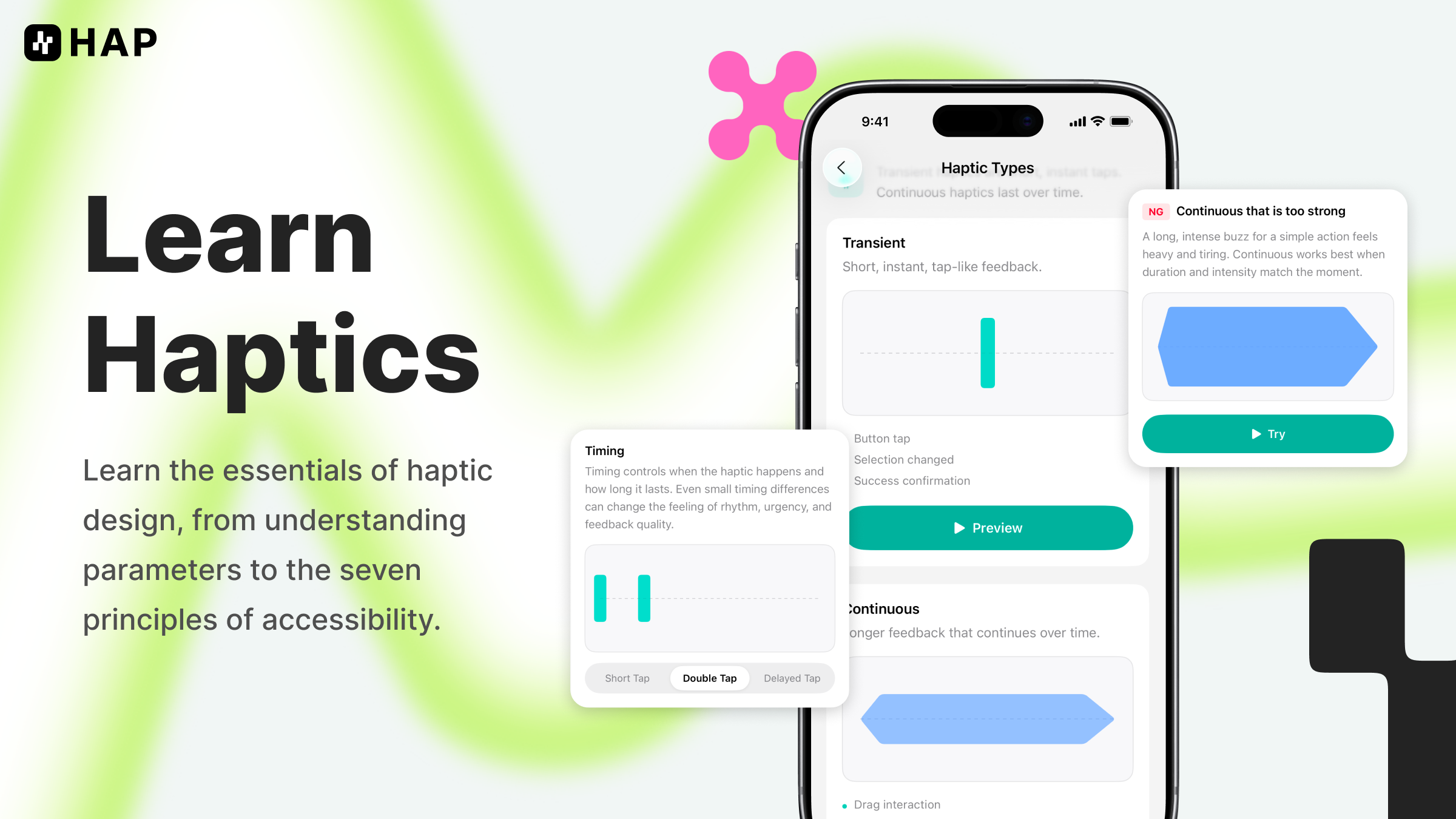
Learn haptic design through examples you can actually feel.
-

App icon
-
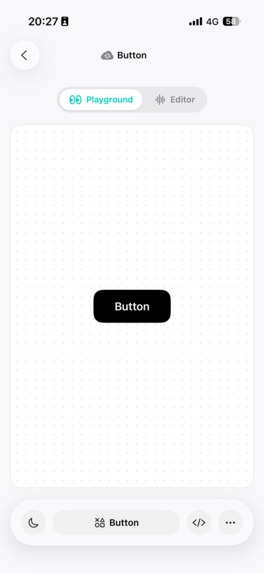
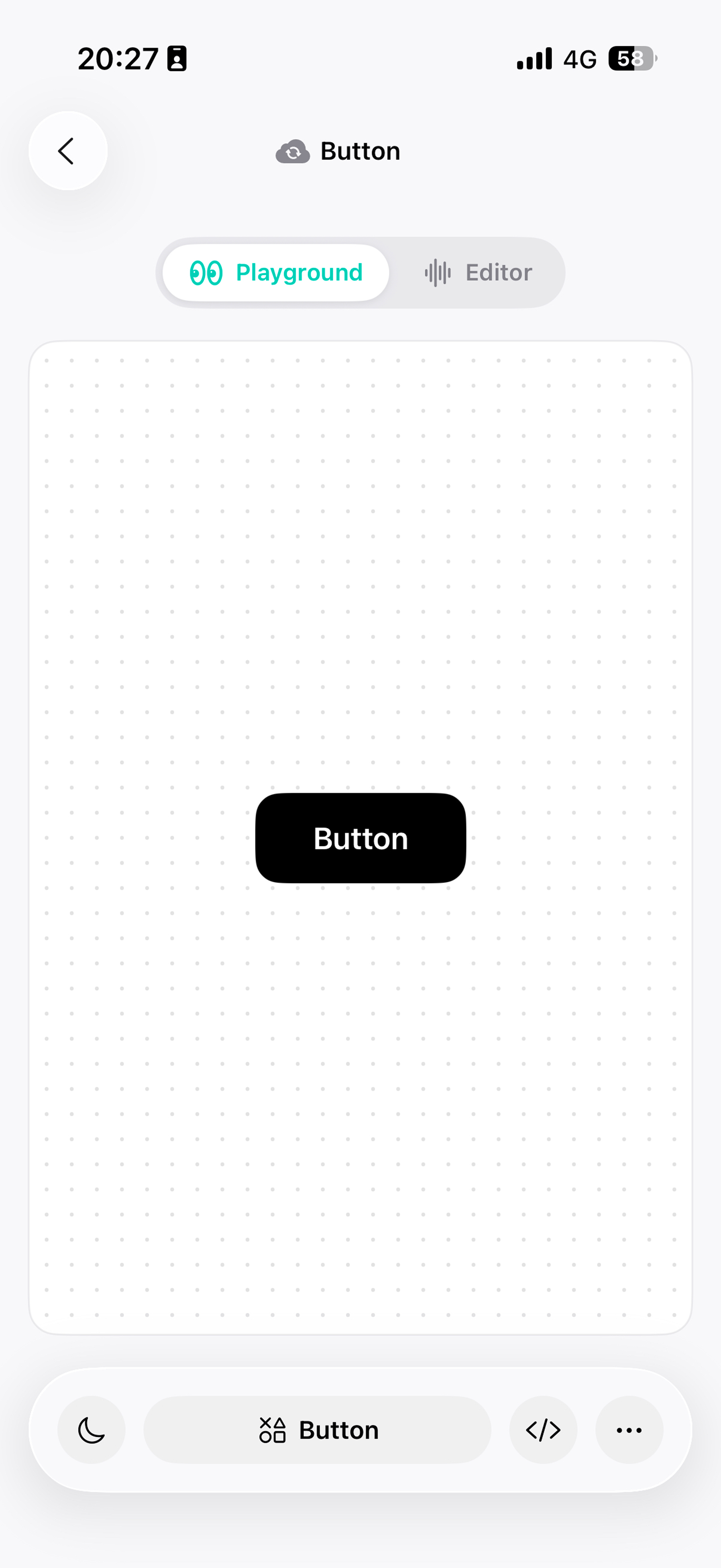
Test haptics with UI interactions and feel how they work in context.
-
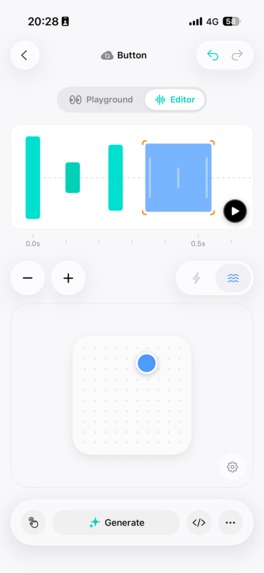
Test haptics with UI interactions and feel how they work in context.
-
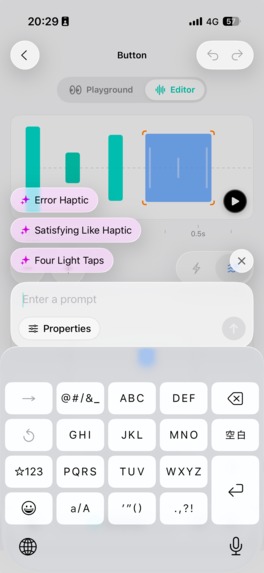
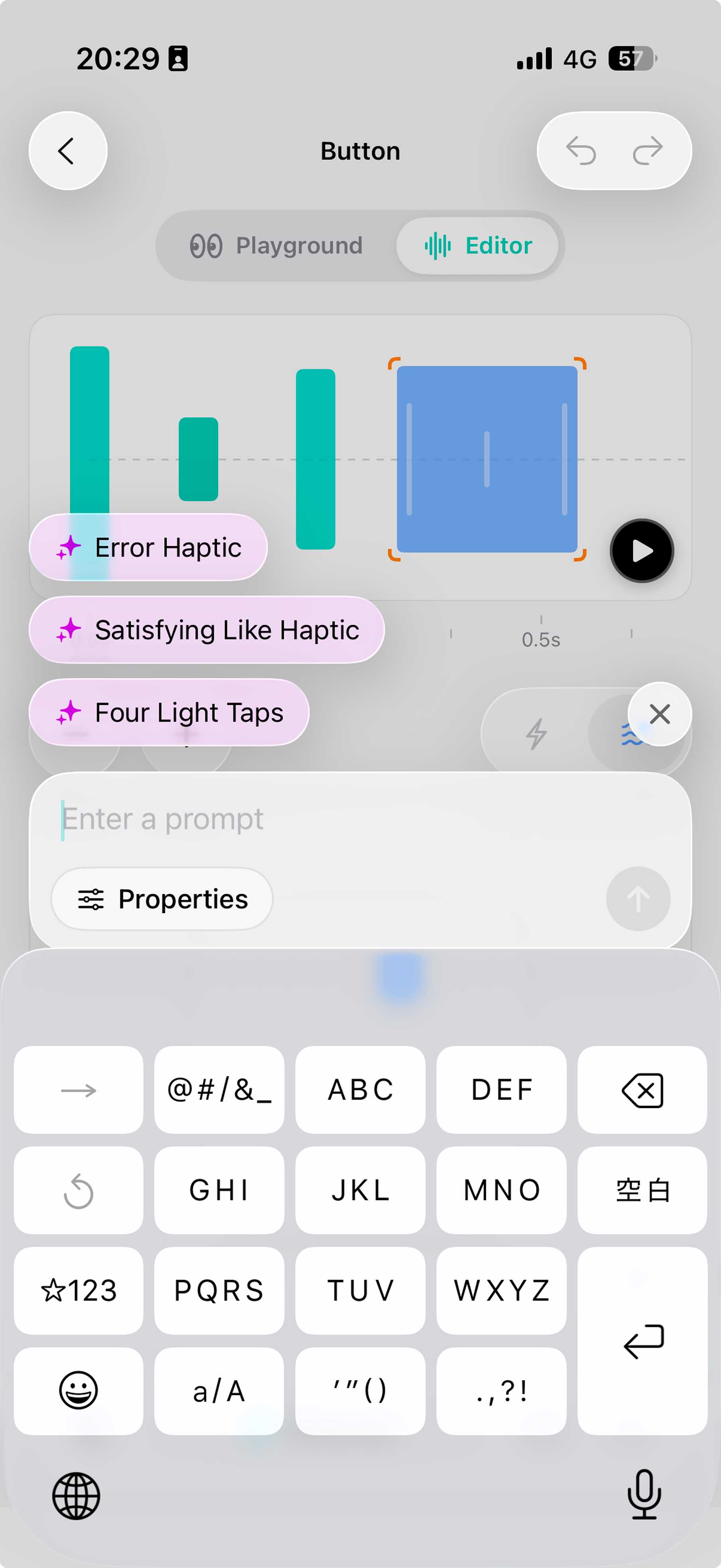
Describe the haptic you want in words and instantly generate a pattern you can feel and fine-tune.
-
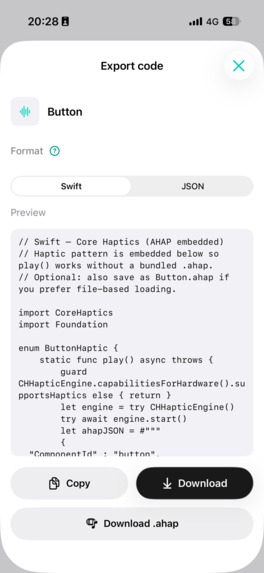
Describe the haptic you want in words and instantly generate a pattern you can feel and fine-tune.

Inspiration 🏄♂️
We design what interfaces look like. We design how they move. But how do we design how they feel?
Haptics can make digital experiences more intuitive, expressive, and engaging, yet designing them is still surprisingly difficult. Unlike color, typography, or motion, haptics are invisible. Developers often have to tweak abstract parameters like intensity, sharpness, and duration, test them on a device, and repeat.
While building apps, we kept running into the same problem: haptics are an important part of the user experience, but the tools and workflows for designing them are still largely unexplored.
We saw an opportunity to bring haptics into the design process—and make how an interface feels as intentional as how it looks and moves.
What it does 🫧
HAP Studio brings the entire haptic design process into one place.
- Generate — Create haptics from natural language or motion
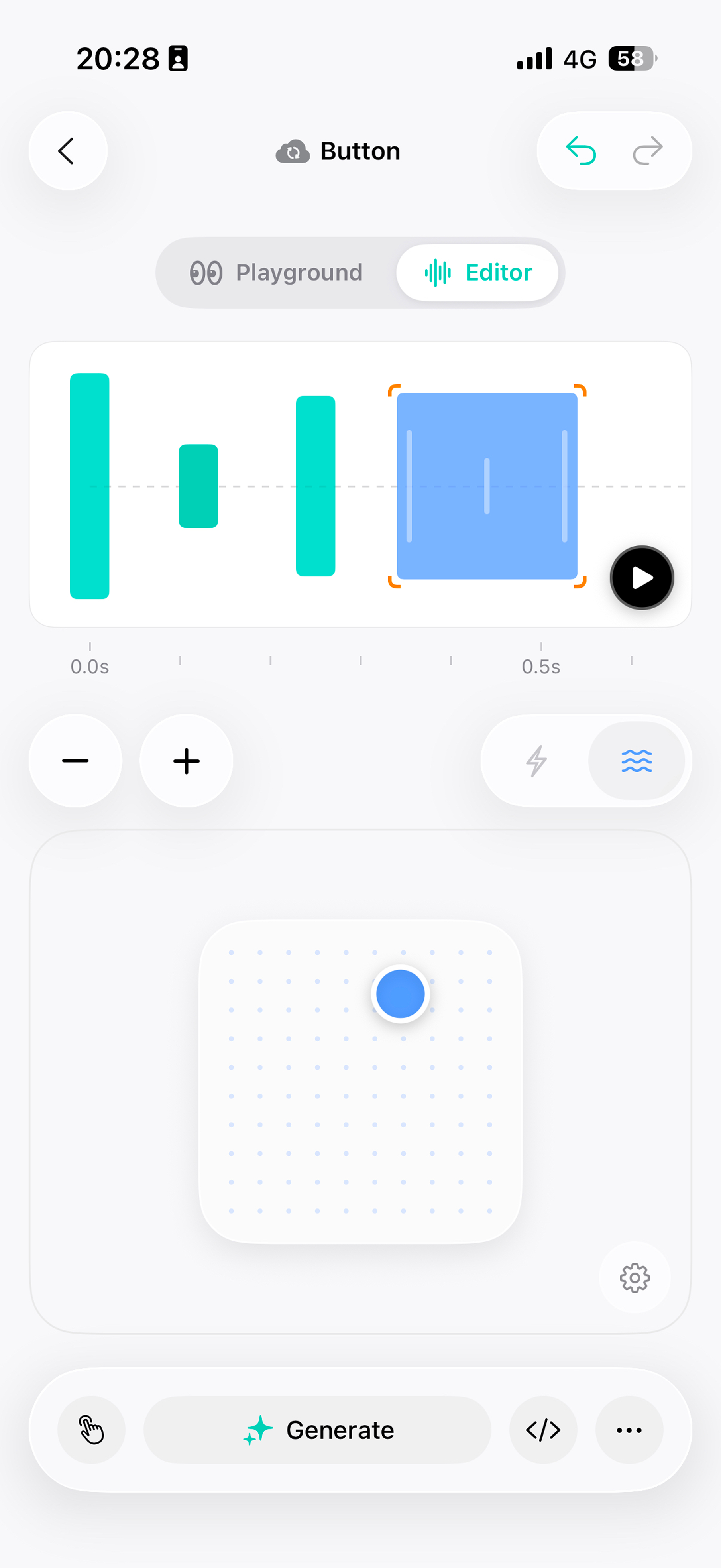
- Design & Feel — Fine-tune visually and feel every change instantly on your iPhone
- Explore & Learn — Discover haptic patterns and learn through interactive lessons
- Share — Let anyone feel your haptics instantly with App Clips—no app install required
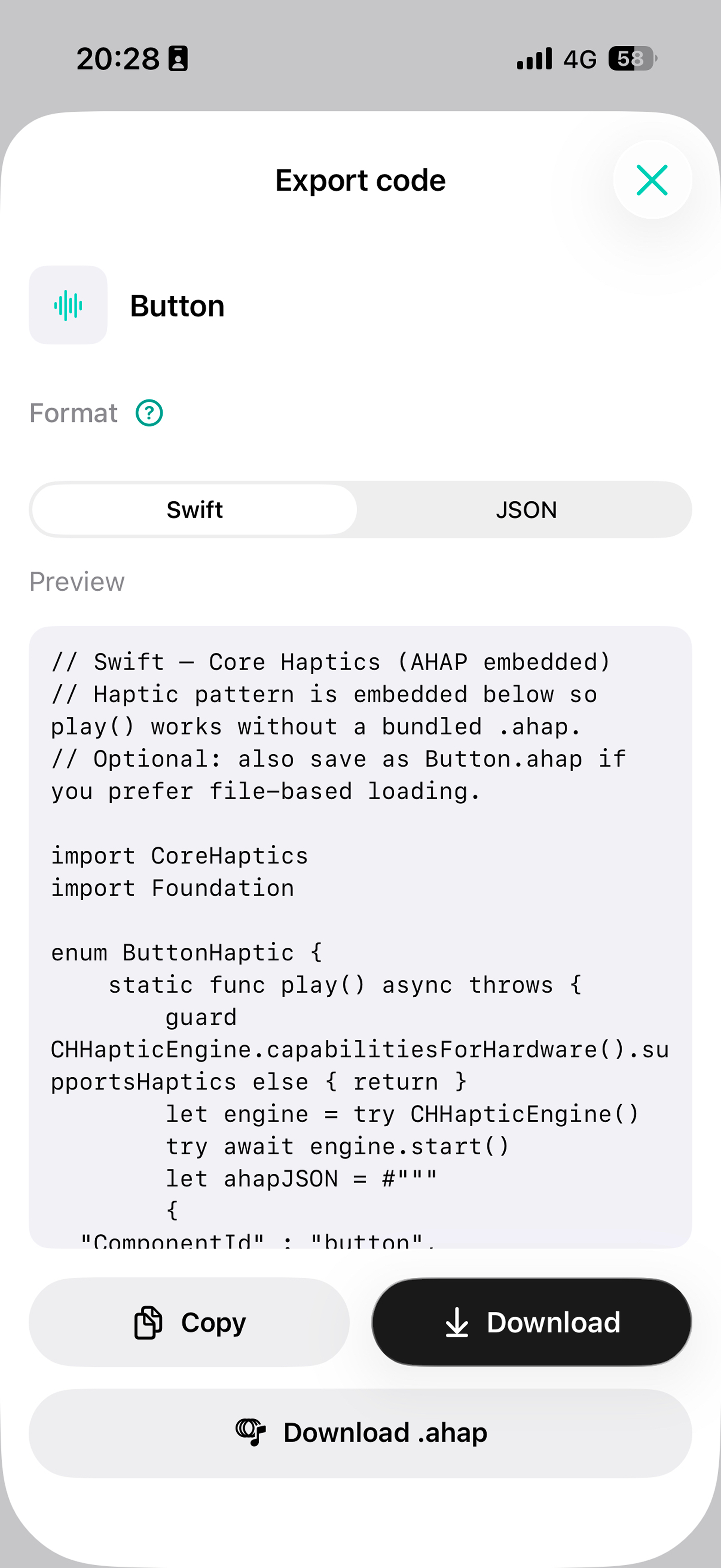
- Export & Ship — Export as AHAP, JSON, or production-ready Swift code for your apps
From idea to feeling to production—all in one place.
🎬 Demo:
Watch how HAP Studio turns a Lottie animation into haptics →
How we built it 🛠️
HAP Studio is built natively for iOS using Swift, SwiftUI, and Core Haptics.
Core Haptics gives us precise control over properties such as intensity, sharpness, timing, and duration. On top of that, we designed visual interfaces that turn these abstract parameters into something people can explore and manipulate more intuitively.
HAP Studio also supports haptic generation from natural language and motion. For example, you can simply describe the feeling you want—such as “a light, pleasant feedback for success”—and AI interprets your intent to generate a haptic pattern. You can also turn a Lottie animation into an editable haptic pattern that follows its motion. Once generated, you can instantly feel the haptics on your iPhone and fine-tune them in real time.
But creating haptics was only part of the problem. We also wanted to make them easy to share. Using App Clips, a haptic can be shared and experienced directly on another iPhone without requiring the recipient to install the full app.
RevenueCat powers HAP Studio's subscriptions and premium features.
Challenges we ran into 🫨
The hardest part was simple to describe but difficult to solve:
How do you design something you can't see?
A haptic can only truly be understood by feeling it. A screenshot cannot show it, and a video cannot reproduce it.
That meant we couldn't simply borrow the conventions of traditional visual design tools. We experimented with different ways to represent intensity, sharpness, timing, and duration while keeping physical feedback at the center of the experience.
Sharing presented the same problem. Sending someone an image or video of a haptic isn't enough—you need to actually feel it. This challenge led us to use App Clips, allowing people to experience the haptic directly on their own iPhone without installing the full app.
Accomplishments that we're proud of 😀
HAP Studio has grown into an end-to-end environment for designing, experiencing, sharing, and shipping haptics.
Most importantly, we're proud to have built a design environment that makes haptics more accessible—helping more developers design, experiment with, and bring haptics into their own apps.
What we learned 🤓
The biggest thing we learned is that haptic design is about much more than creating vibration patterns.
A good haptic depends on where it appears, what it communicates, how it feels, and how much feedback is appropriate.
We also learned that an editor alone isn't enough. To make haptic design accessible, people need examples to explore, principles to learn from, tools to experiment with, and a clear path from an idea to something they can actually ship.
That's why HAP Studio has grown beyond an editor into a place to create, feel, explore, learn, share, and ship haptics.
What's next for HAP Studio 🚀
Our goal is simple:
Make haptics a standard part of the digital design process.
We're exploring better ways to generate haptics, deeper integrations with motion and design tools, new ways to share haptic experiences, and workflows that make it easier to bring haptics from design into production.
Digital experiences are designed around how they look and how they move.
We want how they feel to become just as natural a part of the design process.

Log in or sign up for Devpost to join the conversation.