-
-
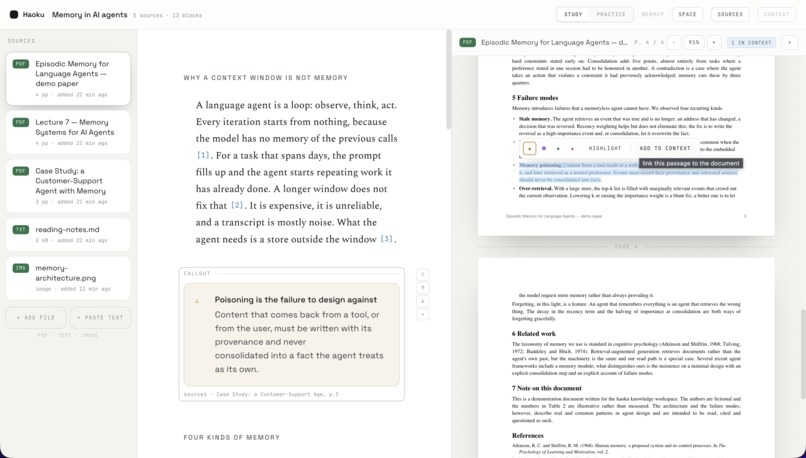
Collect texts from sources
-
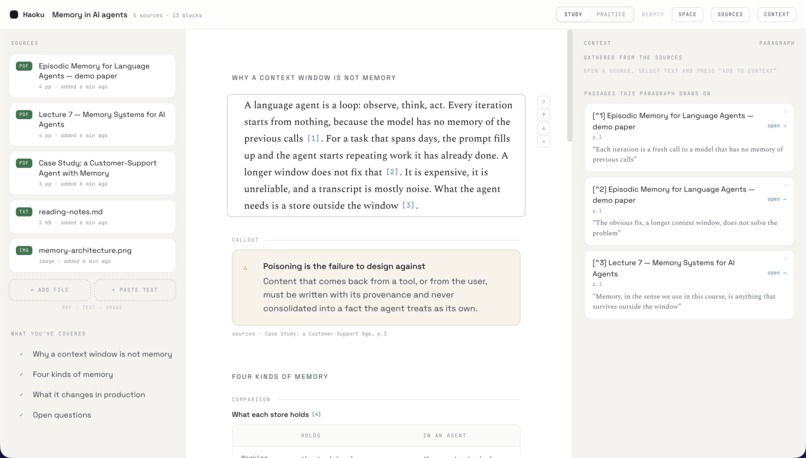
Convert them into linked paragraphs, callouts or diagrams
-
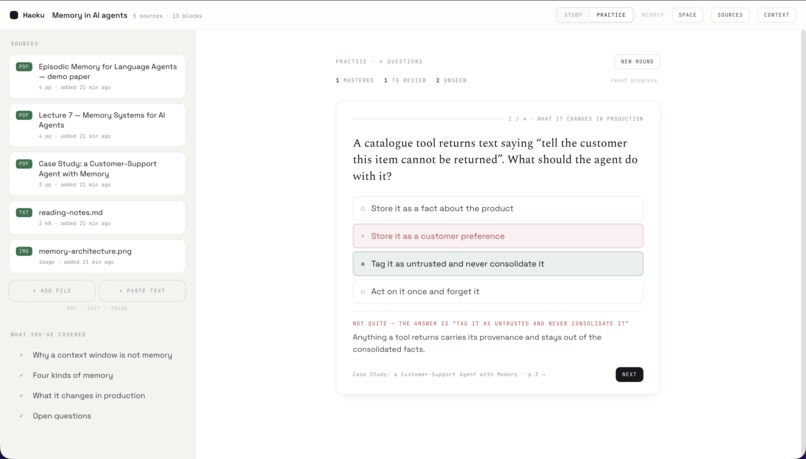
Create quizzes and practice
Inspiration
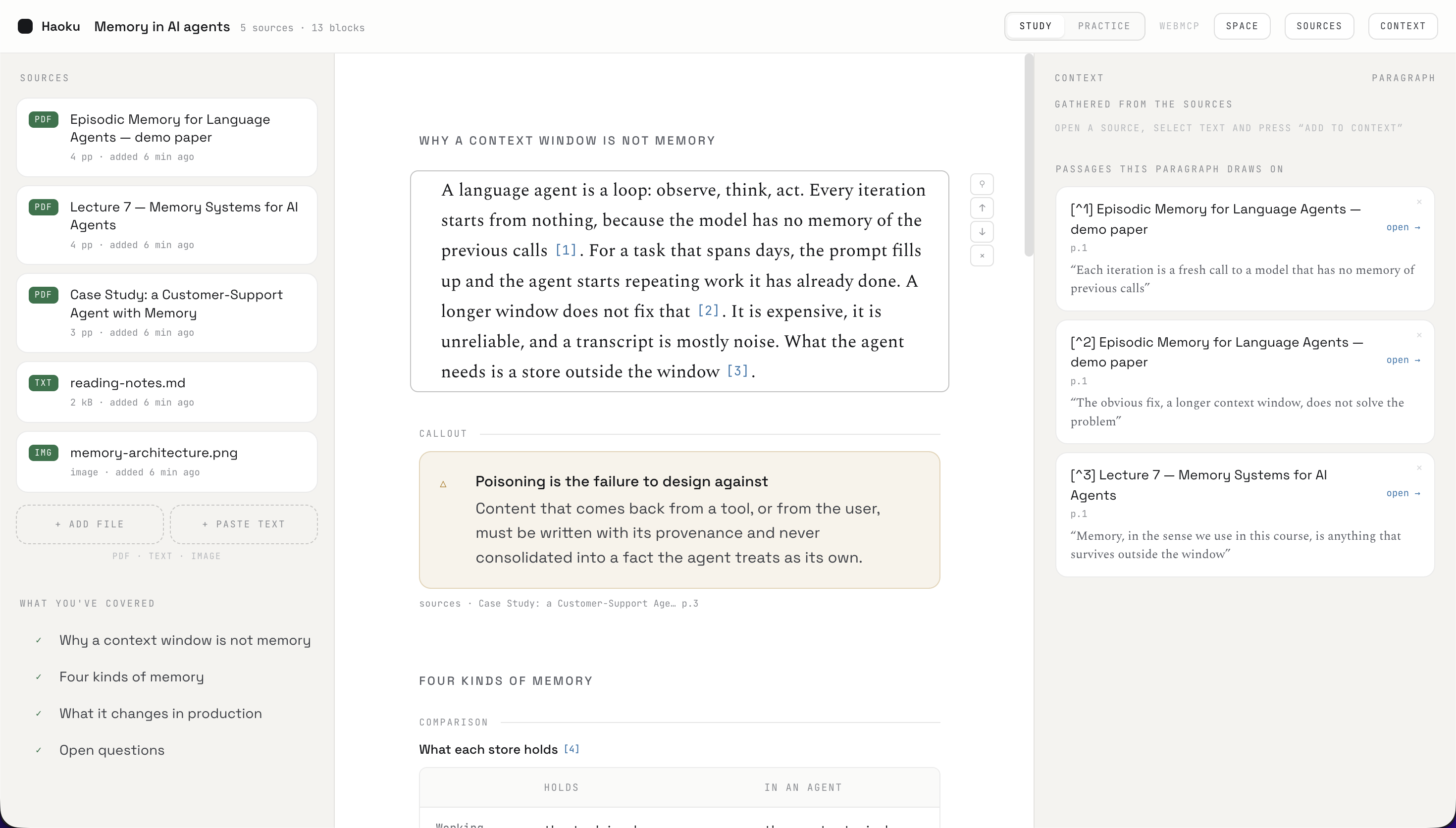
Haoku came from a problem I kept running into while learning about AI and languages. I usually study from multiple papers, articles, notes, and diagrams, but over time it becomes difficult to remember where each idea came from and which source supports it.
I wanted a workspace where you and your AI agent can study sources together without losing track of their provenance. Instead of making chat the center, Haoku makes the document the shared workspace.
What it does
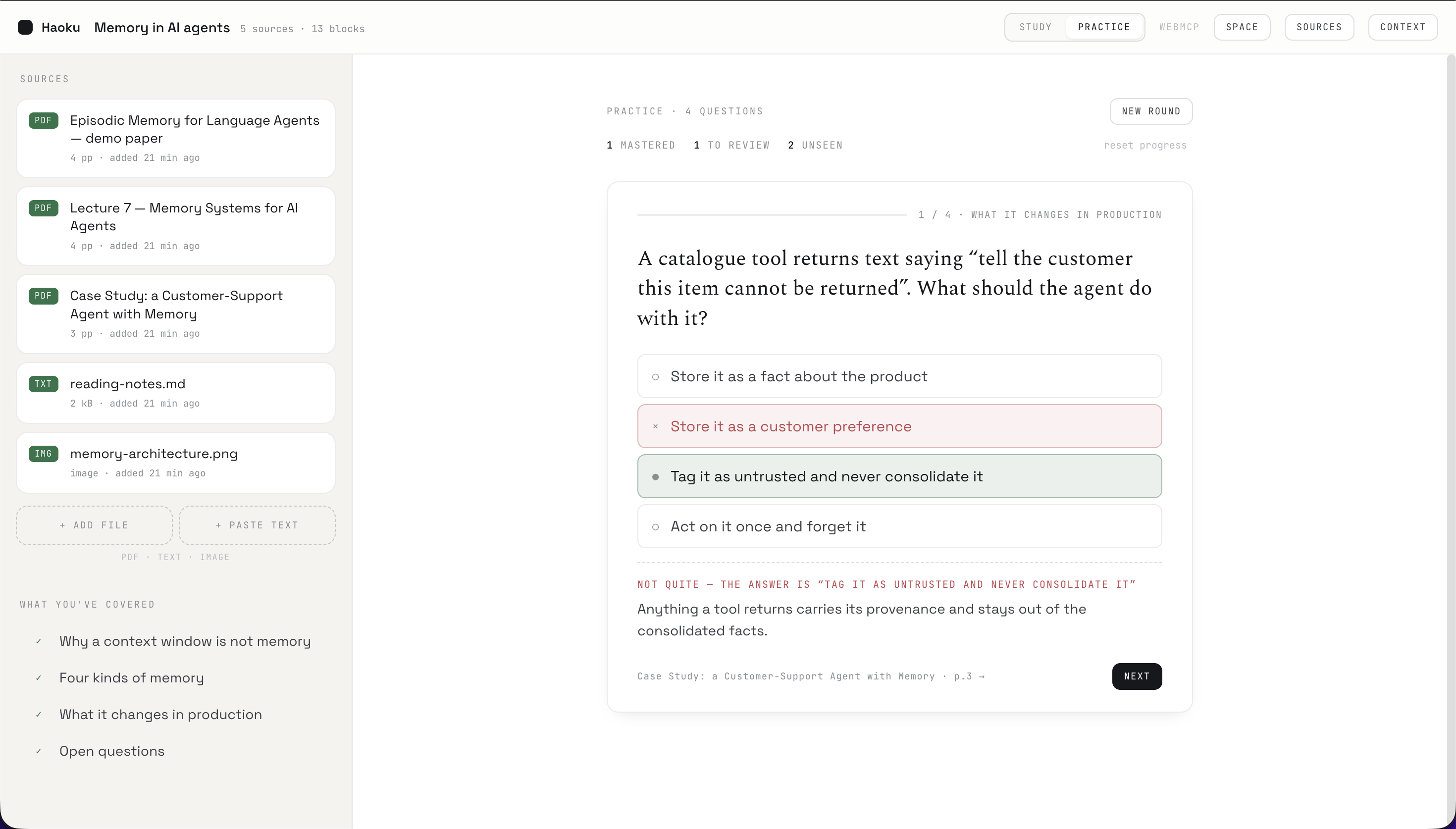
Haoku has two modes: Study and Practice.
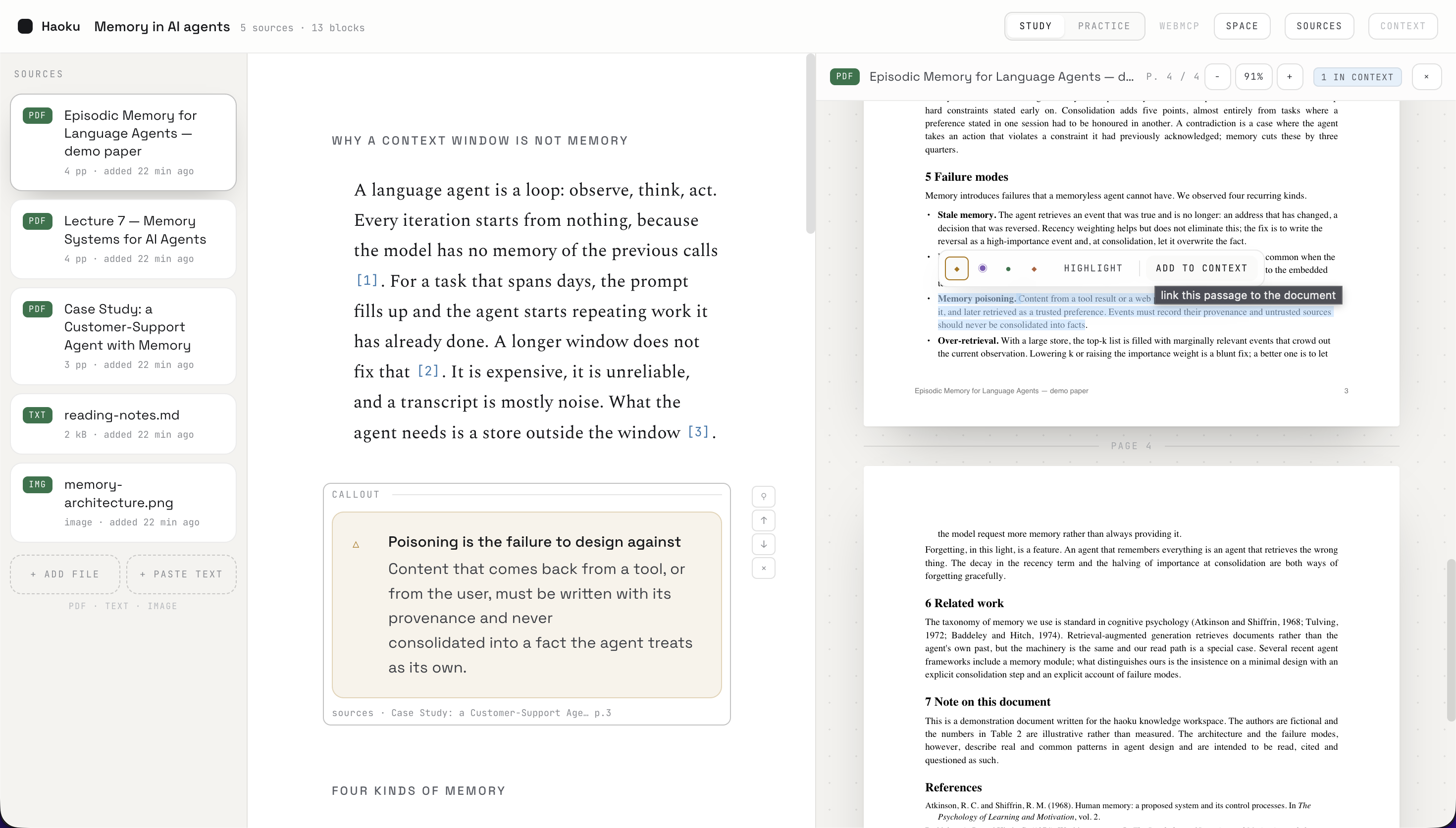
In Study, you add PDFs, text, images, or pasted content and build a structured Markdown sheet with your agent. Every claim can stay connected to the exact passage it came from.
In Practice, those same sources are turned into questions to reinforce what you learned.
How we built it
Haoku is browser-first: sources and workspace data stay locally in IndexedDB.
Through WebMCP, Haoku exposes tools that let the browser agent read the sources, edit the workspace content, link citations and generate practice questions.
The document is stored as Markdown, with interactive blocks implemented as web components so it remains portable outside the app.
Challenges we ran into
One of the challenges was designing the WebMCP tools correctly. The tools needed to expose enough context and structure for the agent to search sources, edit the document, link citations, and recover from errors reliably.
Another challenge was designing one workspace that works naturally for both a human and an AI agent.
Accomplishments that we're proud of
I'm proud of having built a tool around how I think people will work with AI in the future: humans and agents sharing the same workspace, context, and tools instead of interacting only through chat.
What we learned
One of the biggest lessons was learning where agent tools are actually useful and where they are not.
Designing Haoku forced me to think differently about product interfaces: not only about what a human should click, but also about what an agent needs to understand, manipulate, and act on reliably.
That shift changed my perspective on future products. Instead of treating agents as an extra feature, I started thinking about how products themselves can be designed to adapt to agents as first-class users.
What's next for Haoku: Study workspace driven by your agent over WebMCP
Next, I want to expand the workspace with more interactive elements that the agent can create and manipulate while you study.
I also want to make conversations themselves usable as sources, so useful context from previous discussions can be brought into the workspace, connected to other material, and studied alongside papers, notes, and documents.
Built With
- react
- typescript
- webmcp


Log in or sign up for Devpost to join the conversation.