-
-
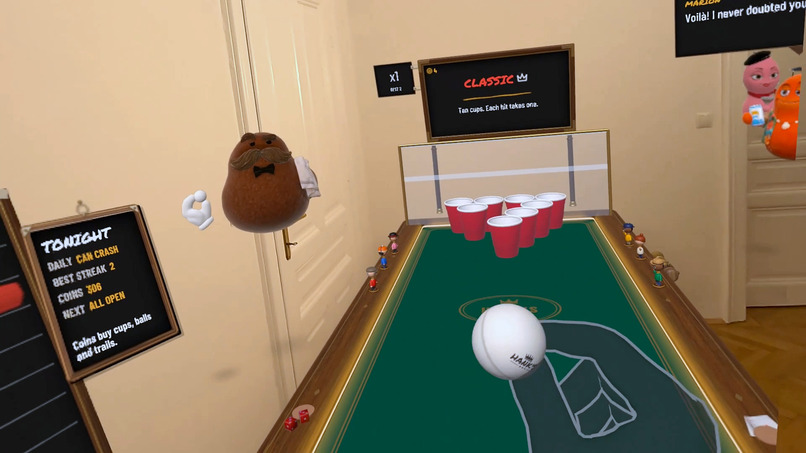
Classic Arcade Mode
-
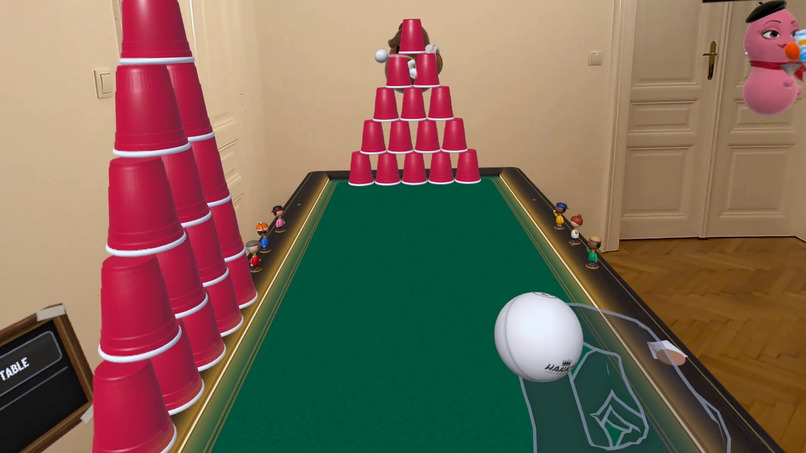
Cup Toweers
-
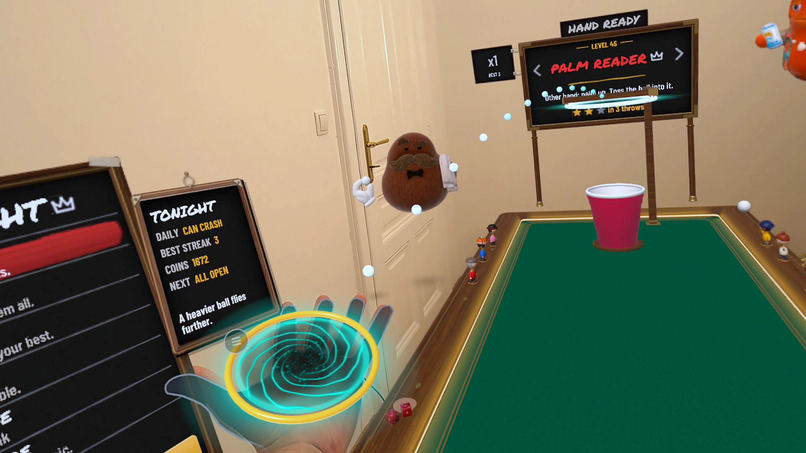
Hand Portal?
-
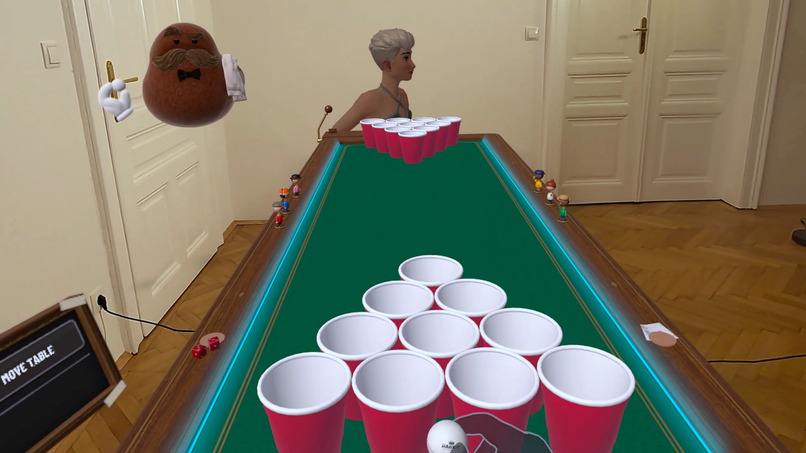
Multiplayeer
-
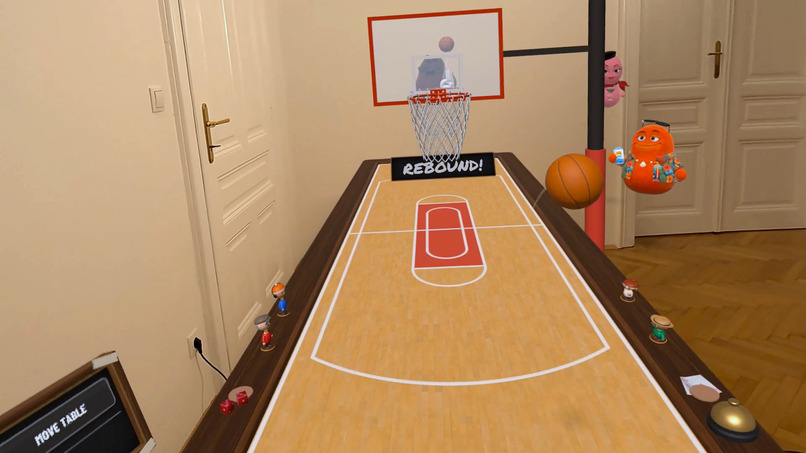
Hoops
-
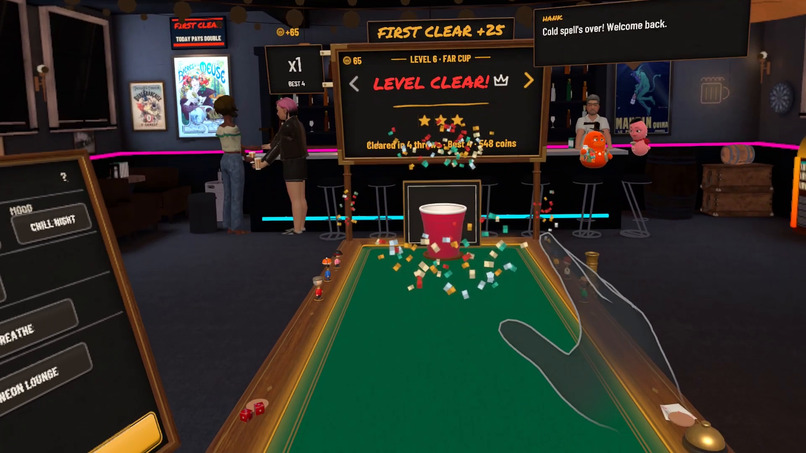
FULL VR
-
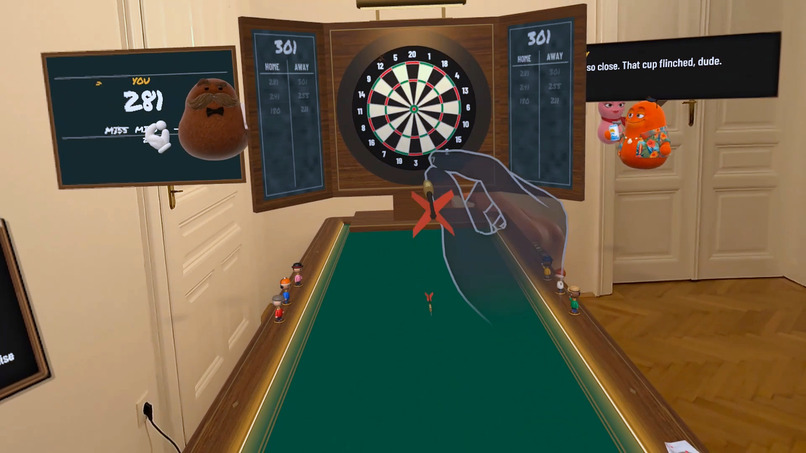
Darts??
-
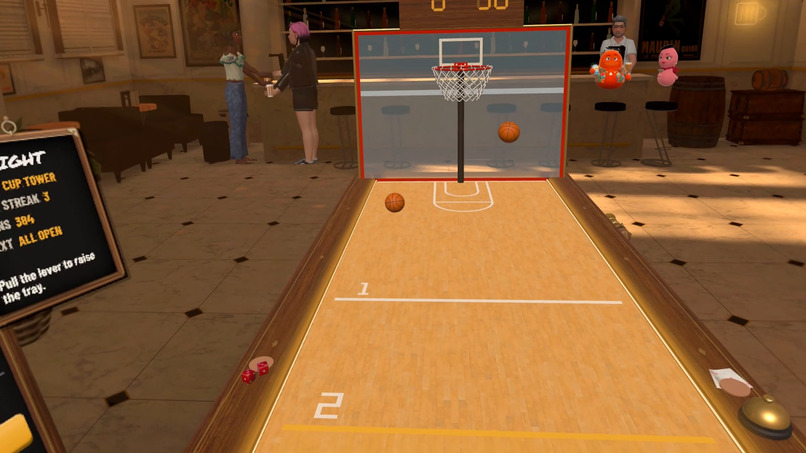
Hoops VR
-
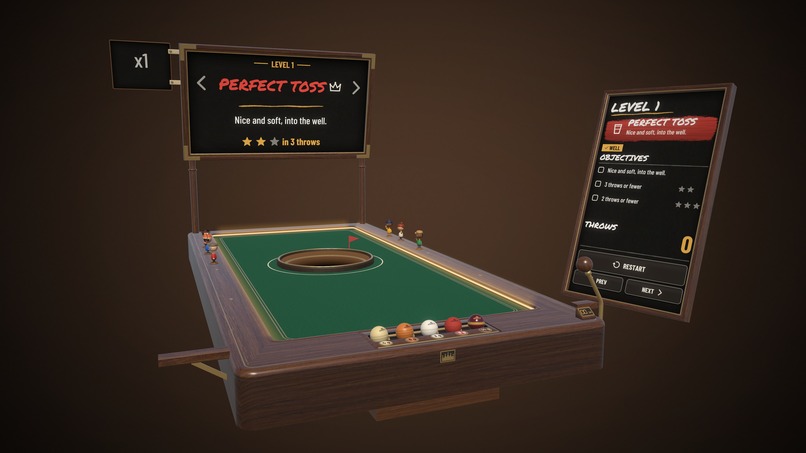
The Table
-
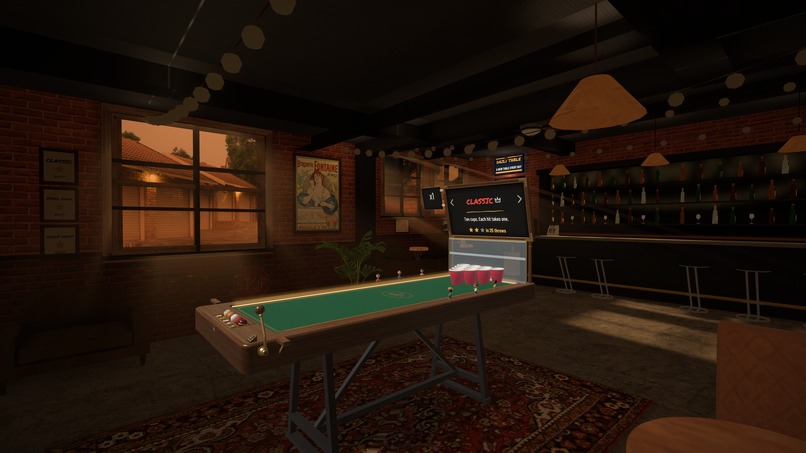
Mood Morning
-
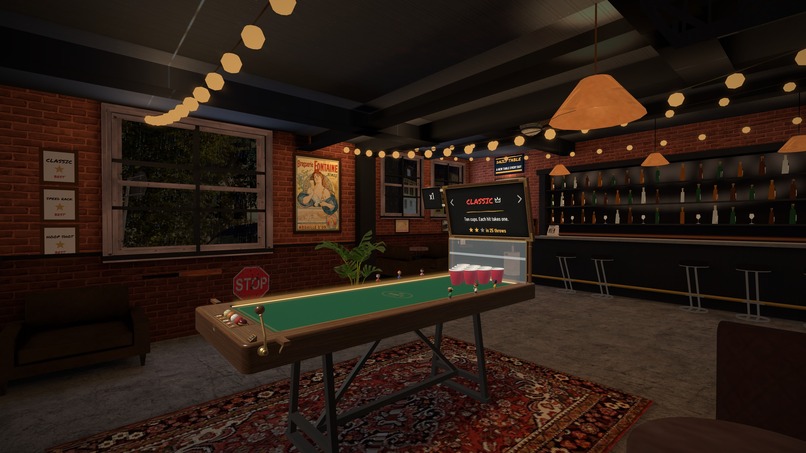
Mood Storm
-
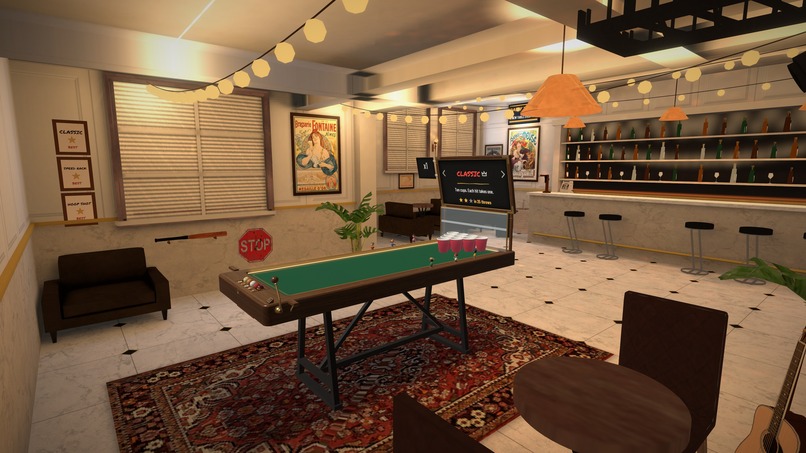
Grand Hotel VR
-
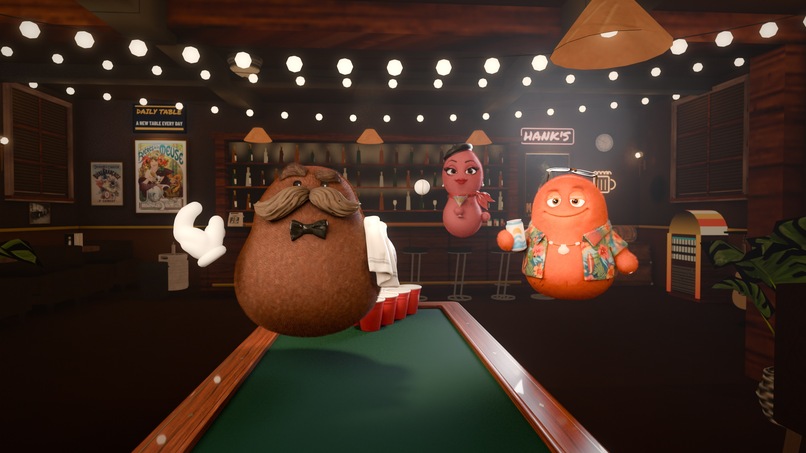
Hank & The Regulars
-
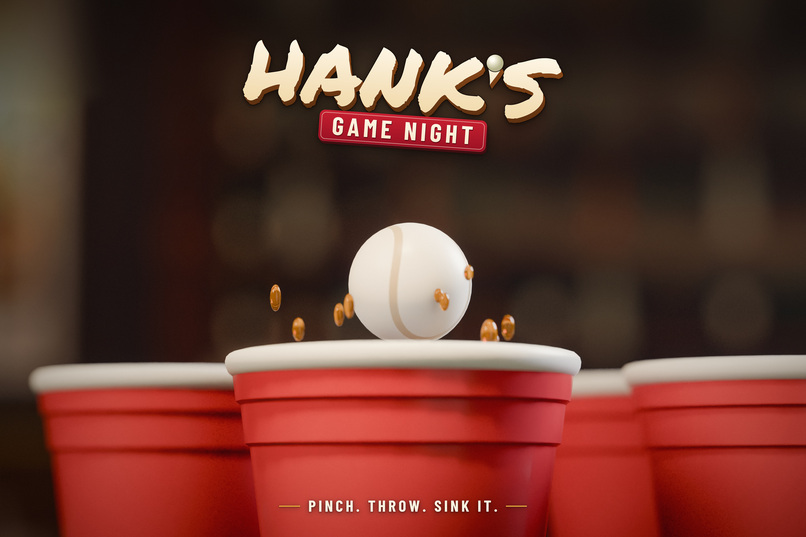
Cover Art
Inspiration
This started as something small. My friends and I live in different countries, and my brother and I especially wanted a way to hang out that wasn't another video call. Something quick and fun, that you can play sitting down, chilling and talking.
We joined the competition and began with a hand-tracked rock, paper, scissors game called Handful, mostly to find out whether throwing signs with your bare hands could feel satisfying. Then life happened, and my friend and my brother had to step away.
The idea that became this game came while in a break at work. We have a mini basketball hoop, and I kept noticing how a tiny, silly game pulls everyone in for "just one more shot". I wondered if I could recreate that feeling in a headset: something you can play alone for five minutes, or with a friend who is a thousand kilometres away.
I spent a couple of weekends just on the throw, looking at how other games did it and trying to get a ball to leave your fingers the way you meant it to. Once that worked, I built multiplayer early, only to answer one question: is this actually fun with another person? It was. But alone, the game felt a bit cold and lonely. That is how Hank was born. The bartender started as a name on the table and turned into a character who talks to you, teases you and keeps you company when your friends are offline.
What it does
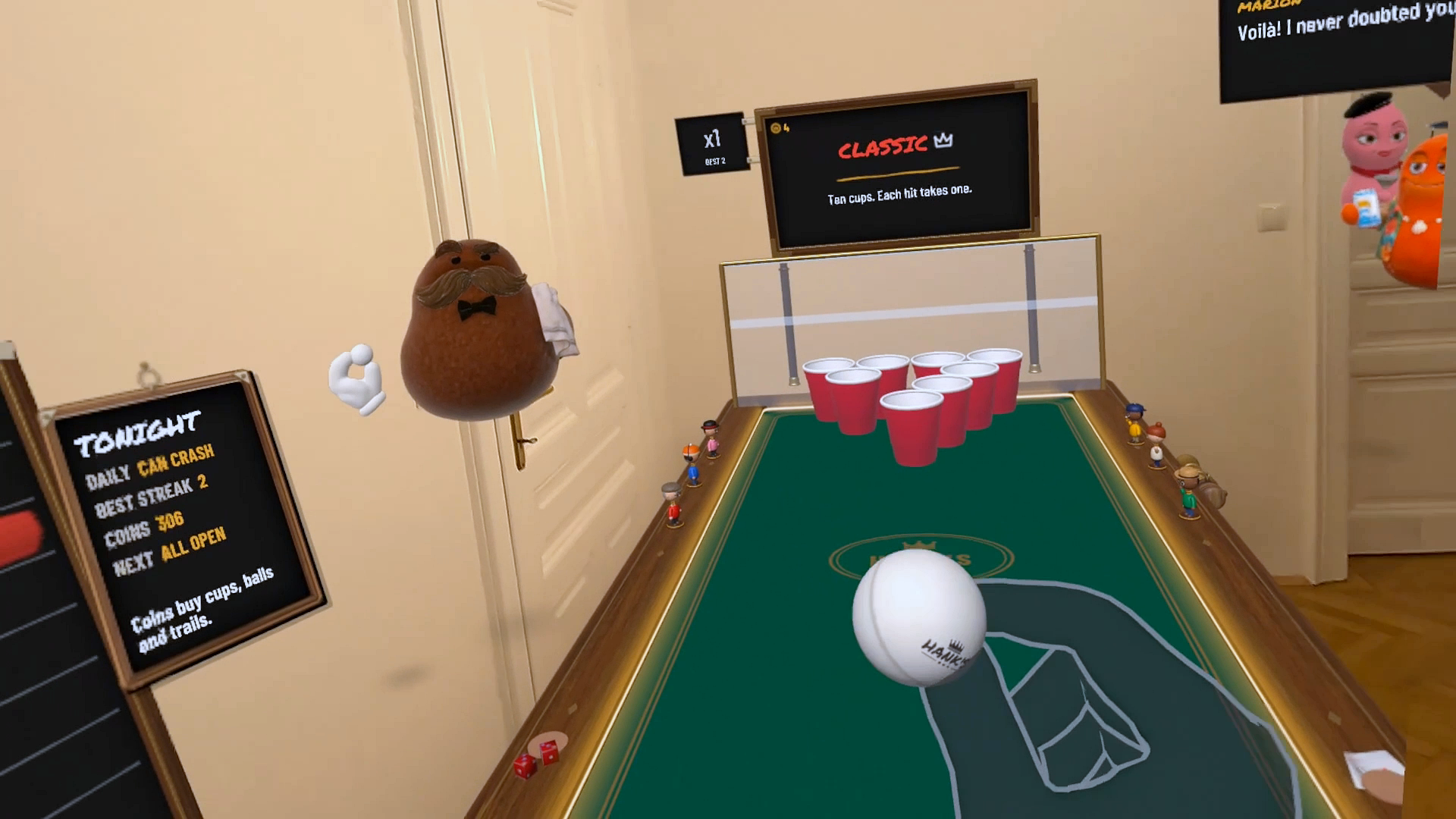
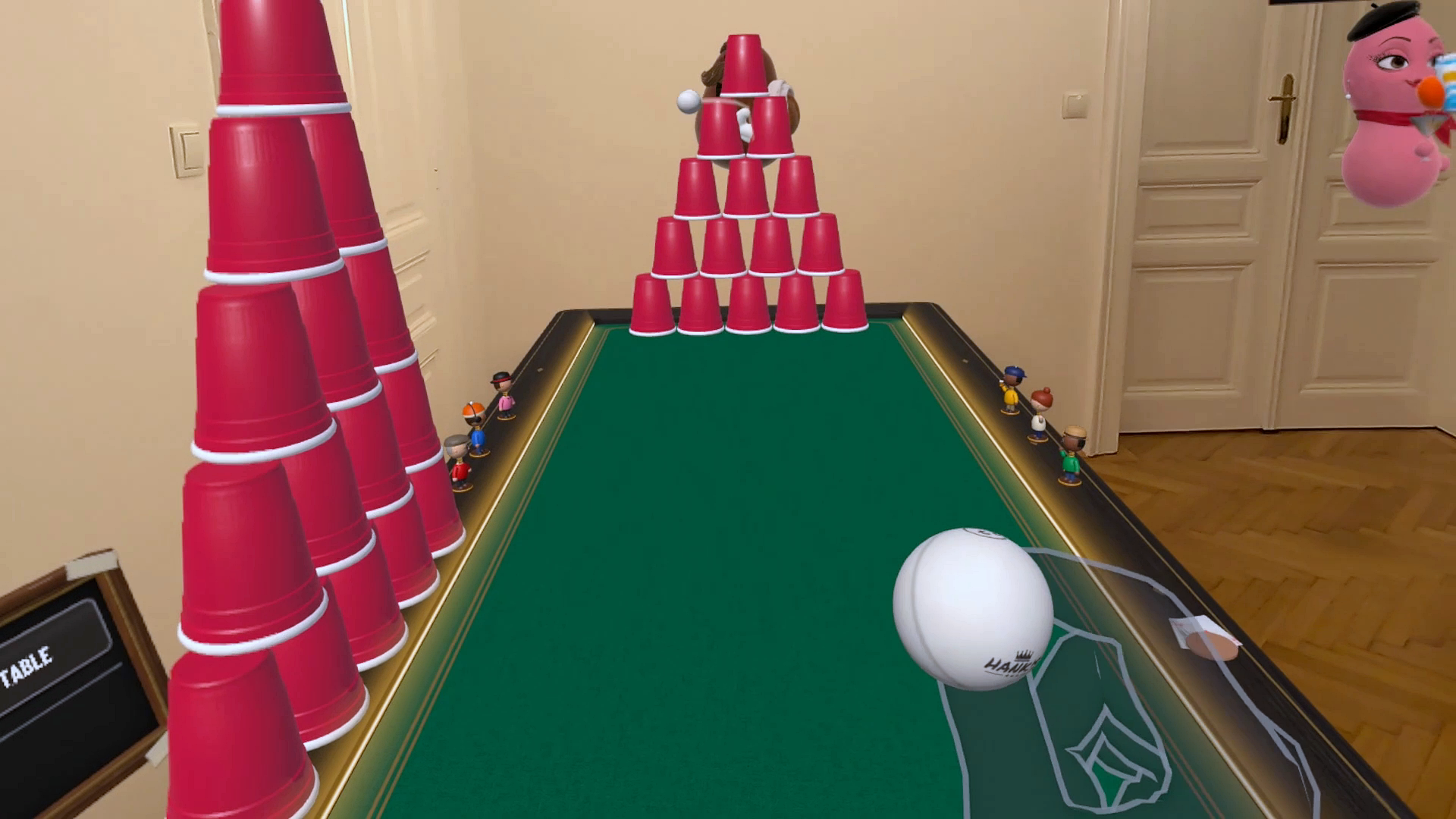
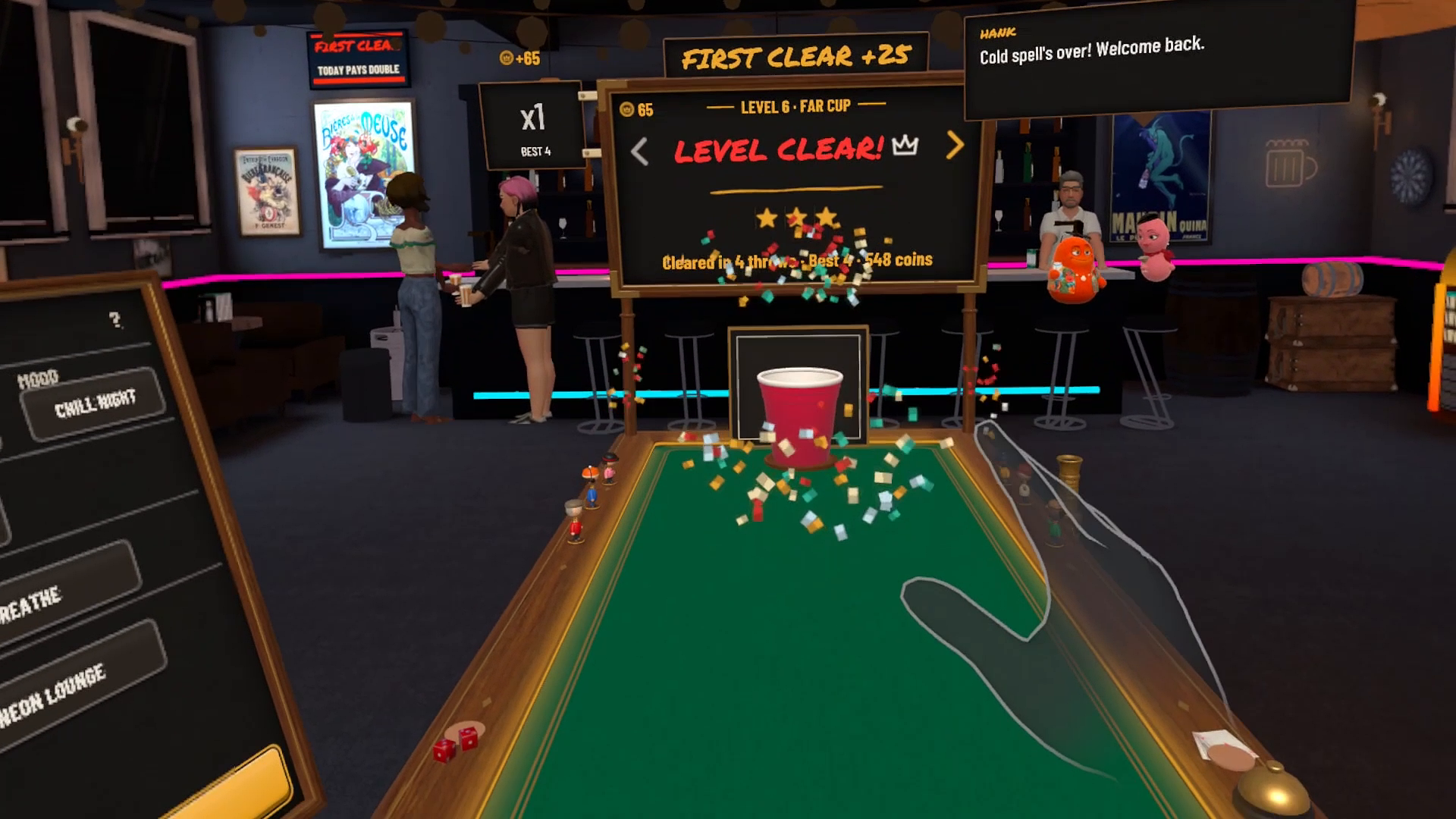
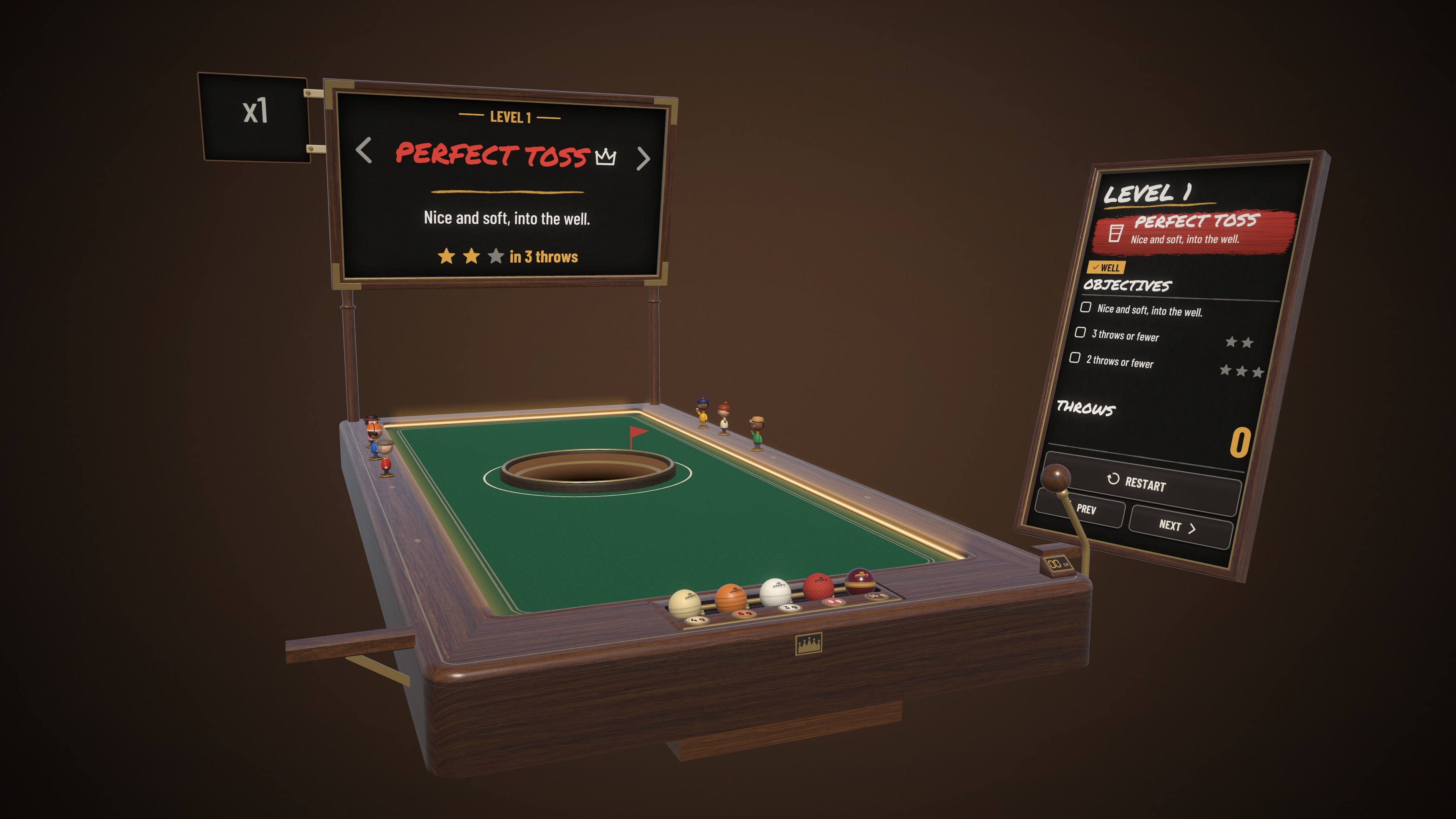
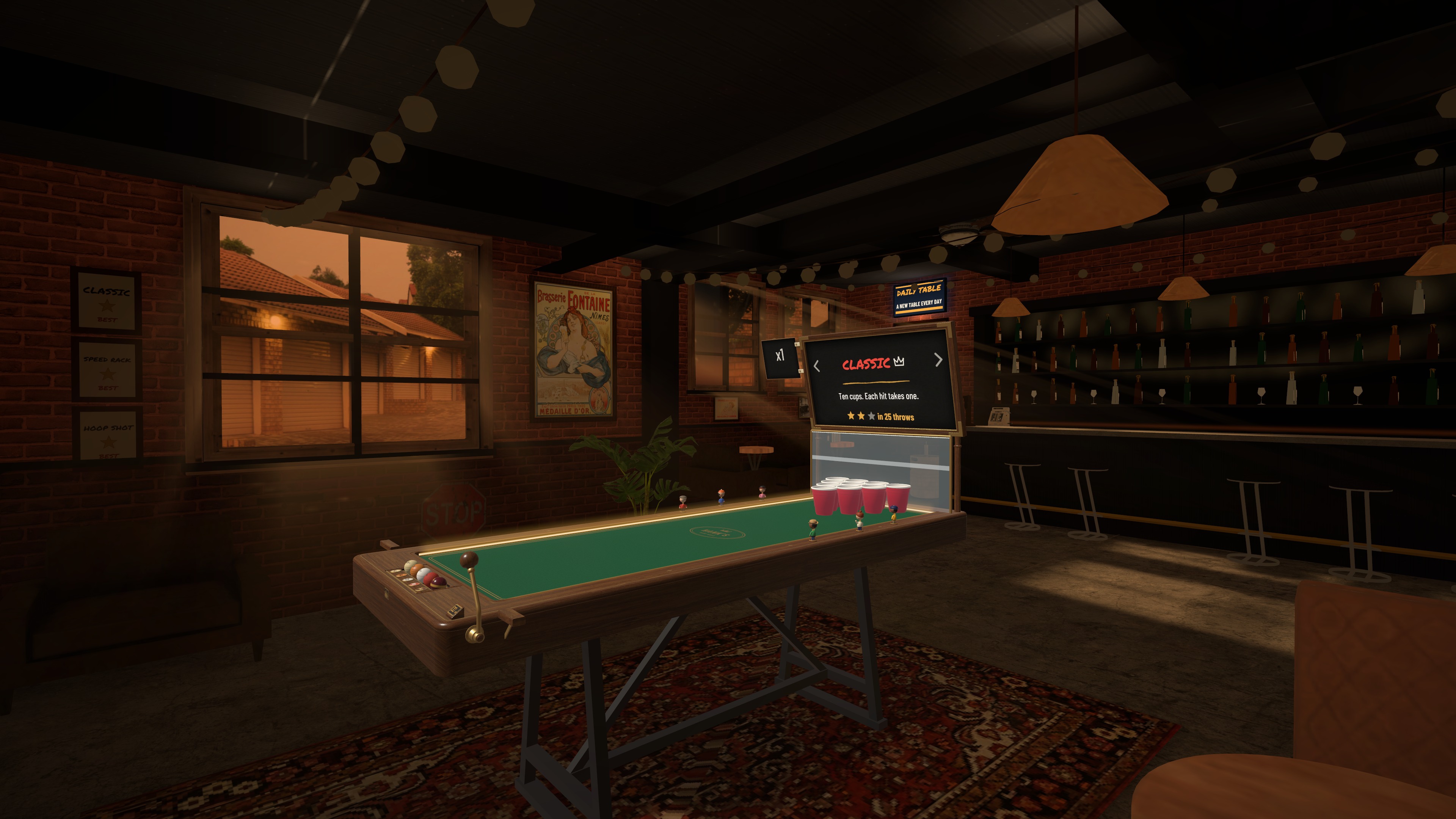
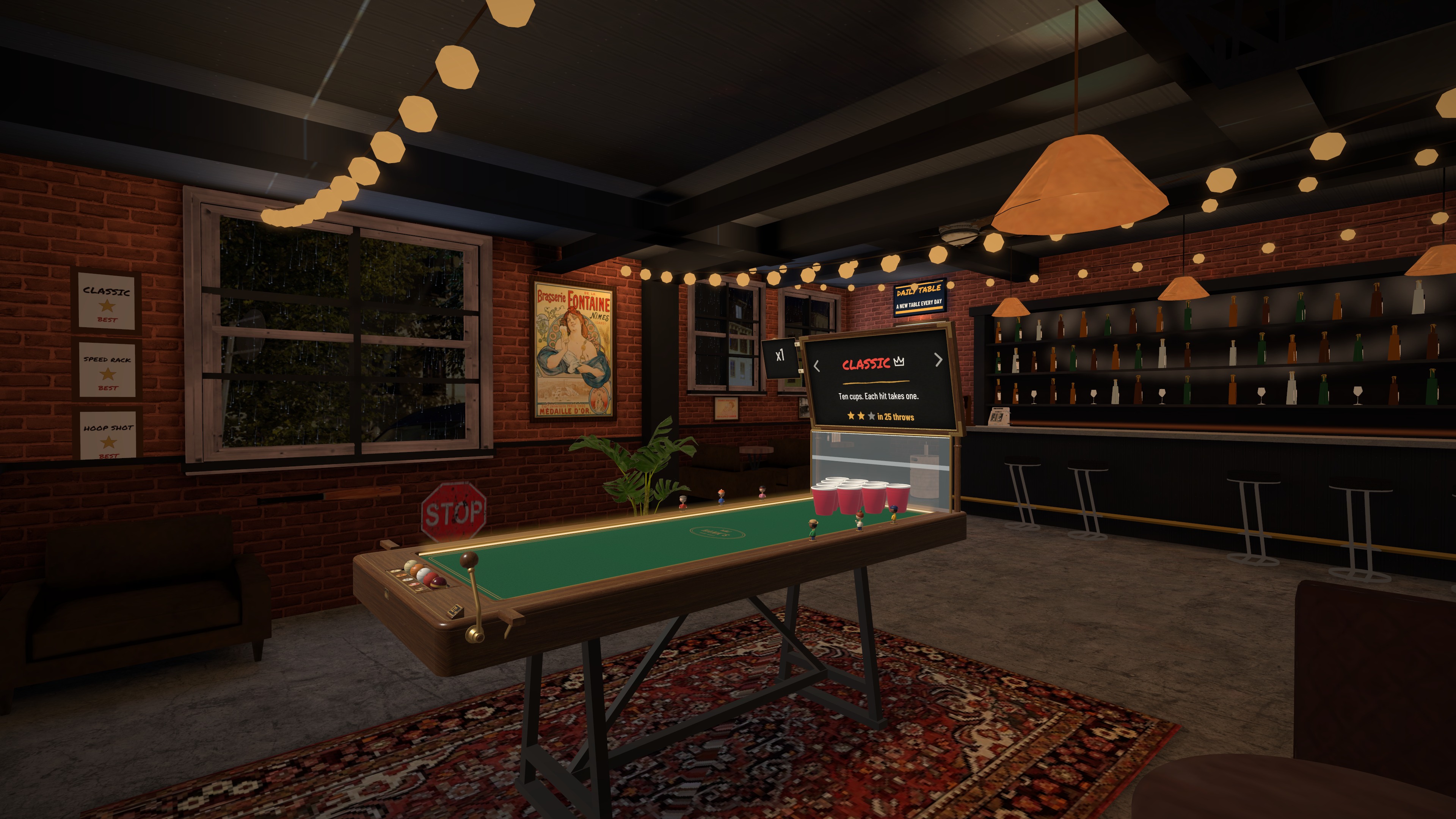
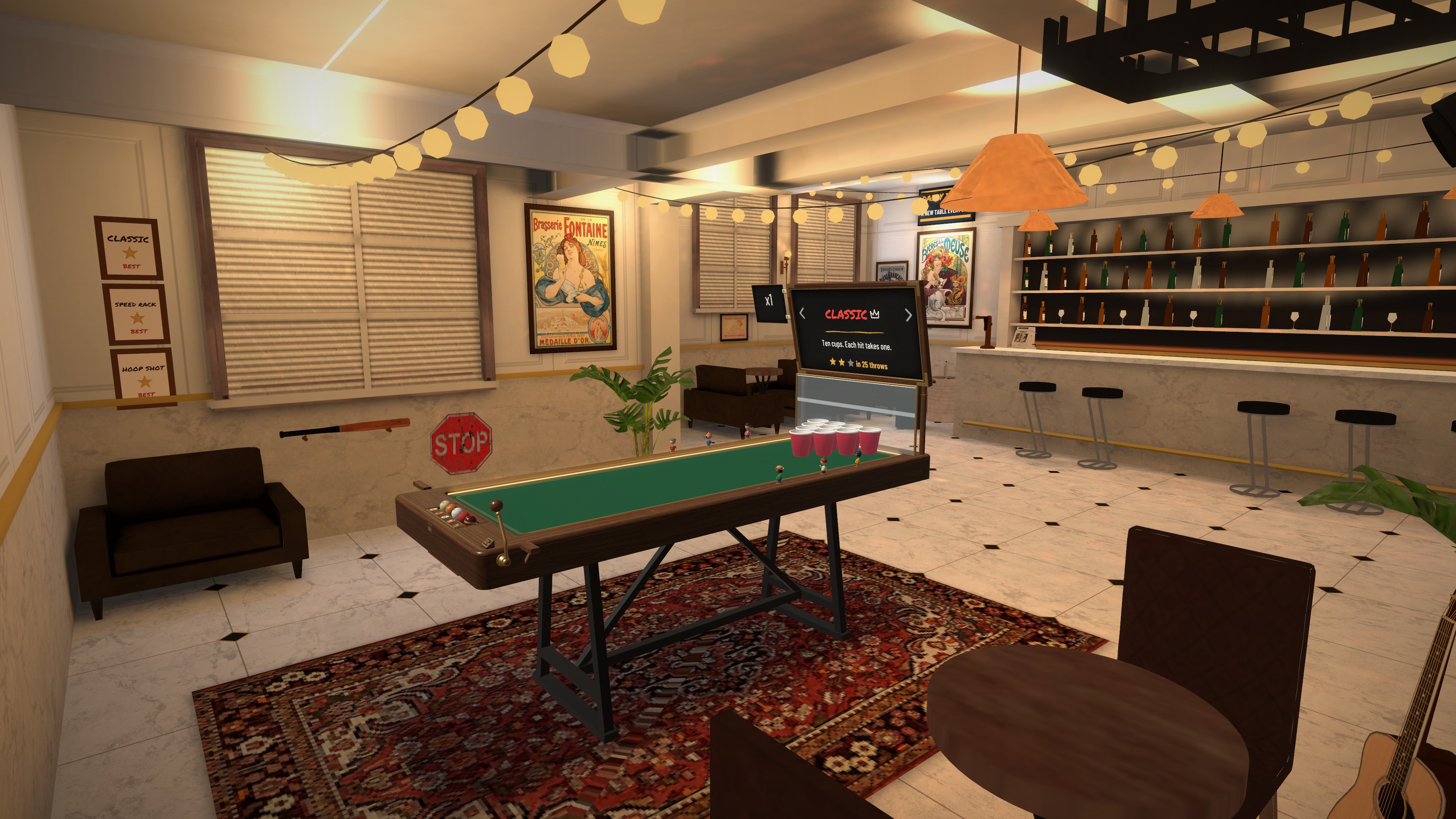
Hank's Game Night puts a game table in your home. You pinch a ball from the tray, throw it, and try to sink it. No controllers, just your hands.
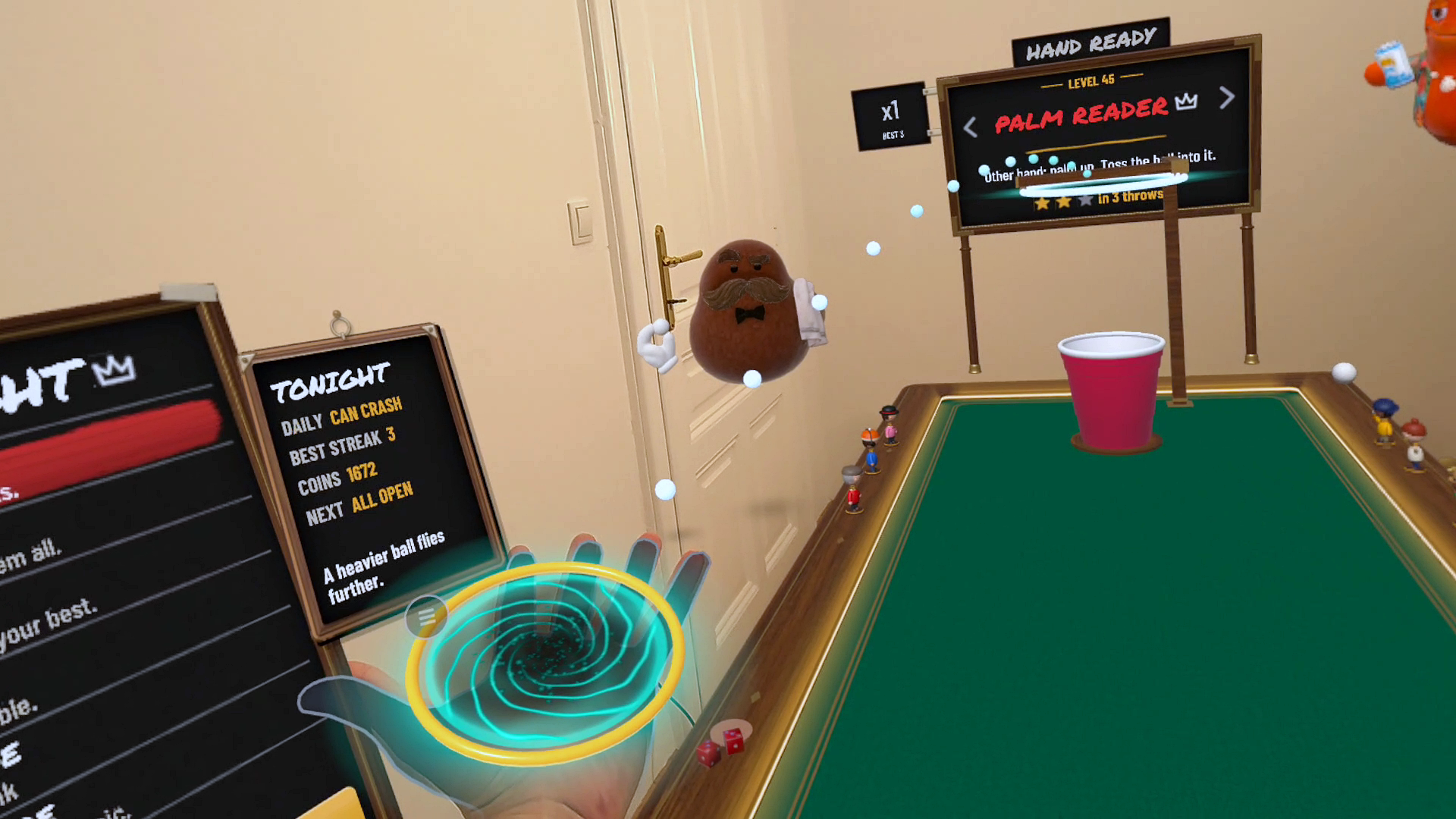
- Trick shots: dozens of levels that start with one cup and grow into bounce shots, glass walls, bells, drums, moving cups and portals.
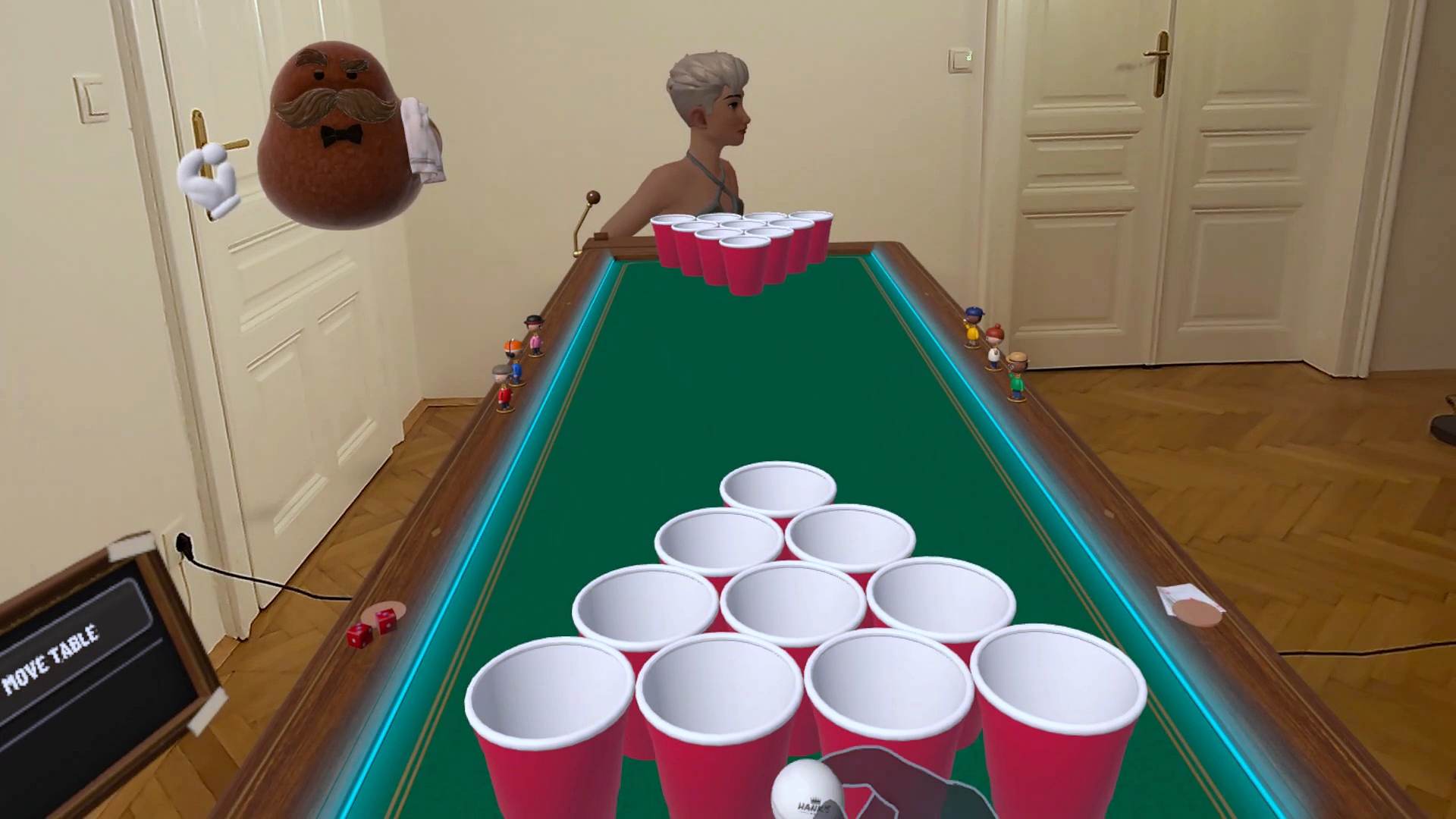
- Classic: ten cups, beer-pong style.
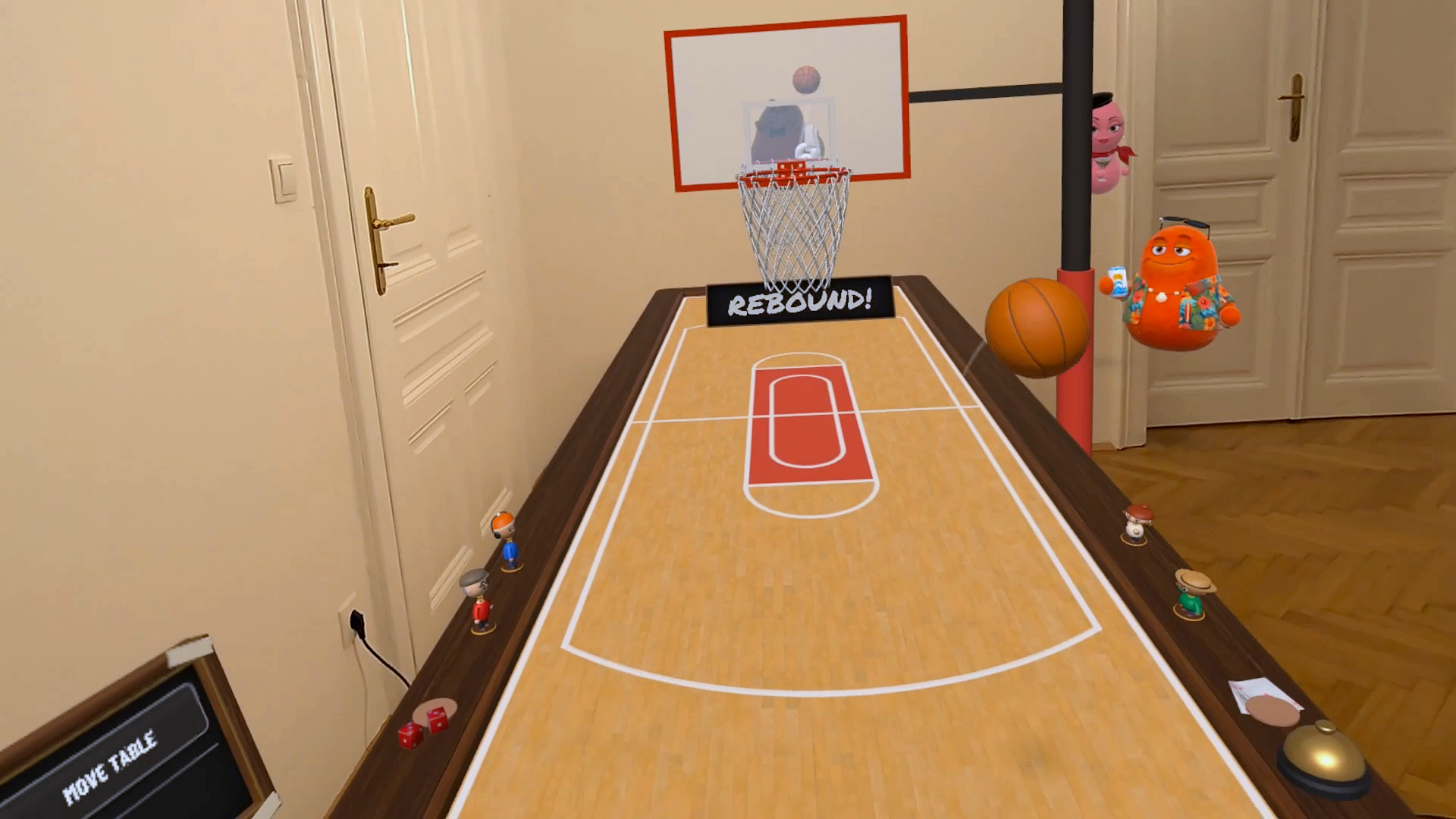
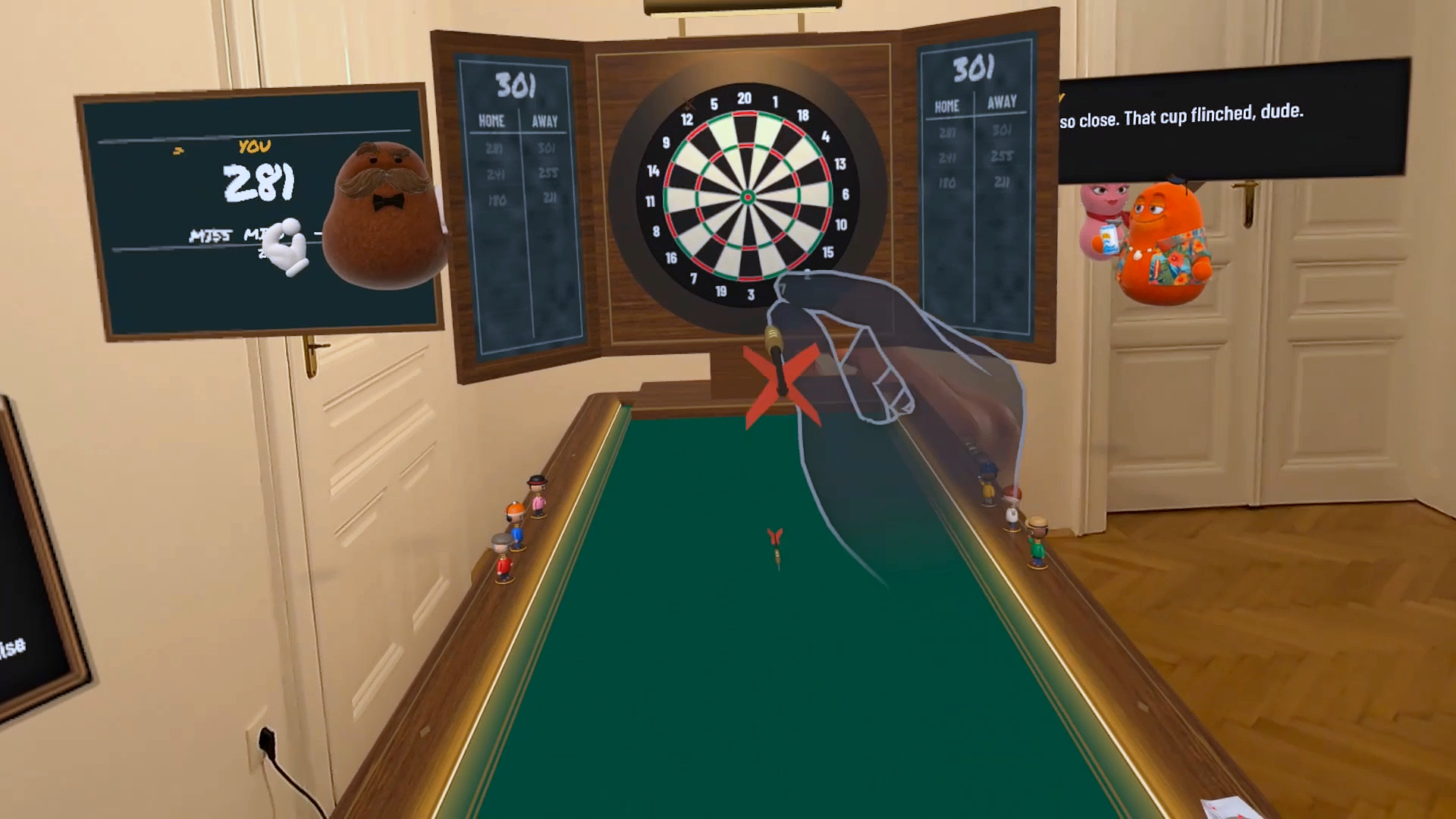
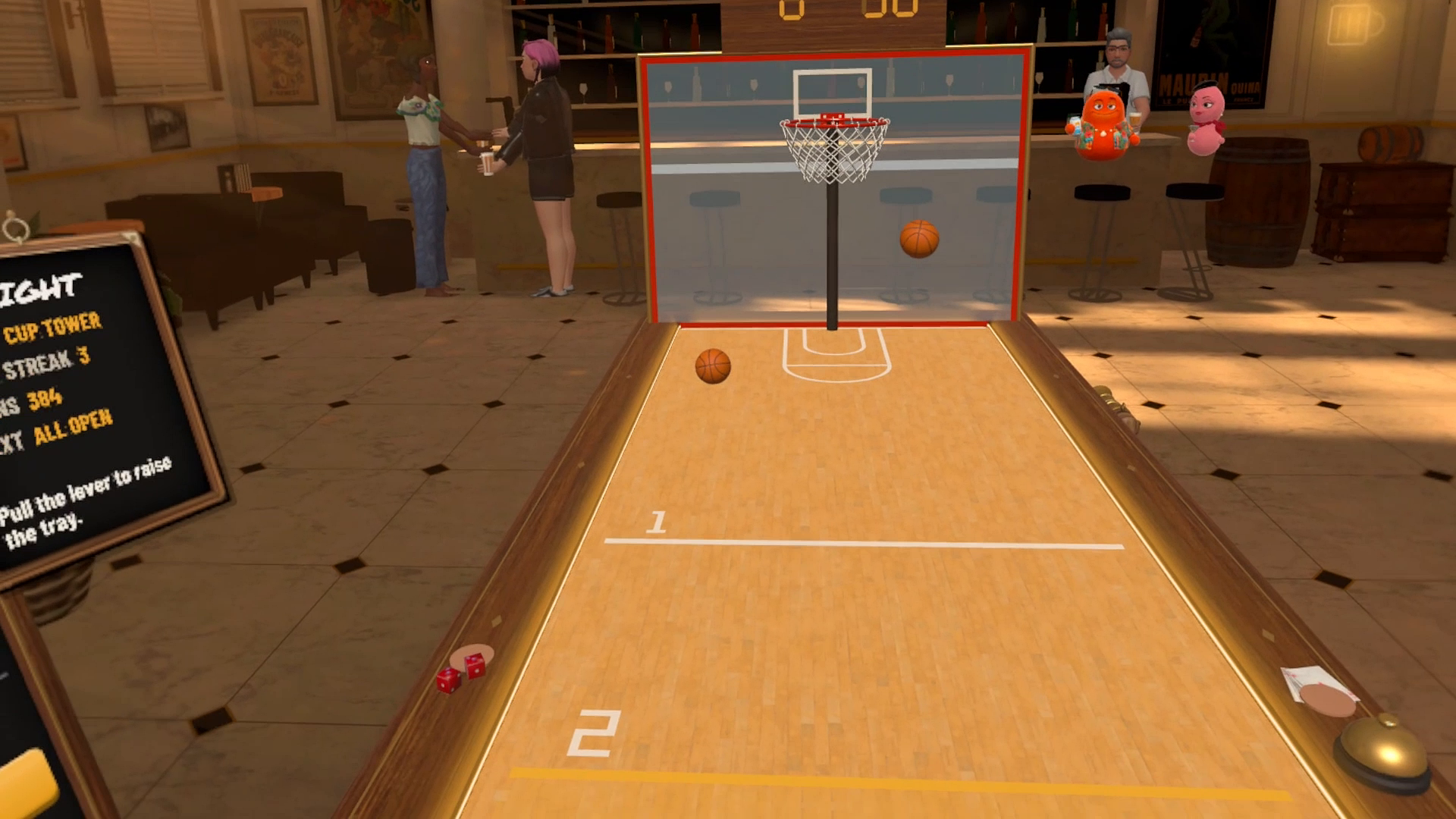
- Arcade: hoops against the clock, a speed rack, can bowling, darts and a daily table.
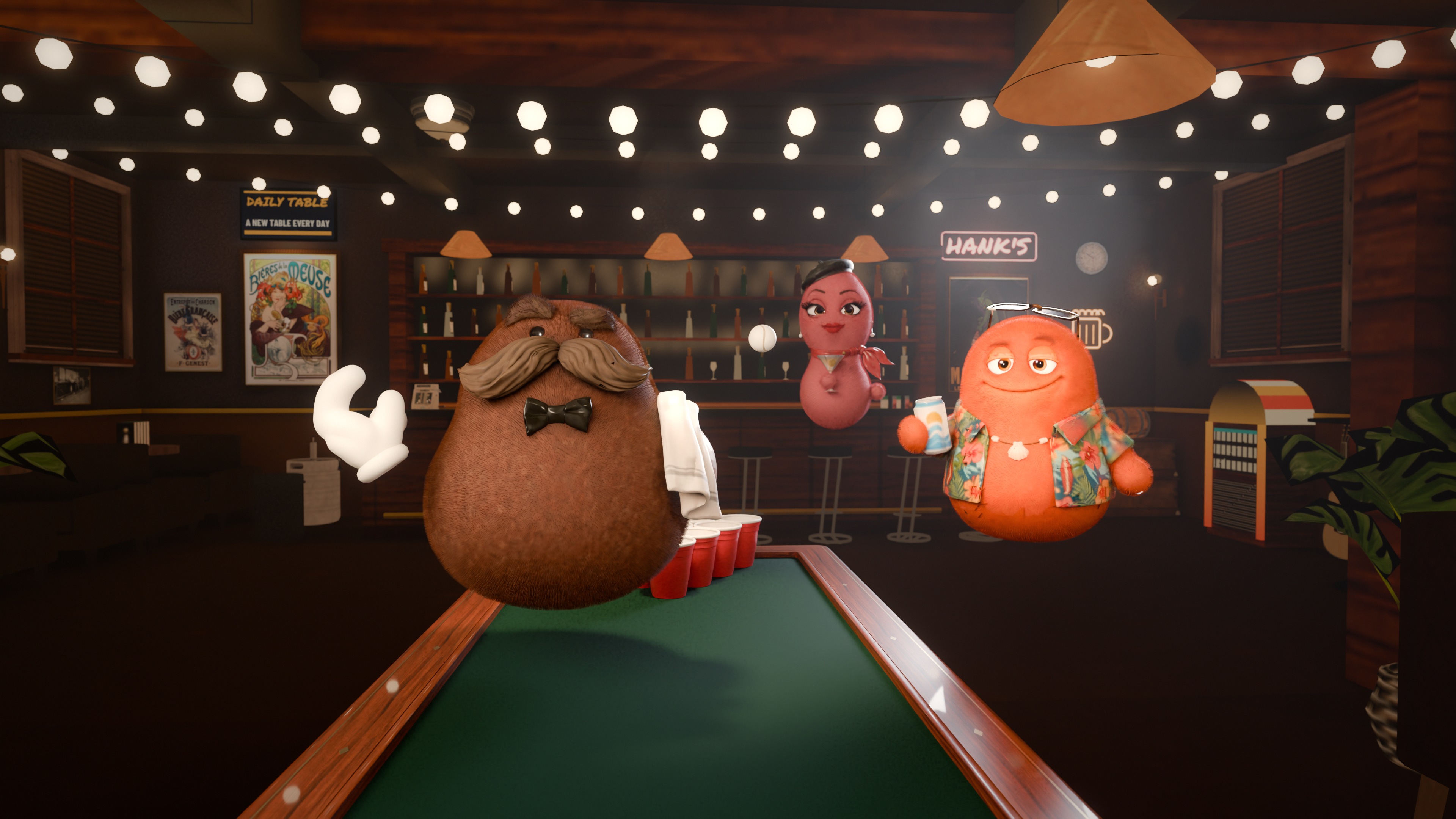
- Hank's Night: a run of games against Hank and his two regulars, Benny and Marion.
- Your room: with a room scan, your real walls and furniture become part of the game. Bank a shot off your actual wall, or stand cups on your real shelf.
- Play a friend: share a table number and a friend joins from their own home, as an avatar across the table, with voice chat.
- The bar: one tap and your room fades into Hank's bar in full VR, with themes and moods to choose from.
- Extras: a level editor, a shop for cups, balls and table cloths, and experimental "powers" like slowing time or rewinding a throw.
Hank, Benny and Marion talk the whole way through. They teach you the game, react to your shots and never let a bad miss go unmentioned.
How we built it
The game is built in Unity 6 with OpenXR and Meta's XR SDKs: the Interaction SDK for every grab, poke and pinch, and the Mixed Reality Utility Kit to understand the room and keep the table out of your walls and furniture. Multiplayer runs on Photon Fusion with Photon Voice, and the other players appears as a Meta avatar.
The throw is my own system. It keeps a short history of your hand, finds the moment you let go, and works out the speed and direction you intended, so the ball goes where you meant it to rather than where a jittery fingertip happened to point.
The table, cups and props are generated with Blender scripts. The characters' voices are made with ElevenLabs from lines written for the game, and their models began as concept images turned into 3D and reworked in Blender.
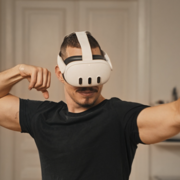
It was built and tested on Quest 3 and designed hands-first from the start, so there is no controller anywhere in the game. I also checked the layout with Meta's field-of-view simulation for the new glasses.
Challenges we ran into
The biggest one is simple to say: I was making my first game, alone, next to a job.
After that, almost everything about hands was hard. Picking up a ball with a pinch, the feeling of the throw, the speed and aim, and making a ball actually drop into a cup the way your brain expects. Real hands are messier than I expected, and things that worked in my head failed quickly in the game.
Then came everything around the throw: where the table should sit and how to place it, making multiplayer feel good when two headsets have to agree on every cup, and finding an overall look for the game.
The characters were their own adventure. Writing Hank, Marion and Benny so their lines feel natural, like real buddies, and then getting them to move around the table without walking through it.
And onboarding. Teaching someone to play with their hands, with no buttons to point at, was much harder to get right than I expected.
Accomplishments that we're proud of
My mom tested it. With no help from me, she placed the table, picked up a ball, and cleared levels. That was the moment I knew it had become something anyone can play.
I'm proud that the whole game, from the first toss to a night against the bartender, is played with nothing in your hands. I'm proud that it works in your real room and in a bar that isn't there. And honestly, I'm proud that a first-time solo developer with a day job got a game with characters, multiplayer and voices to the finish line.
What we learned
Time management matters more than I wanted to admit, and so does scope. Some ideas I loved did not make it: I wanted the powers to be woven much deeper into the game, and there was an ice hockey mode that had to go.
Get the physics right first, because nothing else matters if the throw feels wrong. Make the interface obvious for someone who has never worn a headset.
And test with other people, early and often. My colleagues and friends gave feedback I would never have found alone.
Also: edit the marketing video earlier, so you are not writing this at 1 am.
What's next for Hank's Game Night
I want to keep building and polishing: proper structure for the existing game modes, superpowers done properly, add table ice hokey, more customisation, a better multiplayer experience and VR room, and the ideas that didn't make the deadline and are on the to do list.
The plan is to launch it in January as my first game, in time for my brother's birthday, so the two of us can play together even when we're far apart.