-
-
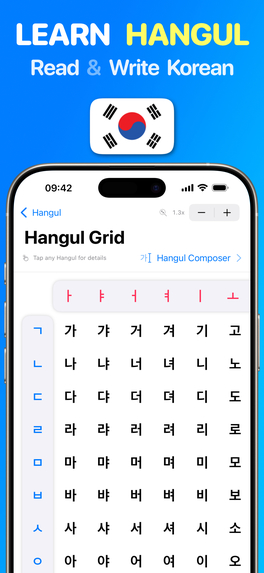
Hangul Grid: Jamo (consonants & vowels in grid headers) and syllables
-
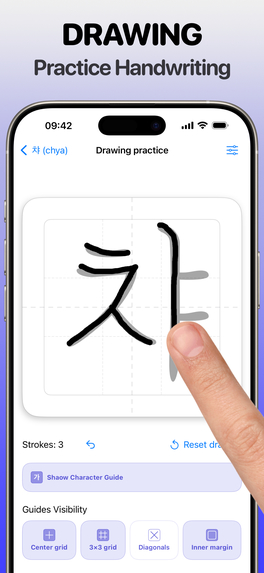
Practice handrawing the Korean alphabet
-
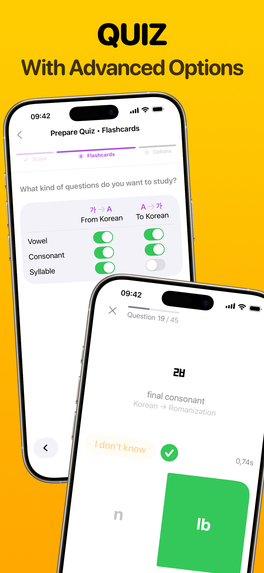
Quiz yourself and customise your learning experience
-
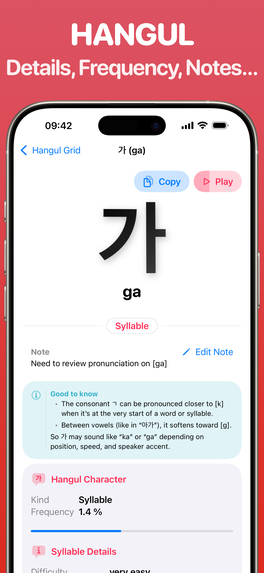
Korean Syllable details
-
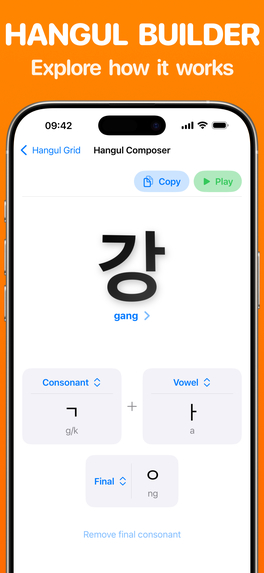
Jamo composer: mix and match Jamo to form Syllables and see its details
-
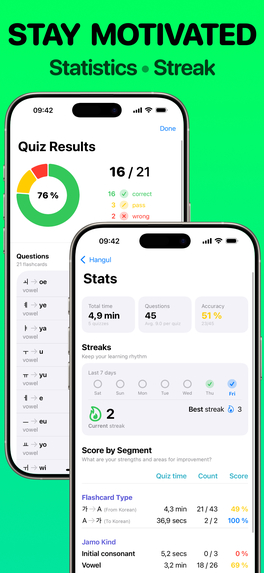
Check your statistics and progress over mastering the Korean alphabet
-
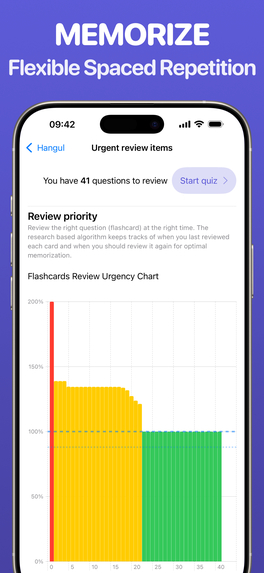
Leverage SRS to maximise memory retention
-
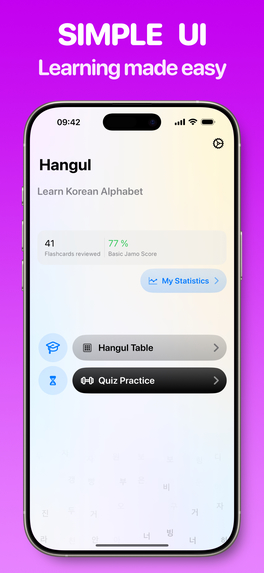
UI & UX are essential for a good tool to stick. Had fun adding subtle matrix style animated hangul characters in the home screen background


Inspiration
Languages are fascinating. They convey different ways to not only communicating, but also thinking. The way a language works and the vocabulary it contains actually shapes the speaker mind and culture. Korean is singular in that regard. It was designed to be simple to harness and accessible to people of all education level. So I wanted to extend that intention by leveraging technology to offer a modern access to its writing system (called Hangul) via an mobile app.
What it does
With Hangul App, you can;
- Learn about the Korean alphabet with the lesson feature.
- Browse the alphabet: understand how it is built, consult details on any entry and get learning tips when relevant.
- Quiz yourself. You can either have full control on the quiz scope, flashcard kind and settings; Or let the enhanced Spaced Repetition System (SRS) pick the right question at the right time to maximize memory retention. In SRS mode, quizzing a question earlier or later than the ideal timing is accounted by the algorythm, so you have a greater review flexibility.
- Check out your progress and how much of the alphabet you master, so you stay motivated. You can also peak at the status of your SRS stack.
How we built it
I first had to study Korean since my knowledge was limited. Because I needed to make sure to build an app that would be usefull, and accurate. The goal was to make something people want!
Challenges we ran into
The data model was challenging because I wanted it future-proof to avoid CoreData migrations as much as possible, but at the same time design a model that is powerful and flexible to ease the development and evolution of the app. In the end I made a model that is ruled by the Korean language structure and leveraged CoreData's subclass feature to combine logic that is shared between items while keeping specificities. That required a lot of data structure try-and-fail until version 1.0
Accomplishments that we're proud of
Hangul achieved the goal that was aimed: an organic growth during the Shipaton period. I kept stacking small actions to improve the app itself and its visibility and it is now getting traction. Finding product market fit is what I'm proud of, because it proves the app's quality and the fact that it solves a problem that real people struggle with!
What we learned
Achieving a vision takes 5x more time than planned when you don't want to compromise. I've learned that you need to have hard deadlines and prioritise. Aim for doing something the best you can rather than doing everything. Originally the app was set to cover the entire Korean language but I figured I would add this later and focus on delivering the best Korean Alphabet learning app experience for the launch.
What's next for Hangul - Write Korean
After improving the existing features, hangul will add more exploration features for sorting out things like frequency or most/least score entries. As well as extend to vocabulary and grammar learning!

Log in or sign up for Devpost to join the conversation.