Inspiration
Many essential services are still accessed by phone, while online information can be outdated or incomplete. Openline helps people verify what is actually available before making a decision.
What it does
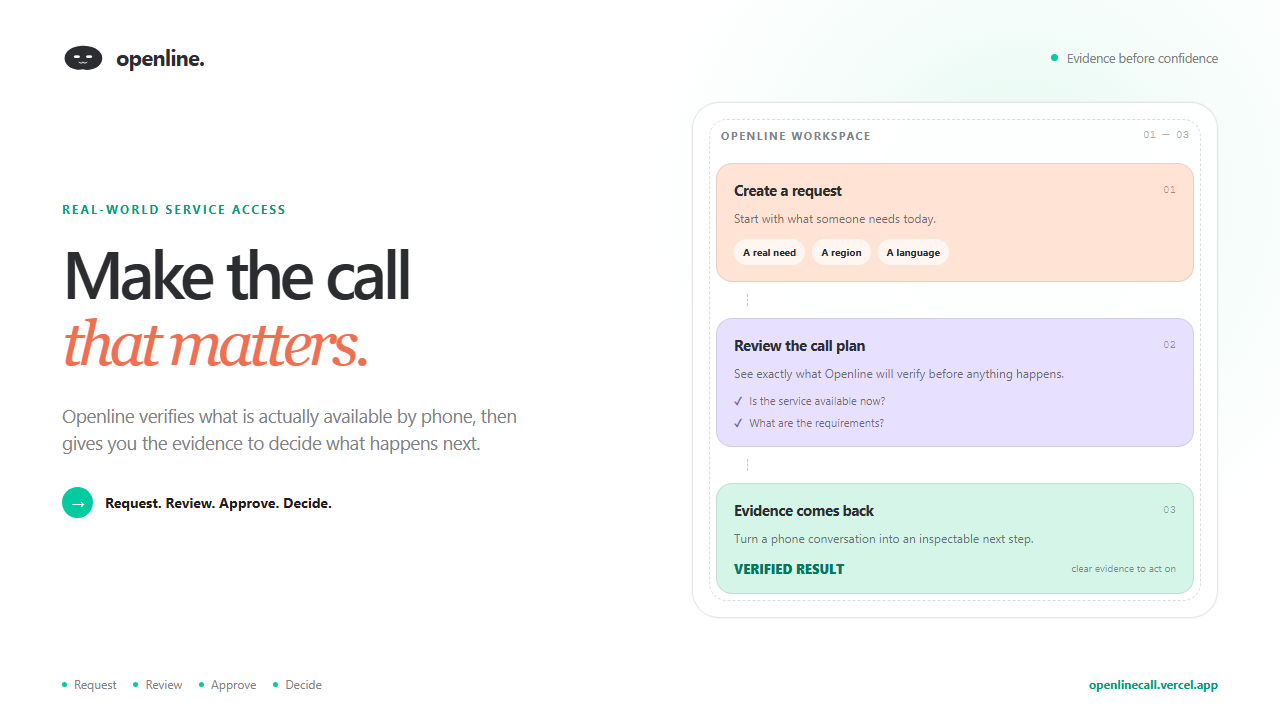
Users describe a need, choose their country and language, and provide basic context. Openline prepares an inspectable call plan, shows the questions it will ask, waits for approval, and returns evidence as a clear next step: confirmed, unavailable, or follow up required.
How we built it
We built Openline with a responsive browser interface, a Node.js backend, and a CALL·E adapter for phone task execution. The simulation first workflow uses the same request, approval, and evidence structure as live execution, making the product reliable to demonstrate while supporting real provider configuration where available.
Challenges we ran into
Phone availability varies by region, language, provider, and configured number. We had to handle unsupported combinations, missing live targets, provider errors, and incomplete results without presenting false success. Openline now makes those limits visible and keeps every result inspectable.
Accomplishments that we're proud of
We created a complete request to evidence workflow with human approval before phone work begins. The product is mobile responsive, deployed publicly, documented, and supported by a presentation and demonstration video.
What we learned
Real world phone automation needs more than an agent that can talk. It needs clear intent, approval, error handling, and evidence that people can trust.
What's next for Openline
We plan to expand supported regions and languages, add more service categories, improve live call result extraction, and give organizations a shared workspace for managing verified phone research.
Built With
- call?e-api
- css
- express.js
- html
- javascript
- node.js
- vercel

Log in or sign up for Devpost to join the conversation.