-
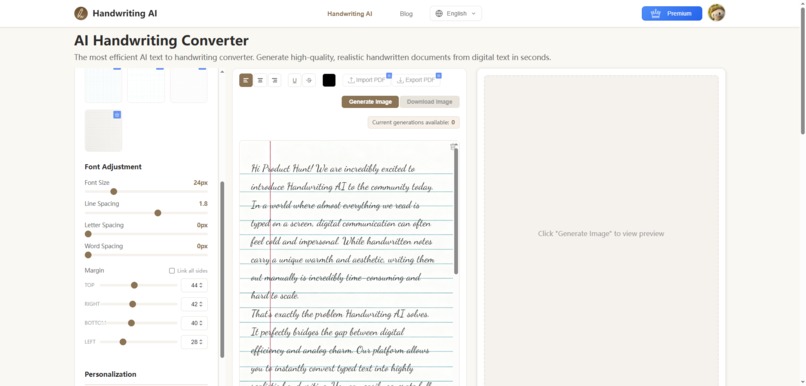
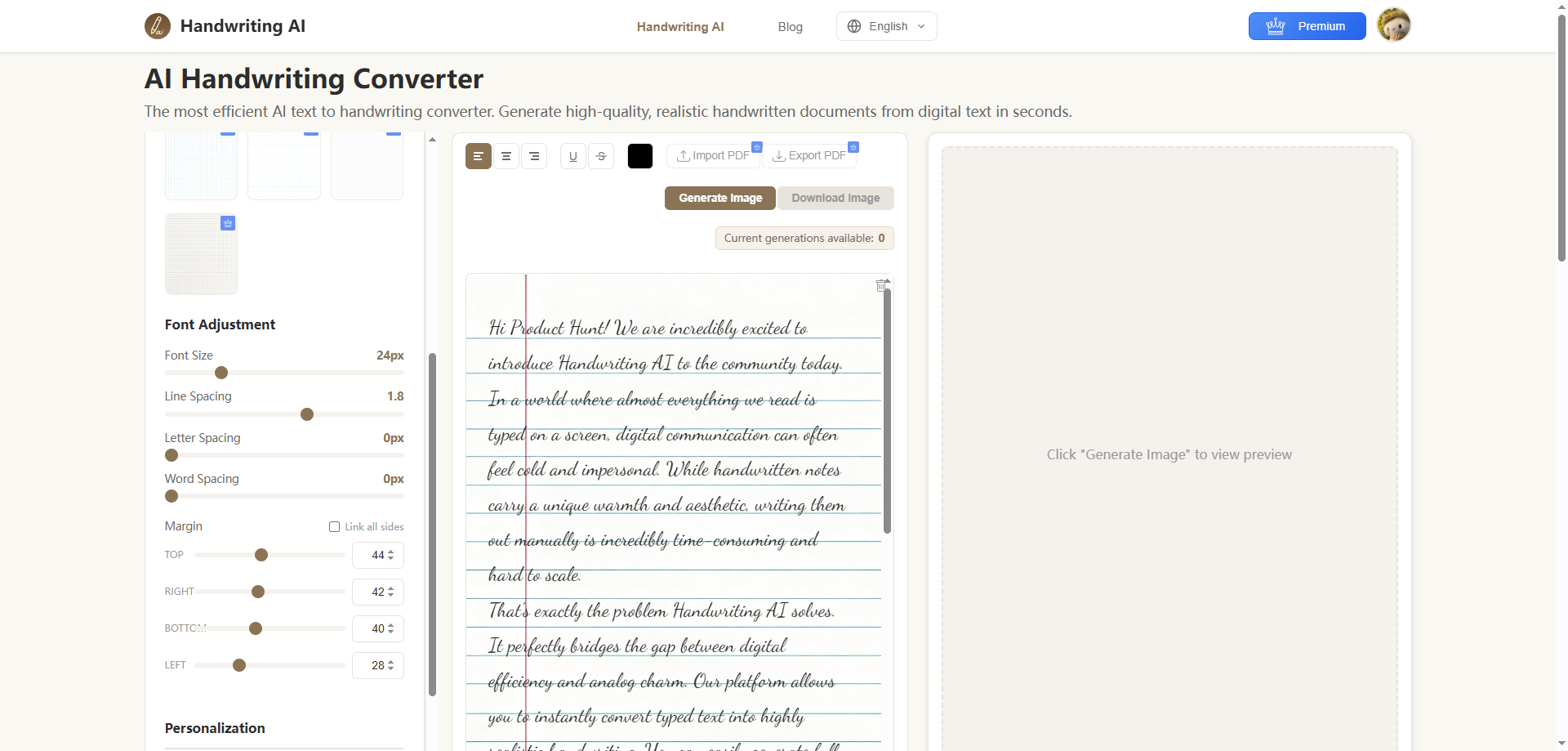
Core Editor: Type your text and instantly preview highly realistic handwriting with customizable fonts and paper styles.
-
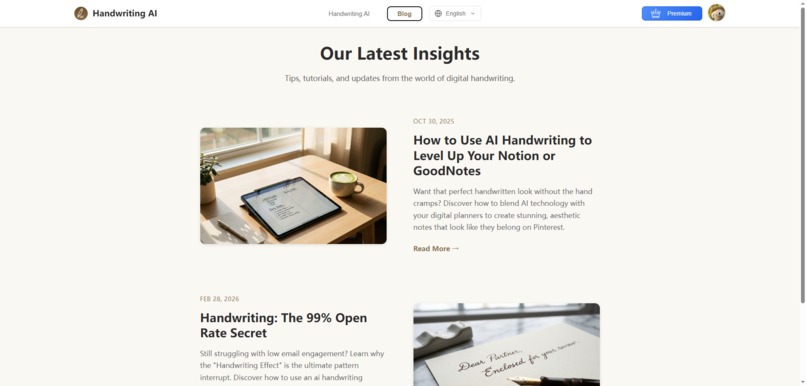
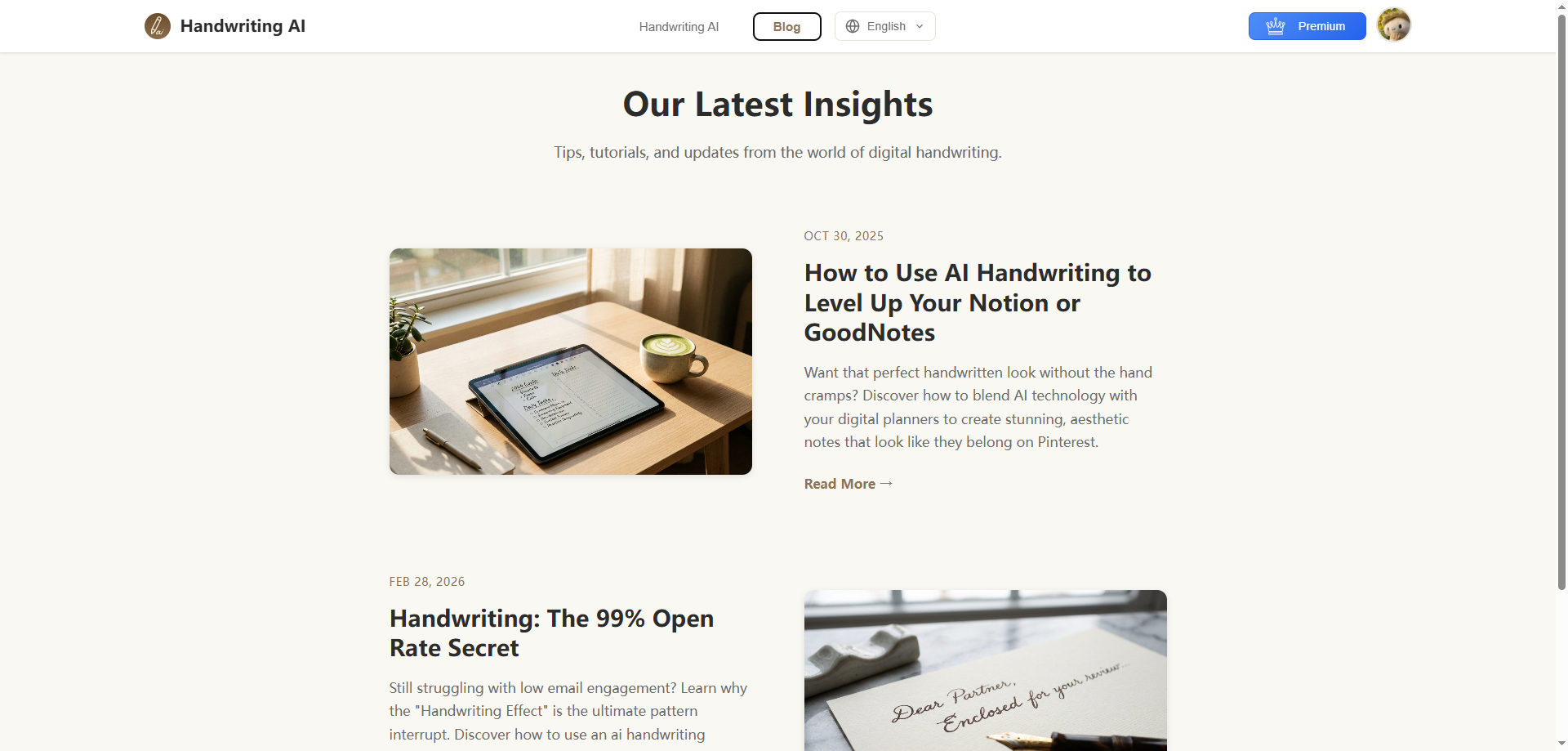
Insights & Guides: Explore our latest articles and tutorials on maximizing your productivity with digital handwriting.
-
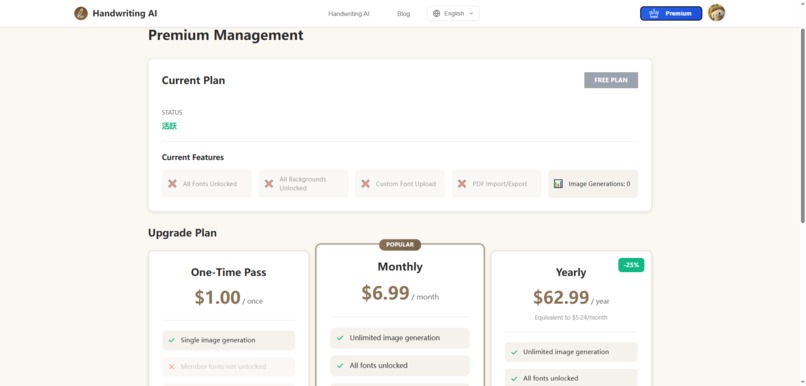
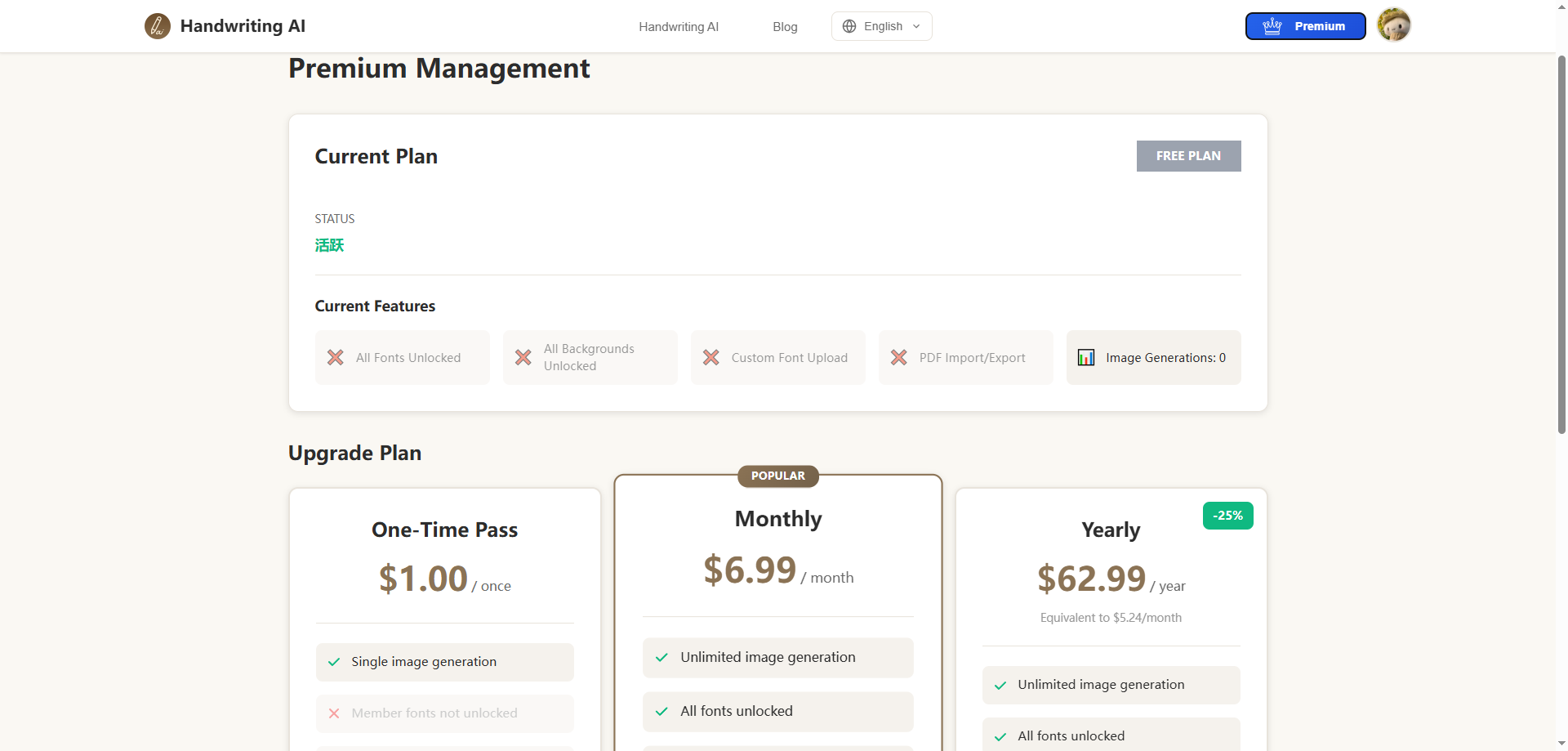
Flexible Pricing: Choose a plan that fits your needs, offering various tiers for casual users and power creators alike.
-
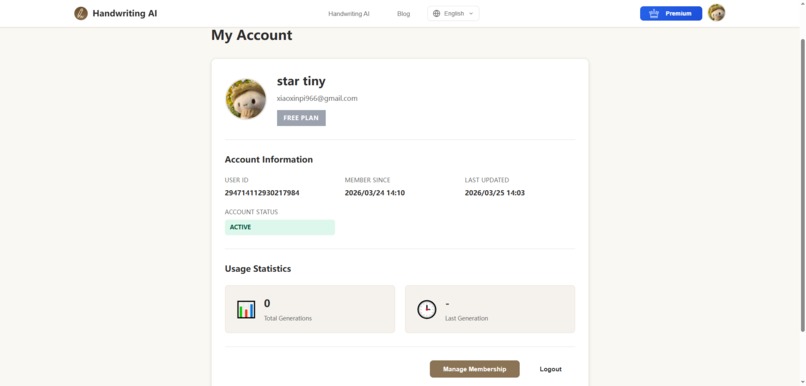
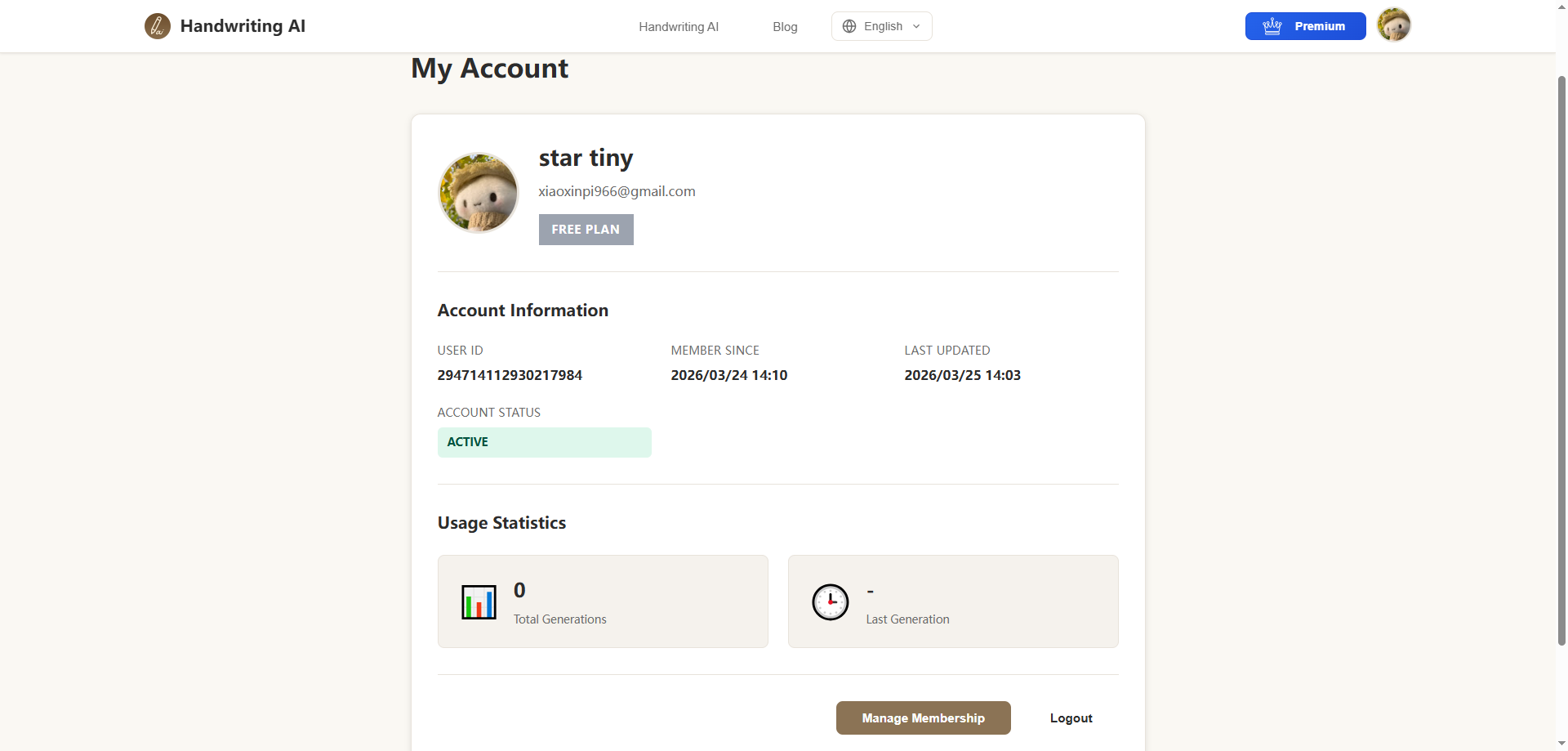
User Dashboard: Easily manage your account settings, subscription details, and personal preferences in one secure place.
Inspiration
In today's fast-paced digital world, almost all our communication is typed on a screen. While this brings incredible efficiency, it strips away the warmth, personality, and aesthetic charm of handwritten notes. However, writing long documents by hand is time-consuming, causes hand cramps, and is impossible to edit digitally. We wanted to build a bridge between digital efficiency and analog beauty.
What it does
Handwriting AI is a powerful web application that instantly converts your typed text into highly realistic, natural-looking handwriting. Users can choose from a variety of handwriting styles, from neat and professional to casual and messy. You can select different canvas backgrounds like ruled paper, grid, or vintage parchment. It also features rapid export, allowing you to generate full handwritten pages and export them instantly as high-quality images or PDFs, perfect for assignments, aesthetic journals, or personalized letters.
How we built it
We developed the frontend using Next.js and Tailwind CSS to ensure a blazing-fast, responsive, and intuitive user interface. The core engine is powered by a Python backend leveraging machine learning techniques. Instead of just mapping characters to static font files, our rendering engine introduces micro-variations in stroke thickness, letter spacing, and baseline alignment to mimic the natural imperfections of human writing. We use Node.js to handle API requests and AWS S3 to temporarily store and deliver the exported files to the user. The entire application is deployed on Vercel for seamless performance.
Challenges we ran into
The biggest technical hurdle was overcoming the uncanny valley of digital handwriting. Traditional script fonts look fake because every repeated letter looks exactly identical. To make it look truly realistic, we had to engineer an algorithm that injects randomized but constrained perturbations into the kerning, line height, and stroke intensity. Figuring out the right math to make it look naturally imperfect without becoming illegible took dozens of iterations.
Accomplishments that we are proud of
We are incredibly proud of the rendering speed and the level of realism we achieved. When we showed the generated notes to our friends, many of them could not tell the difference between the AI-generated output and actual scanned handwriting.
What we learned
Building this taught us a lot about generative image manipulation and the complexities of typography. We learned that the human eye is extremely sensitive to repeating patterns, and breaking those patterns programmatically is the key to creating organic, human-like digital art.
What is next for Handwriting AI
Currently, users can choose from our pre-trained handwriting styles. Our next major milestone is implementing a feature to clone your own handwriting. We plan to train a custom neural network model that will allow users to upload a small sample of their own handwriting, and the AI will learn their unique stroke patterns to generate text in their exact personal handwriting style!


Log in or sign up for Devpost to join the conversation.