-
-
Logo
-
Okay!
-
Dashboard
🤚 Gesture Recognition System - Our Accessibility Journey
What Inspired Us
We were inspired by a simple yet profound realization: there's no shortage of good entertainment, but there's a lot of work to be done with making things easier.
In today's digital world, we have so much incredible entertainment at our fingertips, from brainrot Instagram reels to hour-long YouTube documentaries. But for many people, accessing and controlling these experiences isn't as seamless as it should be. Traditional input methods like keyboards, mice, and touchscreens can be barriers for:
- People with motor disabilities who may have limited hand mobility
- Users with repetitive strain injuries who need alternative input methods
- Anyone in situations where hands are occupied (cooking, working, exercising)
- Users seeking more intuitive, natural interactions with their devices
In a world where "AI" is becoming the buzzword of the century, we want to build a world where technology adapts to human movement, not the other way around. What if you could control your computer, launch apps, adjust volume, or take screenshots just by making natural hand gestures? This vision became our driving force.
What We Learned
Building this gesture recognition system taught us invaluable lessons about accessibility, computer vision, and full-stack development:
Computer Vision & AI
- MediaPipe is incredibly powerful for real-time hand tracking, but requires careful tuning for gesture classification
- Rule-based gesture detection can be surprisingly effective for MVP development, though machine learning approaches would scale better
- Camera calibration and lighting significantly impact recognition accuracy - accessibility tools must work reliably across diverse environments
Full-Stack Integration
- Real-time communication between Python backend, Node.js server, and React frontend requires careful WebSocket management
- Cross-platform system integration (macOS, Windows, Linux) demands platform-specific action implementations
- Service orchestration becomes complex when coordinating multiple processes and ensuring reliable startup/shutdown
Accessibility Design Principles
- Universal Design benefits everyone, not just users with disabilities
- Redundancy is crucial - providing multiple ways to accomplish the same task
- Real-time feedback is essential for users to understand when gestures are detected
- Customizable mappings allow users to adapt the system to their specific needs and preferences
How We Built It
Our system architecture reflects our commitment to modularity, accessibility, and real-time performance:
Three-Layer Architecture
Python Backend (Gesture Recognition)
- MediaPipe for hand landmark detection
- OpenCV for camera management and image processing
- Rule-based classification for 8+ gesture types (fist, peace sign, thumbs up, etc.)
- Real-time camera streaming to web frontend
Node.js Server (API & Actions)
- Express.js REST API for frontend communication
- WebSocket for real-time gesture events and camera streaming
- System action execution (volume control, app launching, screenshots)
- MCP (Model Context Protocol) for tool integration
React Frontend (User Interface)
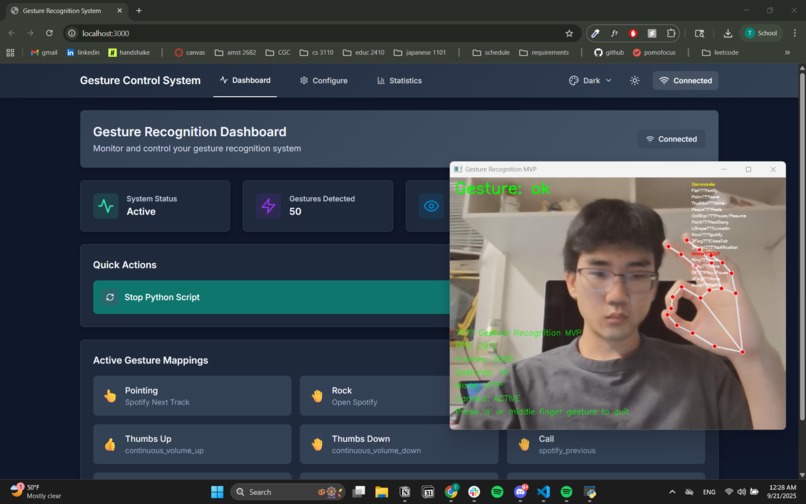
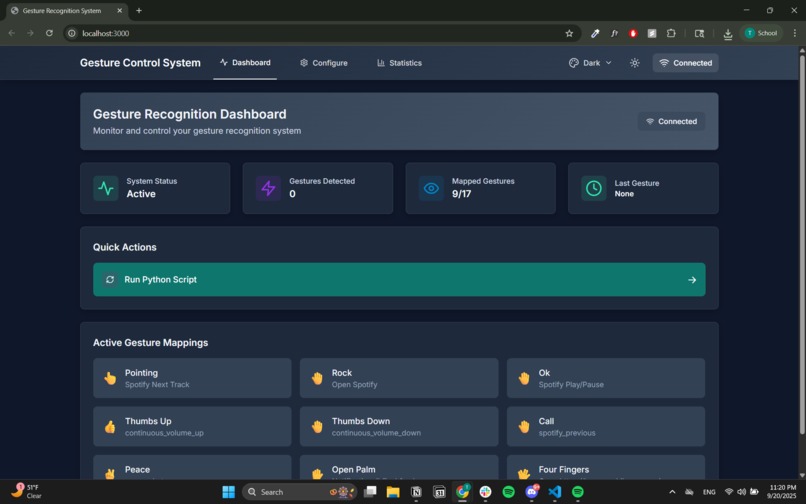
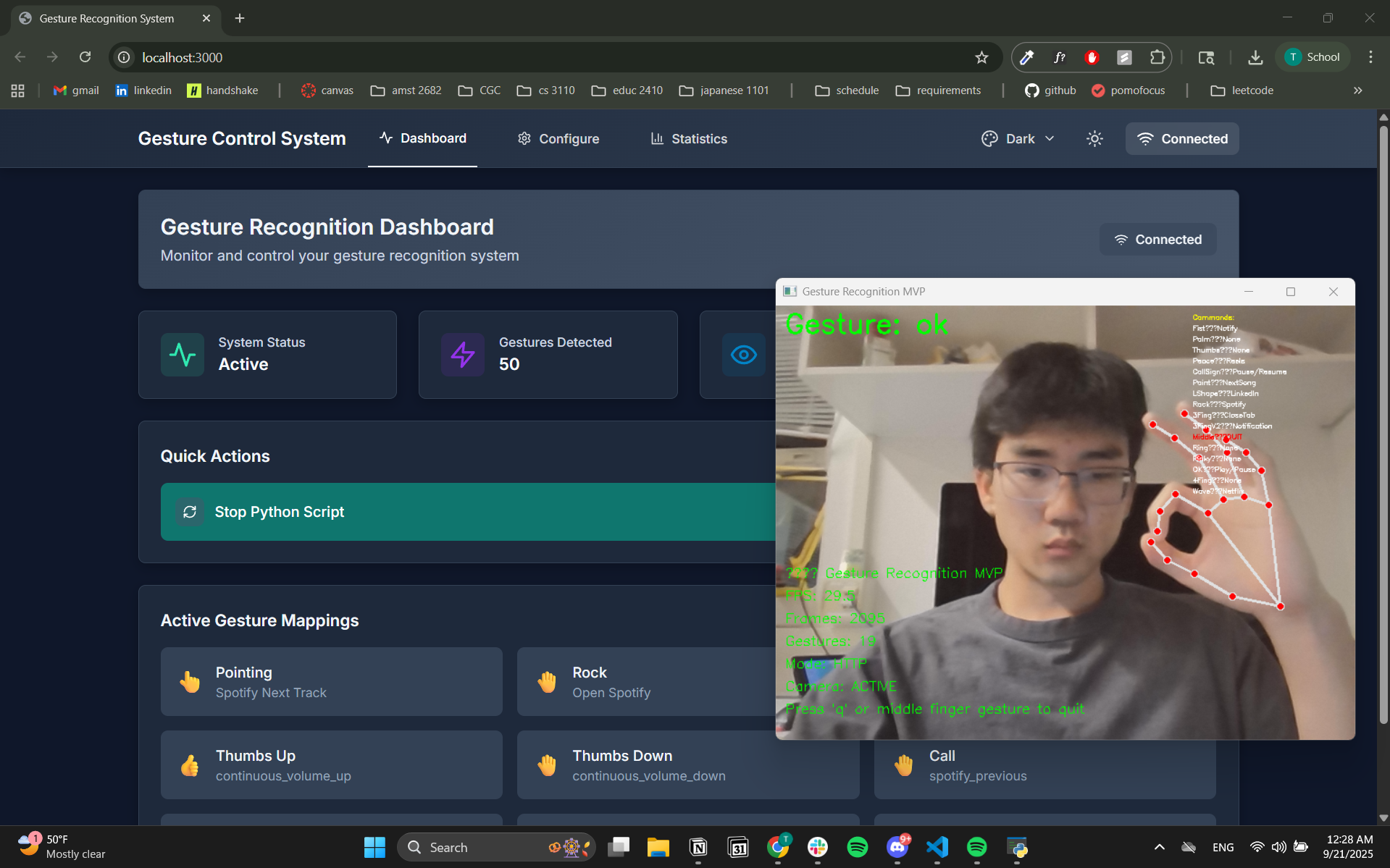
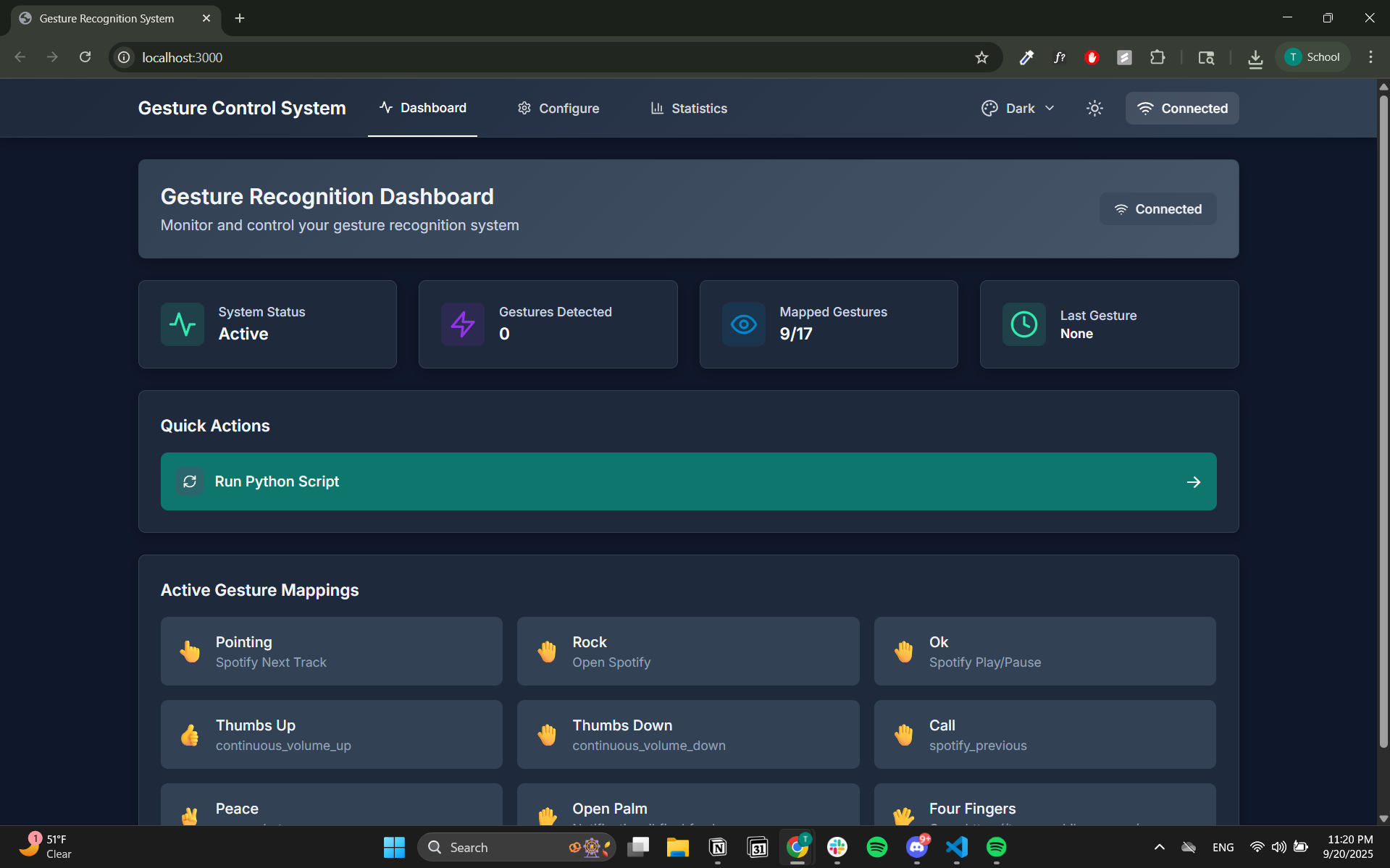
- Real-time dashboard with live camera feed and gesture overlays
- Dynamic gesture mapping - users can customize which gestures trigger which actions
- Dark mode support and responsive design
- Service management - start/stop Python backend from the web interface
Key Features
- 17+ Supported Gestures: From simple thumbs up to complex rock signs
- Real-time Performance: 15-30 FPS processing with <100ms latency
- Cross-platform Actions: Volume control, app launching, Spotify integration, FaceTime calls
- Configurable Mappings: Users can customize gesture-to-action relationships
- Live Camera Streaming: Web-based camera feed with gesture detection overlays
- Service Management: Frontend-controlled Python service restart functionality
The Challenges We Faced
Building an accessible gesture recognition system presented unique technical and design challenges:
Technical Challenges
Real-time Performance Optimization
- Balancing gesture detection accuracy with processing speed
- Managing camera frame rates while maintaining system responsiveness
- Optimizing MediaPipe parameters for different hardware configurations
Cross-platform System Integration
- Implementing platform-specific system actions (macOS vs Windows vs Linux)
- Handling different camera APIs and device indices
- Managing process lifecycle across multiple services
Reliable Communication
- Ensuring WebSocket connections remain stable during long sessions
- Implementing robust error handling for network interruptions
- Coordinating startup/shutdown sequences across multiple processes
Design Challenges
Gesture Recognition Accuracy
- Distinguishing between similar gestures (peace sign vs rock sign)
- Handling variations in hand positioning and lighting conditions
- Preventing false positives from natural hand movements
User Experience
- Providing clear visual feedback for gesture detection
- Designing intuitive gesture-to-action mappings
- Creating a responsive interface that works across different screen sizes
Accessibility Considerations
- Ensuring the system works for users with different motor abilities
- Providing multiple ways to configure and control the system
- Making the interface usable for users with visual impairments
Deployment Challenges
Service Orchestration
- Coordinating startup of Python backend, Node.js server, and React frontend
- Managing dependencies and ensuring proper service initialization order
- Implementing graceful shutdown and cleanup procedures
Development Environment
- Setting up consistent development environments across team members
- Managing dependencies across Python, Node.js, and React ecosystems
- Debugging issues that span multiple services and technologies
The Impact We Hope to Make
While this is a hackathon project, we believe it demonstrates the potential for gesture-based accessibility solutions:
Immediate Benefits
- Hands-free computer control for users with motor disabilities
- Alternative input methods for users experiencing repetitive strain
- Intuitive interaction that feels more natural than traditional interfaces
Future Possibilities
- Integration with existing accessibility tools and assistive technologies
- Expansion to more complex gestures and multi-hand recognition
- Machine learning improvements for better accuracy and gesture variety
- Integration with smart home systems and IoT devices
Our Vision for Accessibility
There's no shortage of good entertainment, but there's a lot of work to be done with making things easier. This project is our contribution to that important work.
*Built with ❤️ for BigRedHacks *


Log in or sign up for Devpost to join the conversation.