-
-
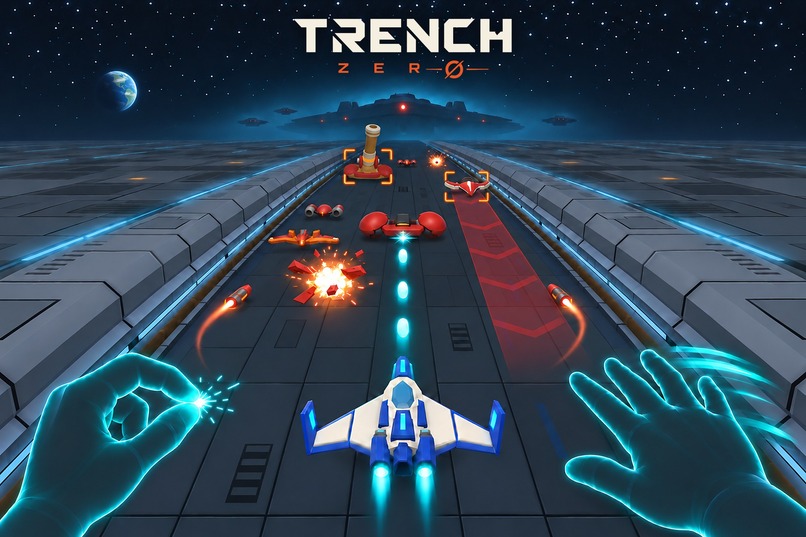
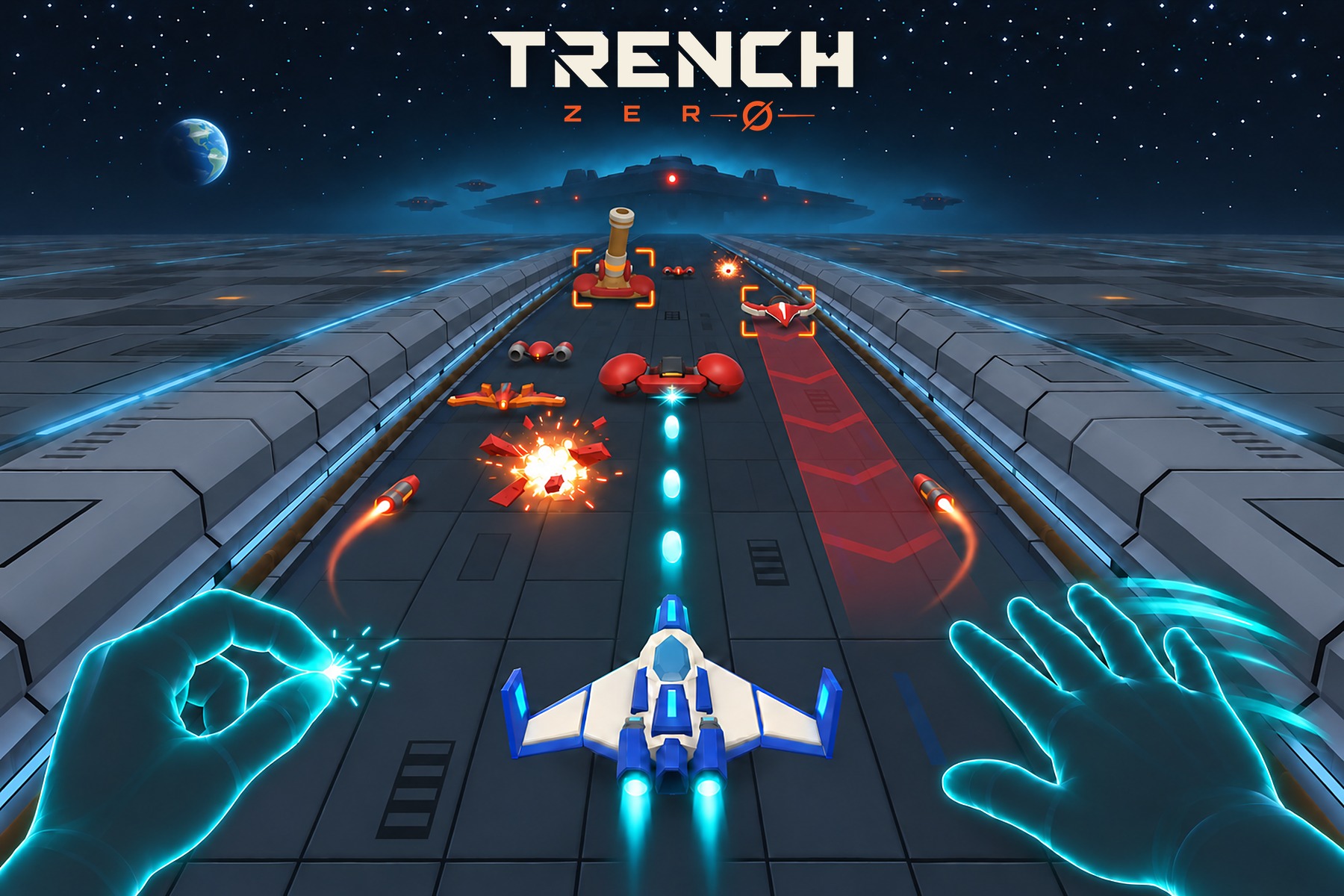
Trench Zero
-
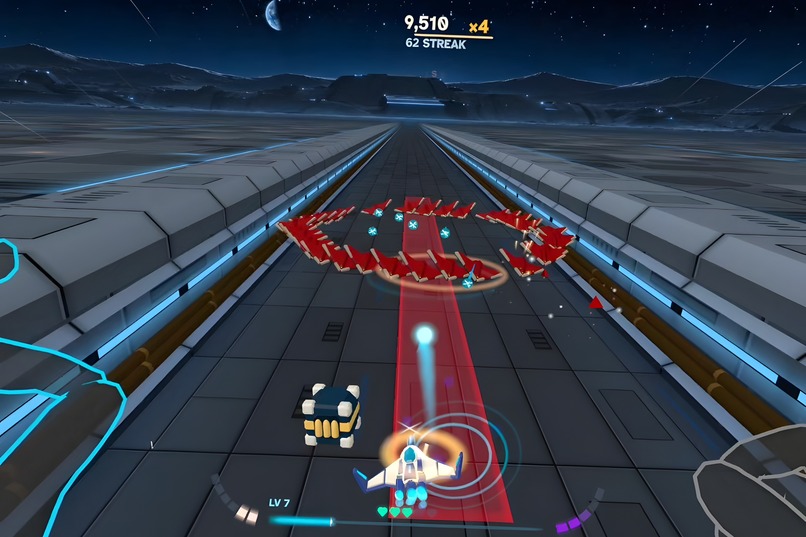
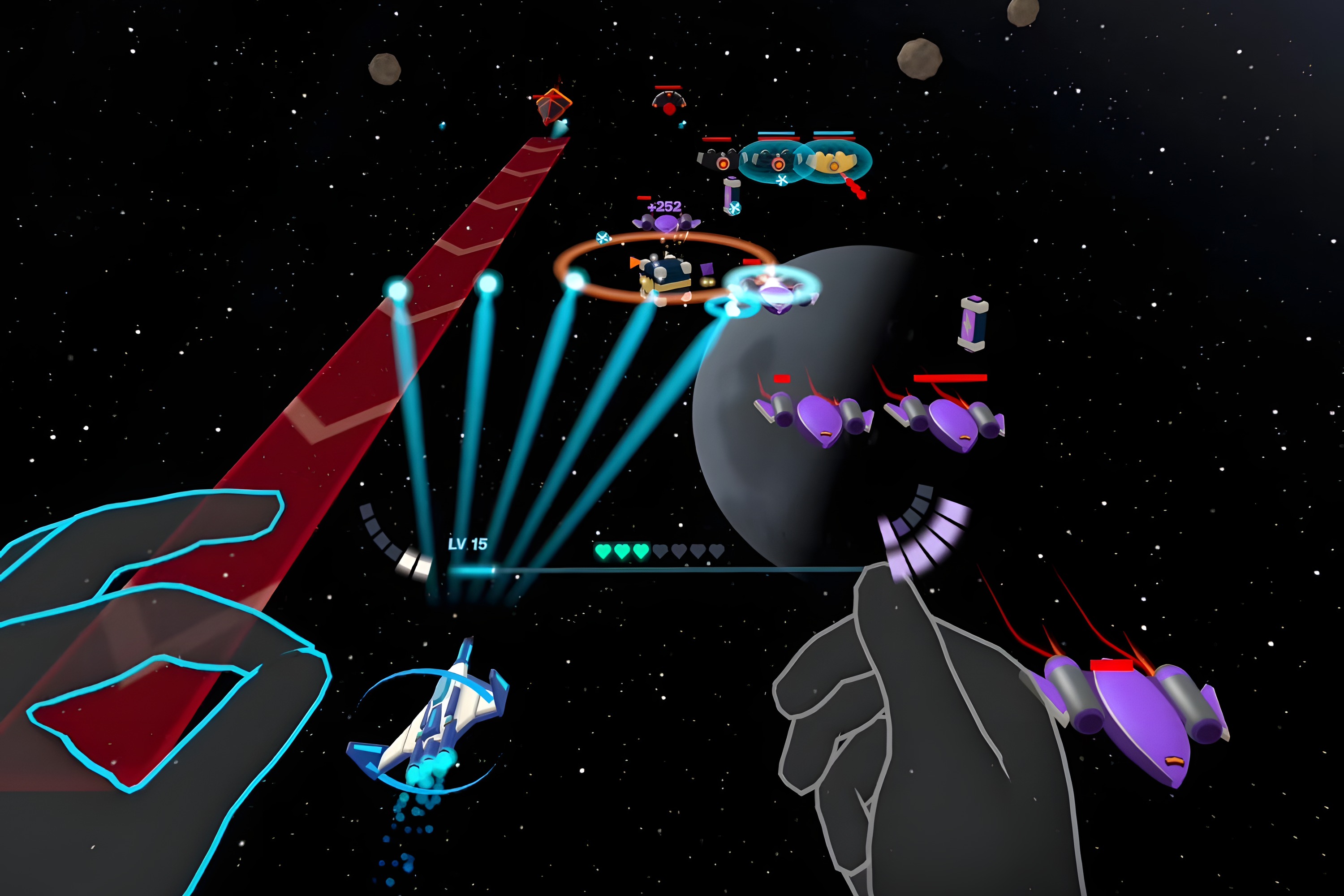
Make a fist, look at your targets, and let go: a missile volley.
-
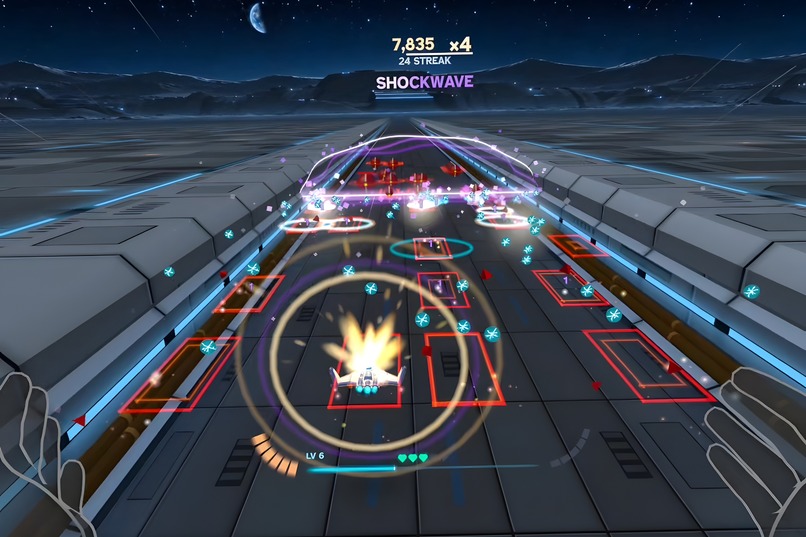
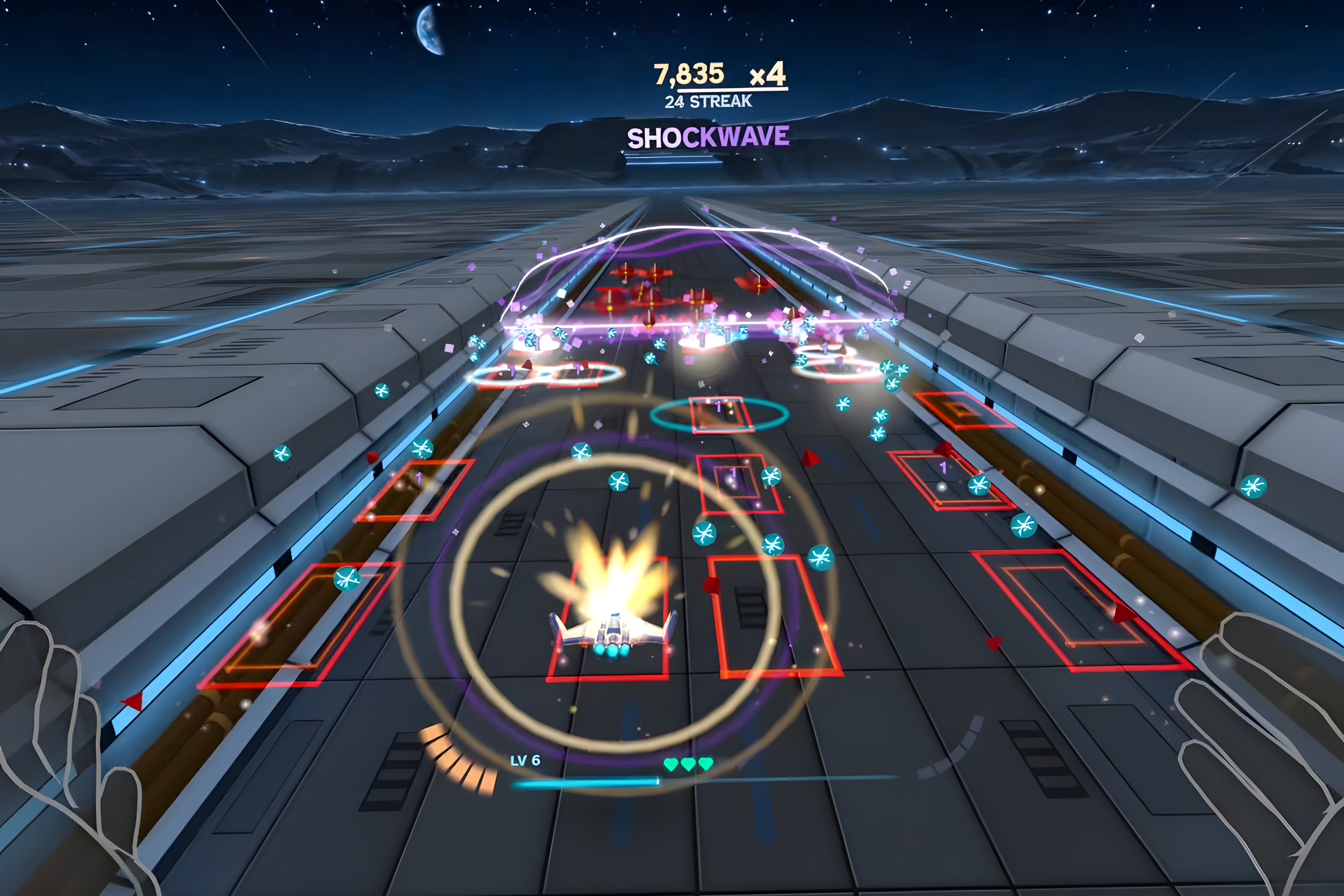
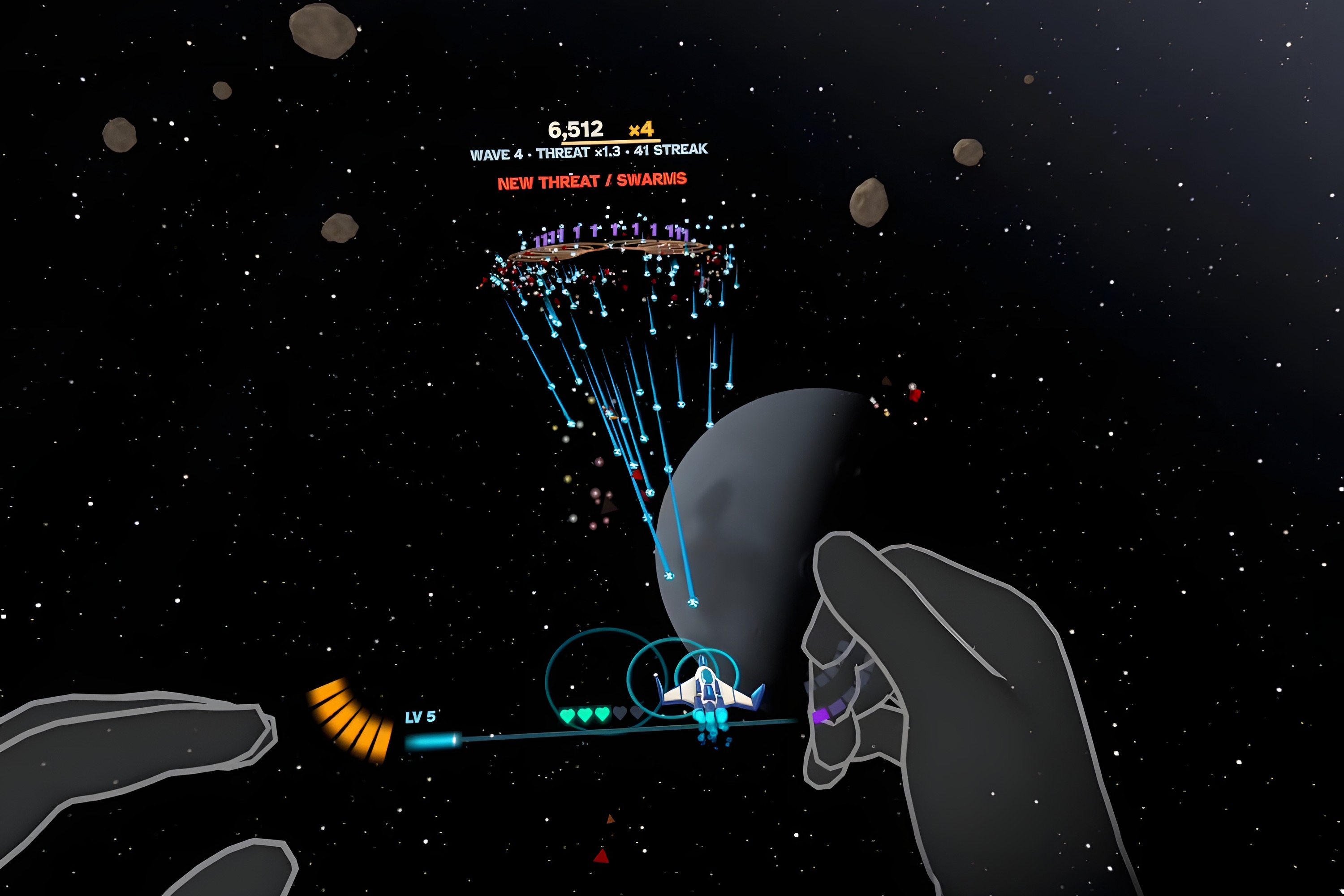
Collect energy cells, then clap: the shockwave.
-
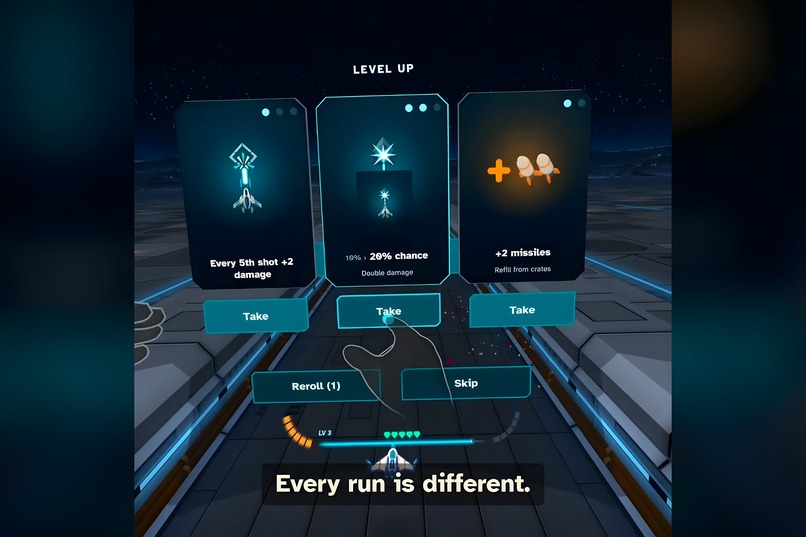
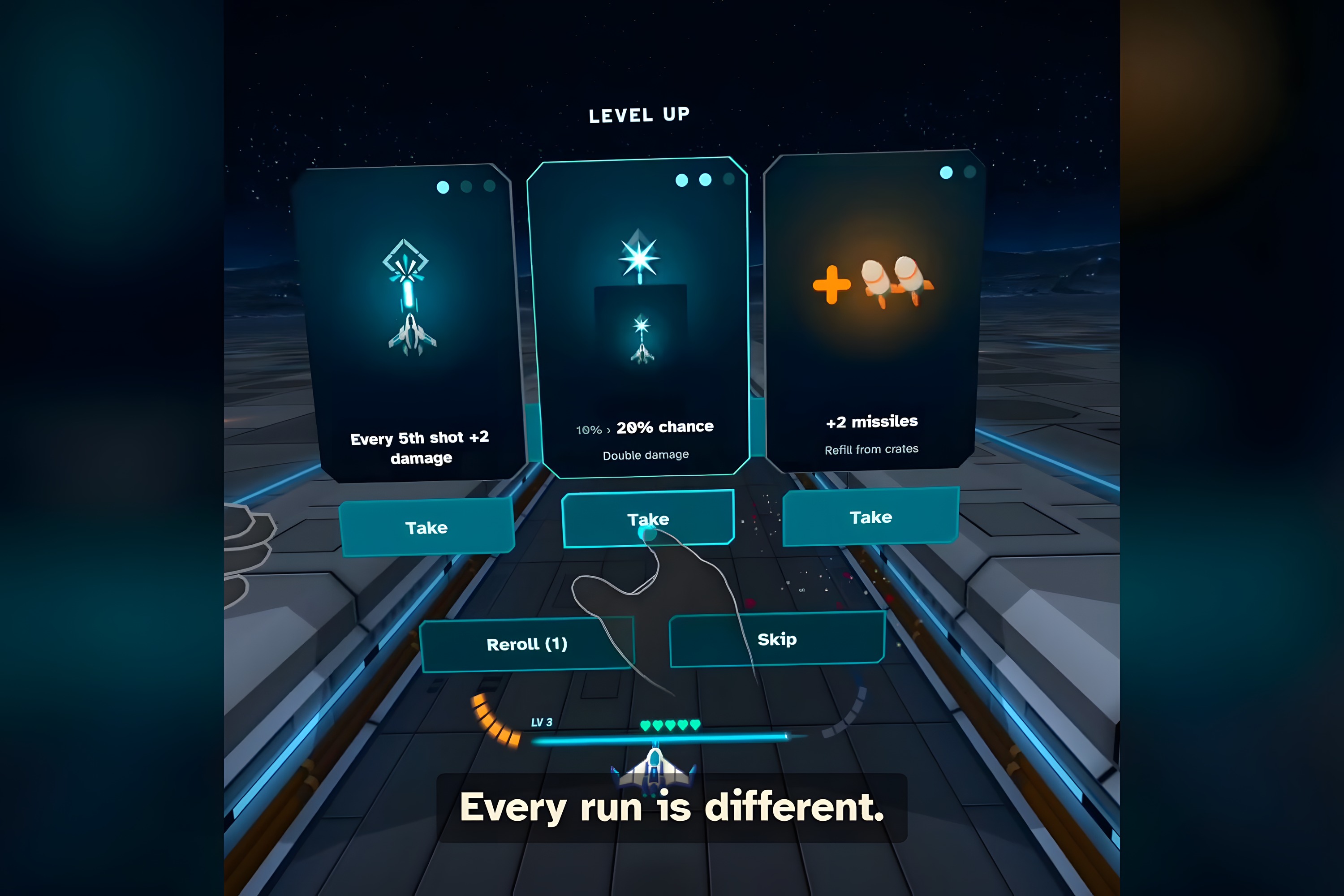
Level up and poke an upgrade card.
-
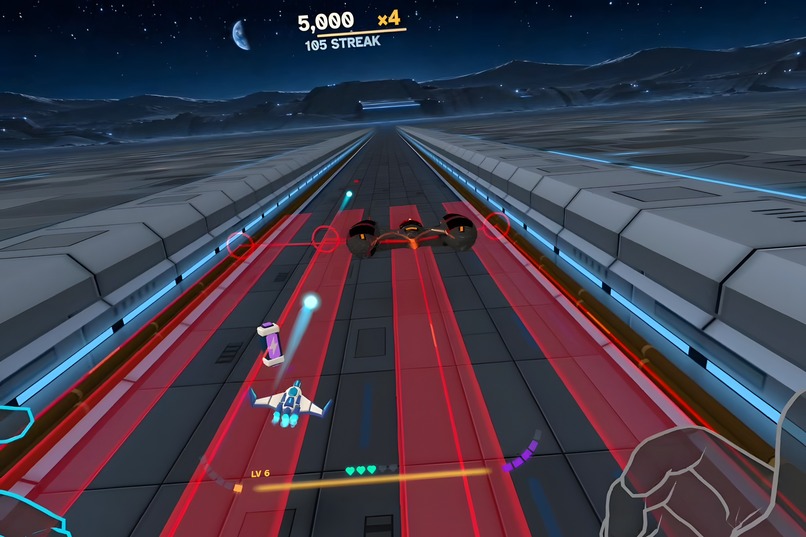
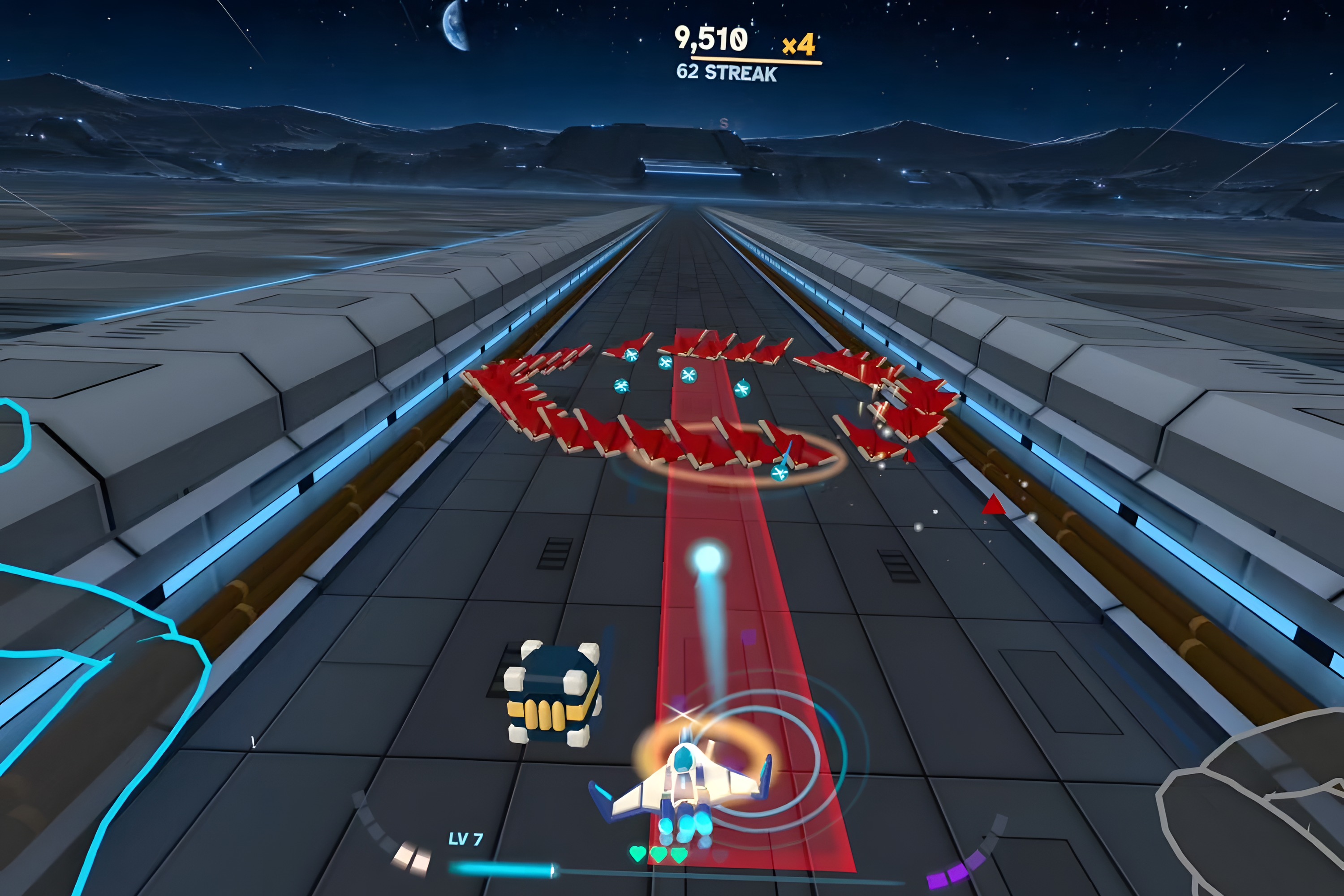
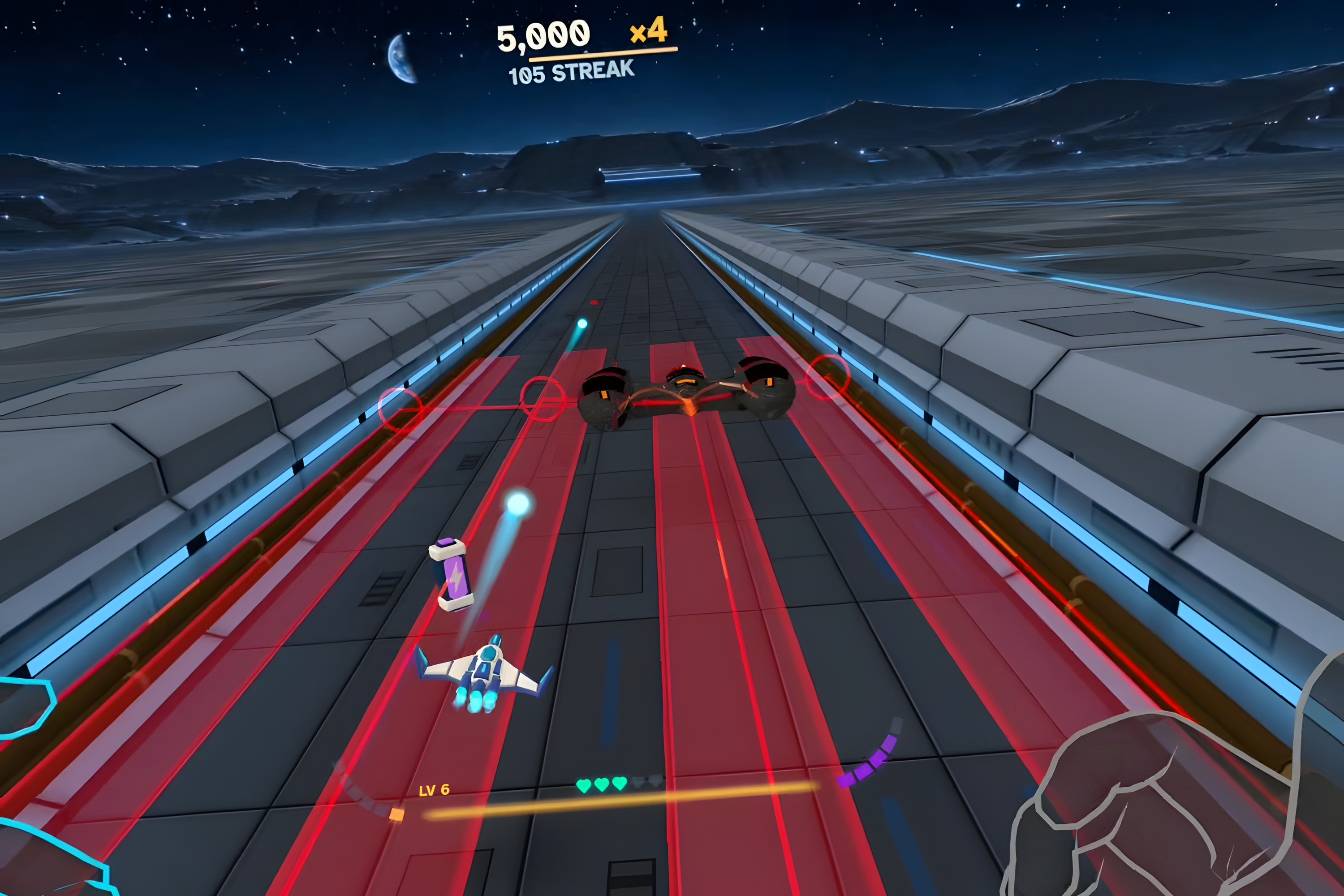
Dodge the Gatekeeper's red lanes.
-
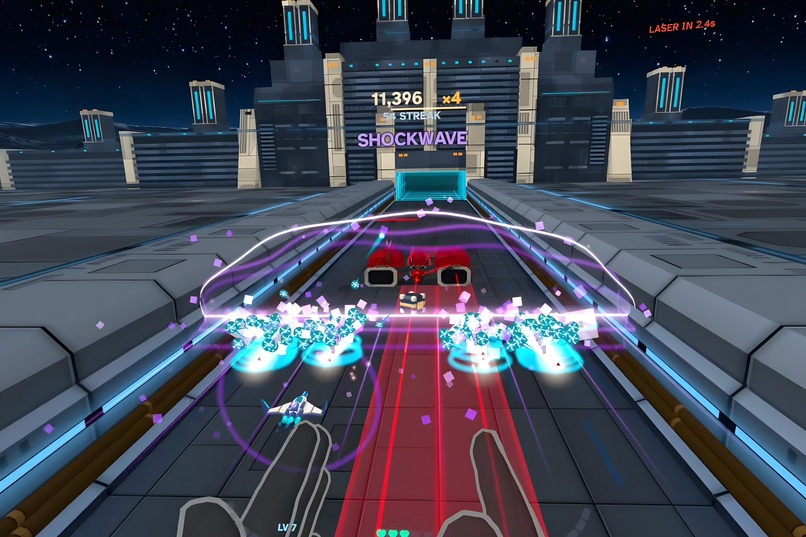
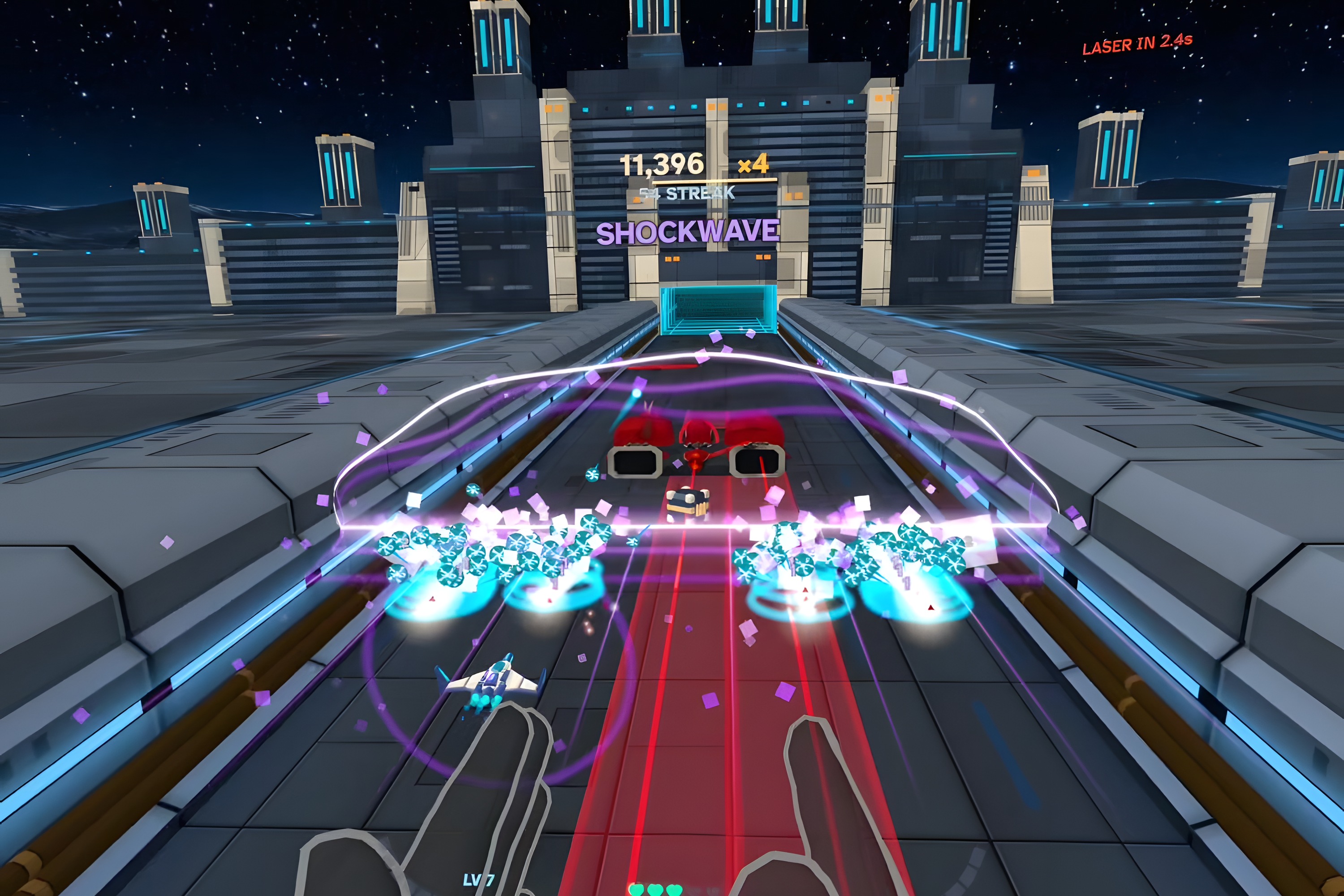
The shockwave meets the Carrier.
-
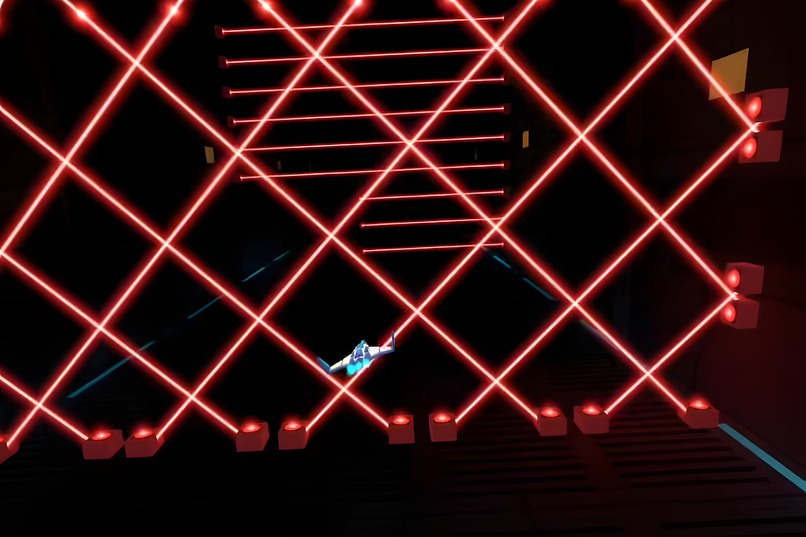
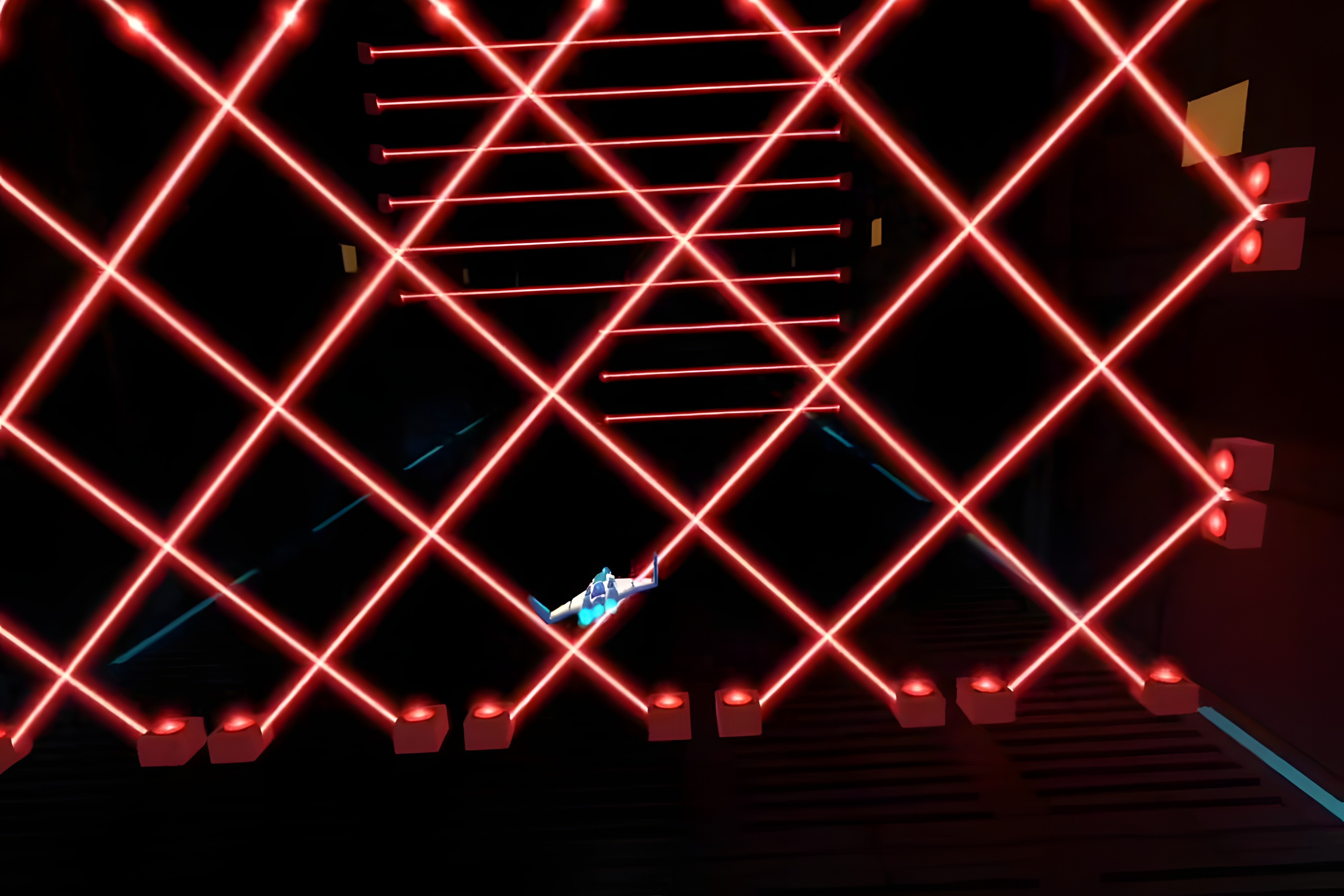
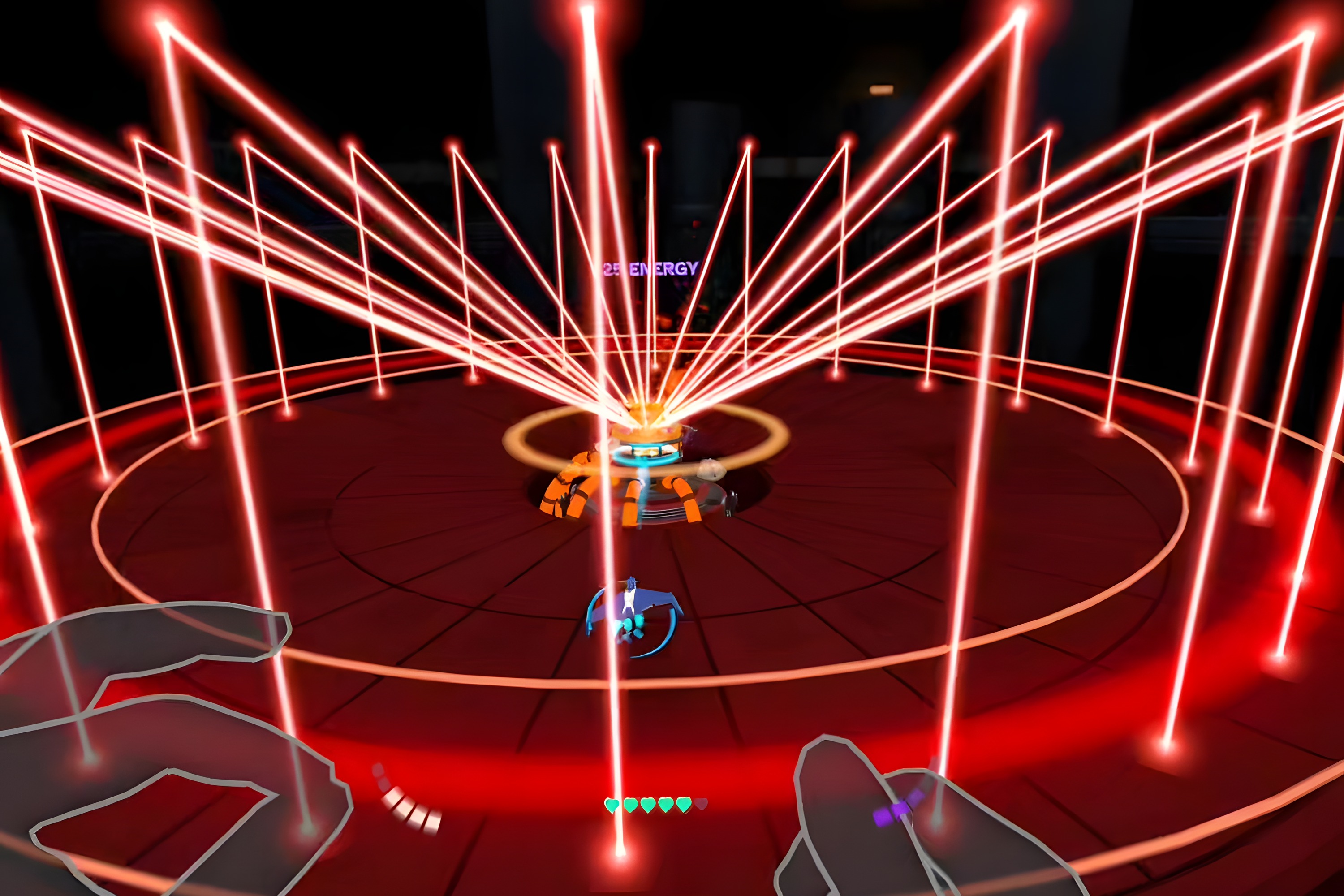
The Laser Vent: slip through the lattice.
-
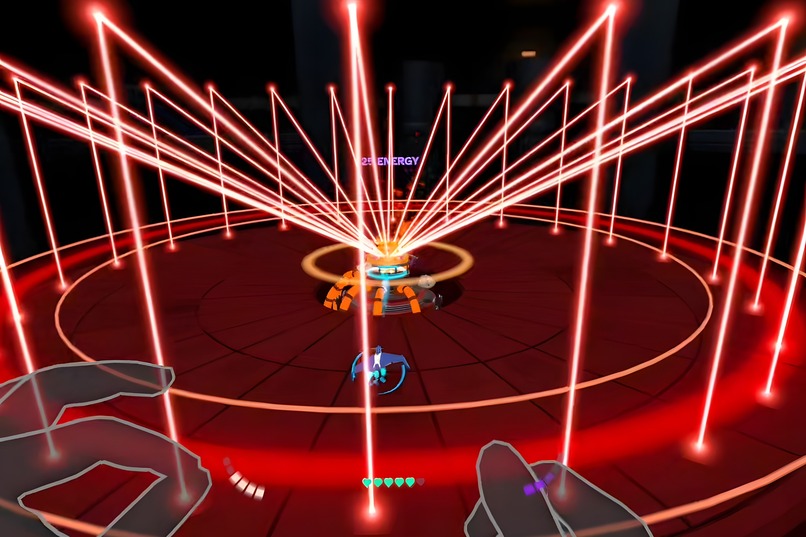
The Core, deep inside the Moon.
-
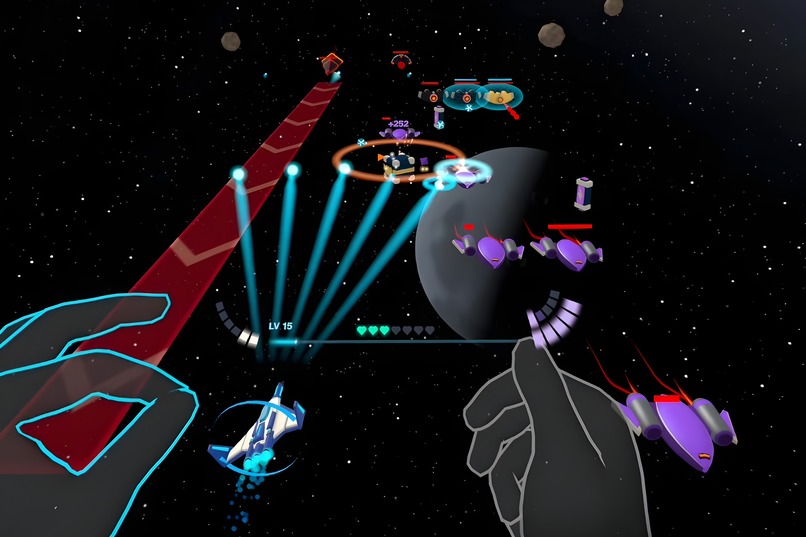
Endless in space, wave 12.
-
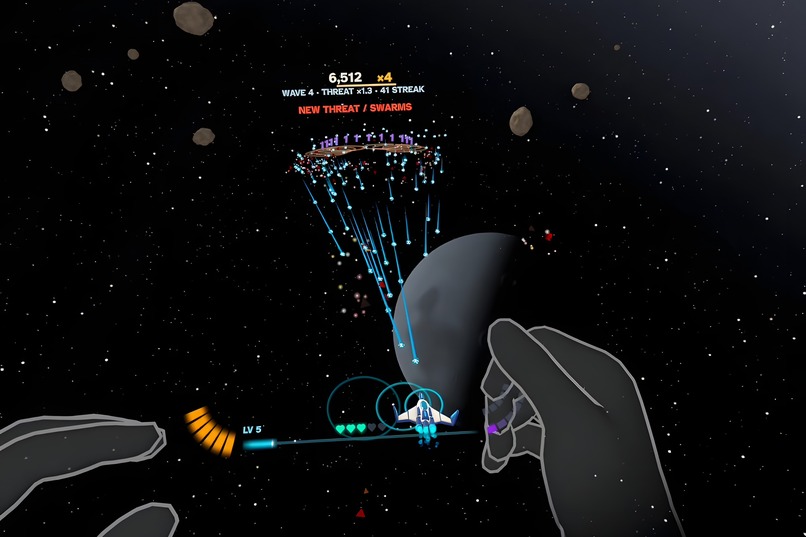
A whole swarm caught in the blast.
-
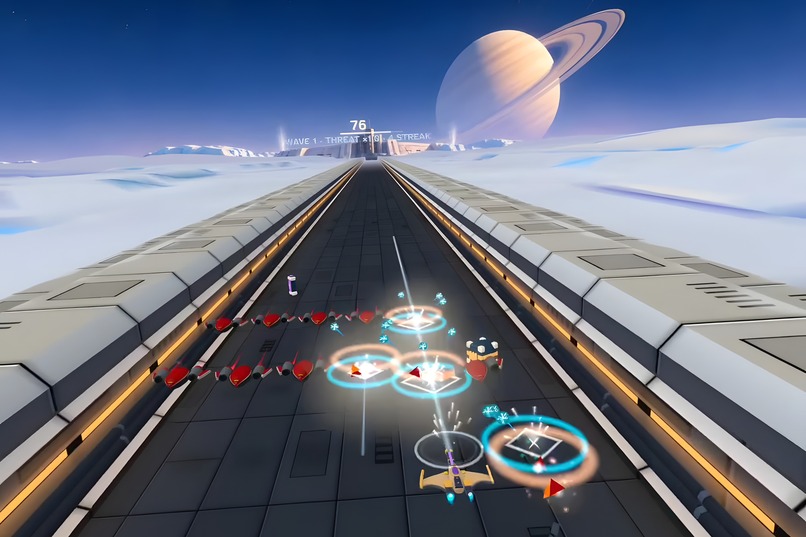
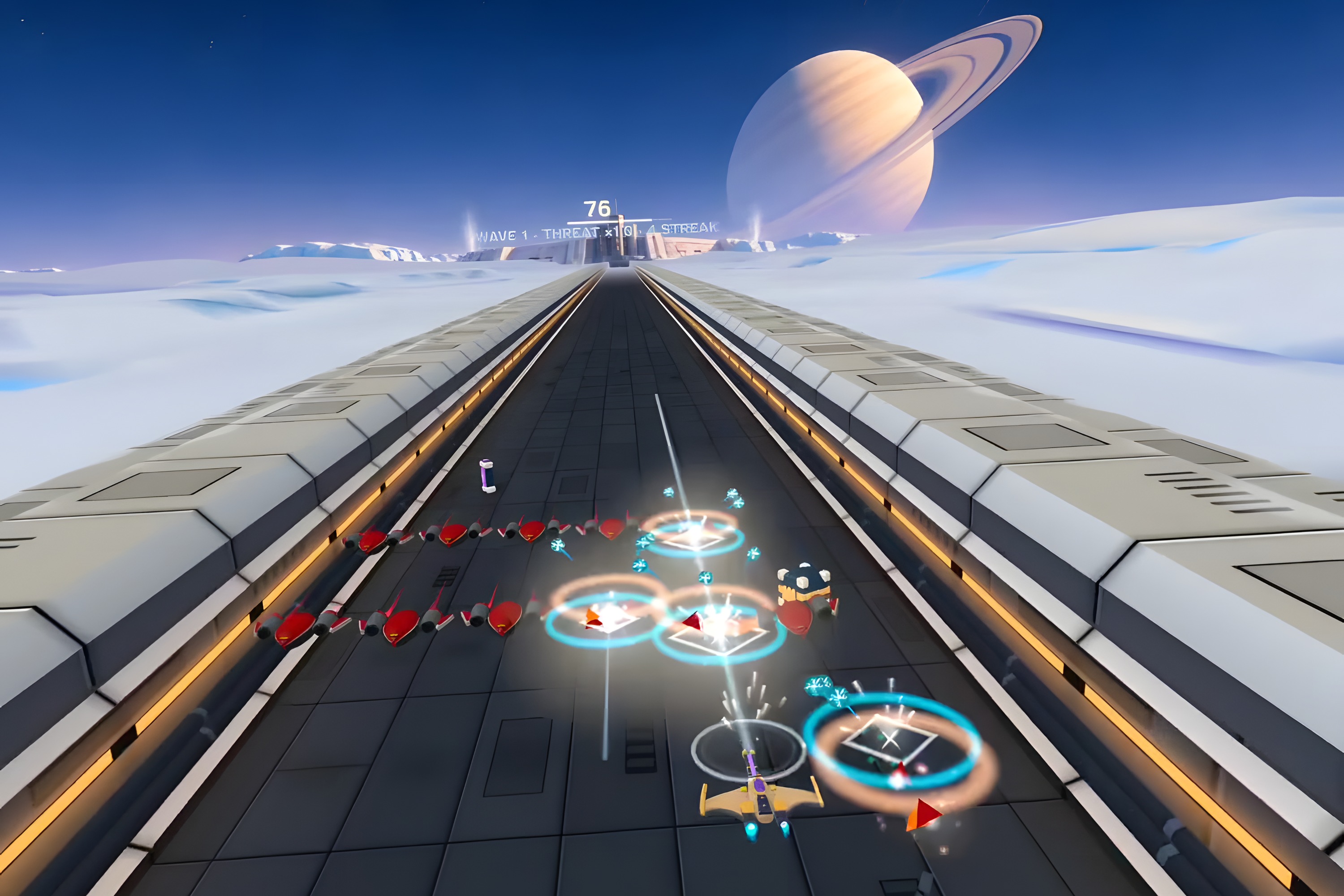
Endless: the Striker's Rail on Iceworks.
-
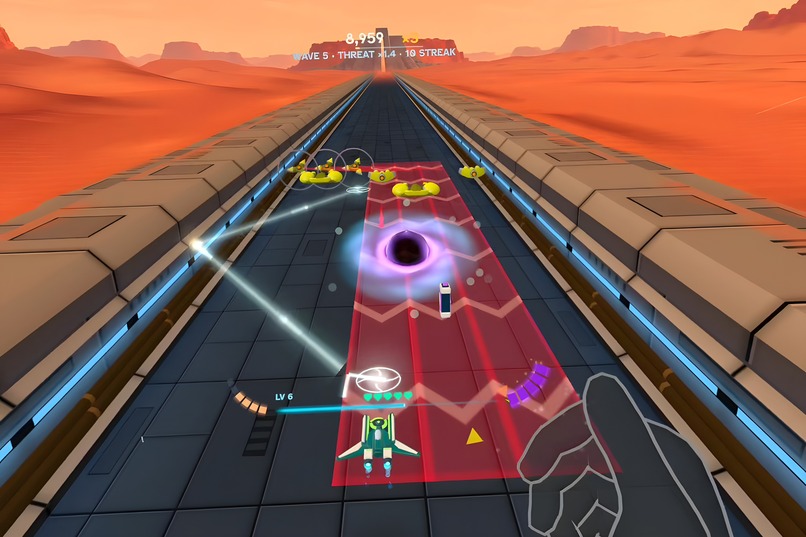
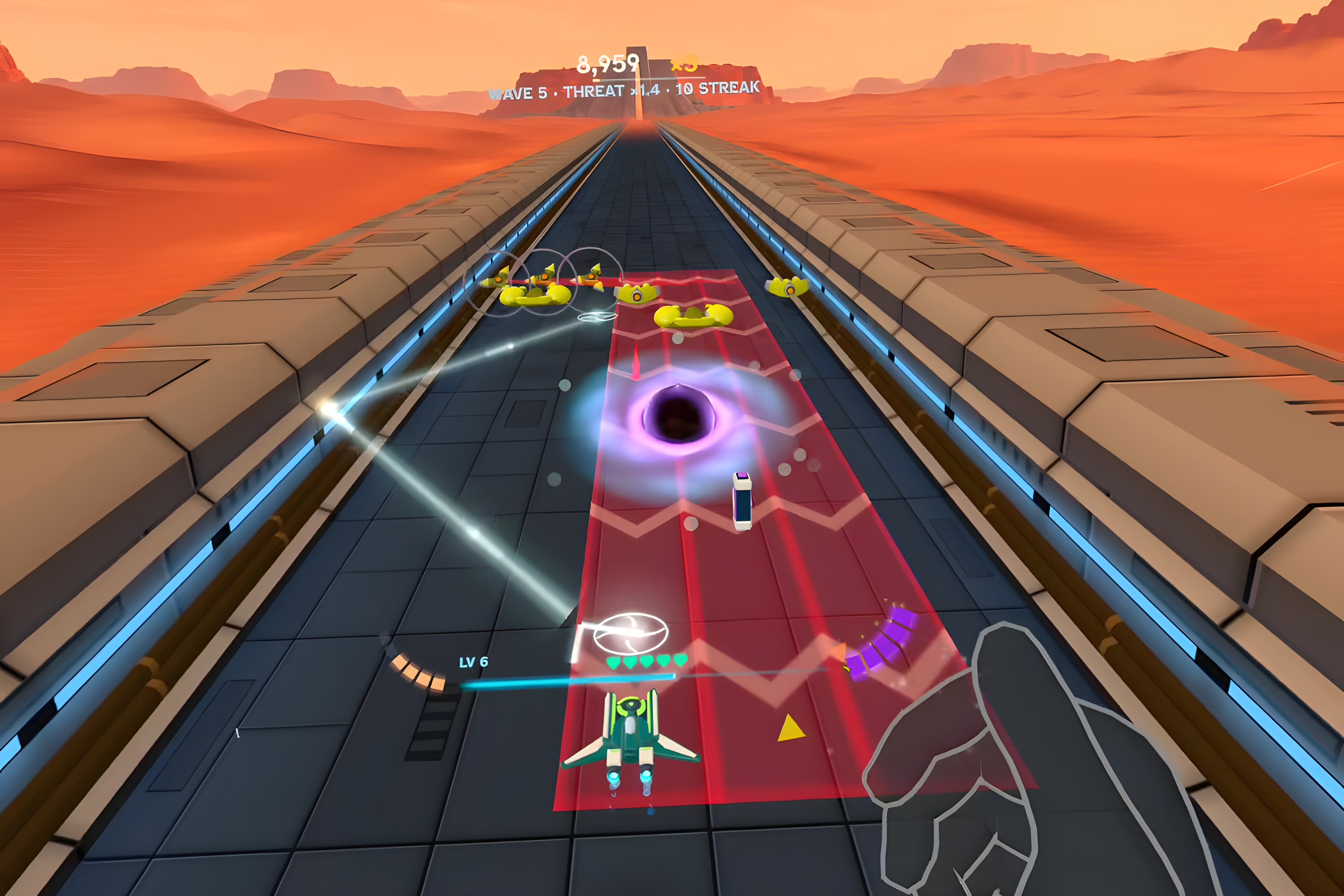
The Ricochet's Glaive and a Singularity on Mars, in Endless.
-
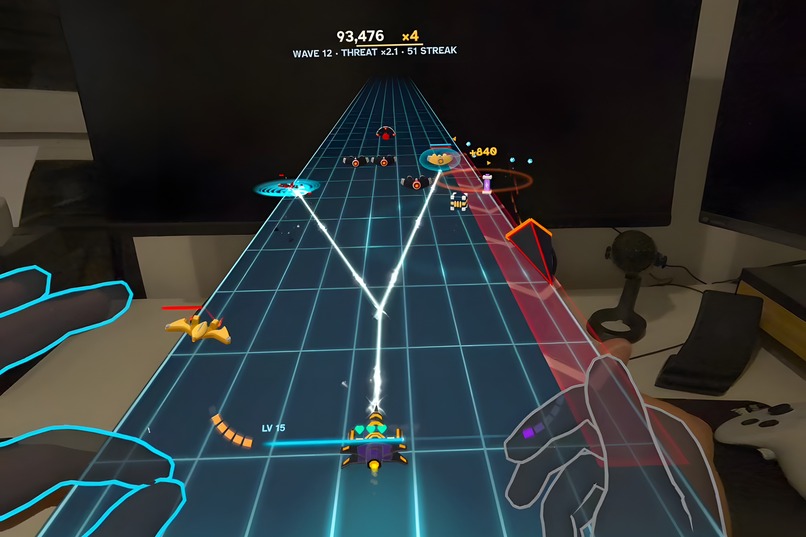
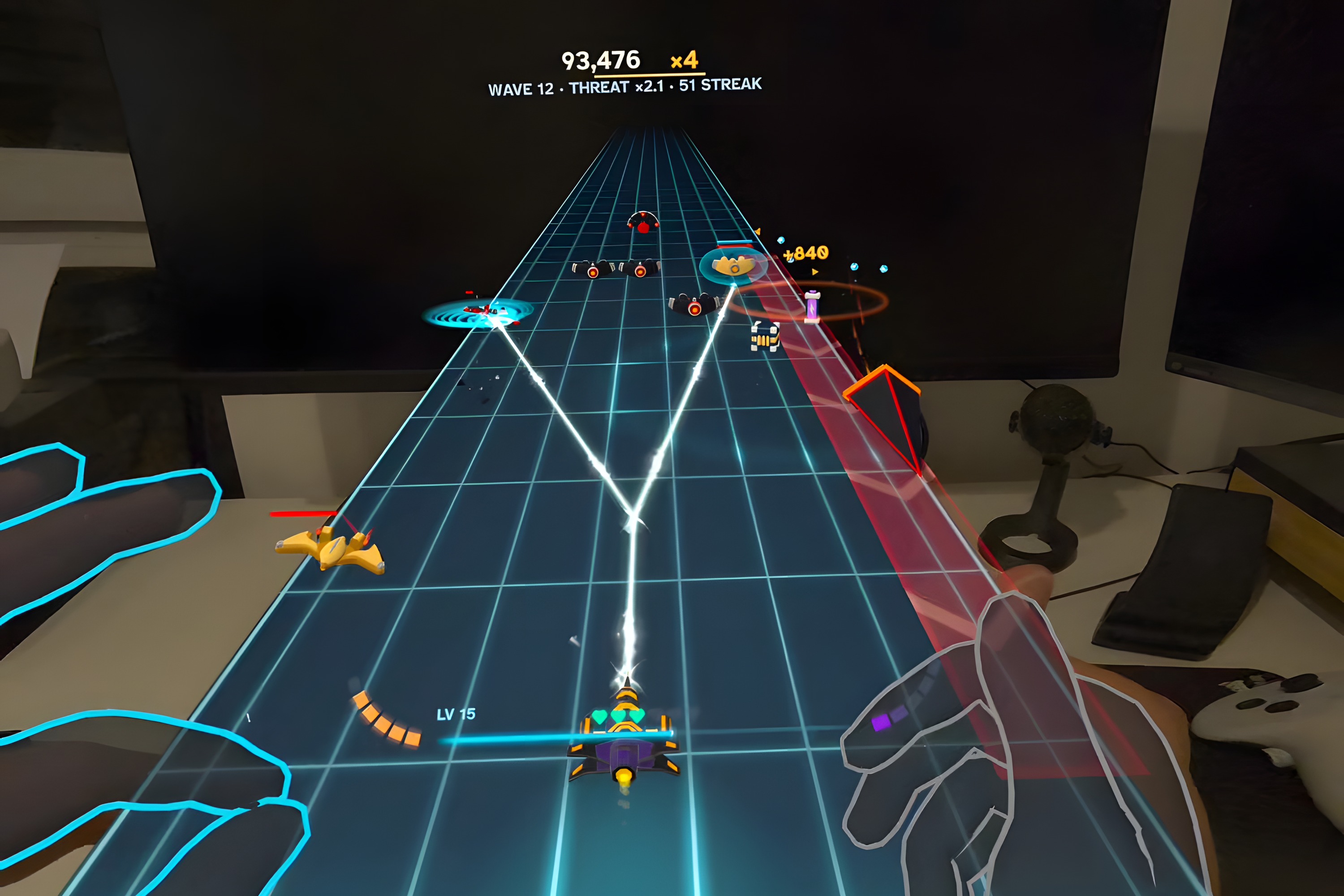
Endless in your own room, through passthrough: the Lancer's Heat Lance forks through a wave.
What it is
Everything goes quiet for a second. Then a swarm of space drones pours in at once, all of them heading for your ship.
You've been saving your energy cells for exactly this moment. You clap your hands and a shockwave rips the swarm to shreds. You're sitting in your chair, grinning and ready for more.
That's Trench Zero, an arcade space battle where your thumb steers, a pinch fires, a fist locks missiles onto an enemy, and clapping is your secret weapon.
Kestrel is your handler, the voice in your ear helping you along the way. She trains you under live fire, then sends you on a perilous mission to the Moon. The colony there has stopped responding, and the main suspect is the superintelligence that we built to help us spread settlements throughout the solar system. You fly down the trench, past the Gatekeeper and the Carrier and into the Core, to find out what happened.
Any time you like, jump into the Arcade and explore Endless with four ships, each with its own primary attack, and five secondary abilities. Choose an environment, even your own room, and play with wild modifiers. Tear through endless waves, or chase the top score in the Daily. For something different, test your hand-eye coordination in the Laser Run, or take on the Core Chamber, a boss ladder that climbs from Easy to Nightmare and beyond.
Inspiration
Arcade games are a pillar of gaming history, and the classic ship shooters among them are still rare in VR. I wanted to bring those classics back with modern game design: one ship against everything on the screen.
I also love miniature-scale games in VR, and roguelites, but the ones I have played lean toward bullet hell. I wanted something more strategic: less about dodging a thousand bullets, more about positioning, good reactions, managing your resources and interesting upgrade choices, with set pieces that show a new side of miniature VR shoot-’em-ups. Trench Zero is a tribute to the classics and my attempt at something new that plays as good as it looks.
How I built it
Solo, in Unity 6 with URP, the Meta XR SDK and the Interaction SDK. I profiled render scales and frame rates on the headset with performance logs and settled on 90 Hz at a 1.25× render scale. AI tools helped with code, art and Kestrel's voice. I spent a lot of time iterating on enemies, environments, sounds, narrator voices and story beats. Every enemy silhouette was made from scratch, so you can tell them apart in the thick of it.
The most important part was validating the prototype early on and then doing playtests every week to refine and improve it. One tester took the missile reticle for a system cursor, so it became lock-on brackets. Another missed the XP bar and couldn't tell how many missiles or how much energy they had, so I kept reworking the HUD until they could.
Testers read the Core's first health ring as a countdown, so I replaced it with ten power cables plugged into its heart, and you tear them off one by one. The chamber, each of its phases and every effect around it went through round after round of work.
I ran simulations and explored different enemy movement patterns and combinations, calibrating enemy and resource spawning rates to achieve a good flow, especially in the Moon mission.
Challenges
The earliest decisions were how the player moves, how big the board is and which hand does what. I had to work within the constraints of the competition, as well as optimizing for Meta VR Glasses, which was a fun limitation and pushed me to adapt the game design to their narrower view.
At first the right hand had two jobs, swiping to fly and pinching for missiles. Then two people who had never used hand tracking sat down to play, and the pinch kept tripping over the swipe. So I split the roles of both hands. By default, you fly with your right hand and fire with your left. Once I established the fist gesture, it clicked right away and people found it cool and easy to use. On Quest 3, missiles aim with your head; on the glasses, they'll aim where you look. The clap worked from day one, and testers loved it.
What I learned
I learned a lot about human perception and how limited it is in VR, and about all the levels of polish required to make every action and response from the system feel good and provide information to the player without overwhelming them. It is a fast-paced action game so everything from the HUD and particles to enemy colors and damage alerts needs to be tuned and timed well. What I never planned was people clapping because something scared them. In playtests it happened more than once. The big move turned out to be a reflex people already had.
The enemies are machines, and they still ended up with personalities. The Serpent weaves around as if it has all the time in the world, then charges straight at you and starts exploding. Tuning that one was some of the most fun I had.
What's next
The next step is expanding the Arcade Endless mode with upgrades you keep between runs: you unlock passive abilities and improve each ship so you can get further through the waves. I am working on a few boss fights inside the Endless mode and a tie-in to the campaign story.
In parallel, work will continue on the next chapter on Mars and then further through the solar system, following a mysterious story. Each chapter will bring in a ship or an ability and put it to work in a new way, with set pieces like flights through underground caves and canyons, and dogfights beside giant starships.
