-
-
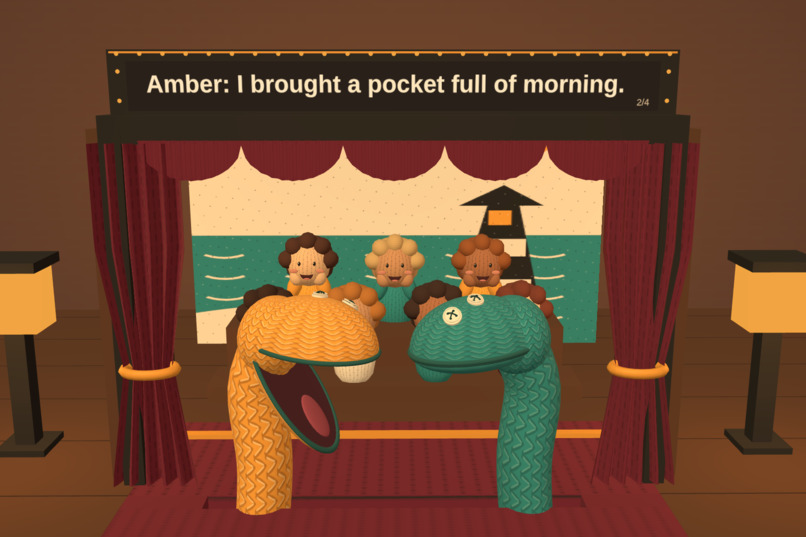
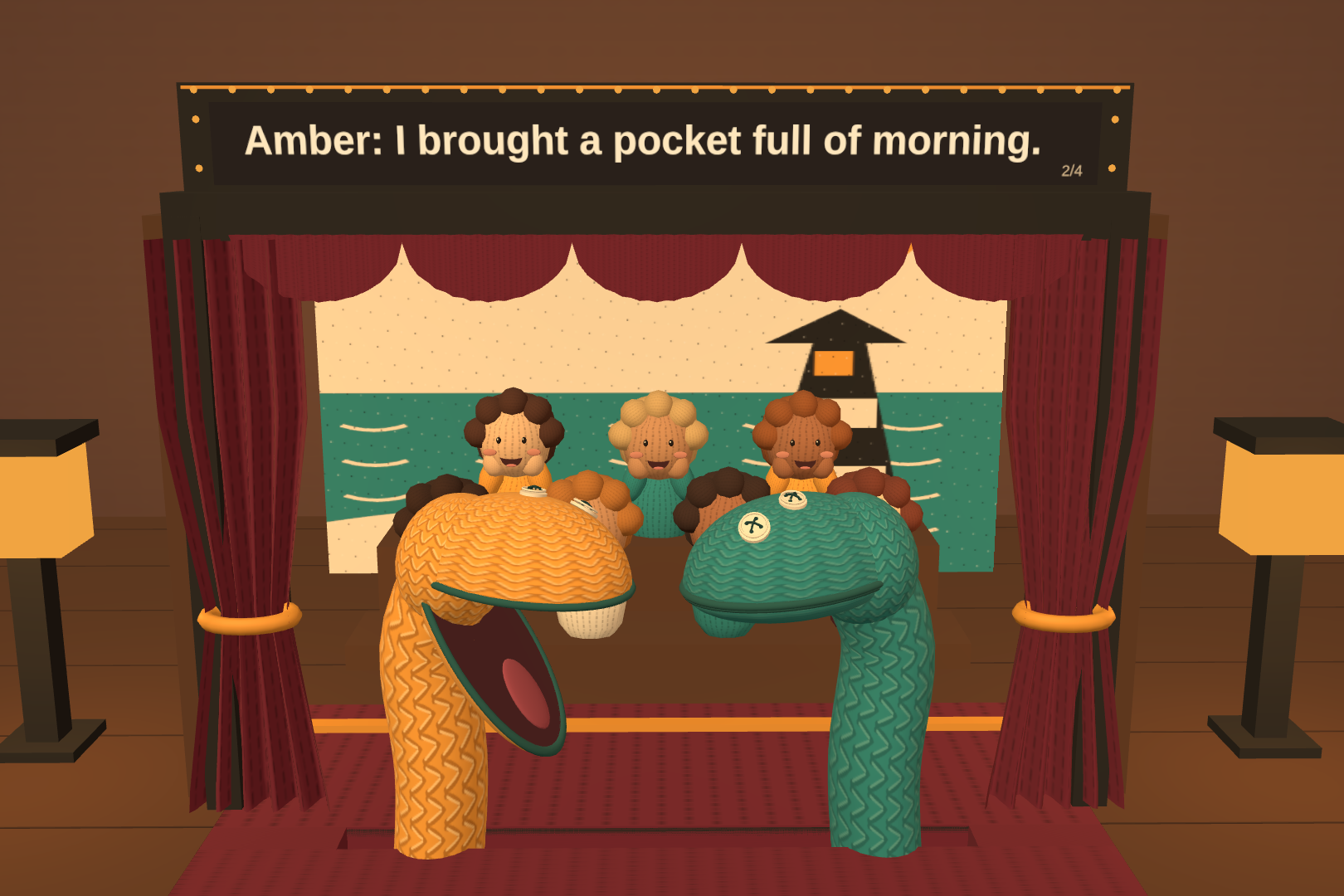
Two sock puppets perform a duet: raise your left hand to bring in an amber partner.
-
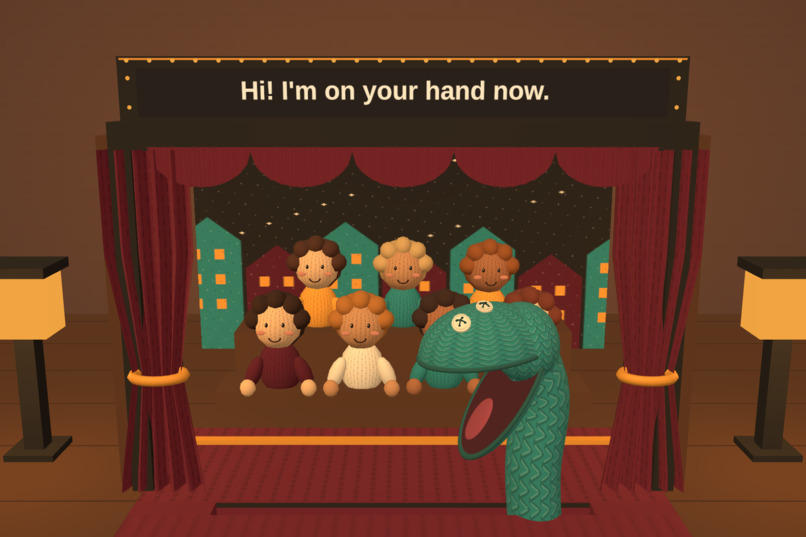
Open your hand and the puppet opens its mouth wide while it speaks its line.
-
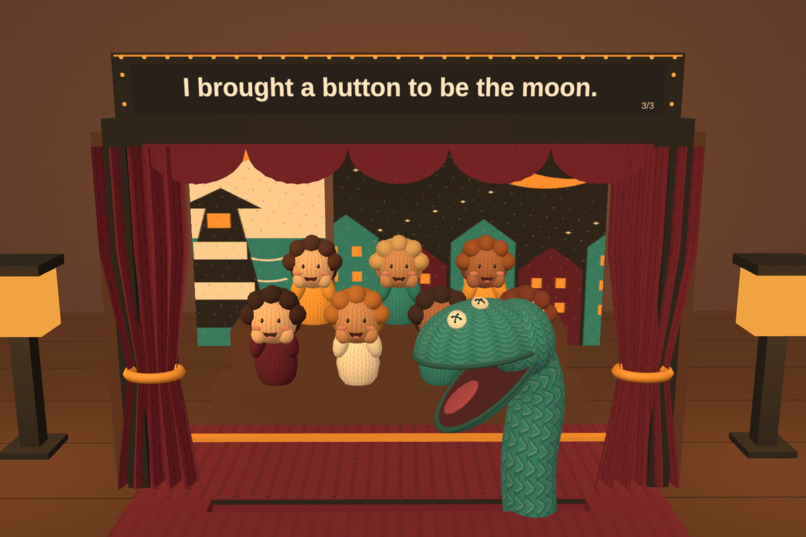
Felt audience dolls applaud each new line of the show.
-
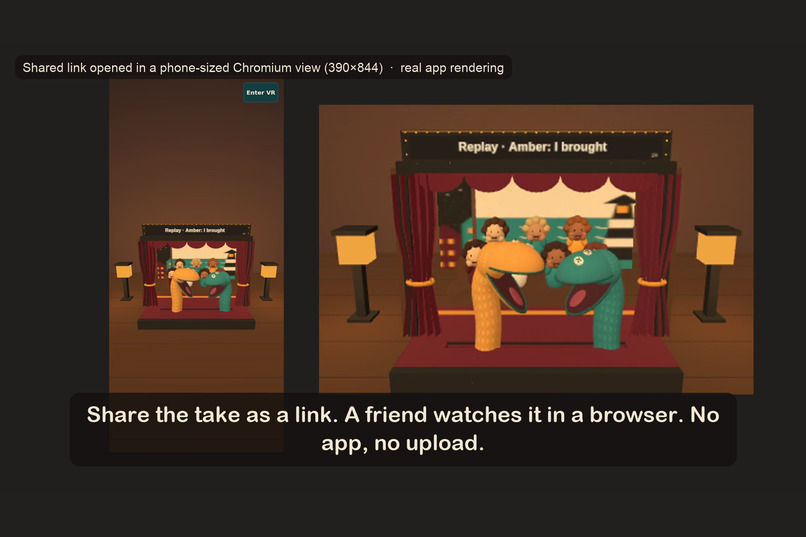
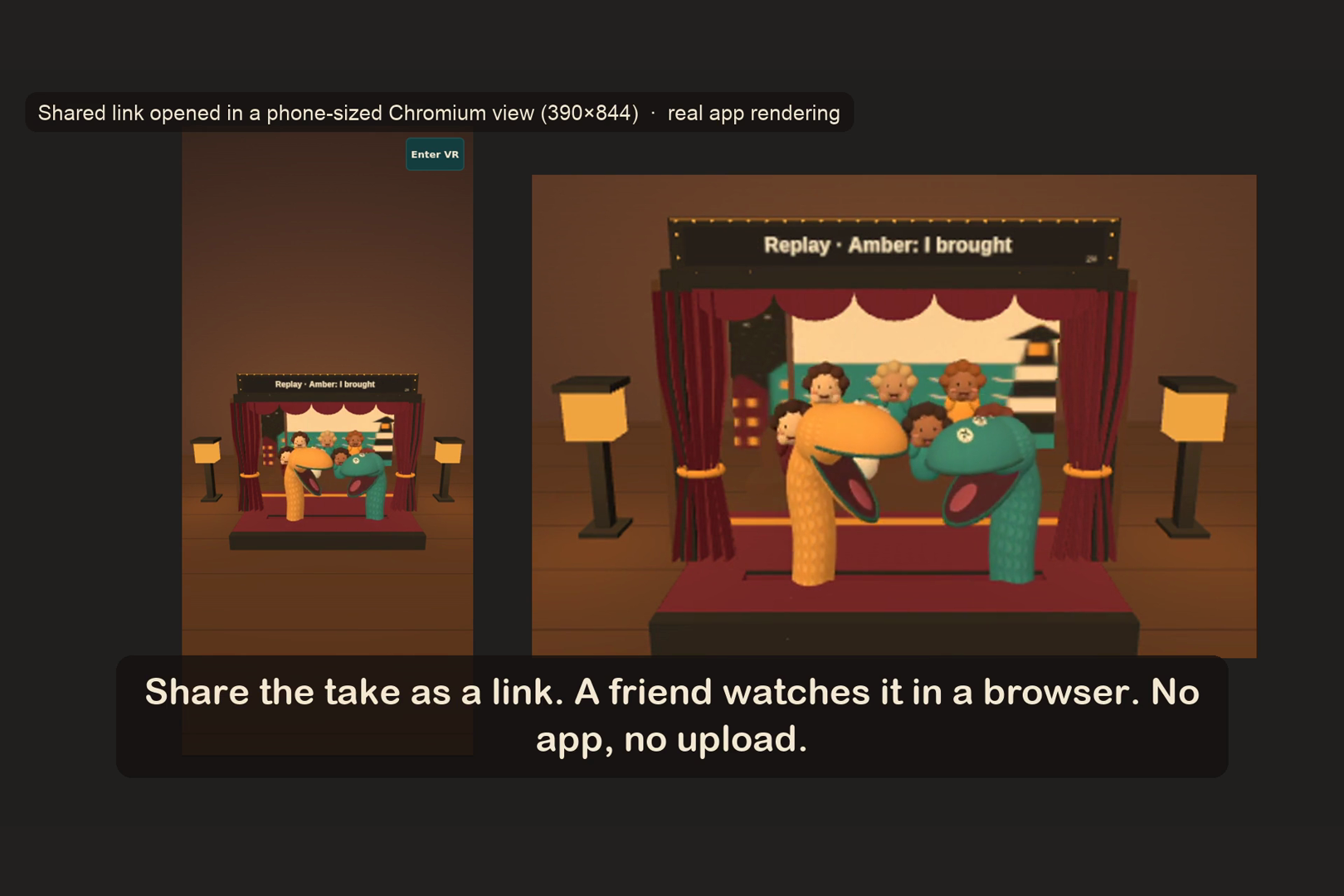
A friend opens the shared take in a phone-sized browser view and taps Watch the show.
-
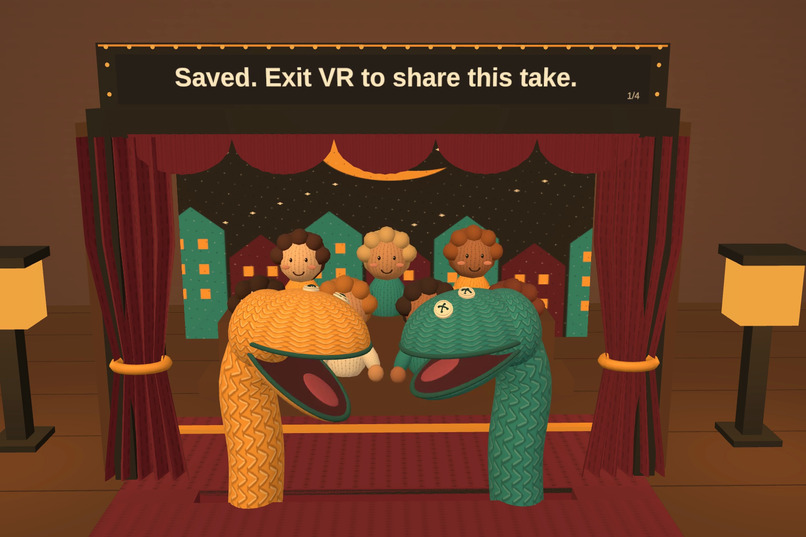
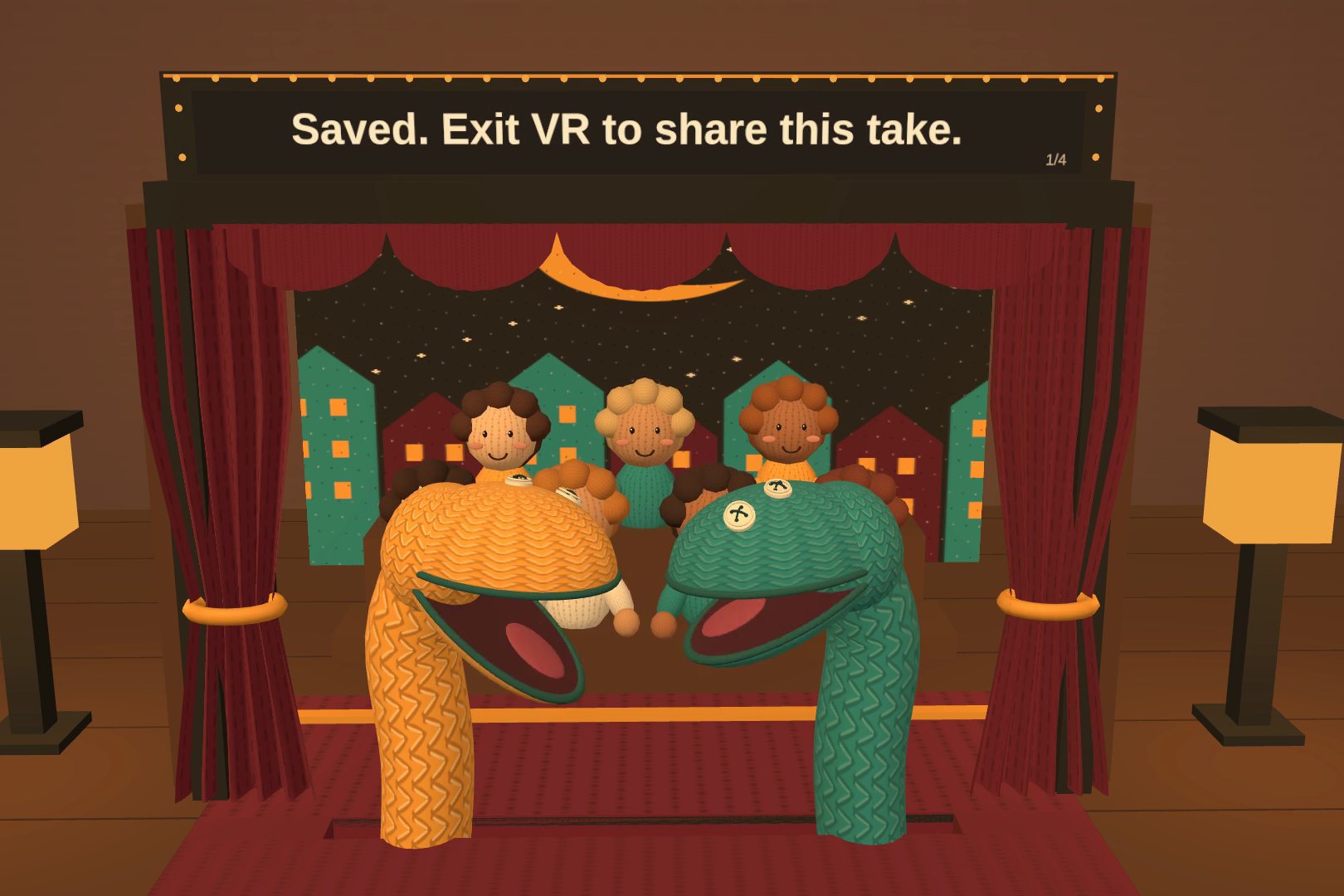
After a take, the marquee says it is saved; outside VR you can share it as a link.
Inspiration
We wanted the hand itself to be the character, not a pointer. A sock puppet needs no manual: open your hand and it talks. So we built a tiny, seated theatre where your bare hands are both the performers and the controls.
What it does
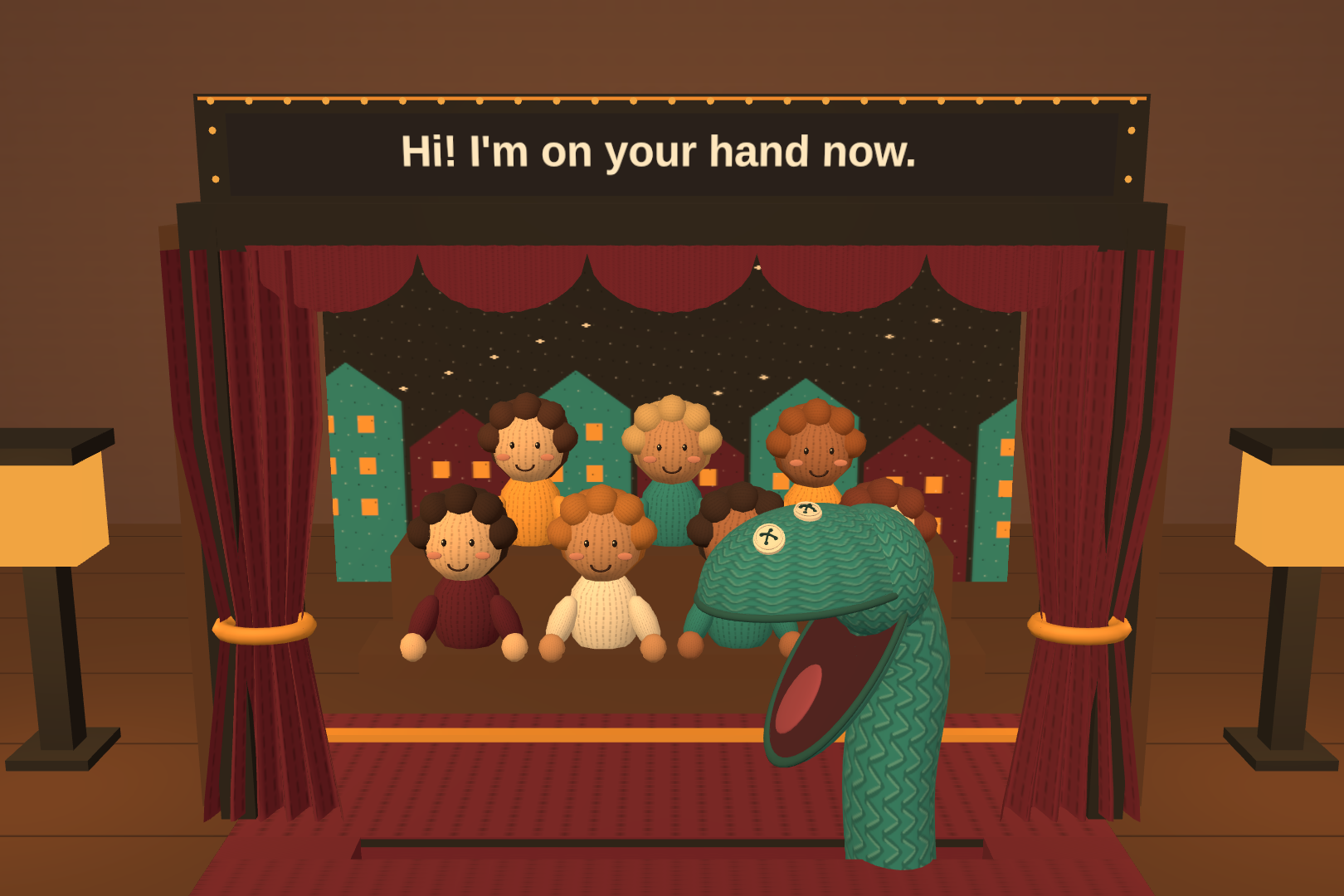
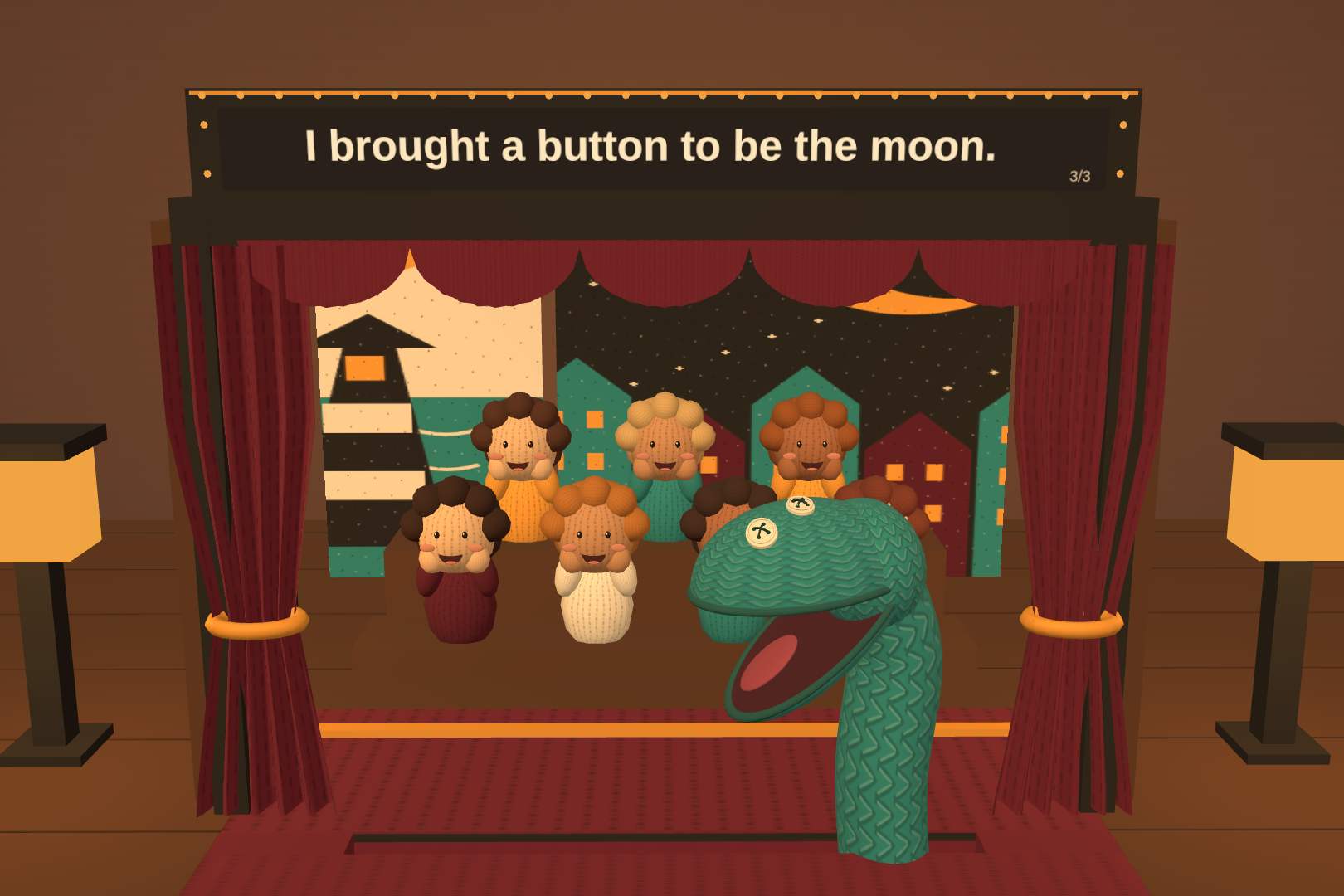
Raise your right hand and a knitted sock puppet slips over it. A lit marquee sign teaches one step at a time. Open your hand and the puppet says hello. Swipe your right thumb or pinch for the next line; you work the mouth while a babble voice speaks it in nonsense syllables. A seven-line original script leads into a four-line duet when you raise your left hand for an amber partner. Then an improv prompt, one of eight we wrote.
Wine-red curtains frame a felt stage. Seven felt audience dolls sway when your puppet opens wide and applaud each new line. Paper backdrops (night town, seaside, moon) slide in behind the audience.
When the marquee says "Make a take", pinch and play with both hands. Hold both fists for two seconds to stop; the puppets replay it, even after you lower your hands. Outside VR, "Share this take" copies a link. The show is packed into the part of the link that browsers never send to a server. A friend opens it in a desktop or phone browser and taps "Watch the show".
How we built it
It is a static WebXR site built with the Immersive Web SDK (IWSDK), three.js and Vite. All visuals and sounds are generated in code.
A take records 25 joints per hand, both mouths and the script at 60 Hz. A share link keeps only the puppet motion and the script, compressed in the browser: about 3,400 characters for our ten-second test take. It holds no camera image and no voice recording.
A JavaScript API (window.puppetStage) lets you, or an AI agent, load your own lines, play takes and make share links; an llms.txt file explains it to agents.
Challenges
We built it without a headset. Meta's Immersive Web Emulation Runtime (IWER) drives scripted hand poses, pinches and thumb swipes in a headless browser. The latest run passed 96 automated checks at desktop and phone sizes, from first raise through duet, recording and replay. The first steps also passed in 18 combinations of seat height, head angle and hand position. There was no controller input, no console error and no external request.
The puppet calibrates to where you first raise your hand and copies your movement at half size, so it stays inside the stage opening. It also turns about 35 degrees toward you to show its mouth.
All checks so far are in browser emulation and Chromium browsers, not yet on a Quest headset or iPhone Safari.
What's next
- A daily improv prompt and goal, so there is a reason to come back tomorrow.
- Duet replies: perform beside a friend's shared puppet.
- Passthrough, to put the theatre on your real table.
Target launch date
December 15, 2026, as a free web page that opens in Quest Browser.
Built With
- github
- immersive-web-sdk
- three.js
- typescript
- vite
- web-audio-api
- webxr
