Inspiration
In school, we were given the offer to take a dual enrollment class called Sign Language. A whole class for the subject can be quite time consuming for most children including adults. If people are interested in learning ASL, they either watch Youtube videos which are not interactive or spend HUNDREDS of dollars in classes (https://deafchildren.org requiring $70-100). Our product provides a cost-effective, time-efficient, and fun experience when learning the new unique language.
What it does
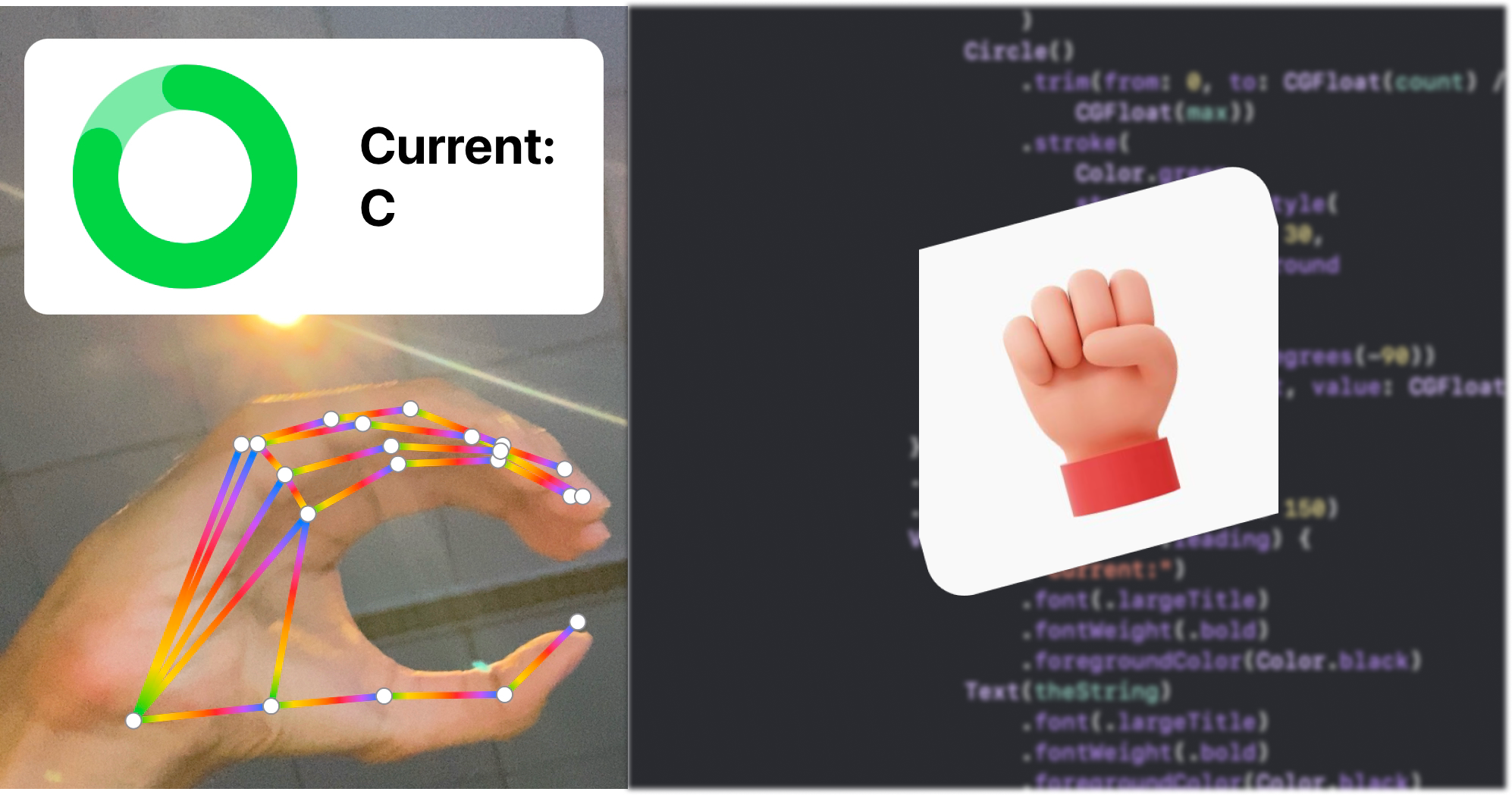
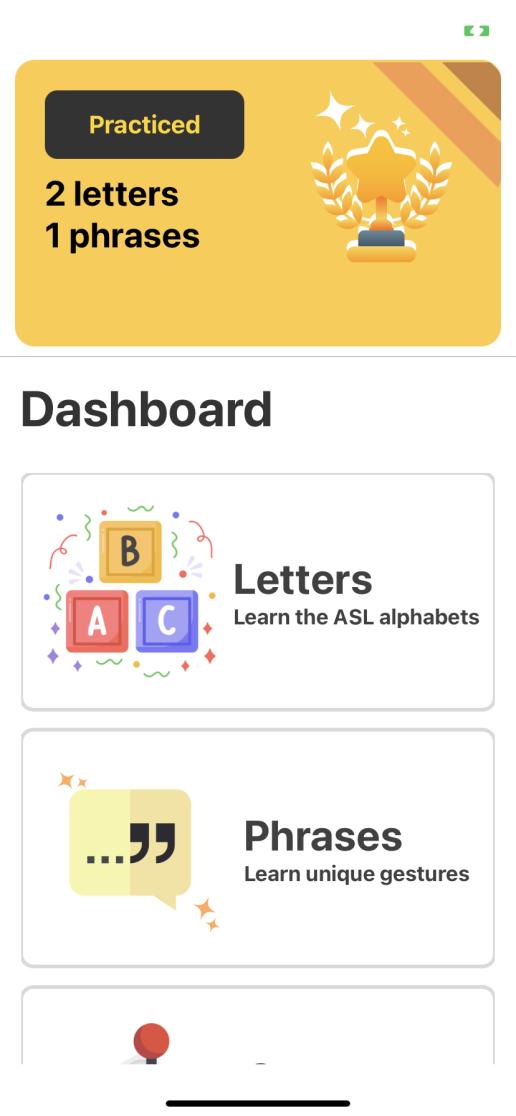
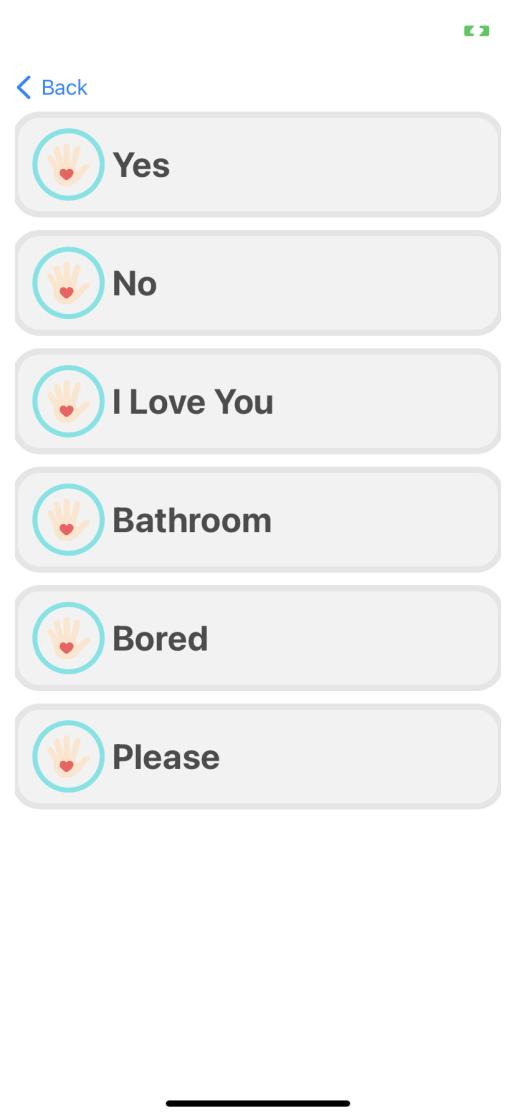
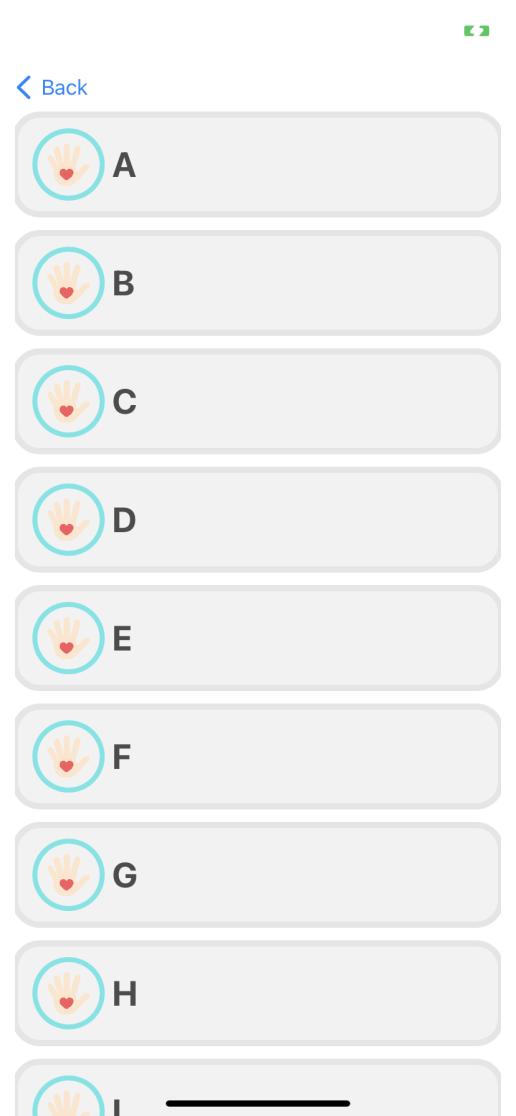
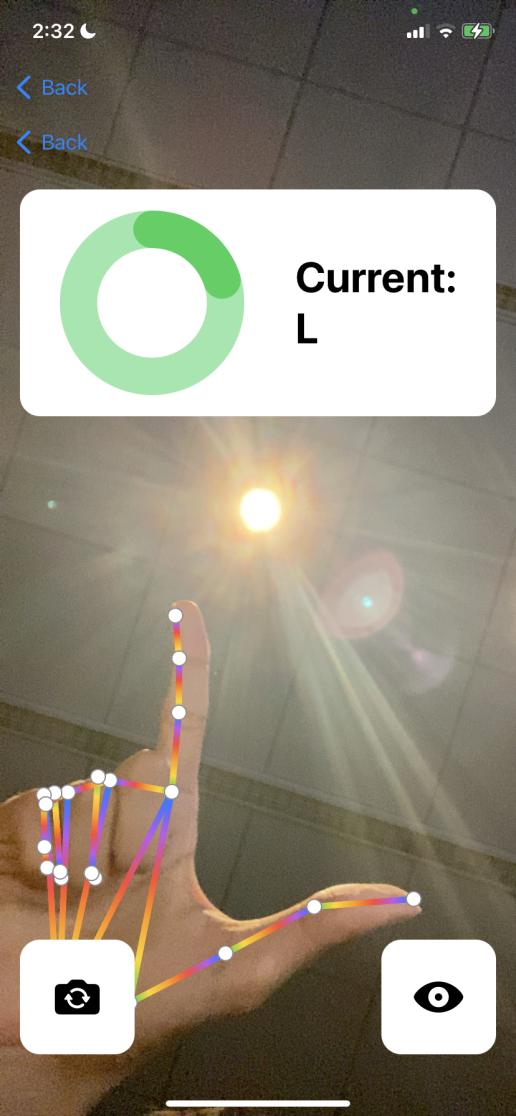
Of course you have to first learn the ASL alphabets. A, B, C, D ... Z. Each alphabet has a unique hand gesture. You also have the option to learn phrases like "Yes", "No", "Bored", etc. The app makes sure you have done the alphabet correctly by displaying a circular progress view on how long you have to hold the gesture. We provide many images to make the learning experience accessible. After learning all the alphabets and practicing a few words, time for GAME time :). Test your ability to show a gesture and see how long you can go until you give up. The gamified experience leads to more learning and engaging for children.
How we built it
The product was built using the language Swift. The hand-tracking was done using CoreML Components. We used hand landmarks and found distances between all points of the hand. Comparing the distances it SHOULD be and what it is as a specific time frame helps us figure out whether the hand pose is occurring. For the UI we planned it out using Figma and later wrote the code in Swift. We used the SwiftUI components to save time. For data storing we used UIData which syncs across devices with the same iCloud account.
Challenges we ran into
There are 26 alphabets. That's a lot of arrays, comparing statements, and repetitive work. Testing would sometimes become difficult because the iPhone would eventually become hot and get temperature notifications. We only had one phone to test, so phone testing was frequently used for hand landmarks mostly. The project was extremely lengthy and putting so much content in one 36 hours is difficult, so we had to risk sleep. A cockroach in the room.
Accomplishments that we're proud of
The hand landmark detection for an alphabet actually works much better than expected. Moving your hand super fast does not glitch the system. A fully functional vision app with clean UI makes the experience fun and open for all people.
What we learned
Quantity < Quality. We created more than 6 functioning pages with different level of UI quality. It's very noticeable which views were created quickly because of the time crunch. Instead of having so many pages, decreasing the number of pages and maybe adding more content into each View would make the app appear flawless. Comparing arrays of the goal array and current time-frame array is TEDIOUS. So much time is wasted from testing. We could not figure out action classifier in Swift as there was no basic open-source code. Explaining problems to Chat GPT becomes difficult because the LLM never seems to understand basic tasks, but perfectly performs in complex tasks. Stack Overflow will still be around (for now) if we face problems.
What's next for Hands-On
The app fits well on my iPhone 11, but on an iPad? I do not think so. The next step to take the project further is to scale UI, so it works for iPads an iPhones of any size. Once we fix that problem, we could release the app to the App Store. Since we do not use any API, we would have no expenses related to hosting the API. Making the app public could help people of all ages learn a new language in an interactive manner.
Built With
- coreml
- figma
- swift
