Inspiration
When someone's heart stops, the person next to them is usually not a medic. It's a parent, a partner, a stranger. Most cardiac arrests outside hospital happen at home, and bystander CPR can double or triple the chance of survival — yet people freeze. They push too slowly, lose count, forget to swap rescuers when they tire, and don't know where the AED pads go.
At that moment, a phone is useless: both hands are on the chest, and your eyes have to stay on the patient. But glasses see what you see and leave your hands free. So we asked: what if the coach lived on the patient, at real size, one calm step at a time?
That's Hands On: a CPR and AED coach for Snap's SPECS glasses, planned with the Devpost Learn skill pack and built entirely by AI coding agents through CLAD in Lens Studio.
What it does
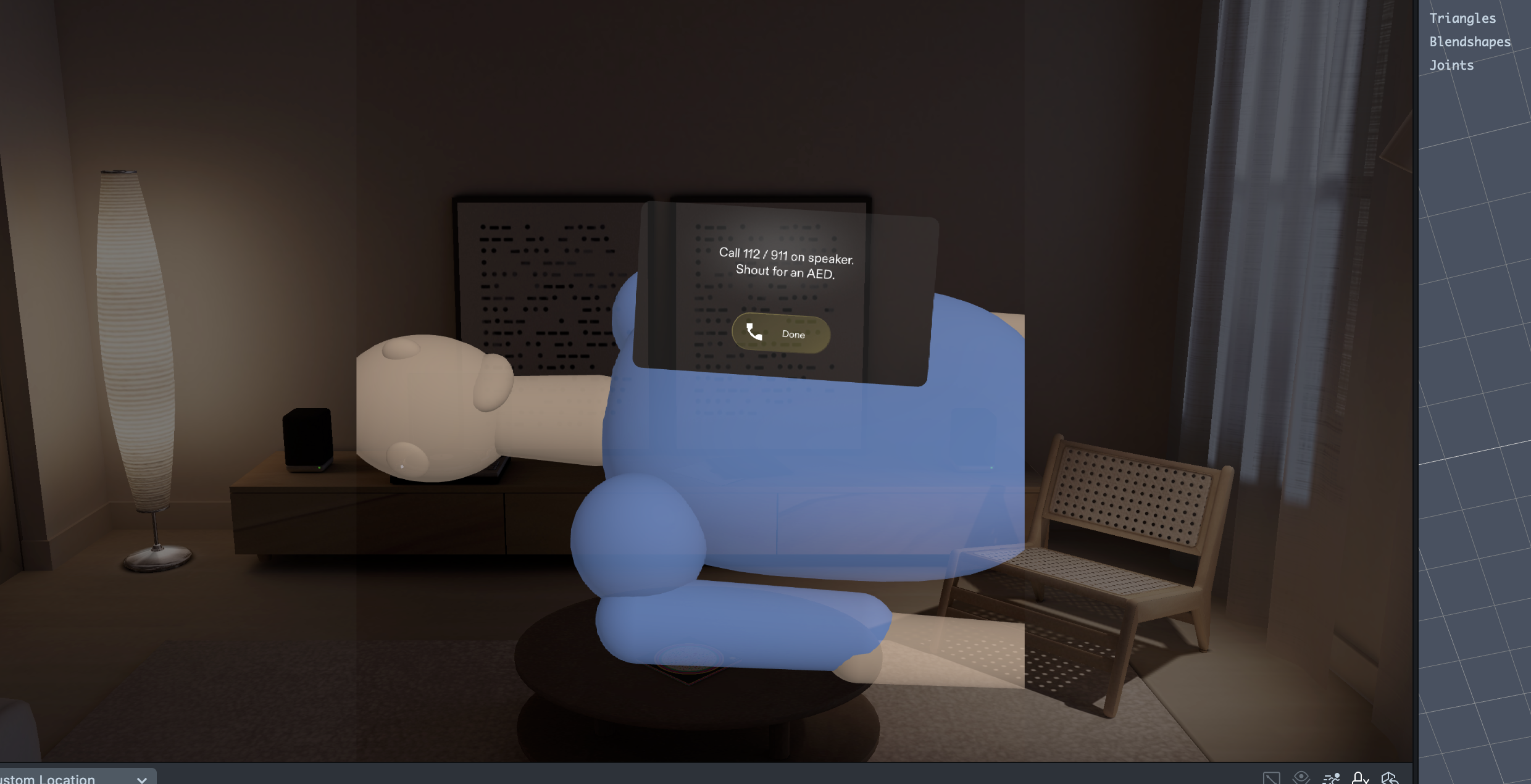
One pinch on the "Someone collapsed?" orb starts the coach:
- Call for help — "Call 112/911 on speaker. Shout for an AED." You pinch the chest once to anchor everything to the patient — one honest stand-in for body detection.
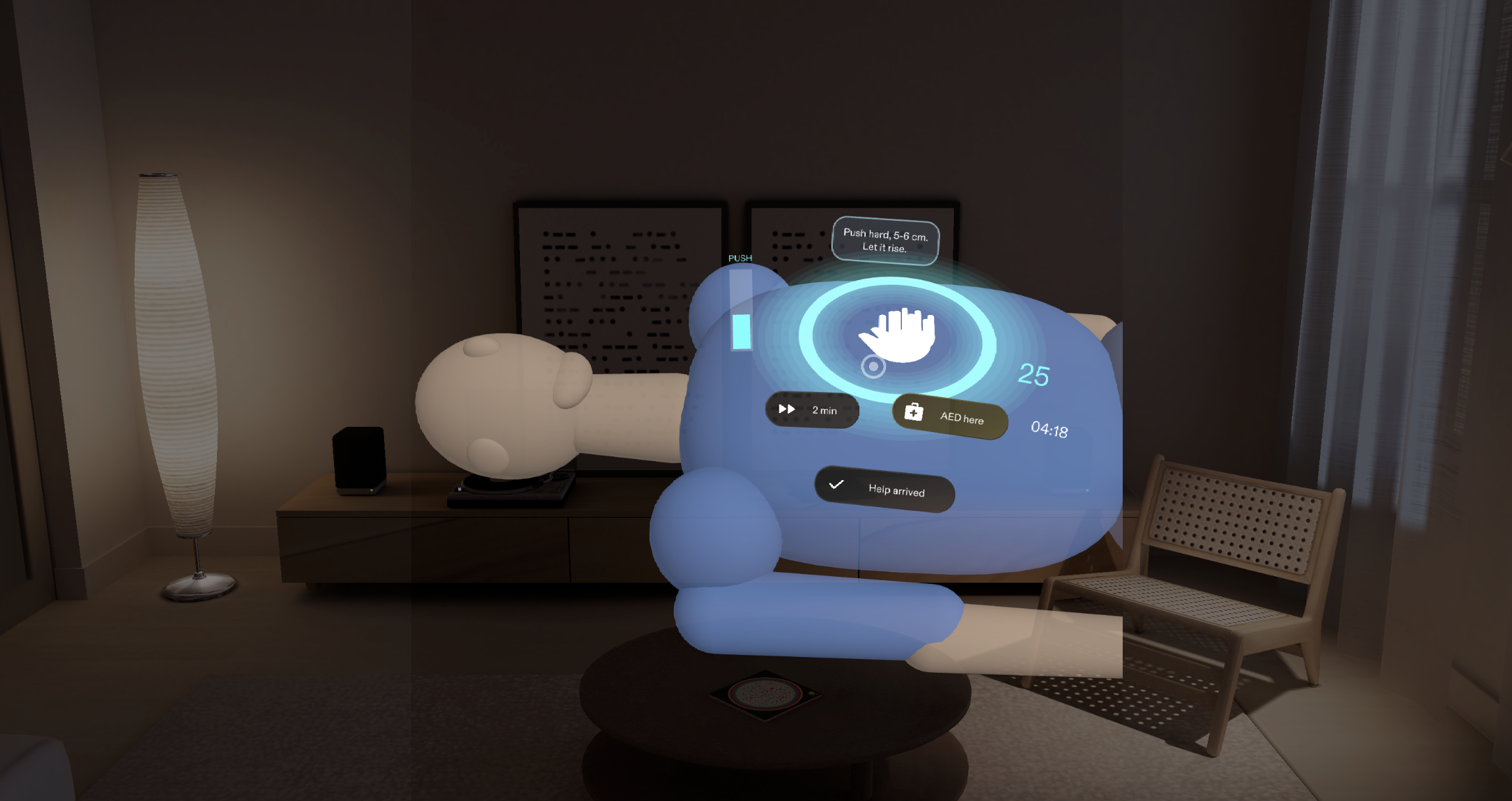
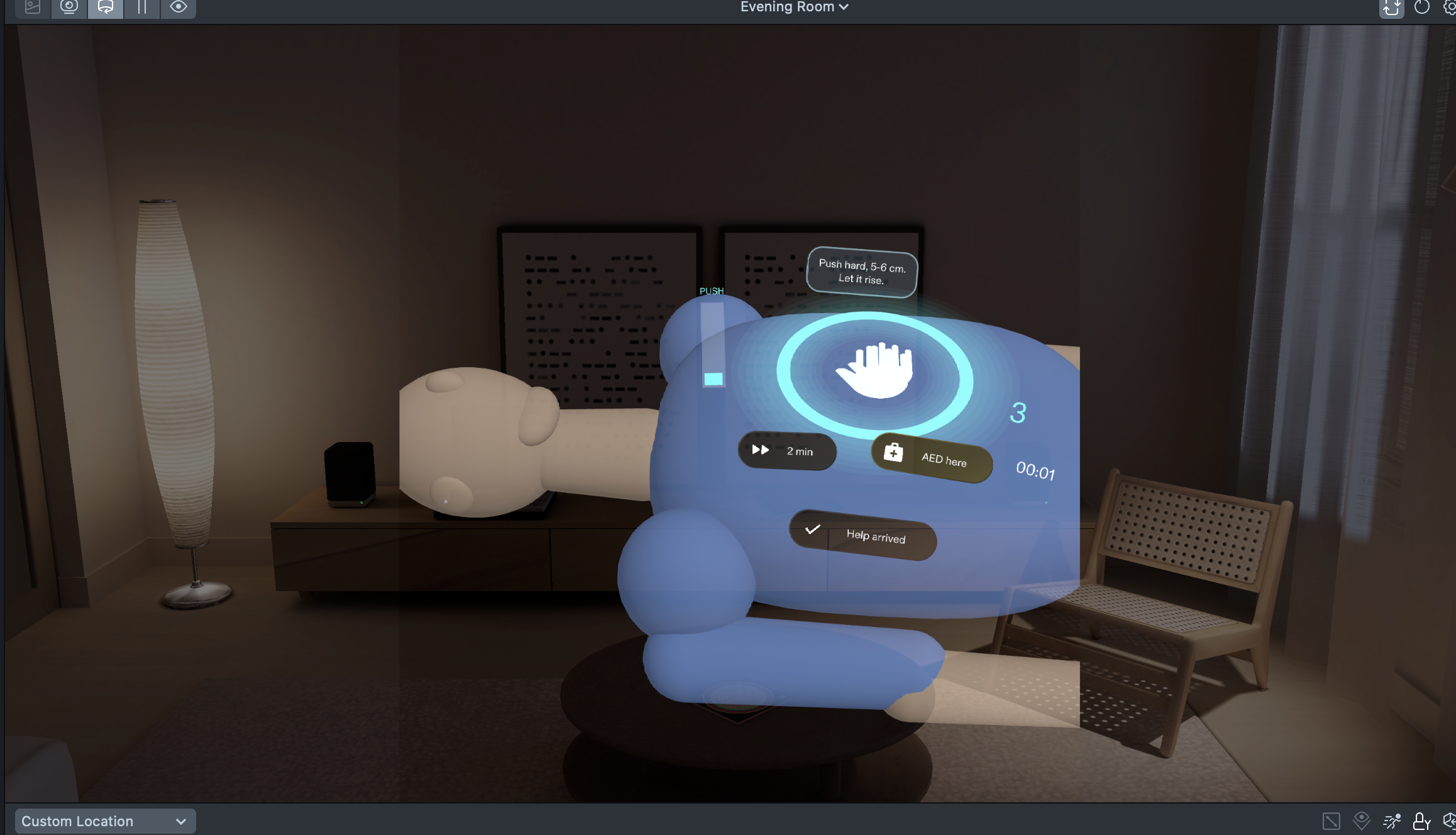
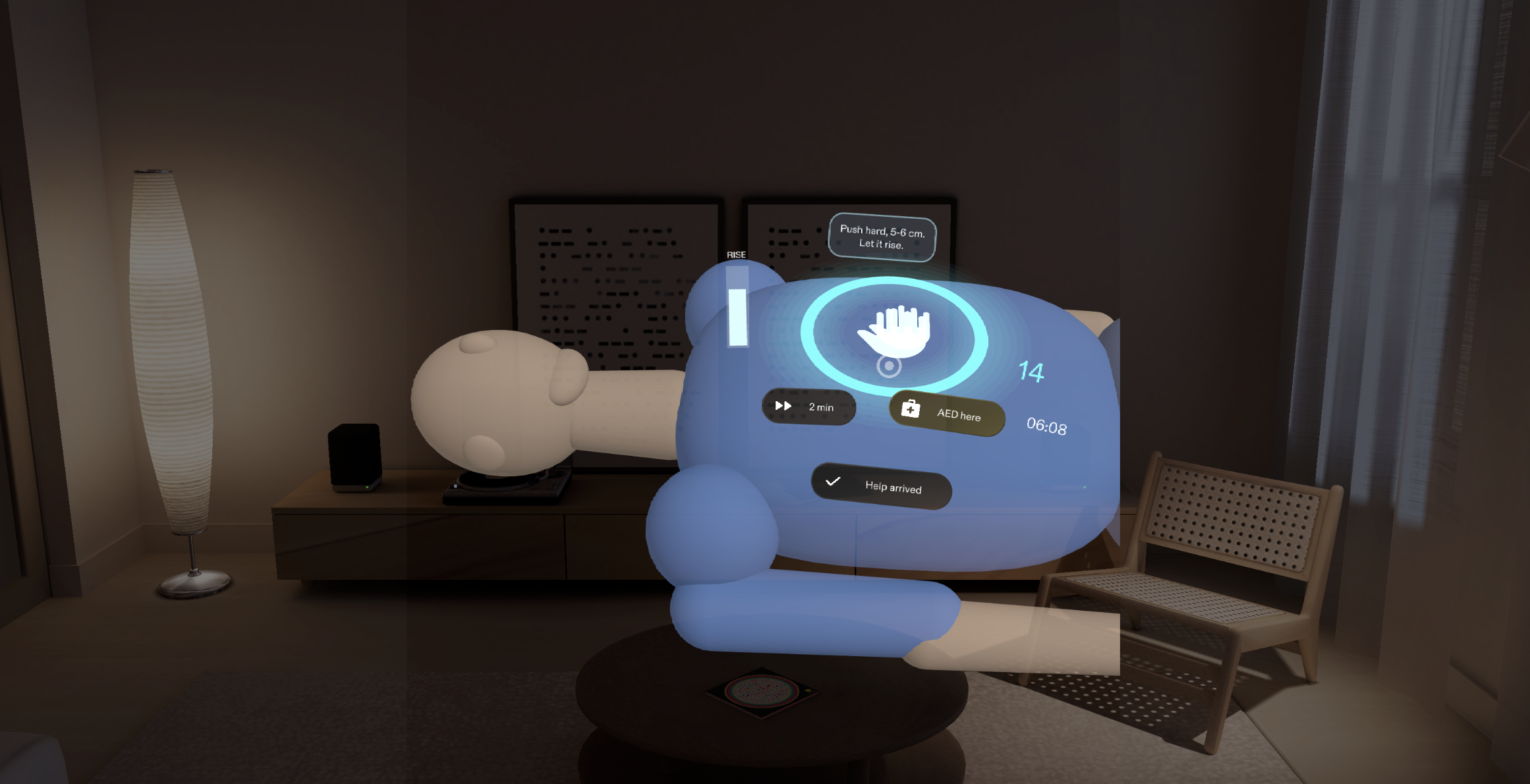
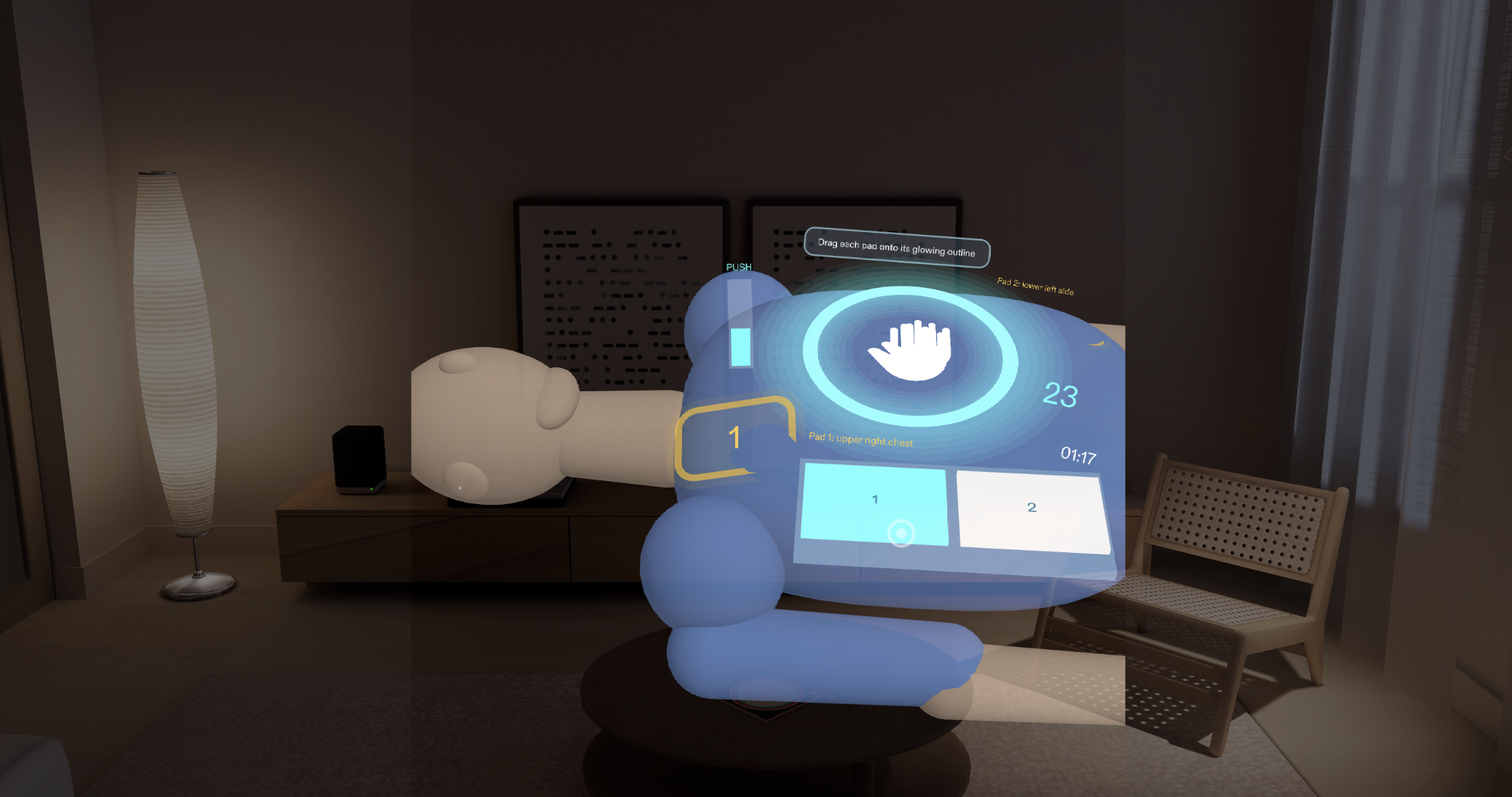
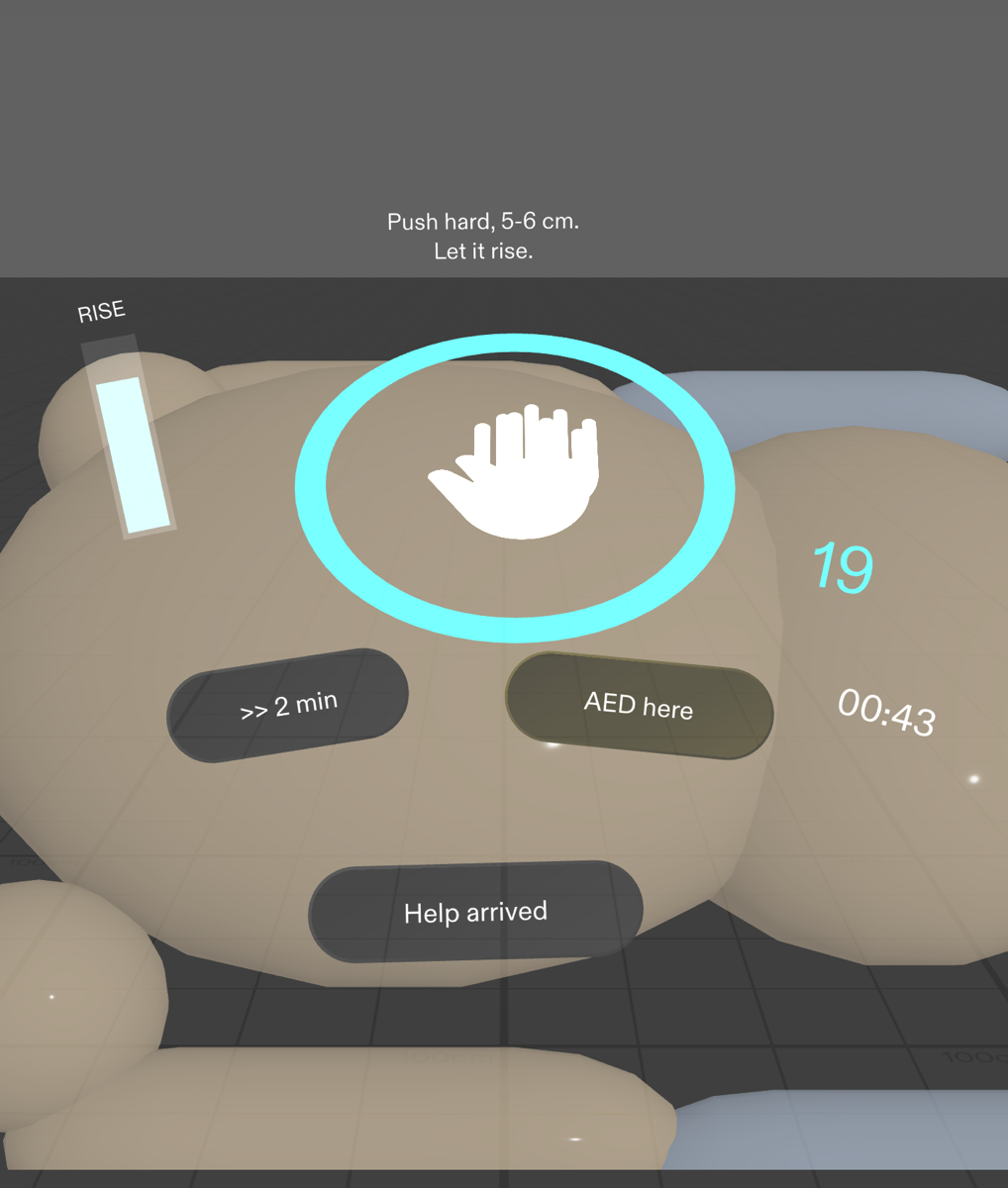
- The pacer — a ring pulses at 110/min right on the breastbone with an audible click. A counter keeps your sets of thirty, a timer runs, and a PUSH/RISE bar teaches full recoil (most compressions are too shallow because the chest never rises).
- Rescuer swap — at 2:00 a chime and an amber cue tell you to switch, then clear themselves.
- The AED — drag each pad onto its glowing, labelled outline on the body. Wrong spot? It bounces back with a hint. Both pads on → "Stand clear" → analysing → one big SHOCK button → compressions resume immediately. Like a real AED, it re-analyses every 2 minutes and coaches the next shock.
- Handover — when paramedics arrive, it speaks their language: time down, first push at, shocks, hands-off time, longest pause, compression fraction, and a timestamped event timeline.
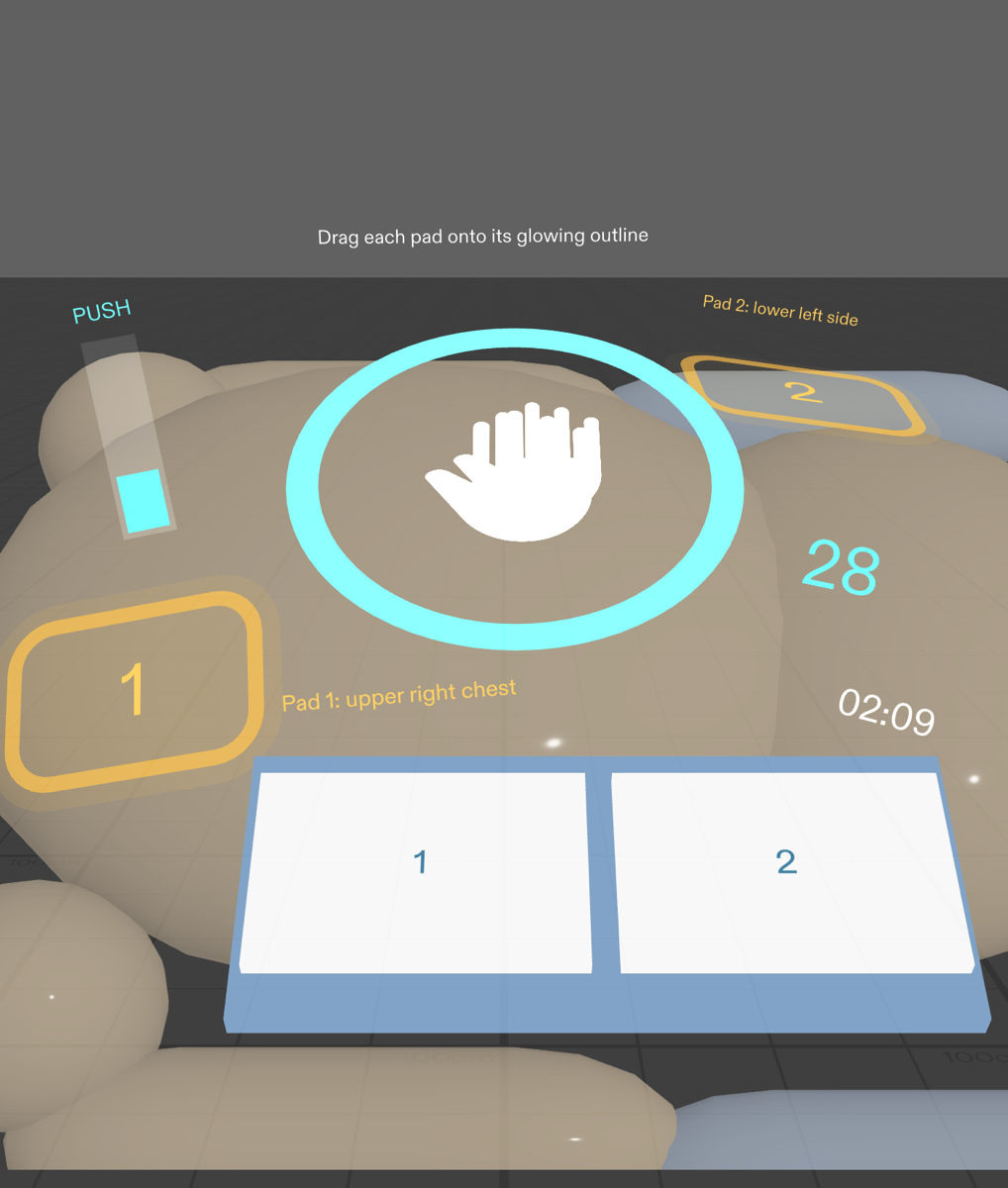
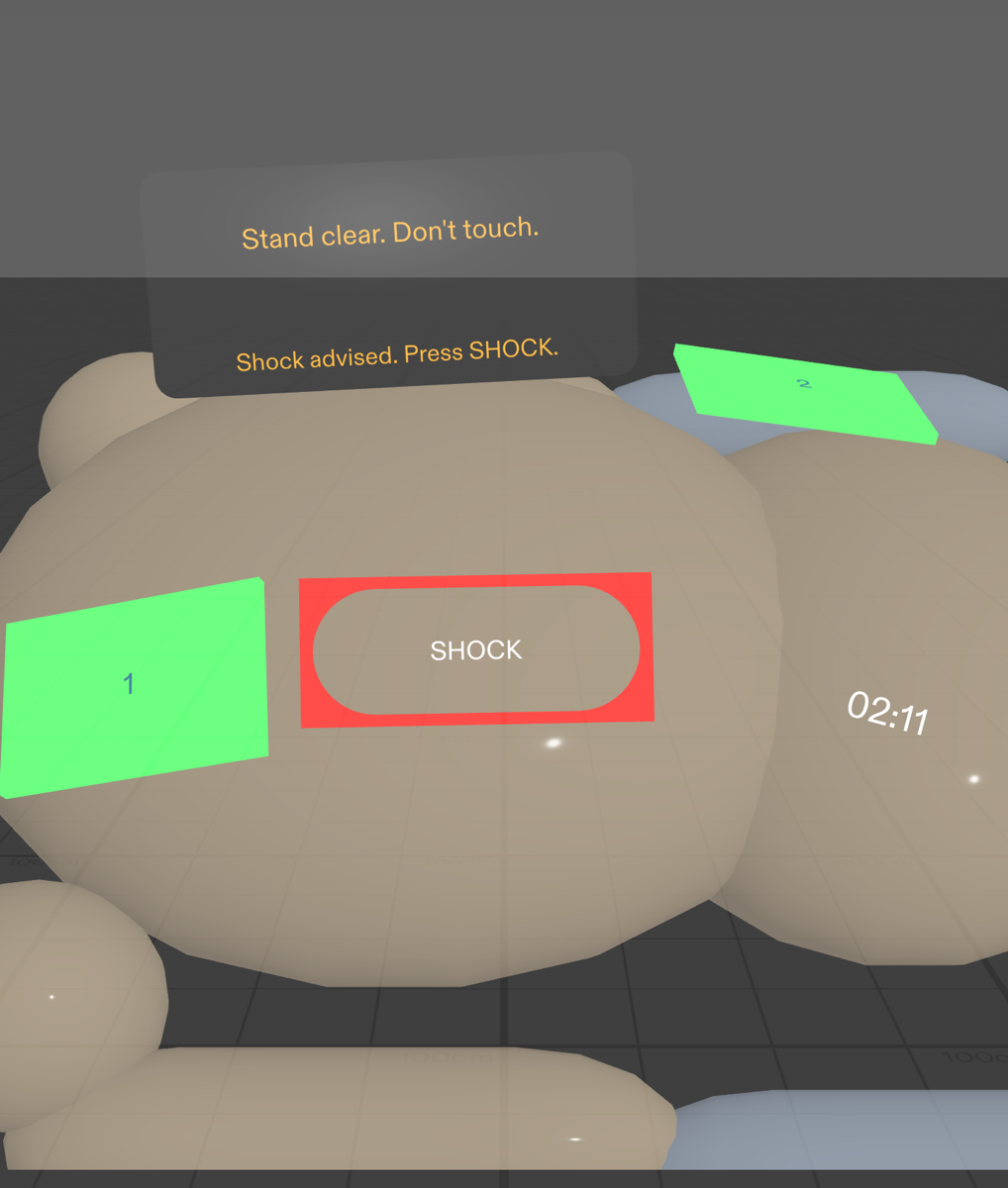
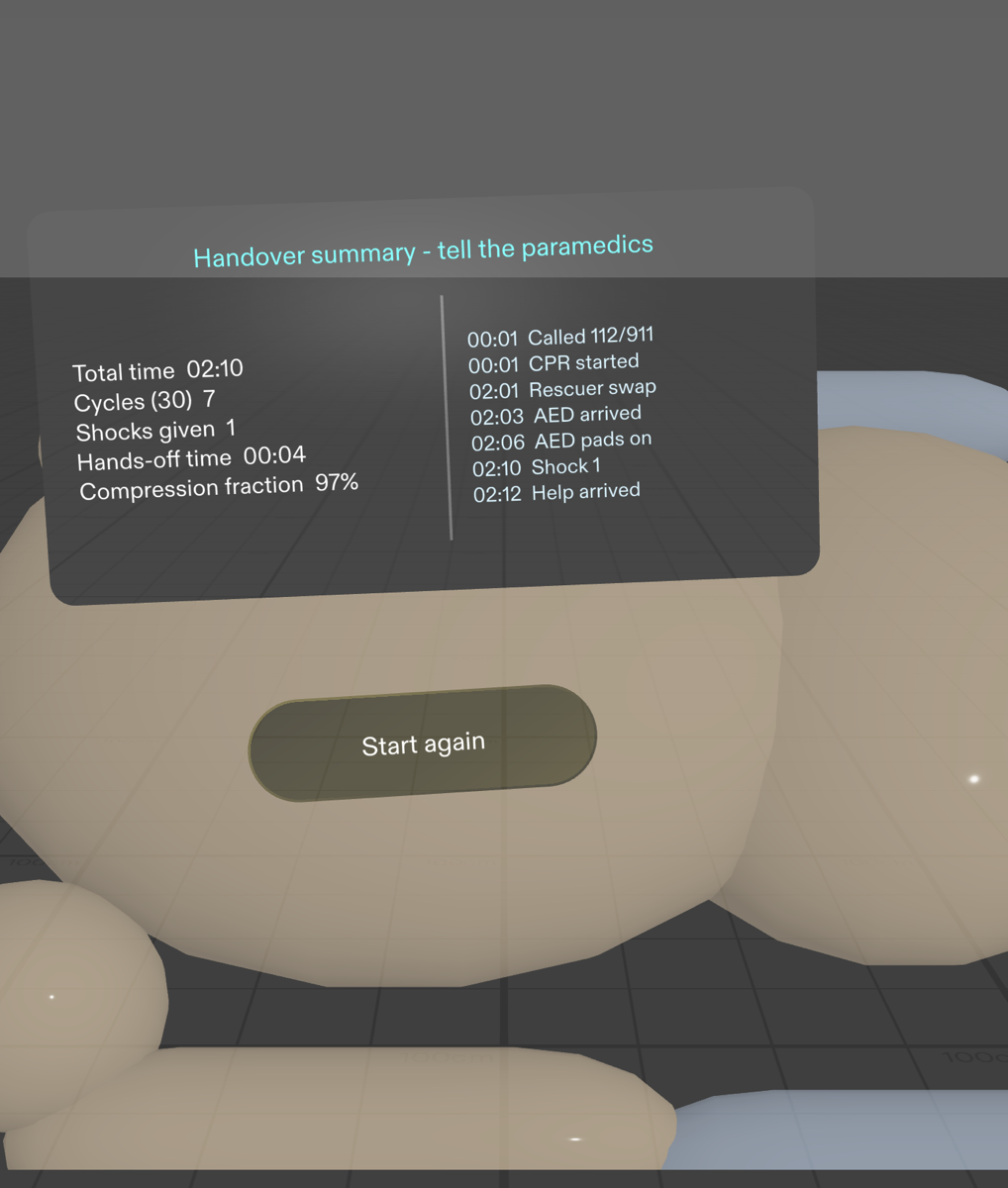
A calm voice speaks every step while the click ducks underneath, so your hands never leave the chest and your eyes never leave the patient. It never claims to detect the patient — it coaches, paces and choreographs.
How we built it
- Planned with the Devpost Learn skill pack — the
plan-lensskill interviewed us and pushed back where the idea fought the glasses or the preview, producing an approved design brief (devpost/design-brief.md) with five testable done criteria. - Built by CLAD agents through the Lens Studio MCP — Snap's
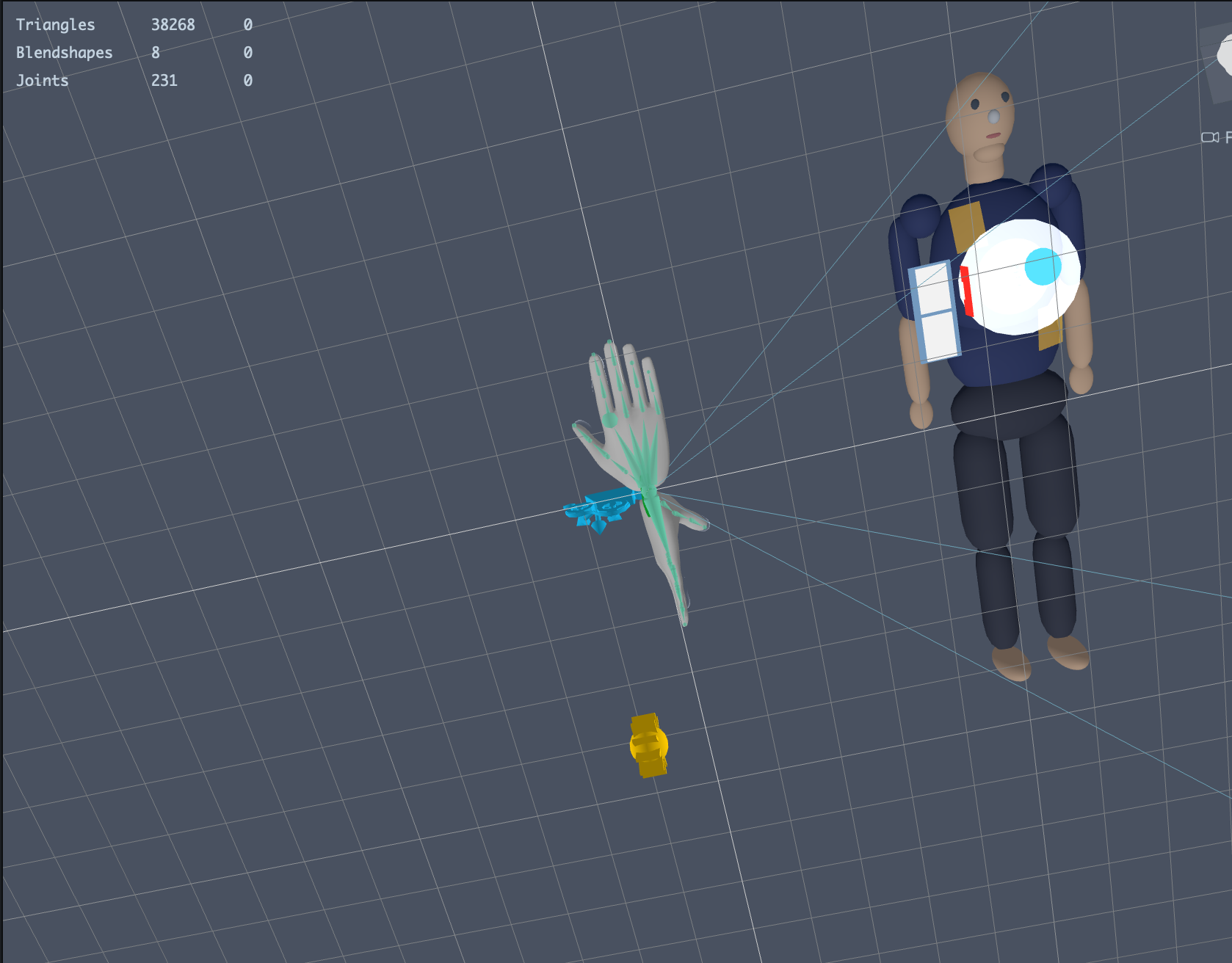
ls-cladagents constructed the whole Lens in Lens Studio 5.24 (SPECS Base Template, Spectacles Interaction Kit + UI Kit) from the brief, iterating through design notes, not code diffs: "the patient reads as a grey slab, make it a recognisable mannequin", "move the swap cue next to the ring." - Verified with LEAF — ten scenarios drive the real SIK pinches and pad drags in the preview: chest marking (target within 4.3 cm of the anchor), measured 109.5 bpm pacing, the swap cue, snap-or-bounce pad drops, the shock loop, the 2-minute AED re-analysis loop, the clinical handover metrics, restart cleanliness, voice coaching and the push/rise bar.
- Audio synthesised with CLAD's
build-sfx; voice lines generated offline with macOS text-to-speech; code in TypeScript with a clean split — flow controller, passive view, pad component, voice coach, demo driver.
Challenges
- The preview can't see compressions. Faking detection would have been an invisible trick, so we chose one honest stand-in: pinch the chest once, everything anchors there. Testable, demoable, truthful.
- An additive display. Black renders as transparent on SPECS, so the whole palette had to be light and high-contrast — cyan, white, amber — with red reserved exclusively for Shock.
- A metronome that doesn't drift. Beats are scheduled on a fixed grid rather than incremented per frame, so 110 bpm stays 110 bpm for the whole run — LEAF measured 109.5.
- Testing drags, not shortcuts. The LEAF pad-drag scenarios steer a real SIK
InteractableManipulationray with position feedback each frame, so "the pad snaps only on its correct outline" is verified through the actual interaction, not a test hook.
What we learned
- On glasses, the best UI sits on the thing you're touching. Moving the beat onto the breastbone and the pads onto the body did more than any new feature.
- A stand-in is better than a gesture nobody can see. One pinch to mark the chest is honest; "detecting compressions" in a preview would have been a trick.
- Every glance has to earn its place. One step at a time, at most three buttons — calm is the point when someone is panicking.
- Design notes beat code edits. Telling the agent what to change in design terms was faster and produced better results than editing scripts by hand.
What's next
On real glasses: body detection to replace the chest pinch, compression-quality feedback from hand tracking, and live emergency-call handoff. Until then, it already works as a training drill on any mannequin Start again resets everything for another round.
⚠️ Hands On is a training and just-in-time coaching concept based on public hands-only CPR guidance. It is not a medical device and must not replace professional training or emergency services. If someone collapses, call your local emergency number and start pushing.
Built With
- 3d
- ai
- ar
- lens
- lensstudio
- snapchat
- typescript
- vr
