-
-
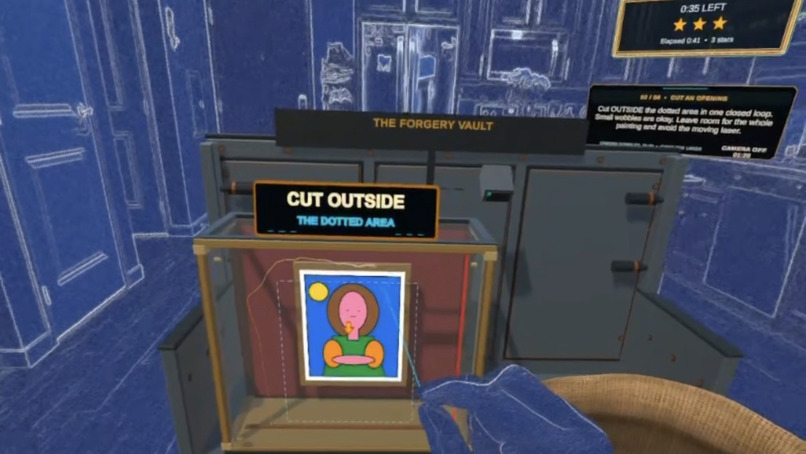
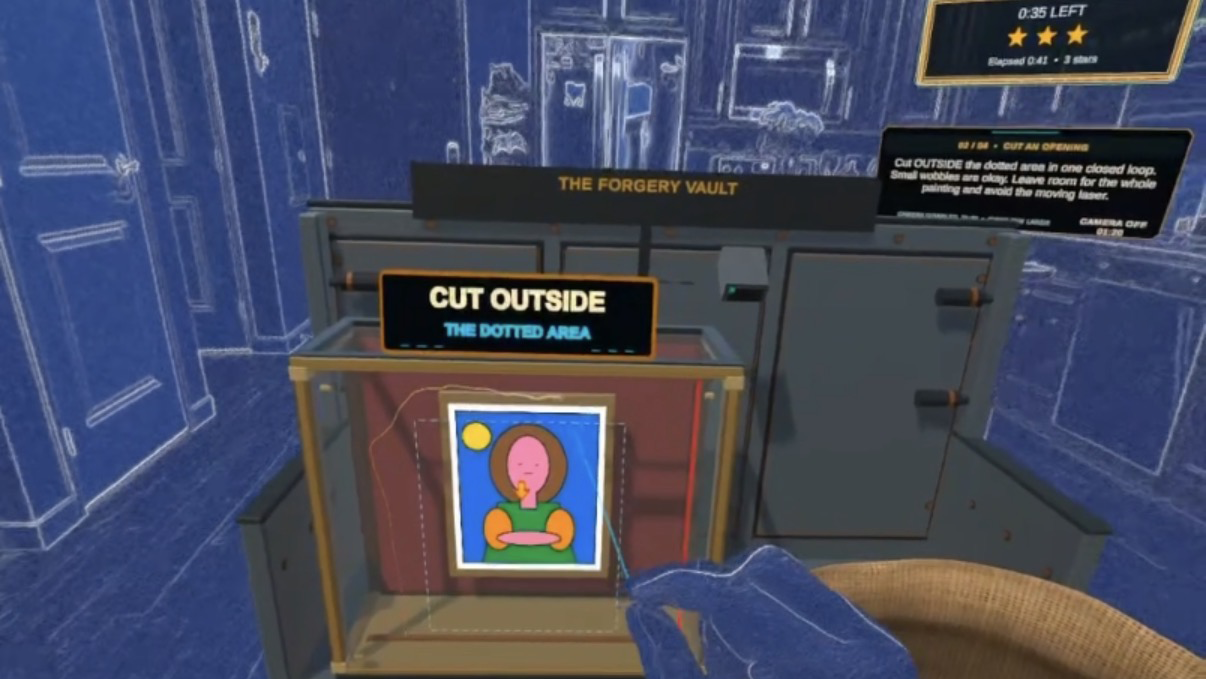
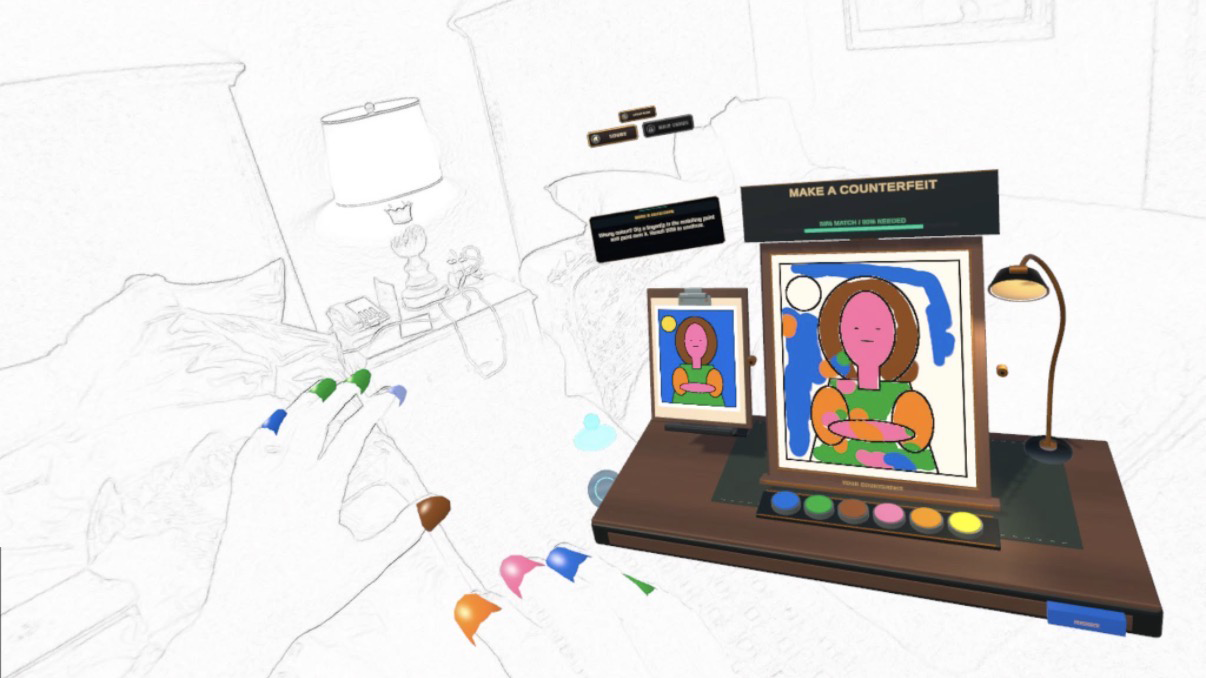
Inside the Vault, Passthrough effect that makes your house look like a drawing blueprint
-
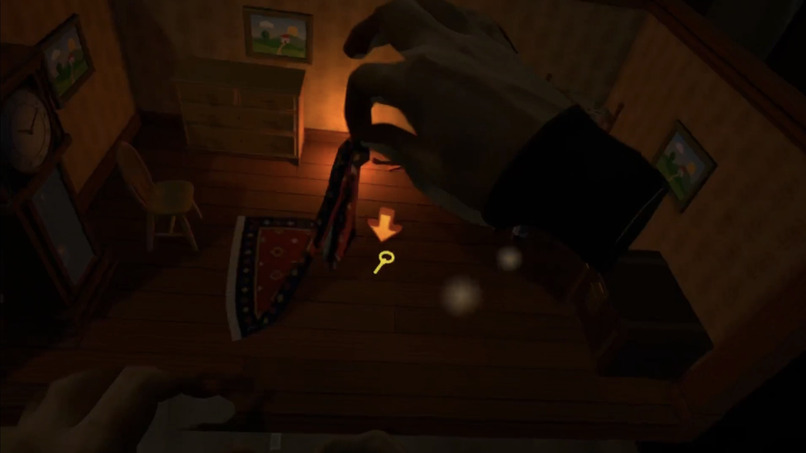
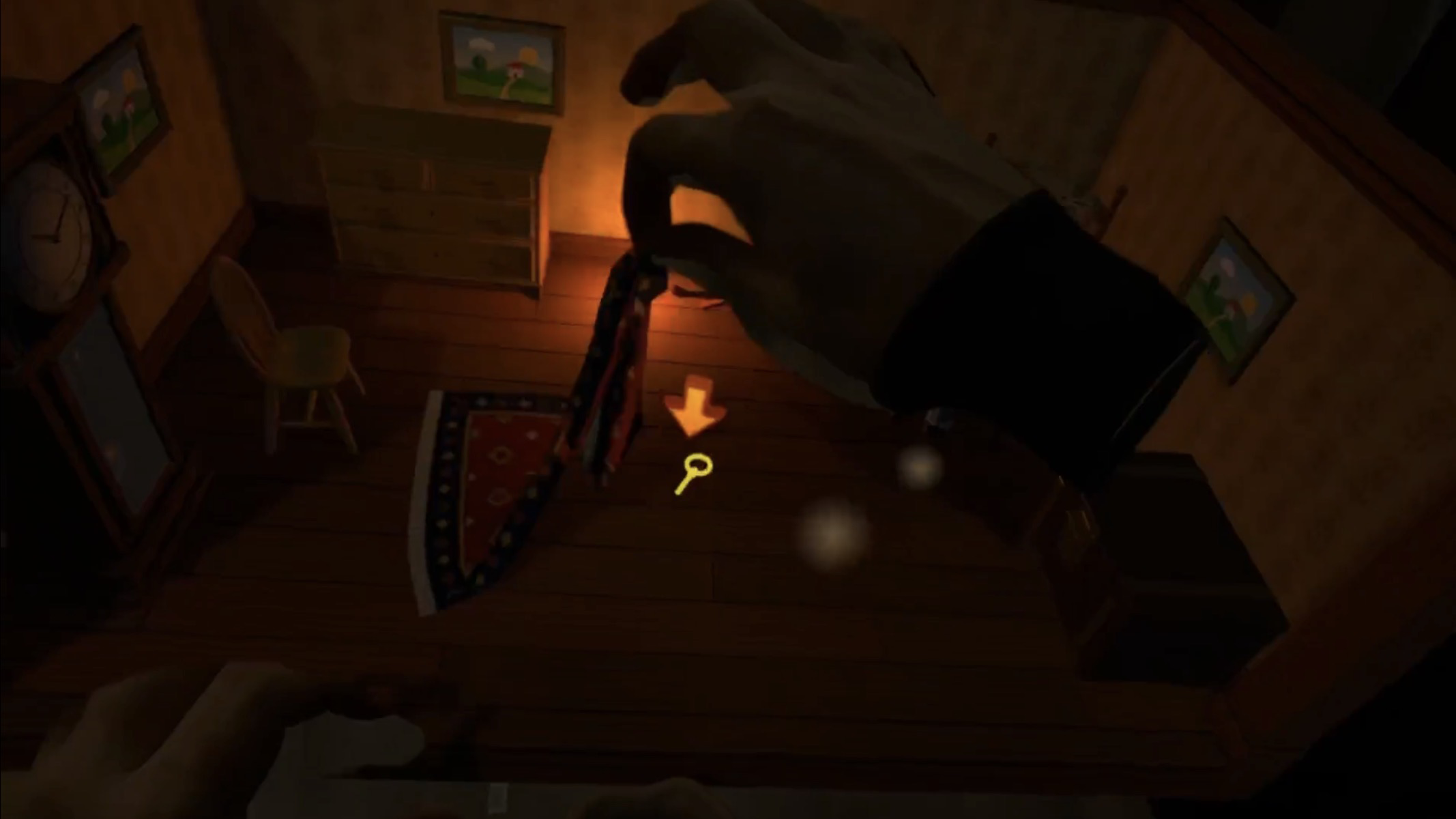
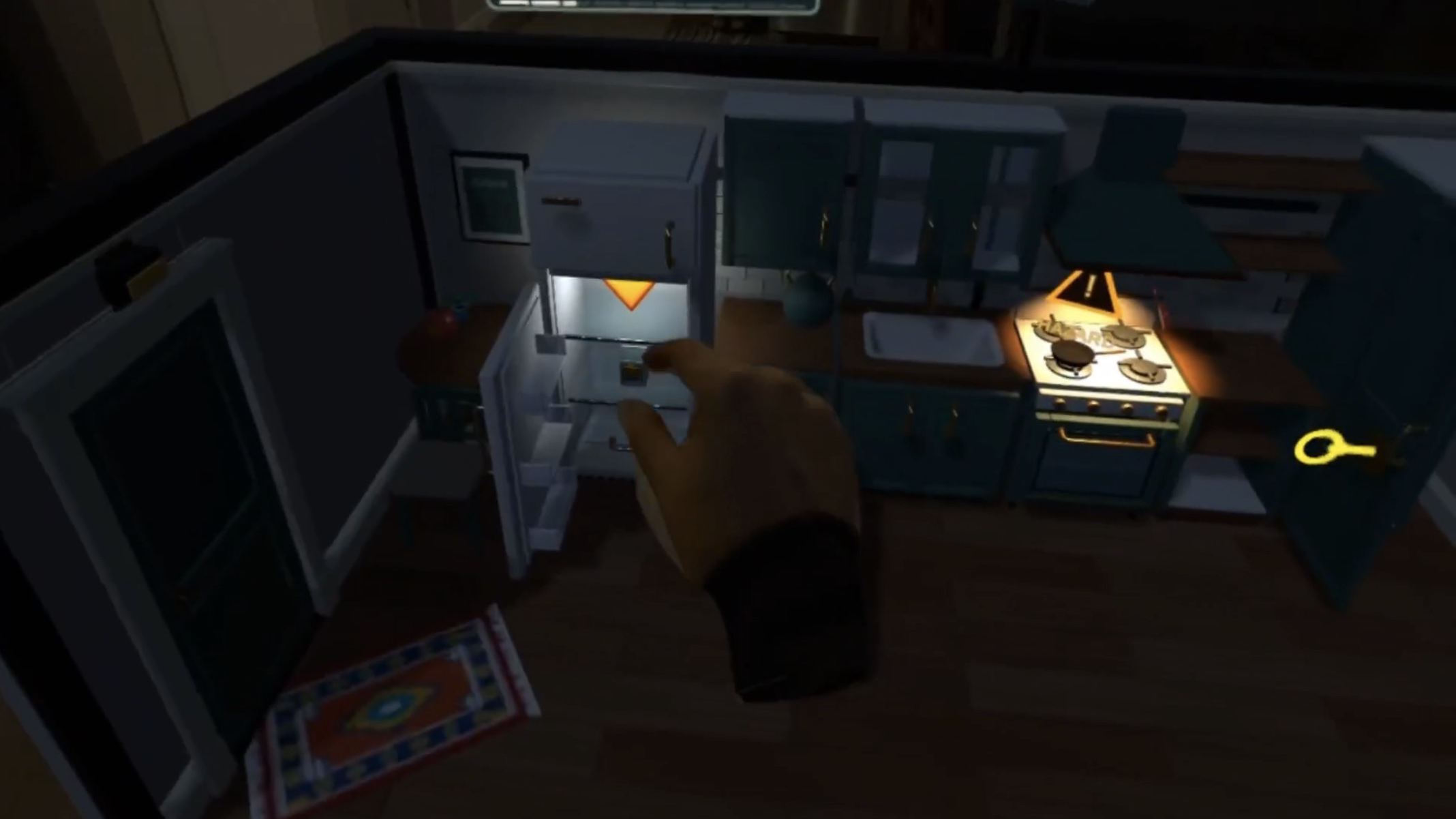
Check under the rug and discover key items
-
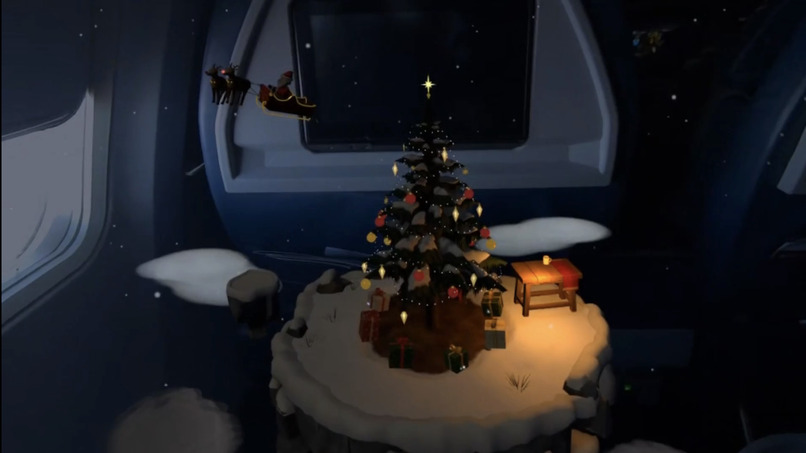
Play anywhere with both seated 2ft radius play or larger standing area
-
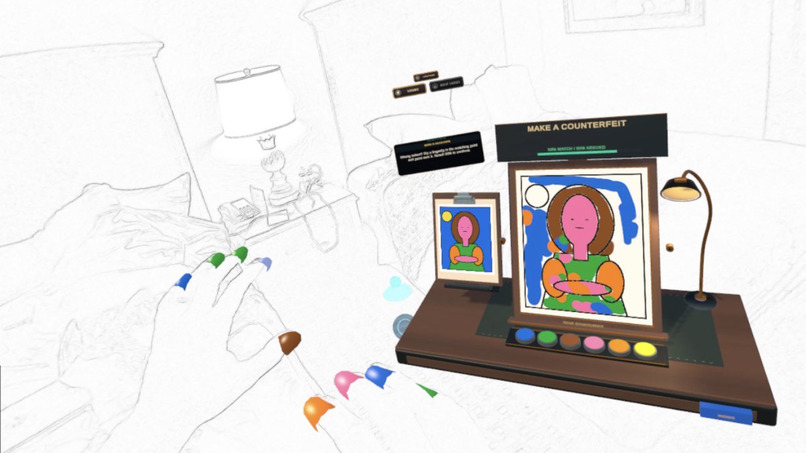
Create counterfeit art as part of the painting heist, your house looks like a drawing
-
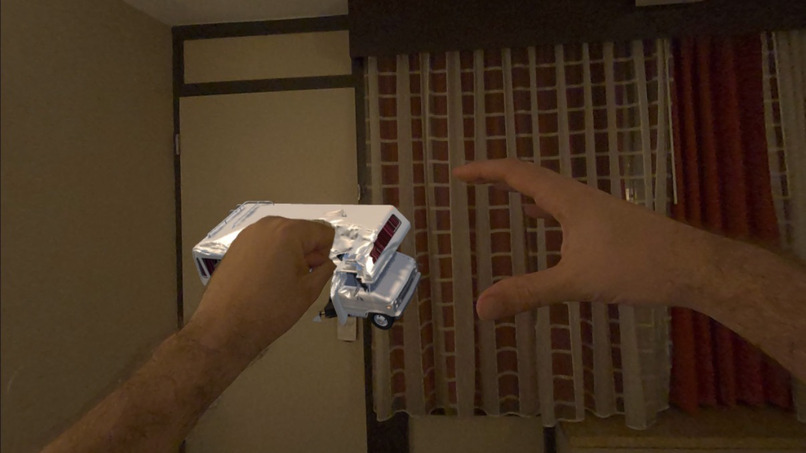
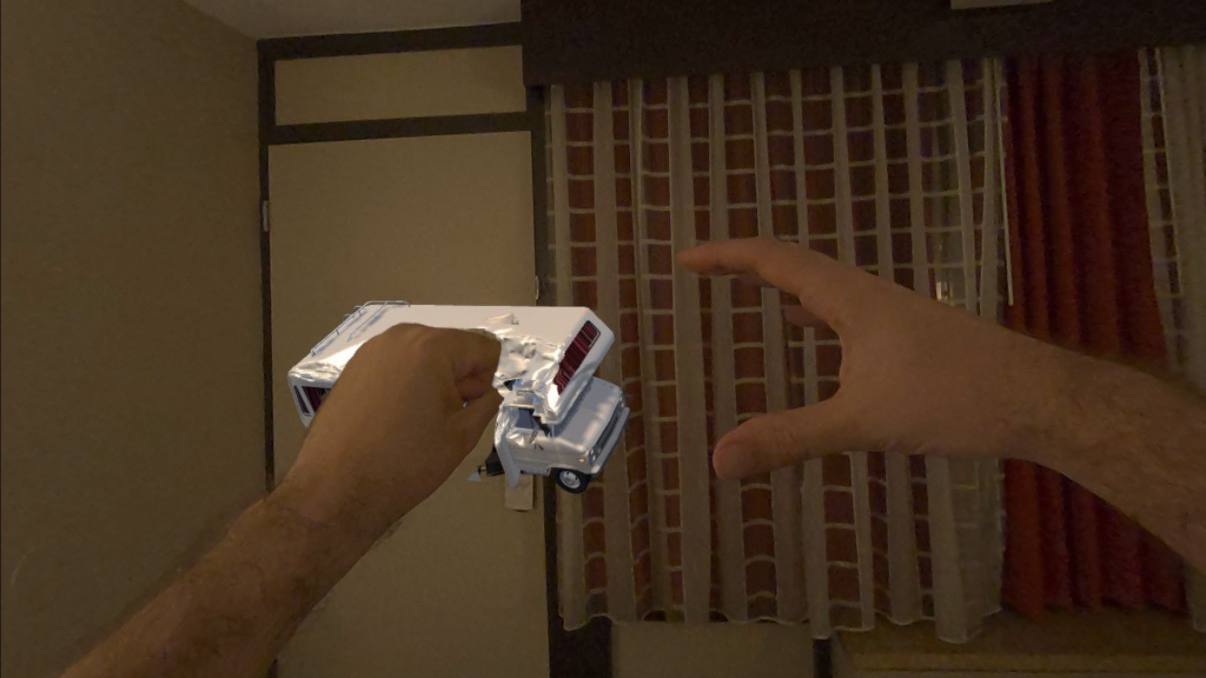
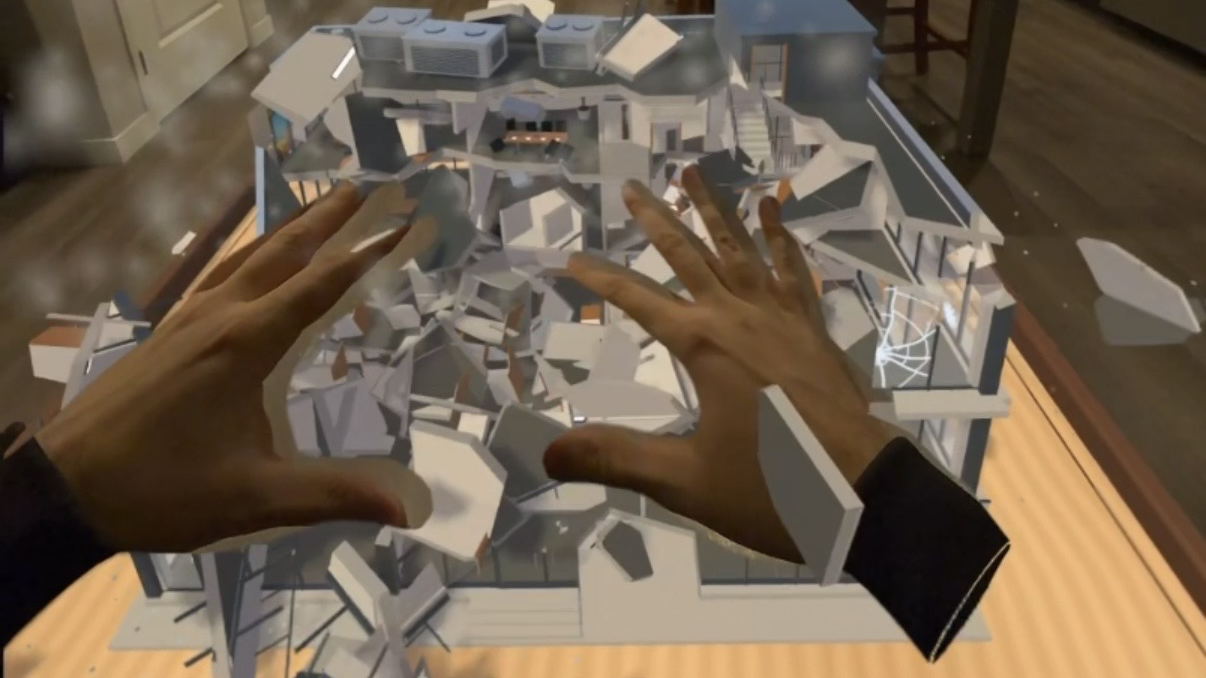
Advanced Destruction that you can crumple cars with your hands
-
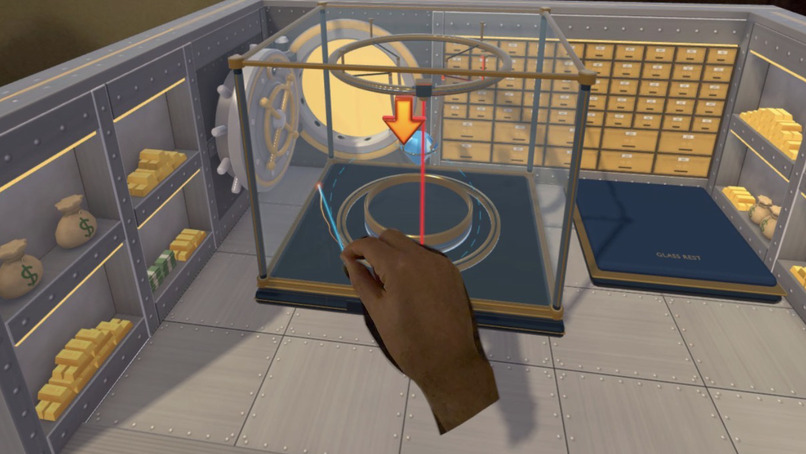
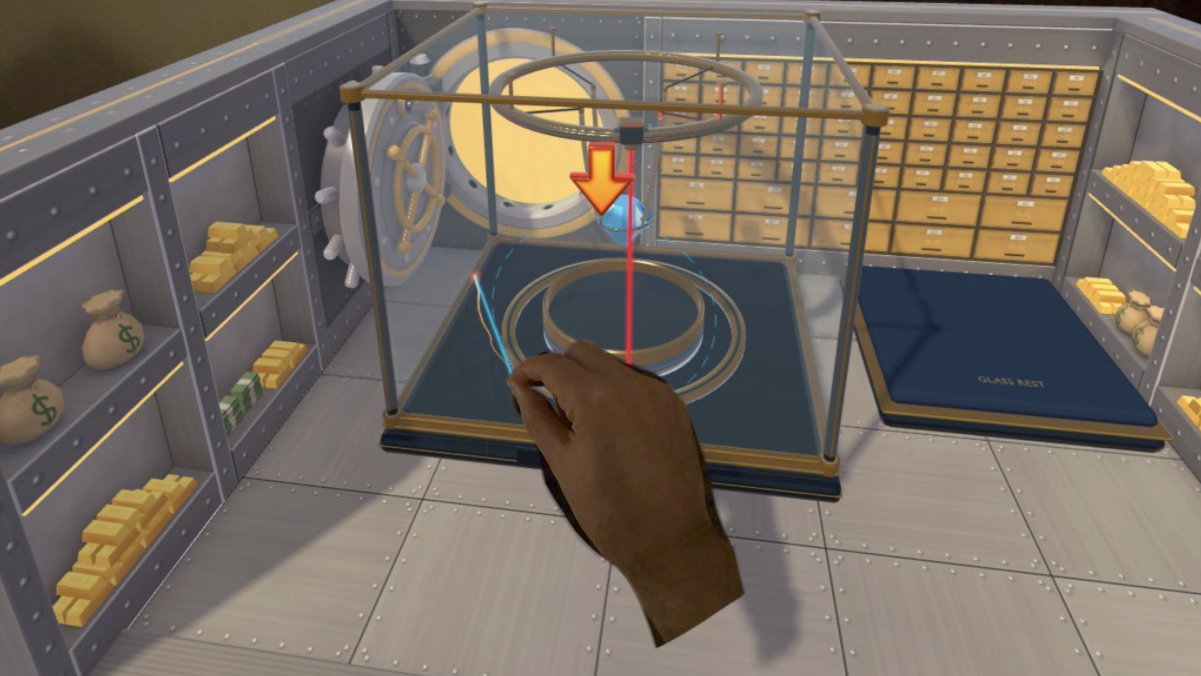
Break into secure location and do not trigger the alarm.
-
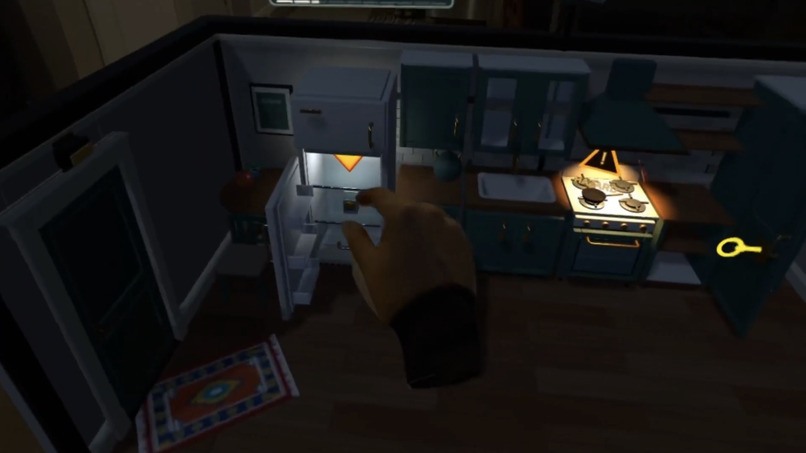
open slowly and avoid getting caught
-
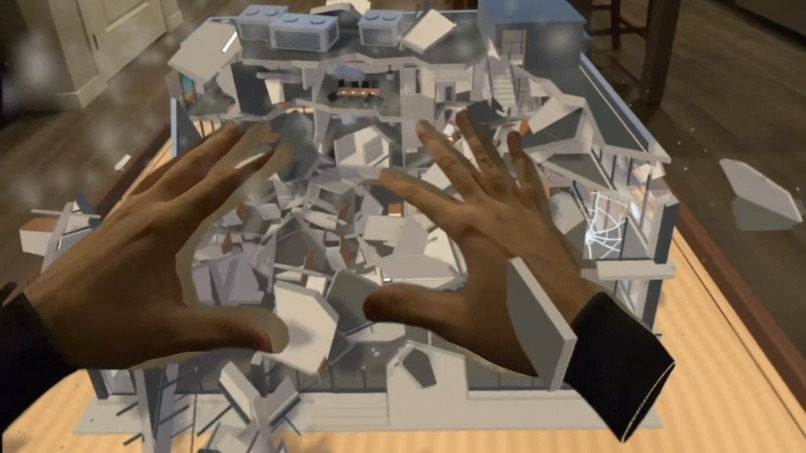
Structural damage and advanced destruction for both sandbox and mission mode
-
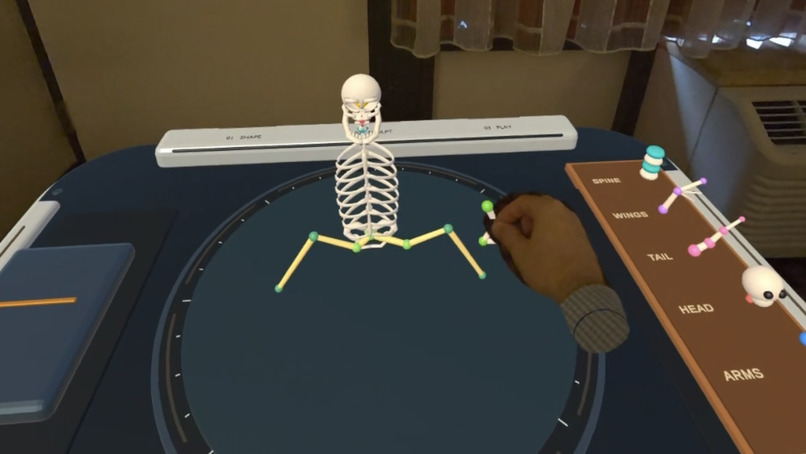
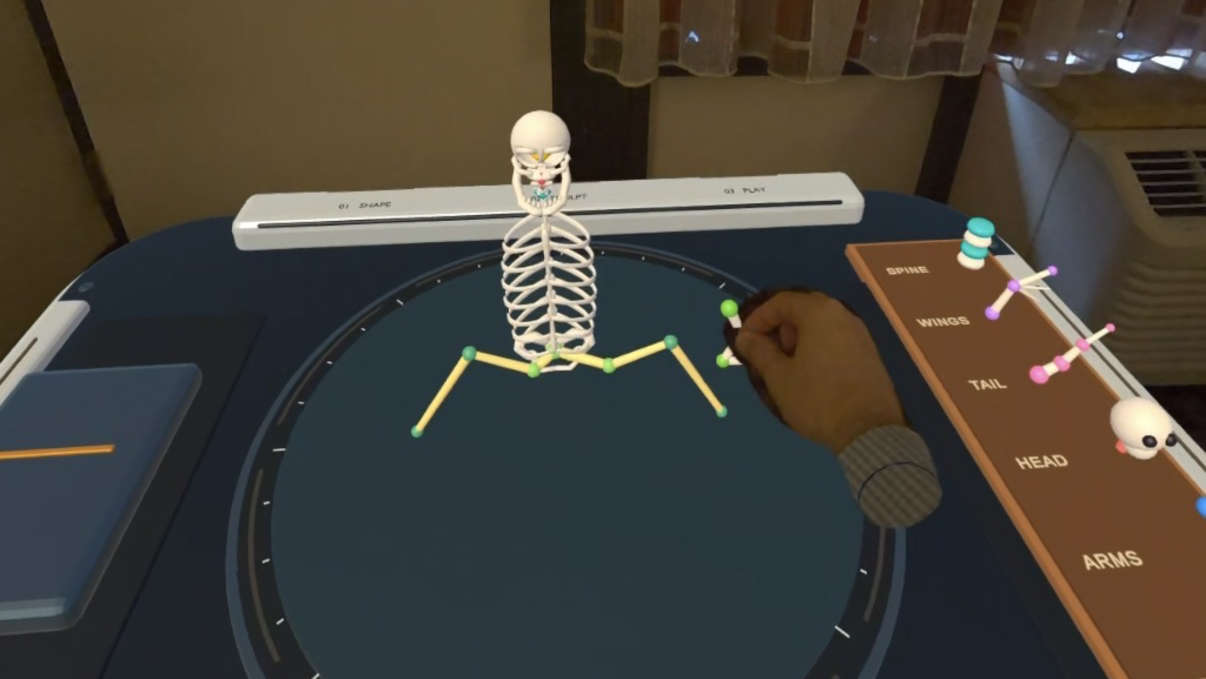
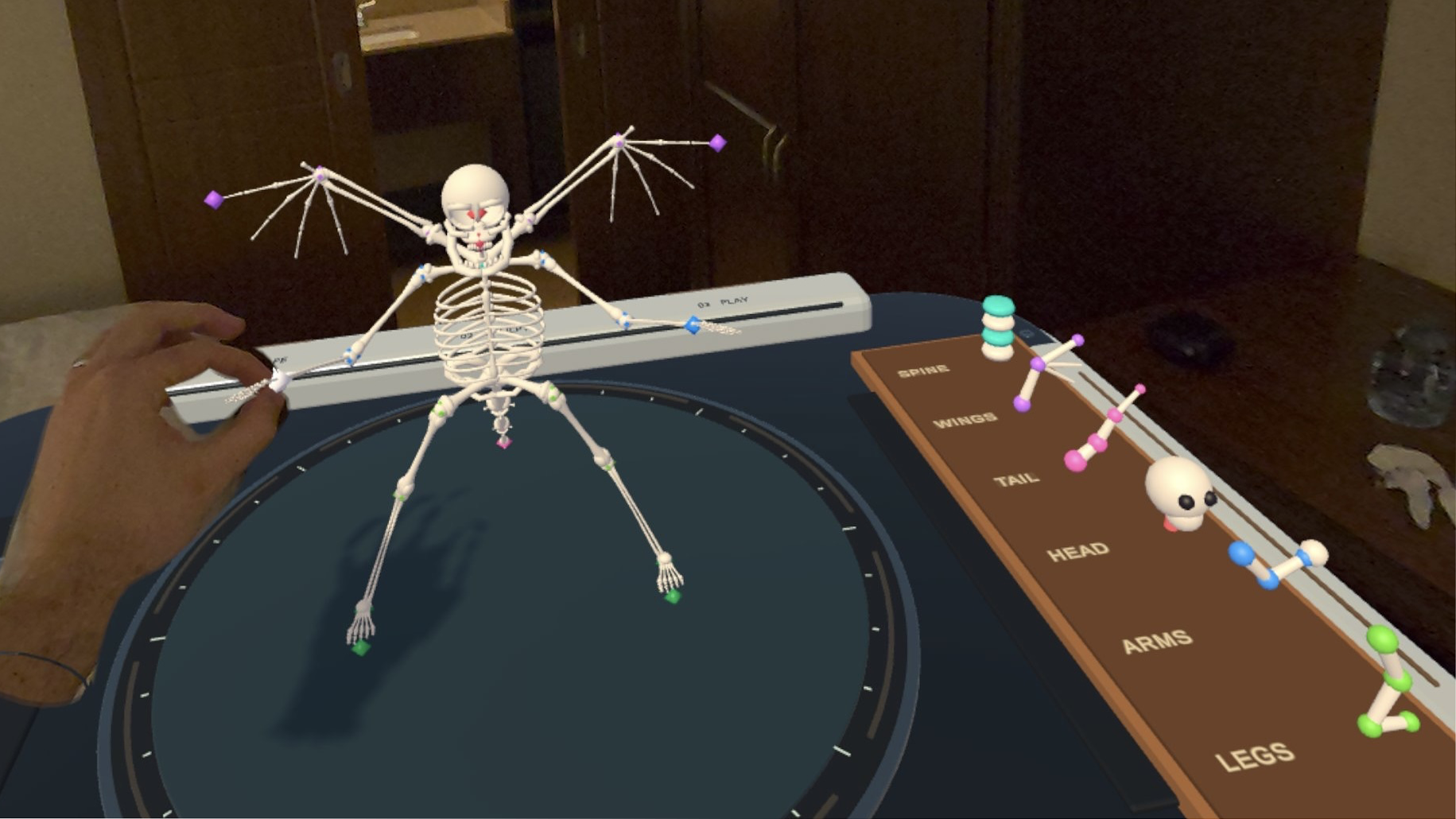
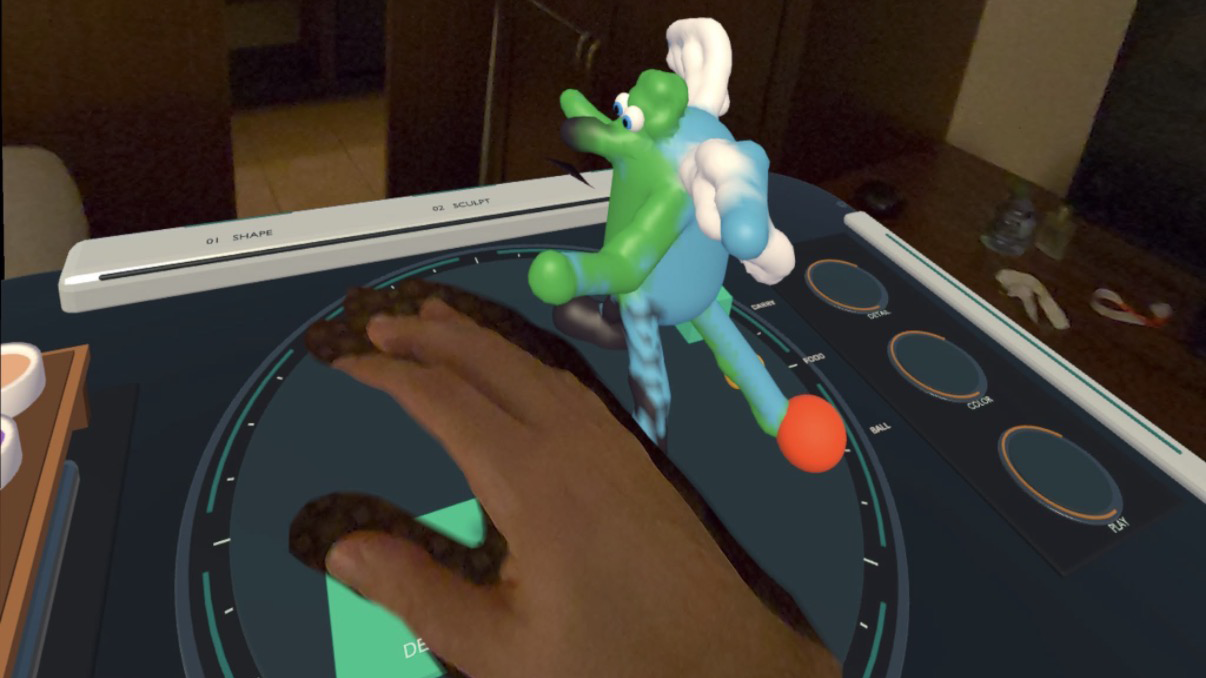
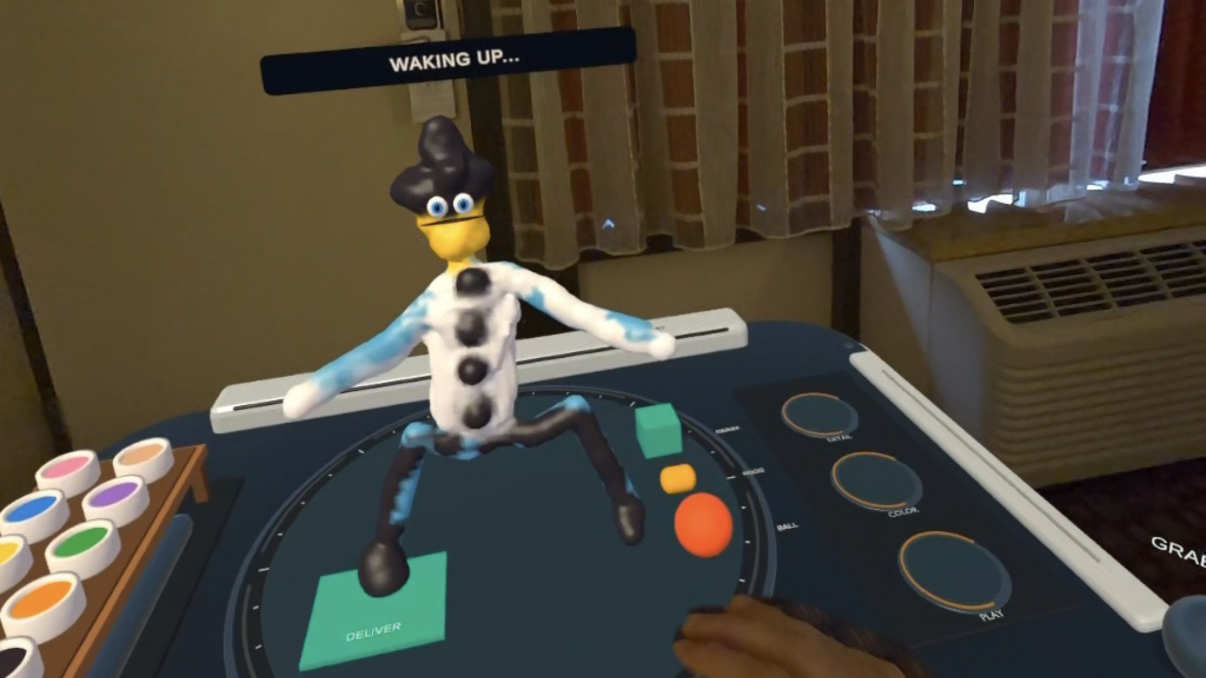
build creatures from scratch with our advanced bone editor, grab the bones, add and stretch them to the desired length.
-
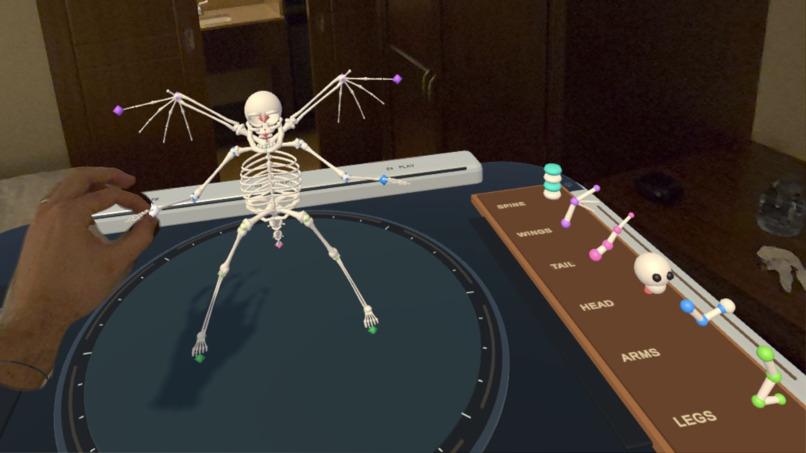
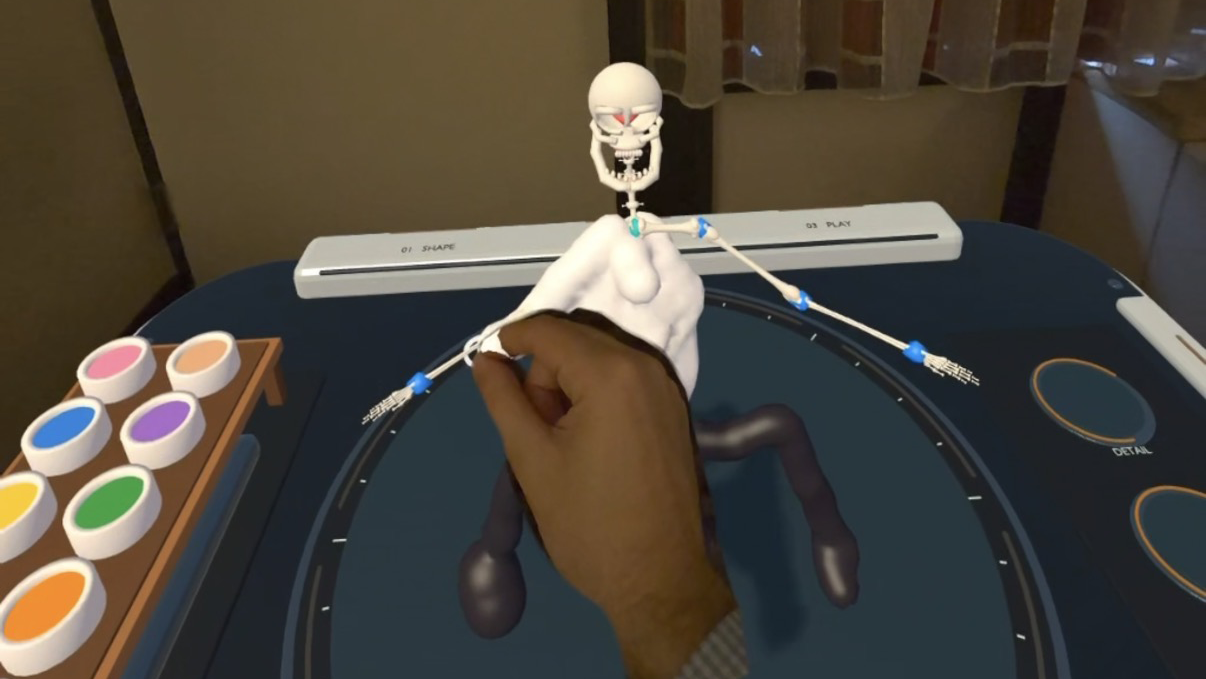
once you are happy with the bone structure, cover them, they come to life
-
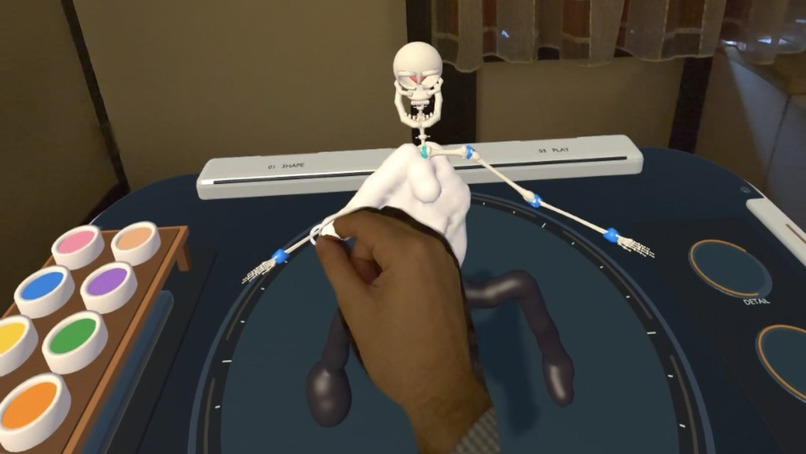
Full customization
-
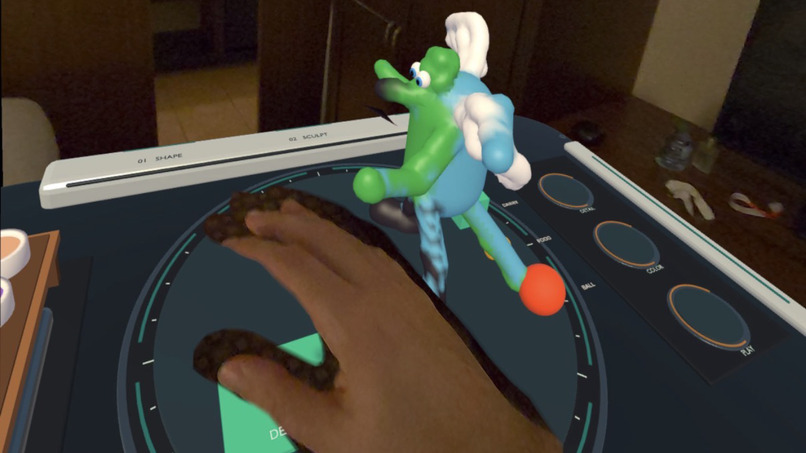
Play with them in sandbox mode or use them in future missions
-
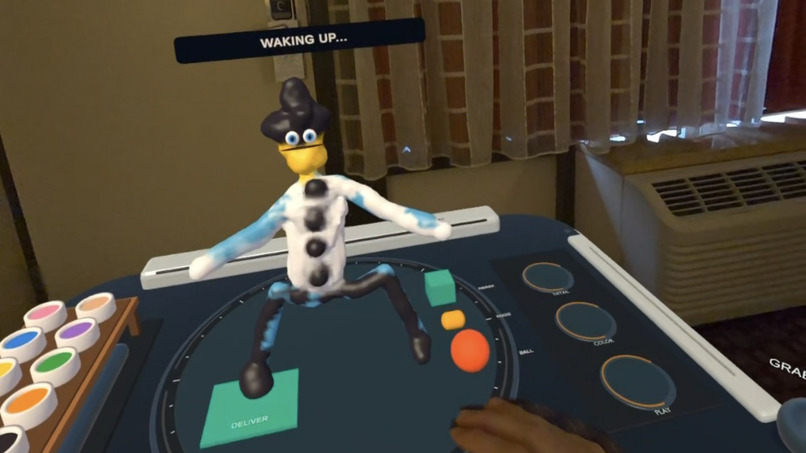
Save you friend for next time you log in as a companion.
Inspiration
I wanted to create a game where your hands become your ultimate tools for creativity, destruction, and mischief. Inspired by the freedom of physics sandboxes and the excitement of sneaky heist games, Hands of Mischief combines both experiences into one interactive mixed reality adventure.
I also wanted a game with truly realistic physics, where you can crunch cars with your bare hands and smash apart entire buildings.
My goal was to make virtual objects feel alive, allowing players to touch, manipulate, destroy, and experiment with their environment in ways that feel natural, satisfying, and often hilarious.
What it does
Hands of Mischief is a mixed reality adventure where players complete a series of mischievous missions by sneaking past enemies, solving creative challenges, and stealing valuable items using their own hands.
Stealth is all in your hands. Players need to open cupboards, drawers, and doors slowly and carefully. Move too fast and you'll make noise, and too much noise can give you away.
Every environment is highly interactive, featuring advanced physics, realistic destruction, and deformation. Players can grab, cut, smash, manipulate, and interact with objects in unique ways, from crunching cars to tearing entire buildings apart.
Watch out for fire! Advanced fire propagation runs in both mission and story mode. Environmental hazards like stoves can start fires that spread through the scene, and if things get out of control, you lose.
Everything you steal becomes part of your Chaos Sandbox!
Each collected item unlocks new possibilities in a creative playground where players can build elaborate contraptions, craft objects, experiment with physics, destroy environments, and even create their own mischievous minions or pets.
Scan your real world into the game. In Sandbox mode, players can scan real-world objects with the headset's cameras and bring them into the sandbox as fully playable physics objects.
Turn your friends into creatures. When someone steps inside the scanning zone, the player scans them with the headset's cameras. The zone is fully adjustable to fit any height or size. The game automatically rigs the scan, then stretches the passthrough around the real person so they appear to vanish behind an invisibility cloak. Their scan spawns in their place and shrinks down until it transforms into a mutant creature that resembles parts of the person who was scanned.
Build creatures from the bones up. Later in the story (Creator Lab), players unlock the Creature Creator. They assemble bones into any creature they can imagine, pull bones with their hands to make them bigger or smaller, and add new bones and parts. Next, they sculpt clay over the skeleton and paint it. Finally, they zap it to life! The creature moves around fully rigged with physics, and players can play with it or keep it as a companion.
The game combines stealth, strategy, creativity, and physics into an experience where experimentation is constantly rewarded.
How we built it
Hands of Mischief was developed in Unity for Meta Quest, with hand tracking at the center of the entire experience.
I built an advanced physics systems supporting realistic object interactions, destruction, deformation, and environmental reactions, strong enough to crush vehicles and break apart full buildings piece by piece.
I built a noise system tied to how players physically move objects, so opening a cupboard slowly stays quiet while yanking it open makes noise. This turns real hand movement into a core stealth mechanic.
I implemented an advanced fire propagation system that lets fire spread dynamically through the environment, turning everyday hazards into real threats during missions.
Custom hand interactions let players manipulate objects through intuitive gestures such as grabbing, pinching, cutting, pulling, and smashing.
I built a scanning pipeline that uses the headset's cameras to capture real-world objects and people, then converts them into interactive, physics-driven game objects. For people, the game automatically rigs the scan so it can move and animate as a creature.
For the invisibility effect, I developed a custom shader that blends two surfaces together and stretches the passthrough around the scanned person, making the real person almost completely invisible.
The Creature Creator uses a modular bone system that players can assemble, resize, and extend by hand. Clay and paint layers sit on top, and the finished creature is automatically rigged and given physics so it can move and interact with the world.
I designed the experience around tabletop mixed reality, bringing detailed interactive environments directly into the player's physical space.
Rather than relying on traditional buttons and menus, we made the player's hands the primary interface for interacting with the world.
Challenges we ran into
One of the biggest challenges was combining advanced physics simulations with responsive hand tracking while maintaining performance on standalone hardware.
Destruction, deformation, fire propagation, and complex interactions can be computationally expensive, especially when multiple systems are running at the same time.
Getting highly accurate scans of people using only the headset's cameras was difficult. Instead of fighting that limitation, we turned it into a feature: the scanned person transforms into a mutant creature that resembles parts of them, which ended up being more fun and more in the spirit of the game.
Making someone convincingly disappear was another challenge. Hiding a real person in passthrough required a custom shader approach that blends surfaces and stretches the surrounding environment over them in real time.
Another challenge was making interactions feel natural and predictable. Players should be able to grab, manipulate, and destroy objects without fighting gesture recognition or complicated controls.
I also had to balance structured mission gameplay with the freedom of an open physics sandbox, so that each experience complements the other.
Fitting the game and all of its features into a 10-minute judging session was a challenge of its own. Rather than dropping judges straight into the sandbox and creator tools, where it's easy to spend the whole session on a single feature, we built a guided experience. The base missions walk players through every core interaction in a fun, lighthearted way.
Accomplishments that we're proud of
I’m especially proud of creating an experience that goes beyond traditional hand tracking interactions.
Instead of simply picking up and moving objects, players can physically manipulate environments, crunch cars, smash apart buildings, deform materials, and discover unexpected reactions.
I can make a real person vanish and replace them with a playable creature version of themselves, using nothing but the headset's cameras and a custom invisibility shader.
I’m proud of the Creature Creator, where players build a skeleton by hand, sculpt and paint it with clay, and bring it to life as a fully rigged, physics-driven companion.
Another major accomplishment is connecting the mission progression system to the Chaos Sandbox. Every successful heist gives players something new to experiment with, creating a rewarding gameplay loop that encourages exploration and replayability.
I’m also proud of bringing complex, interactive physics environments, complete with spreading fire and large-scale destruction, into a tabletop mixed reality experience.
What we learned
Hand tracking becomes significantly more engaging when virtual objects respond naturally to physical interactions.
Small details in physics, object behavior, and visual feedback can dramatically change how satisfying an interaction feels.
Technical limitations can become creative opportunities. When headset scans couldn't capture people perfectly, embracing that with mutant creatures made the feature more memorable.
A guided path matters. Leading players through the missions first helps them understand the interactions, so the sandbox and creator tools feel more rewarding once they unlock.
I also discovered that giving players creative freedom leads to unexpected gameplay possibilities. Sometimes the most entertaining moments come from interactions we never originally planned.
Most importantly, I learned that combining structured challenges with open-ended experimentation creates a stronger sense of progression and keeps players discovering new possibilities.
What's next for Hands of Mischief
My vision is to keep expanding Hands of Mischief into an increasingly interactive world filled with creativity, destruction, and unexpected surprises.
I plan to introduce more mischievous missions, unique environments, advanced physics interactions, new crafting mechanics, and additional objects to unlock in the Chaos Sandbox.
I also want to expand the Creature Creator with more bones, parts, and behaviors, improve scan quality for both objects and people, and experiment with increasingly complex physics systems.
Multiplayer is another possibility we're exploring, letting friends collaborate, compete, and cause chaos together.
Ultimately, our goal is to create a living physics playground where nearly everything can be touched, manipulated, created, or destroyed, and where imagination is the only limit.
Built With
- audacity
- blender
- csharp
- photoshop
- unity
- visual-studio

