
Inspiration
Our inspiration for this project came after we stumbled upon an article that detailed the lack of hygiene products and the spread of the Covid-19 virus in South Africa. We were shocked at the lack of supplies that were available for the population to use, especially those that were common where we lived, such as hand sanitizers. The lack of essential items throughout Africa drove us to help the continent. Here, in California, our members, after visiting hospitals and orthodontics places, noticed that when people exited, entered, and used facilities such as bathrooms at the centers, they were forced to touch the same door handle to get in and out of the place. This meant that if the door is not sanitized properly the viruses and bacteria on one person’s hands were being transferred to other people, and if one person sneezed into their hands, this same virus would get transferred to others as well! The connection between the situations in Africa and California allowed us to see a dire need in materials that eliminated frequent contact with commonly shared surfaces, such as door handles.
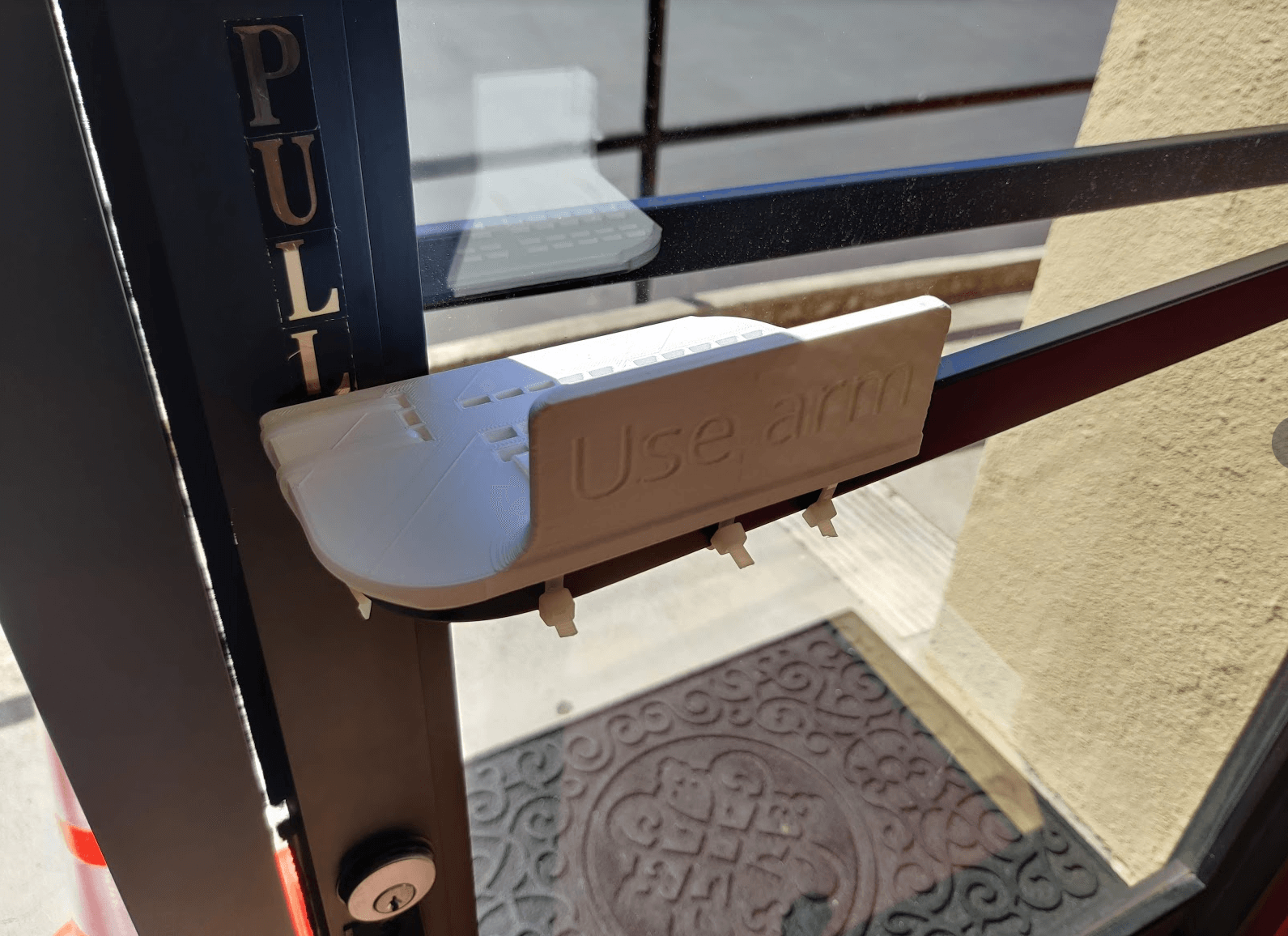
After our initial brainstorming session, we realized that we could not simply just create another form of door handle. This would be too expensive to manufacture, and different door handles would be needed for various needs. Therefore, in order to address this issue, we created universal door handle attachments, which can simply be attached on top of most types of door handles, and utilize only zip ties! Specifically, these designs use one’s arm to operate doors, rather than hands, to prevent the spread of infectious diseases to other people via elimination of a common shared surface.
What it does
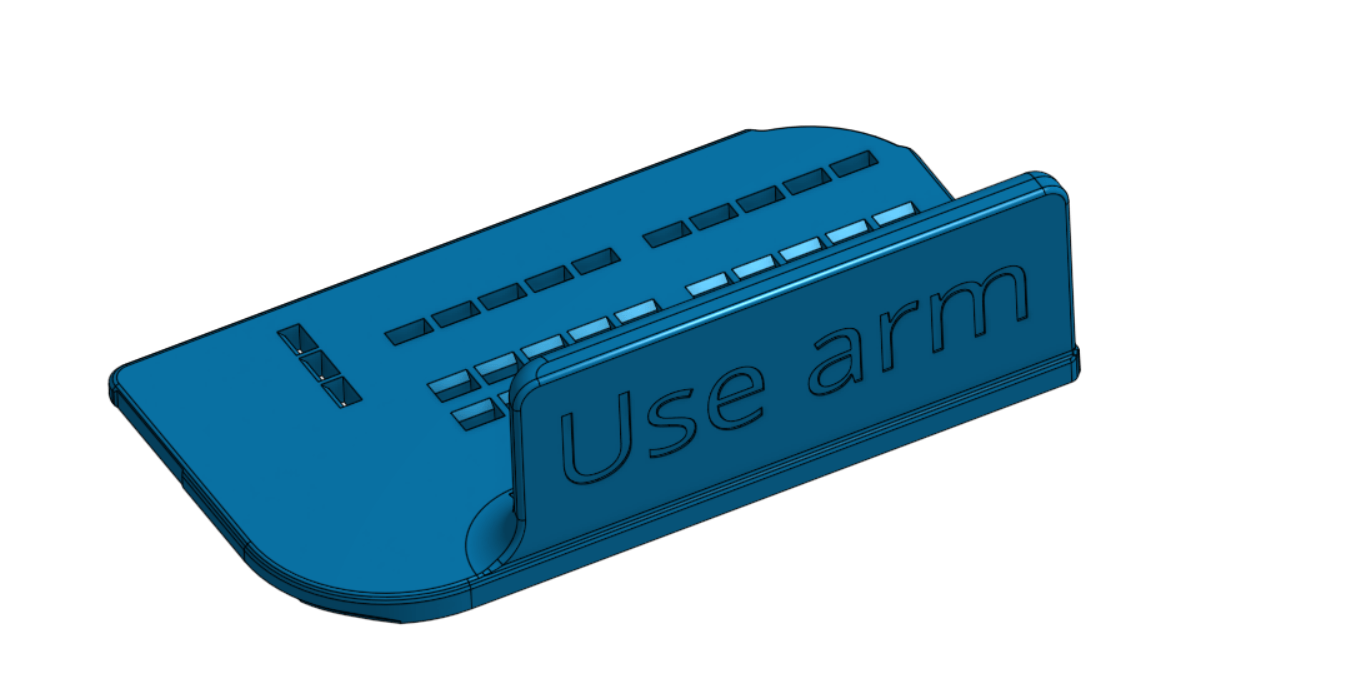
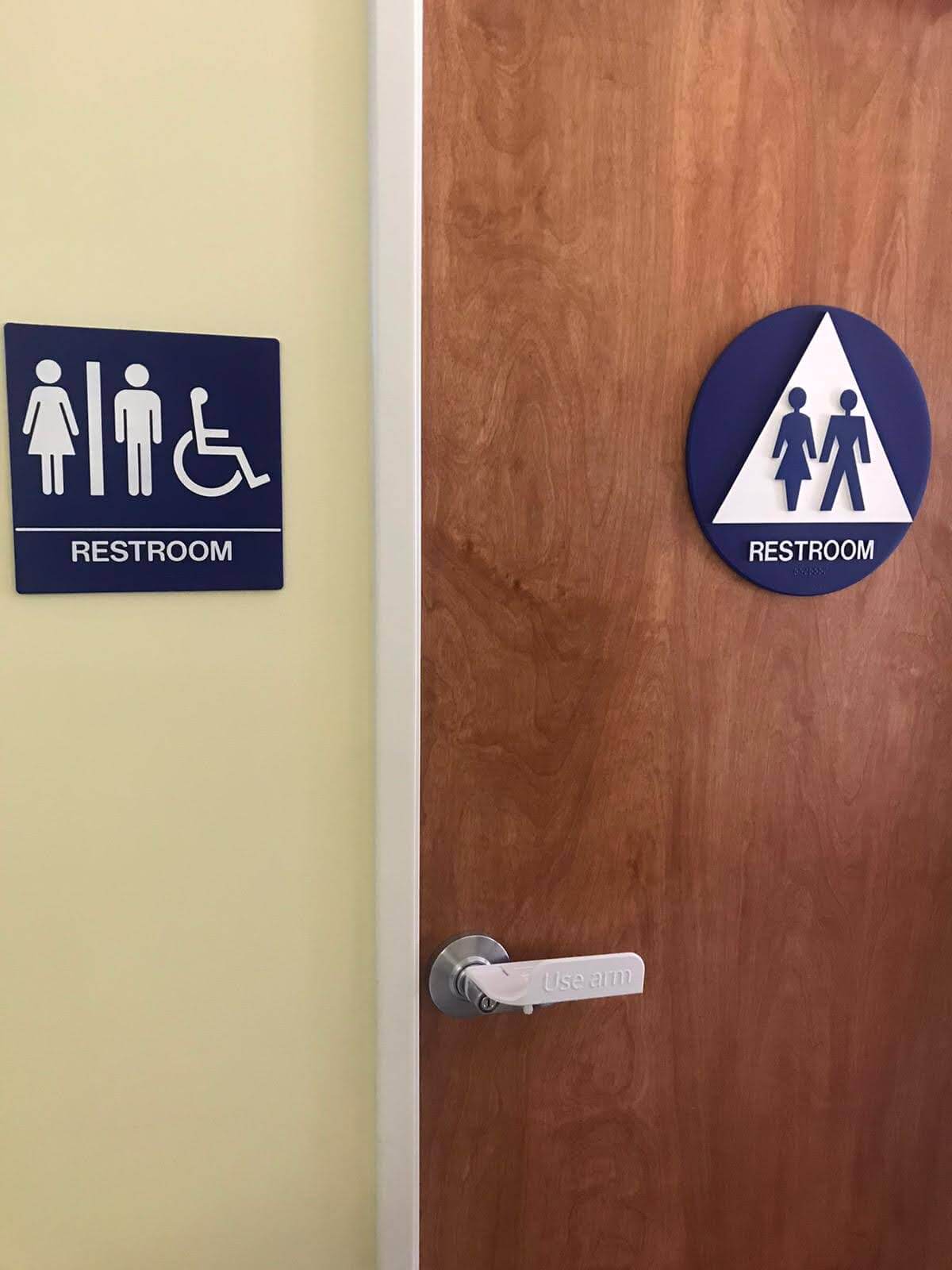
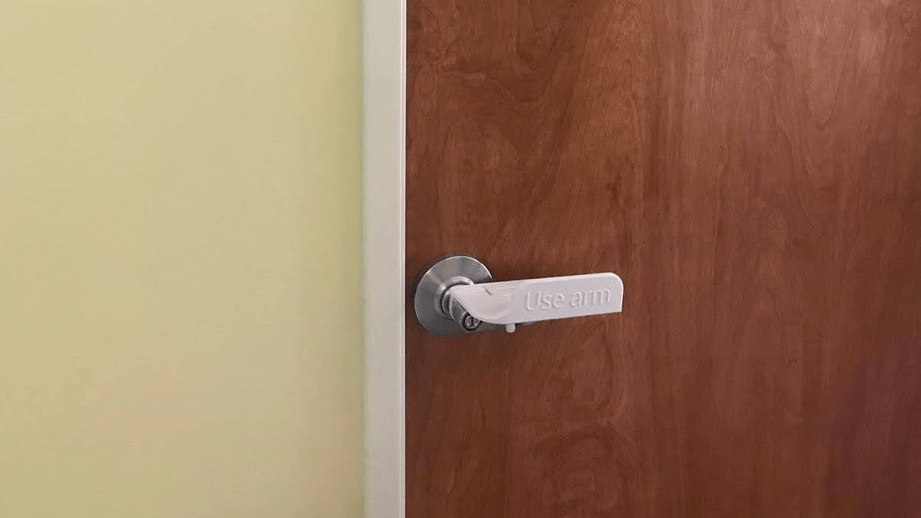
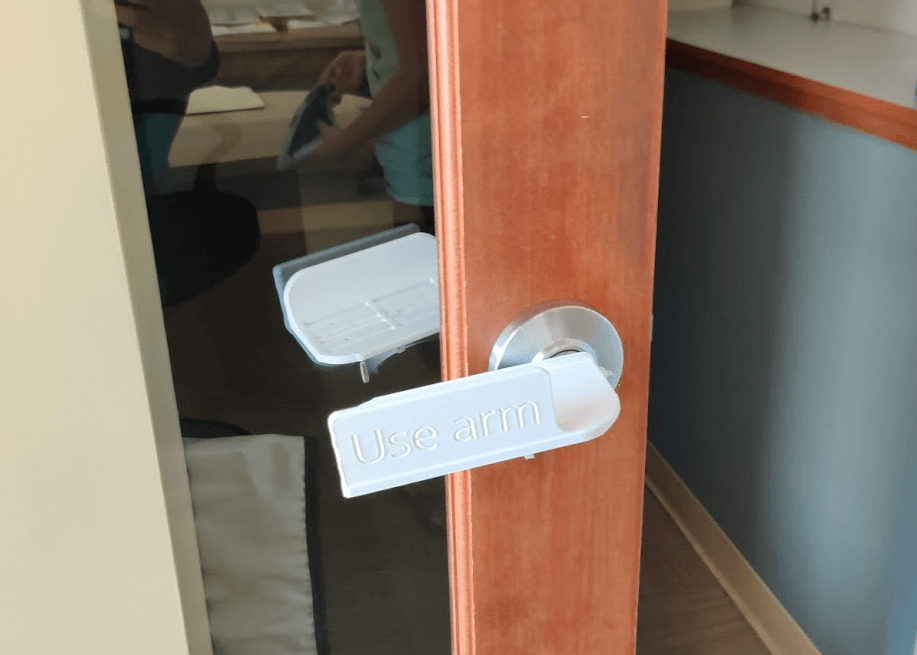
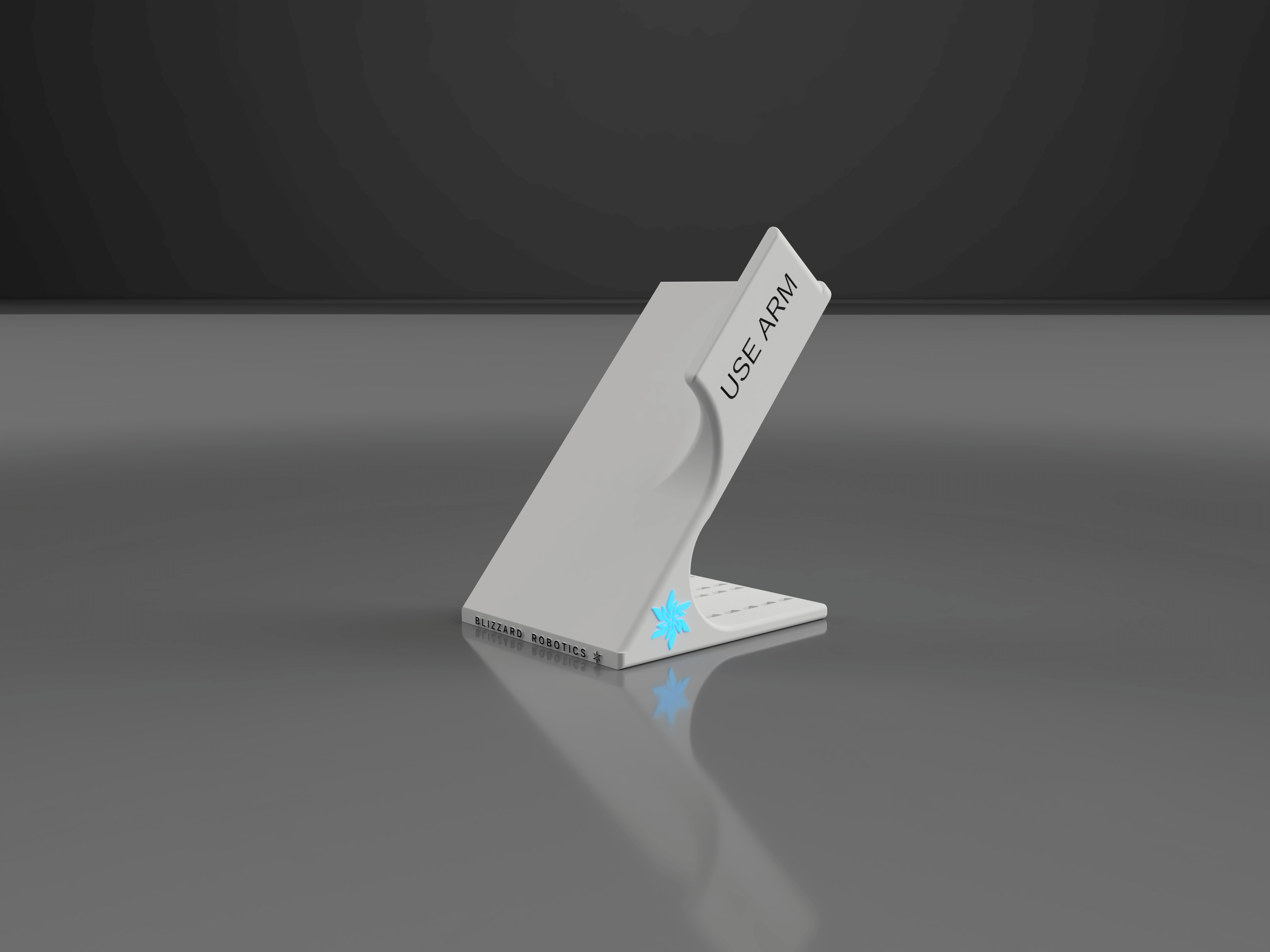
In order to address the issue of spreading infections through shared surfaces, we have created universal door handle attachments that can be placed on the top or side of most existing door handles. When a person needs to open a door, they use their arm to push down or to the side of the door handle, depending on the orientation of the door handle. When pulling their arm back, the raised lip on the attachment hooks onto the user’s arm, allowing the person to “grab” the door despite using no hands in the process. The attachment works for push-doors as well, as the attachment forms a platform over the handle itself, allowing one to turn the door handle by pushing down with the side of their arm and pushing the door open. The final product can be attached onto door handles using zip ties only!
How we built it
We designed this product using OnShape and rendered it using Fusion 360. The final physical form is fabricated using a 3D printer and PLA filament. When attaching to door knobs, a few zipties and scissors (optional) are needed. The cost for one Armdle is approximately $2.11.
Challenges we ran into
Creating the angled Armdle required much brainstorming and precision, and it was difficult to get the angle right. We examined multiple door handle designs as well as how high door handles were from the bottom of the door in order to find the angle that would be most comfortable for the user. Also, creating a door handle that was aesthetically pleasing was a challenge as well, as we wanted to give it a clean presentation. Finally, making sure that the door handle fit securely and was easy-to-use was difficult as well, as we had to think about the issue from a customer’s standpoint and how a customer would utilize the door handle when they approached it.
Accomplishments that we're proud of
We are proud of being able to create a fully functional design that works and one that can be directly implemented into businesses and centers in need. It is stable, has a lost cost associated with it, and can be used on a majority of door handle designs. Also, we had never used a 3D printer before this, so because of this project, we were able to figure out on how to use a 3D printer to print our own designs.
What we learned
From creating this design, we learned about the design process. The necessity of brainstorming was evident to us, as because of the thorough brainstorm session that we completed together, we were able to come up with tangible and creative ideas. Also, we learned about the importance of continuously improving our design, as we went through multiple iterations of the product, with each one becoming better and better as the days passed by. Finally, we learned about trial and error, and that it failing will occur, no matter what. It is how we get past these failures and hurdles is what truly matters. During the creation of Armdle, we thoroughly discussed why we failed and how to prevent this in the upcoming days, and this tactic is one that we will implement in our future robotics meetings as well.
In addition to this, we learned and experimented with more features in OnShape, and for many of these, we did not work with before. Also, we learned that we can render the design in different lightings and environments, allowing different aspects of the Armdle design to be shown more effectively.
What's next for Armdle
In the near future, our team hopes to spread Armdle to essential centers and businesses that need the door handle attachments in order to help control the Covid-19 pandemic all over the African continent. Specifically, we want to distribute these to local hospitals, as it could help decrease the risk of others receiving viruses on peoples’ hands, and popular locations where there are many visitors a day. In addition, we would like to improve the regular Armdle design to be compatible with spherical door knobs as well.
Built With
- autodesk-fusion-360
- onshape


Log in or sign up for Devpost to join the conversation.