-
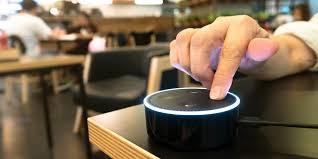
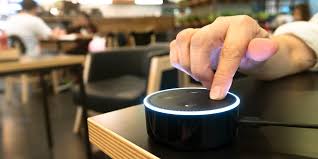
echodot
Inspiration
Basically, the inspiration stemmed from the need for a convenient and accessible way for users to interact with technology with the less physical input as possible.
What it does
"Hands-Free" offers a seamless conversational AI interface, enabling users to perform tasks such as web browsing, messaging, task management, and smart device control through voice commands. Our Alexa Skill is specialized in helping warehouse workers to perform common tasks such as creating order lists and finding products in the warehouse just using the voice.
How we built it
We've used Alexa Skills to implement a conversational AI interface, along with a fitting and matching function that uses Levenshtein's distance to detect the name of the product from the dataset. For dealing with the storing and treatment of the data we've used AWS with S3, in order to be able to have a memory location where to store our files. To generate useful lists for testing (which would not be necessary, because we can create them by talking with Alexa) we've created some python scripts. For the second part of the challenge we've used those lists generated for testing and we've created two algorithms to find the most optimal path, the first is used in those list where the number of products is small and it's based in dynamic programming with bit masks which always finds the best solution paying a high computational cost, therefore for those lists with a high number of products we've used the simulated annealing algorithm since it gives as a an local optimal solution which normally it's not the most optimal but always stays very close with the advantage of computing it in a much low computational time.
Challenges we ran into
Fundamentally, we've got a lot of troubles with the Alexa Developer Skills Console, since the dealing with errors and debugging it's quite hard due to the low explainability of the compiler. Moreover we've got some troubles when dealing on the parsing of the input of the user since the names where not common and therefore most of the models we've came across, didn't gave us good results.
Accomplishments that we're proud of
We are very proud of being able that without training any model, we've managed to find a way to perfectly match the product the user wants with the product our model interprets. Moreover, we are also proud of our improvements in learning python, since almost all the project has been developed in that language.
What we learned
We've learned about how functions of fitting and matching work, we've noticed how important is to have a model trained with data and concepts from the field you deal with and we've improved our skills in debugging thanks to Alexa Skills environment.
What's next for Hands-Free
We think that our project has a wide open range of things to incorporate new functionalities, we also think that the dialog between user and alexa's interface could be extended and finally we also see a very nice idea to train a model with the names of the products of the business to improve even more the accuracy of the interpretations.
Built With
- amazon-alexa
- amazon-web-services
- aws-lambda
- chatgpt
- github
- llama-2
- pandas
- python
- vscode


Log in or sign up for Devpost to join the conversation.