-
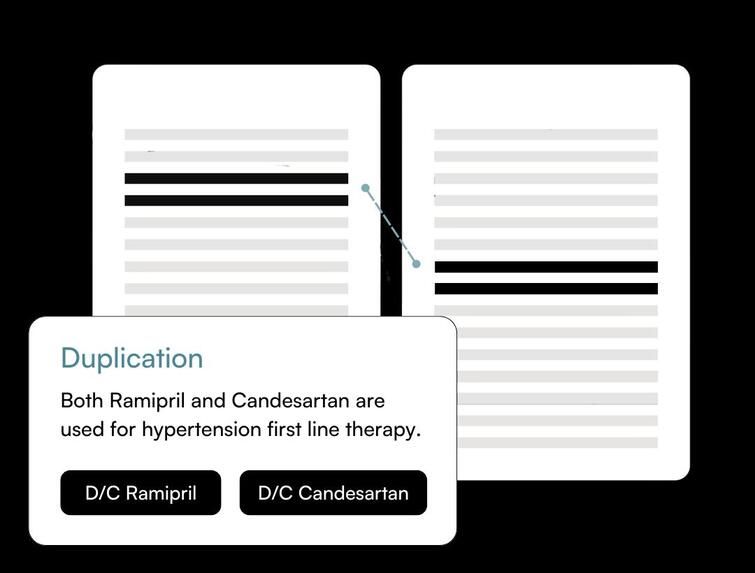
CONTRADICTION REVIEW
-
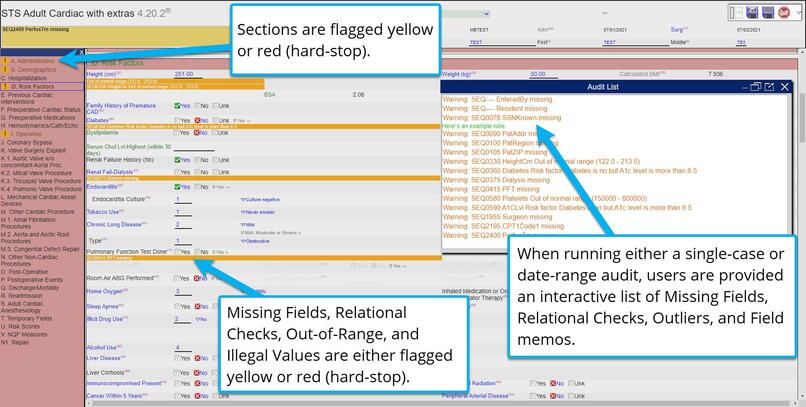
MISSING INFORMATION
HandoverGuard AI: Making Clinical Handover Safer with AI
Inspiration
In healthcare, patient care often passes from one nurse or clinician to another during shift changes and transfers. During these transitions, important information can be missed, left undocumented, or communicated ambiguously. Even a well-written handover may contain gaps that the receiving healthcare professional needs to clarify.
We wanted to explore a practical question: Can AI help healthcare professionals identify missing information before a patient handover is completed, rather than simply summarizing what was said?
This question inspired HandoverGuard AI, an AI-powered clinical handover safety assistant designed to make handover information more structured, transparent, and easier to verify.
What is HandoverGuard AI?
HandoverGuard AI transforms unstructured clinical handover notes into the SBAR format:
- S — Situation: The patient's current situation and reason for handover.
- B — Background: Relevant history and contextual information.
- A — Assessment: Findings and observations explicitly documented in the handover.
- R — Recommendation: Documented next steps, follow-up instructions, and pending actions.
Unlike a basic AI summarizer, HandoverGuard AI focuses on information completeness and uncertainty. It flags missing fields, highlights potentially conflicting statements, and distinguishes documented facts from information that is unknown or requires verification.
For example, if allergies are not mentioned in a handover, the system reports “Allergy status not documented” rather than assuming that the patient has no allergies. Similarly, conflicting medication statements are flagged for human review instead of allowing the AI to choose one without evidence.
Key Features
- Intelligent SBAR Structuring
Converts unstructured handover text into a clear, organized SBAR report while preserving the meaning of the original information.
- Missing Information Detection
Identifies absent or incomplete documentation, helping the receiving healthcare professional recognize which details require clarification.
- Contradiction Alerts
Highlights potentially inconsistent statements, such as medication being described as both administered and pending.
- Evidence-Based Warnings
Where possible, links each alert to the relevant source text. If the information is absent, the system explicitly identifies the gap instead of generating an unsupported answer.
- Human-in-the-Loop Safety
The system presents warnings and suggested clarifications for review. The healthcare professional remains responsible for verifying the information and making clinical decisions.
How We Plan to Build It
HandoverGuard AI combines natural language processing with structured validation rules.
The proposed workflow is:
- The user enters a fictional or appropriately de-identified clinical handover.
- The NLP component extracts relevant information and organizes it into SBAR sections.
- A completeness checker compares extracted information against a defined handover checklist.
- A contradiction checker identifies statements that may require clarification.
- The interface displays the structured report, missing information, supporting source text, and review warnings.
The prototype can use Python for backend processing, an LLM or NLP model for information extraction, rule-based validation for essential checks, and Streamlit or a React-based interface for the user experience.
Challenges and Our Approach
One major challenge is preventing AI from inventing clinical details. A fluent summary is not necessarily an accurate summary, especially when the input contains incomplete information. Our approach is to preserve source evidence, explicitly mark undocumented details, and require human verification.
Another challenge is distinguishing a genuine contradiction from a difference in timing or context. The prototype therefore treats suspected inconsistencies as review flags rather than automatically deciding which statement is correct.
A further challenge is evaluating safety meaningfully. We plan to test the system with synthetic handover examples containing missing fields, ambiguous statements, and deliberate contradictions. Evaluation will consider missing-information detection, contradiction detection, unsupported inference, and processing time.
What We Aim to Learn
This project explores how AI can support healthcare communication without replacing professional judgment. It brings together biomedical engineering, healthcare workflows, natural language processing, and software development.
We aim to demonstrate that a useful healthcare AI system does not always need to predict a disease. It can also help make critical information more visible, traceable, and easier to verify.
Expected Impact
HandoverGuard AI aims to support clearer clinical communication, reduce overlooked documentation gaps, and encourage more structured patient handovers. It could eventually be explored in hospitals, nursing education, and clinical simulation environments.
The current prototype is an educational and decision-support concept, not a clinically validated medical device. It does not independently determine clinical urgency, verify treatment, or guarantee patient safety. Clinical deployment would require rigorous evaluation, privacy safeguards, and validation with healthcare professionals.
Our vision: An AI assistant that does not merely tell healthcare professionals what was written, but helps them recognize what still needs to be checked.
Built With
- artificial-intelligence
- healthcare
- natural-language-processing
- patient-safety
- python
- rule-based-validation
- streamlit

Log in or sign up for Devpost to join the conversation.