-
-
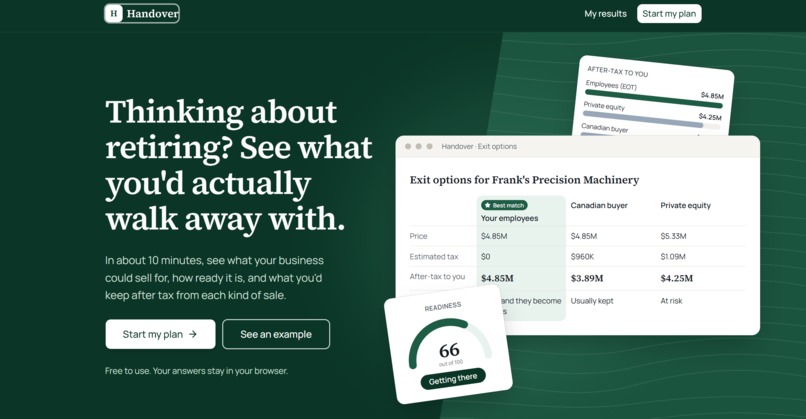
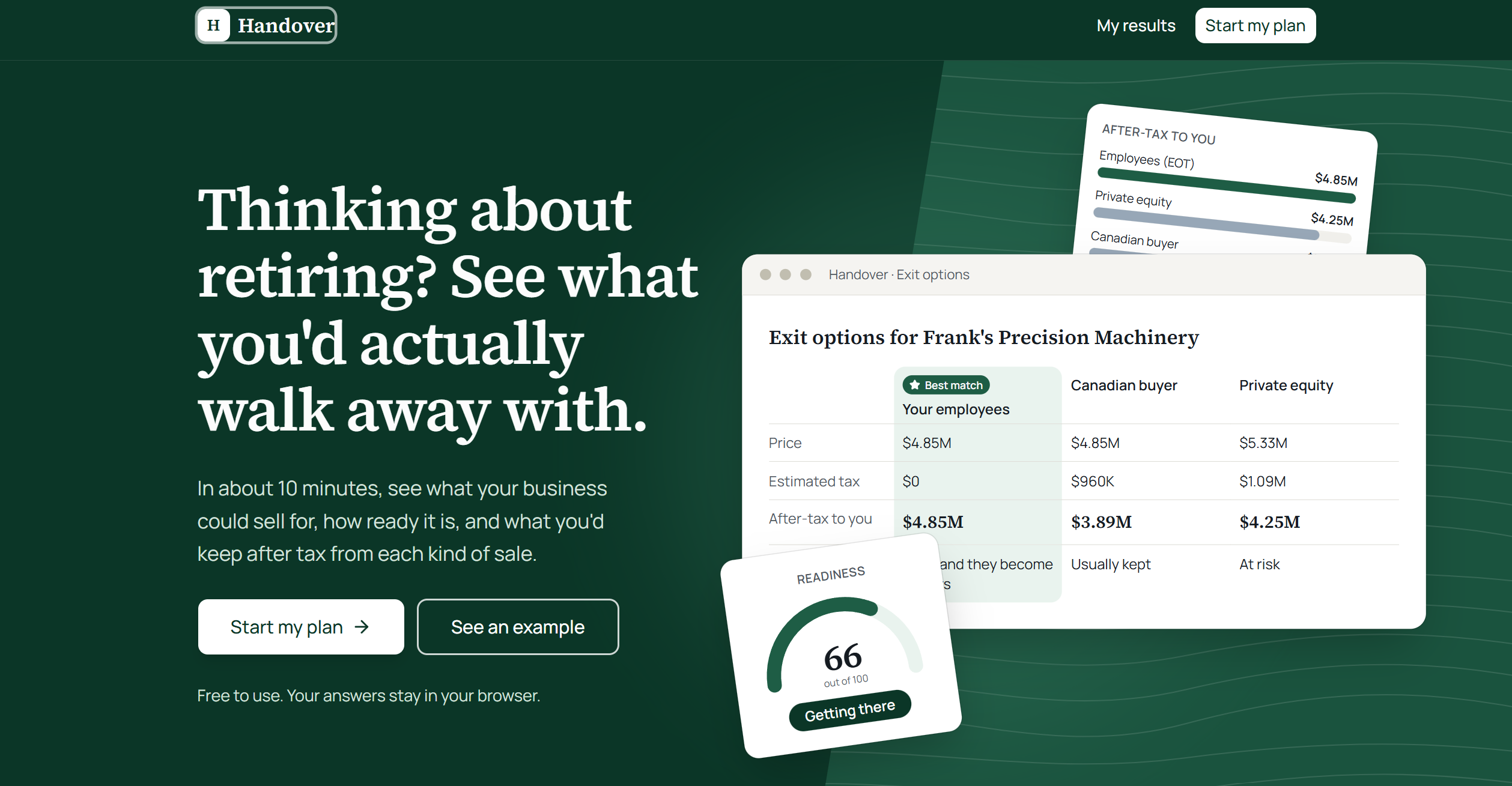
landing page
-
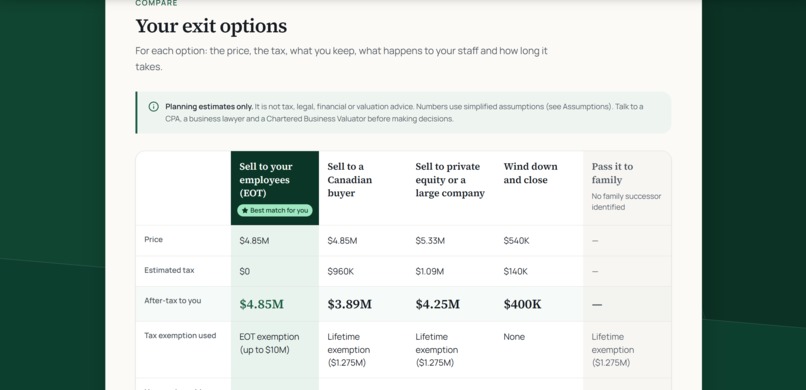
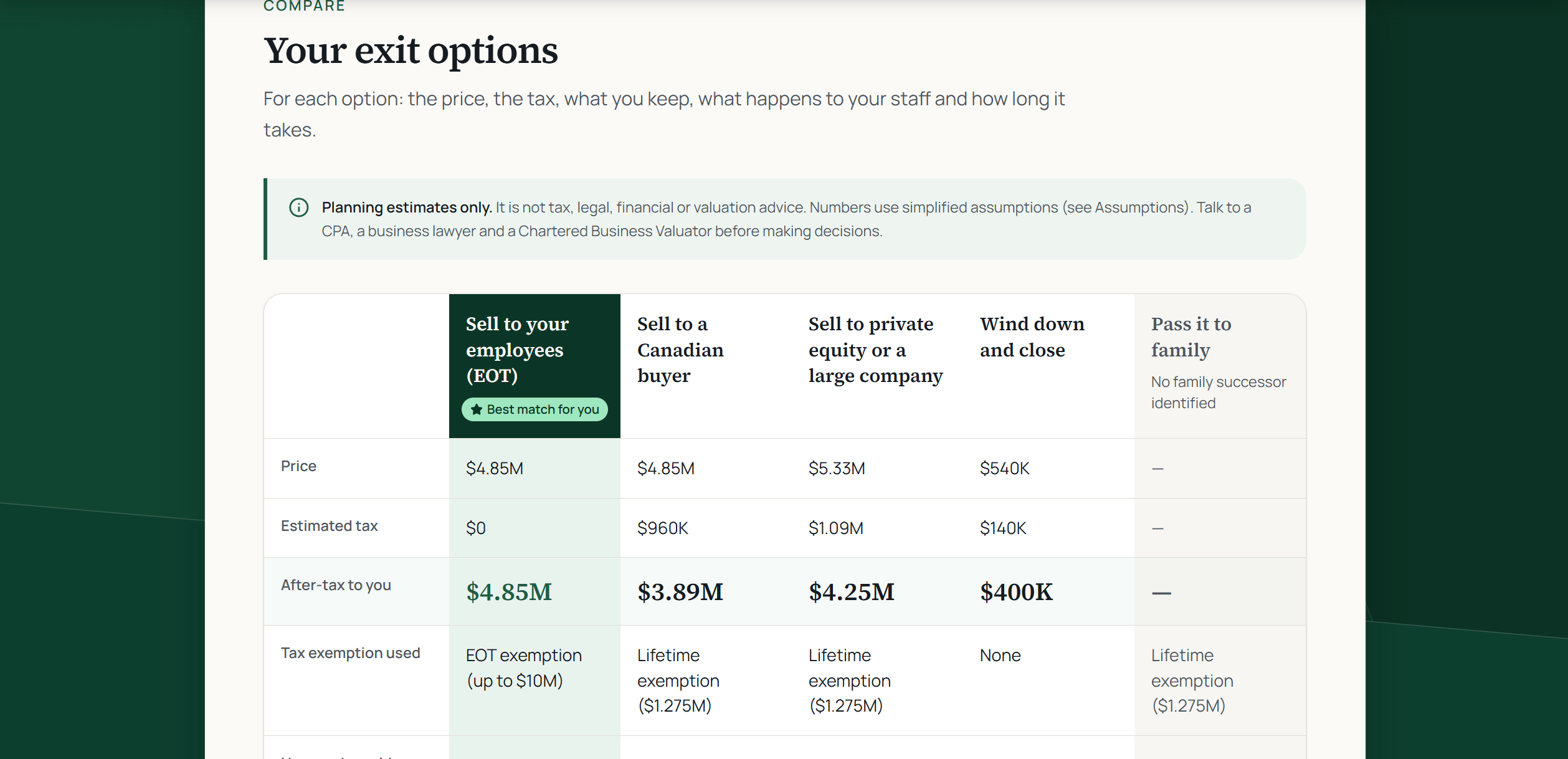
exit options
-
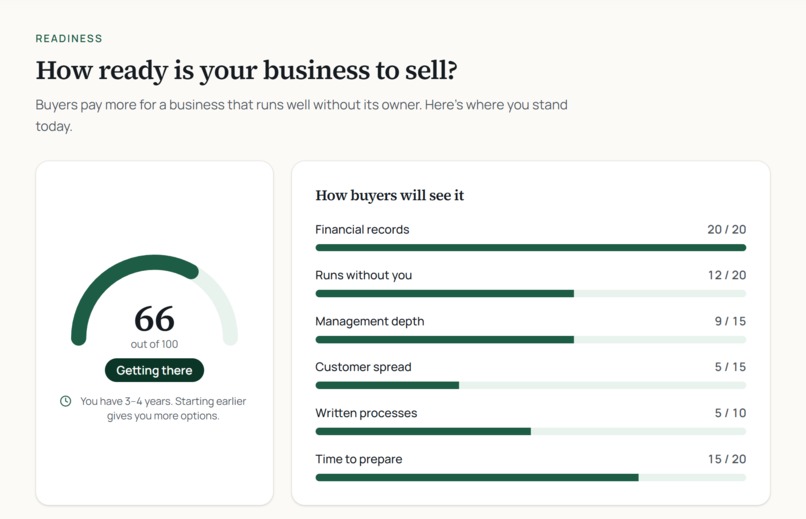
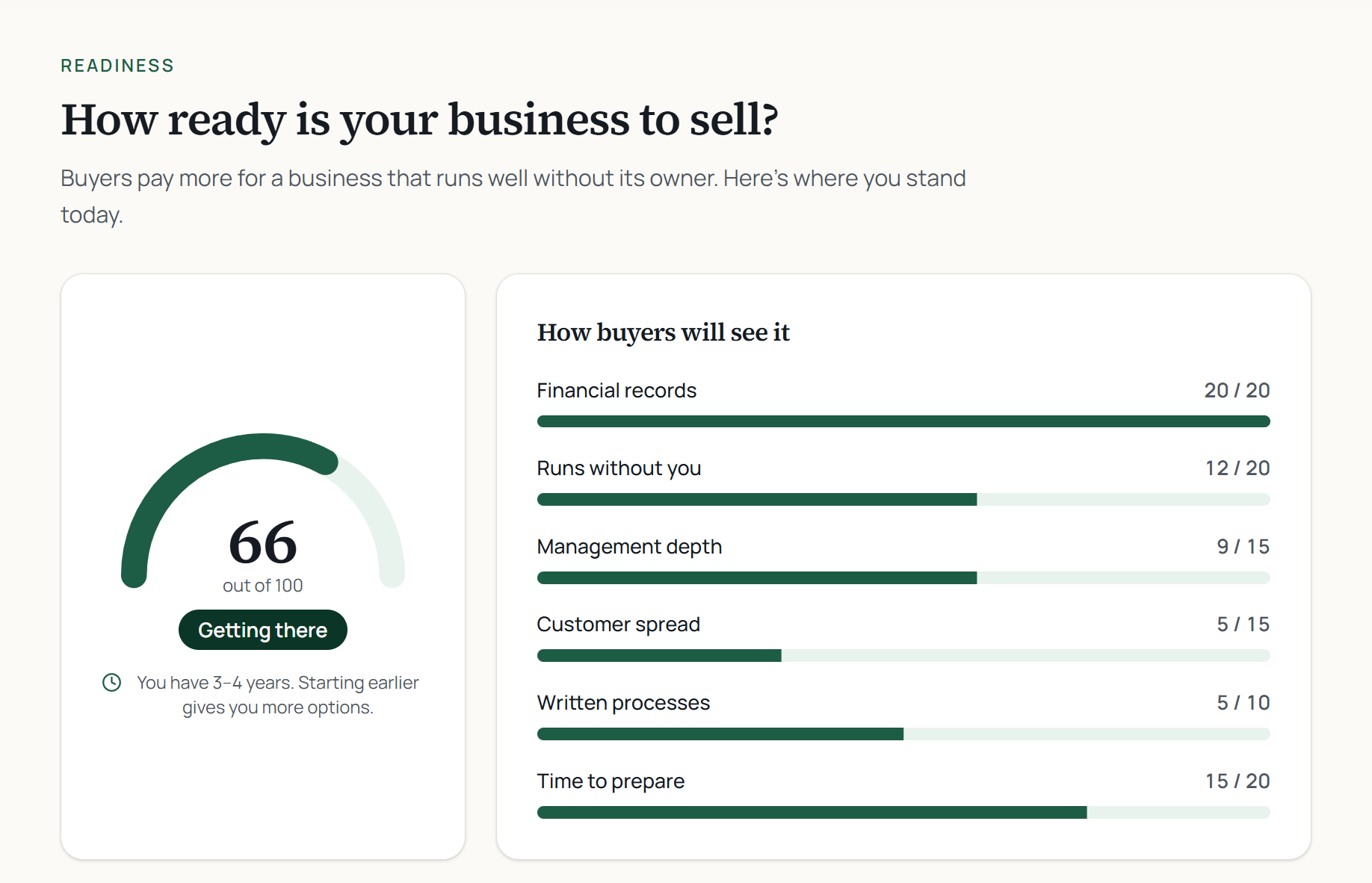
readiness score
-
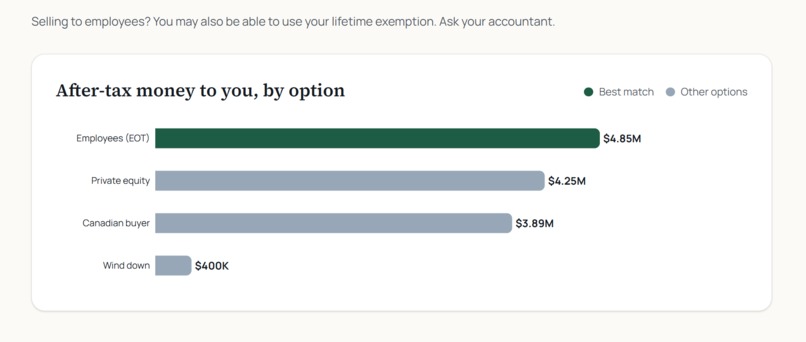
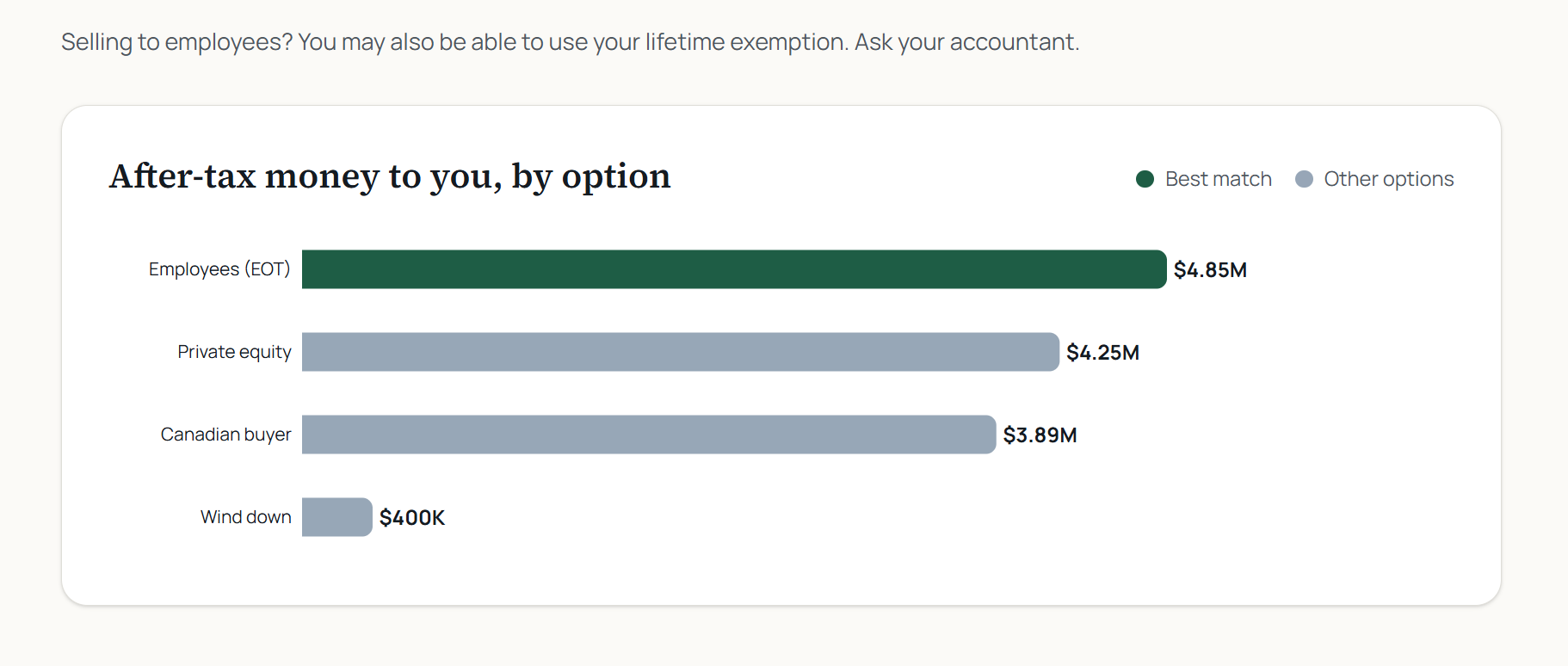
after-tax chart
-
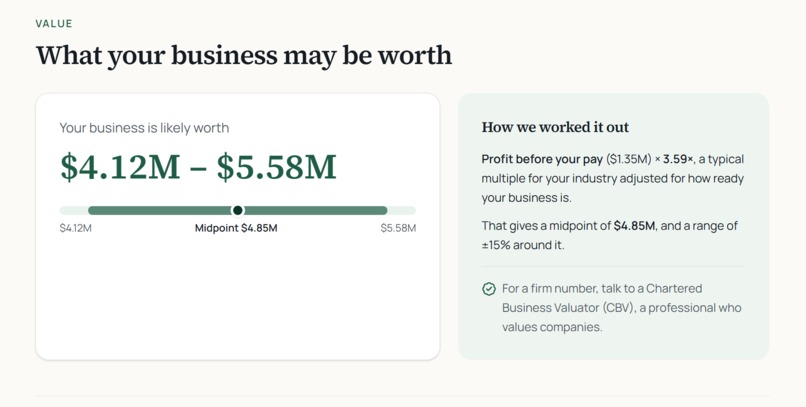
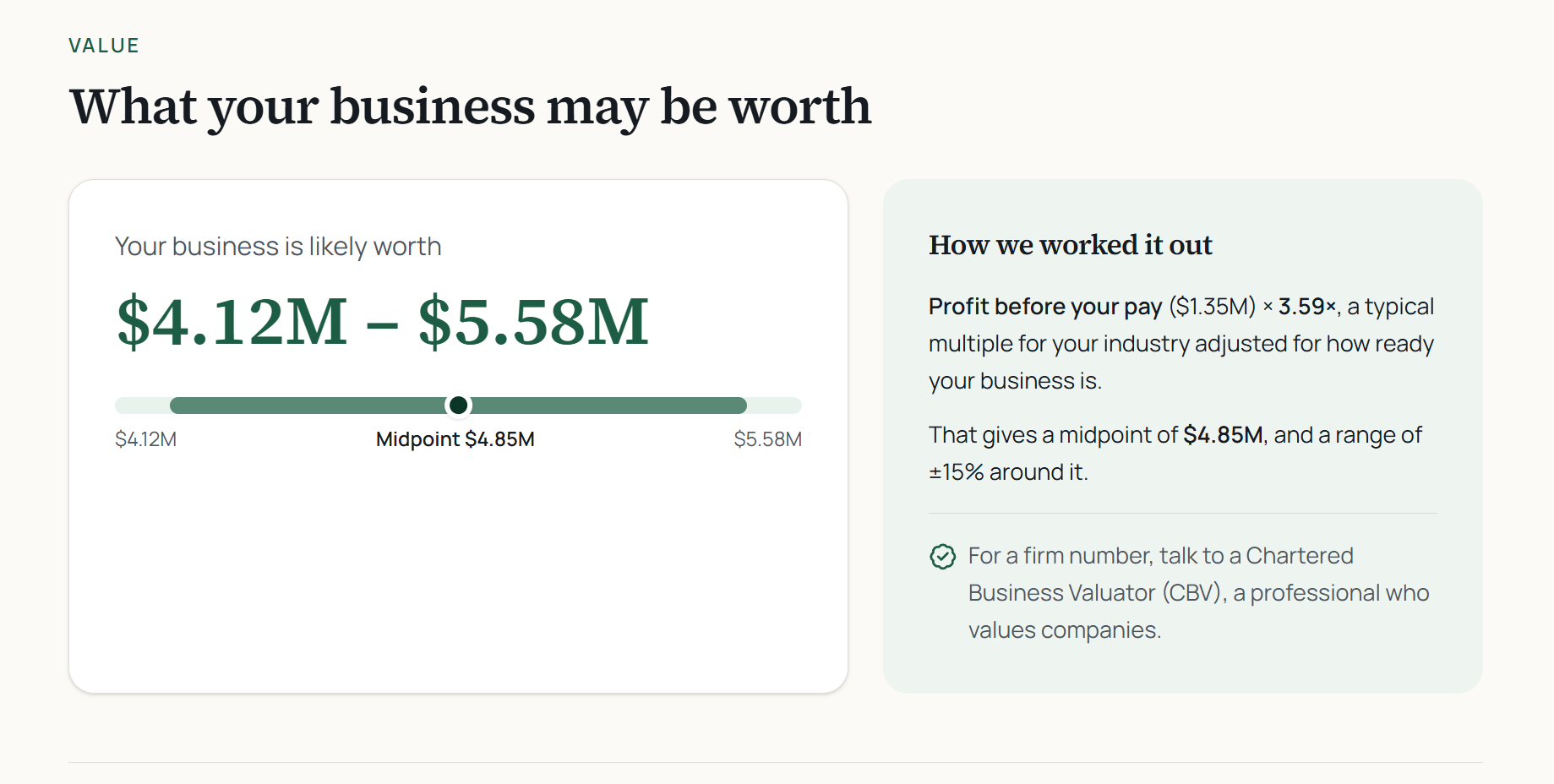
value
-
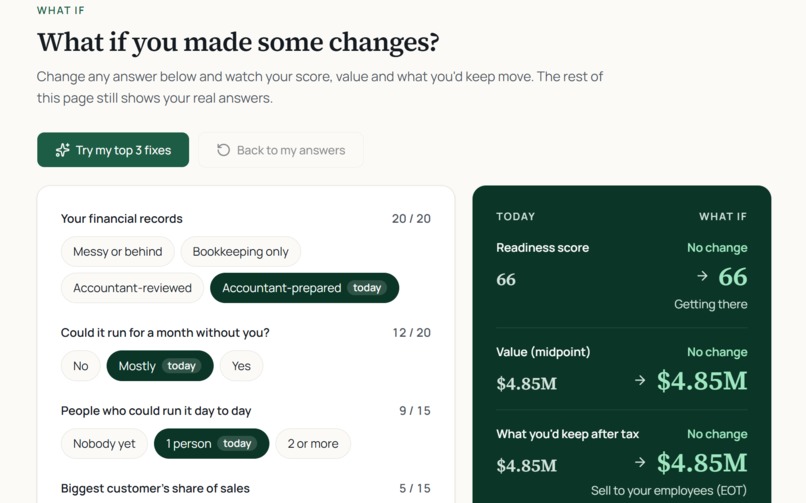
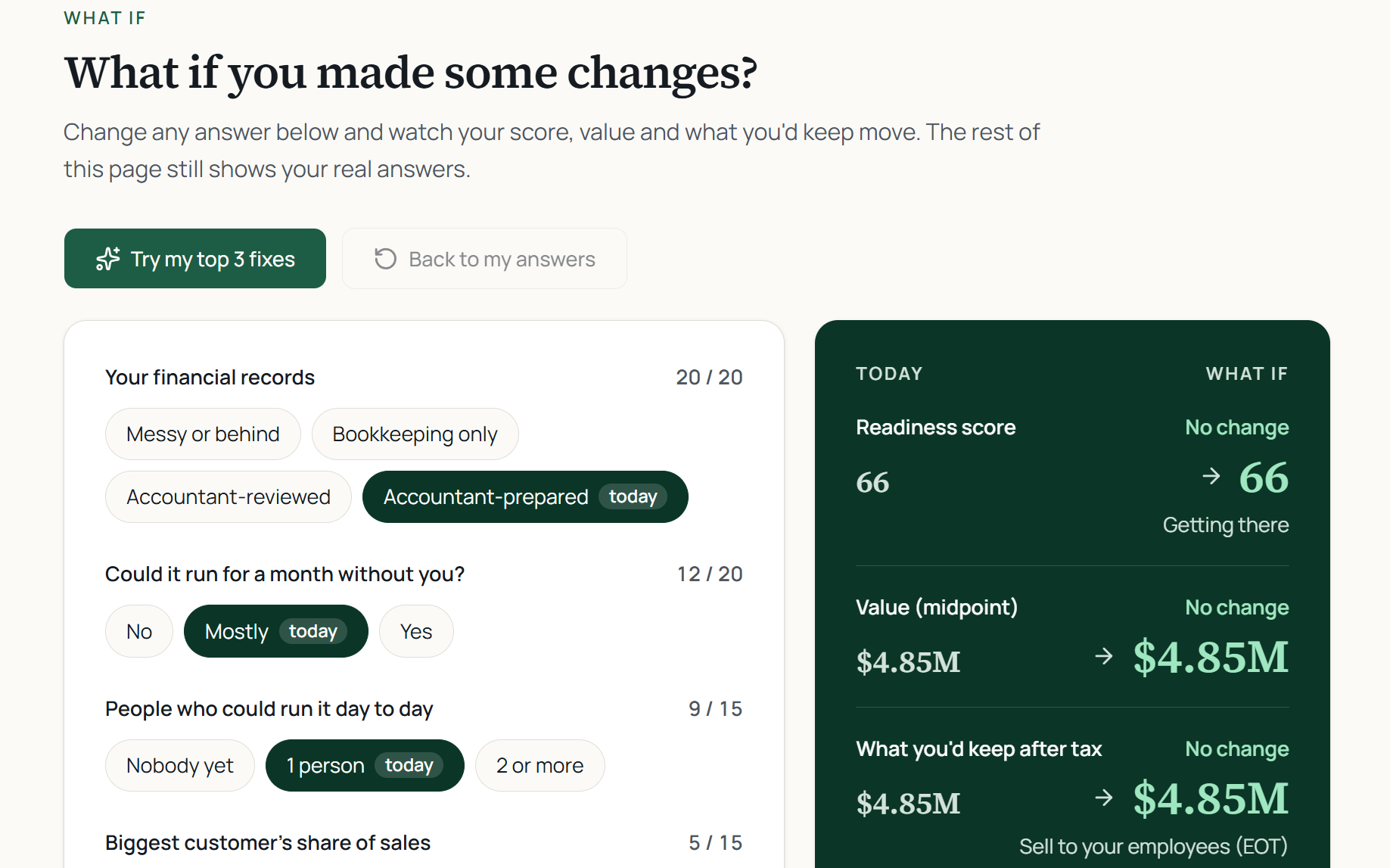
what if the owner made some changes
-
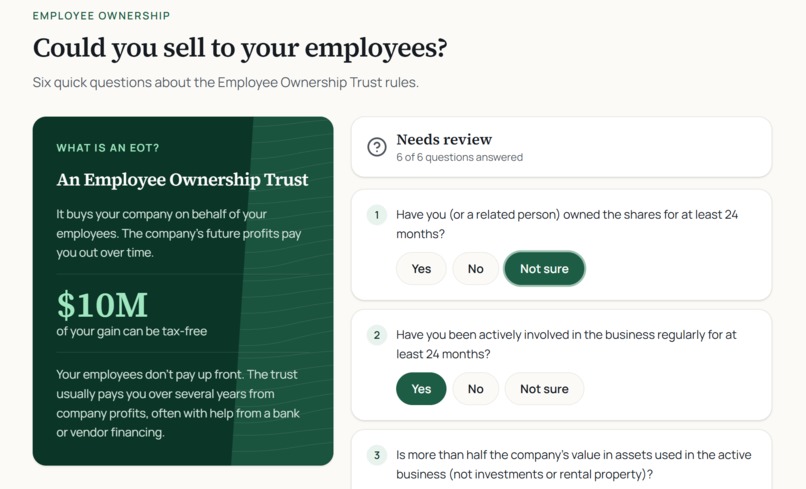
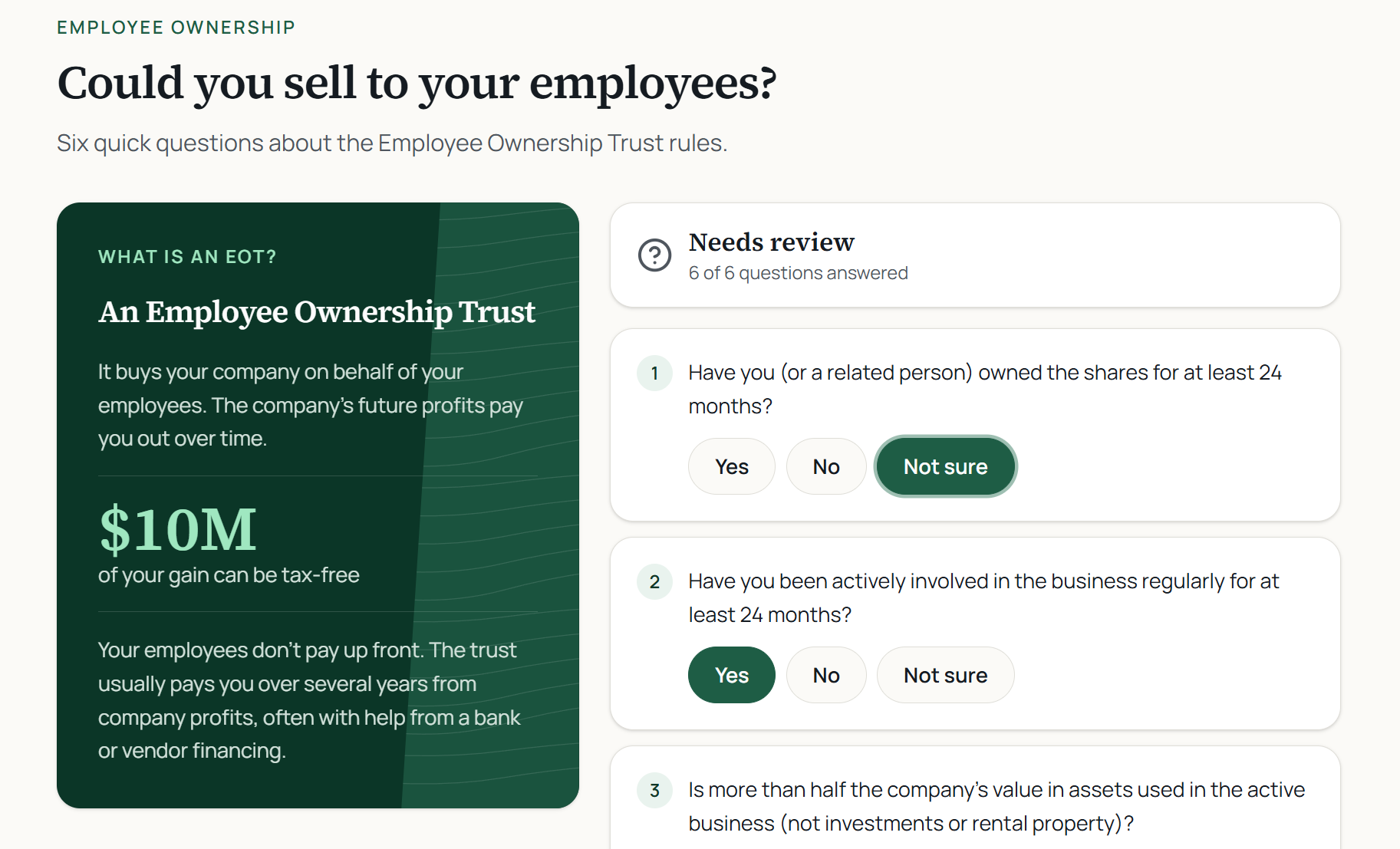
EOT
-
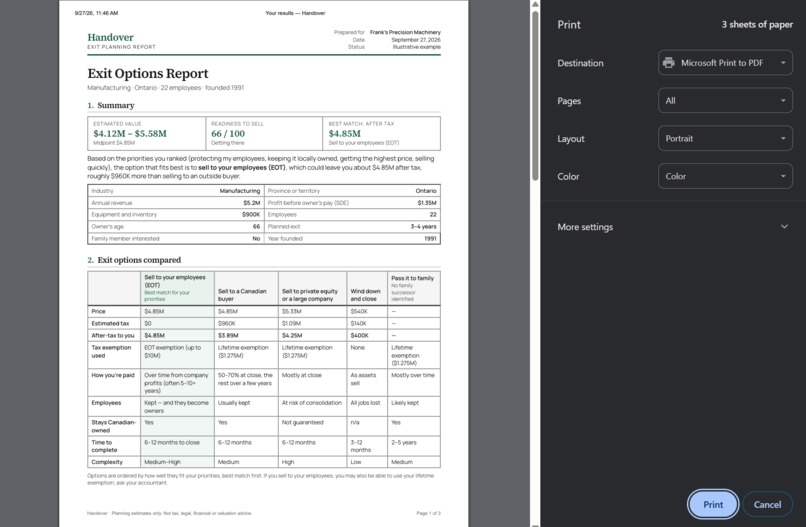
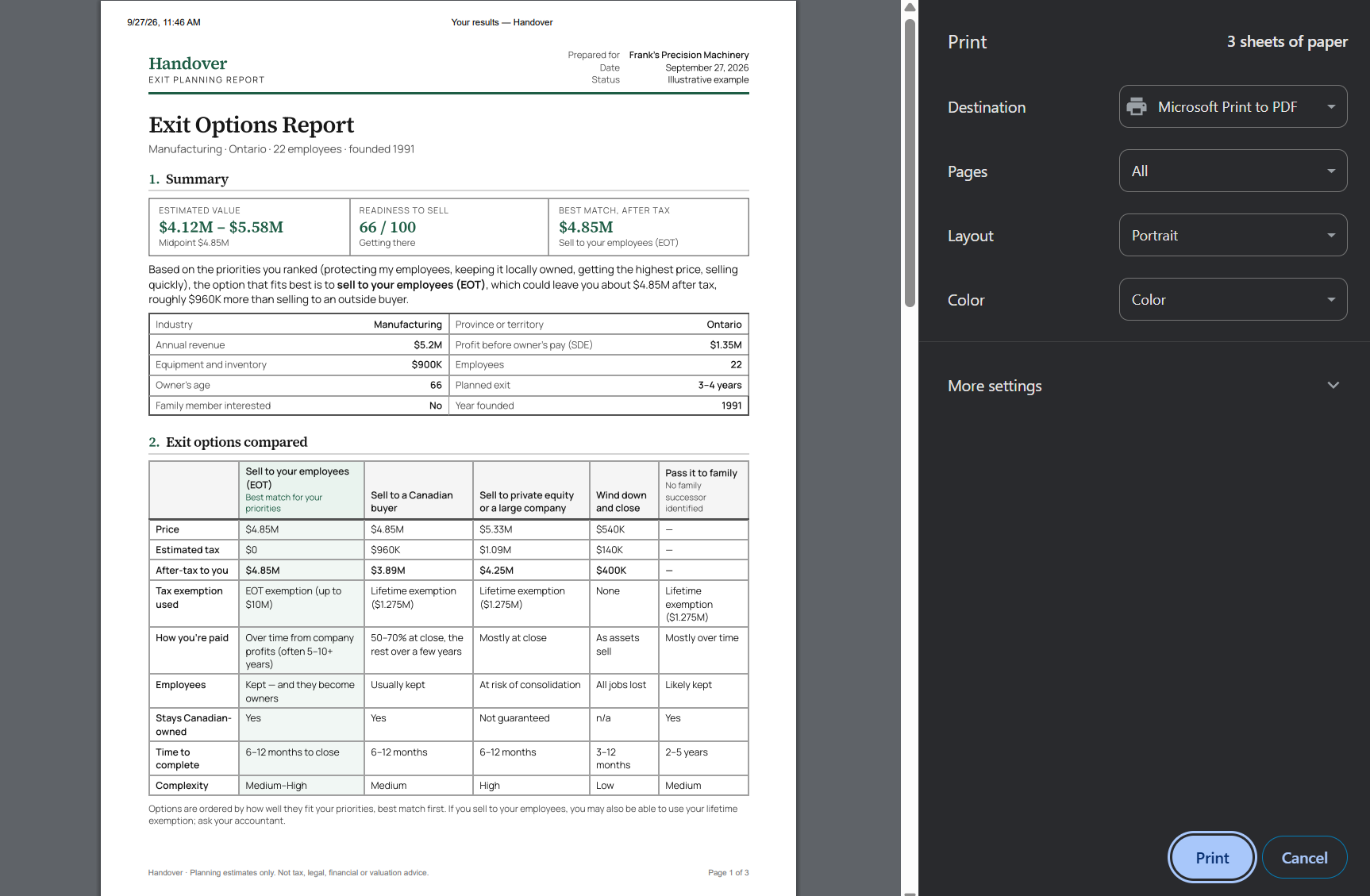
printout page
Inspiration
76% of Canadian small-business owners plan to exit within 10 years, but only 9% have a succession plan (CFIB, 2023). Buyers aren't the problem: BDC counts 10 would-be buyers for every 7 sellers. The problem is readiness. Owners start too late, and most have never heard of an Employee Ownership Trust (EOT), which lets employees buy the company and exempts up to $10 million of the owner's gain from tax.
Good exit advice starts with thousands in accountant and lawyer fees, so many owners never start. I wanted to build the free first step: 10 minutes at the kitchen table that shows an owner what each way out would leave them with, and gets them to their accountant prepared.
How I built it
Handover is a Next.js app (React, TypeScript, Tailwind, Recharts), deployed on Vercel. Answers stay in the browser, so there's no database or login.
The core is a tested TypeScript calculation engine, with every rate and exemption in one config file next to its source. The value uses an industry multiple that rises with the readiness score $R$:
$$ V = \text{SDE} \times \left( m_{\text{low}} + (m_{\text{high}} - m_{\text{low}}) \cdot \frac{R}{100} \right) $$
Tax on each option uses the exemption that applies $E$ (\$1.275M for a regular sale, up to \$10M for an EOT) and the province's top rate $t_p$:
$$ \text{Tax} = \max(0,\ P - \text{ACB} - E) \times 0.5 \times t_p $$
For the example owner, selling to his employees leaves him about \$960K more after tax than selling to an outside buyer, and all 22 jobs stay.
Challenges
- Tax rules that changed recently. The two-thirds inclusion rate was cancelled, the lifetime exemption is \$1,275,000 for 2026, and the EOT exemption became permanent in April 2026. A lot of what's online is out of date, so I checked every number against CRA, KPMG and EY.
- Being honest about estimates. Every screen with money shows a disclaimer and lists its assumptions, and the plan sends owners to a real valuator.
- Designing for someone in their 60s. Bigger text, plain words, one clear path, and printouts clean enough to hand to an accountant.
What I learned
How EOTs actually work in Canada, and what buyers discount for: one big customer, an owner the business can't run without, and no second-in-command. I also learned that for a tool like this, the numbers have to come from tested code, not from guesses.
Next, I'd like to pilot it with a chamber of commerce and partner with accountants and credit unions who already advise these owners.
Built With
- css3
- eslint
- html5
- lenis
- lucide
- next.js
- node.js
- radix-ui
- react
- recharts
- shadcn/ui
- tailwindcss
- typescript
- vercel
- vitest
- zod

Log in or sign up for Devpost to join the conversation.