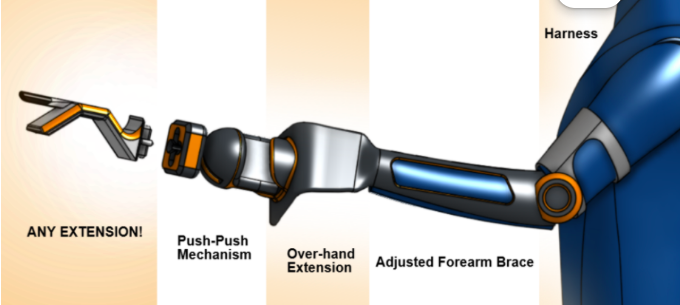
The loss of mobility in the upper limb, losing a hand or forearm, or losing mobility or strength in the arm makes our autonomy and our self-confidence reduced. Activities and hobbies that require holding small objects or manipulating things become difficult. For example, consider the example of cooking. You need to be able to drive to the store, carry your groceries, chop vegetables, turn on the stove, press buttons, carry pans, scroll the recipe and turn on timers on your phone… What are the barriers to access? High cost: between $2,000 and $80,000 depending on the type of prosthesis, with insurance coverage often only partial (max 80% covered) High and persistently stable abandonment rate: A 2022 Austrian study (Salminger et al., 2022, Disability and Rehabilitation) of 68 traumatic upper-limb amputees found a 44% prosthesis rejection rate overall, with no improvement between those amputated before vs. after 2006 (p = 0.939), despite 15+ years of technological advances in myoelectric hands and sensors. Among the ~56% who kept using a device, 93% chose myoelectric over body-powered. Better training and patient involvement in device choice matter more than hardware sophistication for adoption. Technology is not the issue of the product democratization Stigma linked to device visibility: a study of 332 people worldwide (Proceedings of the ACM on Human-Computer Interaction, 2022) found that the perceived visibility of an assistive device is positively correlated with self-stigma and social interaction anxiety. Affected individuals primarily seek not to stand out from others, which pushes them to conceal their situation rather than wear a visible device. All three members of our team have had to use assistive devices for long periods of time, and understand the embarrassment that can come with using them. Many devices look very “medical,” and that can put people off. We aimed to create something which is both stylish, and can be used as a vehicle for self expression. Building on all this available information, we chose to design a fashionable assistive device that can be used equally by someone with a prosthesis, an able-bodied person, or someone with a temporary impairment (fracture, short-term injury). In fact, several iconic products have followed this same trajectory –the electric toothbrush, for example, was designed in 1954 for patients with reduced dexterity, and voice assistance tools emerged from tools for people with disabilities. Our product is divided in two parts : 1: The harness is useful for holding various attachments, and can even be used by people with or without a disability as a storage device (hold your cooking implements, climbing activities, leather working, etc). It also helps to support the robot arm and distribute its weight more evenly across the body. 2: The prosthesis to adapt the use of harness to anyone with a clip system to handle objects or do daily tasks. Here are some ideas of objects and actions we decided to present with our technology: take a cup, hold your phone, hold a washing sponge to wash both sides of your body, a knife & fork, a touchscreen-compatible finger extension, even a paddle to swim. The Handoff system is designed to adapt to a wide range of users and tasks. A push-push connection—similar to a retractable pen—allows users to quickly attach or remove any task-specific extension at the end of the arm. Built into this connection is a servo-controlled gimbal with roughly a half-sphere of wrist motion, which can be locked, left free, or given adjustable resistance depending on the task. The over-hand extension accommodates users who still have a hand but have limited or no ability to use it, such as after severe burns or injury. The adjustable forearm brace can extend along the full forearm or shorten to fit different limb lengths and amputation levels. Finally, the shoulder harness distributes the system’s weight across the upper body, reducing the load carried directly by the arm. To integrate this system into people’s lives, we want to create a sticker with a strong adhesive that can be attached to any household object, like your favorite mug, to make it attachable to the prosthetic. We also want to create a line of smartphone and iPad cases with the attachment end embedded, to make it easier to carry and hold up your devices. The forearm brace is adjustable and can become shorter or longer to accommodate a variety of disabilities and use cases. This system should function well for anyone with a below-the-elbow amputation no matter the length of their forearm, and any wrist or hand disabilities such as carpal tunnel, arthritis, broken/bandaged fingers, etc. And with an estimated materials cost of only $240, this system is likely to be more affordable than most motorized prosthetics on the market today.
The human model in our design was taken from the Onshape public library.
Built With
- onshape

Log in or sign up for Devpost to join the conversation.