Inspiration
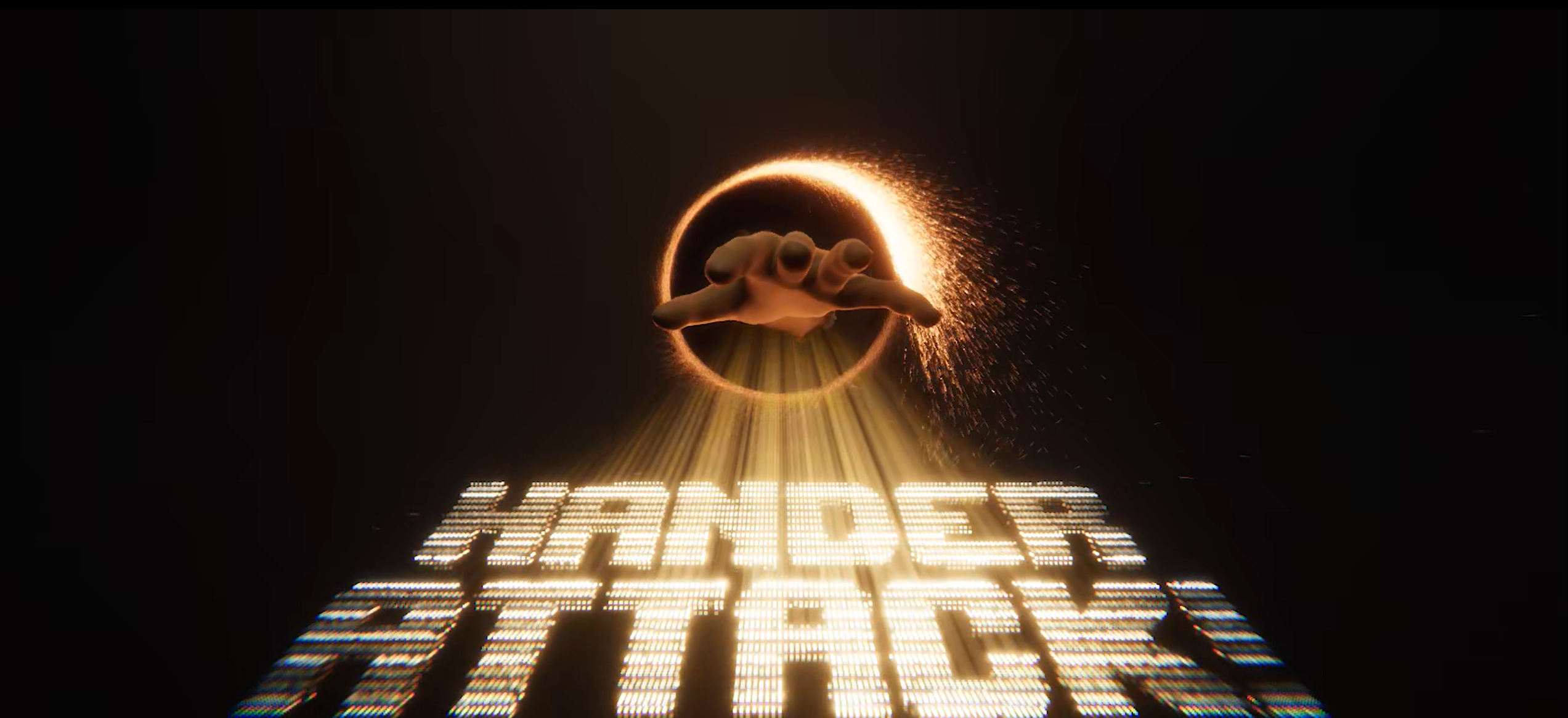
Hander Attack started from a simple “what if” question: What if you could reach into someone else’s room and play with it as if it were a tiny model?
We were inspired by digital twins in industry, where a virtual replica of a place or system is used to monitor and control what happens in the real world. We wanted to bring that idea into mixed reality in a playful way: instead of dashboards and data, you get a small, tangible map of another person’s room, and your hands become the way you interact with it.
We combined that with the tension of classic “hunter vs. runner” games. One person hunts, the other hides, but the twist is that the chase happens across two real rooms, linked together through MR and hand tracking.
What it does
Hander Attack is a two-player mixed reality game for Meta Quest where each player’s real room becomes part of the gameplay.
Each player scans their room; the app builds a miniature 3D map of the space.
The maps are exchanged so you hold a tiny version of your opponent’s room in front of you.
One player plays as the Hander (the hunter), using their tracked hand and a ray over the minimap to locate and tag the opponent.
The other player is the Handed (the one being hunted), seeing a large virtual hand invading their own room and trying to stay out of reach.
In the latest version, we introduced proper rules to make it feel like a complete game:
The Hander gets a brief reveal of the Handed (0.5 seconds every 5 seconds), which forces constant decision-making instead of camping.
The ray has a speed limit: if you swing your hand too fast, it switches off, preventing unrealistic “whip” behaviour.
Visual effects and spatial sound respond to hits, near misses and movement, so even without controllers or haptics, it still feels like something is really happening in your space. A new hand-focused UI and hand-customisation options (like colours) make the hand feel like your character and sidekick, not just an input device.
How we built it
We built Hander Attack in Unity 6 with C#, targeting standalone Quest performance using Universal Render Pipeline (URP).
Environment understanding & minimap
Using the Meta MR Utility Kit, we scan the room and get a JSON description of the environment.
From that data, we reconstruct a simplified layout that becomes both the collision geometry and the miniature map each player interacts with.
Hands and interaction
The core of the experience runs on the Meta XR Core SDK for hand tracking.
Custom logic turns hand poses and ray interactions on the minimap into events that affect the other player’s room (for example: “tagging” a position).
Networking
We use Photon (Fusion) for multiplayer.
After scanning, both devices recreate their local maps from JSON.
When the Hander moves, we:
Convert the ray/hand position into the minimap’s local coordinates.
Send those compact values over the network.
Rebuild the equivalent world position in the remote player’s space, so both players see a consistent chase.
Art, VFX and UI
3D content and simple animations were created in Blender and integrated via Unity Timeline.
VFX Graph provides GPU-friendly particles that can collide with the geometry generated from the room scan.
We redesigned the UI so the hand is the main visual motif: menus, selection states, and colour picks are all built around the idea that the hand is your avatar.
Challenges we ran into
Making hand-only interactions feel impactful With no controllers and no haptics, we had to rely entirely on visuals and sound design to convey impact. It took several passes on timing, animation curves, particle bursts and audio cues to make grabs and hits feel satisfying.
Aligning two different rooms in a shared logic Even though each player is in a different physical room, the game needs a shared reference. Working from the JSON scan, we had to carefully manage coordinate systems so that positions made sense both on the minimap and in each player’s world.
Networking and coordinate conversions The loop of “world space → minimap space → network → remote world space” was tricky. Any mistake in those conversions could cause the hand to appear offset or laggy on the other side, so we spent time debugging and refining that pipeline.
Balancing the game rules Turning a cool prototype into an actual game meant addressing exploits: camping in one spot, flailing the ray around too fast, or never giving the hunted a fair chance. The reveal timer and ray-speed limit emerged from that tuning process.
Accomplishments that we're proud of
We took a hackathon prototype that only worked locally against a basic AI and grew it into a networked, room-to-room multiplayer experience.
We managed to turn the abstract idea of a digital-twin minimap into a mechanic that players understand quickly: the small map isn’t just decorative, it’s your main tool.
We implemented a full pipeline on standalone hardware: scanning, JSON parsing, environment reconstruction, hand tracking, networking and VFX, and kept it running smoothly on Quest.
We created a distinct personality and identity for the project by centring the hand visually and offering personalisation options, so your hand genuinely feels like “your” character.
What we learned
Remote rooms can feel connected in real time. Watching how small movements over a tiny model instantly change what someone else sees in their own room gave us a better sense of how MR can support social presence at a distance.
Hand-tracking–only design forces clarity. Without buttons, you have to be much more intentional about how you signal states, affordances and feedback. That pushed us to think carefully about gesture design, timing, and how we layer audio and VFX.
Robust MR networking is hard but valuable. Working with room scans, local and world coordinate systems and network sync showed us many of the pitfalls of multi-user MR, but also how rewarding it is when everything lines up and “just works”.
What's next for Hander Attack!
In the short term, we’d like to:
Add more abilities and variations for both roles (temporary shields, decoys, scans, slow zones, etc.).
Experiment with different modes: quick 1v1 matches, party playlists, and asymmetrical objectives where the Handed has tasks to complete while hiding.
Polish onboarding and UX so that scanning your room, inviting a friend, and starting a match are as smooth as possible.
In the longer term, our goal is to scale Hander Attack into a full XR online game for young people, where friends can play together even when they’re all at home in different spaces. We imagine a platform where players connect regularly, customise their hands, unlock new abilities, and jump into fast MR chase sessions across their own rooms,turning everyday environments into shared, playful arenas that live on your headset.


Log in or sign up for Devpost to join the conversation.