Inspiration
We wanted to capture the pleasure of playing with a miniature world: leaning closer to look at its details, picking up its characters, and sharing it with friends. Then we wanted to let you race through it.
Hands felt like the natural starting point. Holding reins, turning a steering wheel, and paddling are movements people already understand. We wanted to build on that familiarity and create a racing game you could play comfortably from your chair, with everything within reach.
That idea became Hand Riders.
What it does
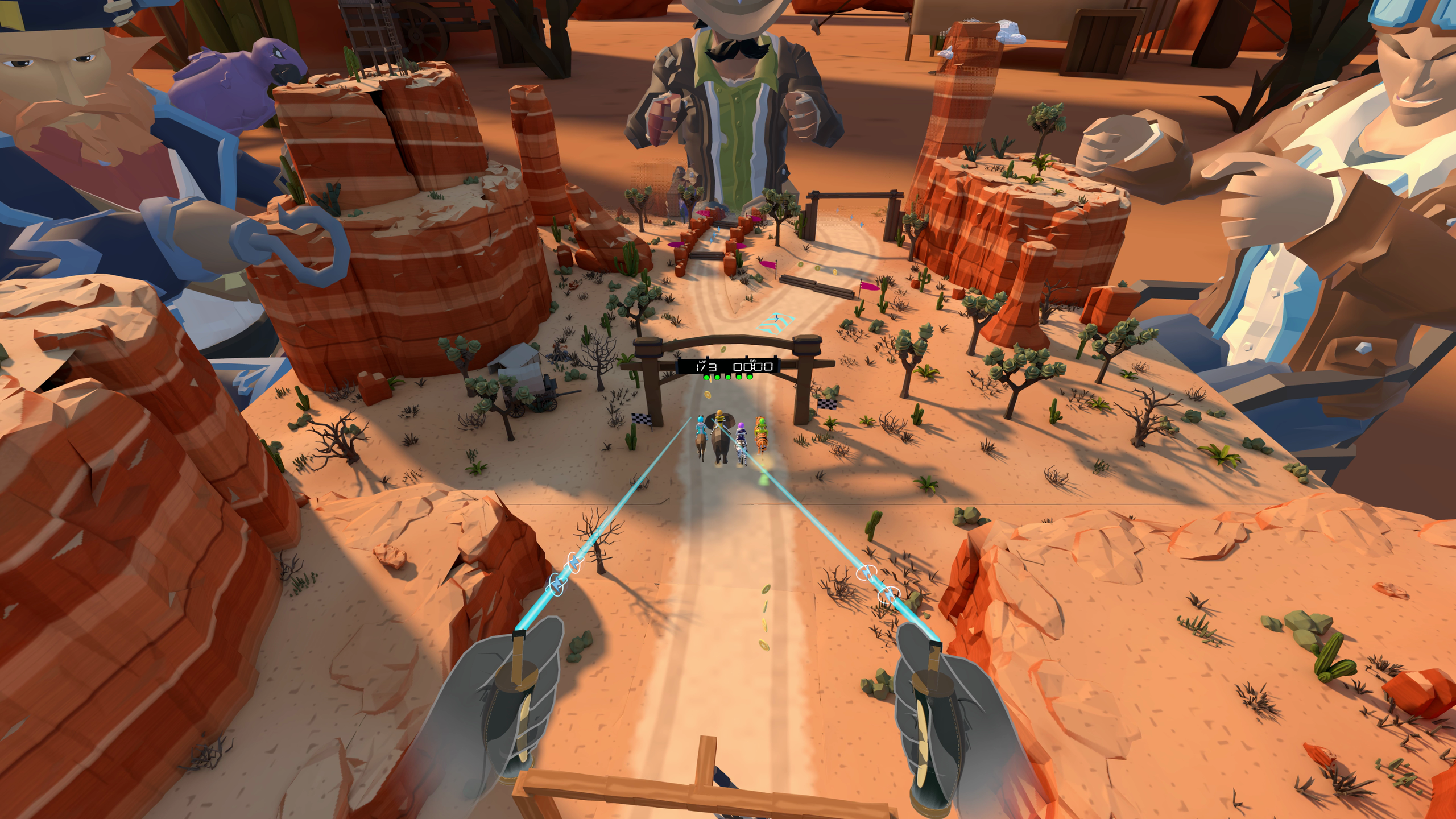
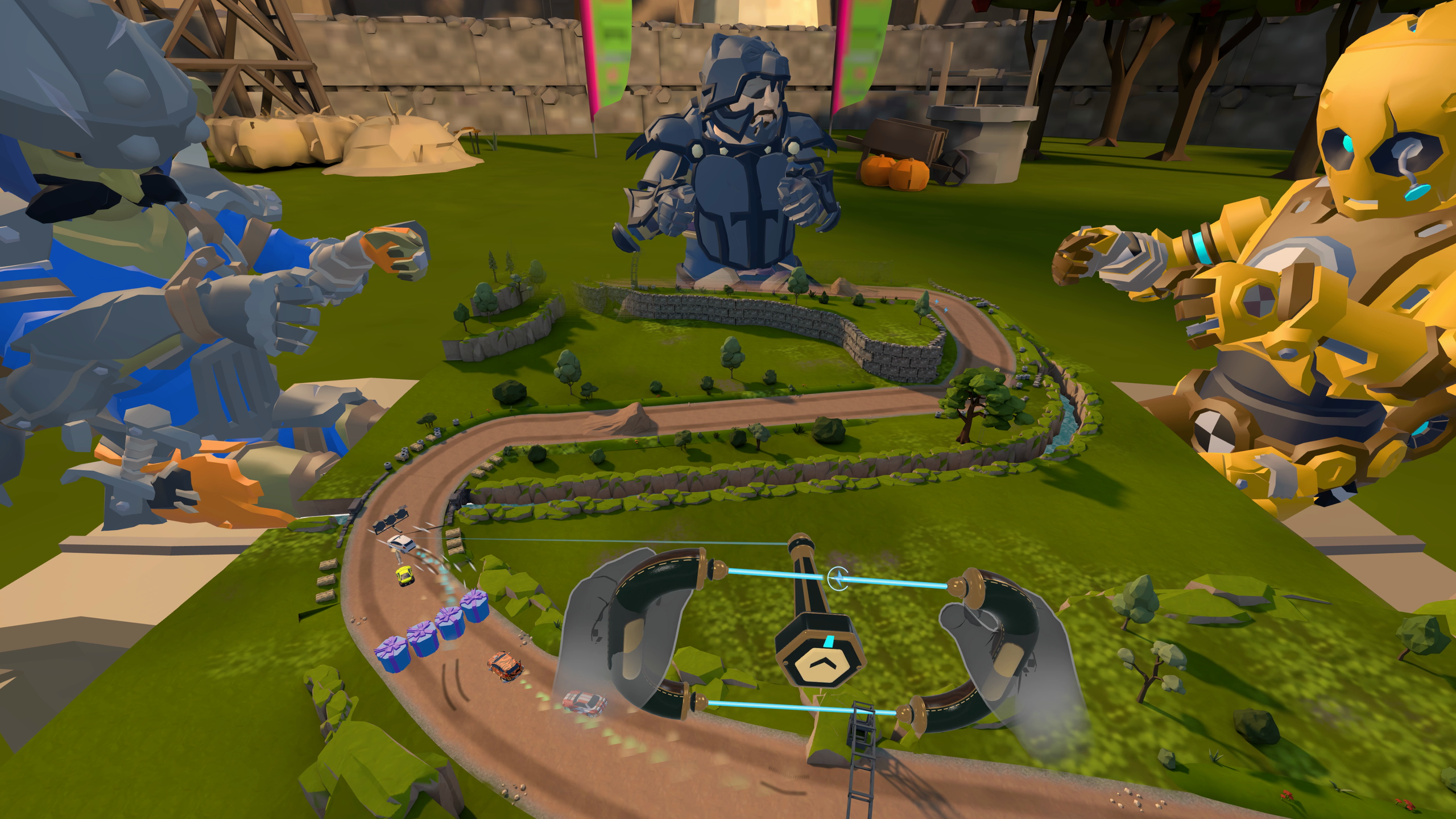
Hand Riders is a seated, hands-first racing game for Meta Quest. Up to four players compete in miniature worlds, while their life-sized avatars sit around the action, talking, gesturing, and reacting to the race.
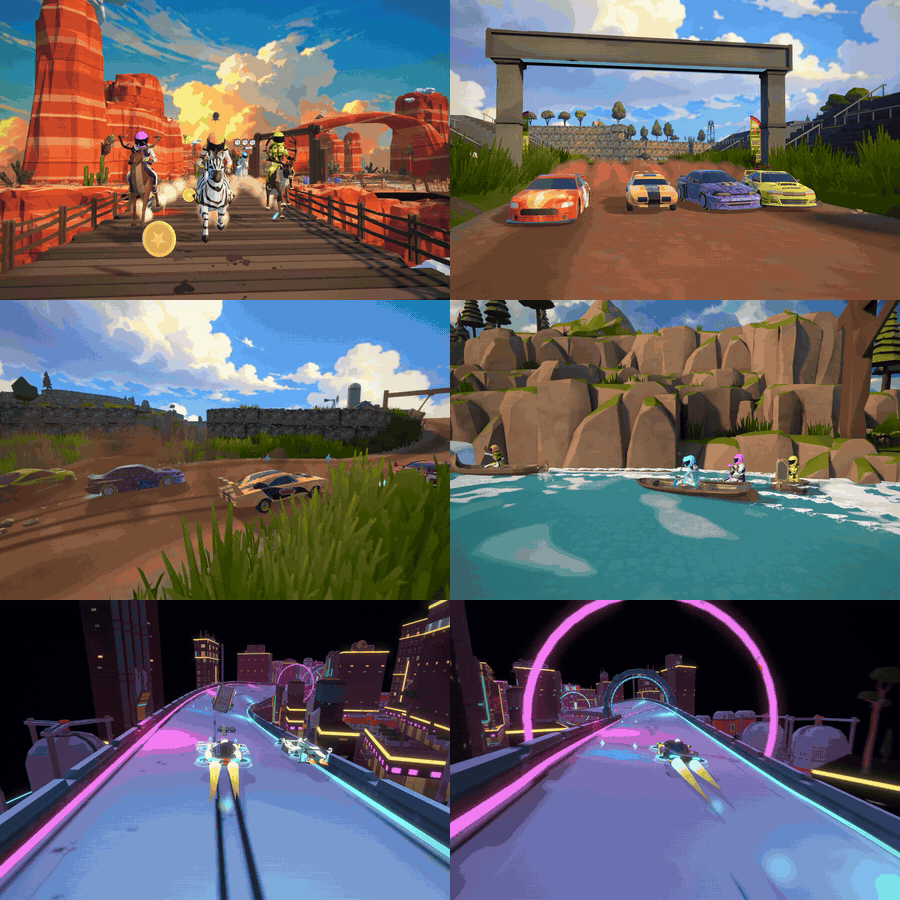
Each of the five worlds introduces a different way to drive:
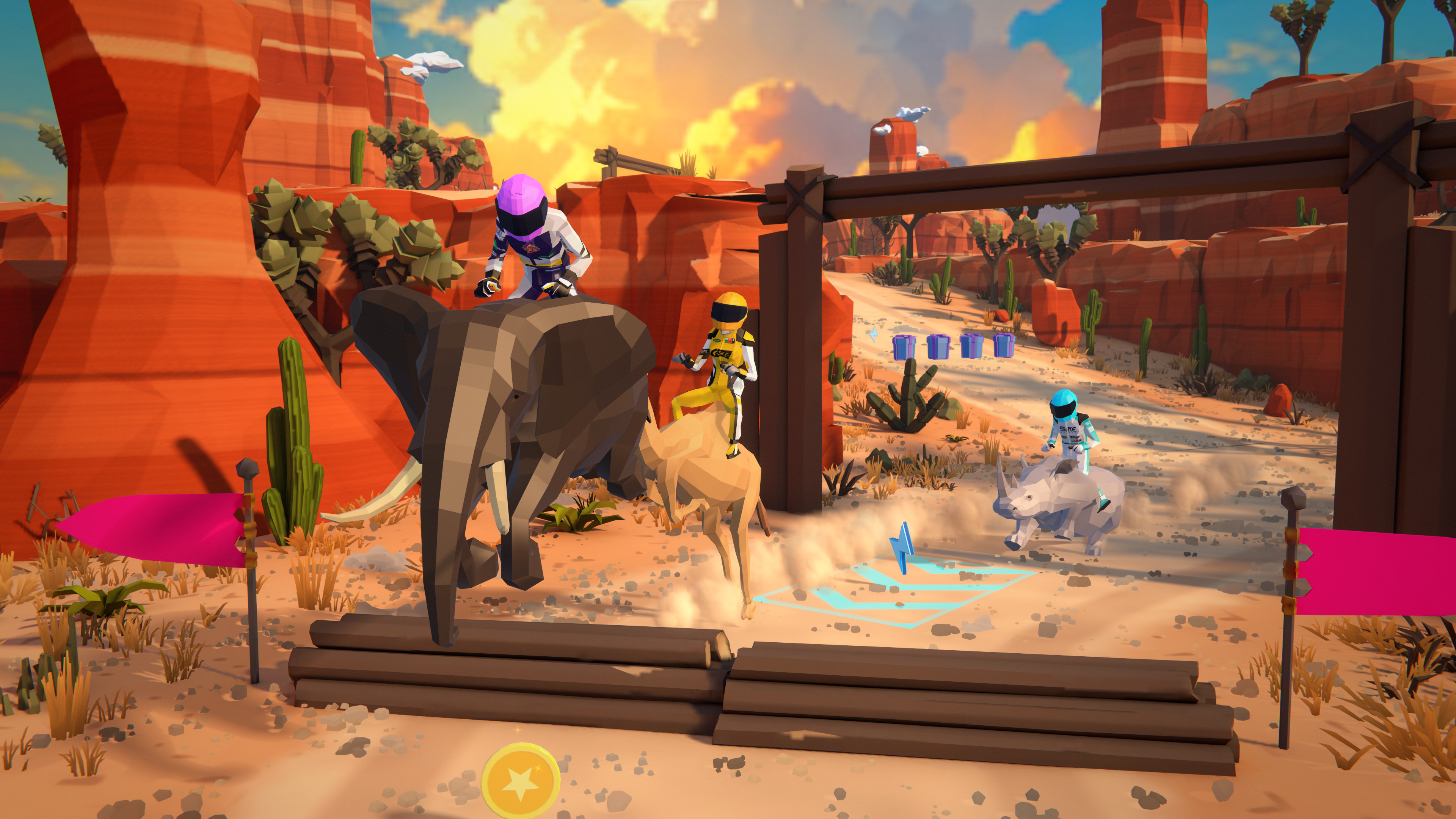
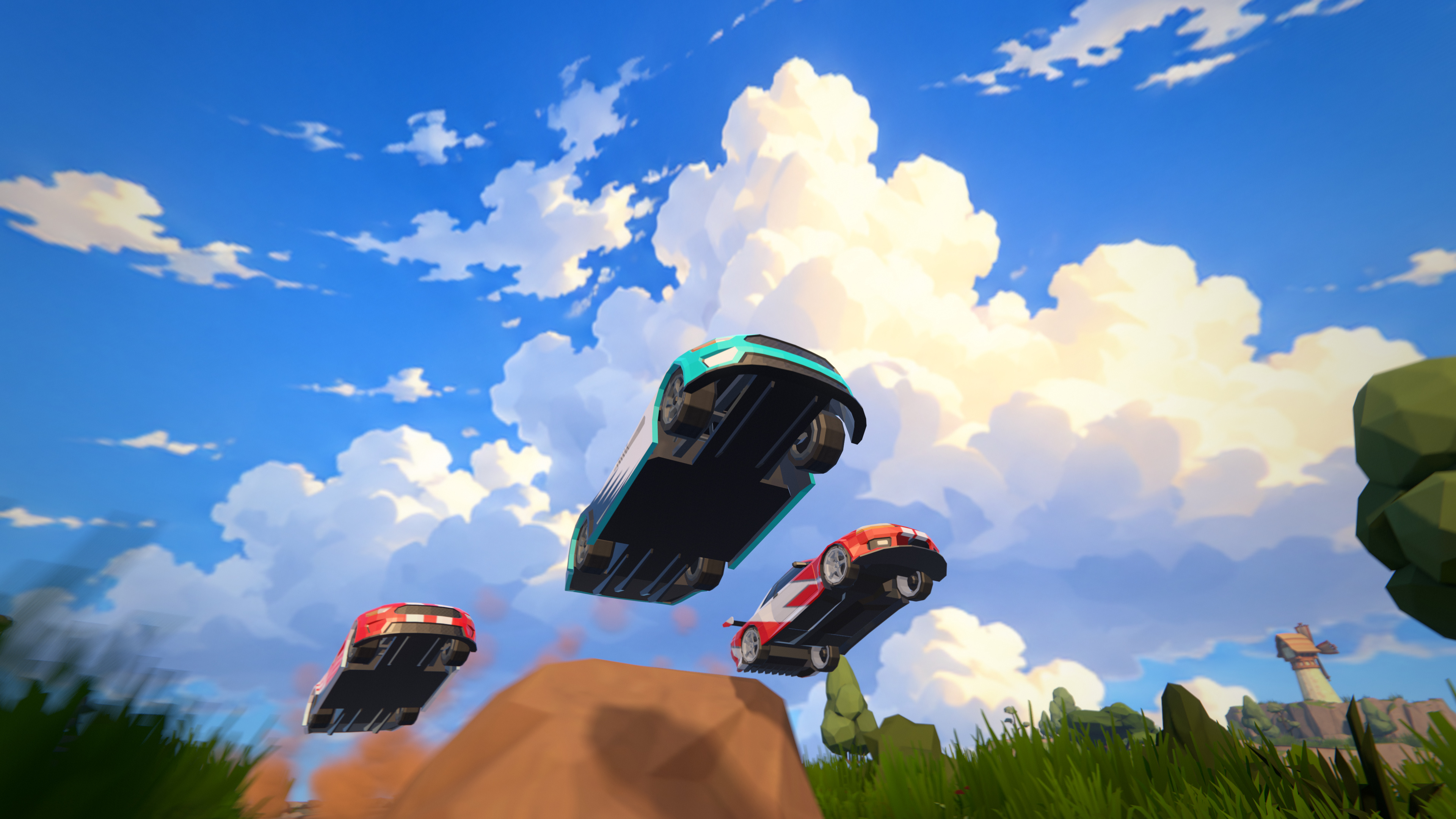
- Canyon: pull the reins to steer your mount, flick them for a boost, and pull both back to jump.
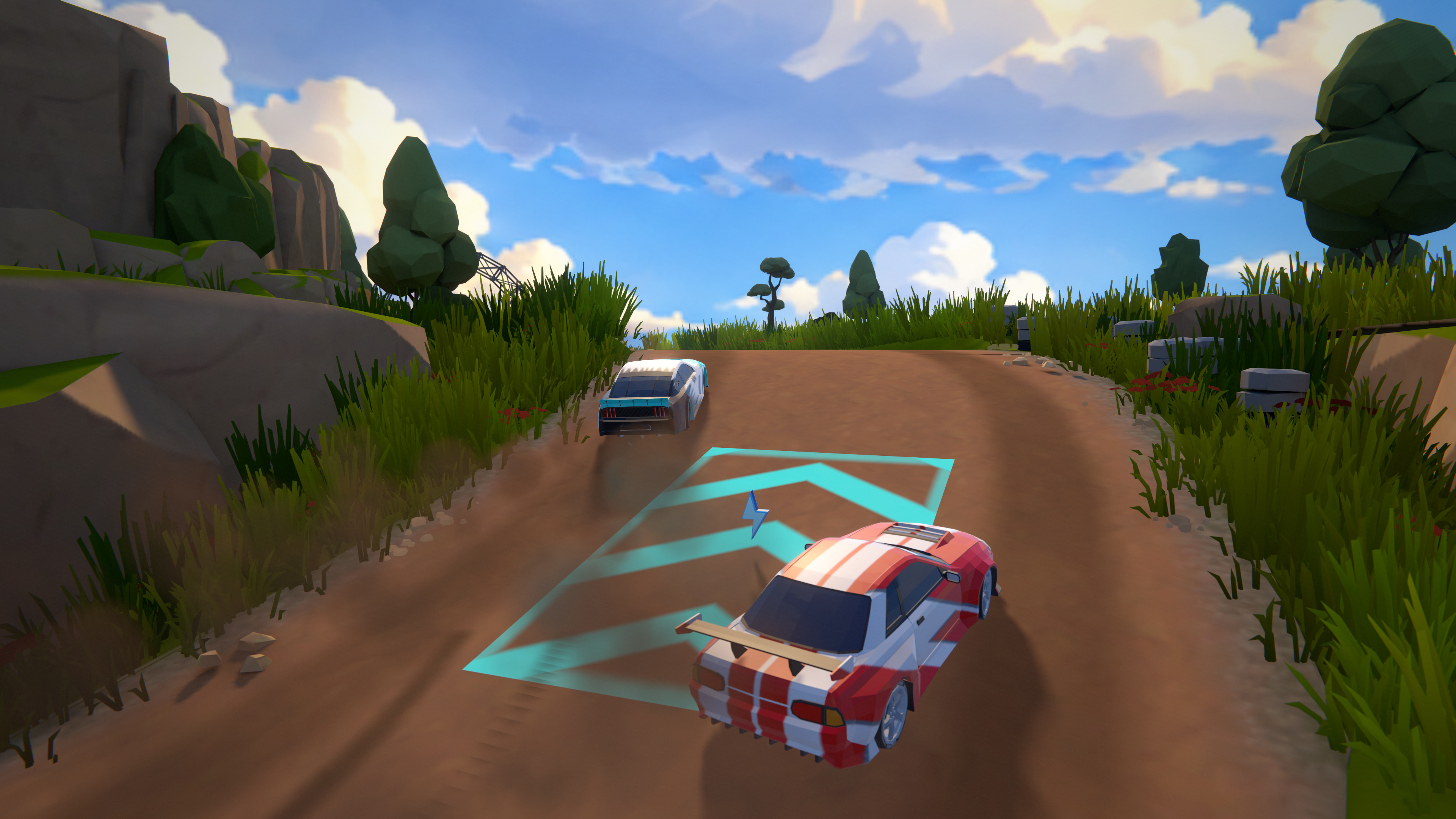
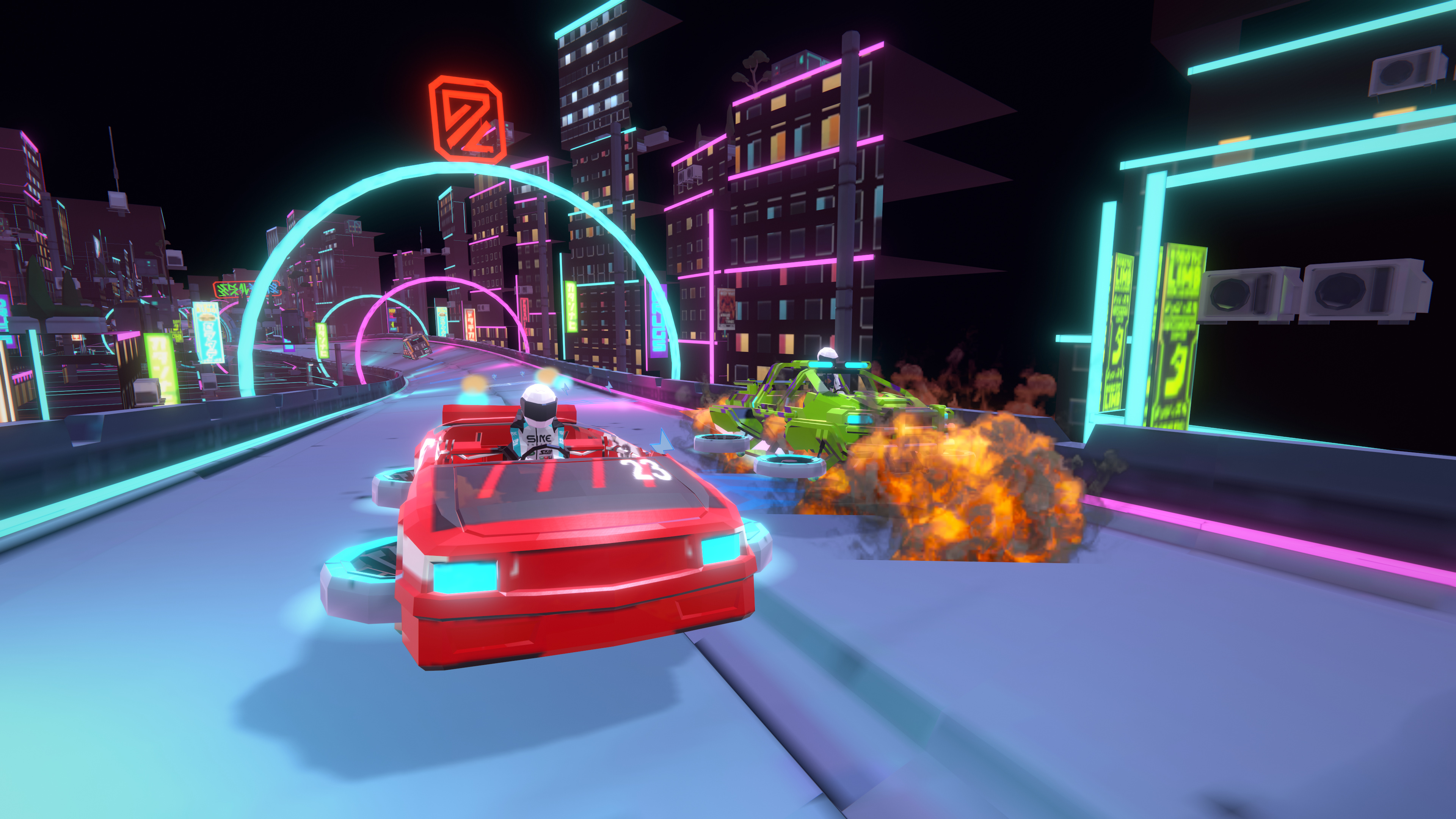
- Meadow Rally: turn a virtual steering wheel, squeeze it to boost, and drift through corners.
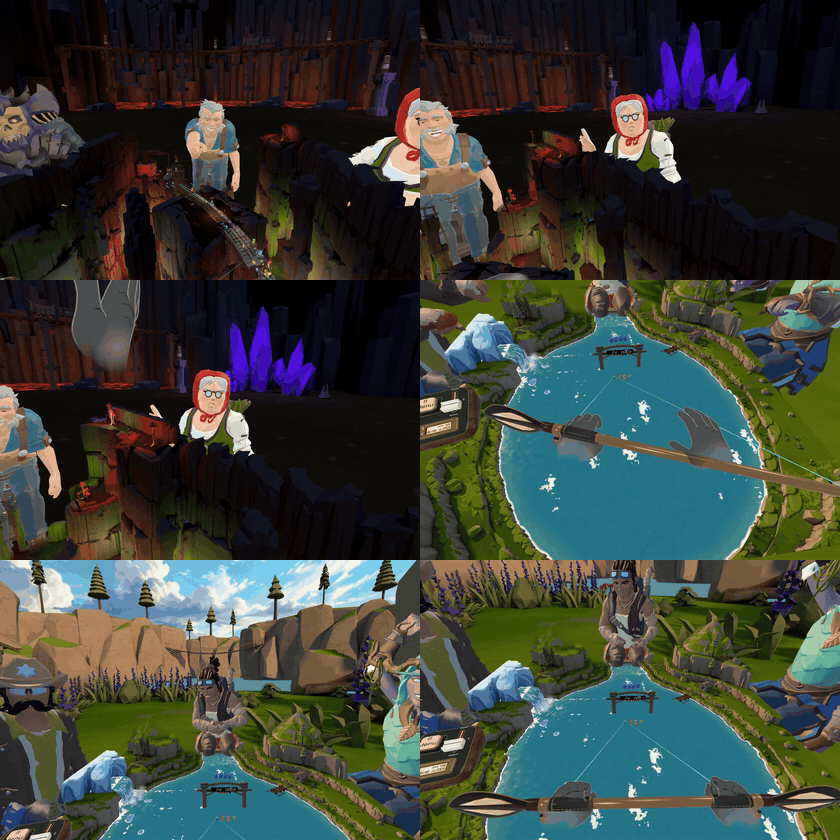
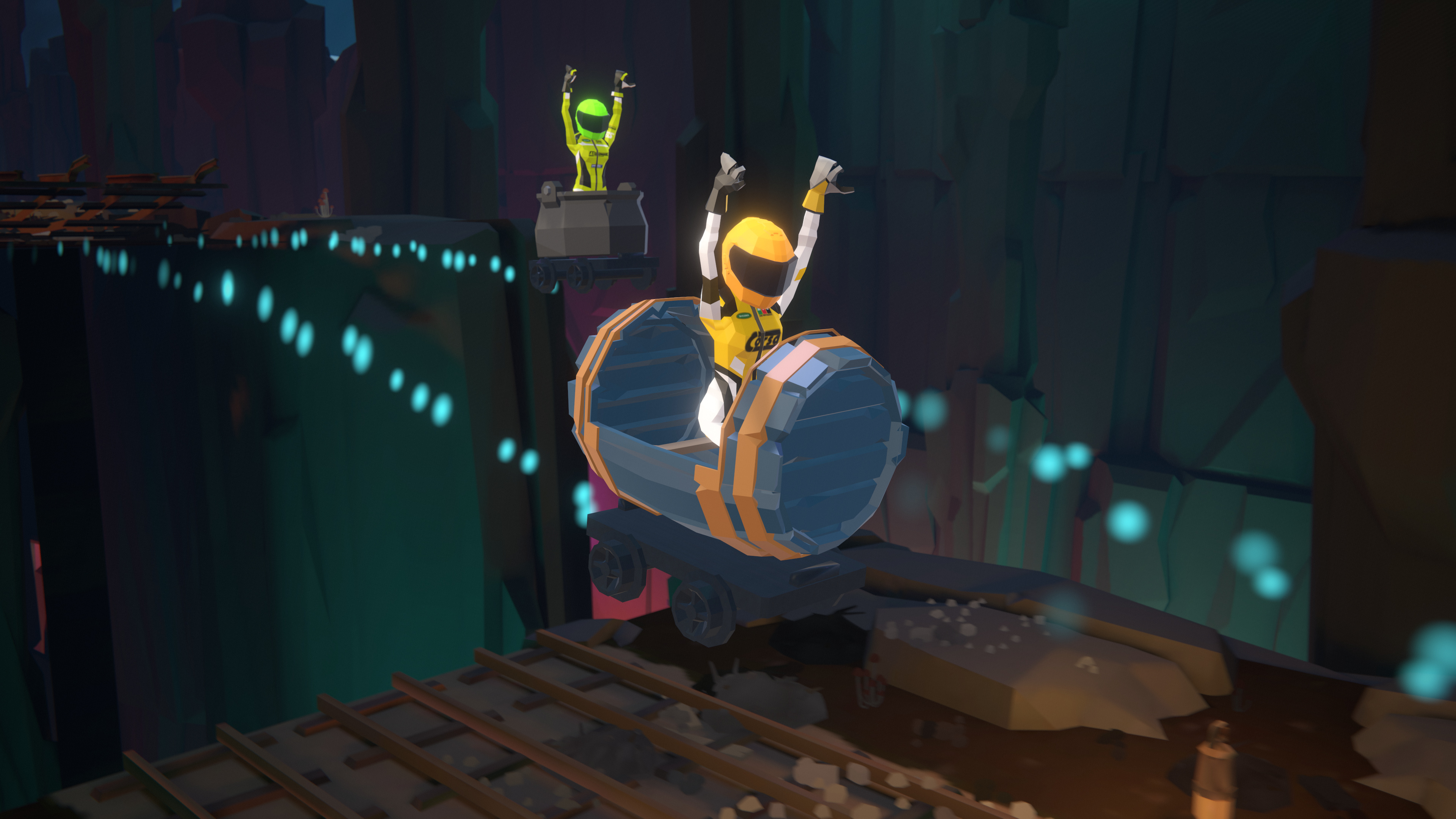
- Mine: tilt your control to change tracks and lift it to jump your mine cart.
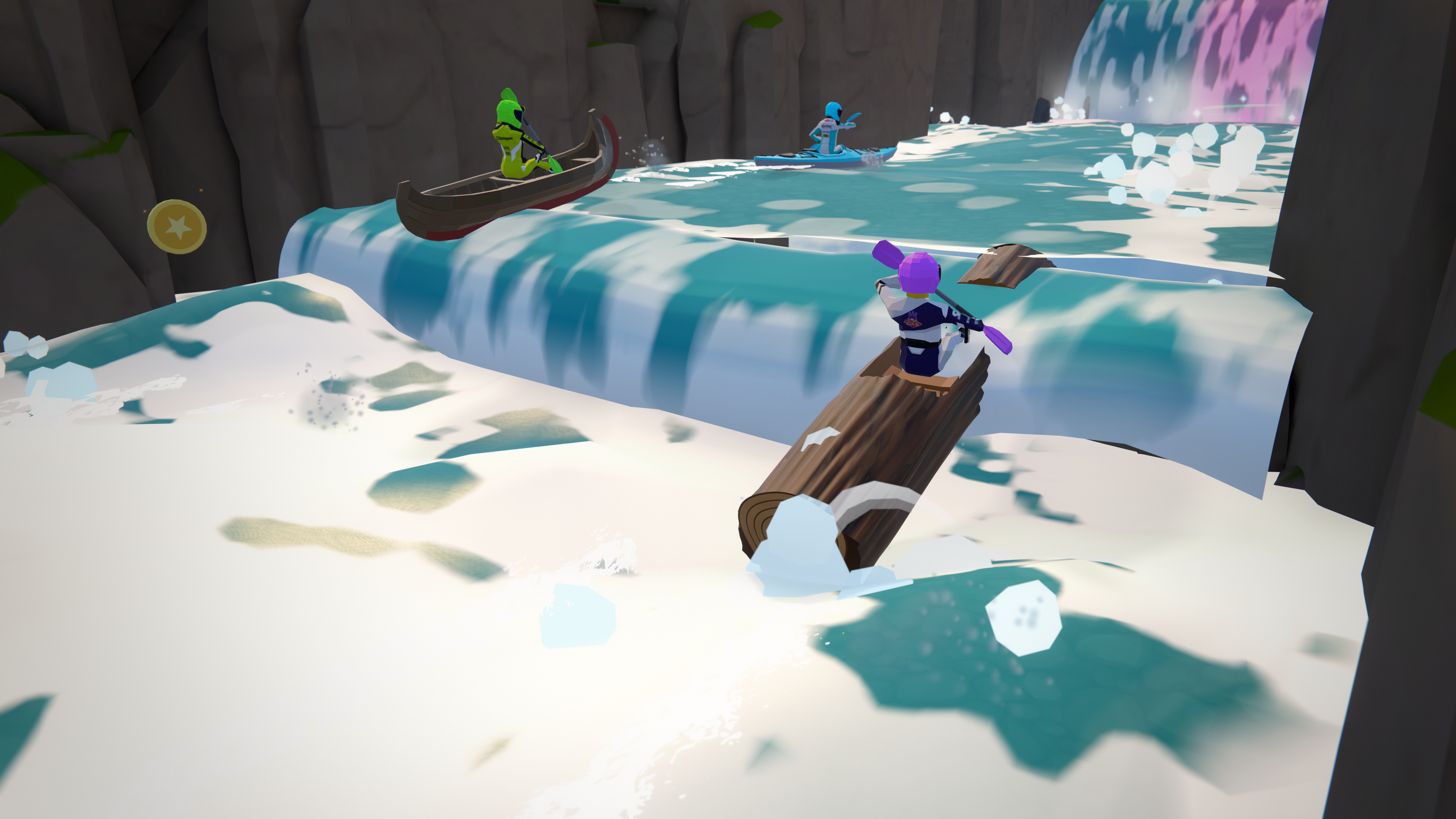
- River: paddle to build speed and steer your boat through the current.
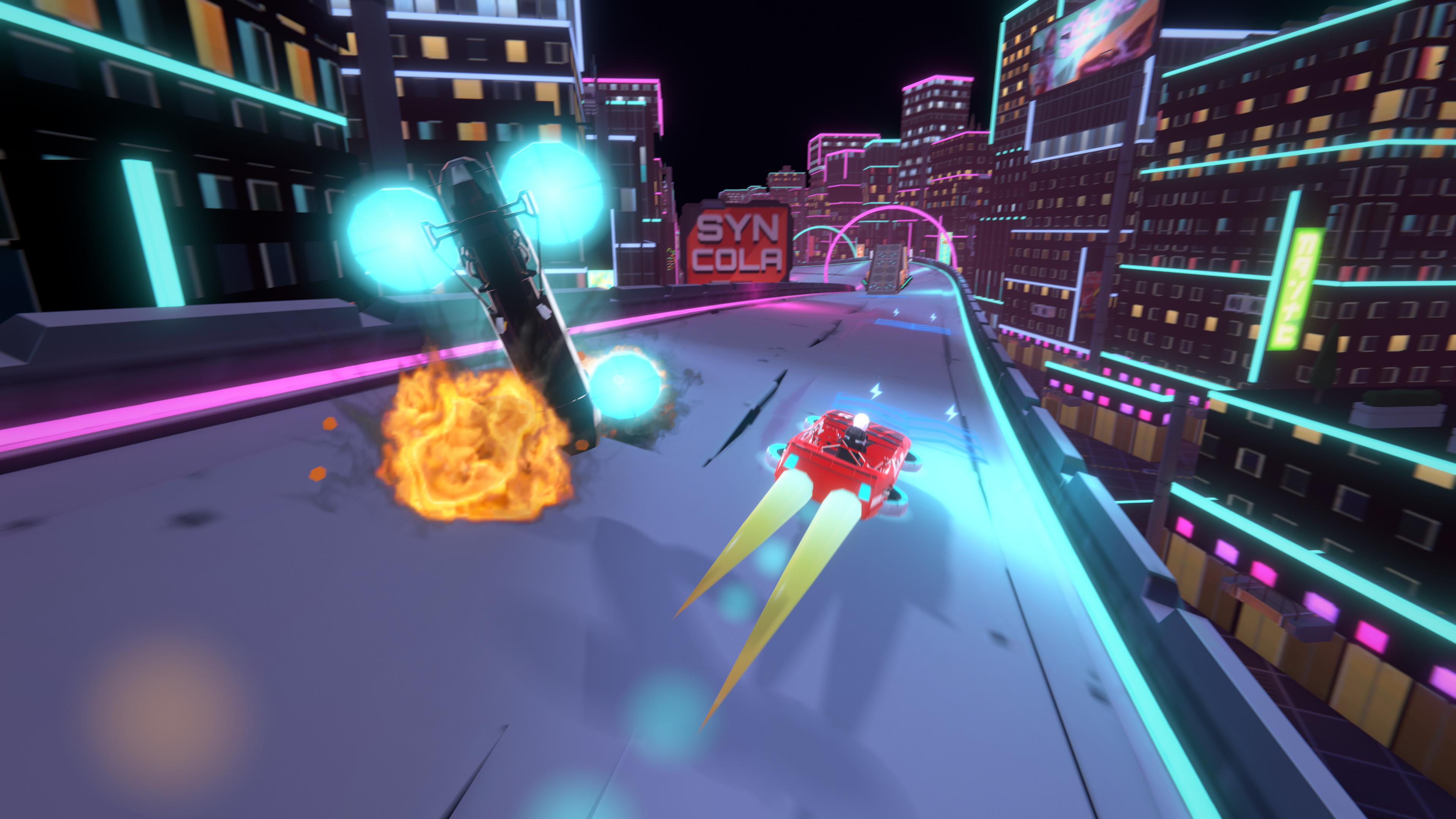
- Sky: control two engines independently to guide your flying vehicle.
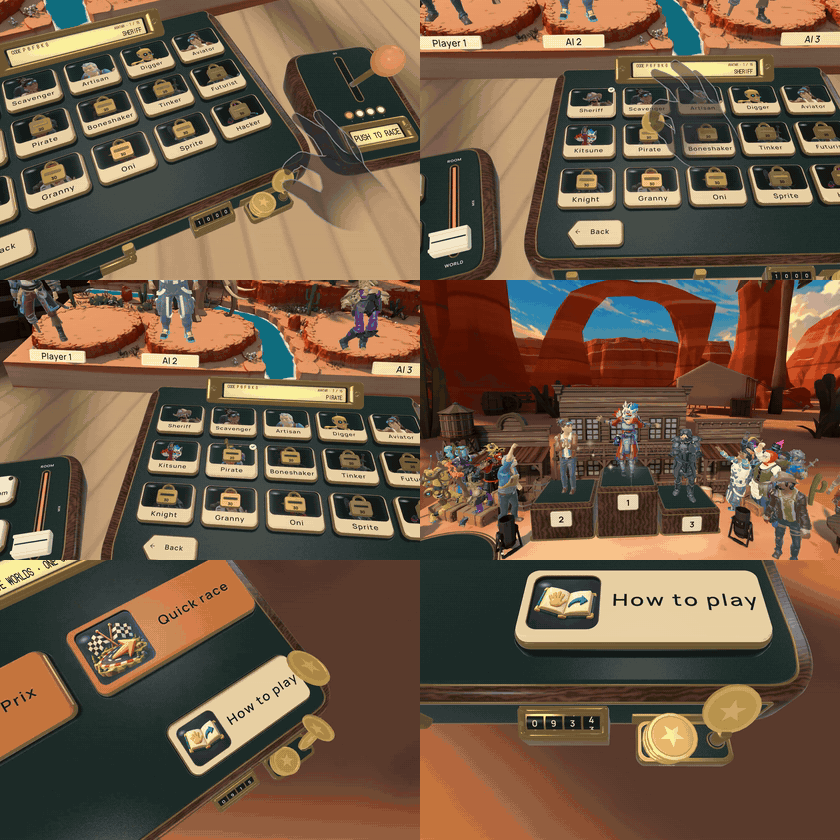
You can play a quick race or take on a Grand Prix across all five worlds. AI rivals fill the empty seats, with different racing personalities and their own reactions. Coins earned through racing unlock characters and vehicle appearances, with 15 characters and 60 selectable mounts and vehicles in the current collection.
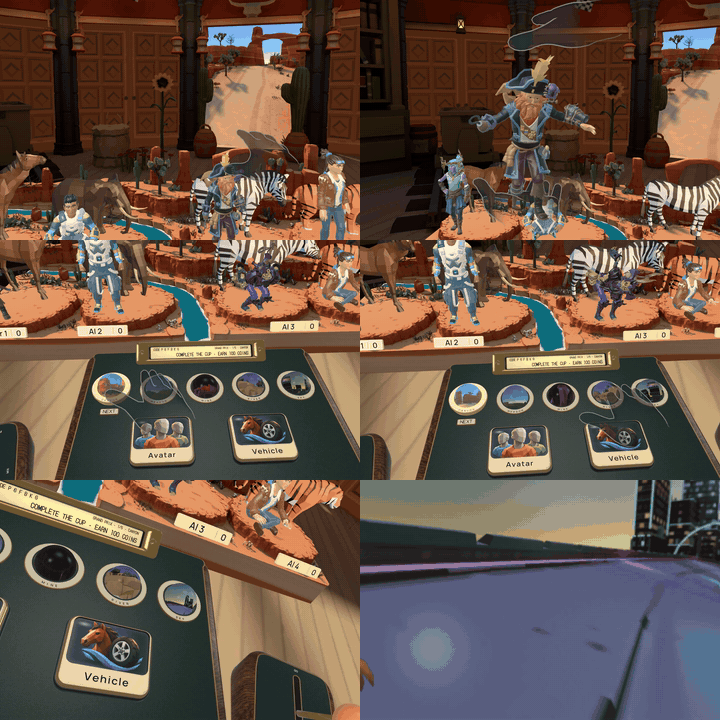
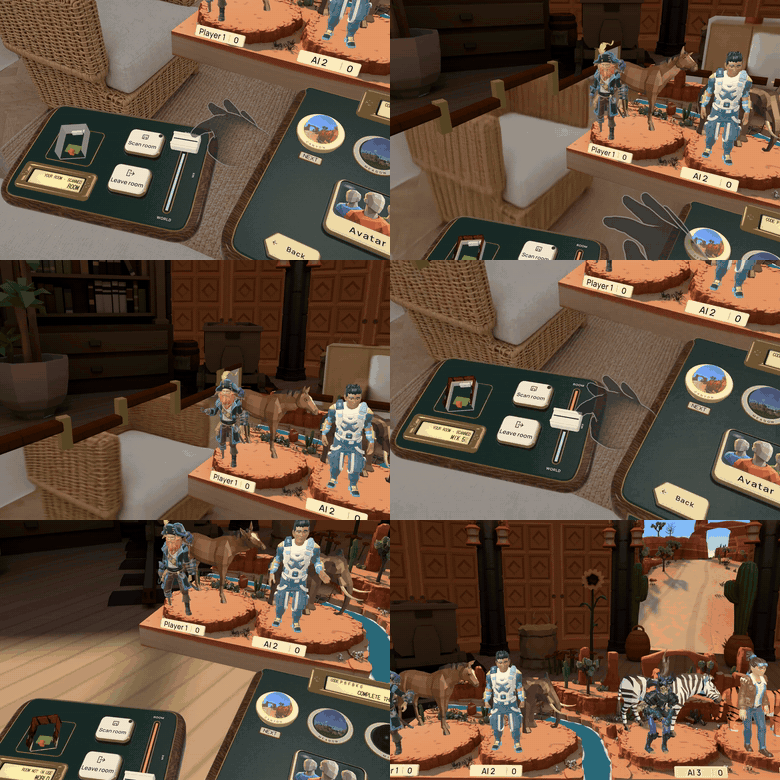
We also wanted the moments between races to be worth exploring. The lobby is a little workshop full of physical controls. You can turn miniature worlds, pick up characters, let them hop onto your palm, and unlock something new by putting a coin into its lock. Nana Oca welcomes you on your first visit and hands you the console.
A physical slider lets you choose how much of your real room remains visible. Spatial anchors remember where you placed the setup.
How we built it
We built Hand Riders in about two months, and generative AI was central to making that ambition possible.
We worked with Codex and Claude throughout development, using them to help implement gameplay, develop shaders and editor tools, investigate bugs, and build automated checks. Generative tools also helped us create character voices and explore visual ideas.
This became a very hands-on process: describe an intention, build something, inspect it, try it in the headset, and revise it. We made the creative decisions and kept adjusting the results until they matched the experience we wanted. AI made it practical to explore and implement much more within the time we had.
The game runs in Unity on Quest, using Meta XR and OpenXR for interaction, MRUK for room understanding, and persistent spatial anchors. FishNet handles multiplayer, with Unity Lobby and Relay connecting players and Dissonance carrying voice chat. Our characters have custom animation, inverse kinematics, and audio-driven lip sync.
We also built tools for publishing the worlds, preparing characters, testing network sessions, and recording repeatable gameplay sequences. Those tools helped us keep working as the project grew.
Challenges we ran into
The hardest part of hand controls was making them feel forgiving. A player may rest their arms differently, move quickly, release one hand, or briefly lose tracking. We had to work on gesture recognition, filtering, grip recovery, and feedback so that the game could follow the player's intention.
Multiplayer added another layer. Your own vehicle needs to respond immediately, while other racers, collisions, projectiles, voices, and avatars must remain coherent across the network.
There was also the challenge of scale. The race happens in a miniature landscape, the other players appear around it at human scale, and the controls stay close to your hands. Making those spaces feel connected took repeated adjustments.
Throughout development, we kept returning to standalone Quest performance. Every animated character, visual effect, and interface detail had to earn its place within that budget.
Accomplishments that we're proud of
We are proud of how much personality emerged from the systems working together: a rival looking toward someone who is speaking, a tiny character balancing on your palm, a rider tumbling after a crash, or a celebration bringing the cast together after a race.
We are especially proud of turning an ambitious idea into this much playable game in two months with generative AI as part of our daily workflow. It helped us bring together five control styles, five worlds, multiplayer, voice, progression, and a physical interface within one project.
The game runs natively on Quest 3 with a stable 90 Hz display refresh rate and a render scale of 1.1, non spacewarp. Seeing all of that running together inside a standalone headset has been the most rewarding part.
What we learned
That AI multiplies whatever you bring to it. With a clear vision and an experienced hand to guide it, it is astonishing. Being able to generate an implementation quickly gave us more opportunities to try ideas and revise them. Choosing what to keep, what to simplify, and what felt right remained a constant part of the work.
We also learned how much natural interaction depends on small details. A familiar gesture still needs the right range, timing, tolerance, and visible response. Often, a small adjustment to a grip or an animation made more difference than adding another feature.
What's next for Hand Riders
Our next priority is to put Hand Riders in more people's hands: watch how they discover the controls, listen to their reactions, and refine comfort, clarity, and multiplayer reliability.
Then come more courses for every world, more ways to ride, and tournaments with friends.
Our current target launch window is February 2027.
Built With
- dissonace
- fishnet
- unity