-
-
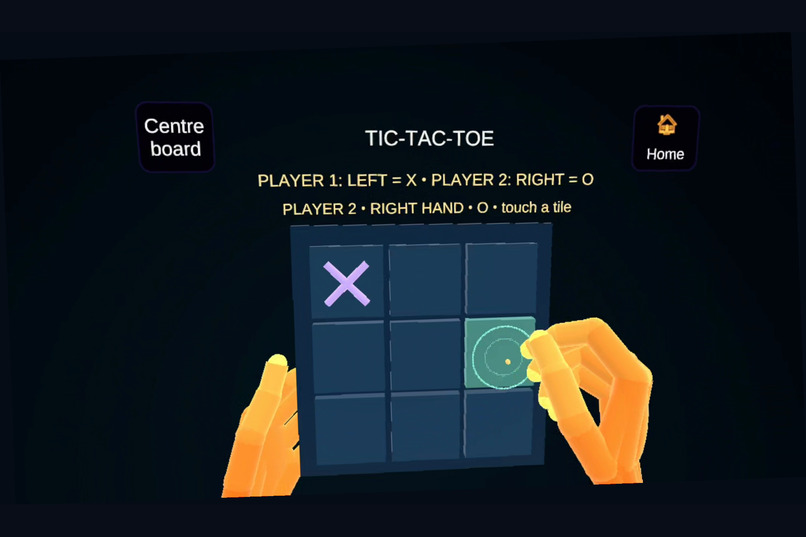
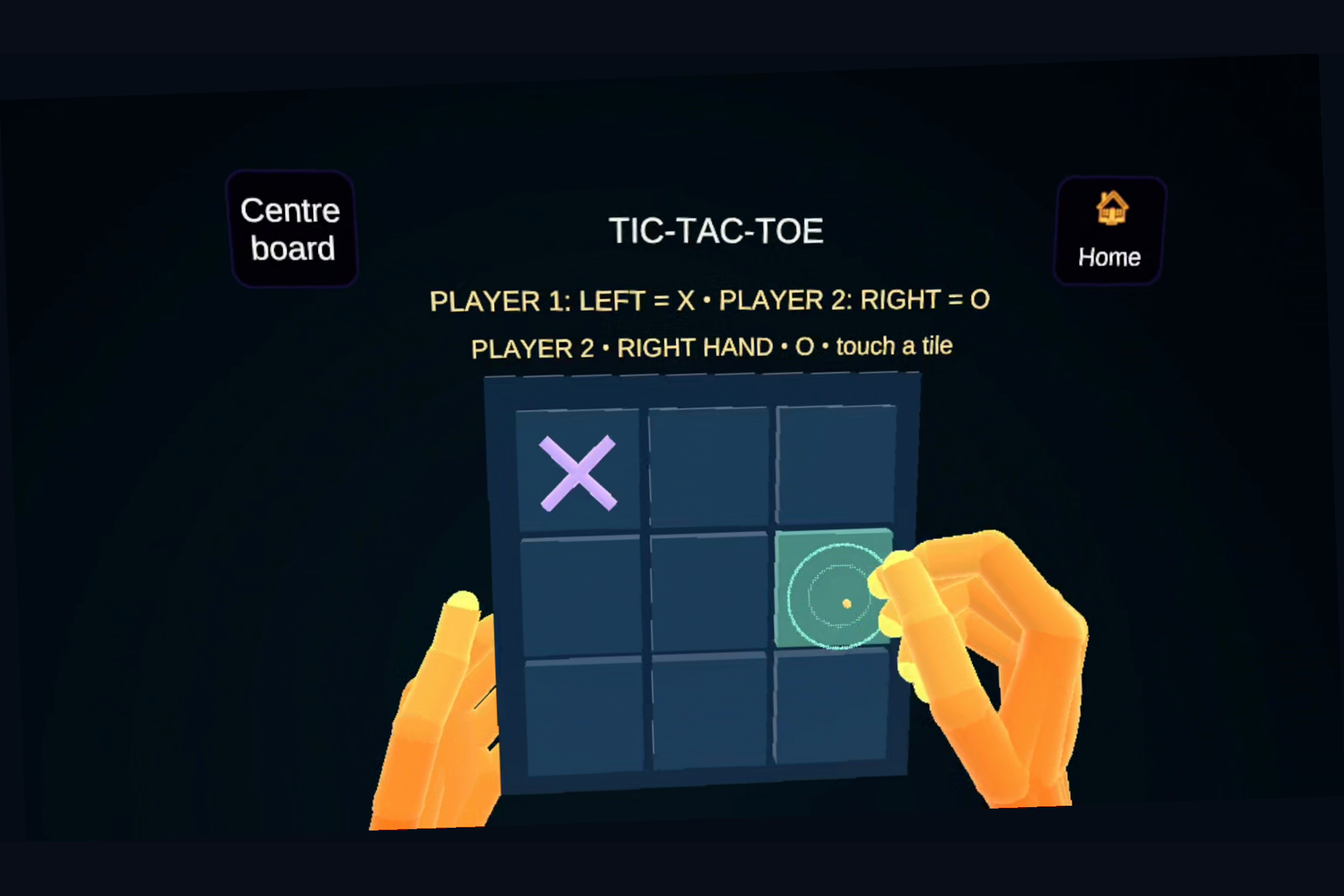
Touch a square with the active hand: left plays X and right plays O.
-
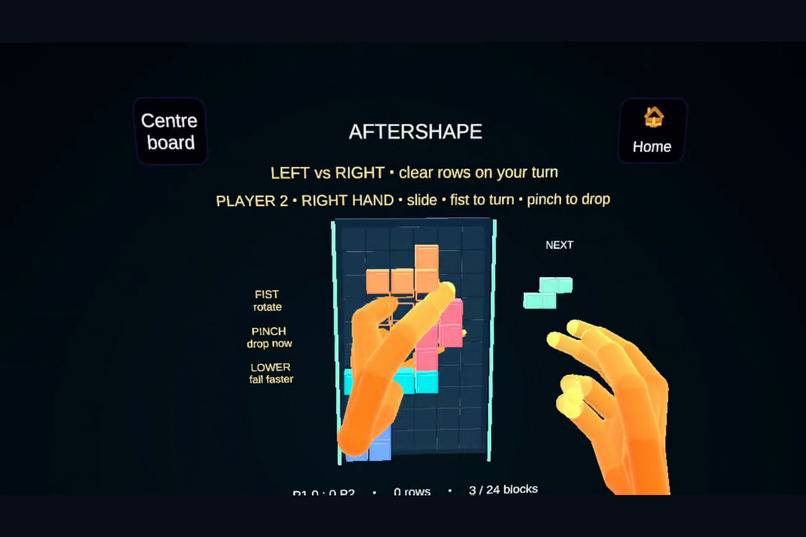
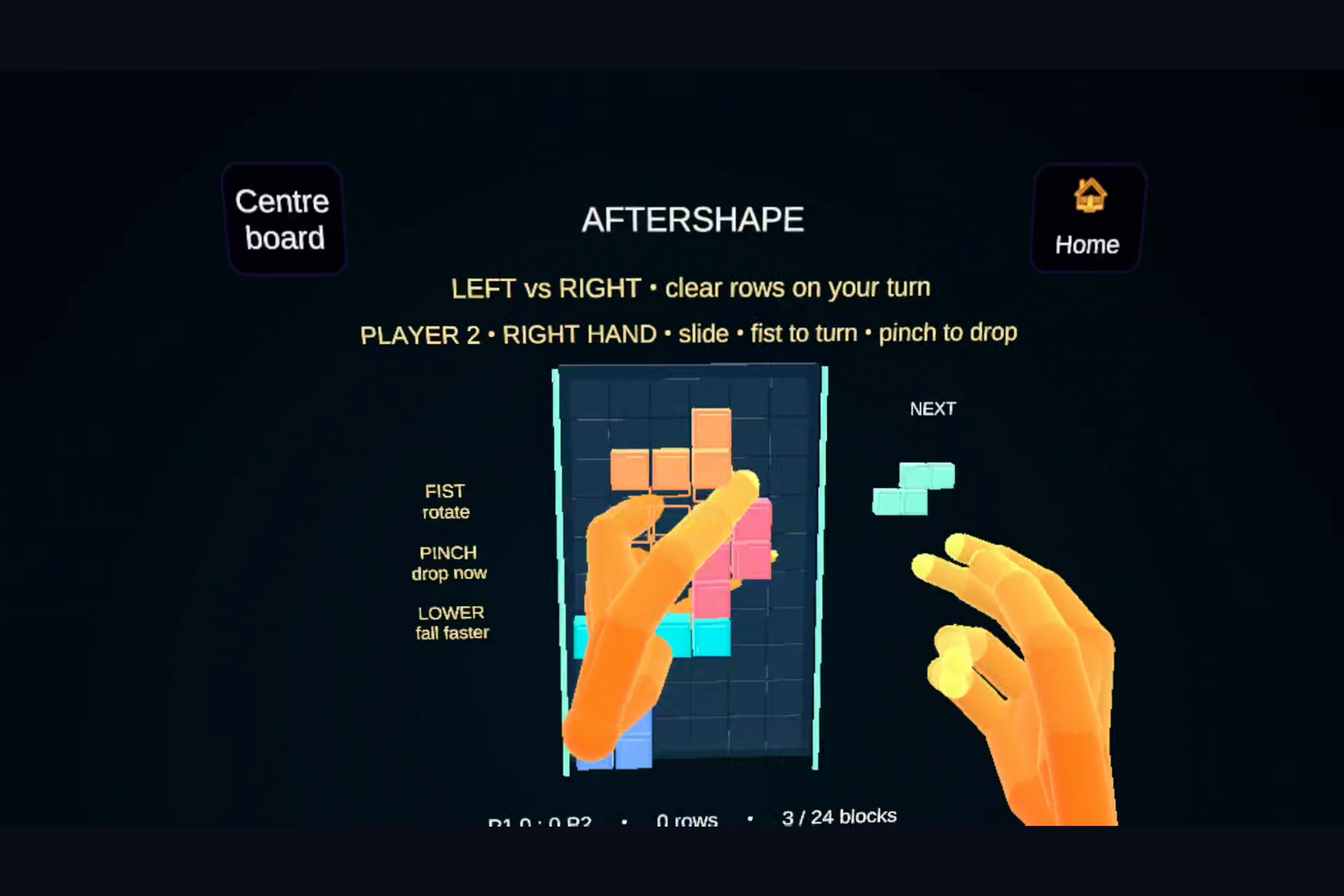
Steer with your hand, make a fist to rotate, and pinch to drop a block.
-
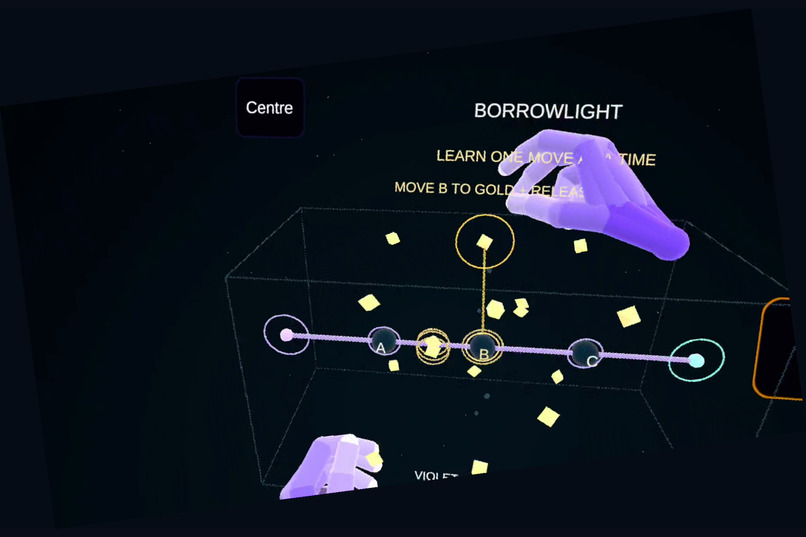
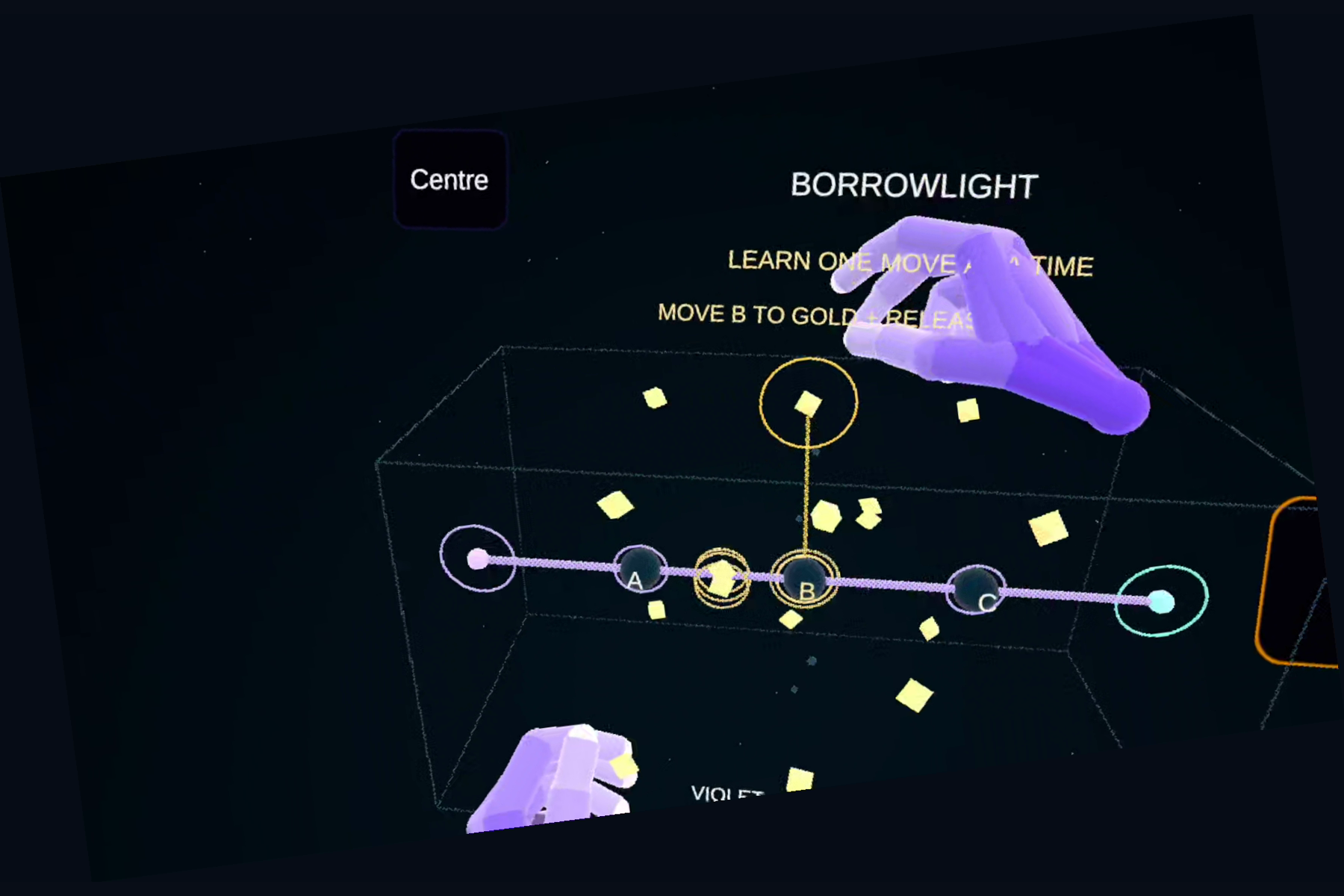
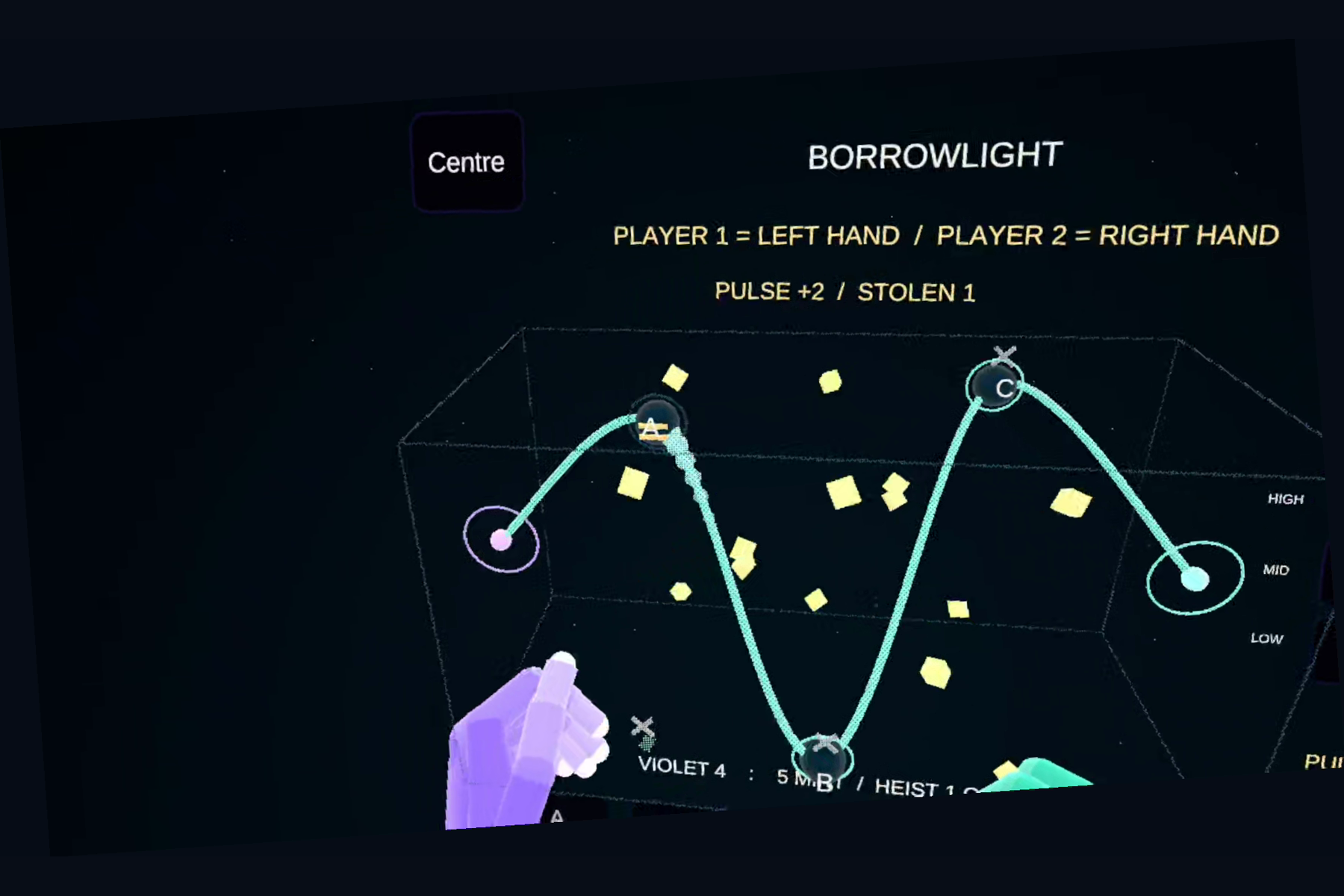
Pinch and move a knot to reshape the shared ribbon before releasing your move.
-
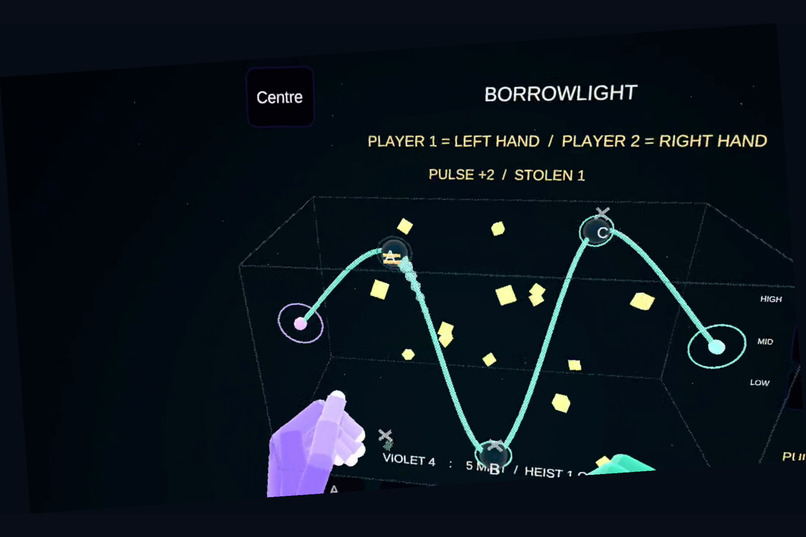
Steal a rival’s light for two points; each stolen light then burns out.
-
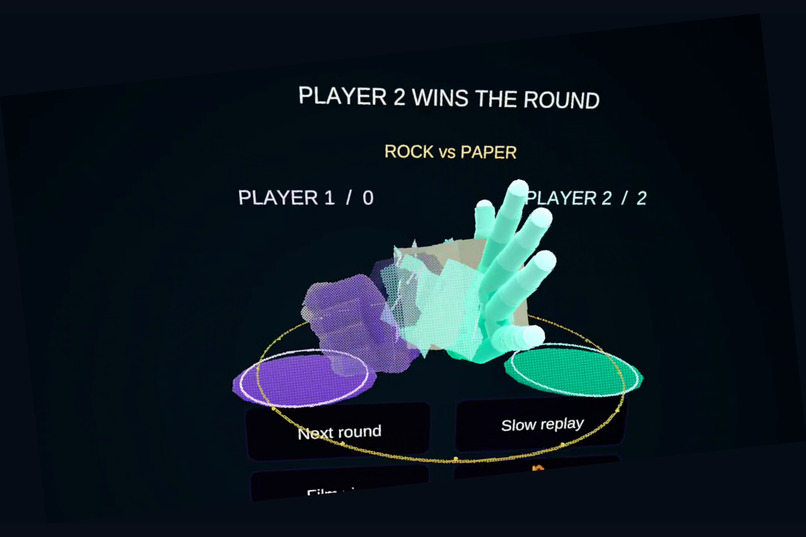
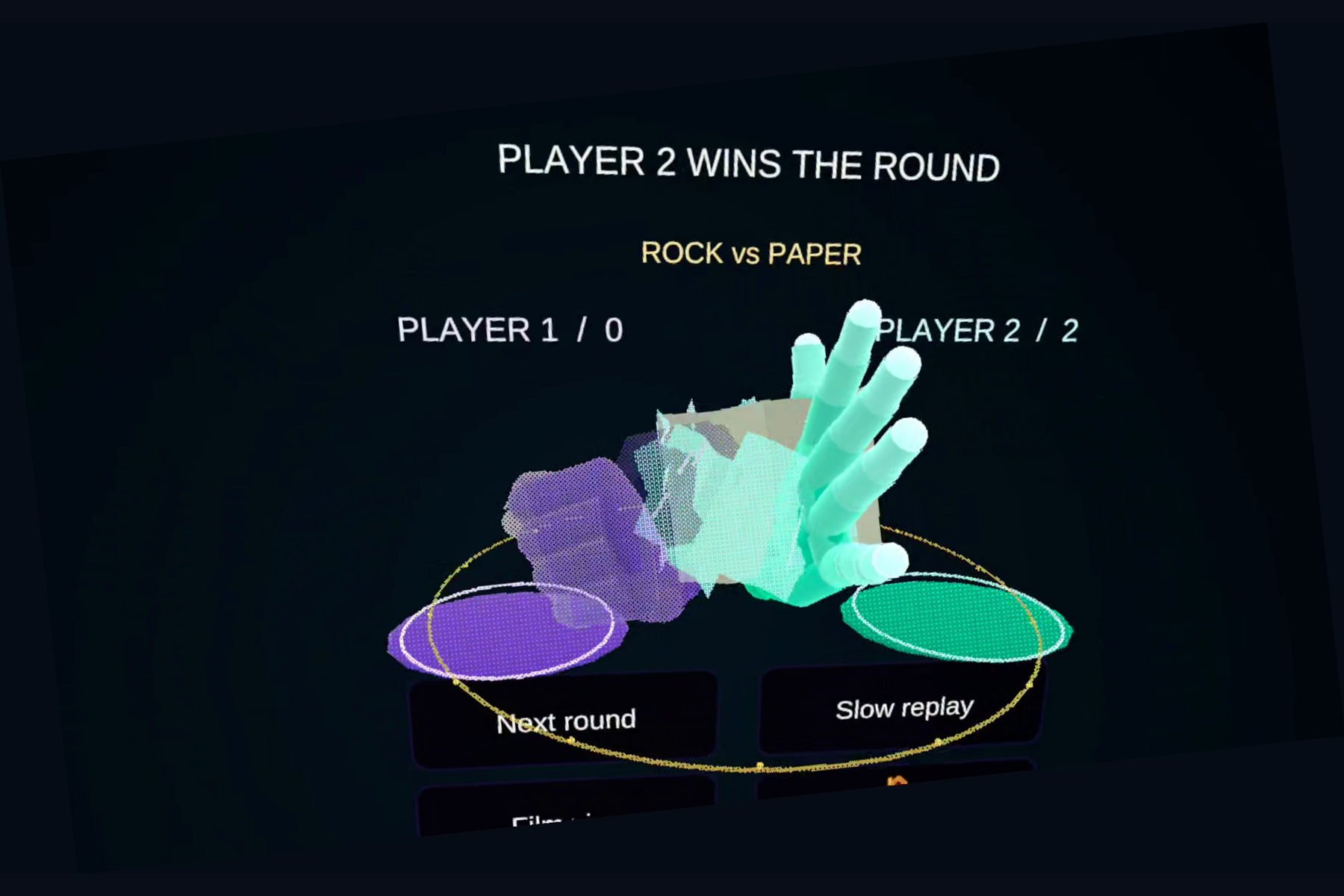
1. Throw with your bare hands and watch the result become an animated clash.
Inspiration
I wanted one headset to offer the tension of a shared tabletop game. My first familiar hand games helped establish the controls, but I wanted the main game to make the player's physical move part of the strategy.
What it does
Hand Duel's main game, Borrowlight, gives two rivals one shared ribbon of light suspended around a field of beacons. Pinch and hold a knot, move it through height and depth, then release. A preview shows the route before a pulse follows it.
Fresh light scores one point. Passing through a rival's claimed light scores two points once, then burns that beacon out. The knot just moved cools for the next turn. Your opponent inherits the shape you left, so every move creates both an opportunity and a risk.
A short lesson teaches a claim and a counter-steal. Play against a rule-based bot, or choose Pass the Quest: two people take turns wearing one headset, with a Ready screen between turns. Either hand works for the wearer. A separate left-hand/right-hand option supports practising both roles or sharing a cast view. A match has two six-move heists with the starter swapped.
Three familiar games round out the arcade: Aftershape falling blocks uses palm steering, fist rotation and a pinch to drop; Tic-tac-toe accepts fingertip touches; Rock Paper Scissors recognizes actual throws and replays their clash.
How I built it
The standalone Unity/C# app uses Meta XR, OpenXR and Unity XR Hands. Procedural geometry and instanced rendering draw the field and boards. Deterministic game models separate scoring from input and visuals. Borrowlight requires no PC pairing, network or AI service.
Challenges and learning
Removing a separate launch button made the gesture clearer, but required filtering pinch flicker, cancelling on tracking loss and preventing duplicate commits. Headset handoff also needed explicit readiness and safe focus handling. Ownership letters, spent-light crosses and cooling markers supplement color.
The current build passed 80 EditMode checks and 21 simulated gameplay flows. An earlier 0.5.4 Quest 2 rendering probe averaged 71.8 FPS with simulated hands; it is not a current physical-capture benchmark. A real Quest 2 recording demonstrates both hand roles by one wearer. The latest patch improves small-target touch and pause recovery. The owner confirmed its buttons and native recording work reliably. Independent two-person and Quest 3/3S testing remain next steps.
What's next
I want to observe uncoached matches, improve the most common input or teaching friction, and tune the bot's counterplay. The aim is a compact duel people can teach each other and return to for a rematch.
