-
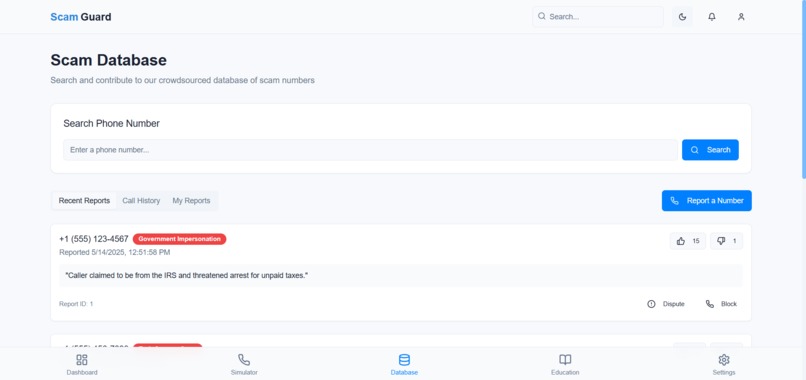
Database
-
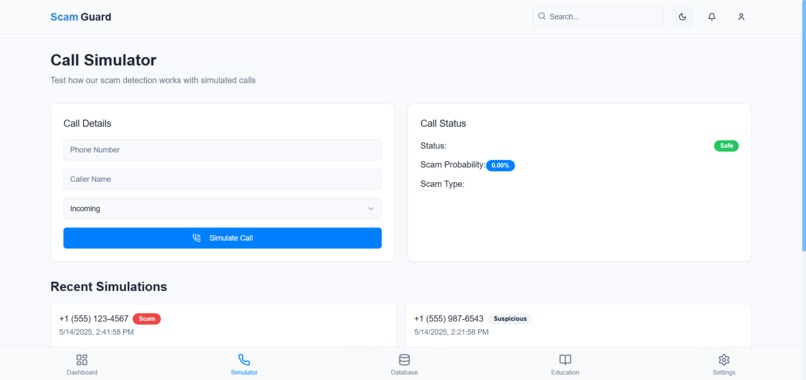
Simulator
-
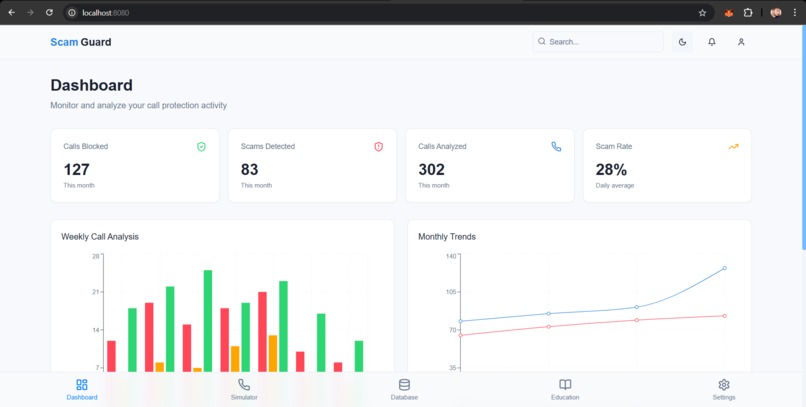
Dashboard
-
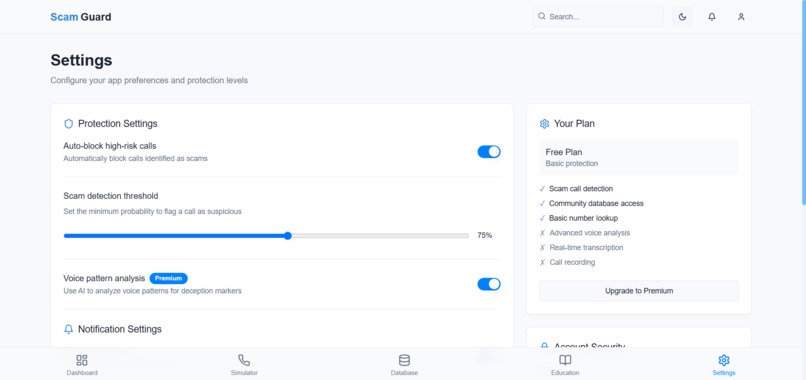
Settings
-
Education
Inspiration
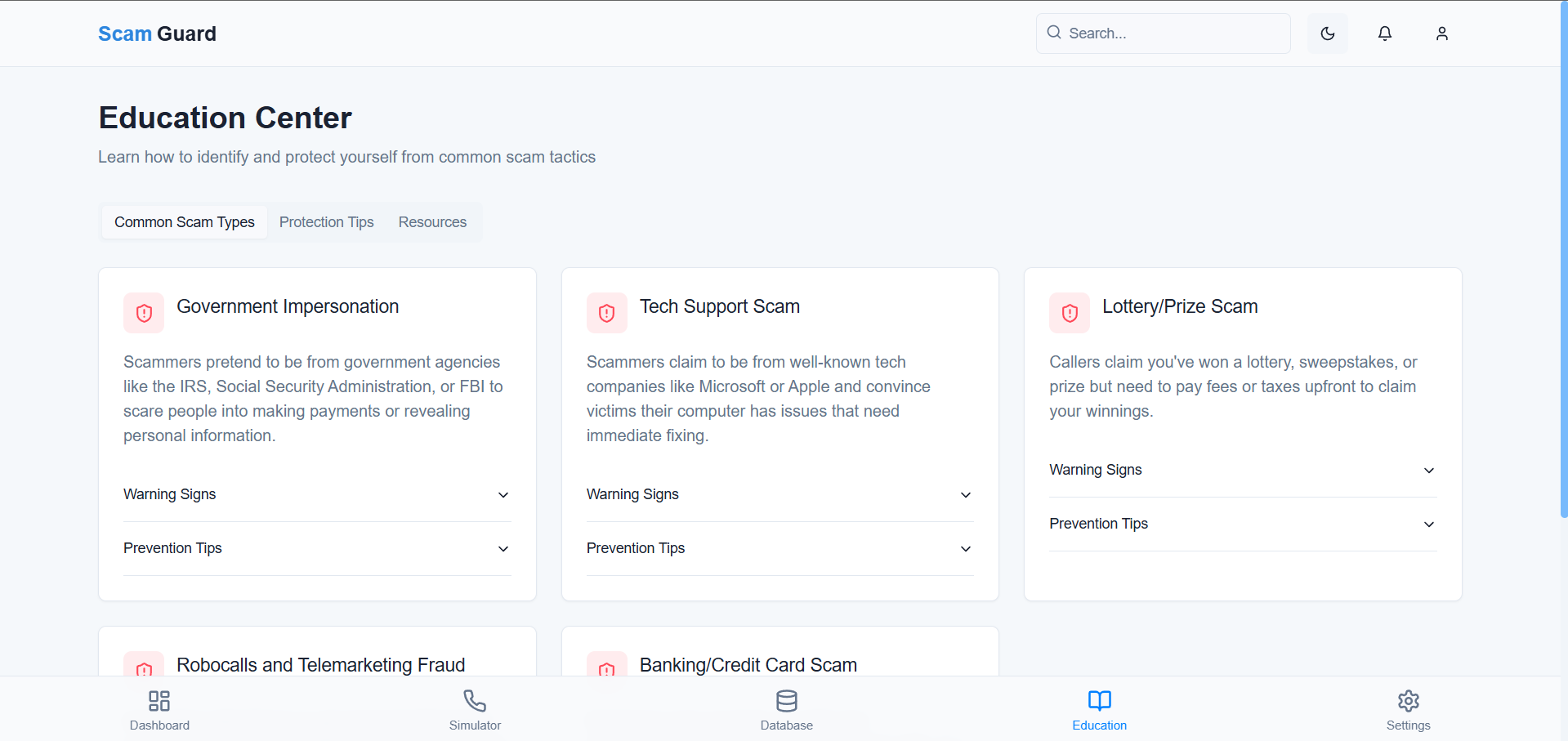
Scam calls have become a daily nuisance and a serious threat to personal safety, financial security, and digital trust. From fake IRS agents to lottery scams and impersonation tactics, scammers have grown more convincing—especially over voice calls. We wanted to build a solution that goes beyond simple number blocking and leverages the power of AI to analyze what’s being said in real-time. Our goal was to create an intelligent, proactive tool that detects and flags scam behavior before users get trapped.
What it does
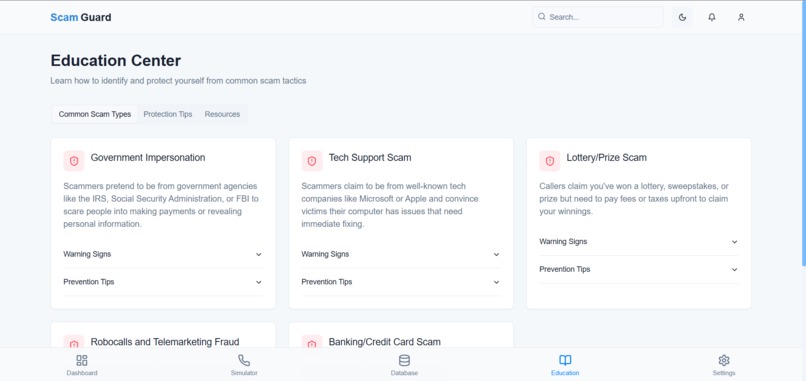
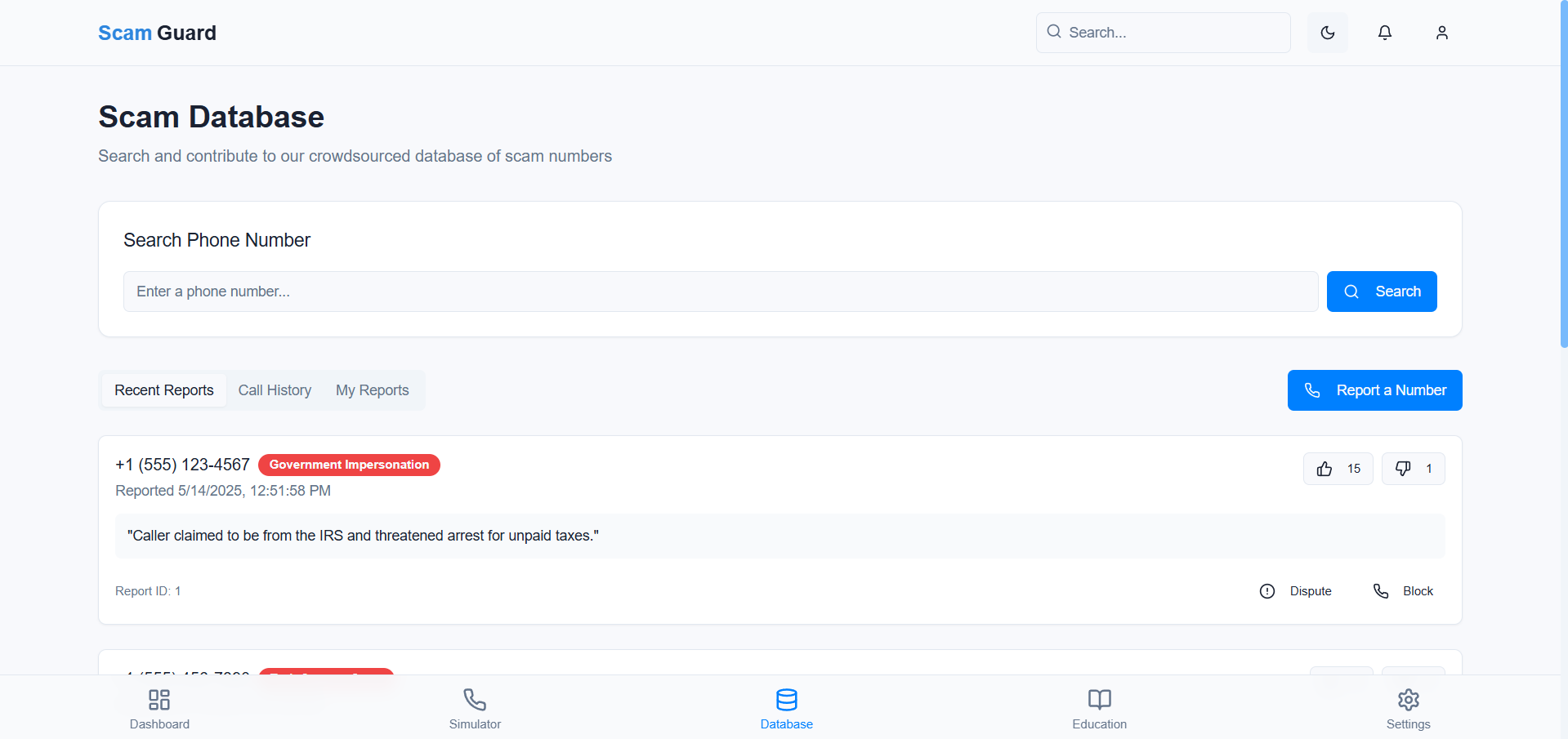
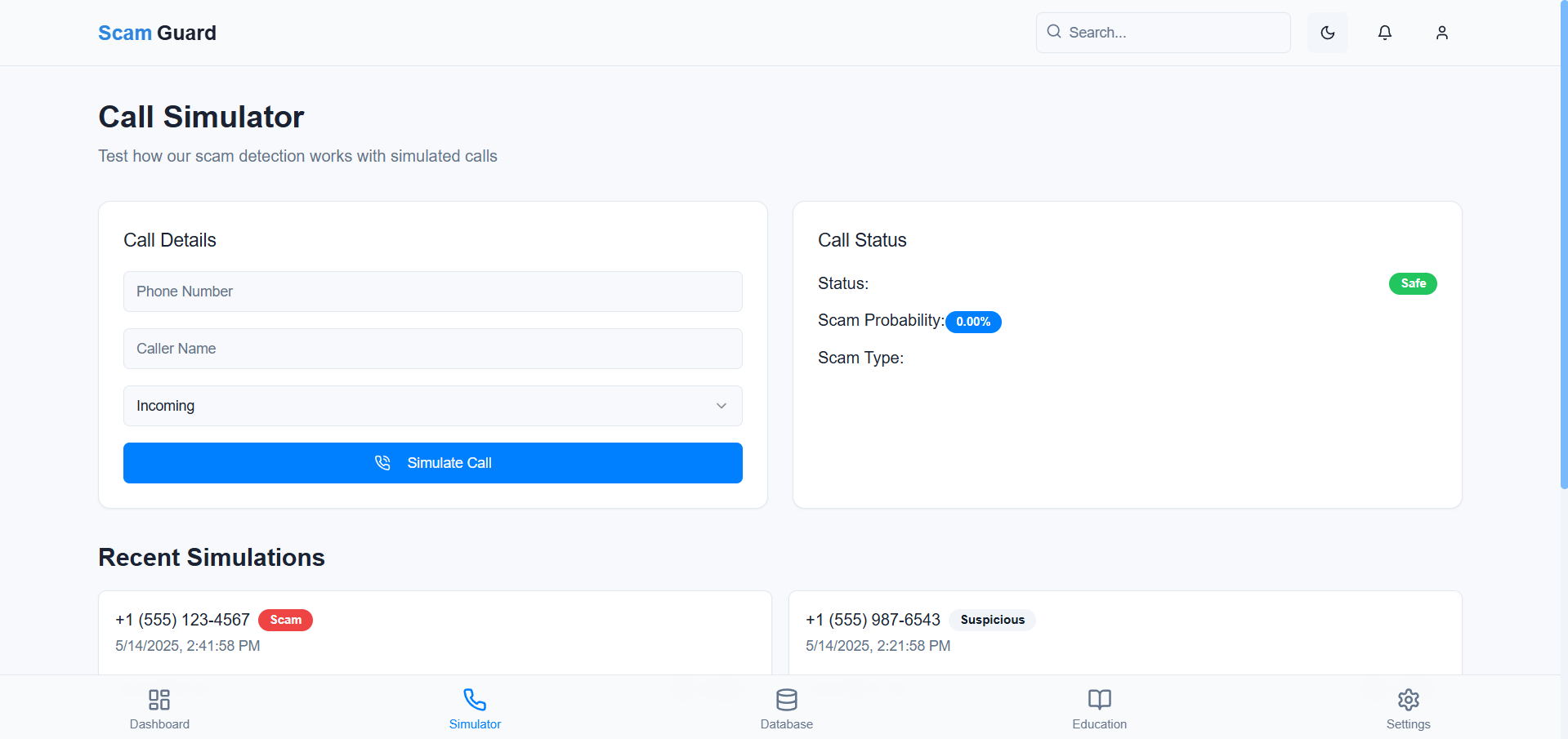
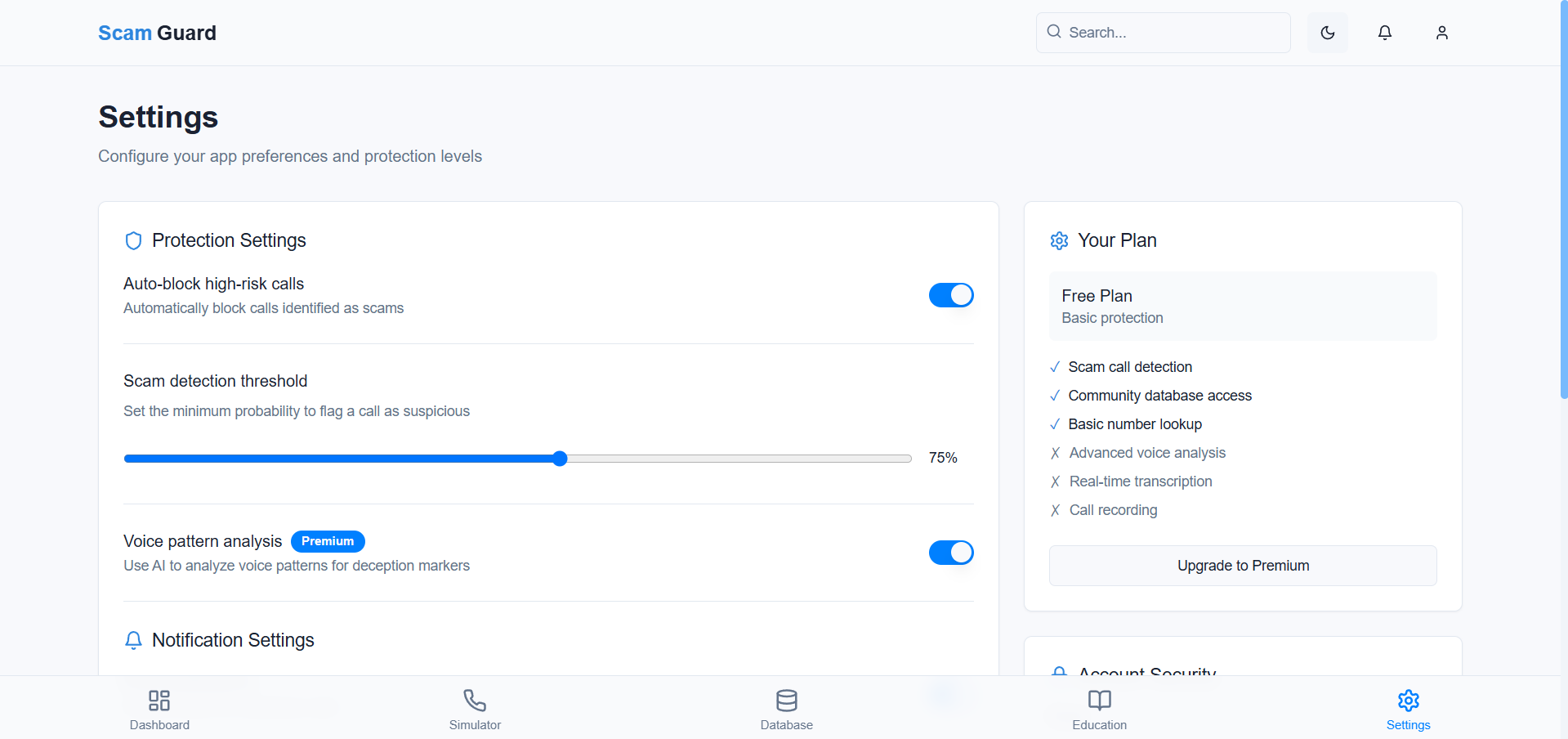
SCAMGUARD is an AI-powered web app that: Transcribes live or uploaded audio calls using speech-to-text (STT). Uses NLP and machine learning to detect scam-like language, including urgency, threats, financial requests, and impersonation. Flags calls as Scam, Suspicious, or Legitimate. Allows users to report scam numbers and contribute to a crowdsourced scam number database. Displays caller reputation and community-based voting for trustworthiness. Educates users on common scam tactics and safety practices.
How we built it
Frontend: Built using React.js and Tailwind CSS for a clean, responsive UI. Speech-to-Text (STT): Utilized Whisper AI for high-accuracy voice transcription. NLP Model: Used spaCy and fine-tuned BERT models to classify scam language patterns. Backend/API: Developed in Node.js, integrated with external APIs and our custom model. Deployment: Hosted on Vercel for fast and secure global deployment. Data Handling: Incorporated anonymized user inputs to continuously improve scam detection.
Challenges we ran into
Real-time voice transcription was tricky, especially managing performance and accuracy. Ensuring NLP correctly interprets context (e.g., “You won a prize!” can be both real and scam). Building a user interface that’s simple yet informative enough for non-tech-savvy users. Designing a crowdsourced system that avoids abuse and provides meaningful caller reputation scores. Balancing privacy and data usage when analyzing sensitive conversations.
Accomplishments that we're proud of
Built a full-stack, AI-integrated scam detection tool within a limited timeframe. Successfully combined live voice analysis with machine learning for scam prediction. Created a clean and intuitive UI that makes complex AI features accessible to all users. Launched the app on a public URL and made it usable for anyone with internet access.
What we learned
How to integrate AI/ML models into a live web application pipeline. The practical challenges of STT and NLP in real-world speech contexts (accents, noise, slang). Importance of UX when building tools for personal safety and trust. How to structure crowdsourced systems in a way that improves over time. The value of community collaboration in detecting and mitigating scams.
What's next for ScamGuard
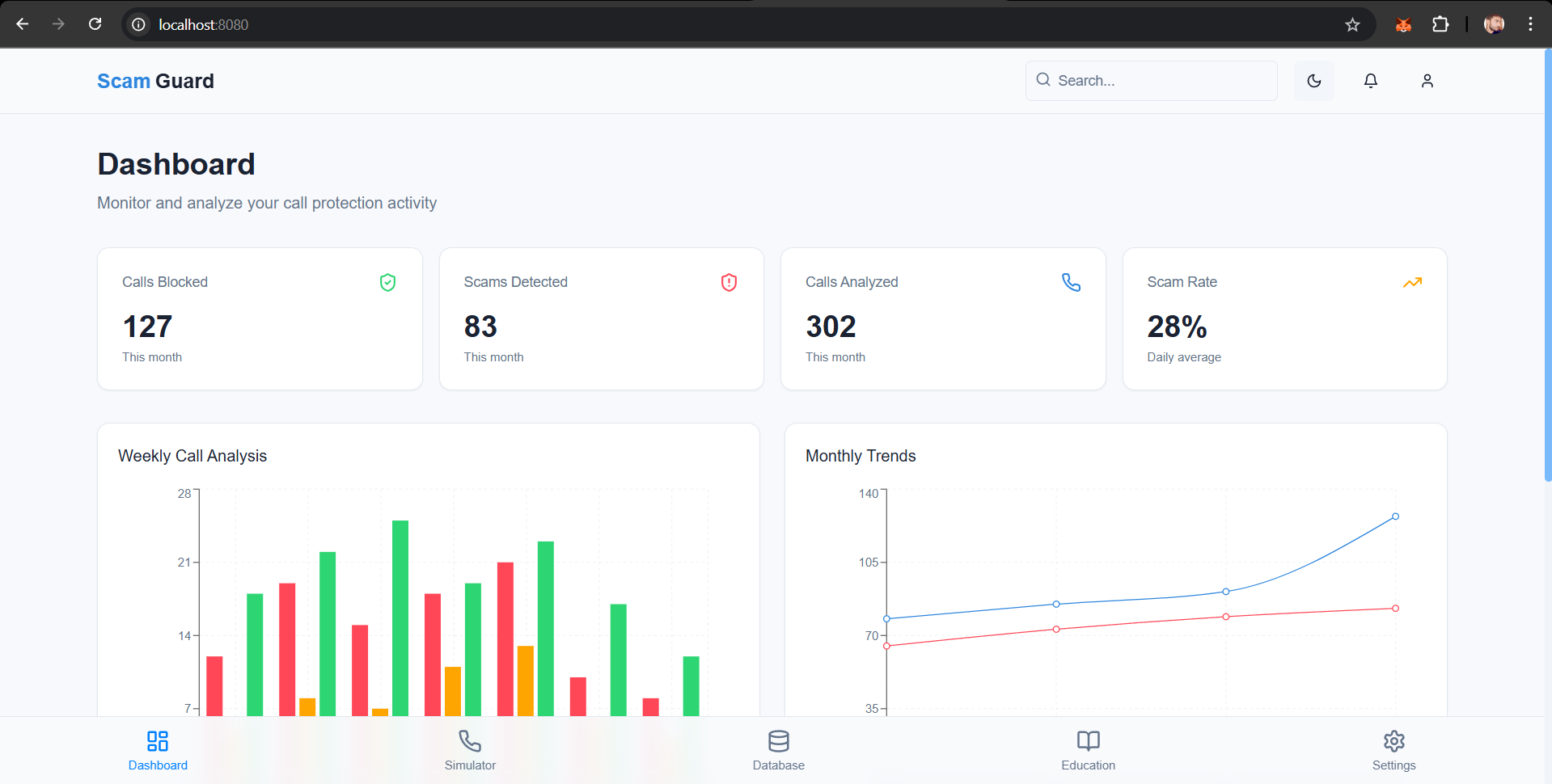
Live call interception on mobile platforms (Android/iOS). Improving NLP models using real anonymized feedback from users. Integration with telecom APIs to automatically screen and block scam numbers. Native mobile apps with push notifications and call blocking. Advanced analytics dashboards for scam patterns by location, keywords, and number type. GDPR-compliant opt-in for training our AI model with user data. Partnering with telecom providers, security orgs, and anti-fraud NGOs.
Built With
- natural-language-processing
- node.js
- python-package-index
- react
- tailwind
- wishper


Log in or sign up for Devpost to join the conversation.