-
-
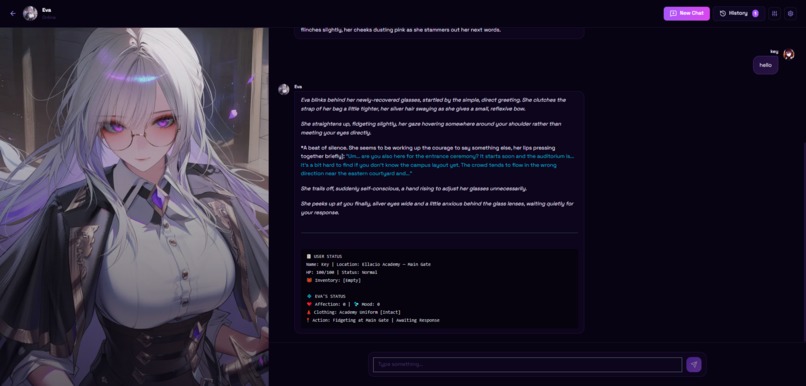
chat-page
-
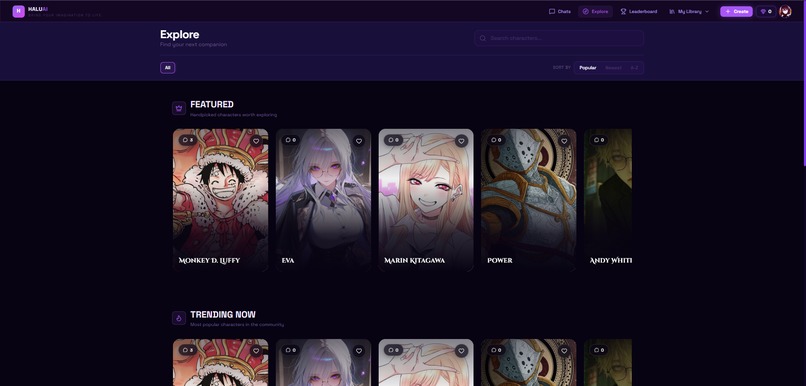
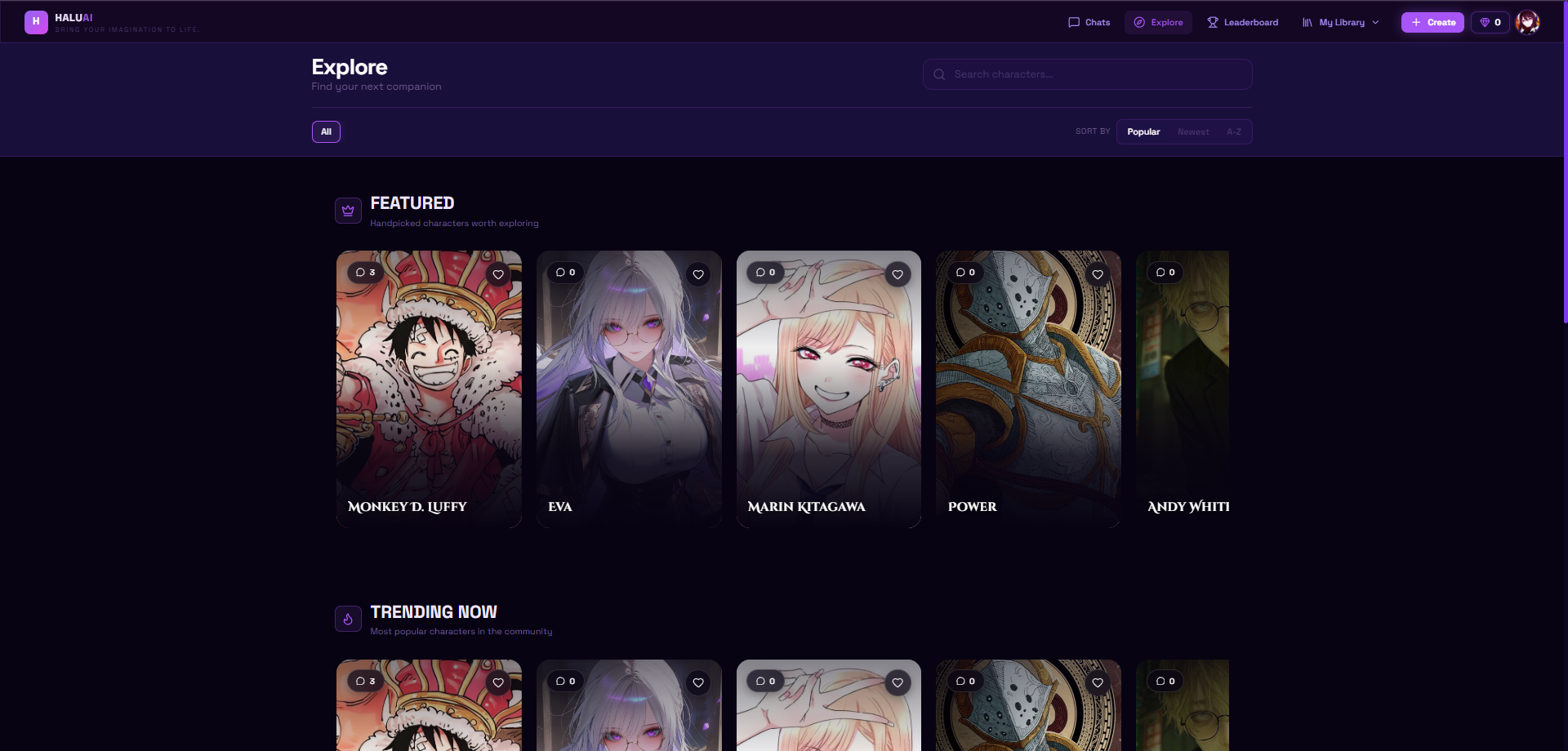
explore/dashboard
-
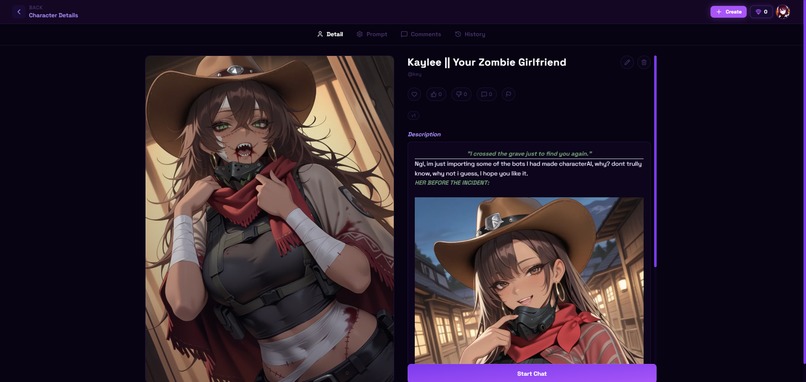
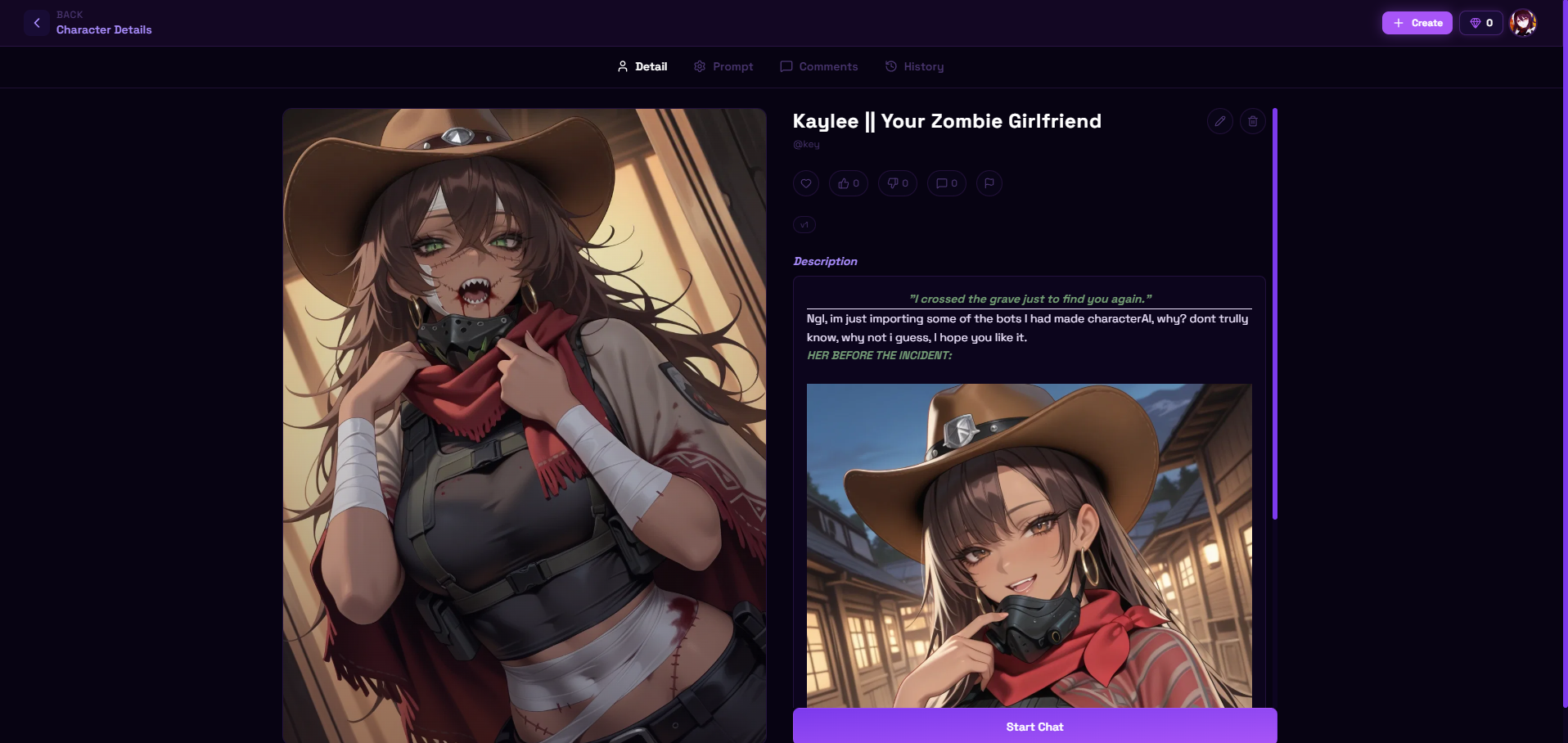
detail-character
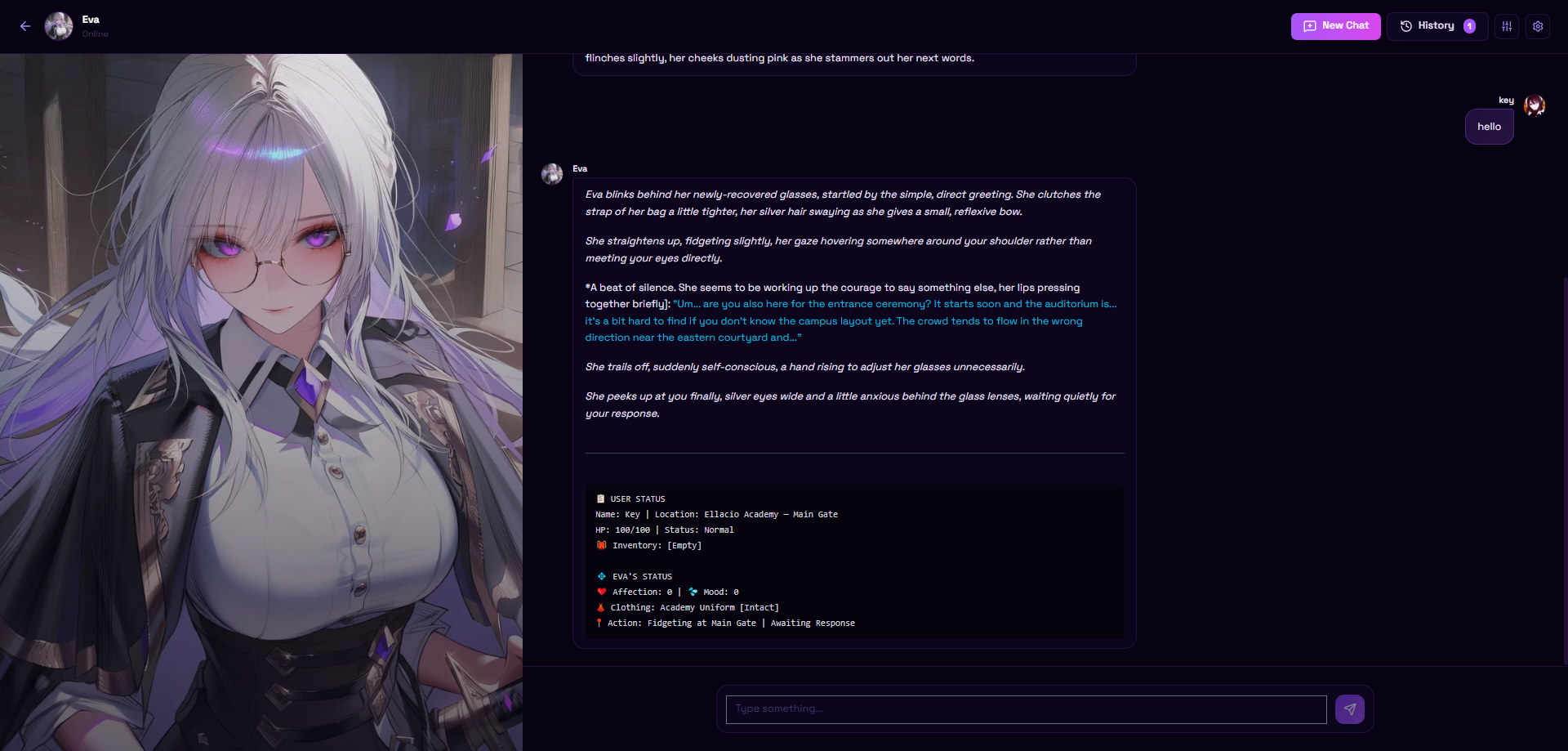
Inspiration
HaluAI was born from curiosity about how AI can bring fictional characters to life in a way that feels immersive, personal, and emotionally engaging. Inspired by platforms like Character.AI and Janitor AI, we wanted to create a space where users could explore conversations across fantasy, romance, and sci-fi — but with stronger control over privacy and a more visually captivating experience. The name “Halu” comes from hallucination — a playful nod to the imaginative and creative nature of AI-generated conversations. What started as experimentation with AI chat quickly evolved into a full-stack platform built with intention and long-term vision.
What it does
HaluAI is a full-stack AI character chat platform where users can chat with AI-powered fictional characters, create and customize their own characters, define detailed personalities, lore entries, regex scripts, and trigger behaviors, and explore genres like fantasy, romance, and sci-fi. What makes HaluAI unique is its privacy-first architecture: all chat data is stored locally in the browser using Origin Private File System (OPFS) with an IndexedDB fallback. Conversations never leave the user’s device, ensuring a safe and private experience.
How we built it
HaluAI is built as a modern full-stack TypeScript application. On the frontend, we use SvelteKit with Svelte 5’s rune system for reactivity, styled using Tailwind CSS v4 and a custom design system called “Cosmic Arcanum.” The interface features deep space backgrounds, neon purple and cyan glassmorphism, starfield animations, floating nebula orbs, and a cohesive cosmic aesthetic across dozens of components. On the backend, we use Express.js v5 with TypeScript and Prisma ORM connected to PostgreSQL. The database contains over 30 interconnected models covering users, characters, personas, gems (in-app currency), subscriptions, transactions, notifications, and more. Authentication is handled through JWT with Google OAuth support. Input validation is implemented using Zod, and email verification uses Nodemailer with OTP.
Challenges we ran into
One of the biggest challenges was balancing the privacy-first local storage architecture with social features such as leaderboards, trending characters, follows, and comments. We also faced complexity in building advanced character systems, including regex scripts, trigger scripts, alternate greetings, and lore entries. Maintaining performance while implementing rich cosmic visual effects was another significant challenge, especially ensuring accessibility across different devices and screen sizes. Accomplishments that we're proud of We are proud of successfully implementing true local-first chat storage using OPFS, building a scalable backend with over 30 relational models, and designing a cohesive custom design system instead of relying on generic templates.
We also successfully created a flexible character engine that supports deep customization while keeping the platform performant and visually immersive.
What we learned
Through building HaluAI, we learned how to architect a client-side storage layer with OPFS, structure complex relational schemas using Prisma, and maintain consistency across a large UI system. We also learned the importance of making deliberate architectural decisions early, especially when prioritizing privacy, scalability, and long-term maintainability.
What's next for HaluAI
Next, we plan to expand social features, improve AI response quality, enhance persona and personalization systems, optimize performance for lower-end devices, and continue evolving the monetization system responsibly. HaluAI will continue growing into a platform where imagination feels real — without compromising user privacy.
Built With
- prisma
- supabase
- svelte
- tailwindcss
- typescript
- vite


Log in or sign up for Devpost to join the conversation.