-
-
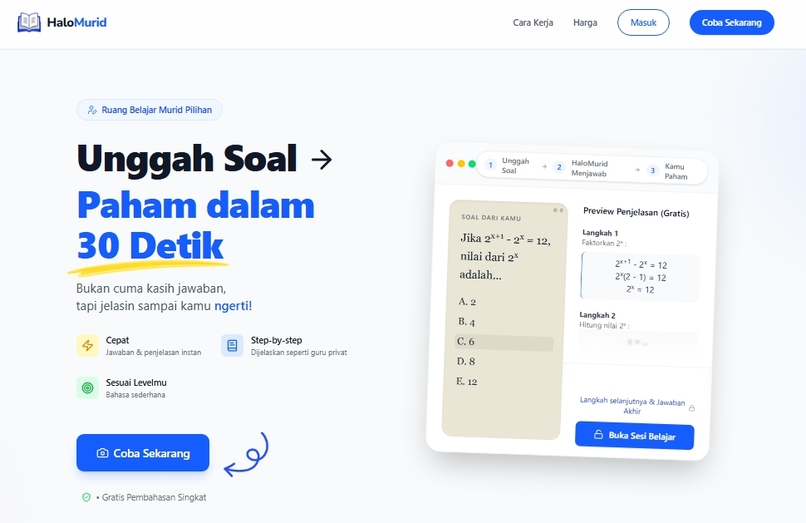
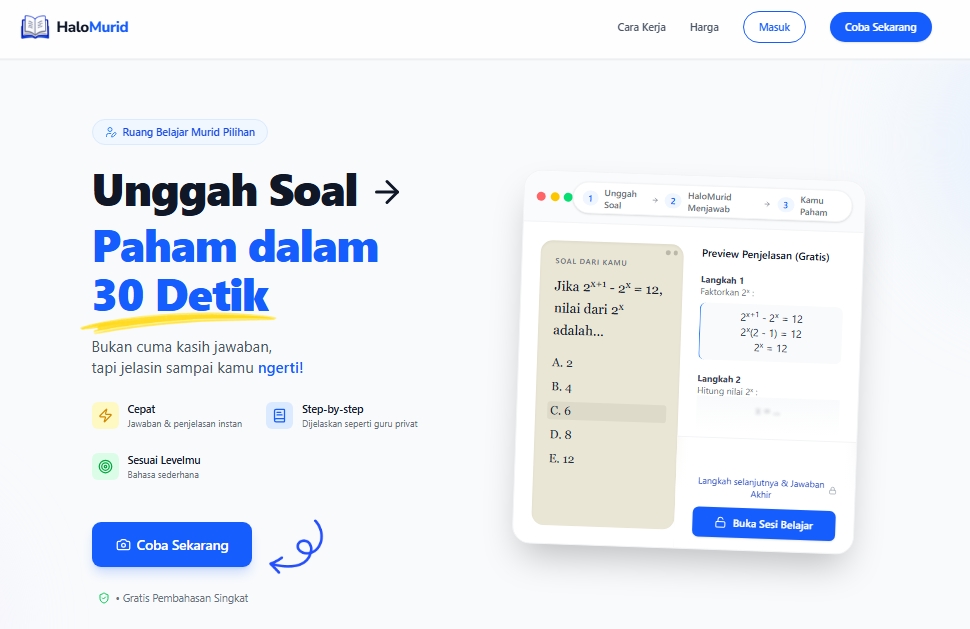
home
-
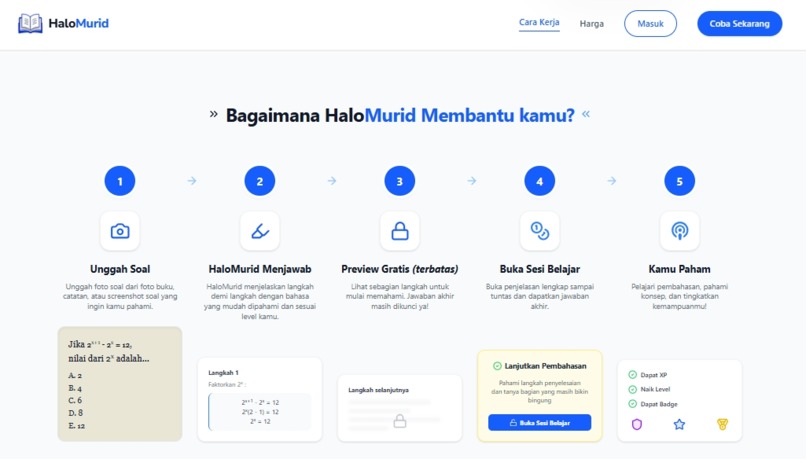
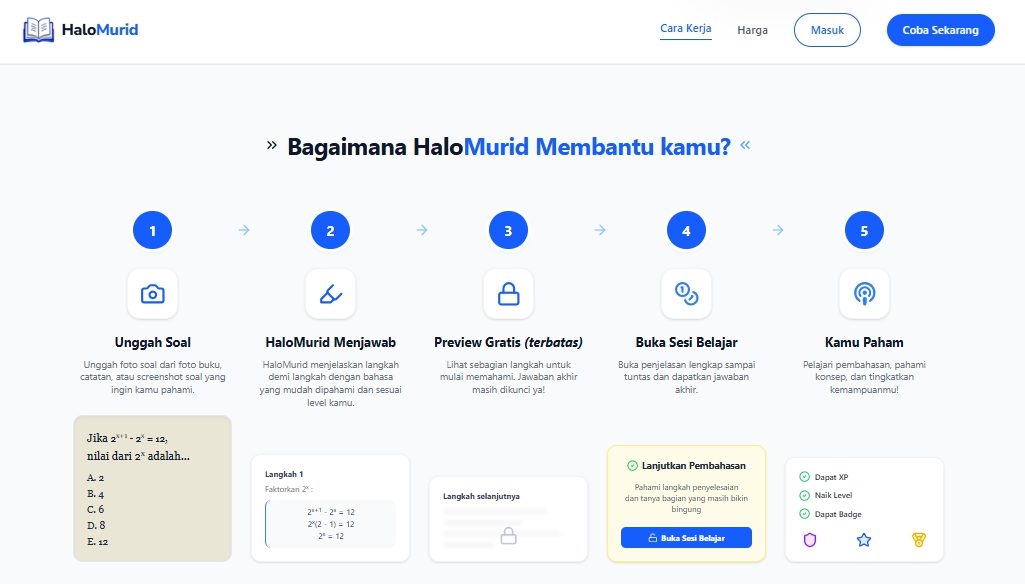
how it works
-
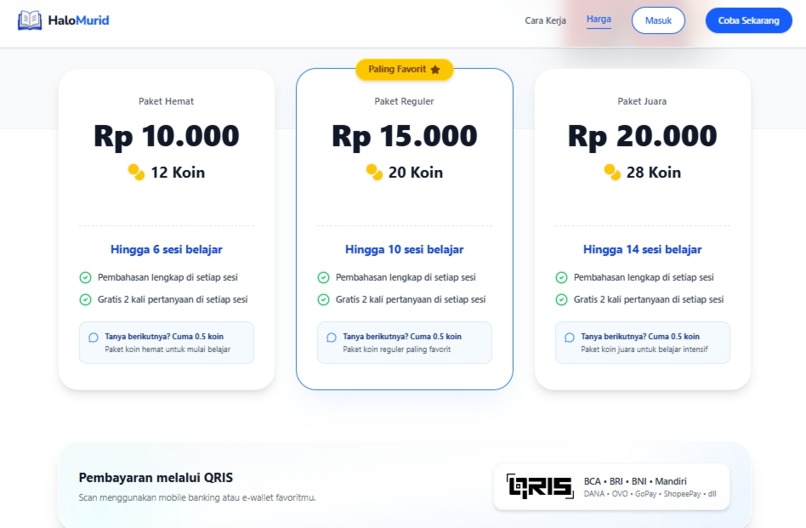
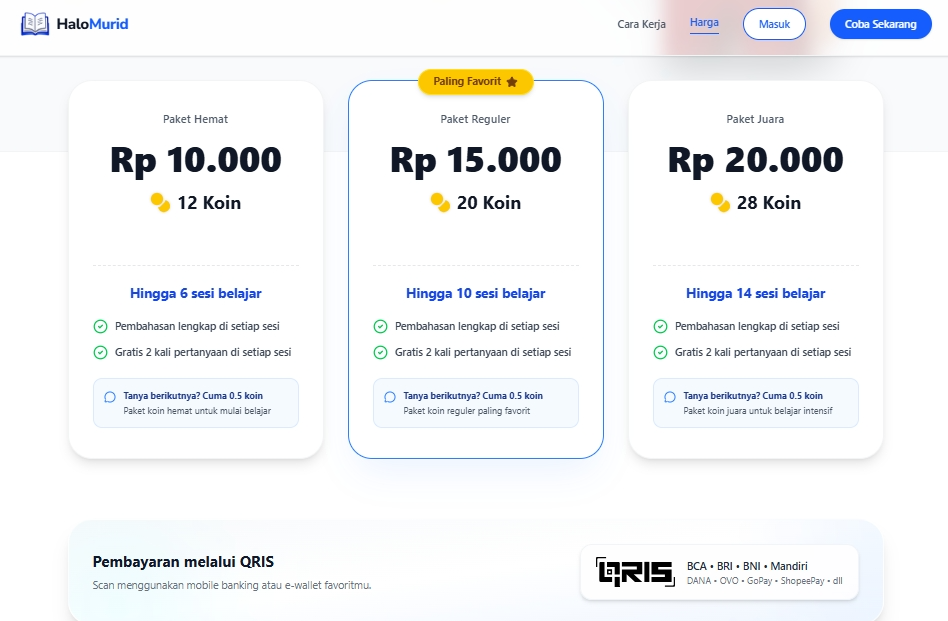
price
-
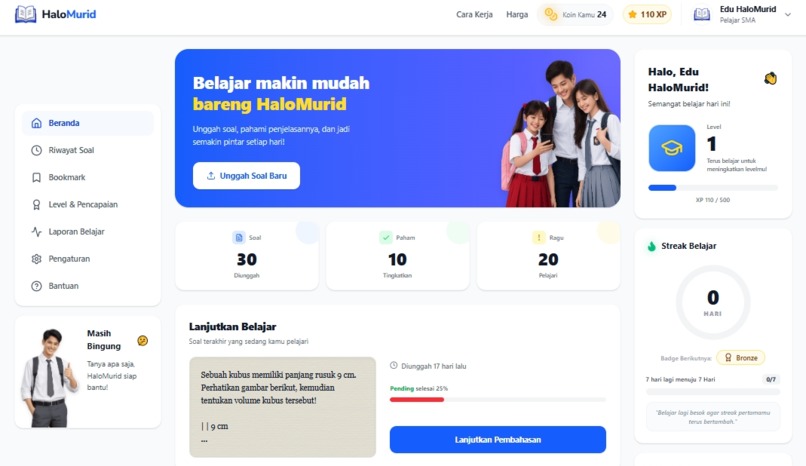
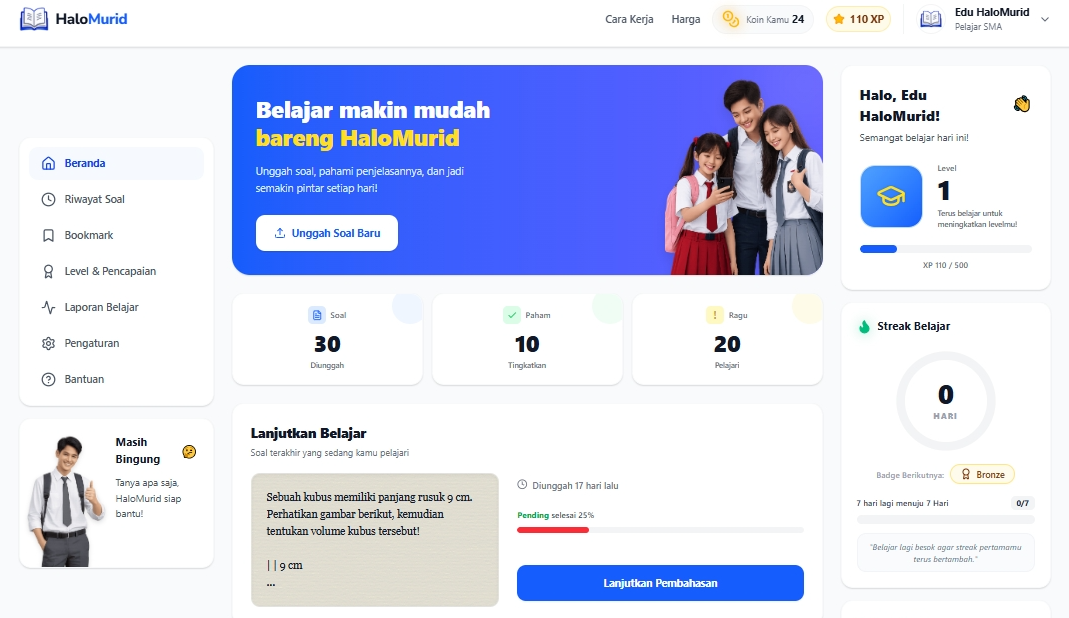
student dashboard
-
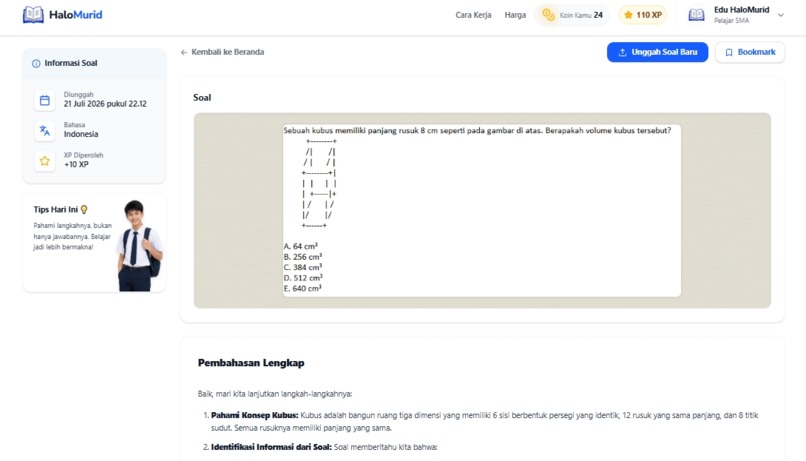
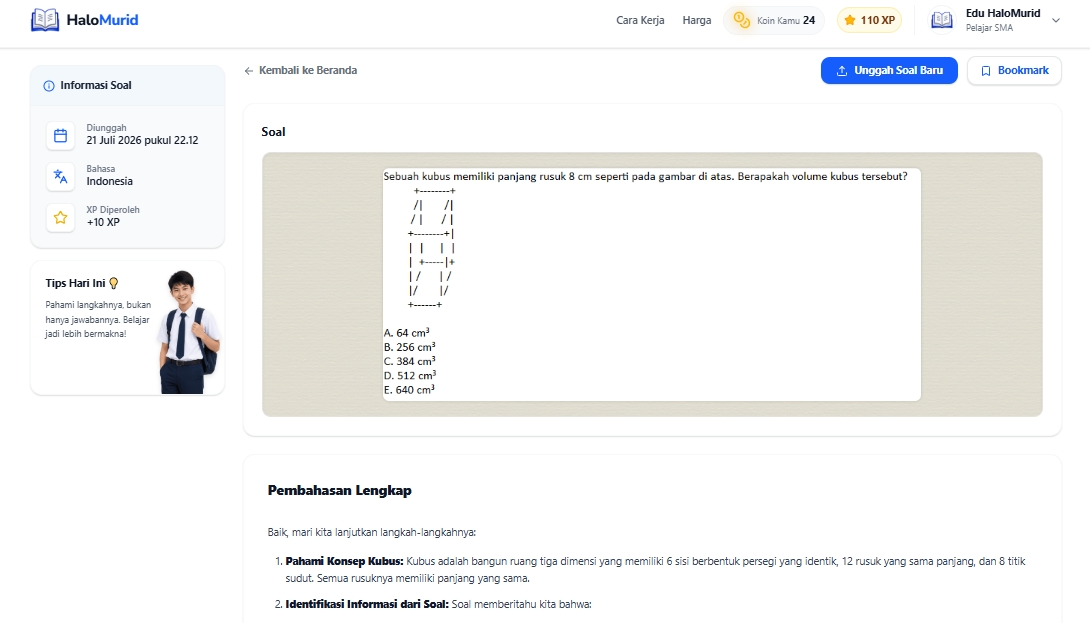
explanation of the question
-
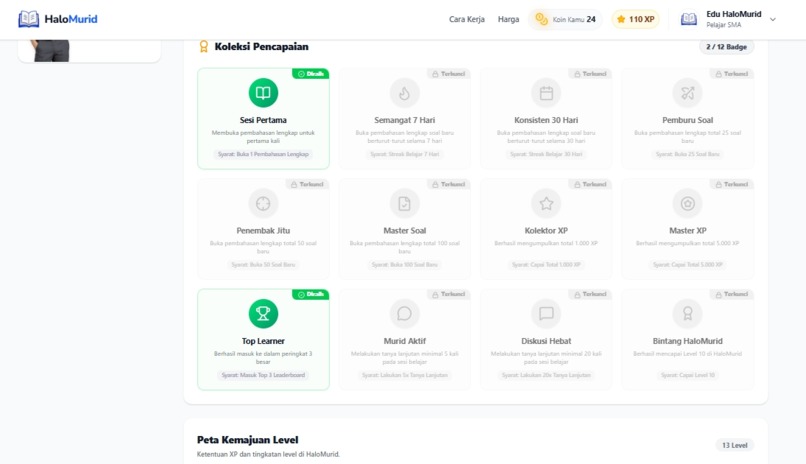
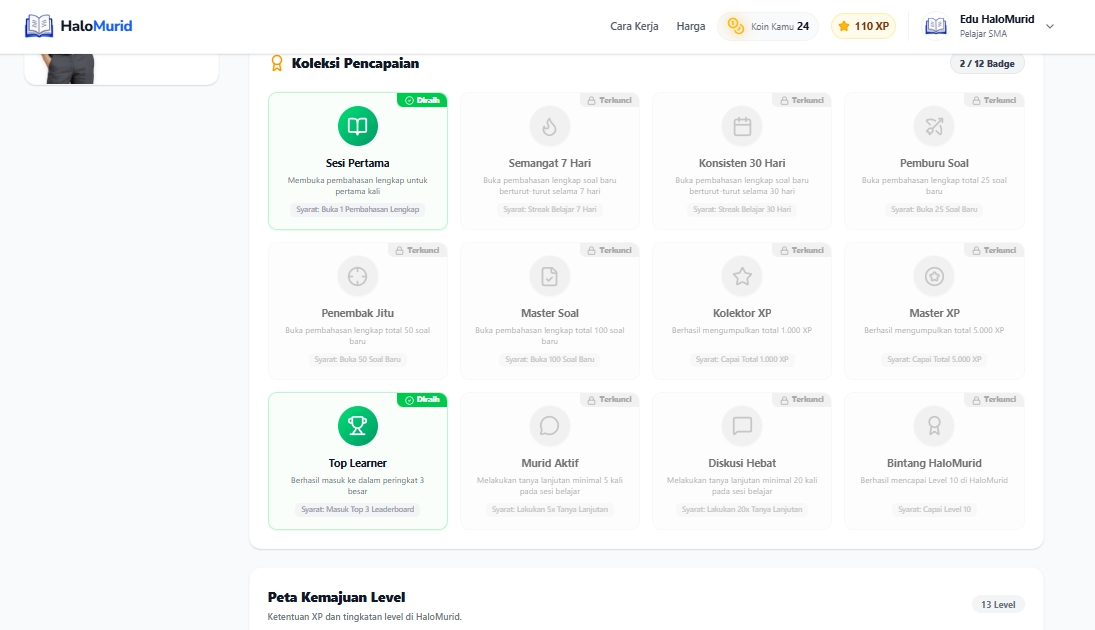
Levels and achievements
-
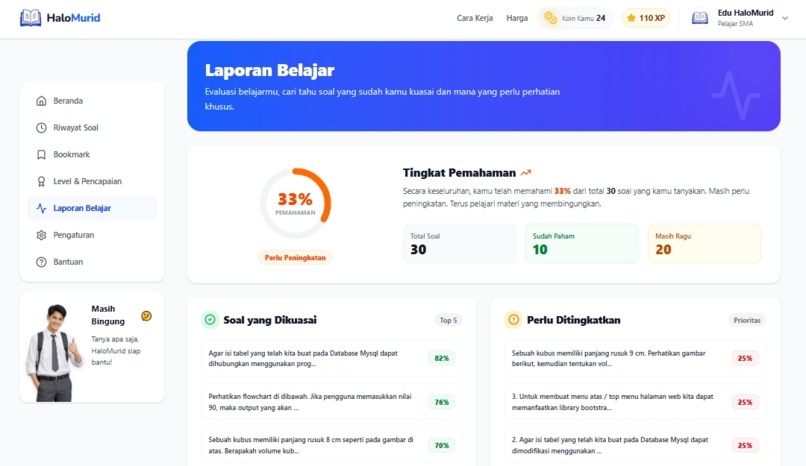
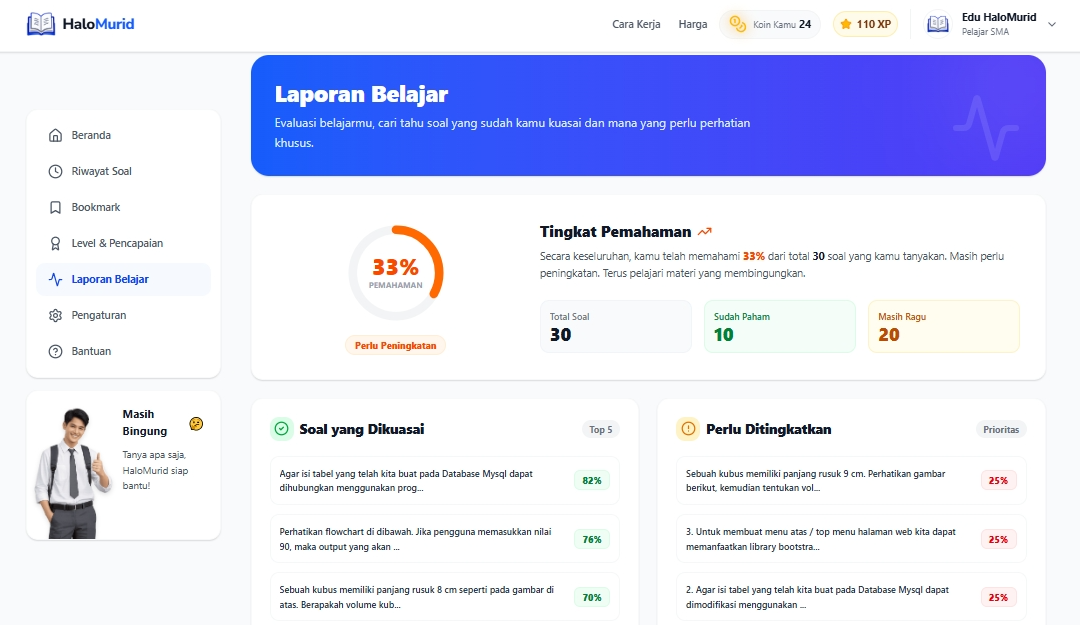
Learning report
-
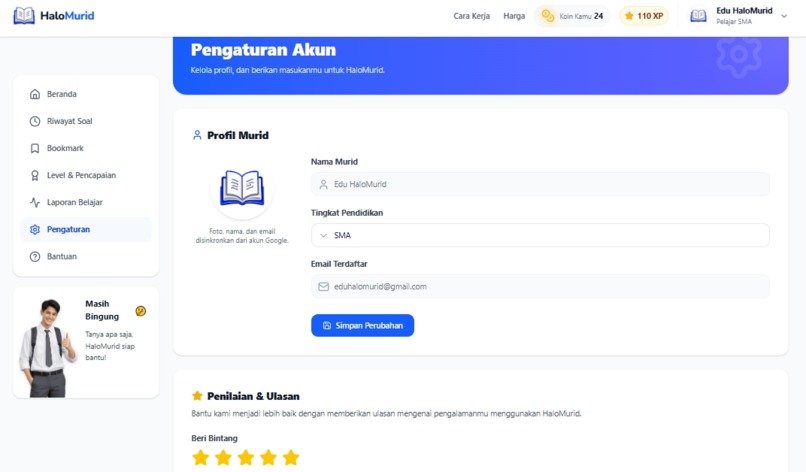
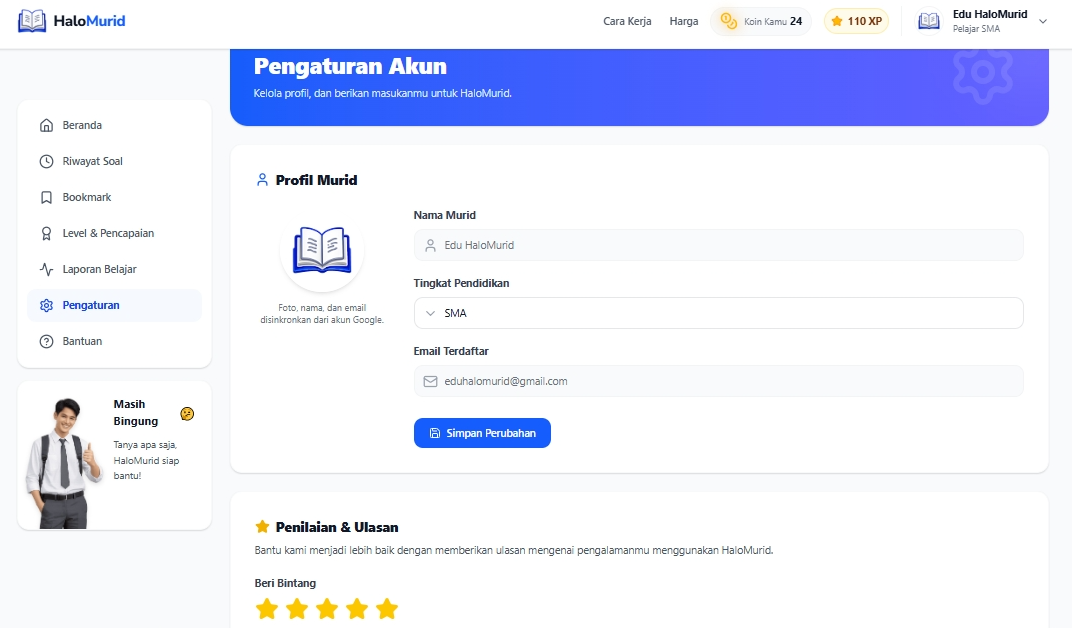
settings
-
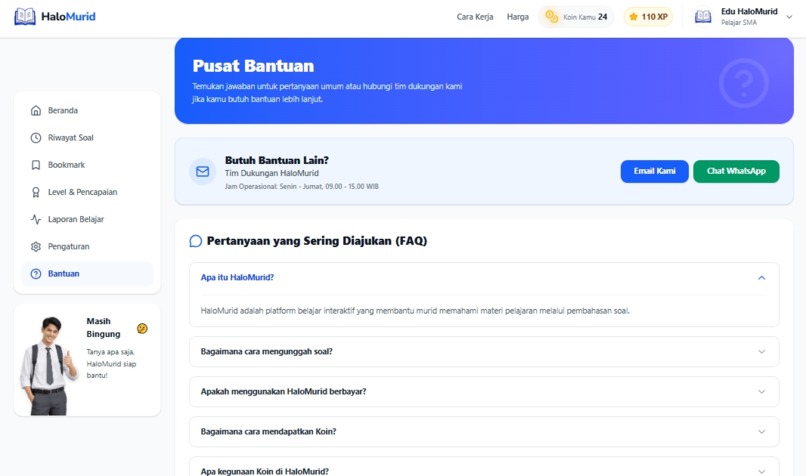
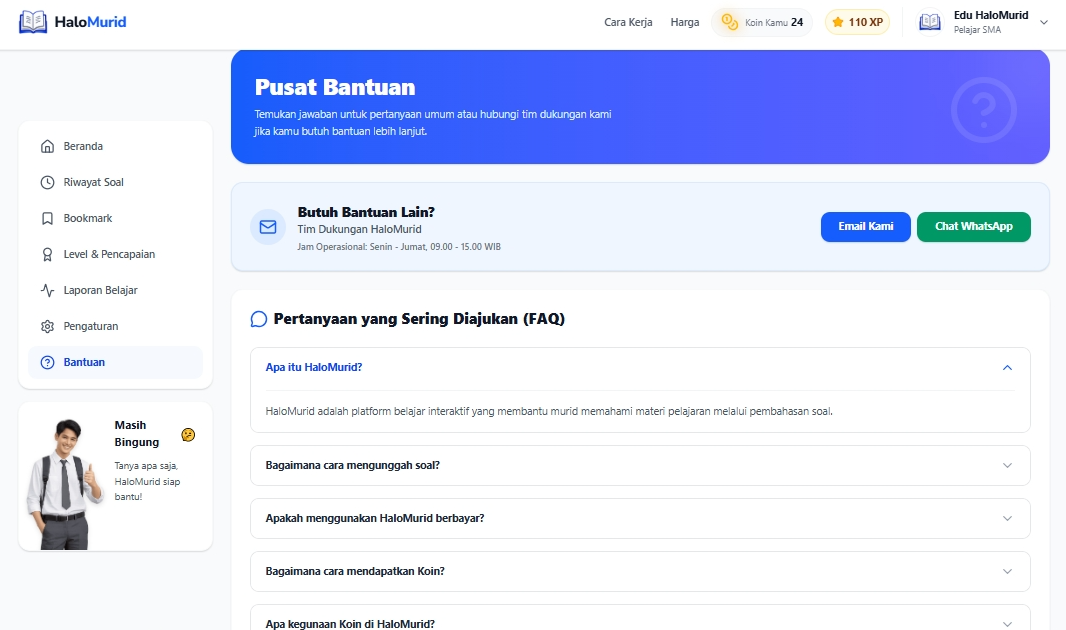
FAQ and Help Center
-
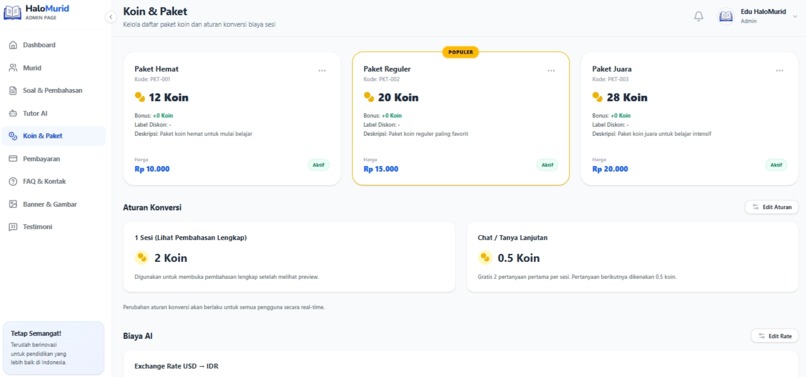
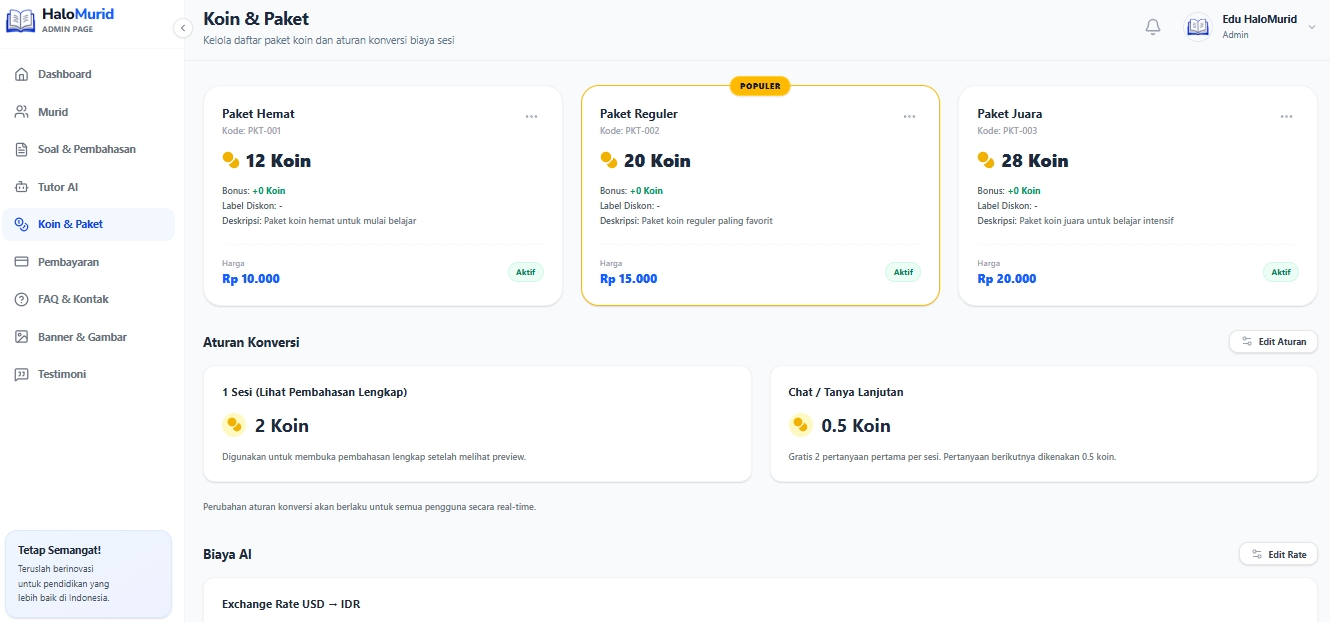
admin dashboard
Inspiration
I got the idea for HaloMurid from seeing how AI is starting to change the way people can build businesses.
I came across a YouTube video about Medvi, a company that caught my attention because it was built by one person in a very short amount of time by making extensive use of AI, and had already generated significant revenue. It made me think: if AI can help one person build a business like that, could I do something similar in an area that is close to me — education?
I started thinking about a common problem students face when they encounter a difficult question. They can search for an answer online or ask an AI, but getting an answer does not necessarily mean they understand how to solve the problem.
That is where the idea for HaloMurid came from: an AI-powered learning space that helps students understand problems, rather than simply giving them the answers.
Before May 19, 2026, HaloMurid was still just an idea, along with some early discussions I had with ChatGPT about the project. Around May 26, I discovered the Build with Gemini XPRIZE hackathon on Devpost. That motivated me to stop just thinking about the idea and actually start building HaloMurid.
On August 11, 2026, HaloMurid became publicly accessible at halomurid.com.
What it does
HaloMurid is an AI-powered learning space that helps students understand questions from photos.
Students can upload a photo of a question, and Gemini analyzes it and provides an explanation. If there is still something they do not understand, they can continue the conversation with the AI.
I did not want HaloMurid to stop at being a place where students ask a chatbot for answers. That is why I also built learning sessions, question history, learning progress, XP, levels, streaks, and a coin system into the experience.
The goal is not simply "upload a question and get an answer," but to create a learning process that students can continue when they still do not understand something.
On the business side, HaloMurid also has monetization and payment systems so the product can continue to grow as an education business.
How we built it
I built HaloMurid as a solo founder with AI as a major part of my workflow.
I started with the idea and used ChatGPT to discuss the concept of HaloMurid and create UI designs for the different pages. After reviewing and refining those designs, I used Google AI Studio to turn the mockups into a working frontend. The application was built using React and Vite.
Once the frontend was ready, I continued development using Google Antigravity. At this stage, I used the AI agent to help with finishing the application, developing features, debugging, testing, and connecting the application to Supabase as the backend and database.
I was still directly involved in defining the features, business rules, architecture, reviewing and testing the results, and providing corrections. For some parts, I also made manual code changes to make the final result fit HaloMurid's specific needs.
For the AI inside the product, I use the Gemini API as the brain of HaloMurid. Gemini is directly integrated into the application to analyze questions and help students understand and discuss them.
Once the system was ready, I deployed HaloMurid using Firebase Hosting, and on August 11, 2026, it became publicly accessible at halomurid.com.
So AI is used on two sides of HaloMurid: as a core part of the product students use, and as a major part of my own workflow for building and developing the business.
Challenges we ran into
The biggest challenge was finding the right balance between the speed AI provides and the quality of the product I wanted to build.
With AI agents, I could build features much faster than if I had to write everything from scratch. But AI still needs direction, review, testing, and correction. As the application grew, even a small change in one part could affect other parts of the system.
I ran into problems such as making sure a question was not processed multiple times, preventing coins from being deducted twice, handling concurrent processes, keeping data consistent, and making sure the payment system remained reliable when retries, timeouts, or duplicate webhooks occurred.
I also learned that making an AI application that looks good at first is very different from building a product that people can actually use. There are databases, authentication, security, payments, business logic, API costs, error handling, and many other details that all have to work together.
In the end, the challenge was no longer "Can AI build the application?" but rather "Can I guide AI correctly and make sure the final result is actually a product people can trust?"
Accomplishments that we're proud of
I am proud that in less than three months since I started actually building it, HaloMurid has grown from an idea into a publicly accessible product.
I built the entire process myself as a solo founder with the help of several AI tools. From exploring the idea and designing the UI with ChatGPT, to building the frontend with Google AI Studio, continuing development and finishing the product with Google Antigravity, and integrating the backend and database with Supabase.
Inside the product itself, Gemini serves as the brain that helps students analyze and understand questions.
I also built the learning system, gamification, coin system, payments, dashboard, and the backend systems needed to make HaloMurid work as a real product.
For me, the biggest accomplishment is not simply building the application. It is taking an idea that originally existed only in my head and turning it into a public product that people can now try at halomurid.com.
What we learned
I learned that AI can dramatically change how an individual can build software and start a business.
With AI tools, I can move much faster from an idea to design, frontend, backend, debugging, and deployment. Things that might previously have required a team with several different skill sets can now be tackled by me as a solo founder with AI assistance.
But I also learned that AI does not mean I can simply hand everything over to a machine. I still need to understand the product, define its direction, provide the right context, review the results, test everything, and make decisions when something does not work.
I also learned that building an AI product is very different from building an AI demo. A real product has to consider response quality, AI costs, user experience, data security, reliability, and the business model.
From the business side, I learned that technology is only one part of the equation. What matters more is whether the product actually provides value to users and whether the business model is healthy enough to keep the product growing.
What's next for HaloMurid
August 11, 2026 is not the end of HaloMurid. It is the beginning of the next stage now that the product is publicly available.
I want to gather more feedback from students, improve the quality of AI analysis and explanations, improve the learning experience, and expand the types of questions and subjects that HaloMurid can help with.
On the business side, I want to grow HaloMurid into a sustainable education business. My goal is not simply to acquire users, but to make students feel that HaloMurid genuinely helps them learn and gives them a reason to come back.
In the long term, I want to prove that a founder in education can build and grow a technology business by making the most of AI, without having to start with a large engineering team.
For me, HaloMurid is not just a hackathon project. It is a business I want to keep building after the hackathon is over.
Built With
- firebase-hosting
- google-cloud
- google-gemini-api
- google-oauth
- midtrans
- postgresql
- react
- supabase
- typescript
- vite

Log in or sign up for Devpost to join the conversation.