-
-
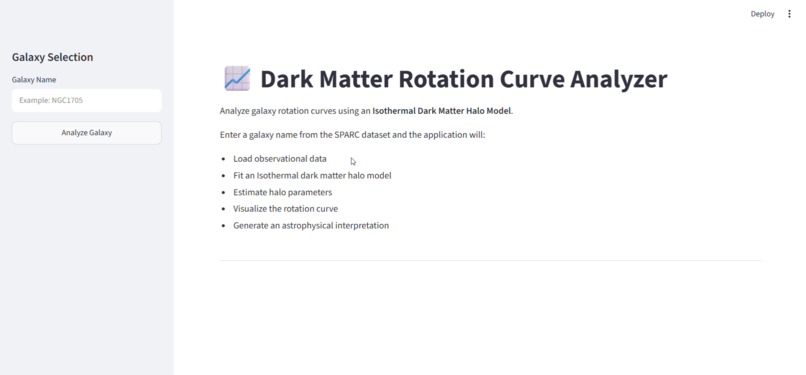
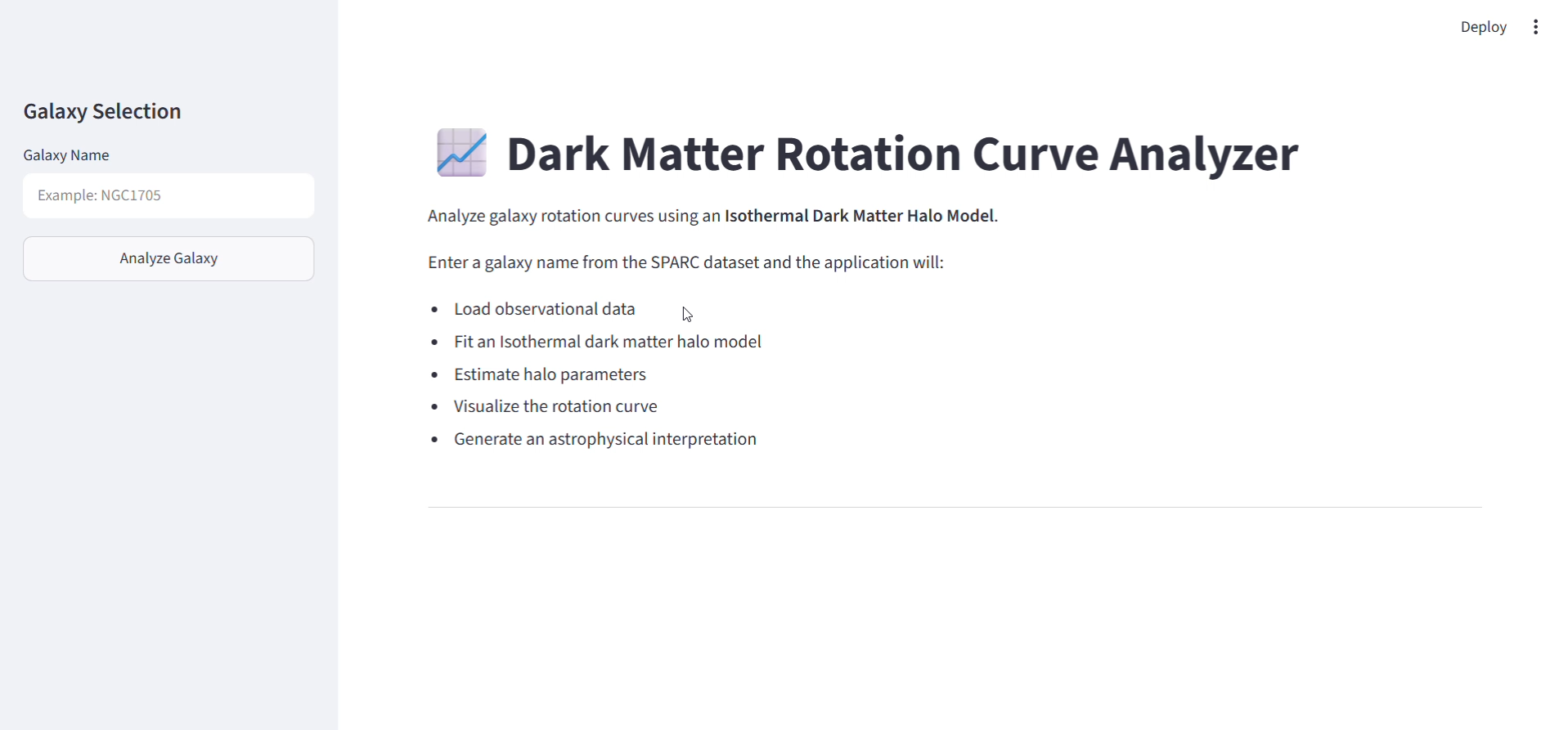
Homepage of application
-
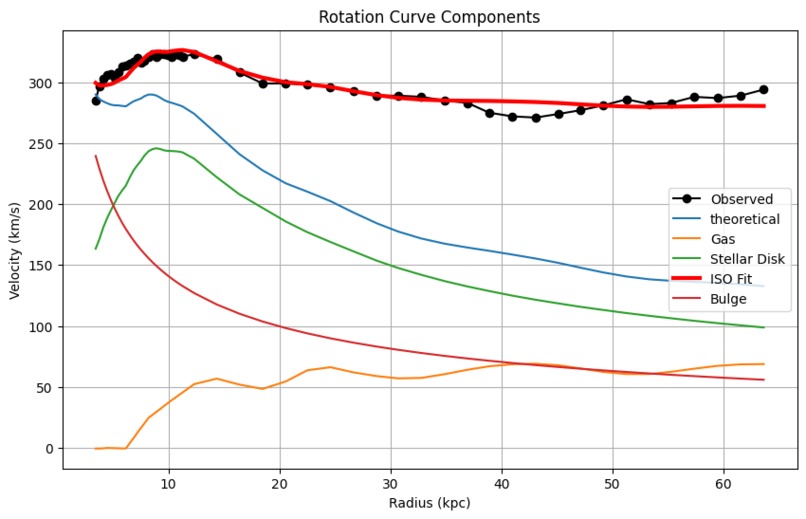
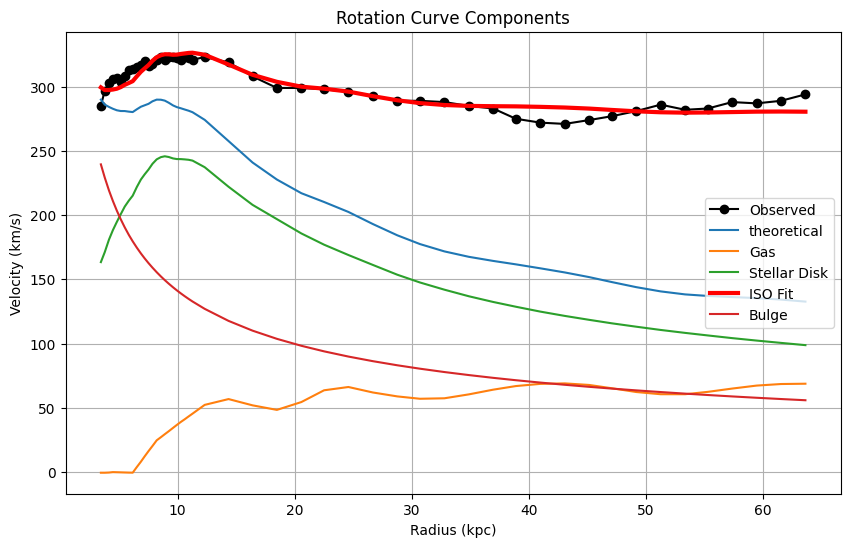
Example galaxy rotation curve of NGC2841 Galaxy
-
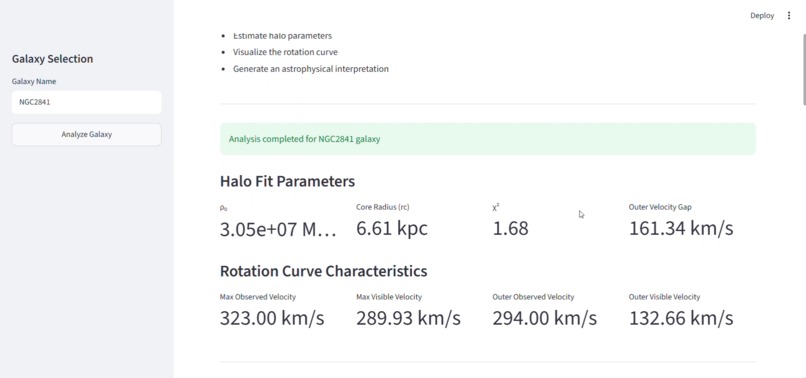
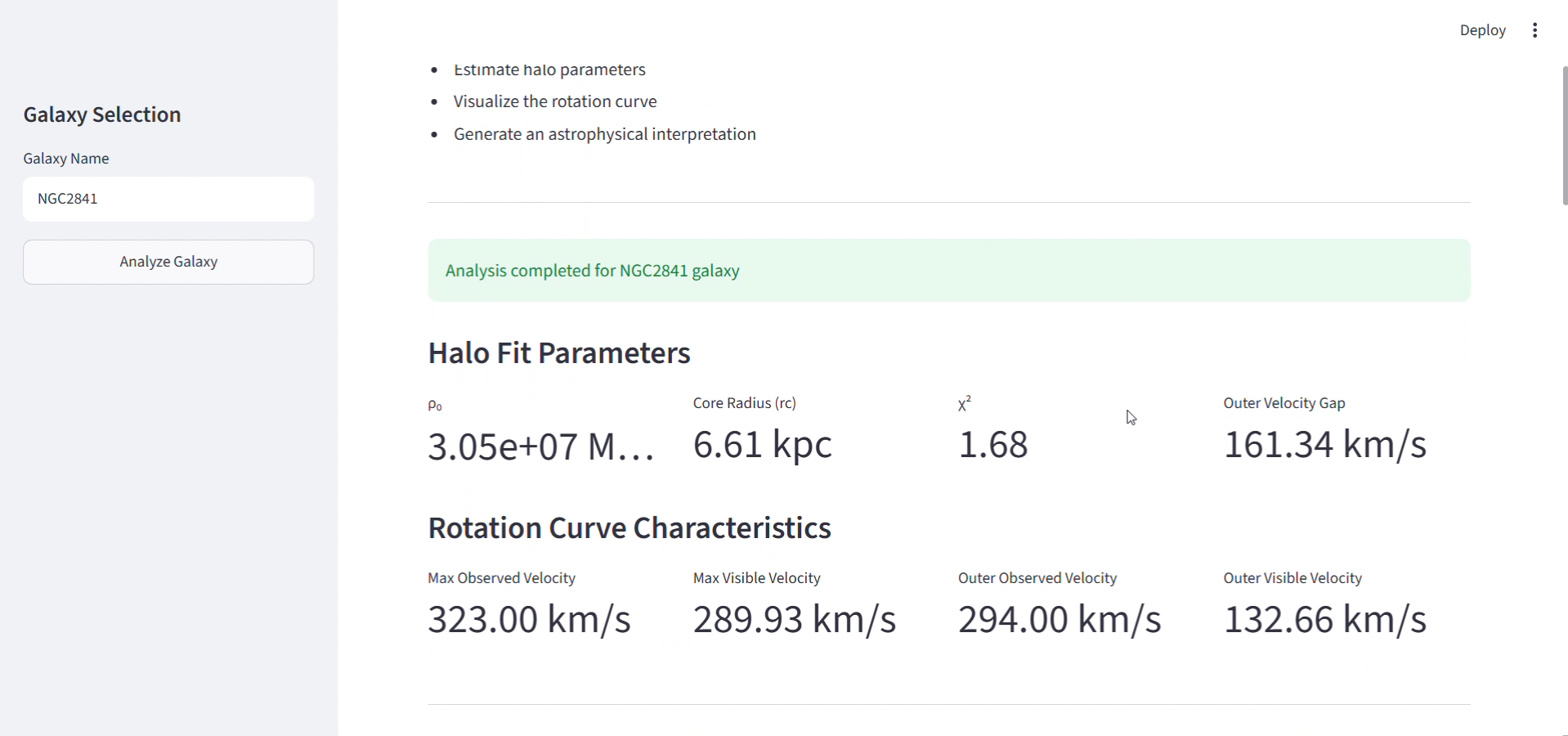
Statistical Parameters
-
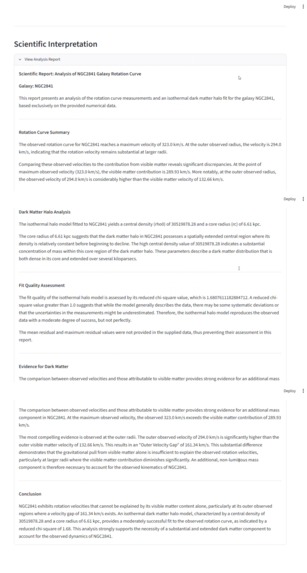
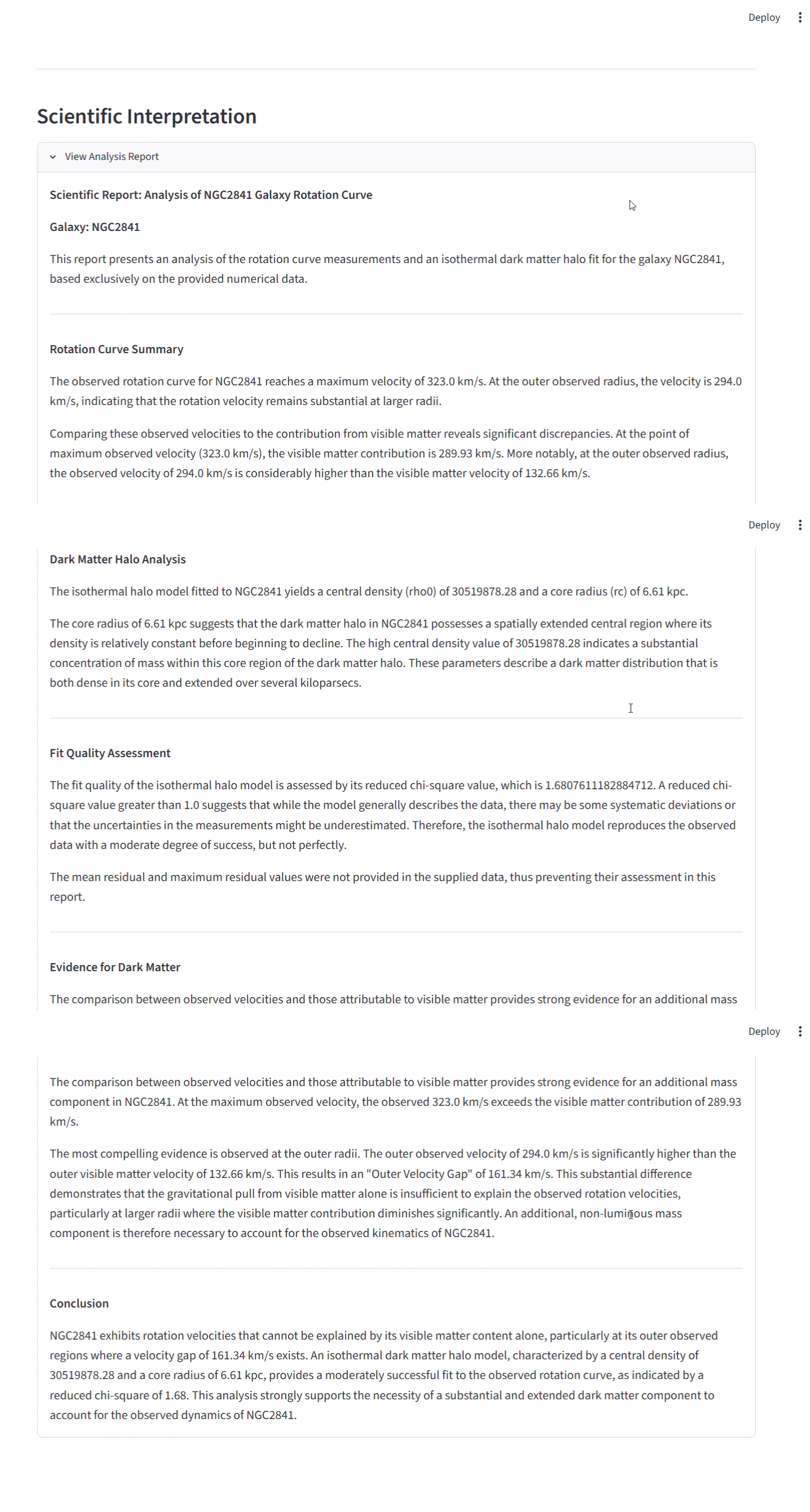
Scientific Report generation
Inspiration
I've always been fascinated by the universe and wanted to build something that combines my interest in astrophysics with machine learning. Dark matter remains one of the biggest mysteries yet to be discovered. While studying galaxy rotation curves, I realized that analyzing dark matter halo models requires specialized tools and a strong astrophysics background making it less accessible to students and enthusiasts. Recent advancements in machine learning and large language models have made it possible to simplify complex scientific workflows and explanations.
What it does
Dark matter can't be observed directly, yet it's believed to constitute most of the mass in galaxies. One of the strongest pieces of evidence for its existence comes from galaxy rotation curves, where the observed rotational velocities of stars and gas differ significantly from predictions based on visible matter alone. The application analyzes galaxy rotation curve data to estimate the distribution of dark matter using Isothermal Halo Dark Matter Model. It compares the theoretical predictions with observational data, visualizes the results and generates automated scientific explanation using LLM that help the users interpret the analysis.
How we built it
The project was built using Python for data processing and model implementation. Galaxy rotation curve data from the SPARC dataset was pre-processed and analyzed using astrophysical equations, achieving approximately 84% accuracy. The backend integrates data analysis, visualization and automated report generation while Docker was used to containerize the application for easy deployment.
Challenges we ran into
The biggest challenge was understanding the astrophysical concepts behind galaxy rotation curves and dark matter halo models. Implementing mathematical equations correctly, tuning the curve fitting model and combining scientific analysis with smooth application workflow required significant experimentation and debugging.
Accomplishments that we're proud of
I'm proud of successfully integrating astrophysics with machine learning into a single application. The project accurately analyzes real astronomical data, achieved around 84% accuracy, generates context-grounded analysis explanation using Gemini LLM model. It demonstrates how computational methods can be applied to solve real scientific problems.
What's next for HaloFit-Dark Matter Rotation Curve Analyzer
Future improvements include supporting multiple dark matter halo models such as NFW and Burkert improving model accuracy with advanced machine learning techniques, integrating additional astronomical datasets.

Log in or sign up for Devpost to join the conversation.