Inspiration
The idea for Halo started with a simple real-life situation. Imagine sitting alone in a café. Around you are many people—some reading, some working, some scrolling on their phones. You notice someone nearby who seems interesting. Maybe they are reading a book you like or working on something you're curious about. But you hesitate. You wonder if they are open to talking, or if approaching them might feel awkward or intrusive. Because of that uncertainty, the moment passes and the opportunity for a meaningful conversation disappears. We realized that many shared spaces are full of potential connections, but there is no clear signal showing who is open to interaction.
Halo was created to solve this invisible barrier by helping people discover nearby individuals who are open to conversation in a safe and comfortable way.
What it does
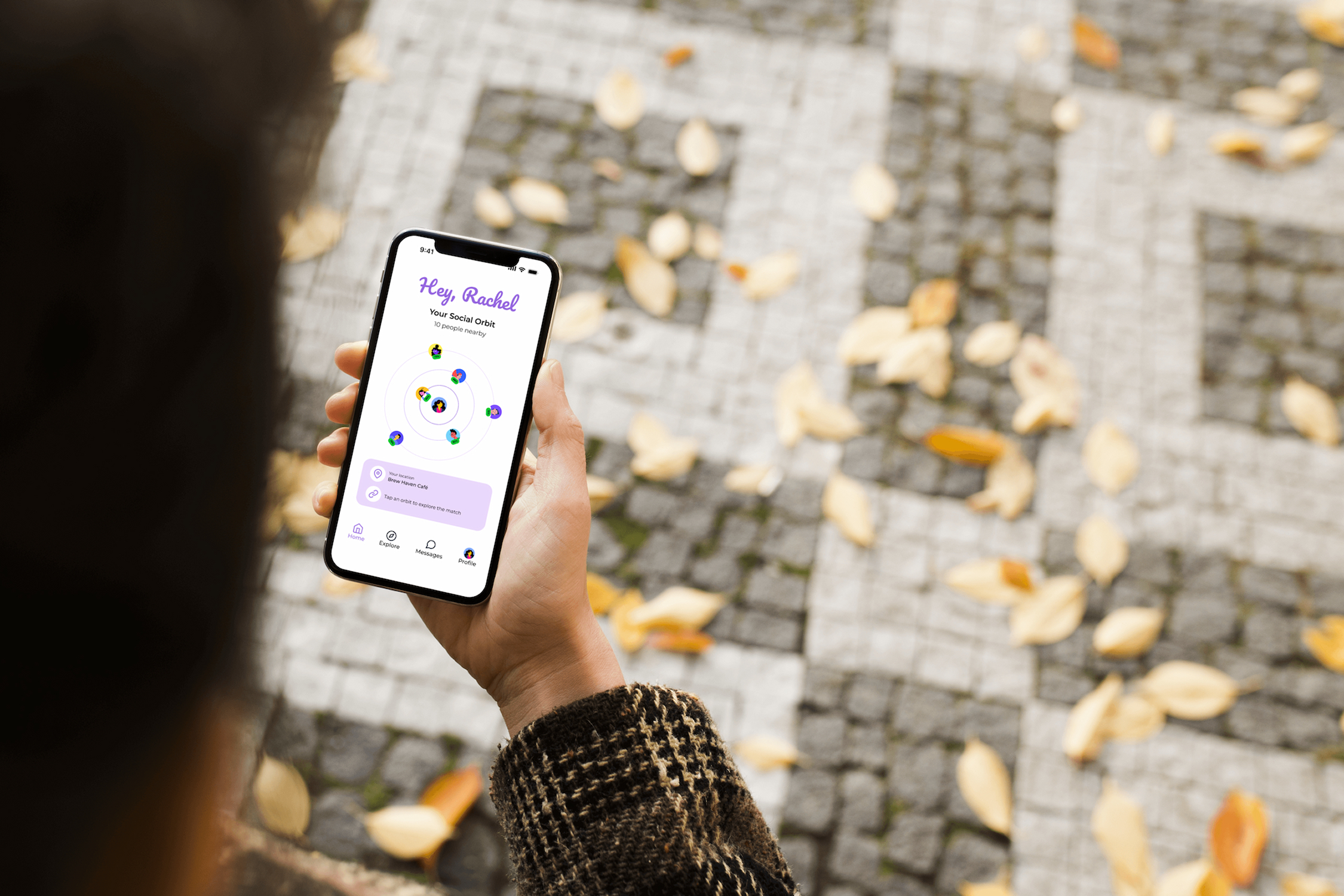
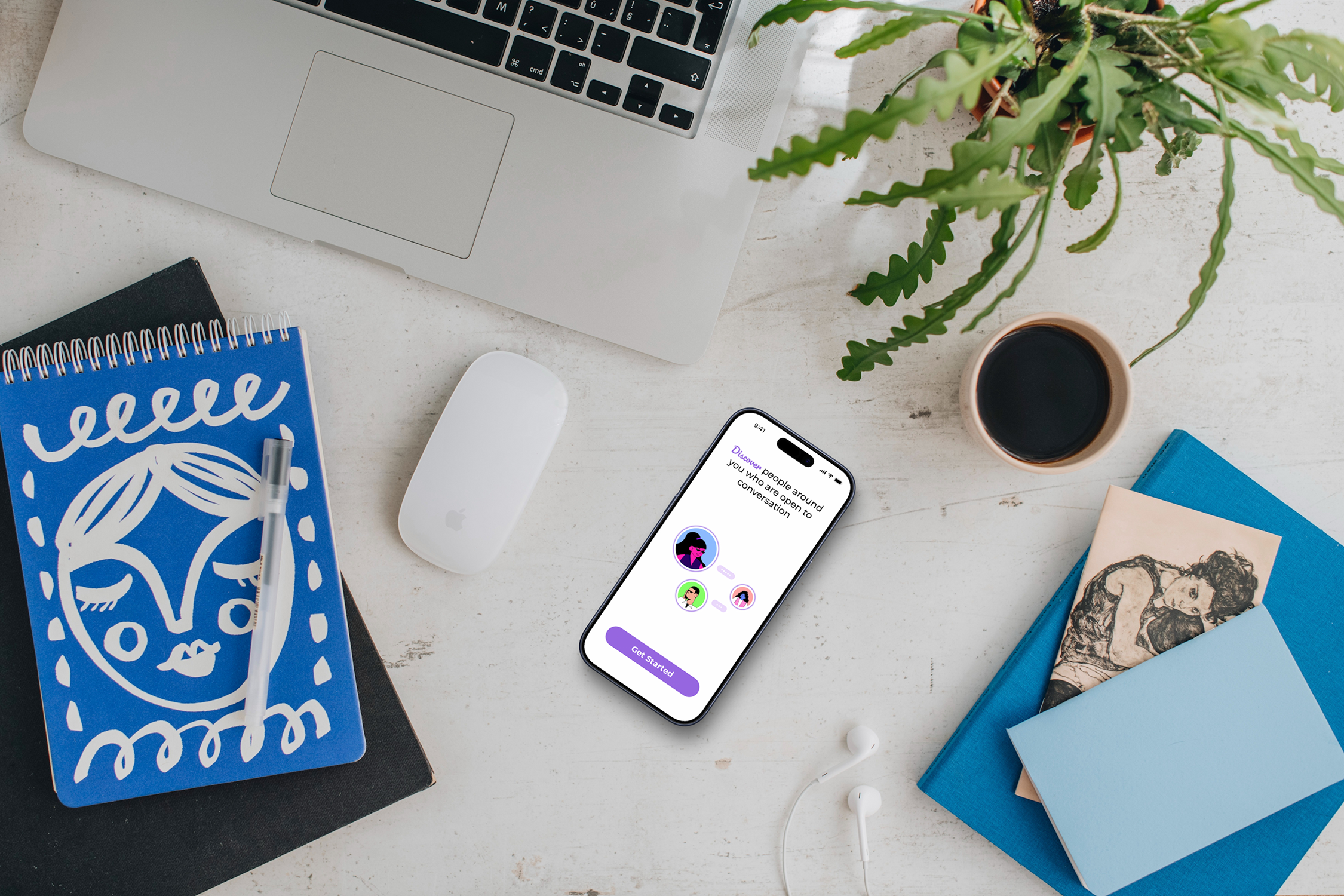
Halo is a proximity-based social discovery app that helps people connect with others around them who share similar interests and are open to conversation. Instead of awkwardly approaching strangers, users can view a visual Social Orbit that shows compatible people nearby.
Key features include:
(1) A Social Orbit interface that visualizes nearby people like planets orbiting the user (2) Avatar-based profiles to protect privacy and reduce social pressure (3) Interest-based matching to help people find meaningful connections (4) Consent-based interaction, where both users must accept before communicating
Halo transforms everyday spaces like cafes, libraries, campuses, and events into opportunities for comfortable real-world interaction.
How we built it
The project was designed using a user-centered UX approach.
First, we explored the problem of social hesitation in public spaces and identified the need for a low-pressure way to initiate conversations. The interface was designed using Figma, focusing on simplicity, clarity, and visual interaction.
Key design elements include:
(1) A minimal purple and white interface to create a calm and friendly environment (2) Illustrated avatar profiles instead of real photos to maintain privacy (3) A planet-inspired orbit visualization to represent compatibility and proximity (4) A simple onboarding flow using phone number authentication and OTP verification
The design prioritizes intuitive navigation, minimal cognitive load, and clear social signals.
Challenges we ran into
One of the main challenges was designing a system that encourages real-world interaction while still protecting user privacy.
We needed to balance:
(1) Visibility of nearby users (2) User safety and consent (3) Avoiding social pressure or awkward rejection
Another challenge was visualizing compatibility in a way that was easy to understand without overwhelming users with data. This led to the development of the orbit-based interface, where compatibility is represented visually through distance rather than complex metrics.
Accomplishments that we're proud of
We are proud of creating a concept that turns an invisible social barrier into a visible and approachable interaction.
Some of our key accomplishments include:
(1) Designing a unique Social Orbit discovery interface (2) Creating a privacy-first interaction model using avatars instead of real photos (3) Developing a clear user flow that reduces social friction (4) Designing a system that encourages real-world conversations instead of endless scrolling
The project successfully combines UX design, social psychology, and technology to improve everyday social experiences.
What we learned
Through this project we learned how design can influence social behaviour. We explored how subtle interface choices such as visual proximity, consent-based interaction, and avatar identity can reduce social anxiety and make people feel more comfortable connecting with others. We also learned the importance of responsible design when working with location-based social tools, especially regarding privacy, safety, and consent.
What's next for Halo – Your Social Orbit
Future improvements for Halo could include:
(1) Expanding discovery contexts such as events, campuses, and coworking spaces (2) Adding interest-based group conversations (3) Introducing optional real-time signals like "open to chat" status (4) Improving the orbit visualization with dynamic motion and interaction
Ultimately, Halo aims to create a world where shared spaces naturally lead to meaningful conversations and connections.
Built With
- figma


Log in or sign up for Devpost to join the conversation.