-
-
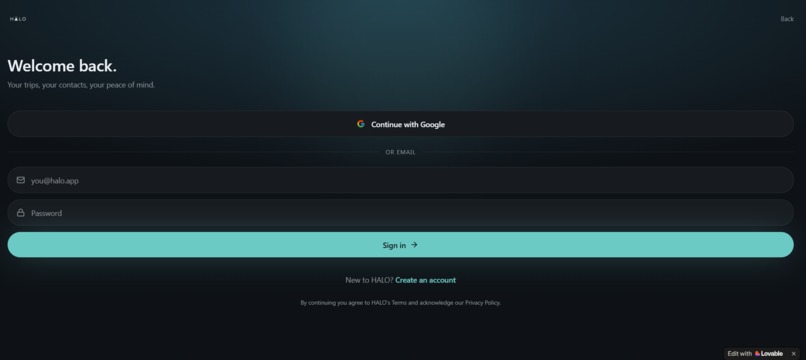
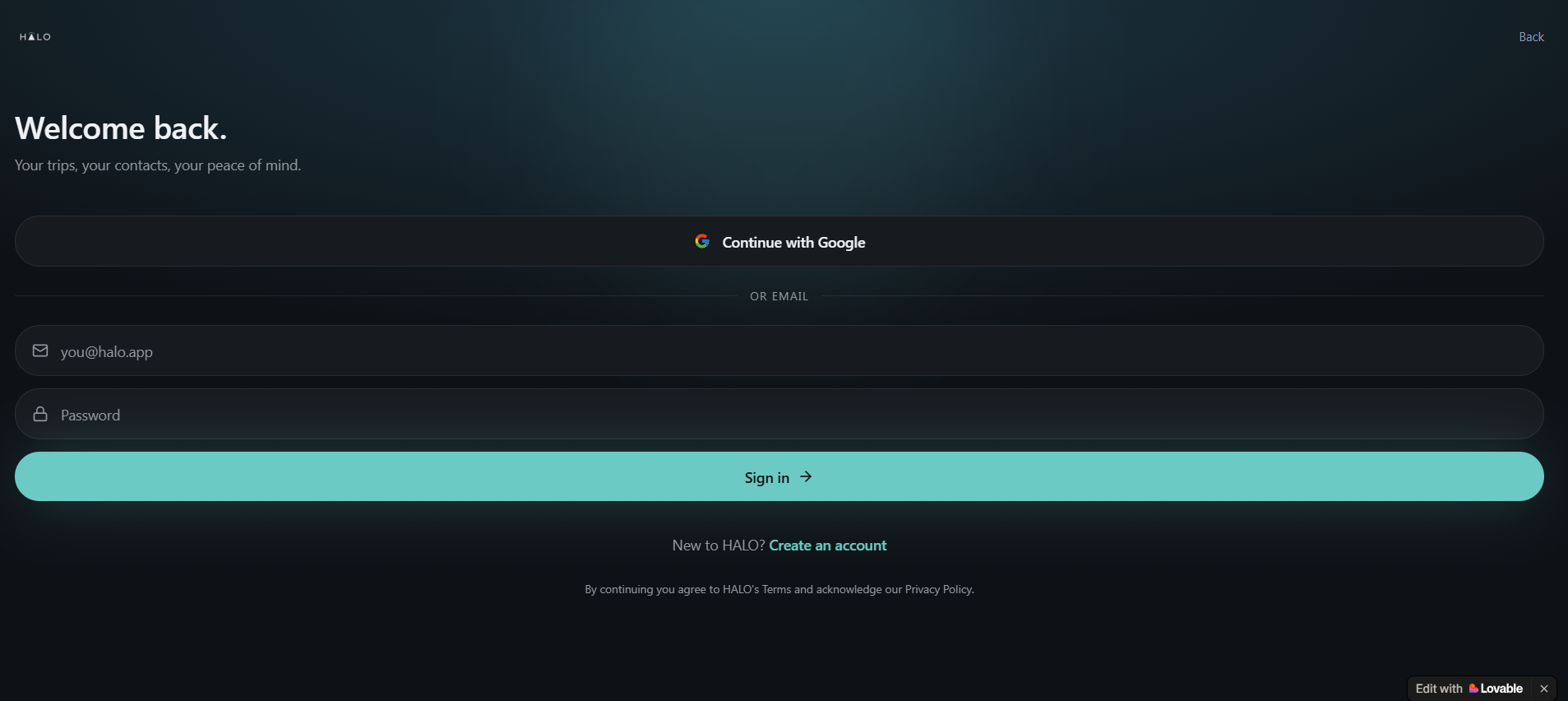
Halo - login page
-
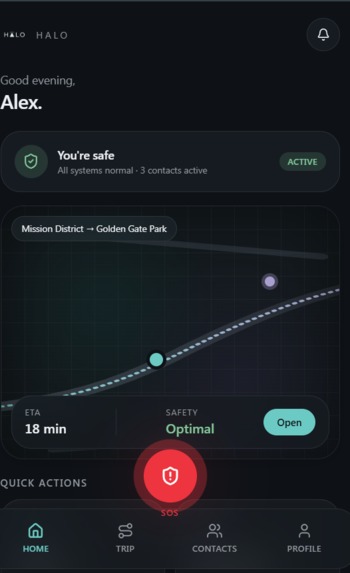
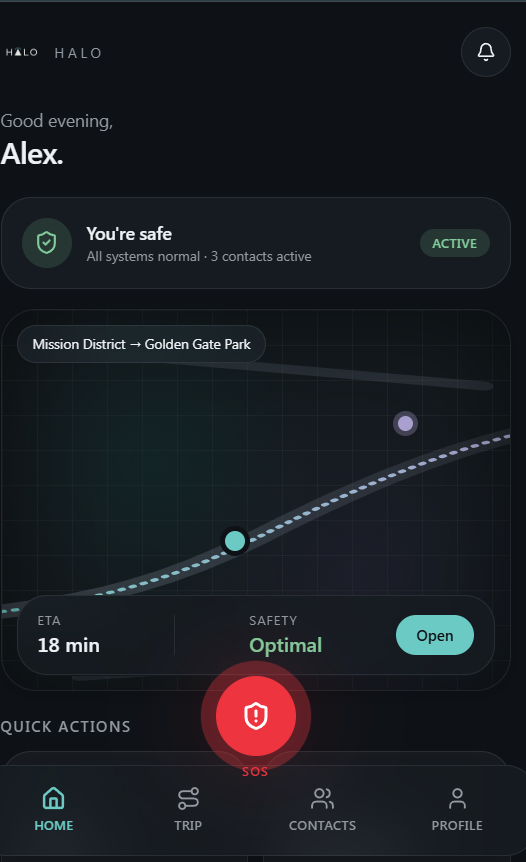
User started the trip
-
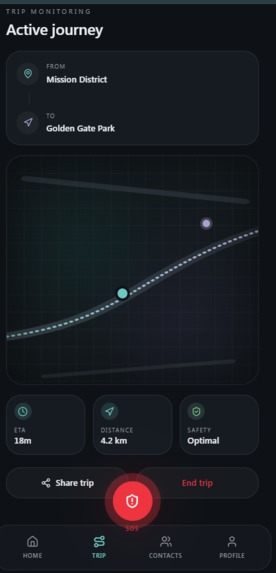
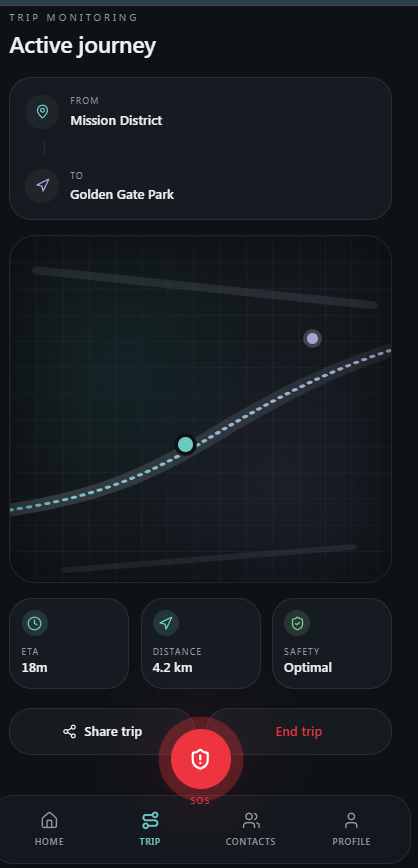
User gets guided to trip section
-
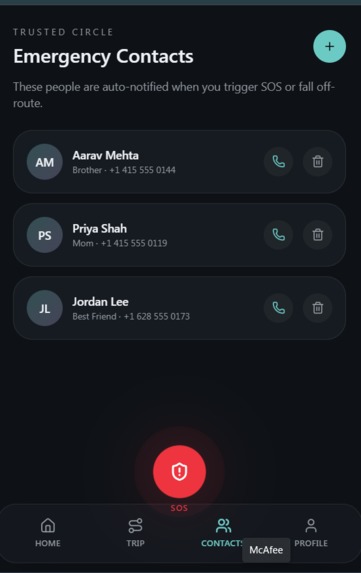
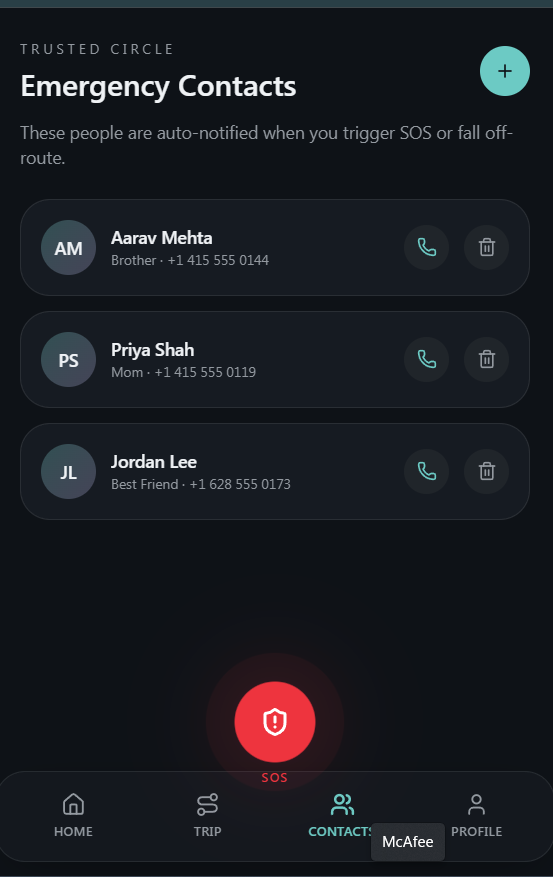
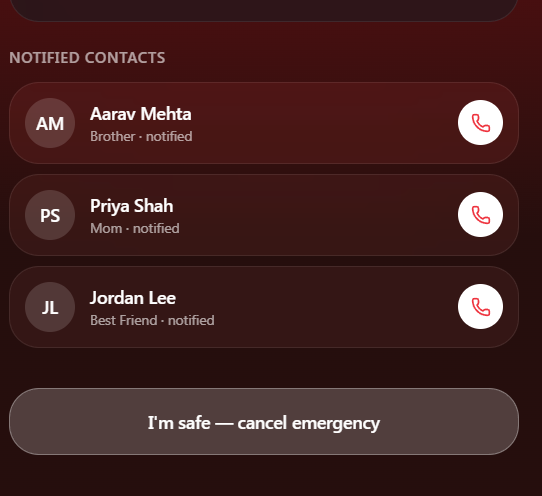
User's emergency contacts
-
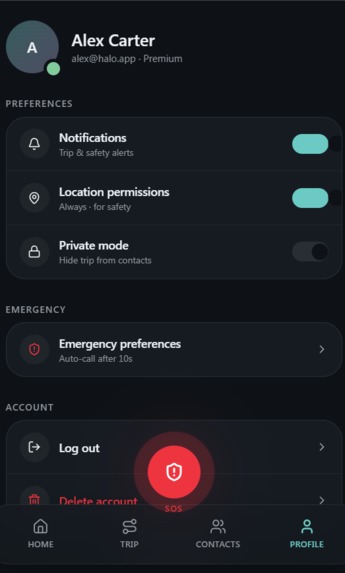
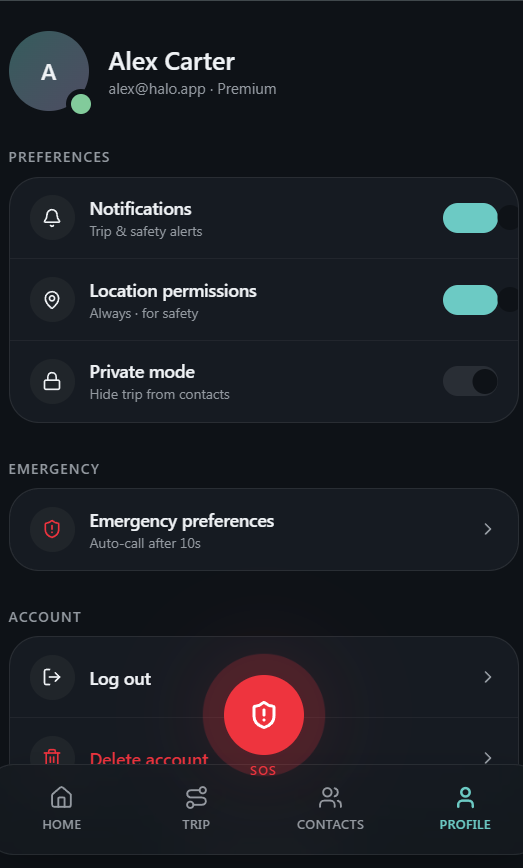
Profile page
-
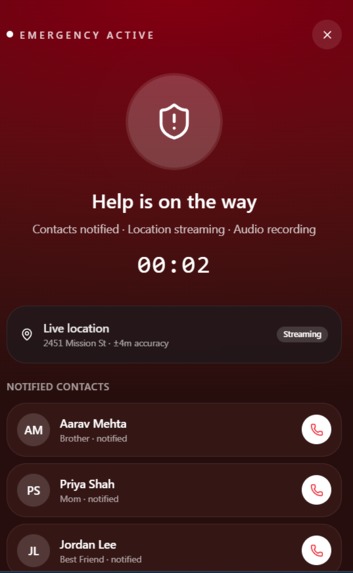
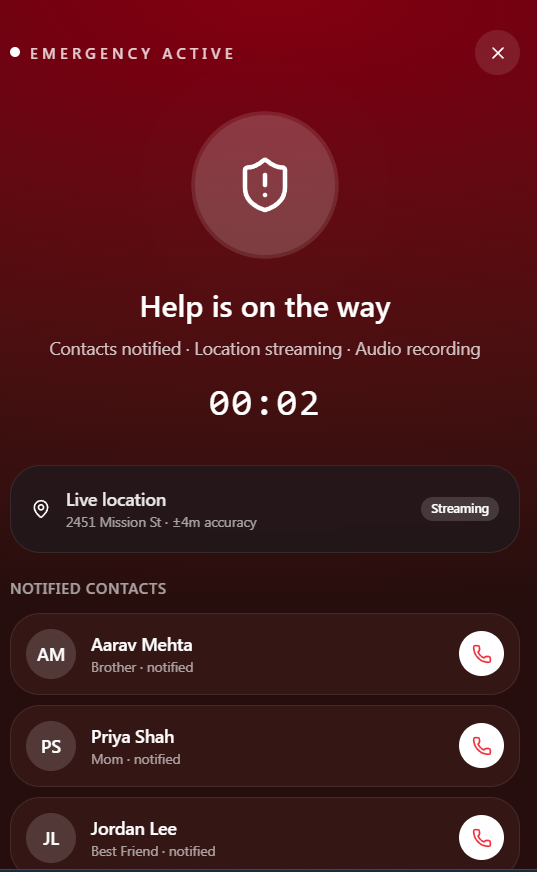
Sos helpline page
-
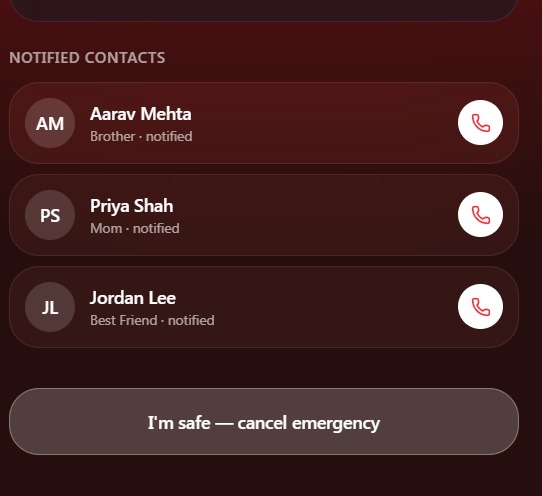
User's contacts are notified
-
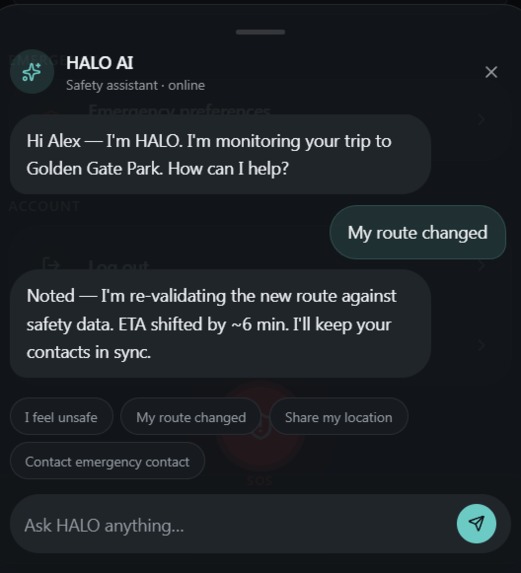
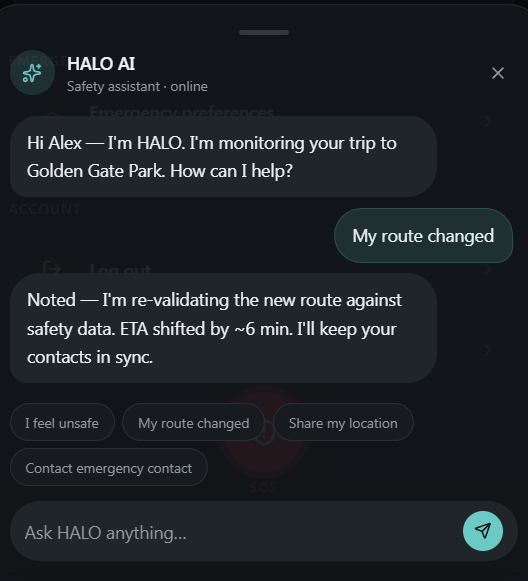
User can chat with the agent (Halo-AI)
HALO – AI Safety Companion
Inspiration
Personal safety remains a daily concern for millions of people, especially women traveling alone, commuting at night, or facing unexpected situations. While many safety apps focus only on emergency alerts, we wanted to create something more proactive—an intelligent companion that can guide users before, during, and after a potential safety incident.
This led us to build HALO, an AI-powered safety agent designed to provide real-time assistance, emergency support, and practical safety guidance whenever users need it most.
What It Does
HALO acts as a personal safety companion powered by Gemini. Users can:
- Chat with an AI safety assistant for situation-specific guidance.
- Receive immediate safety recommendations during potentially dangerous situations.
- Store and manage emergency contacts.
- Trigger SOS alerts and incident reporting workflows.
- Access safety-focused features through a simple and mobile-friendly interface.
Unlike traditional chatbots, HALO is designed to help users take action by providing practical next steps rather than generic information.
How We Built It
HALO was built using:
- React and TanStack Start for the frontend
- Node.js and Express for the backend
- Gemini for AI-powered reasoning and safety guidance
- MongoDB Atlas for storing contacts and incident-related data
- Vercel and modern web deployment tooling for hosting and testing
The frontend provides an intuitive user experience while the backend manages safety workflows, AI interactions, and data storage.
Challenges We Faced
One of the biggest challenges was integrating multiple services while maintaining a smooth user experience. We spent significant time troubleshooting database connectivity, deployment issues, routing configurations, and frontend build pipelines.
Another challenge was designing AI responses that remain concise, practical, and safety-focused. We refined prompts and workflows to ensure HALO provides actionable guidance rather than lengthy generic responses.
What We Learned
This project strengthened our understanding of:
- AI agent design and prompt engineering
- Full-stack application development
- MongoDB integration and data modeling
- Frontend deployment and SSR workflows
- Building user-centric safety applications
We also learned how important reliability, clarity, and speed are when developing tools intended for real-world safety scenarios.
Future Improvements
Future versions of HALO will include:
- Live location sharing
- Automated emergency notifications
- Voice-based SOS activation
- Predictive risk detection
- Enhanced incident tracking and reporting
- Deeper integration with emergency response systems
Impact
HALO demonstrates how AI can move beyond answering questions and actively help people make safer decisions. By combining intelligent guidance with practical safety tools, HALO aims to provide users with confidence, support, and actionable assistance when it matters most.


Log in or sign up for Devpost to join the conversation.