-
-
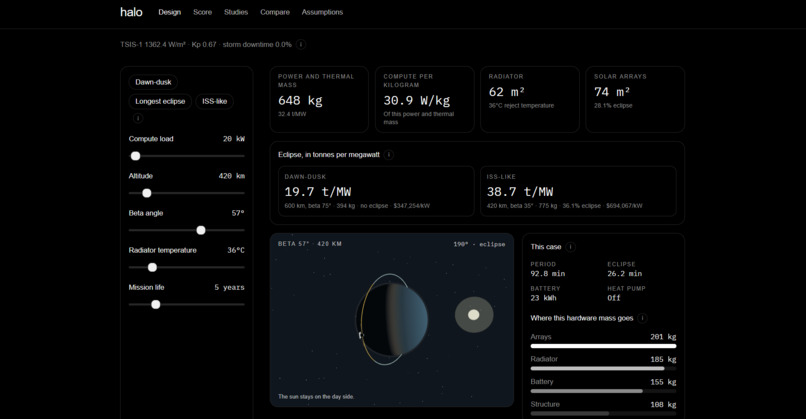
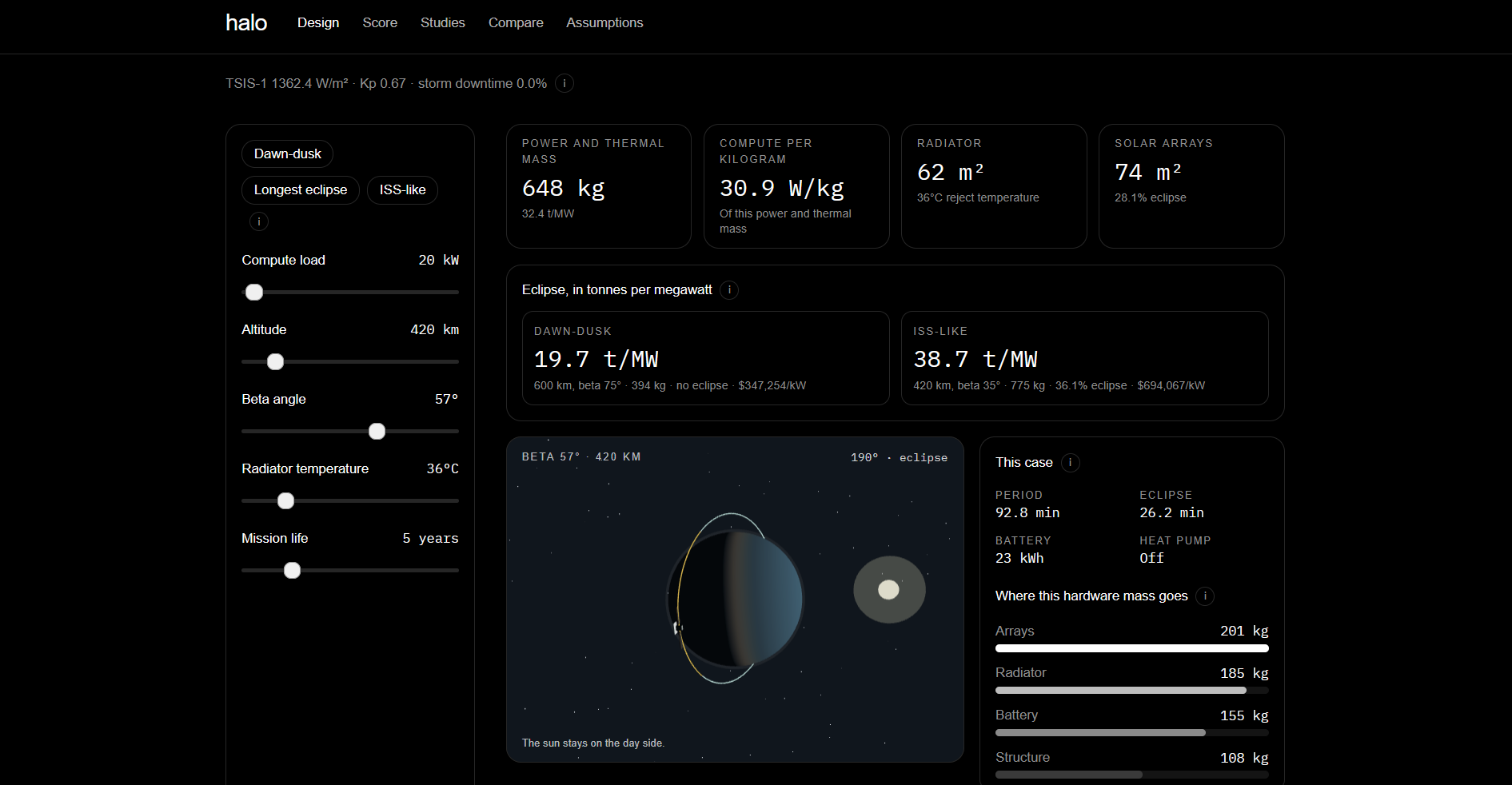
home page
-
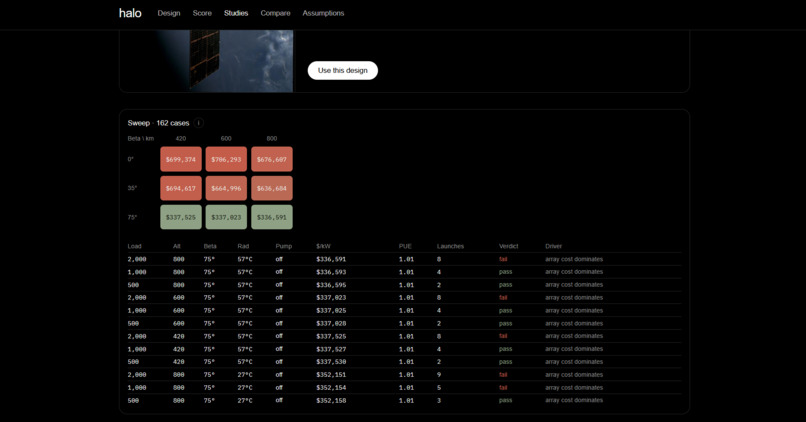
run study
-
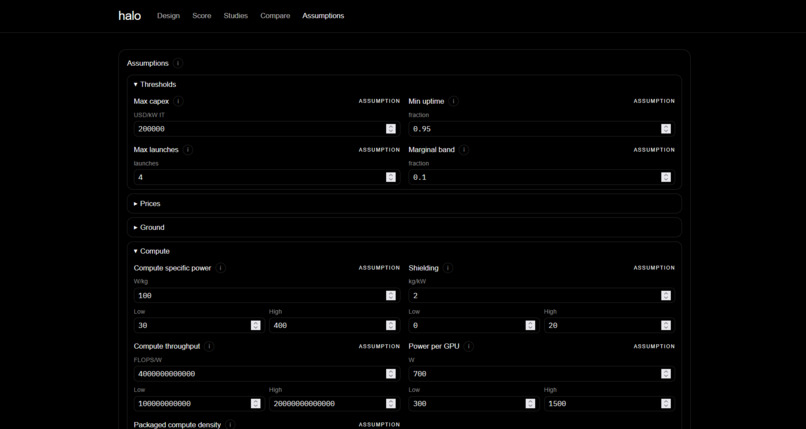
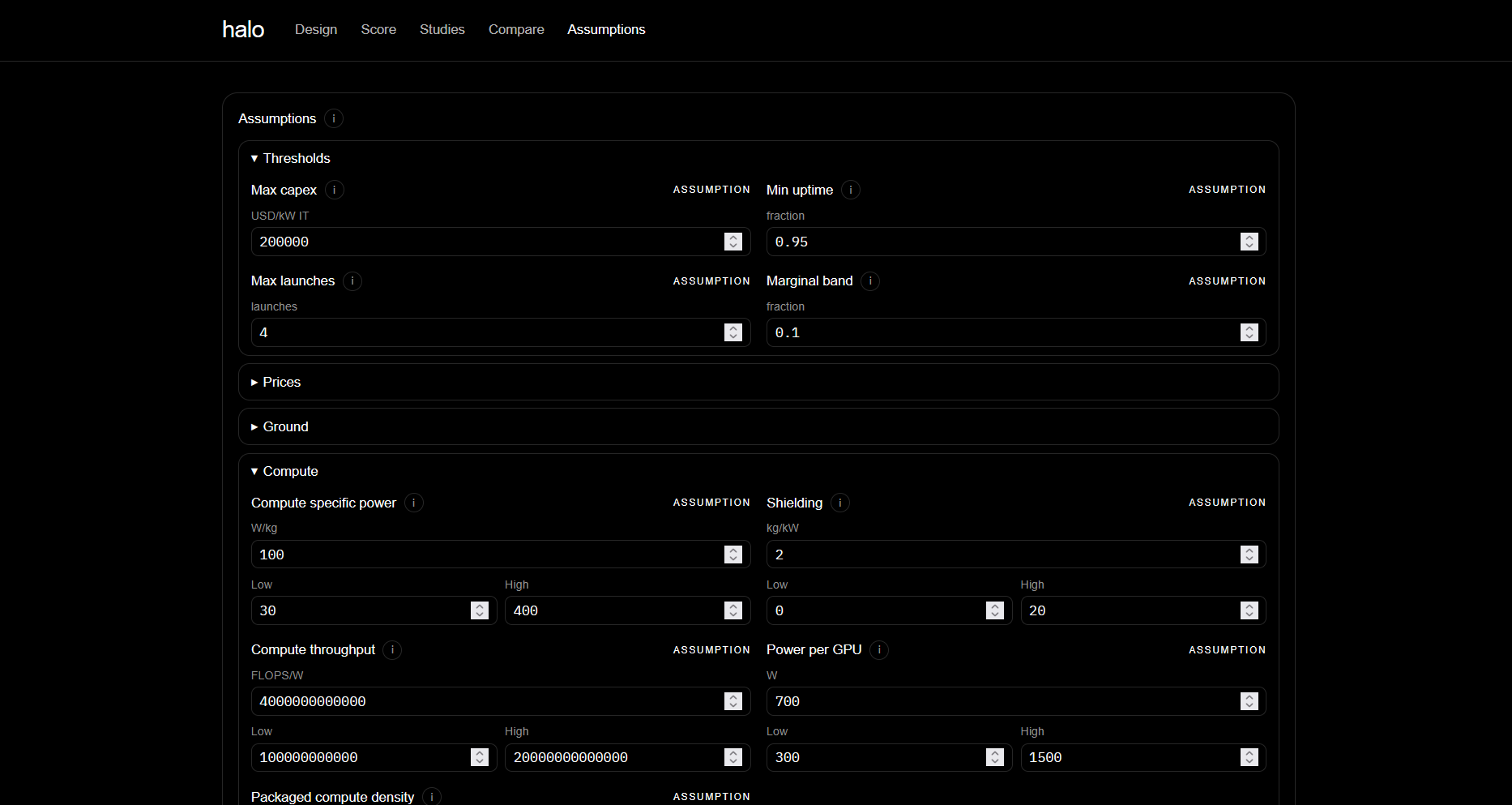
ideal assumptions
Inspiration
Halo is something we've built because data centers are moving up into space, and we want that to become a feasible reality. We hope it becomes the first-pass screening tool companies use to test whether their orbital designs are technically and financially viable.
What it does
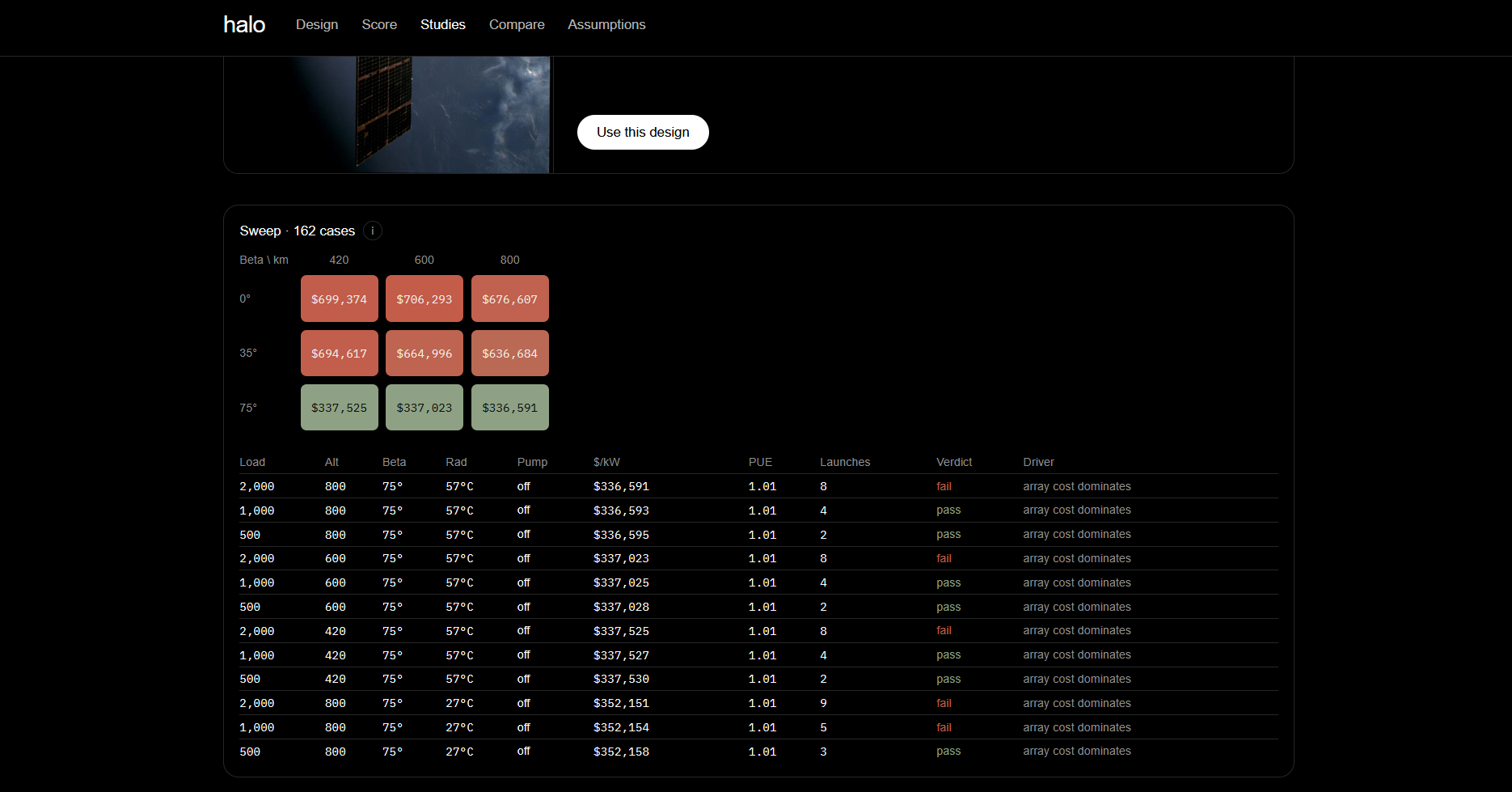
Halo is an orbital data center screening tool, you give it a compute load, circular orbit, and cost caps, and it returns solar array sizing, battery and mass requirements and cost per kilowatt for a variety of parameter ranges to determine best design philosophy. This allows companies who want to send data centers into space a first step to determine if their theoretical designs are feasible and financially viable.
How we built it
Frontend & UX
- React + Vite for the sliders, scorecard, and sweep
- Three.js for a 3D orbit view with the sun on the day side
Physics & Backend
- Python code that sizes the solar array, radiator, battery, and mass
- FastAPI to serve the results to the page
Live Space Data
- LASP LISIRD for real solar irradiance
- NOAA SWPC for space weather
Challenges we ran into
- Getting the heat math to balance
- Sizing up to many cases per sweep without slowing the page
- Turning sized hardware into a cost comparison against a ground data center
- Deciding which parameters belong in a data center optimization tool
Accomplishments that we're proud of
- Built a fully functioning tool that enables data center optimization in space
- Uses real data to support the model
- Sweeps hundreds of orbits to find the cheapest design, reports a break-even launch price, and charts what moves dollars per kilowatt
What we learned
We learned how to combine live space data with physics-based sizing, turning raw solar and space weather readings into a clear design verdict for orbital data centers. We also learned how to build a full pipeline from a Python engine to a web interface, so every result can be traced back to an assumption and tested against real conditions.
What's next for Halo
- Debris modeling to ensure structural stability
- More ideal assumptions for a closer match to real conditions
- CAD interfaces for exporting and refining designs


Log in or sign up for Devpost to join the conversation.