-
-
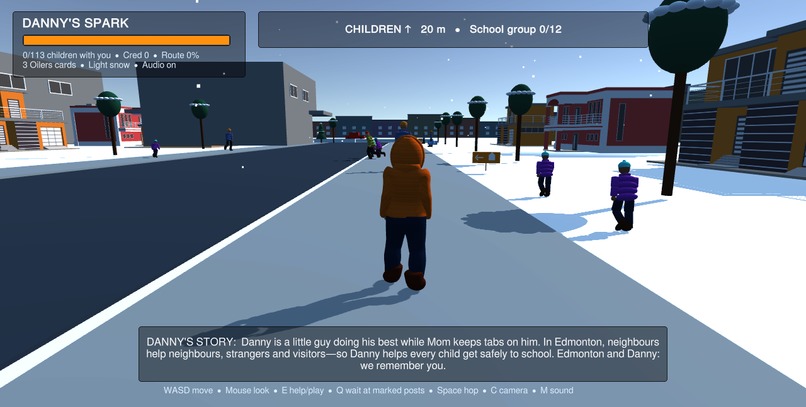
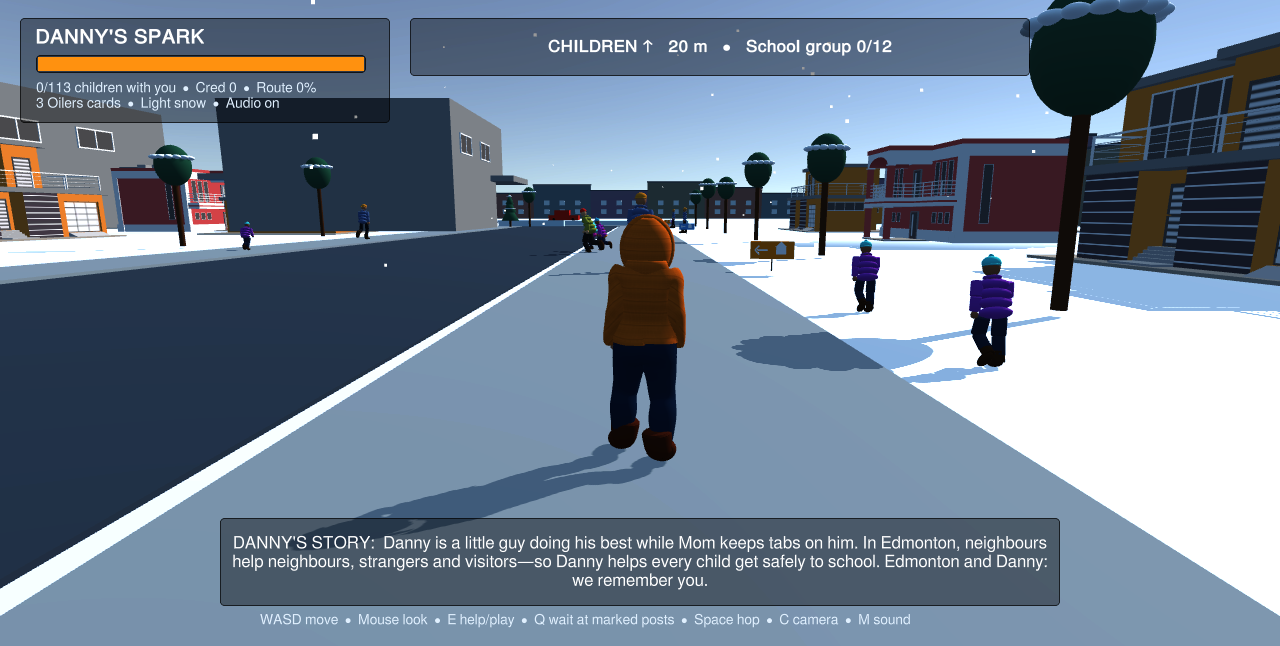
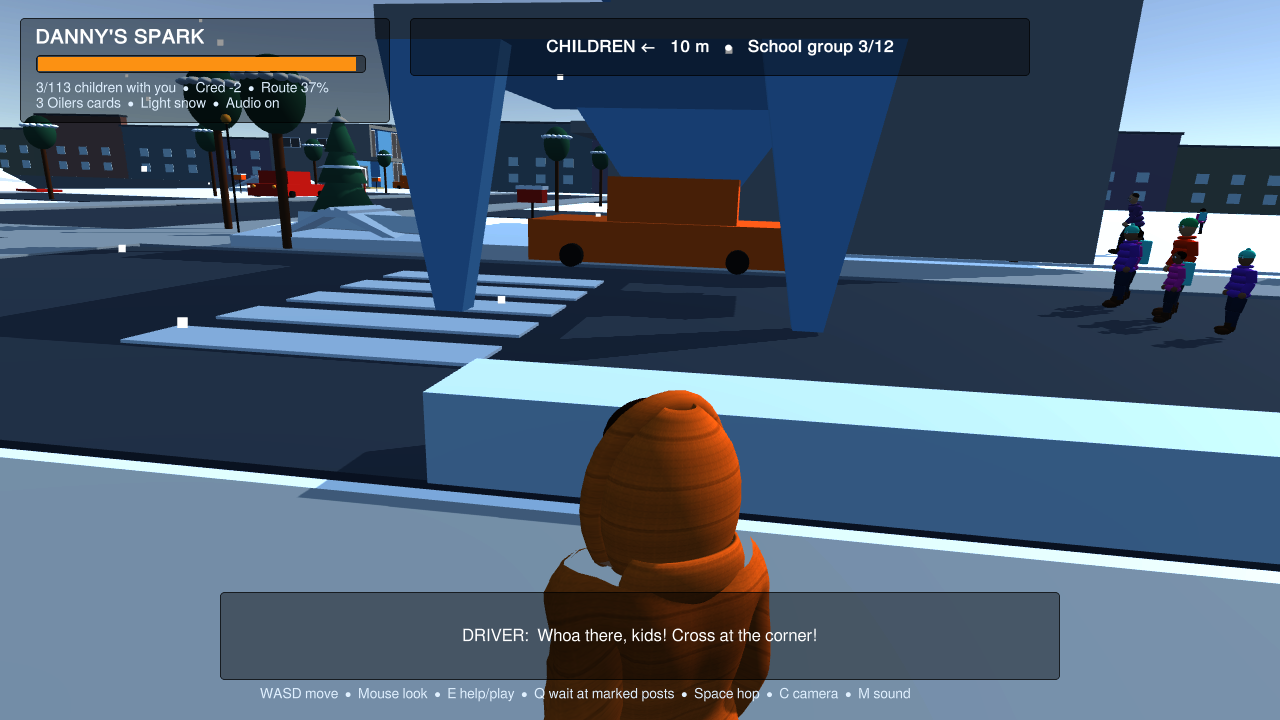
1. The School Run Begins — Danny leaves home and sets out across a snowy Edmonton neighbourhood to gather the children for school.
-
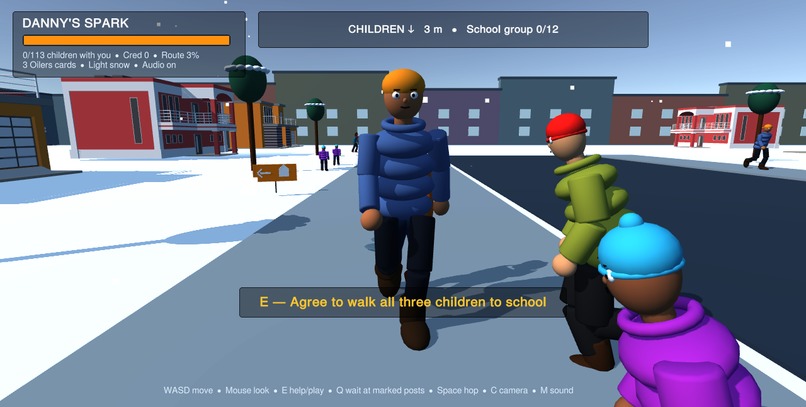
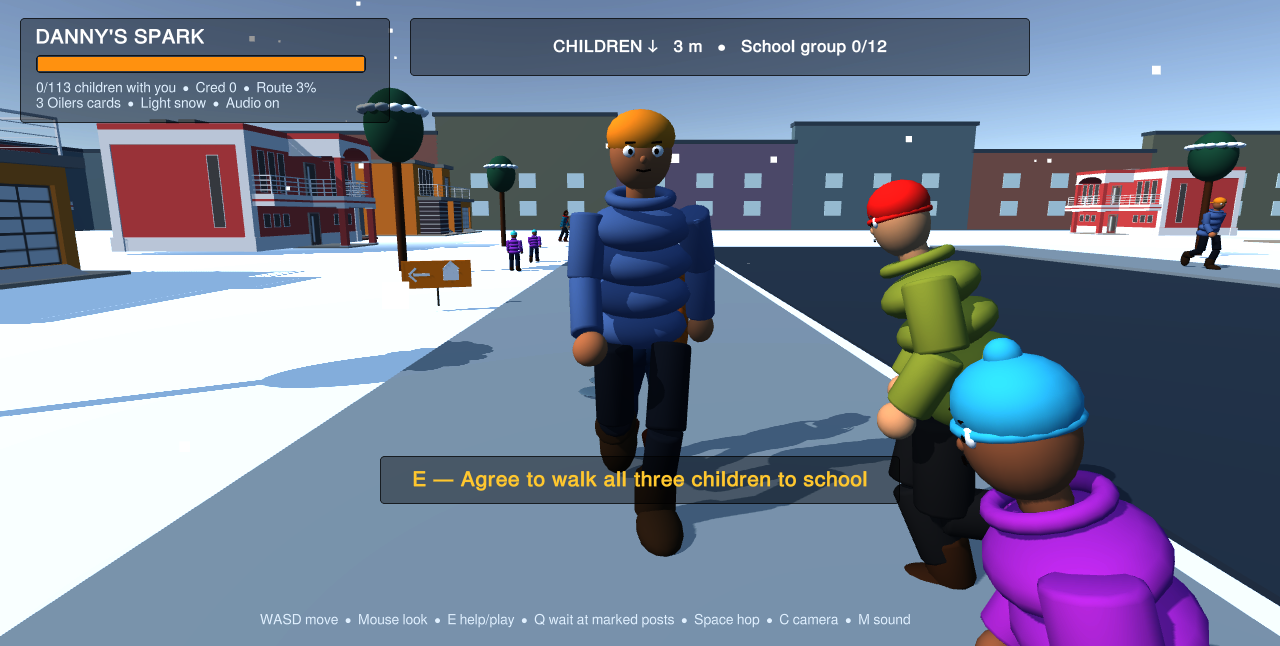
2. Mom Has Entered the Conversation — Danny meets the waiting children while Mom delivers another loving—and slightly embarrassing—reminder.
-
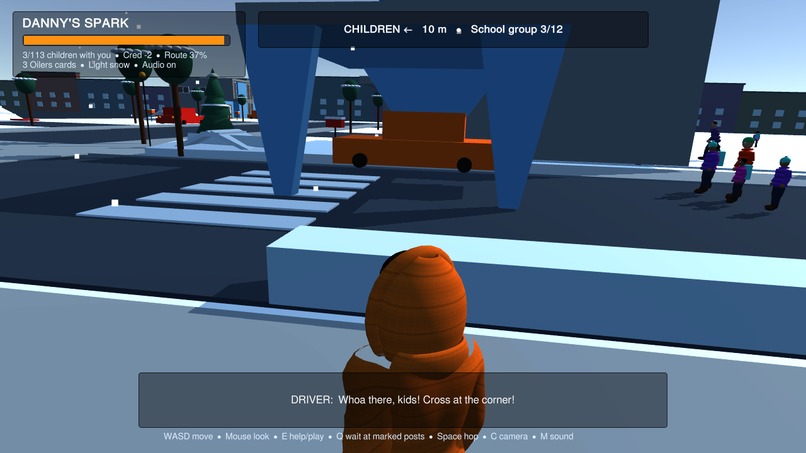
3. Street Hockey Detour — A lively street-hockey game turns the journey to school into another unpredictable neighbourhood adventure.
-
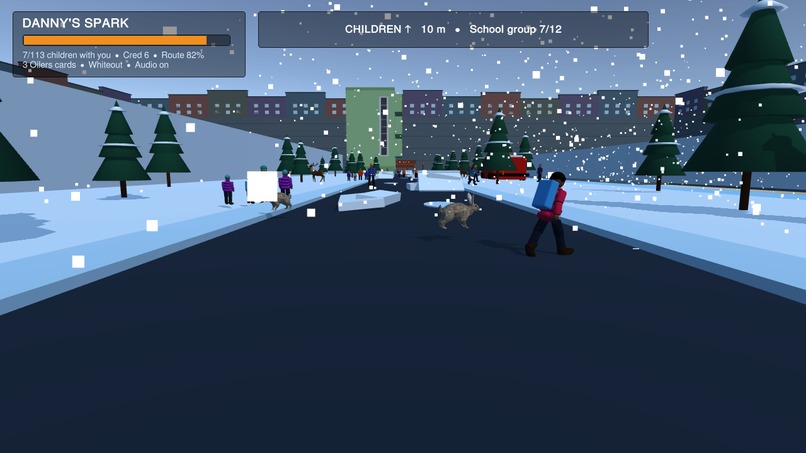
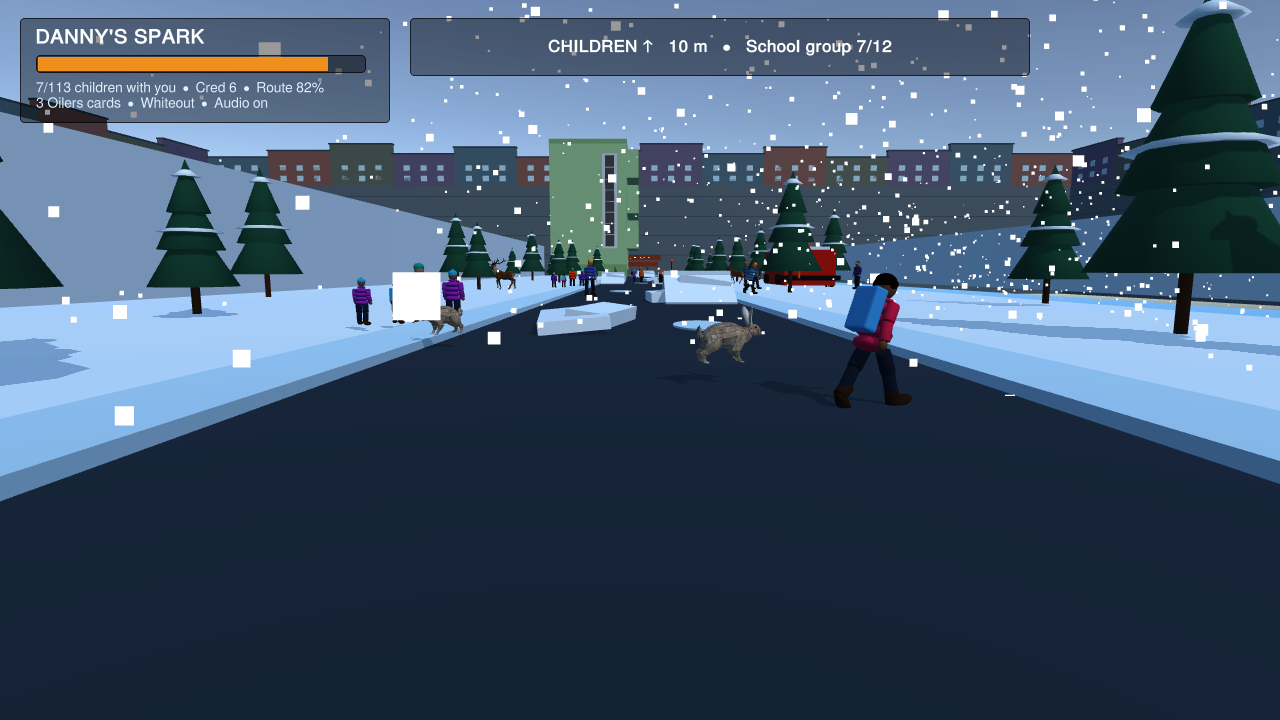
4. Through the River Valley — Danny guides the growing group through heavy snow, wildlife, traffic, and the hazards of an Edmonton winter.
-
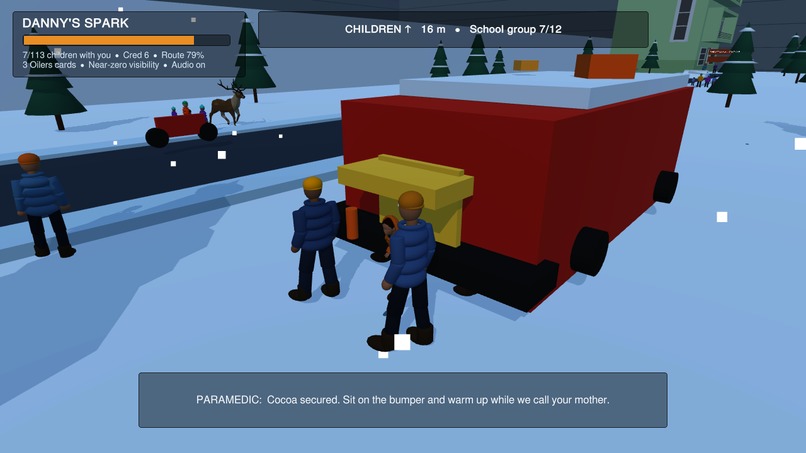
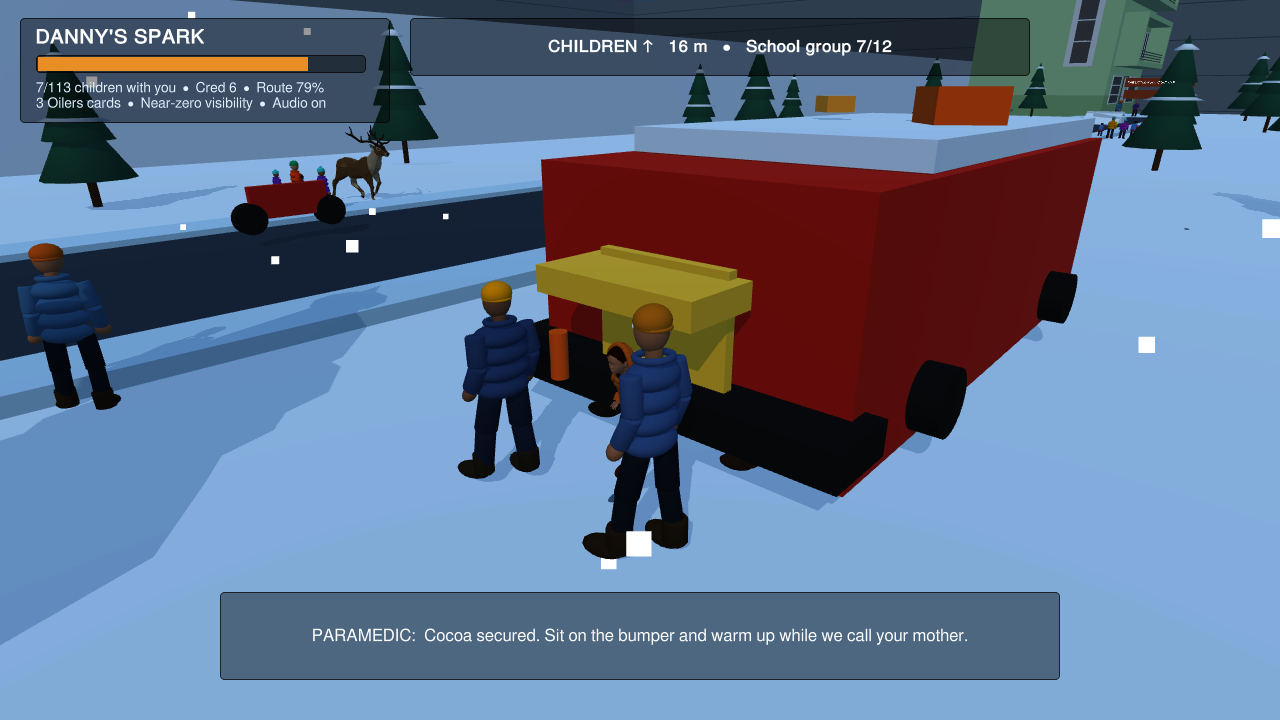
5. Rescue, Blankets, and Hot Cocoa — The emergency team gets everyone warm and safe after a freezing River Valley mishap.
-
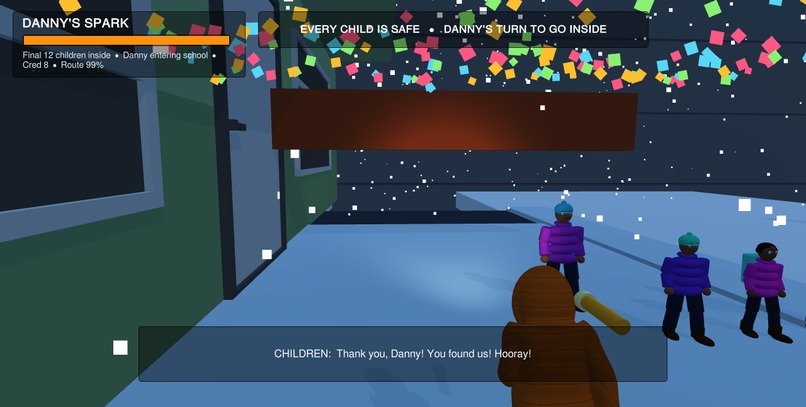
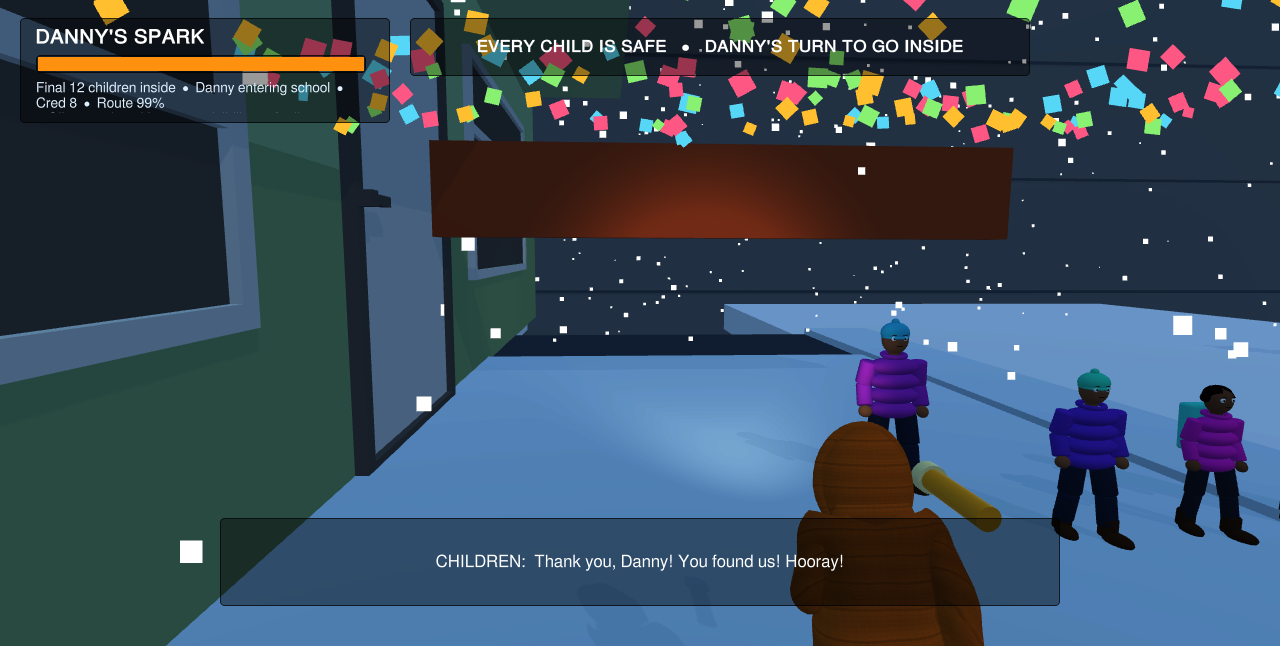
6. Every Child Made It! — The children celebrate with cheers and confetti as Danny completes the school run.
Inspiration
The Littles: Edmonton School Run began with a real person named Danny. During a difficult time when I had nowhere to stay, Danny treated me with kindness and gave me somewhere safe to be. I have never forgotten that.
I lived in Edmonton for many years. I found love, lost love, built lasting friendships, and experienced both the best and worst of times. It eventually became too cold for me to stay, but part of my heart will always be there.
This game is my thank-you to Danny and to the people of Edmonton and Alberta. You deserve more recognition for the kindness, friendship, and hope you give others.
What it does
A fierce Edmonton snowstorm has scattered children throughout the neighbourhood. Danny chooses to search for them and bring them safely to school.
Across three levels, players explore streets, parks, houses, and the river valley. They find missing children, keep the growing group together, and guide everyone through the storm.
Later levels introduce darkness, a flashlight, wildlife, longer searches, dangerous weather, and larger groups of children. Danny’s mother also keeps checking on him while he tries to help the neighbourhood.
I wanted to create a nonviolent game. There are already many games about shooting and fighting. This game is about responsibility, community, persistence, and helping people.
How we built it
The game was built in Unity using C#. I normally develop with Unreal Engine, so changing engines was a major learning experience.
We created systems for exploration, dialogue, objectives, following children, group movement, snowstorms, flashlight use, level progression, mobile controls, and the final return to school.
The project had almost no budget, so it combines original work, custom code, in-house construction, and properly licensed assets.
ChatGPT and Codex were major development partners. They helped turn rough ideas into working systems, diagnose problems, test builds, and improve the experience. OpenAI also provided a month of access that helped make this development possible.
Challenges we ran into
One of the greatest challenges was developing the game while I could effectively use only one arm. Ordinary development tasks took much longer, but I kept working.
Other challenges included learning Unity, building without a meaningful art budget, making groups of children follow Danny without colliding or getting stuck, adapting keyboard interactions for Android touch controls, and keeping the game understandable during a heavy snowstorm.
The project also taught us when to stop adding features and concentrate on finishing.
Accomplishments that we're proud of
We are proud that the game became a complete three-level experience rather than remaining an unfinished prototype.
Danny can explore the neighbourhood, find missing children, form a growing group, survive the whiteout, use a flashlight, encounter wildlife, and return everyone safely to school.
We are especially proud that the game tells a nonviolent story about ordinary kindness. Danny does not save the world by fighting. He helps children through dangerous weather and does his best for his community.
What we learned
We learned a great deal about Unity, Android development, player guidance, camera design, group-following behaviour, mobile controls, performance, accessibility, and testing a complete experience.
We also learned that limitations can encourage creativity. A small game made with limited resources can still carry a meaningful story.
Hackathon deadlines provide useful discipline. We do not enter expecting to win. We participate because the structure encourages us to learn, finish our work, and build within clear guidelines.
What's next for The Littles: Edmonton School Run
The Android release is waiting for Google Play developer verification and may not complete before the hackathon deadline. The game will remain free either way.
A directly installable Android build and the publishable project source will be available so the game can still be played and evaluated.
After release, we hope to improve the children’s movement, animations, mobile interface, accessibility, environmental detail, and overall polish.
Thank you to Danny, our friends, the people of Edmonton, OpenAI, and the Devpost community.

Log in or sign up for Devpost to join the conversation.