Inspiration
The inspiration behind Hallucination Hunter came from a simple problem: AI tools are becoming part of our daily lives, but they do not always provide correct information. Tools like ChatGPT, Gemini, and Claude can sometimes generate incorrect facts with great confidence. We wanted to build something that helps people verify AI-generated information instead of blindly trusting it.
What We Built
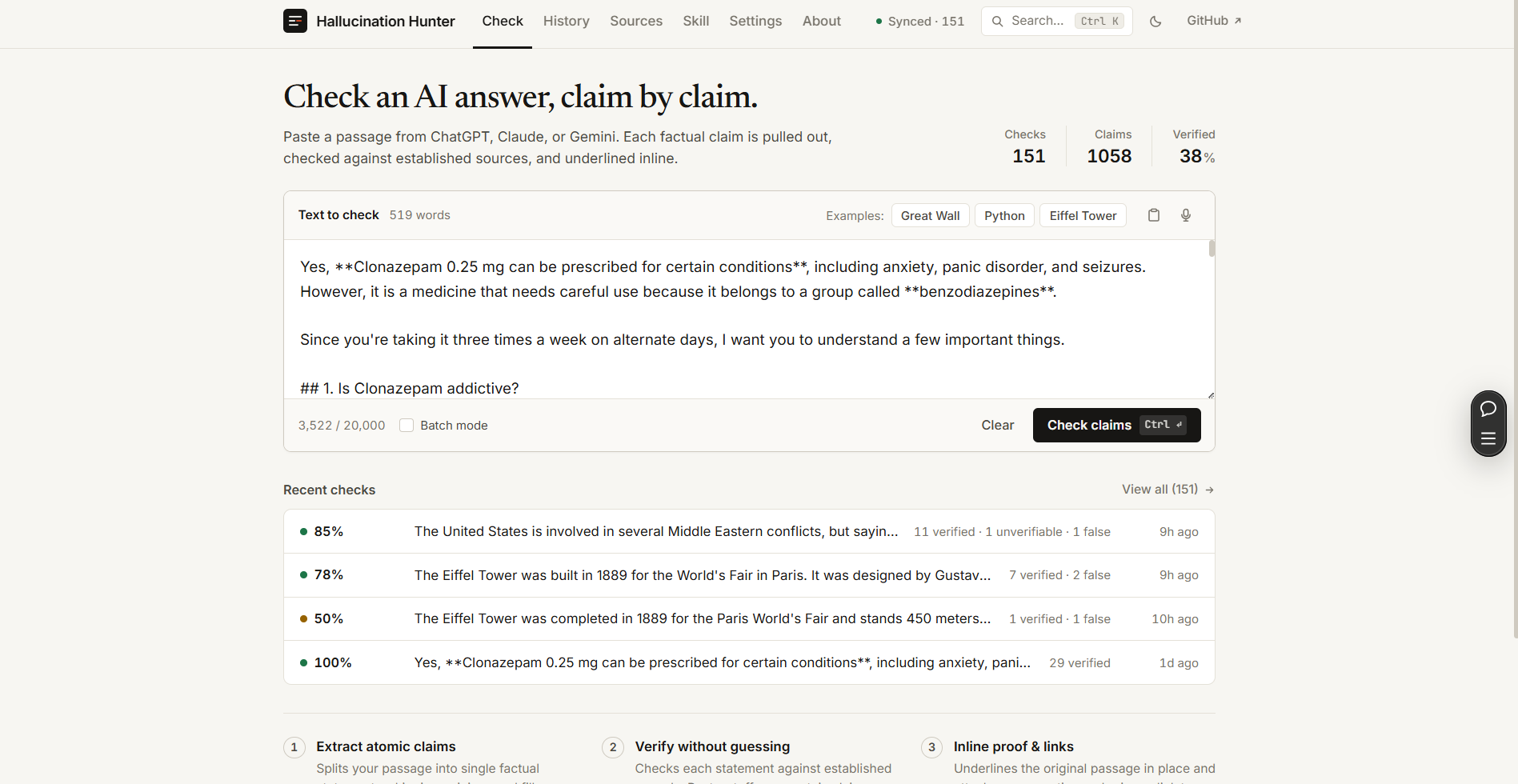
We developed Hallucination Hunter, an AI-powered claim-level fact verification platform. It follows a multi-step, agent-oriented workflow to analyze information:
- Extracts individual factual claims from AI-generated text.
- Verifies each claim independently using AI and source search.
- Classifies results as Verified, Wrong, or Unverifiable.
- Provides confidence scores, source references, and explanations.
- Suggests corrections for incorrect claims.
- Calculates an overall trust score.
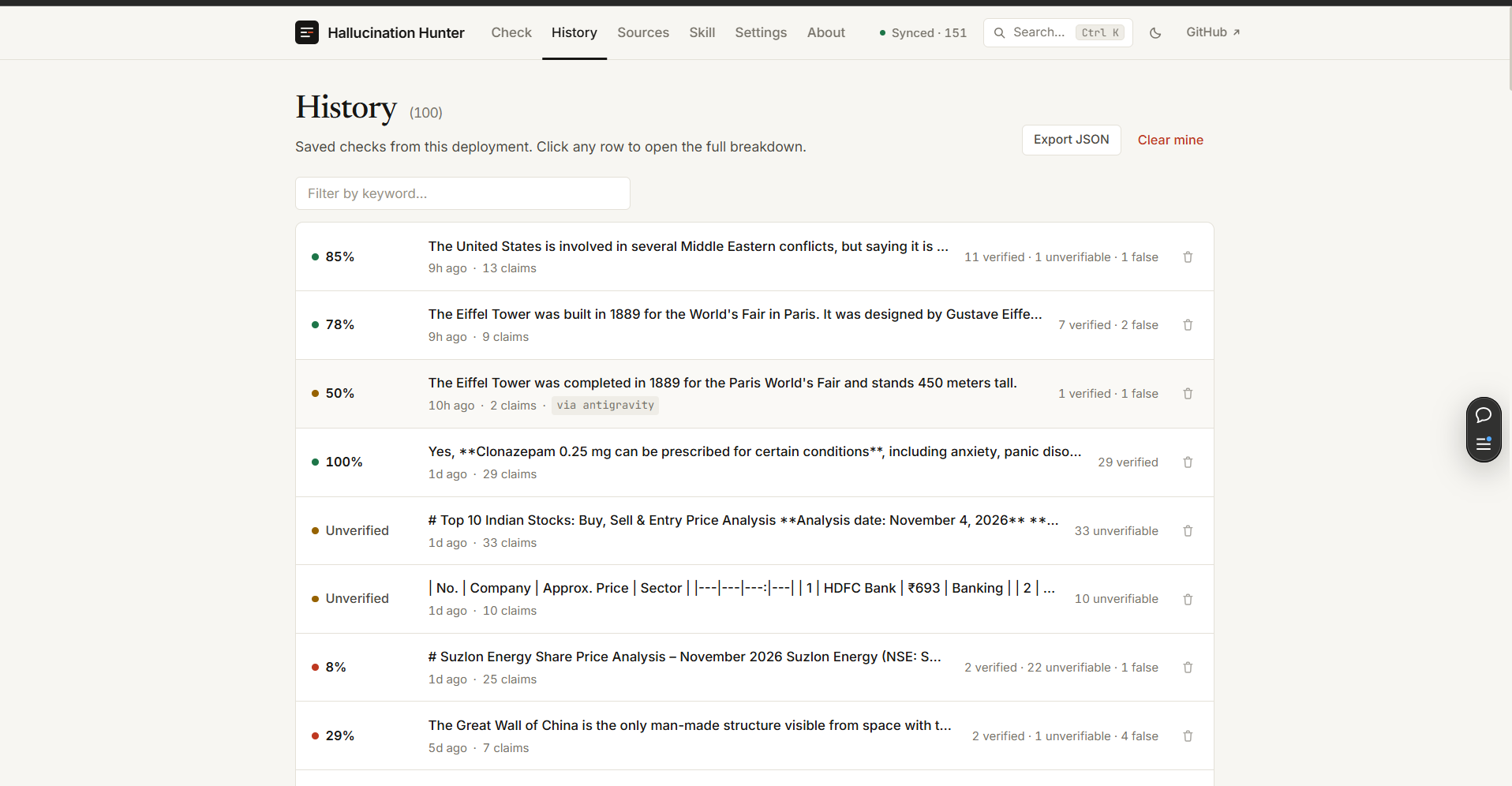
- Saves previous analyses using Supabase.
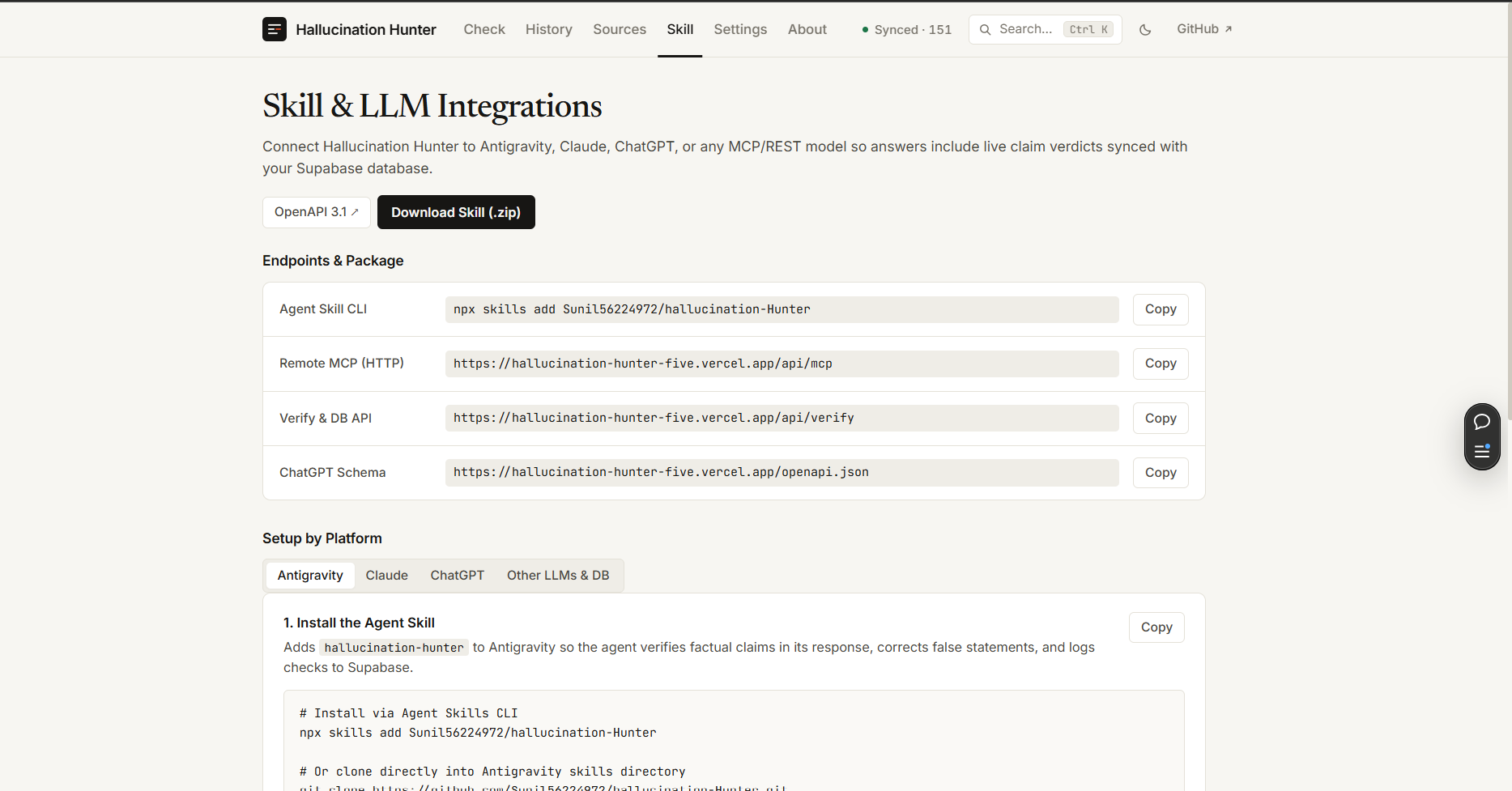
We also developed voice input, batch analysis, a searchable history dashboard, PDF reports, and a Chrome extension to make fact-checking easier.
How We Built It
We used HTML, CSS, and JavaScript for the frontend, Groq API with GPT-OSS-120B for AI-powered analysis, Google Custom Search for source discovery, Vercel Serverless Functions for backend processing, and Supabase with PostgreSQL for storing analysis history.
The system follows a structured workflow: user input → claim extraction → individual claim verification → source attribution → trust score → final results.
What We Learned
During development, we learned how to integrate large language models, design multi-step AI workflows, extract factual claims, retrieve supporting evidence, manage databases, and build secure API integrations. We also learned that identifying an incorrect claim is not enough; users need understandable explanations and supporting sources.
Challenges We Faced
One of our biggest challenges was handling multiple factual statements in a single paragraph. We had to structure the analysis so that each claim could be evaluated independently. Other challenges included handling uncertain information, finding relevant sources, managing AI response accuracy, reducing processing time, protecting API keys, and maintaining reliable analysis history.
Future Vision and Impact
Our vision is to make Hallucination Hunter a reliable verification layer for the AI ecosystem. We want to help students, researchers, developers, and professionals identify misleading AI-generated information before using or sharing it.
We believe AI should not only generate answers but also make it easier for people to question, investigate, and verify those answers.
Hallucination Hunter — Don't Trust. Verify.**

