-
-
Halloween Candy Reclaim (Main Logo)
-
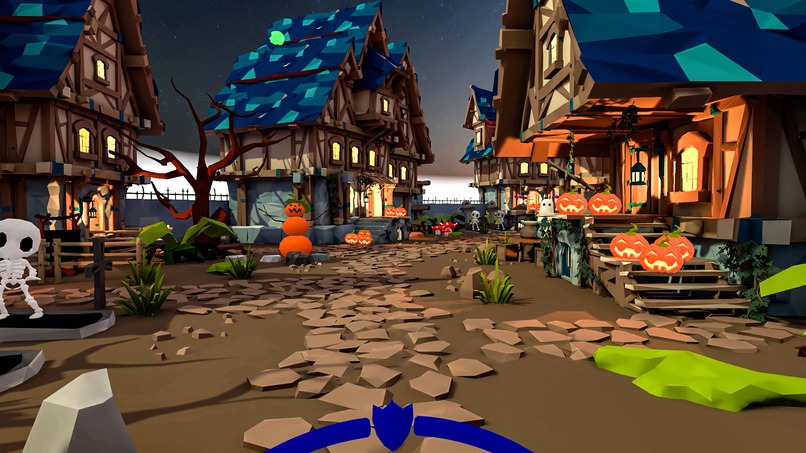
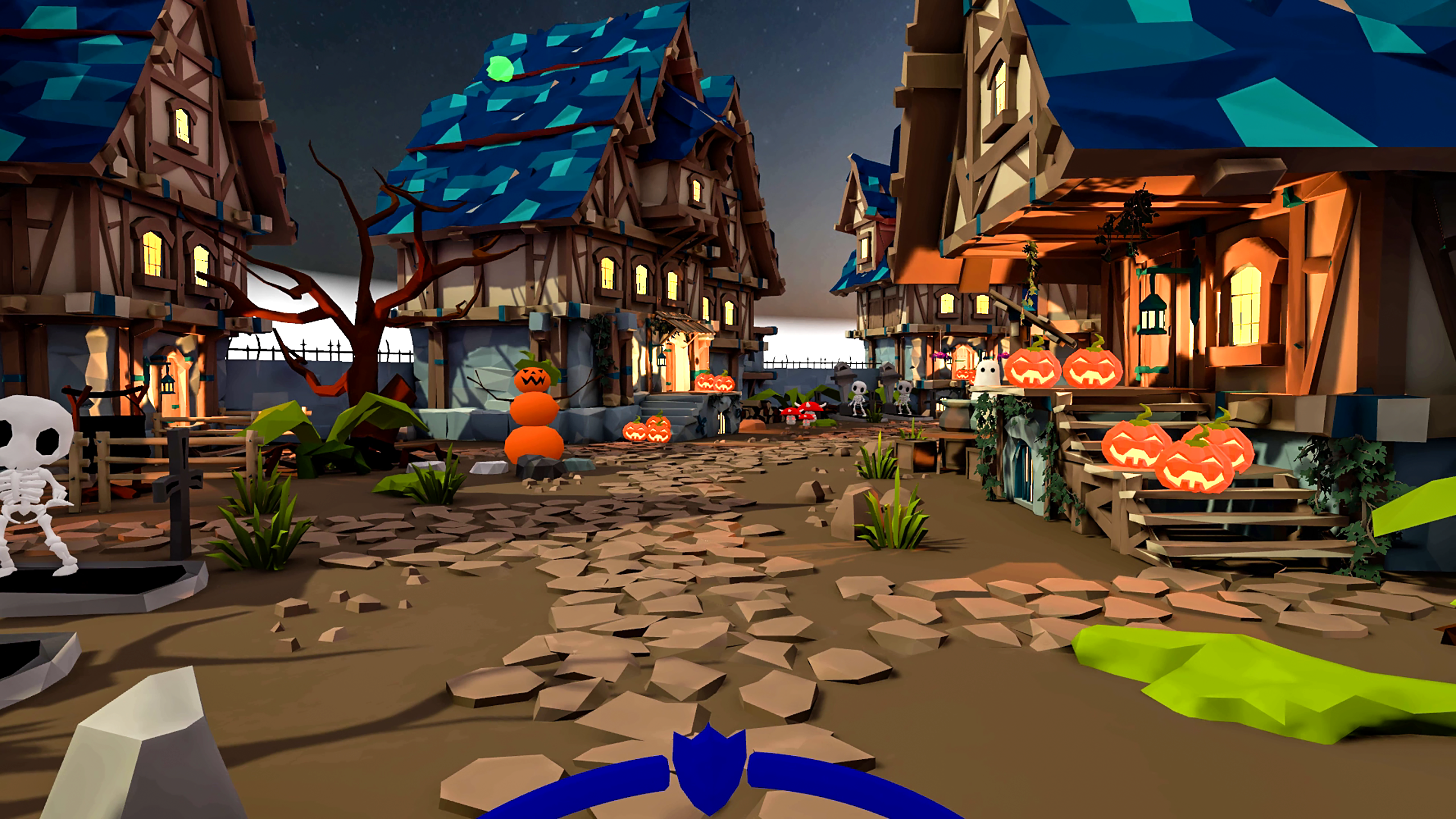
Screenshot - Level
-
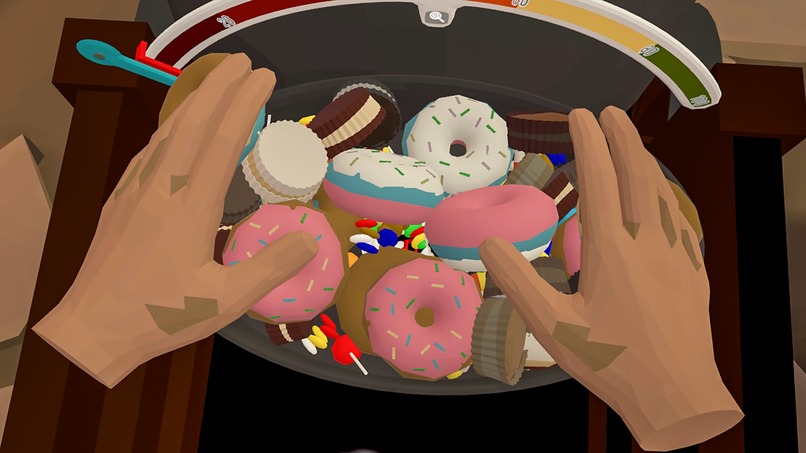
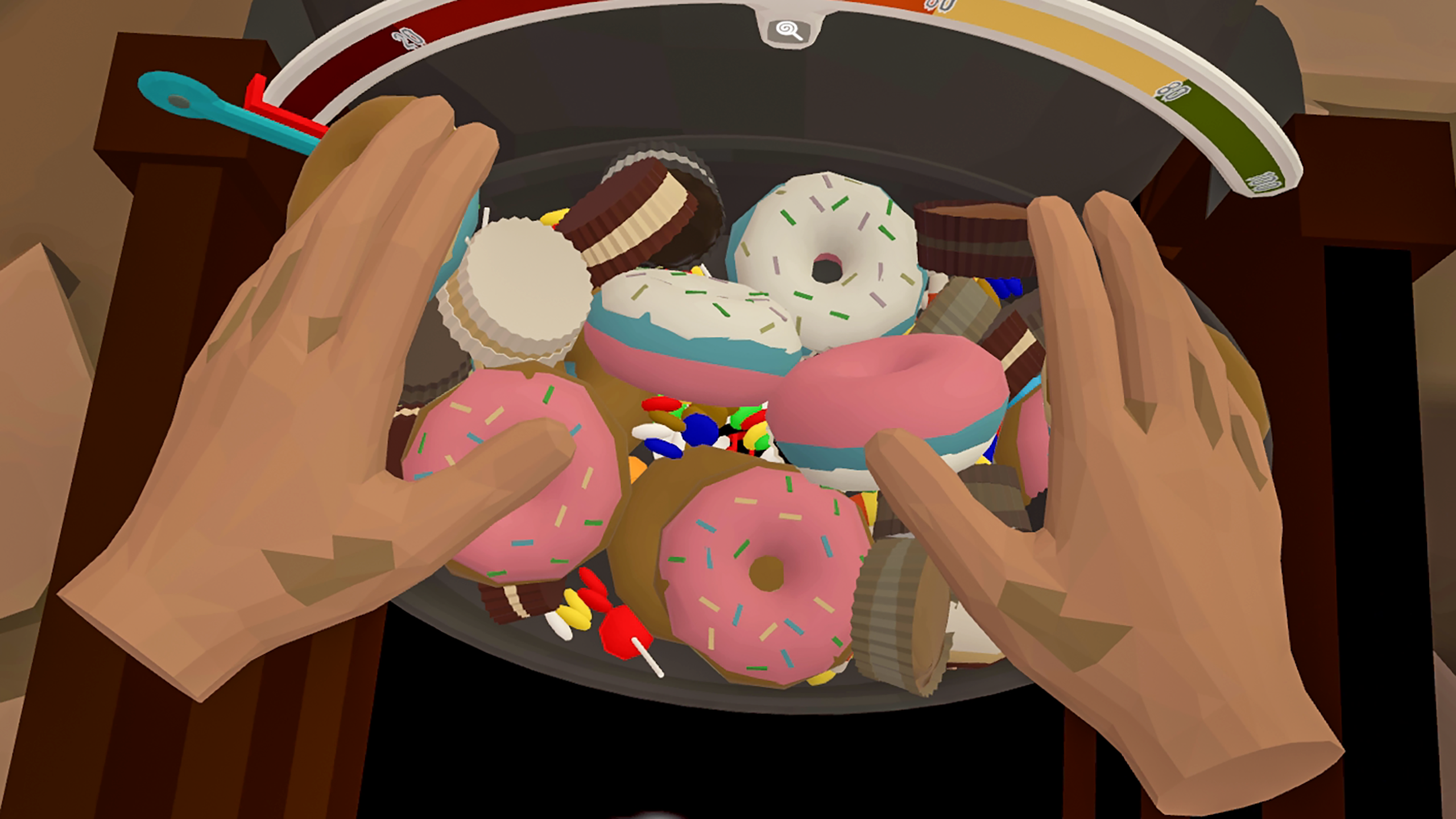
Screenshot - Lots of Candy!
-
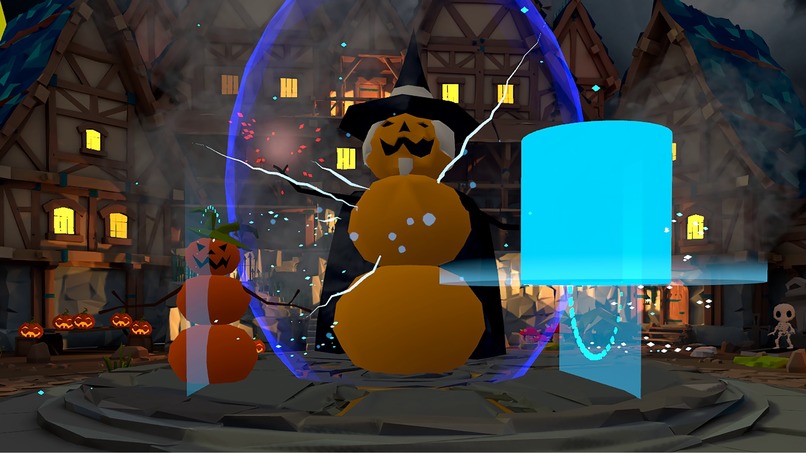
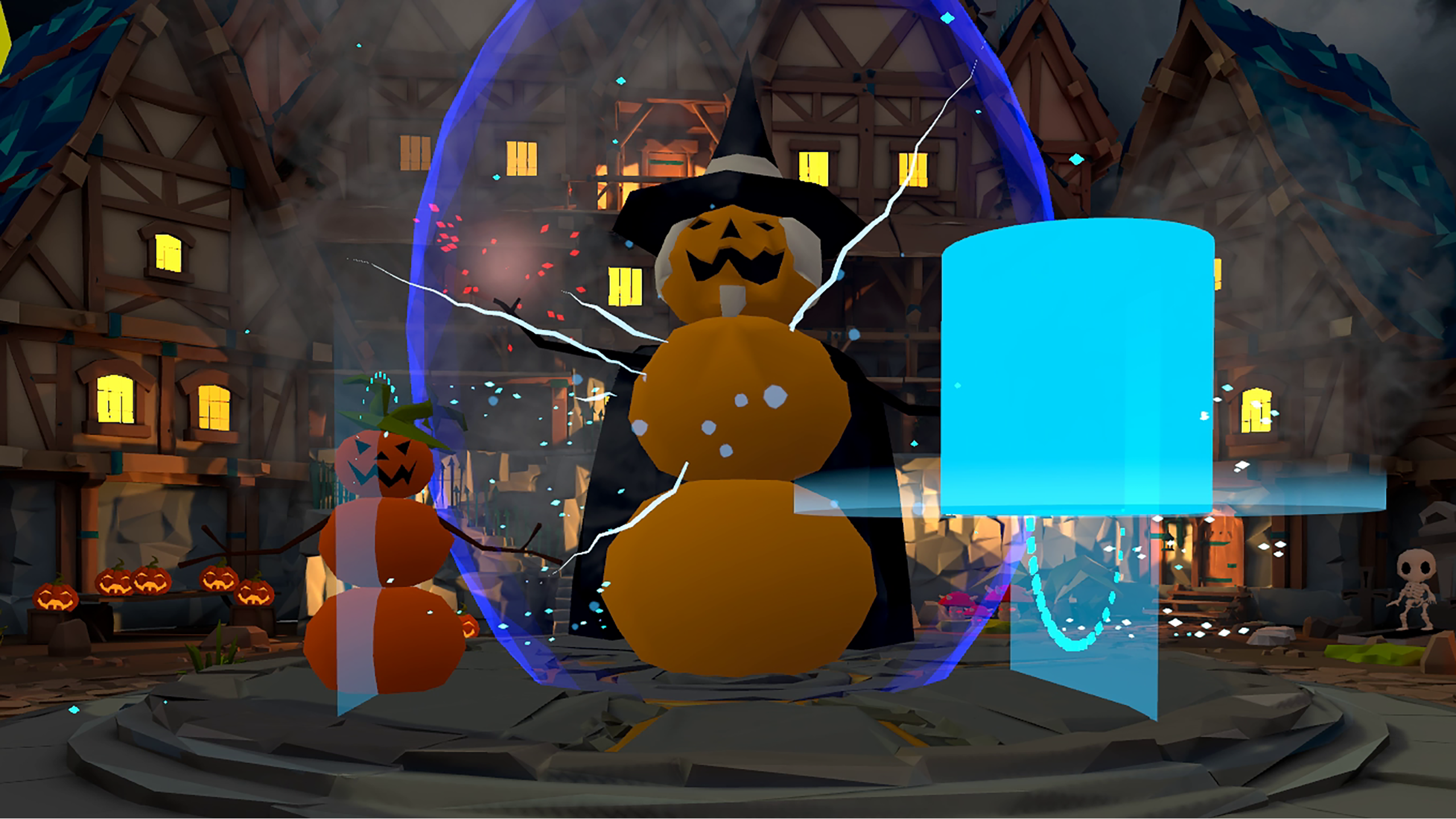
Screenshot - Boss
-
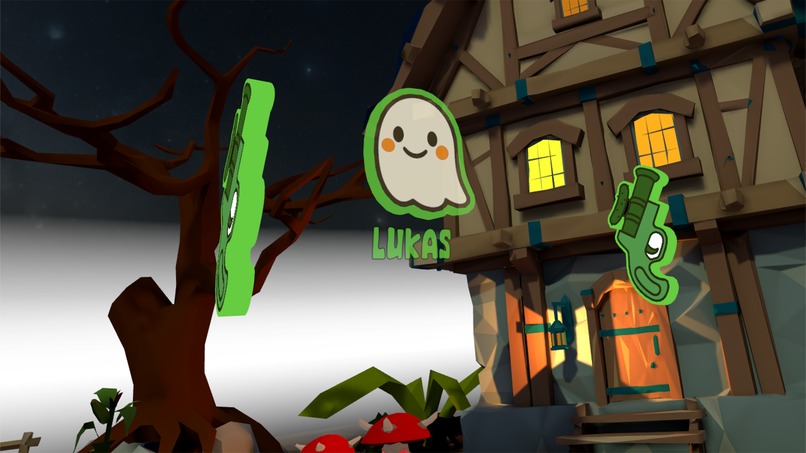
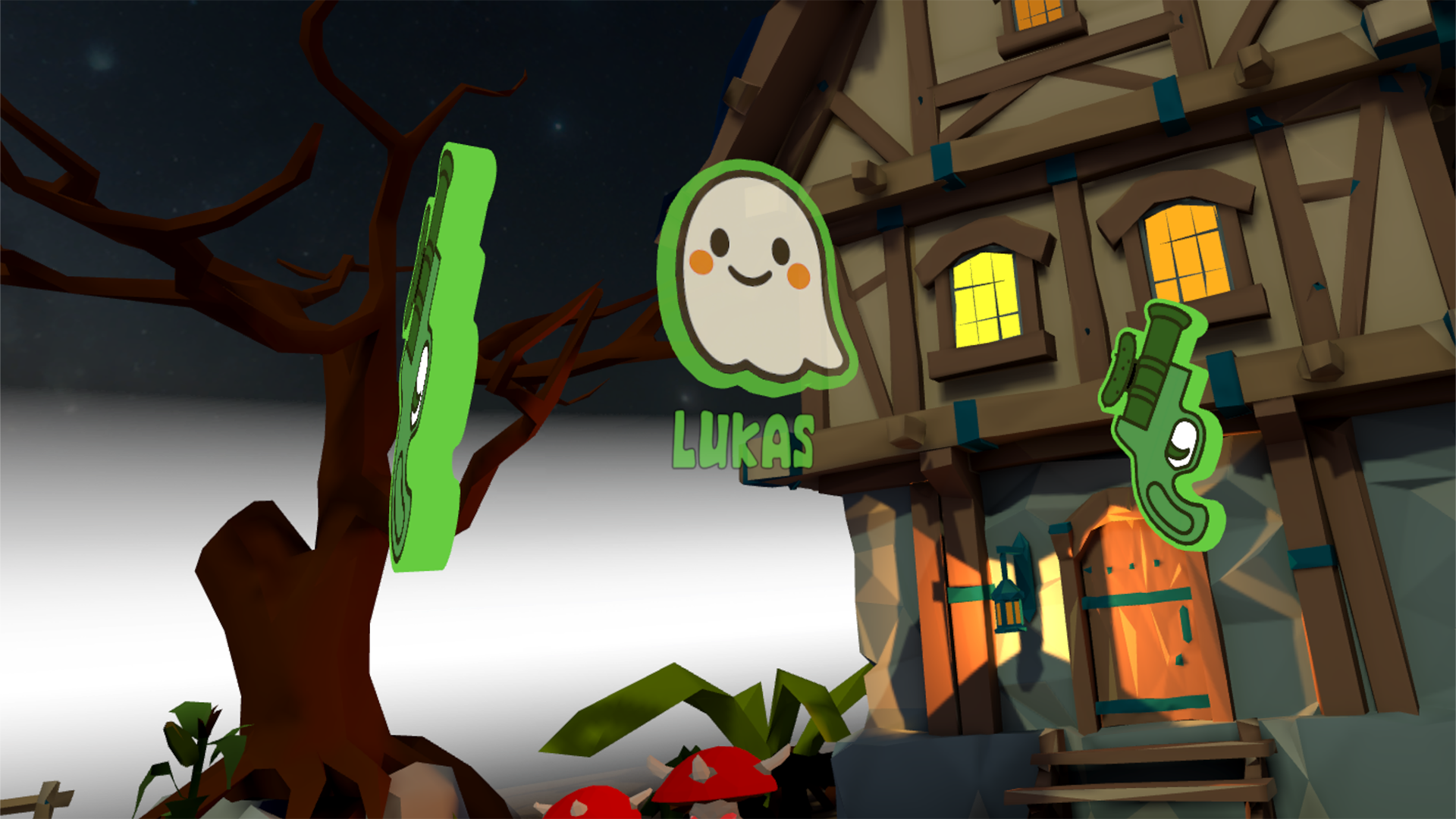
Screenshot - Multiplayer Avatar
-
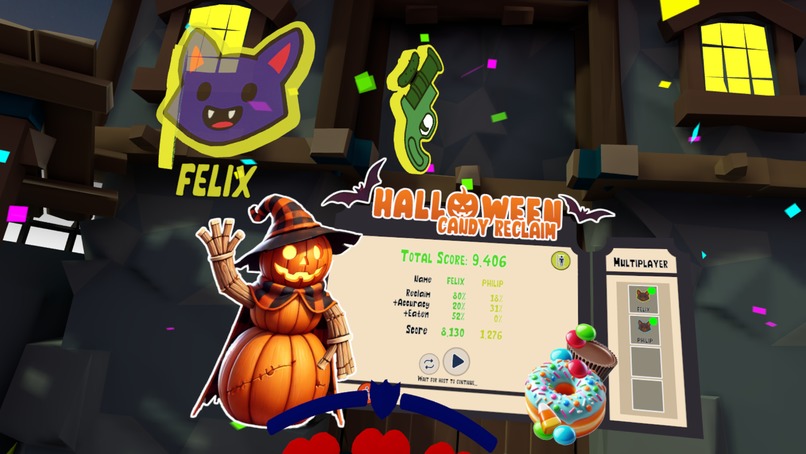
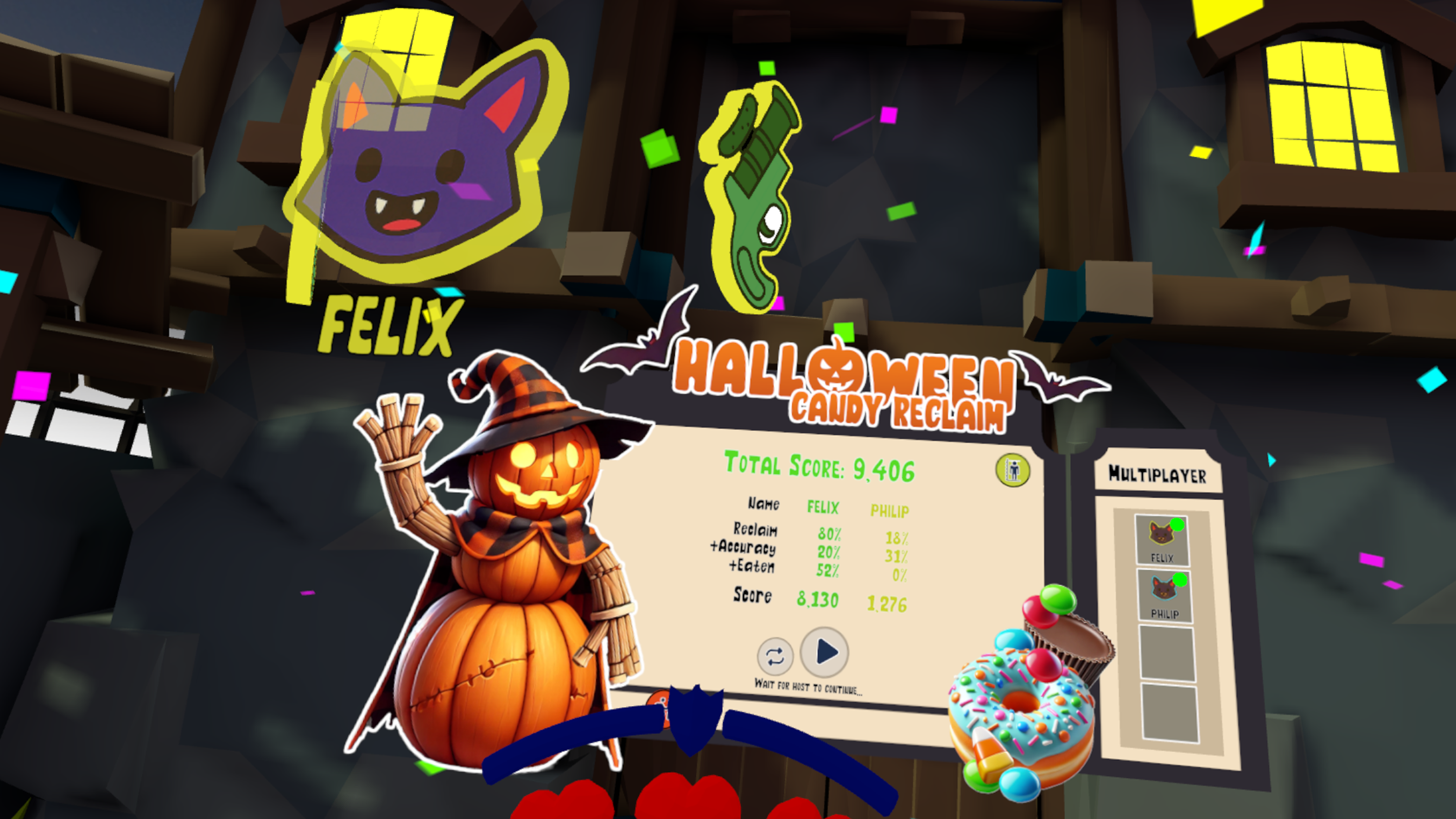
Screenshot - Multiplayer Scoring
Inspiration
Trick or treat is a Halloween highlight for kids. For my own children, I wanted to recreate that feeling in VR: a non-scary experience that still feels spooky and is packed with candy.
The goal, and where this game stands out, is simple fun for everybody – no complex reload mechanics, cooldowns, builds, or weapon selection. One button only. Jump in and have a blast.
What it does
Halloween Candy Reclaim is a rails shooter where players sit in a cart and ride through Halloween-themed levels. They shoot pickles at “mobs” – slightly spooky Halloween creatures – who then return the candy they stole.
The candy is sucked into a big vacuum at the front of the cart and lands in a bowl in front of the player. Players can grab the candy and “eat” it by placing it in their mouth, which restores health, because some mobs also shoot green slime at the player. If they eat too much, a sugar overload is triggered.
Players win a level by surviving and collecting at least 80% of the loot.
How we built it
The game is built with Unity. I started developing for VR (on other projects) in 2016, and the tools have come a long way since then. OpenXR combined with Meta’s SDKs has been a major improvement, and Unity’s XR Interaction Toolkit abstracts most of the basics such as button input and haptics.
All modeling was done in Blender. I initially used Asset Store content as placeholders and then replaced and refined it step by step with custom assets.
Challenges we ran into
A major early challenge was the visual style. I wanted the game to look “good,” but as a solo developer I cannot compete with large teams on visual fidelity. After a lot of experimentation, I settled on the current low-poly, flat-color style with custom shaders that tweak brightness, contrast, and saturation to create a distinct look.
Before the original launch, performance became the main issue (as it does in almost every game). Even with simple graphics, the triangle counts add up and had to be reduced. Lighting was especially tricky; I spent a lot of time fighting Unity’s lighting system until I found a balance between visuals and performance. A newer GPU helped with the overnight lightmap bakes as well.
Another later challenge was multiplayer, which was added for this hackathon. This is my first multiplayer game, and I was surprised by how much custom work is needed for network synchronization. In VR, local lag on direct interactions (gun positions, shots leaving the barrel) is unacceptable, so latency has to be pushed into other parts of the simulation instead.
Accomplishments that we’re proud of
Working back and forth on difficulty with my kids was extremely helpful and directly led to major changes. For example, there is now a difficulty mode where you are not shot at at all. Very few games offer this kind of low-stress entry point, and I am proud of that.
I am also proud of the visuals. The game now has a consistent, recognizable look that works well with the low-poly style. As a trained computer scientist and not a visual artist, getting there took time and experimentation.
Finally, we celebrated the release with a big Halloween party. The kids were lining up to play, explaining the game to each other, crowding around the mirrored screen, and having a fantastic time. Seeing that reaction in person is something I am very proud of.
What we learned
The first lesson was that what I think kids like is not necessarily what kids actually like. They insisted on monsters. I originally had only candy, but for a Halloween game that was “not enough” for them. They also insisted on a boss fight to give the game a real ending, which I did not have at the start. At the same time, they insisted on a mode where they are not being shot at. I was convinced players would want to be under pressure. They did not – at least, not always.
Another key learning was that there is no such thing as “planned fun.” I came across the term proof of fun – a prototype that may lack graphics, sound, and performance, but is already fun to play. The lesson: build the proof of fun first, then refine everything else.
And finally: the game started as a single-player experience, and retrofitting multiplayer into a single-player codebase is much more involved than it appears. It required major rewrites to keep clients’ clocks synchronized and to handle various networking edge cases. In the end, the “single-player” mode is now essentially a multiplayer mode with one client attached.
What’s new from the hackathon
The main update for this hackathon is full online multiplayer with deep platform integration, including deep links, group presence, and friend invites. Players can now play together over the Internet using Unity’s Relay service.
The game now exposes destinations (Main Menu, Lobby, In-Game, etc.) to the platform, lets players host games, send and accept friend invites, and join friends directly via platform features.
Up to now, Halloween Candy Reclaim was a single-player title with a simple LAN-only mode added in October, which required all devices to be on the same Wi-Fi network and had no platform integration – no visibility to friends and no invites via the Meta friend list.
For online play via Relay, I had to refine several systems to handle higher latency and still keep the experience comfortable and responsive in VR.
Note: The LAN-based mode remains available. It is ideal for travel scenarios where a local router is available but the Internet connection is limited or unreliable.
What’s next for Halloween Candy Reclaim
The idea of monsters stealing your candy and you having to reclaim it is not limited to Halloween. The plan is to evolve this into “Candy Reclaim” with themed editions for Christmas, Easter, and Summer.



Log in or sign up for Devpost to join the conversation.