-
-
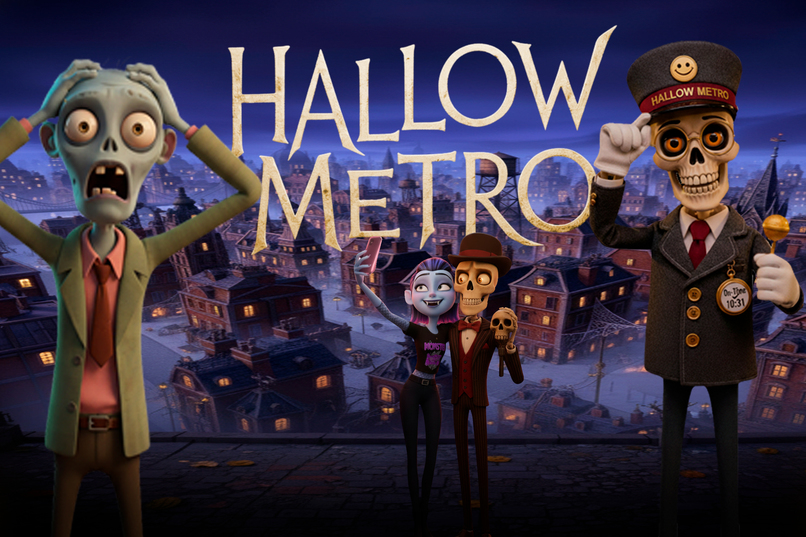
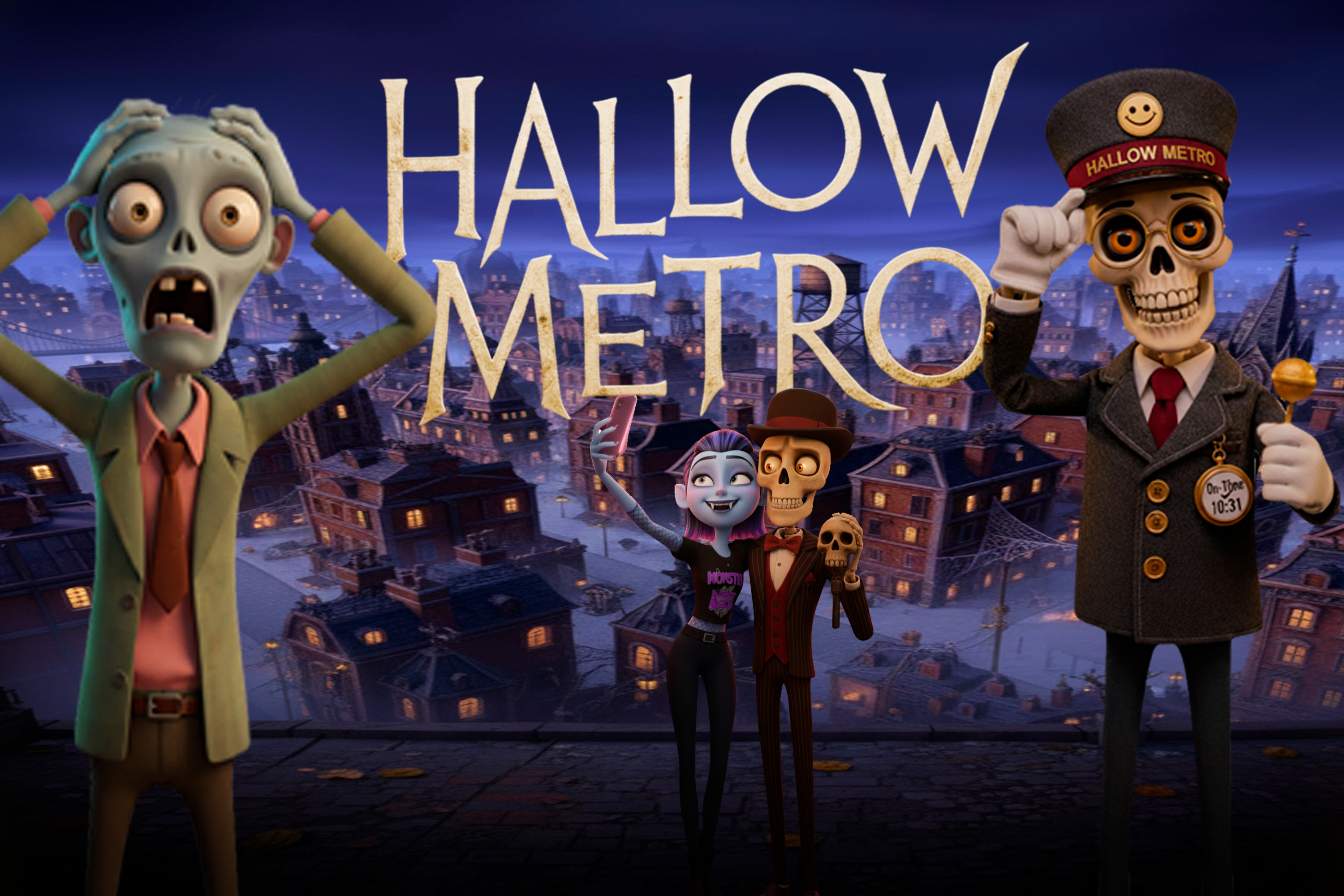
Hallow Metro A Spooky AI-Generated Halloween Mockumentary Short Film — key visual from the short.
-
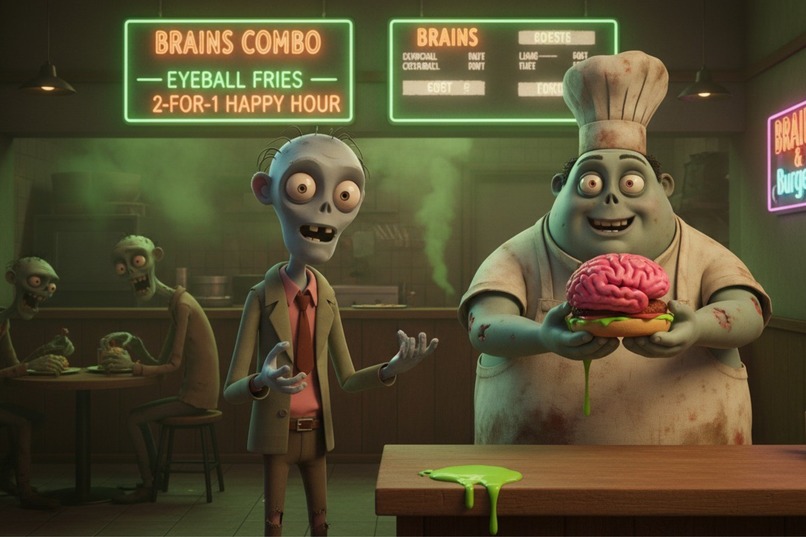
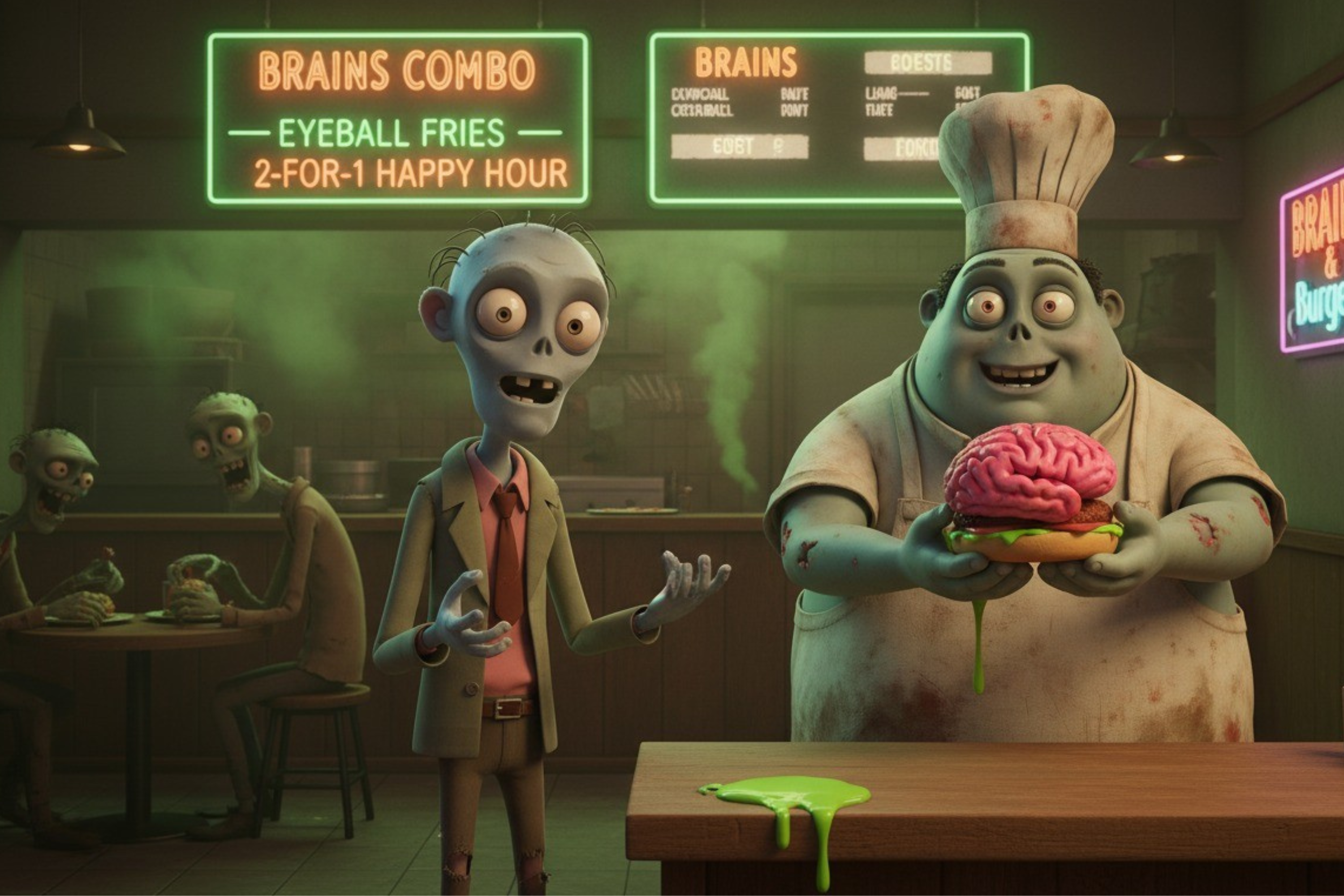
Inside the Zombie District — where “Brains Combo” is today’s special.
-
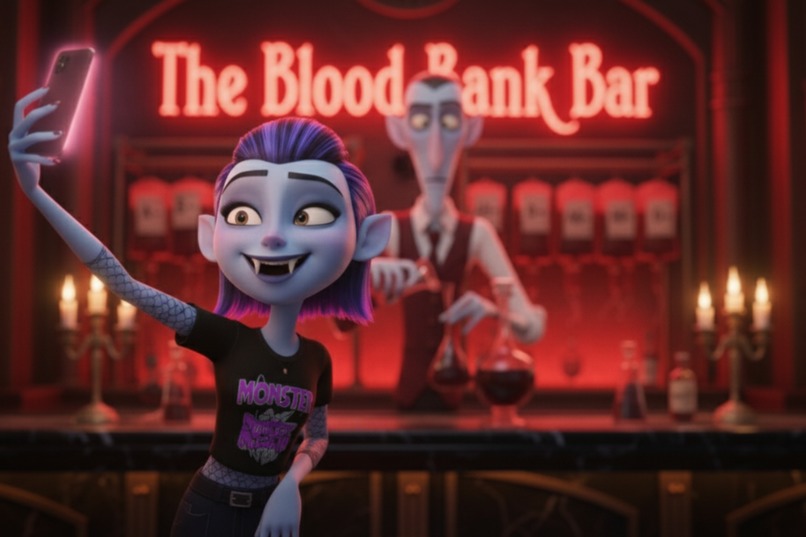
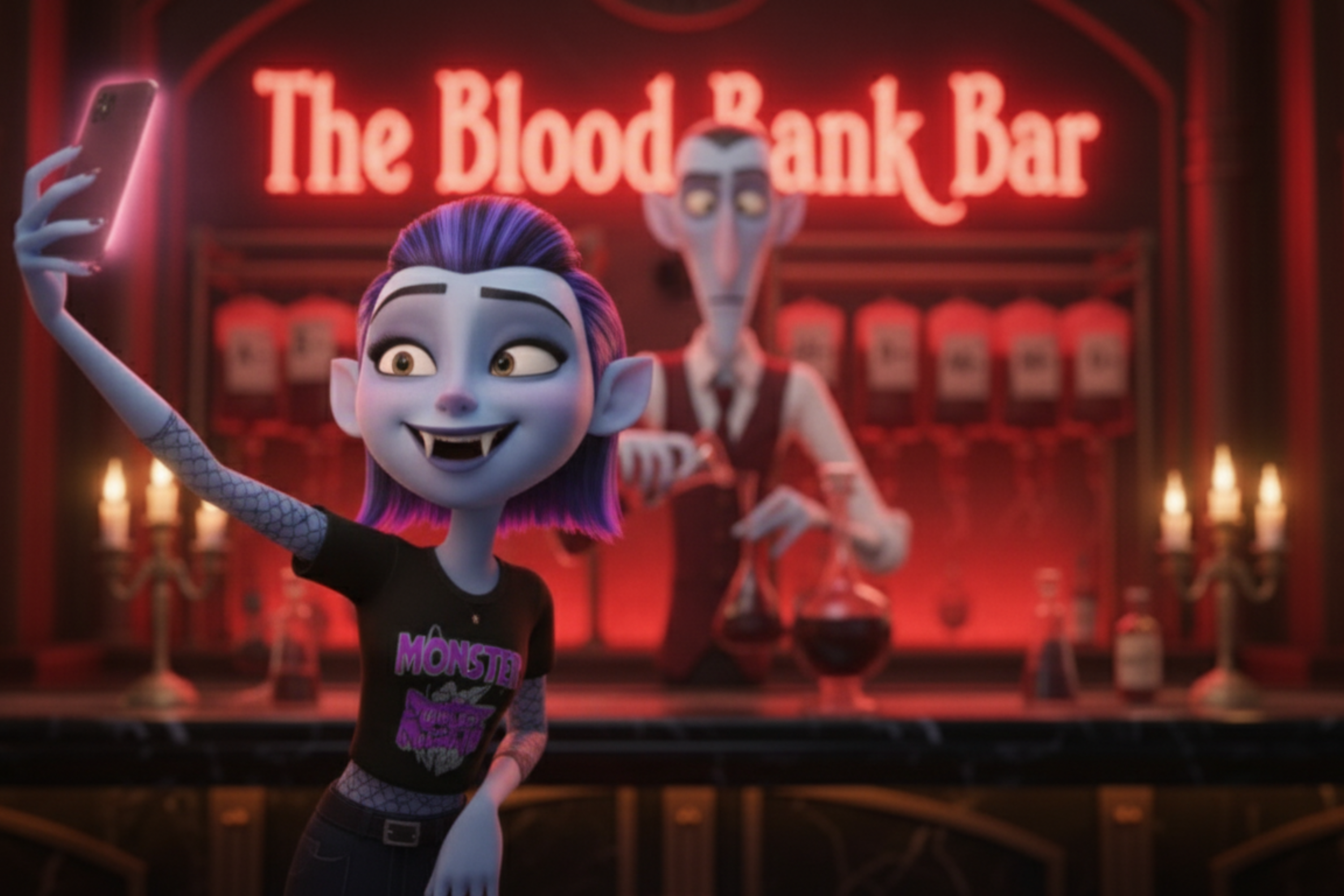
The Vampire District nightlife — selfies meet sophistication.
-
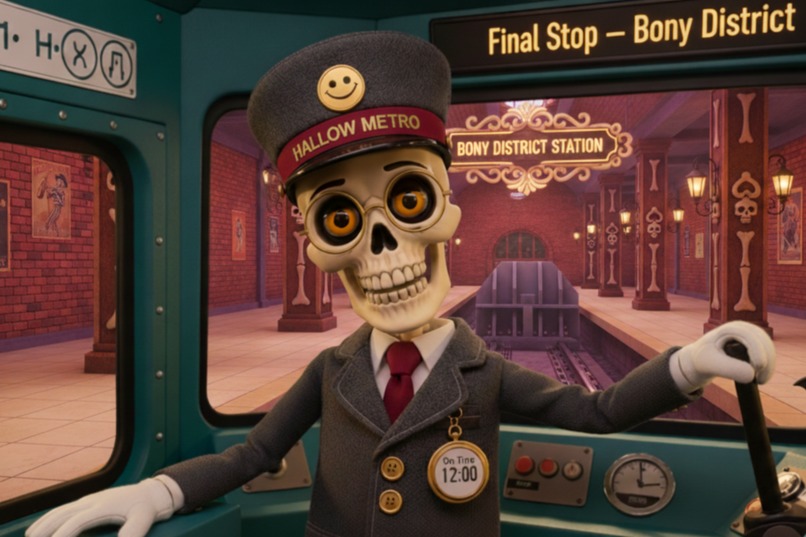
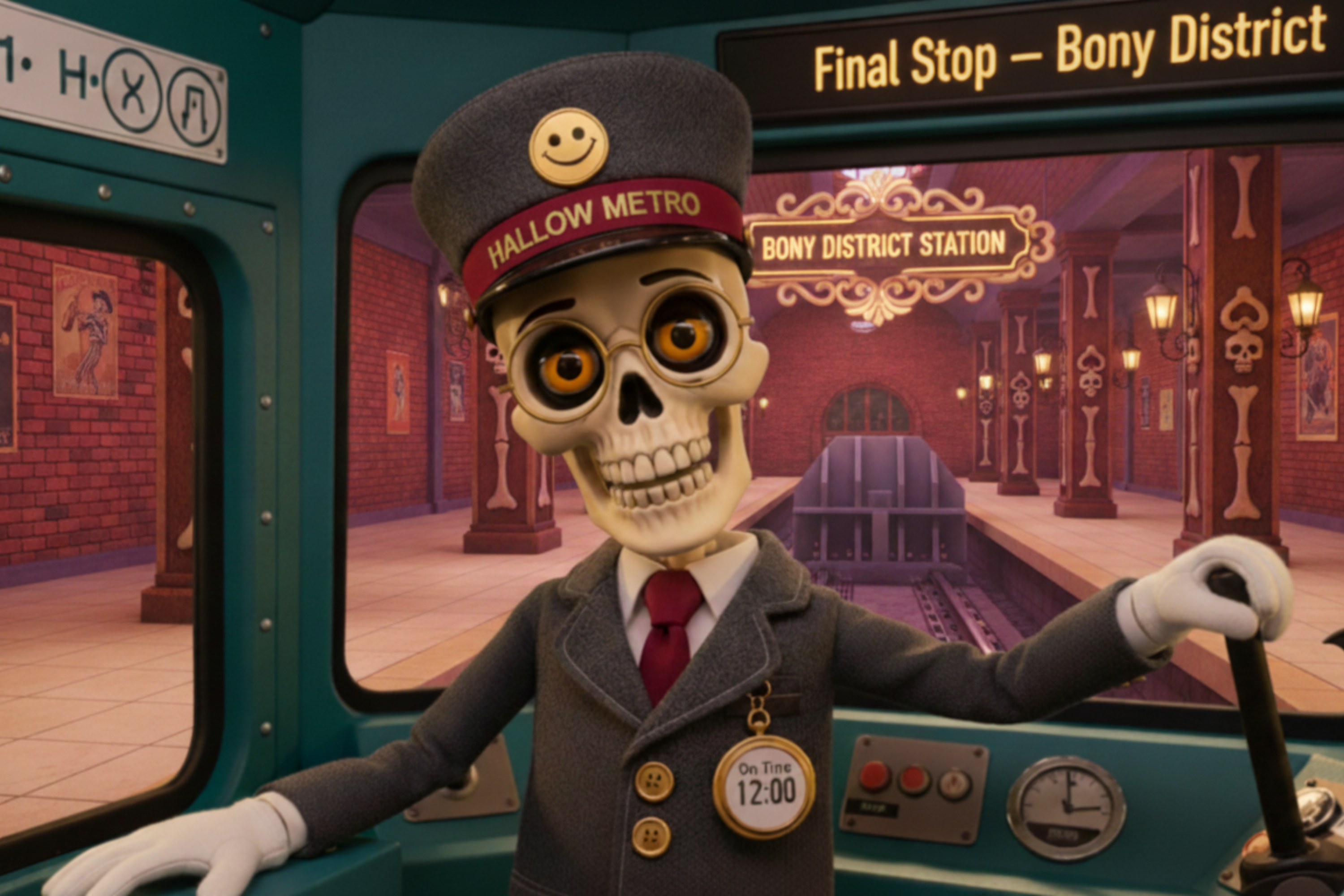
The Bony District — final stop of the Hallow Metro line.
Hallow Metro — Project Story
Inspiration
My journey with Hallow Metro began not as a filmmaker, but as an English teacher frustrated by the lack of engaging Halloween materials. Everything I found for my students was either too childish or genuinely scary. I wanted something different: spooky, funny, and classroom-friendly.
The concept was inspired by the Spanish documentary-style TV show Callejeros Viajeros, where reporters explore different cultures through on-the-street interviews. During a trip to Canada, I saw a decorative Halloween train in a shop window, and both ideas clicked:
What if I created a documentary-style mockumentary — a funny Halloween documentary where monsters talk about their daily lives and districts?
From that spark, Hallow Metro became the centerpiece of a transmedia educational project. The short film serves as a launchpad for a free Teacher's Guide, encouraging students to design their own "monster districts" and teachers to use digital tools to visualize their students' creations.
Pedagogical aim: Move from passive consumption → active creation, letting students become world-builders and storytellers.
Building Process
I built the entire project as a one-woman AI studio, conducting a virtual orchestra of generative tools to craft a cohesive film.
- Script & World-Building: Developed with ChatGPT and Gemini, exploring tone, structure, and monster lore.
- Art Direction & Concept Design: Created with Nano Banana to achieve a blend of cozy 3D warmth and stop-motion imperfection.
- Animation & Voice Production: Executed with Veo 3 and Kling, combining cinematic shots and character performances.
- Narration: Produced with Eleven Labs to achieve a consistent documentary-style voice that guides the audience through each scene.
- Sound & Music: Composed through Suno AI and Eleven Labs, including the final song by "The Spooksters".
- Editing & Post-Production: Final pacing, transitions, and effects assembled in CapCut.
Each phase required balancing human direction with algorithmic execution, almost like solving a creative equation:
$$ Creative\ Output = Human\ Vision + AI\ Iteration + Curation^2 $$
The goal was not to automate creativity, but to conduct a set of intelligent tools like instruments, each contributing a different artistic layer — writing, visuals, sound, and motion — under a single creative vision.
Why AI (Beyond the Buzzword)
AI was not a shortcut; it was a creative amplifier.
The process relied on iterative experimentation, feedback loops, and carefully designed constraints to achieve the right comic rhythm and world coherence.
A simplified way to describe the process mathematically:
$$ Scene_{n+1} = argmax_{variants}(NarrativeFit + Timing_{comedy} + VisualConsistency) $$
Each iteration refined timing, humor, and tone — until the generated material felt "performed", not just produced.
Comedy & Mockumentary Language
- Documentary tropes: voiceovers, interviews, and "field reporting" parody real documentary formats.
- Humor through logic: absurd but consistent rules govern each monster district.
- Timing as narrative tool: editing and pauses used like punchlines.
- Visual tone: color palettes and lighting inspired by cozy 3D cartoons mixed with stop-motion imperfection.
The result is a blend of AI-assisted filmmaking and classic comedy rhythm, where timing became a measurable variable:
$$ min_{edit} L_{comedy} = a(OverlongBeat) + b(PrematureCut) + c(MisdirectedFocus) $$
Challenges & Learnings
The hardest challenge wasn't technical — it was artistic direction:
how to "direct" technology so it delivers a sense of timing and performance.
I learned that creative prompting is closer to conducting than coding — each change in wording shifted tone, emotion, and pace.
Iteration became a rehearsal process.
"Comedy in AI is not generated — it's discovered through persistence."
The biggest takeaway: an AI-generated film can evolve into a pedagogical tool.
When guided by an educator's vision, technology doesn't replace creativity — it multiplies it.
Educational Impact
While Hallow Metro stands as a complete cinematic experience, it was also designed to spark creativity beyond the screen.
Its world of monsters and neighborhoods became a model for students to imagine and create their own stories in class — blending humor, language, and storytelling.
To support this vision, the film includes a free Teacher's Guide, available through the YouTube video description, offering adaptable classroom ideas and activities for English learning.
The educational layer doesn't define the film — it extends its life.
It turns a six-minute mockumentary into a creative springboard for teachers and learners, showing that AI filmmaking can both entertain and educate.
Hallow Metro demonstrates how stories born from AI can foster imagination, literacy, and collaboration in real classrooms.
Conclusion
Hallow Metro is a stylized AI cartoon mockumentary — a playful Halloween ride that merges art, comedy, and education.
It's both a cinematic experiment and a proof-of-concept for how AI filmmaking can serve creative pedagogy.
In simple mathematical terms:
$$ Impact = Creativity \times Education \times DigitalSynergy $$
Built With
- aesthetics
- ai-animation
- ai-filmmaking
- ai-music
- ai-voice
- and-sound-generation.-each-tool-functioned-as-a-creative-department-within-a-virtual-studio
- capcut
- chatgpt
- eleven-labs
- gemini
- generative
- generative-workflow-?-a-multi-modal-ai-filmmaking-pipeline-that-combined-text
- image
- kling
- nano-banana
- orchestrated-manually-for-timing
- suno-ai
- text-to-video
- veo-3
- video

Log in or sign up for Devpost to join the conversation.