-
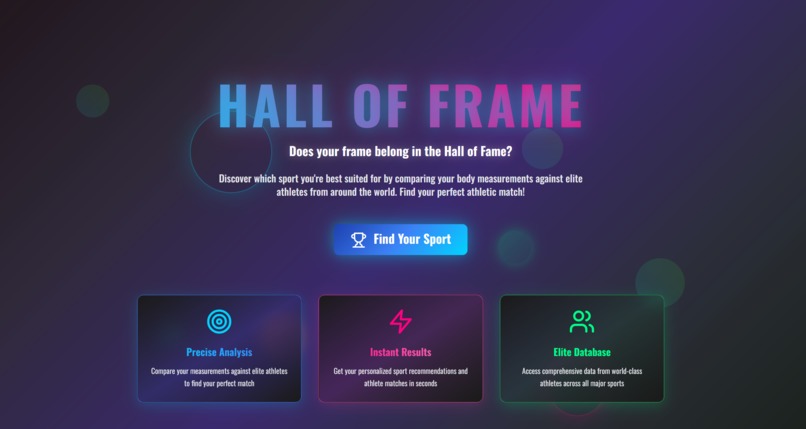
Landing
-
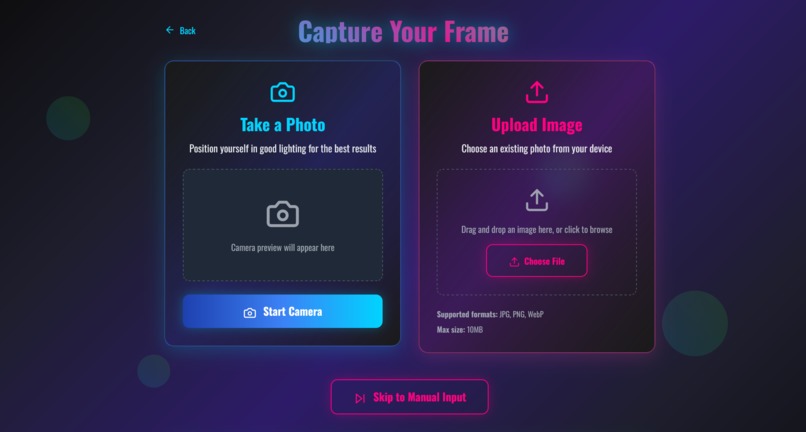
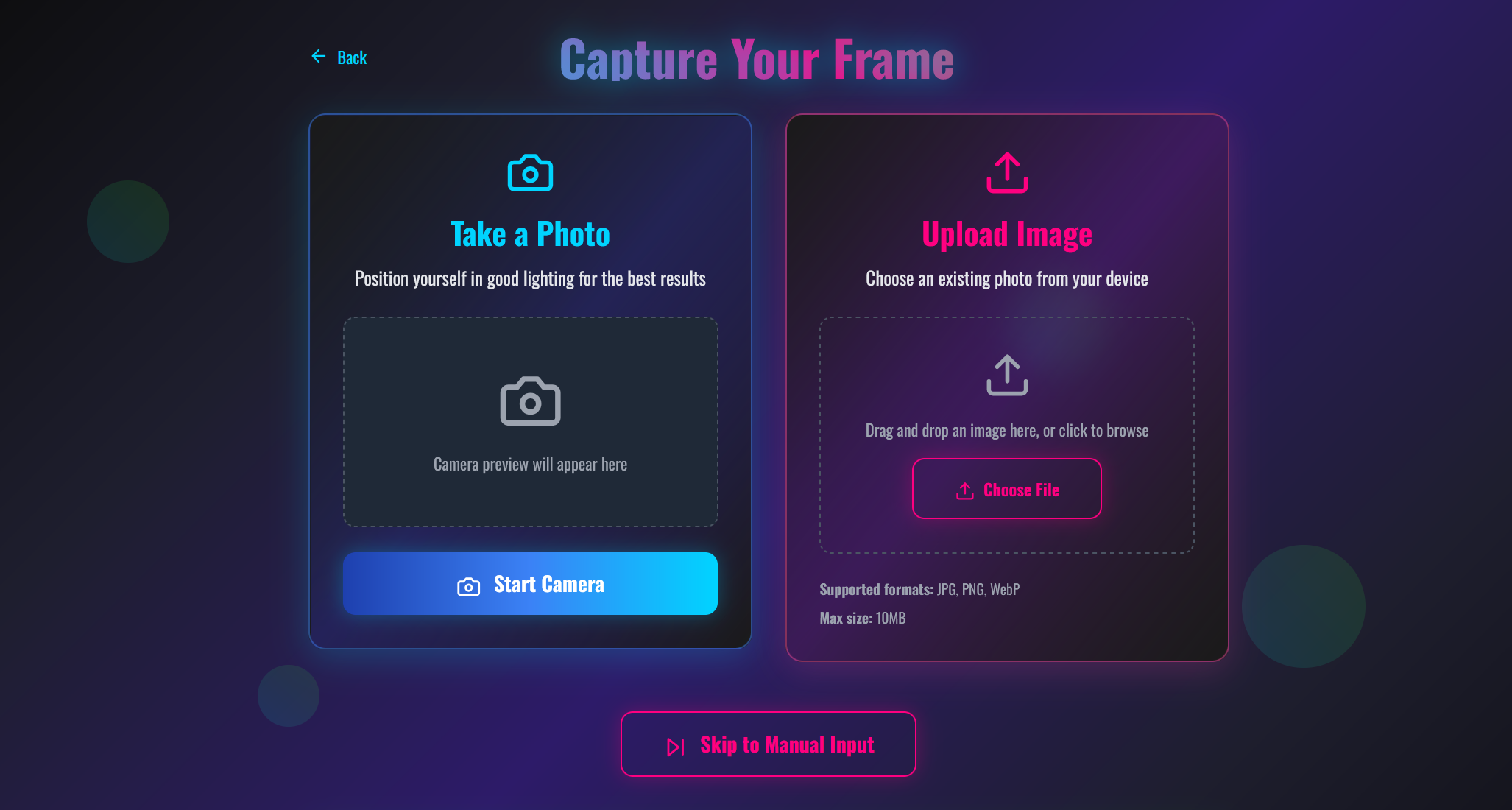
Upload
-
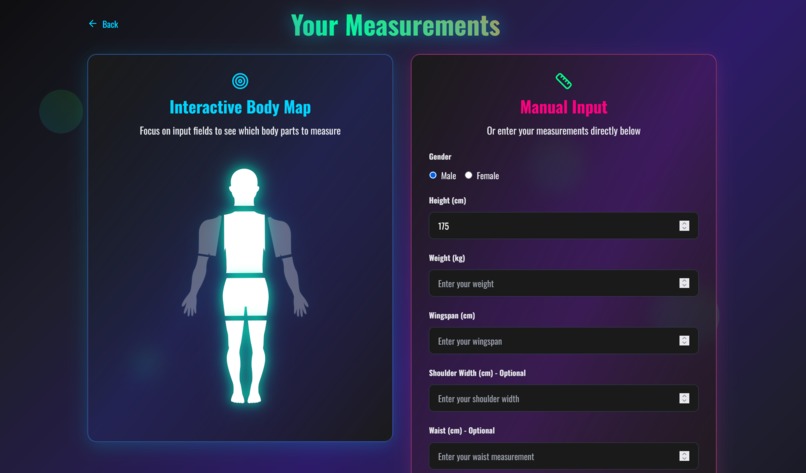
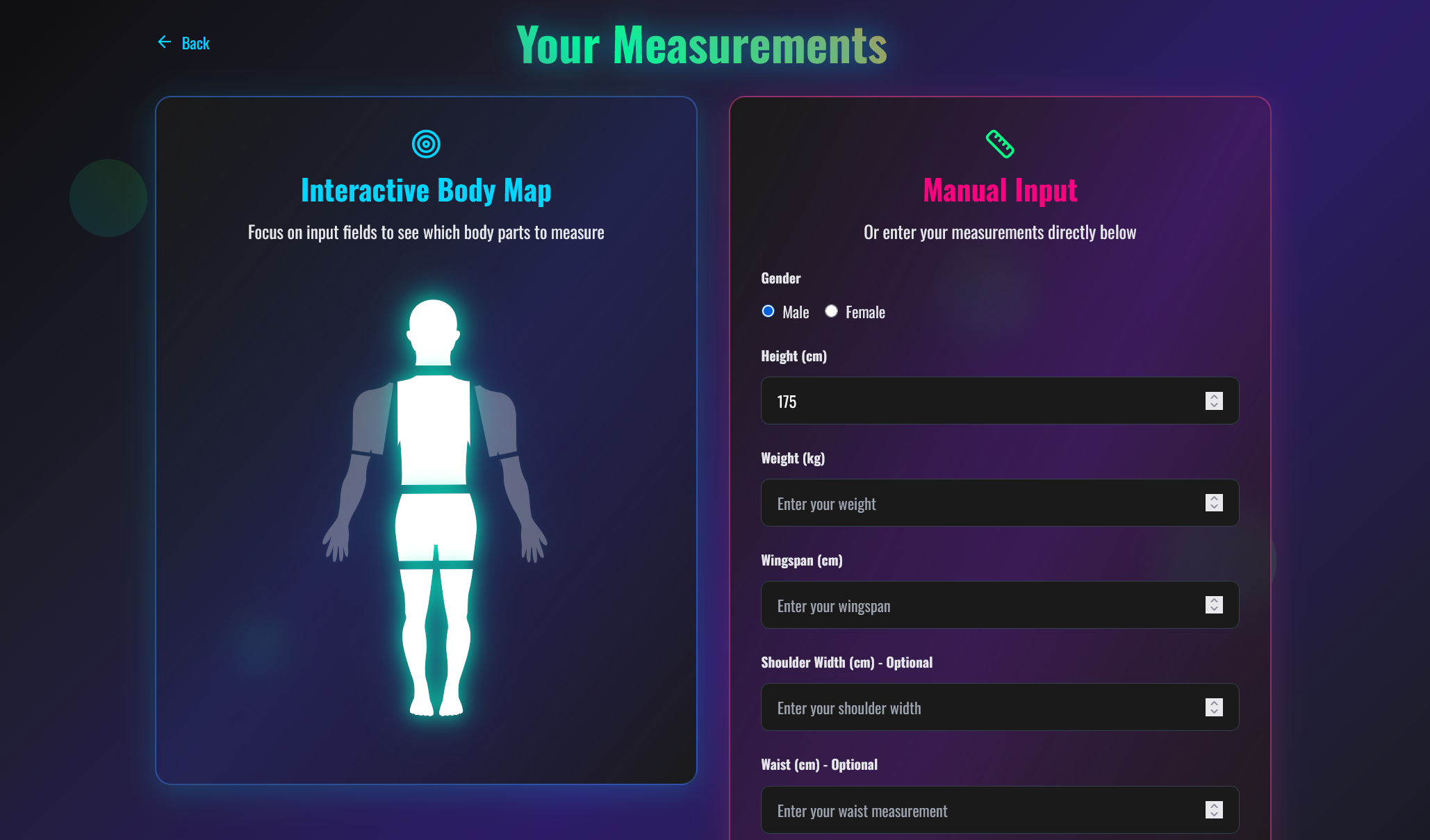
Input
-
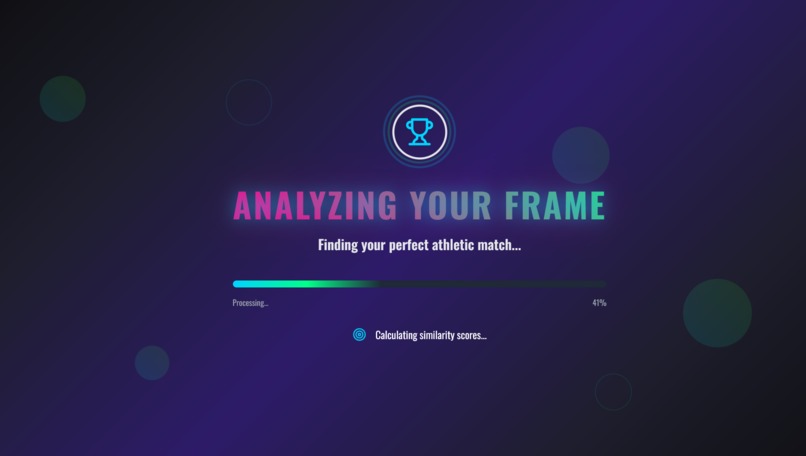
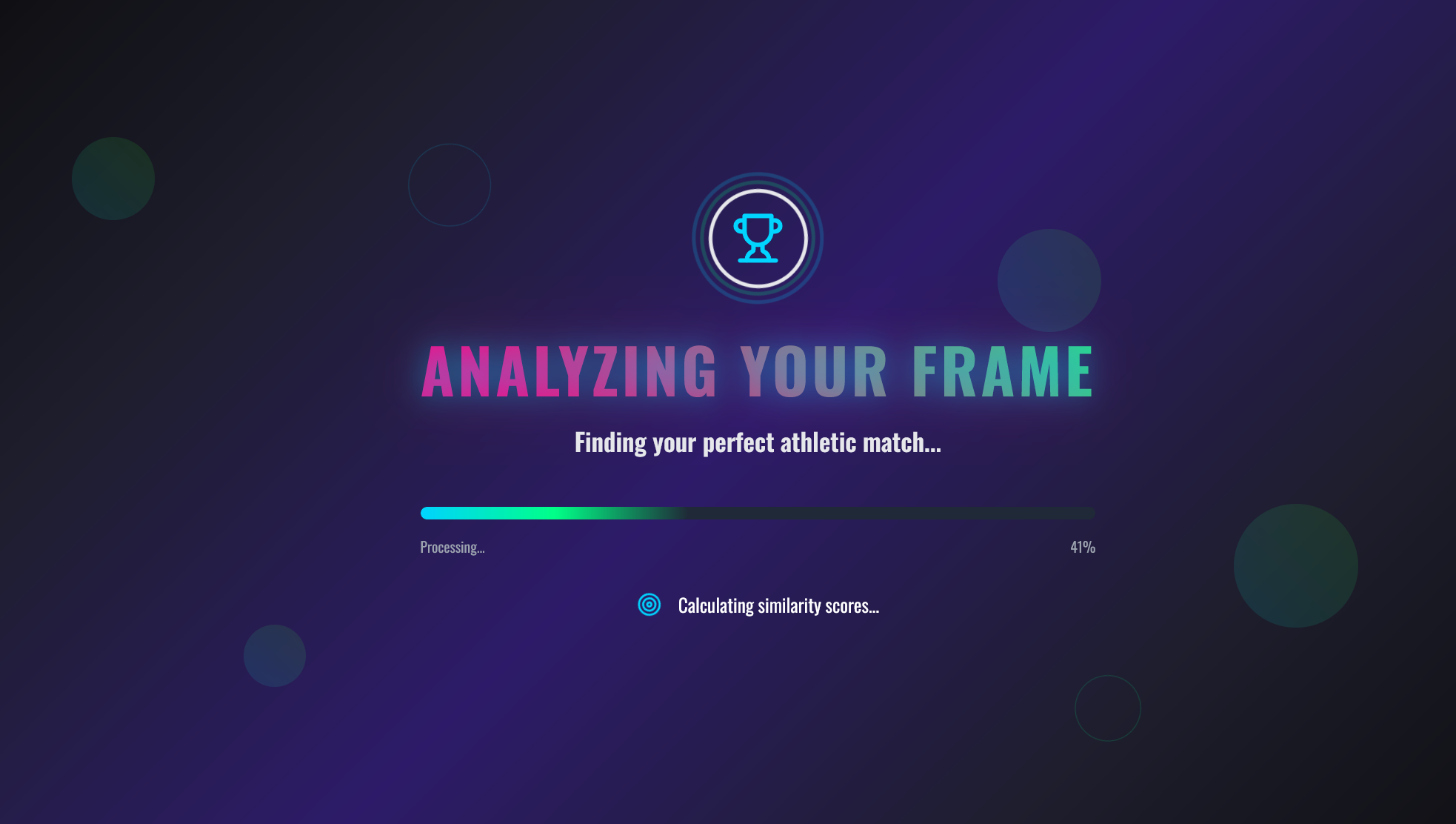
Loading
-
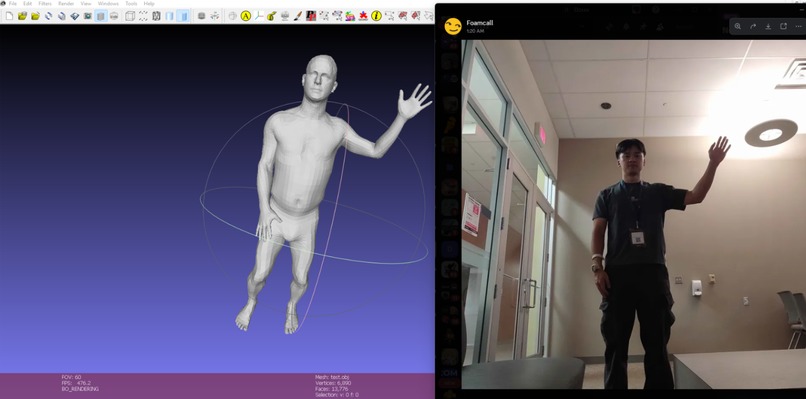
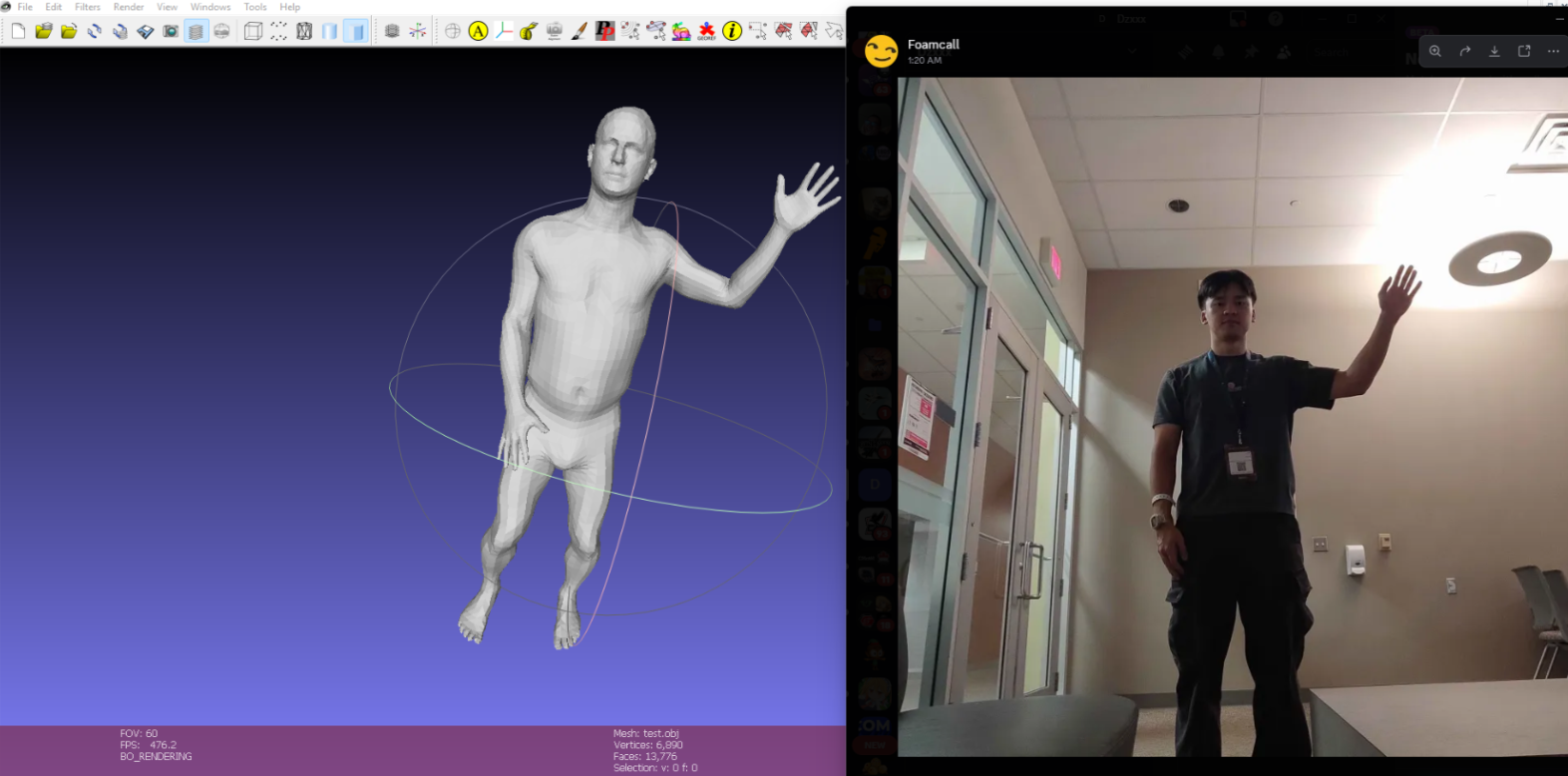
Verifying accuracy of ML/CV generated anthropometric model (SMPL)
-
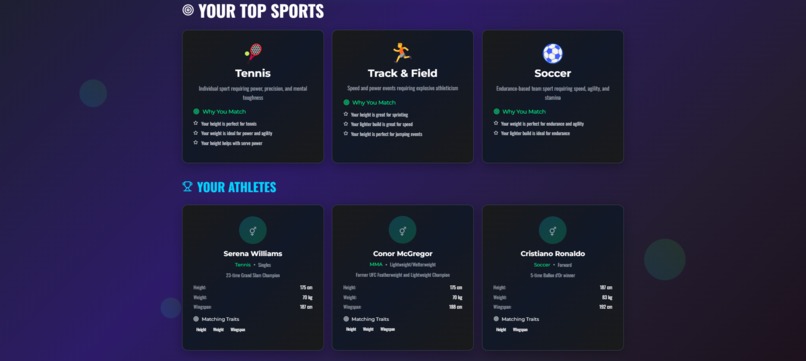
Result 1
-
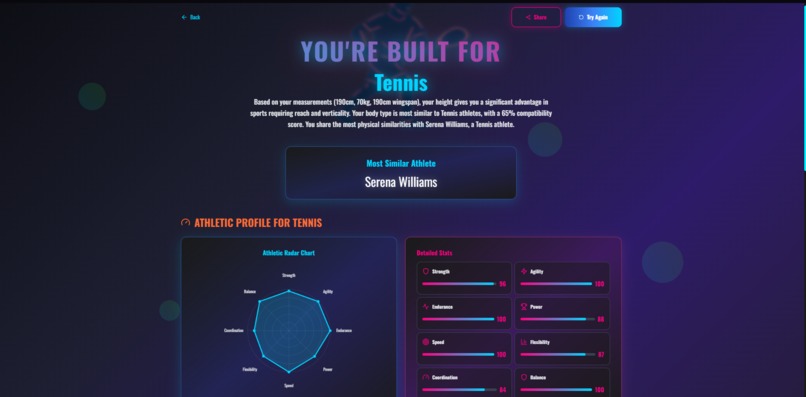
Result 2
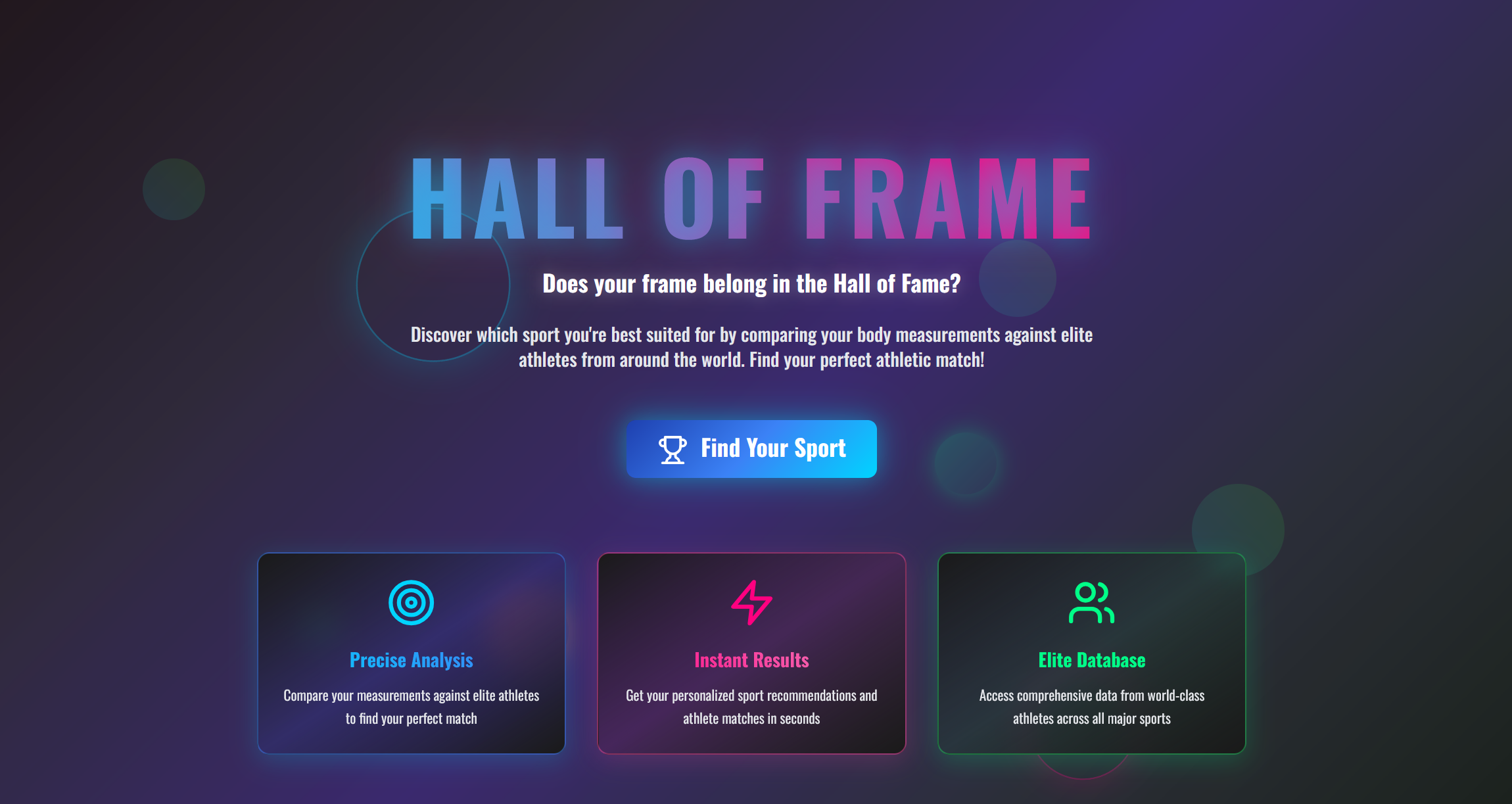
Inspiration
We’ve all been told things like “You’d be a great basketball player with that height!” or “You have a swimmer’s body.” But those are usually just guesses or stereotypes. We wanted to create a tool that uses real athlete data and AI to give people a fun, scientific way to discover which sports they’re best built for.
For people who want to try a new sport, the decision isn’t small — sports require time, money, and dedication. Picking the right one from the start can make the experience more rewarding, motivating, and sustainable. Hall of Frame helps people make that choice smarter by showing where they’re naturally predisposed to succeed.
What it does
“Let’s boil it down: Hall of Frame shows you what sport your body is built for — and the pros who share your build.”
- You give us your measurements.
- We crunch the numbers behind the scenes (a lot goes on here, but you don’t have to worry about it).
- You get one clear answer: the sport you’re best built for.
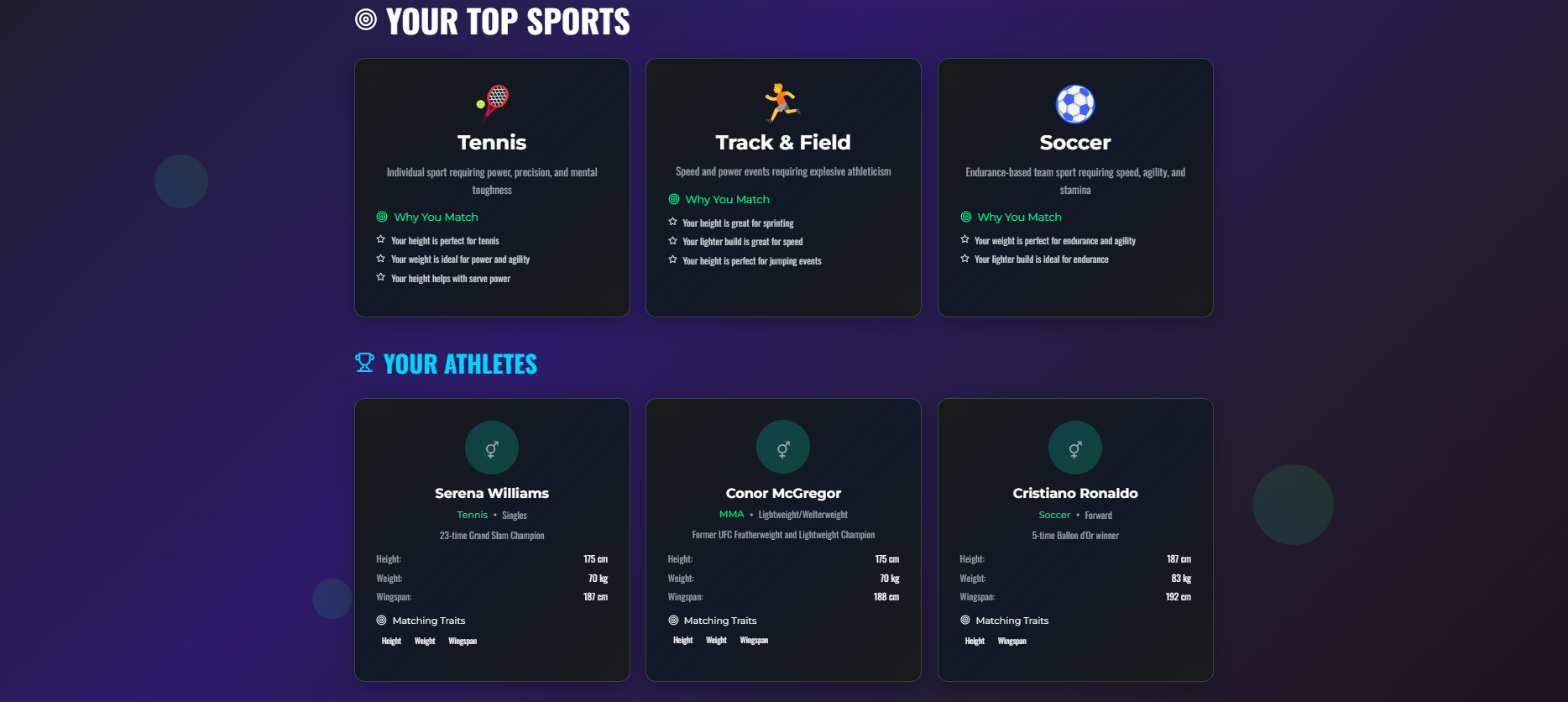
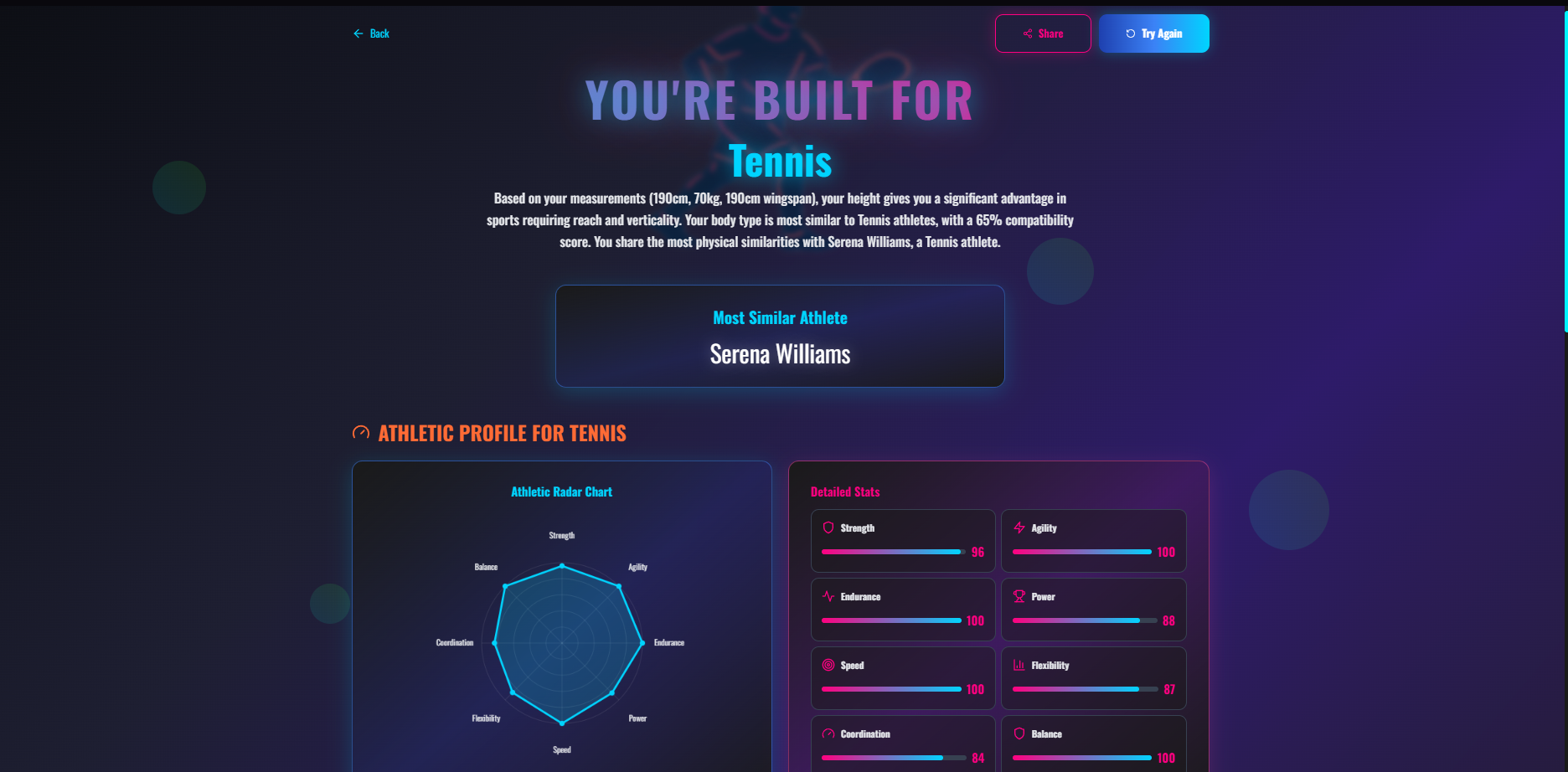
On top of that, we show you the professional athletes most similar to you, along with some useful stats and insights that highlight your natural strengths for that sport.
In short: you put in your stats → we tell you your sport and stats → you see who you match with.
How we built it
Dataset
- Data Collection: Gathered body measurements from 300+ pro athletes across 10+ sports (basketball, soccer, gymnastics, swimming, and more).
- Sources: Pulled from sports databases, team rosters, and official athlete profiles.
- Metrics: Included height, weight, wingspan, position, team, country, and more.
Data Processing
- Cleaning: Standardized units and formats across different sports.
- Missing Values: Built sport-specific algorithms to fill gaps (e.g., missing wingspans).
- Feature Engineering: Created 12+ body ratios (wingspan-to-height, power indices, reach advantages).
- Gender Aware: Processed male and female data separately for accuracy.
Clustering & Matching
- Machine Learning: Used K-means clustering for male, female, and combined populations.
- Body Type Grouping: Grouped athletes into clusters based on body proportions.
- Similarity Matching: Used Euclidean distance to find the closest pro athlete “twins.”
- Sport Recommendation: Suggested sports based on which ones dominate each cluster.
Frontend
- Tech Stack: Next.js + React with Tailwind CSS and Framer Motion for sleek animations.
- Measurement Input: Users can type in measurements or upload a photo for AI analysis.
- Interactive Components: Visual body mapping, photo upload UI, and results visualization.
- Results Display: Card-style profiles with sport recommendations, athlete matches, and spider charts.
Backend
- API: Flask-based RESTful API for processing and serving recommendations.
- ML Integration: Connected scikit-learn models with endpoints for real-time analysis.
- Photo Pipeline: Computer vision to estimate body measurements from images.
- Data Validation: Error handling, input checks, and performance tuning.
- Database: Efficient storage + retrieval of athlete data and user results.
Challenges we ran into
- Adapting existing ML models for extracting precise body measurements from images proved difficult due to outdated dependencies and deprecated tooling. Rebuilding and modifying the model to fit our needs required significant effort and low-level troubleshooting. While we achieved promising results, integrating the model into our MVP wasn’t feasible within the timeline.
- Messy data was our biggest opponent — handling missing values, inconsistent units, and incomplete profiles taught us that data cleaning is 80% of the job.
- Missing values: Many athletes were missing key stats like wingspan or weight. We had to design imputation strategies using sport-specific averages and ratios instead of just dropping data.
- Interpreting the data itself: Sports aren’t uniform. Positions in soccer or basketball, or weight classes in martial arts and lifting, mean the same “sport” can contain very different body types. Making sense of that in a fair way was a real challenge.
- Gender imbalance: Most of our dataset was male (175 men vs. 63 women). If we trained the model without splitting by gender, the recommendations became meaningless. We had to explicitly separate and process male/female data to make it work.
- Bias in availability: Some sports (like basketball) had way more detailed data than others, so we had to work around uneven coverage to keep clusters balanced.
- Clustering complexity: K-means clustering required careful hyperparameter tuning (like deciding the right number of clusters). Too few clusters blurred athletes together, too many made results noisy.
In short: the hardest part wasn’t coding — it was figuring out how to clean, split, and interpret the data so the results actually made sense.
Accomplishments that we're proud of
-This was our first time teaming up after meeting less than 2 days ago, and we found a natural rhythm right away.
- Created a polished, design-first experience — from the draft-card style results to spider charts, athlete cards, and smooth animations — making the whole app feel engaging and easy to use.
- Engineered 12+ advanced body ratios and indices that go beyond raw measurements to capture true athletic potential through ratios that were researched during the hackathon.
- Implemented a real-time photo analysis pipeline that extracts body measurements from an image in under 5 seconds.
- Compiled a clean database of 300+ pro athletes across 10+ sports — transforming messy, incomplete stats into a usable dataset.
- Overcame tough data quality and gender bias challenges, proving this idea could work fairly and accurately.
- Achieved sub-3-second response times with optimized pipelines and robust error handling.
- Most importantly: we turned a complex research idea (AI-powered sport discovery) into something accessible, engaging, and inspiring for everyday users.
What we learned
- Hackathon time pressure forces you to optimize and focus on the core user experience.
- UX and storytelling are as important as the AI — how results are delivered is crucial.
- Even with a small dataset, smart preprocessing can unlock powerful insights.
- K-means clustering is powerful but finicky; tuning hyperparameters and interpreting the clusters felt more like an art than a science considering our short amount of time.
What's next for Hall of Frame
- We’ve laid the groundwork for easier access to accurate limb measurement via computer vision, and plan to fully integrate this functionality in future iterations. The experimental branch already supports key metrics like torso length, wingspan, and leg proportions. There is currently a lack of mobile apps that can perform at-a-glance measurements like this, and this is a first step into making anthropometric data more widely available and easier studied.
- Expand the database: Add thousands of athletes across more sports for richer comparisons. Start saving user-submitted measurements to help address gaps in the dataset.
- Training insights: Beyond “what sport fits you,” suggest drills or workouts tailored to the user’s body profile.
- Mobile app: Bring Hall of Frame to iOS/Android so anyone can test their athletic potential instantly — we’ve already started on the design and flow for mobile.
- More research & refinement: Use incoming user data to refine models, improve recommendations, and explore new sports analytics insights.
Built With
- next.js
- python
- react
- sk-learn
- tensorflow
- typescript
- windsurf


Log in or sign up for Devpost to join the conversation.