What happens to a CFC molecule when the ocean gets warmer?
It gets harder for the ocean to keep.
That's the whole idea behind Haline. And it's a bigger deal than it sounds.
- The Ocean Is a Sponge That's Losing Its Grip
Warm water holds less dissolved gas. Every kid who's left a soda in a hot car knows this.
But scale it up. The ocean has been soaking up chemicals from our atmosphere for decades, including CFC-11 and CFC-12, the ozone-destroyers we banned in 1987. As the ocean warms, it holds less of them.
So what happens when scientists measure CFCs in the air and try to work backward to who's emitting them? Some of the signal might not be coming from a factory anywhere. It might be coming from the ocean.
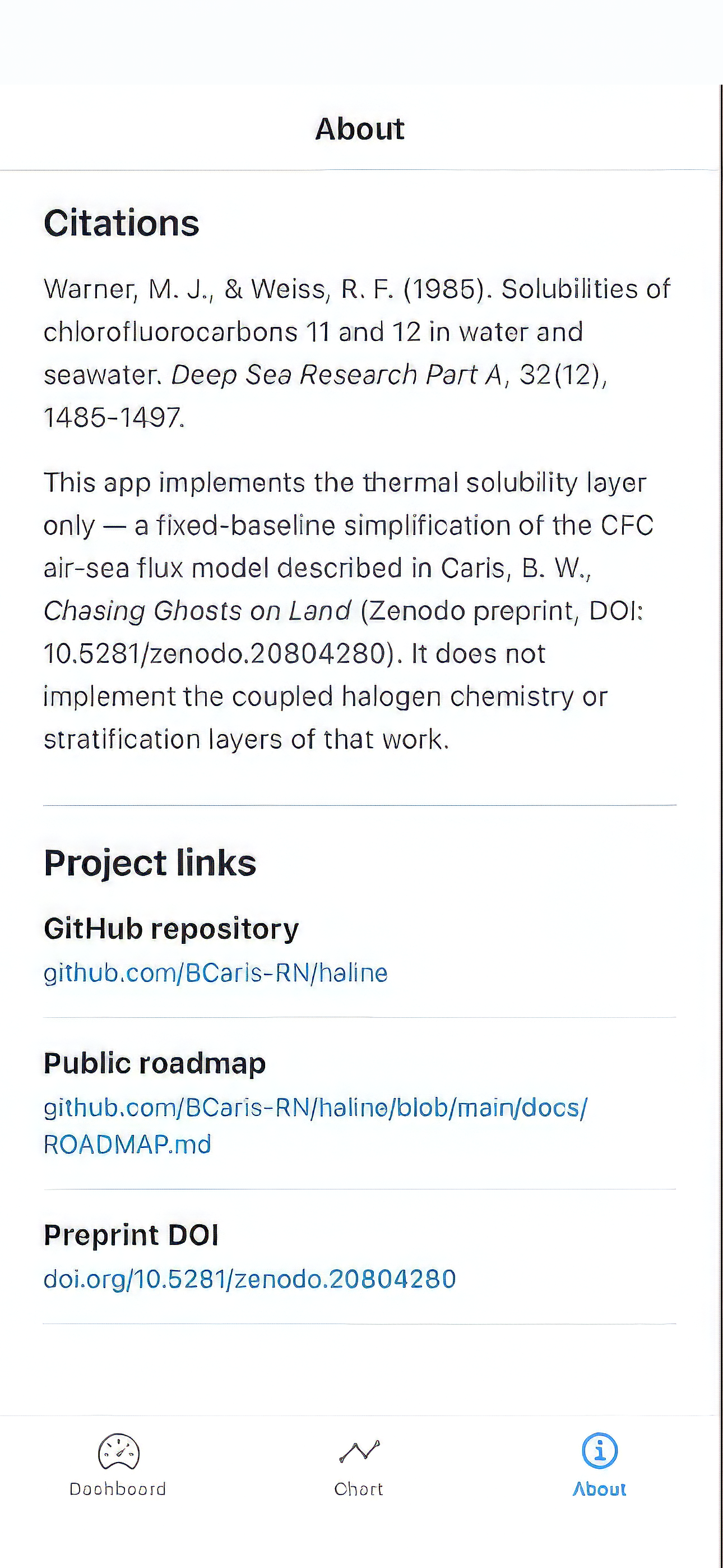
I spent the last year writing about exactly this. Three papers. One framework. Published open on Zenodo (DOI 10.5281/zenodo.20804280). The first one is called Chasing Ghosts on Land, because that's what you end up doing if you ignore the sea.
Papers are great... but almost nobody reads them. lol
So I built an app.
- Haline Turns One Number Into Something You Can Actually See
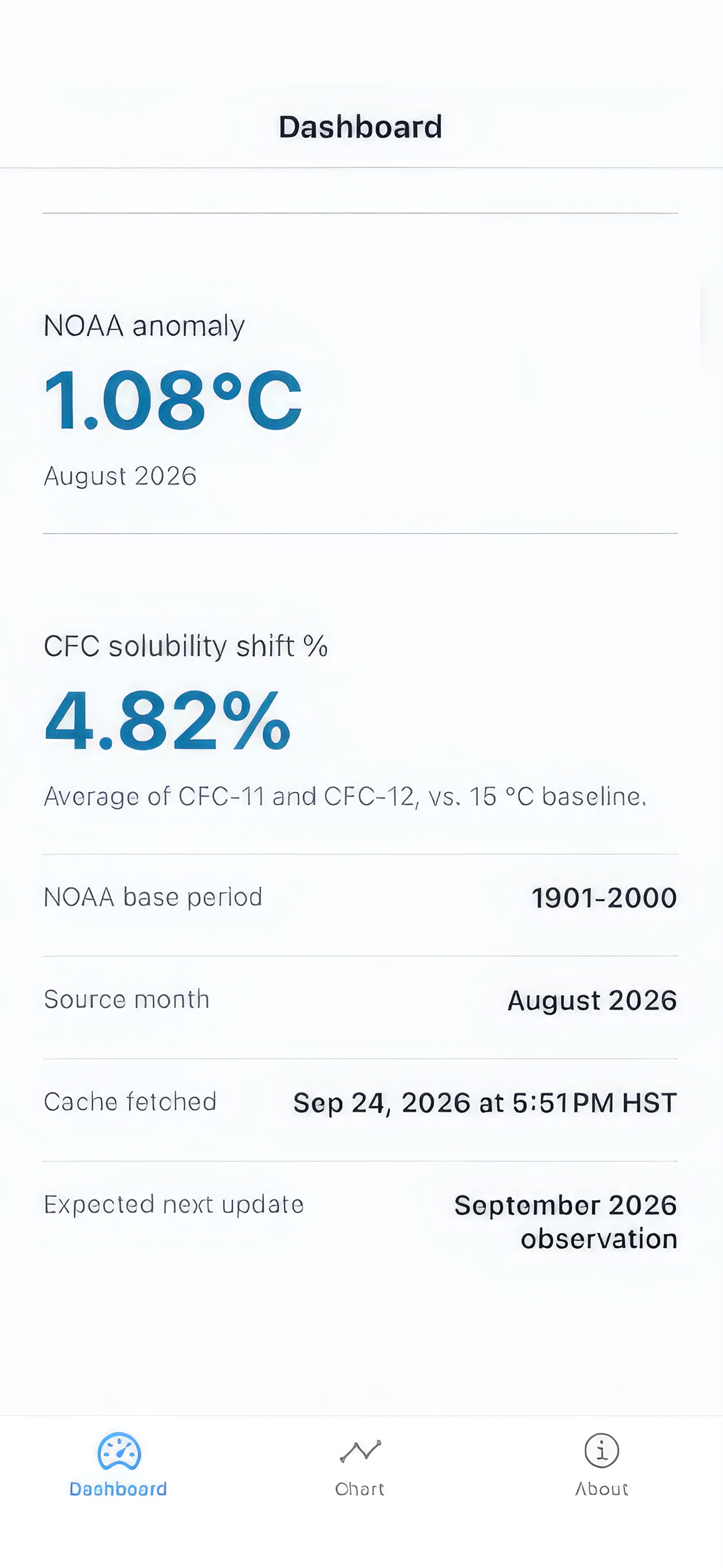
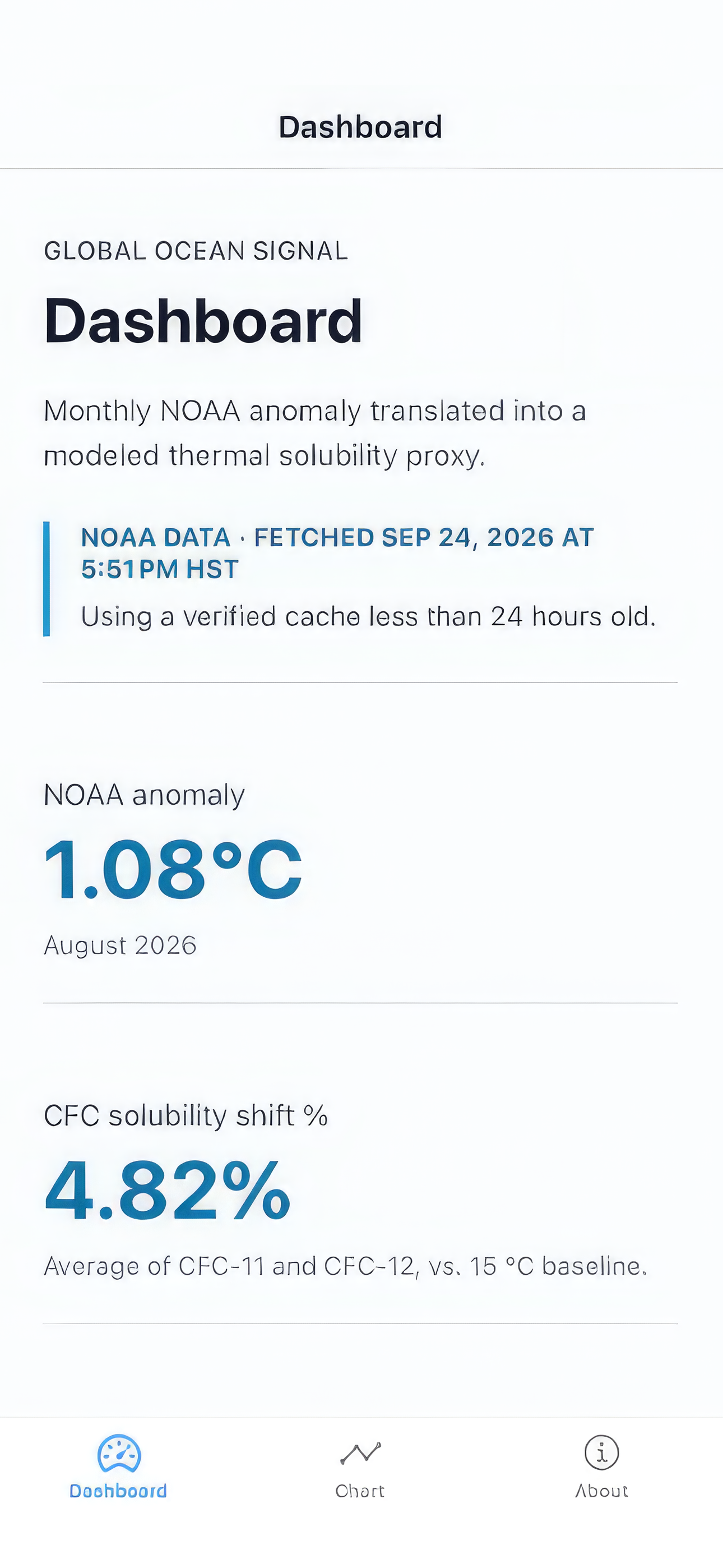
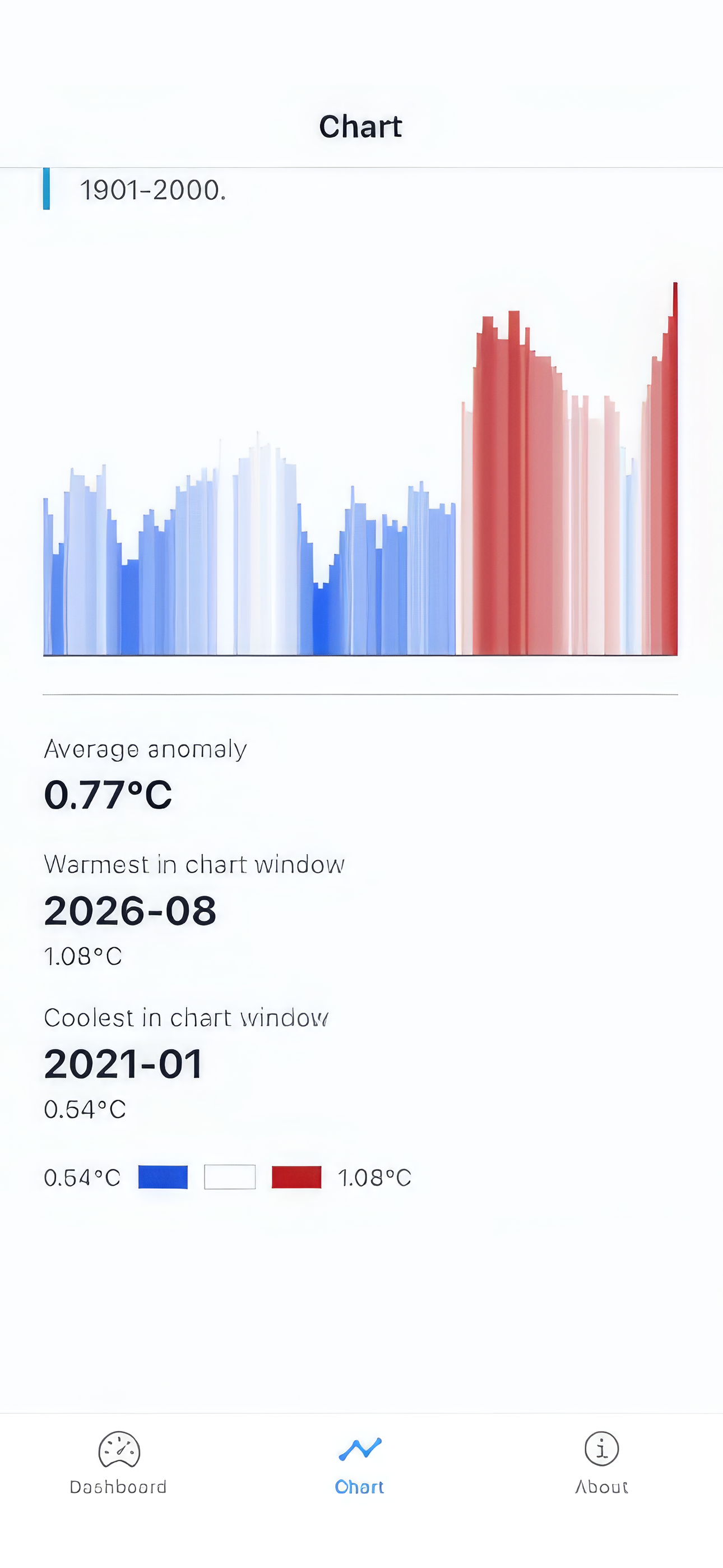
Every month NOAA publishes how far global ocean temperatures have drifted from their 1901–2000 average. August 2026: +1.08°C.
Haline takes that number and runs it through the Warner & Weiss (1985) solubility equations:
NOAA anomaly > ocean temperature > CFC solubility > how much less gas seawater can hold
Right now that shift is about 4.82%.
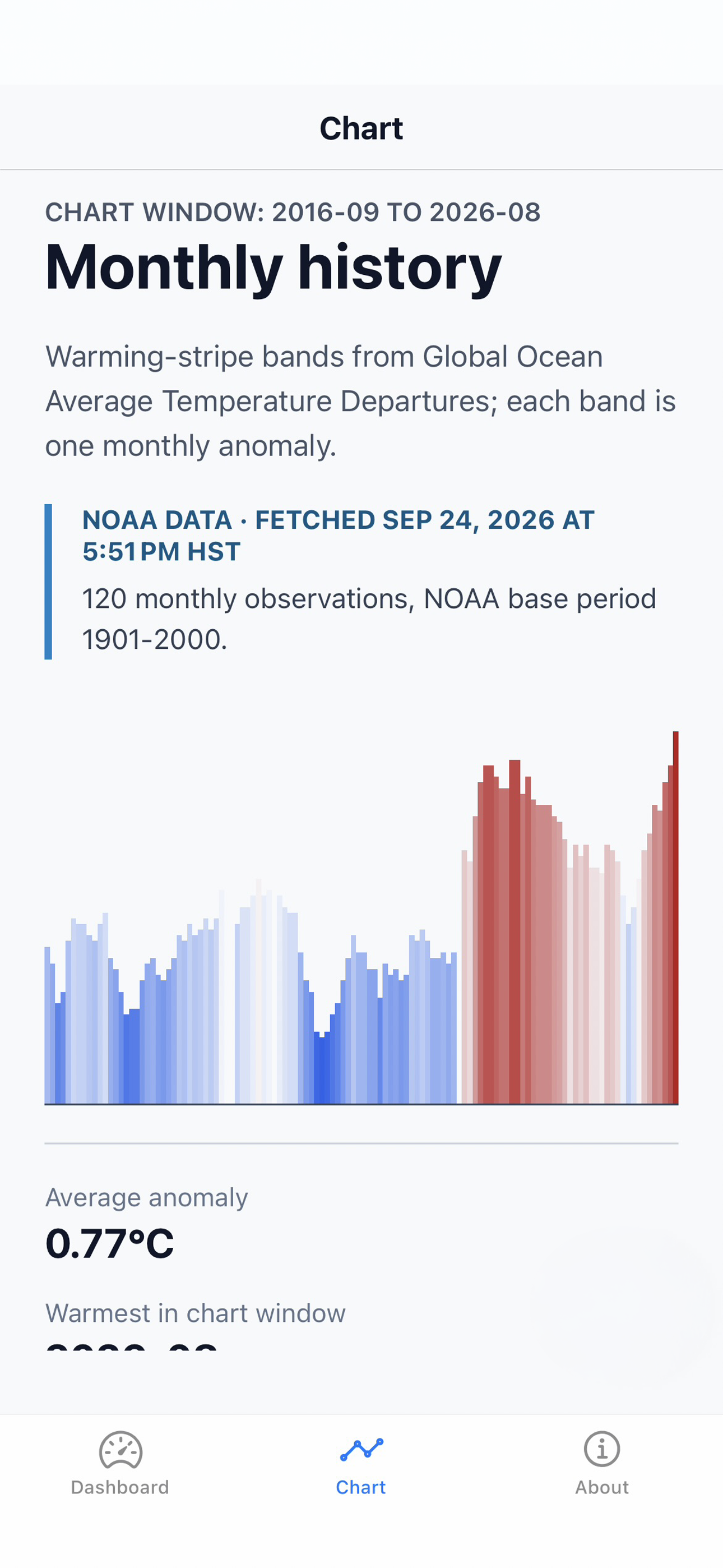
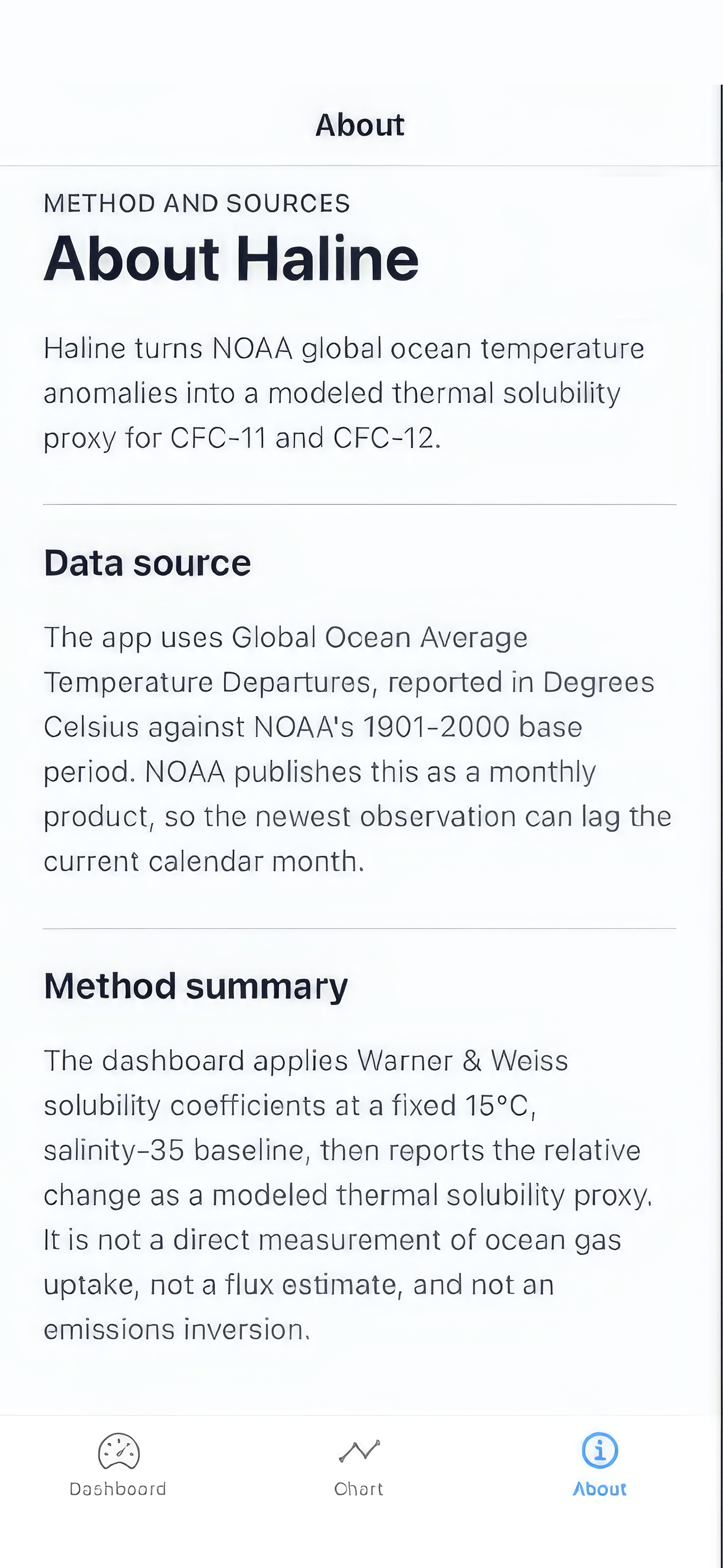
Free: this month's live NOAA anomaly and the current solubility shift Premium: ten years of monthly history as warming stripes, plus data export About: every source, every citation, and the method, right in the app
And it tells you plainly what it is: a modeled proxy. It isn't a flux measurement or an emissions inversion. If you're going to put science in someone's pocket, you owe them the fine print.
- The Science Came First, the App Came Second
Stack: React Native, Expo, TypeScript, RevenueCat, EAS Build.
But the part I care about is the math. The Warner & Weiss coefficients are hand-entered from my paper and tested three ways:
Coefficient fidelity: every constant, checked against the source Analytical derivatives: nudge the temperature 0.01 K and make sure the slope matches the calculus Physical invariants: saltier water should always hold less gas, so the tests enforce it
205 tests. Green CI. Open source, MIT licensed.
- The Hard Parts Weren't the Code
The original 1985 data table is behind a paywall. So I validated with calculus instead of spot checks, which turned out to be stronger anyway.
I shipped an iOS app without owning a Mac. Windows, PowerShell, EAS cloud builds.
And I learned the App Store has more checkboxes than a hospital discharge form. Bank routing numbers. Tax forms. Age ratings. Keys for keys.
- Where It Goes Next Alerts when NOAA's monthly number drops Student and classroom plans, because this belongs in a science class More gases, more of the framework, same honest math
Built With
- eas
- expo.io
- react-native
- revenuecat
- typescript

Log in or sign up for Devpost to join the conversation.