Inspiration
Somewhere along the way, our generation stopped watching the news.
It wasn’t apathy. Most of today’s coverage is written from a doomsday angle: crisis after crisis, framed in ways that leave us stressed, overwhelmed, and helpless about massive world issues we have no power to fix. So we tuned out, not because we don’t care, but because we couldn’t keep absorbing it.
The format hasn’t helped either. Traditional news platforms feel built for another era, and social media chops complicated stories into sensational headlines and disconnected clips. Neither fits how we actually consume things today.
We started asking: What if staying informed felt less like doomscrolling and more like listening to your favorite playlist?
We took our UI/UX inspiration from the applications our peers use most, and set out to build an app that brings young people back to the news. Instead of overwhelming users, it helps them stay informed in a minimal, manageable way, focusing on pressing topics that are hopeful or at least within reach, in an experience that feels native to how Gen Z already engages with technology, without sacrificing the substance or credibility of journalism.
That's how half full was born.
The world is a lot. The news doesn't have to be.
What it does
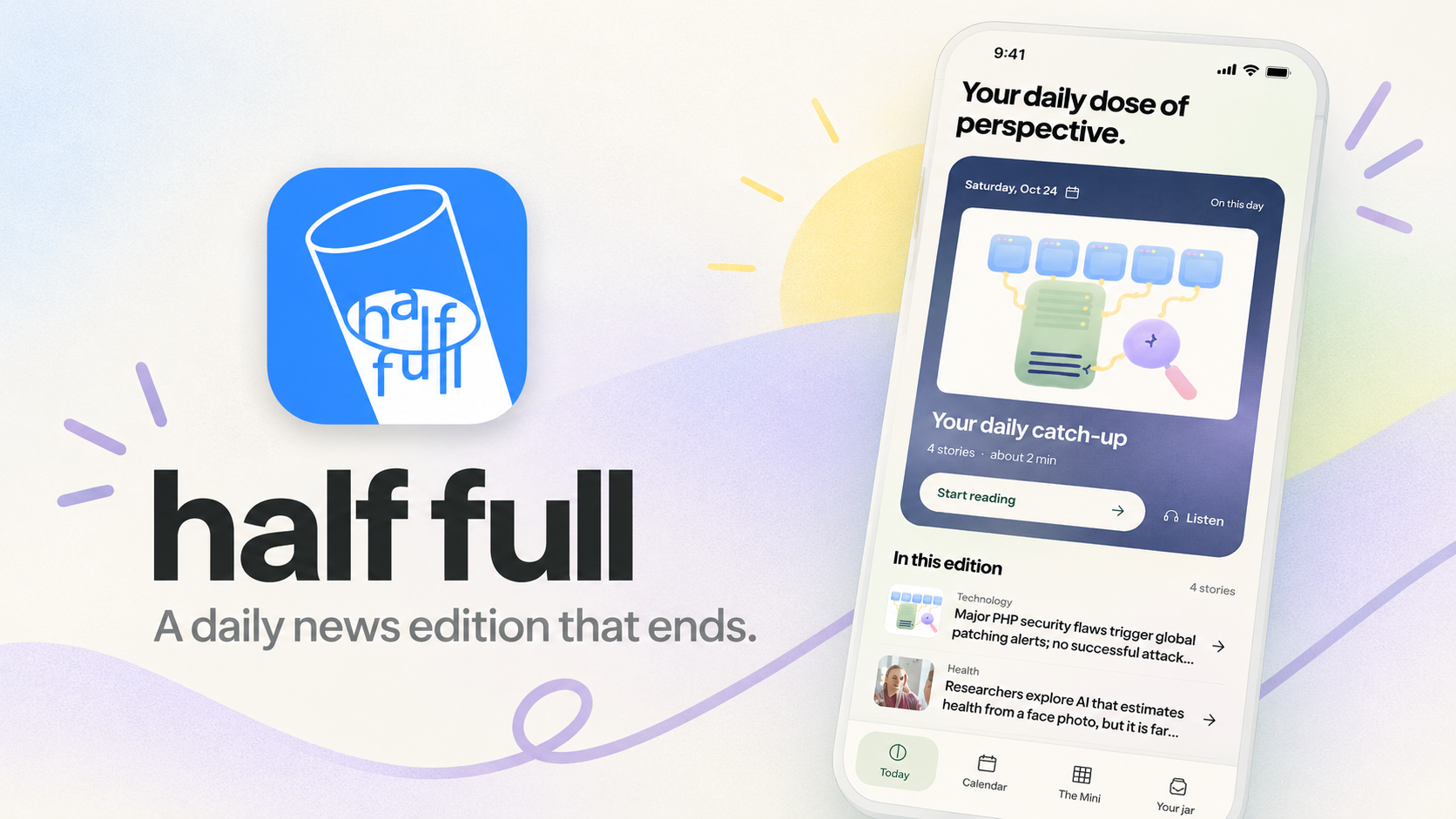
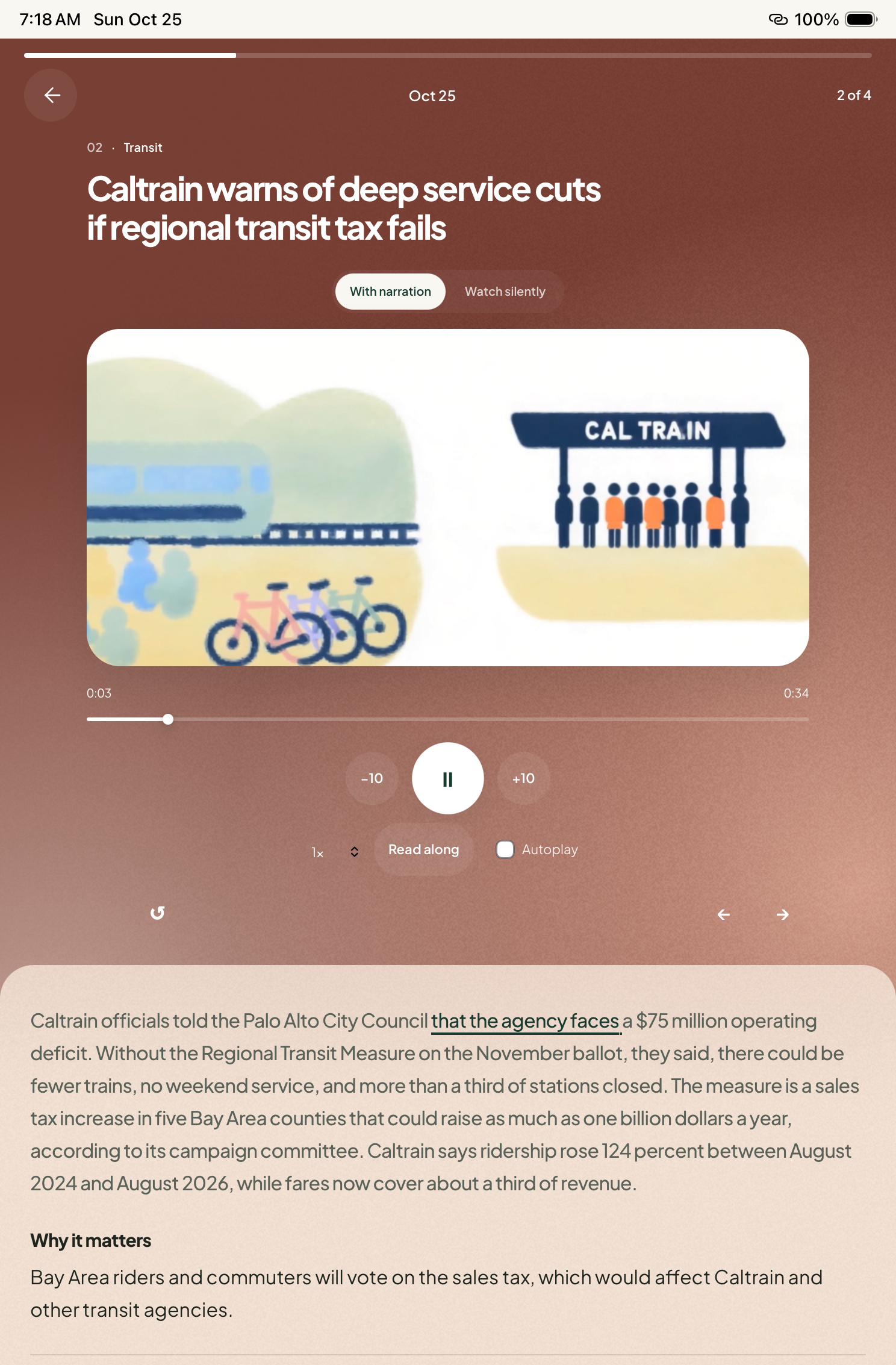
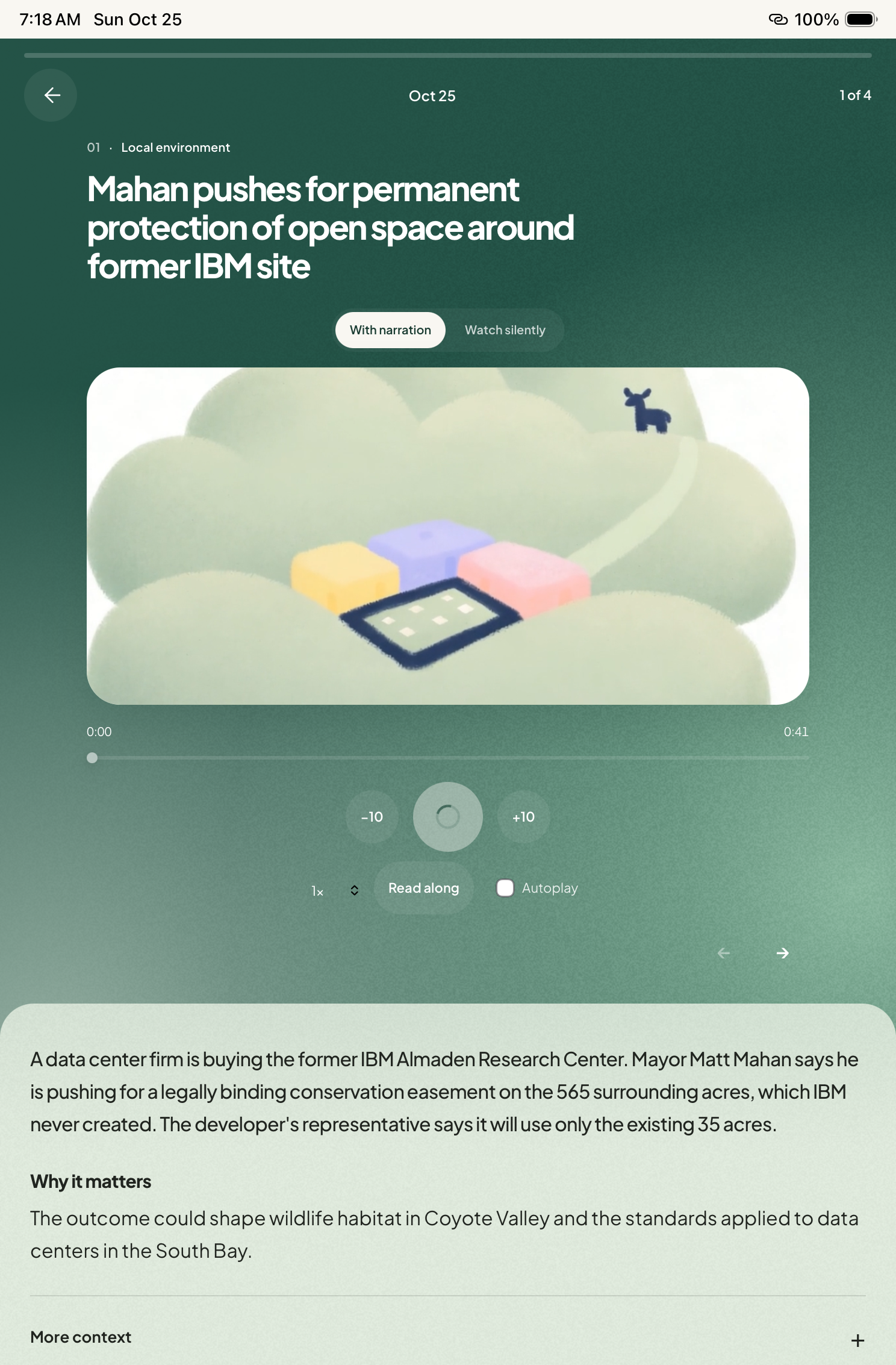
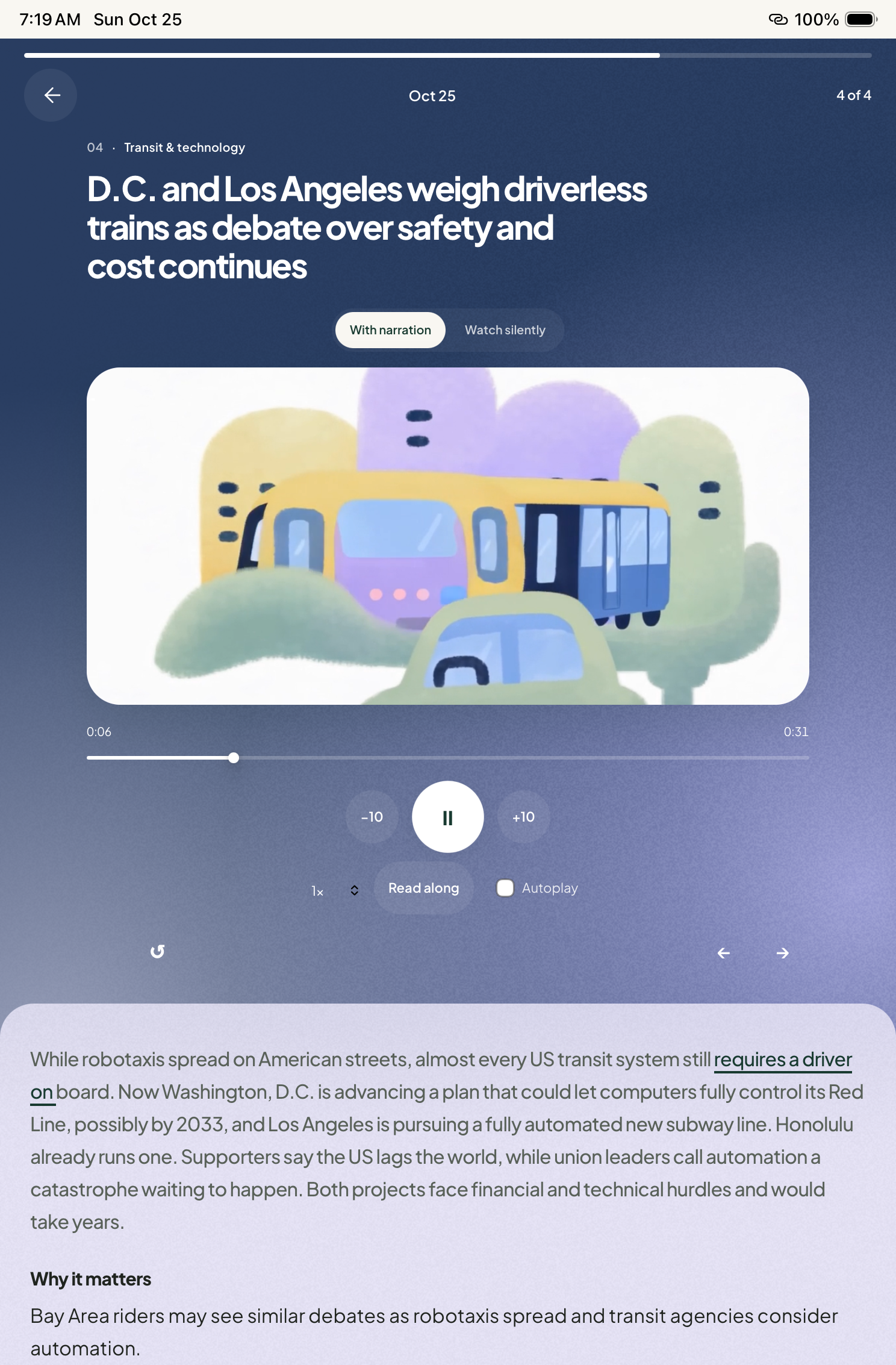
half full transforms the daily news into an immersive, swipeable, illustrated experience you can read, watch, or listen to.
Instead of throwing hundreds of headlines at users, half full curates a small daily edition of 3–5 meaningful stories.
Think of it as a daily playlist for understanding the world.
Each story comes with an accessible explanation, original AI-generated illustrations, and natural-sounding audio narration. We're also exploring AI-generated animated explainers that bring illustrated stories to life, making complex concepts easier to visualize.
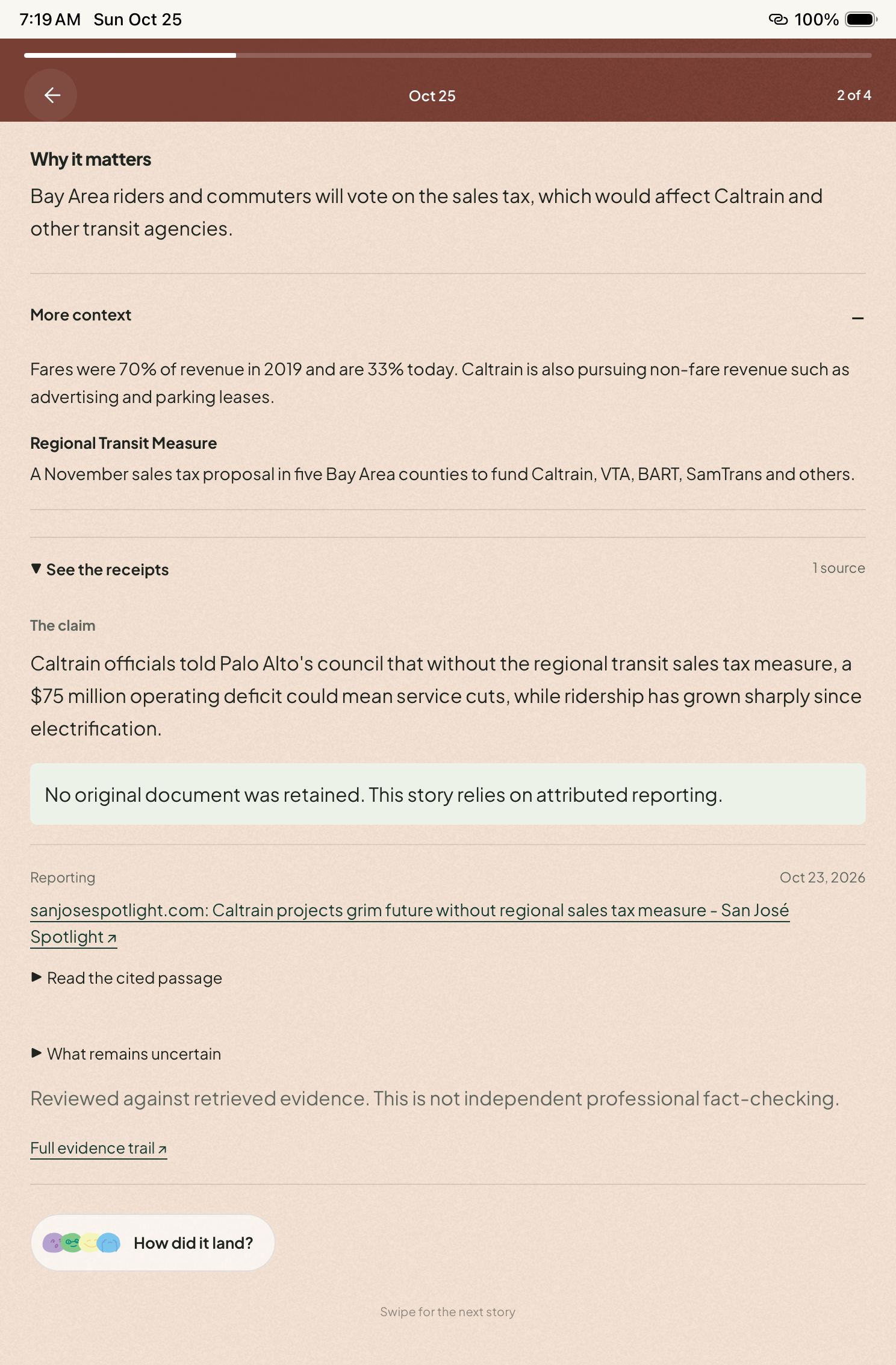
Users can swipe horizontally between stories, listen with their preferred narrator, and explore the supporting evidence behind the reporting.
But half full is more than a news reader.
See the Receipts: Readers can explore the sources supporting a story rather than simply trusting an AI-generated summary.
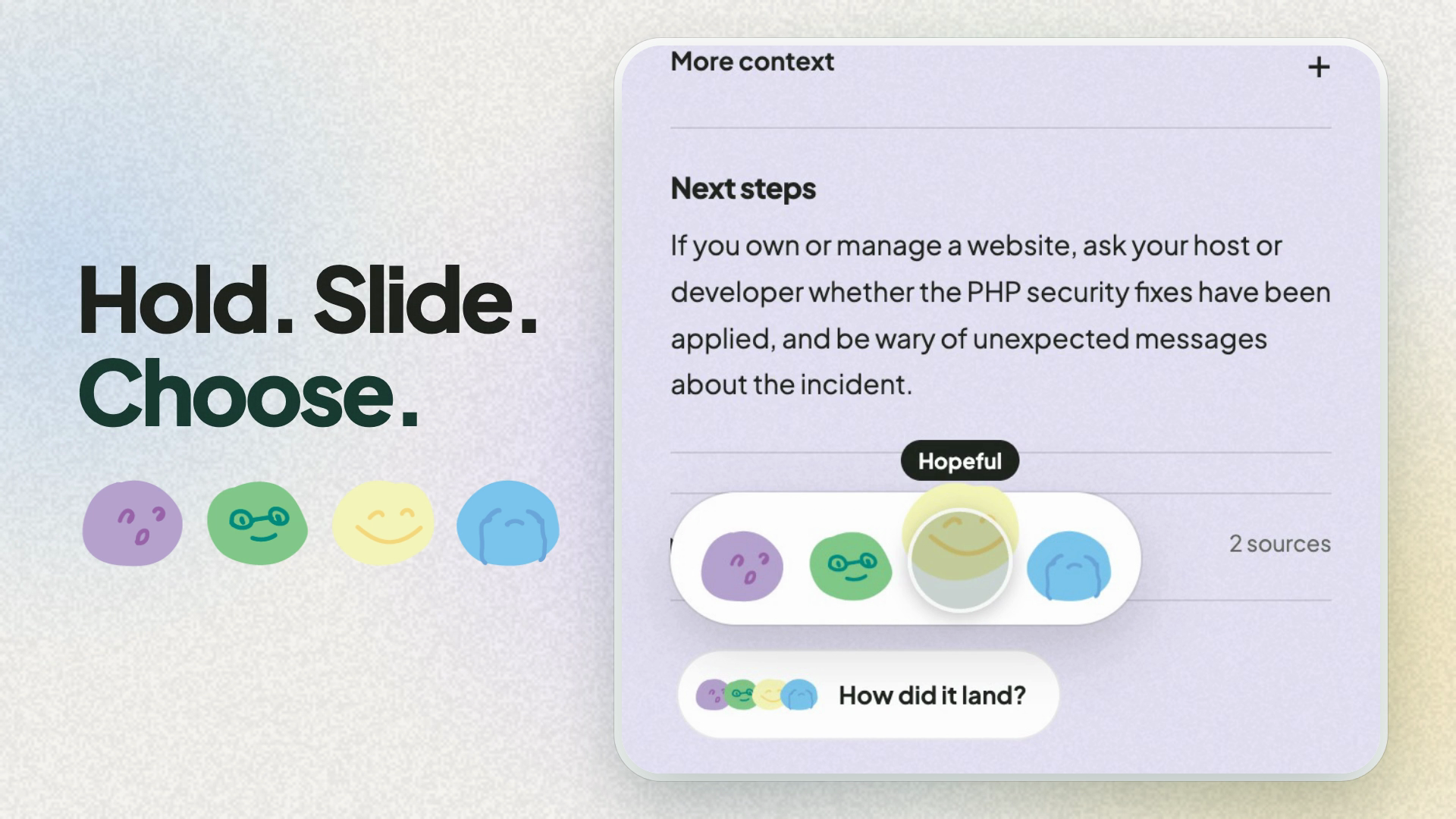
Your Jar: Users collect their reading history and express how stories made them feel through original illustrated reactions: Interesting, Insightful, Hopeful, and Stressed.
The Mini: An optional daily crossword offers a playful way to engage with the news.
Your Daily Catch-Up: Previous editions are accessible through a calendar, allowing users to revisit stories from other days.
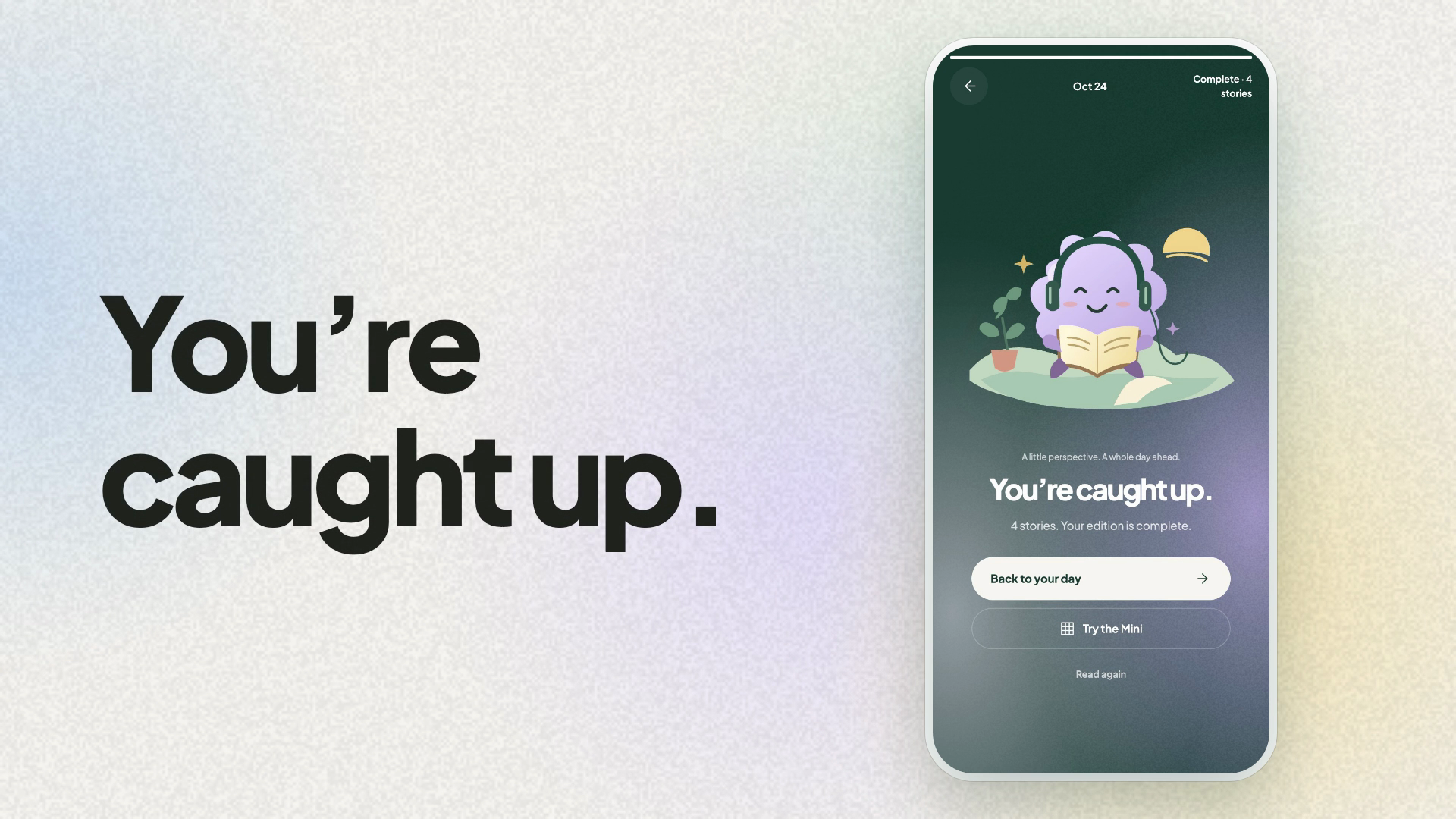
And when you've finished your edition, half full tells you something most news apps never will:
You're caught up.
No infinite feed. No pressure to keep scrolling. Just a little more understanding of the world.
How we built it
We built half full as a mobile-first Progressive Web App using Next.js, React, TypeScript, and Firebase, connecting several AI services into one news-to-media pipeline.
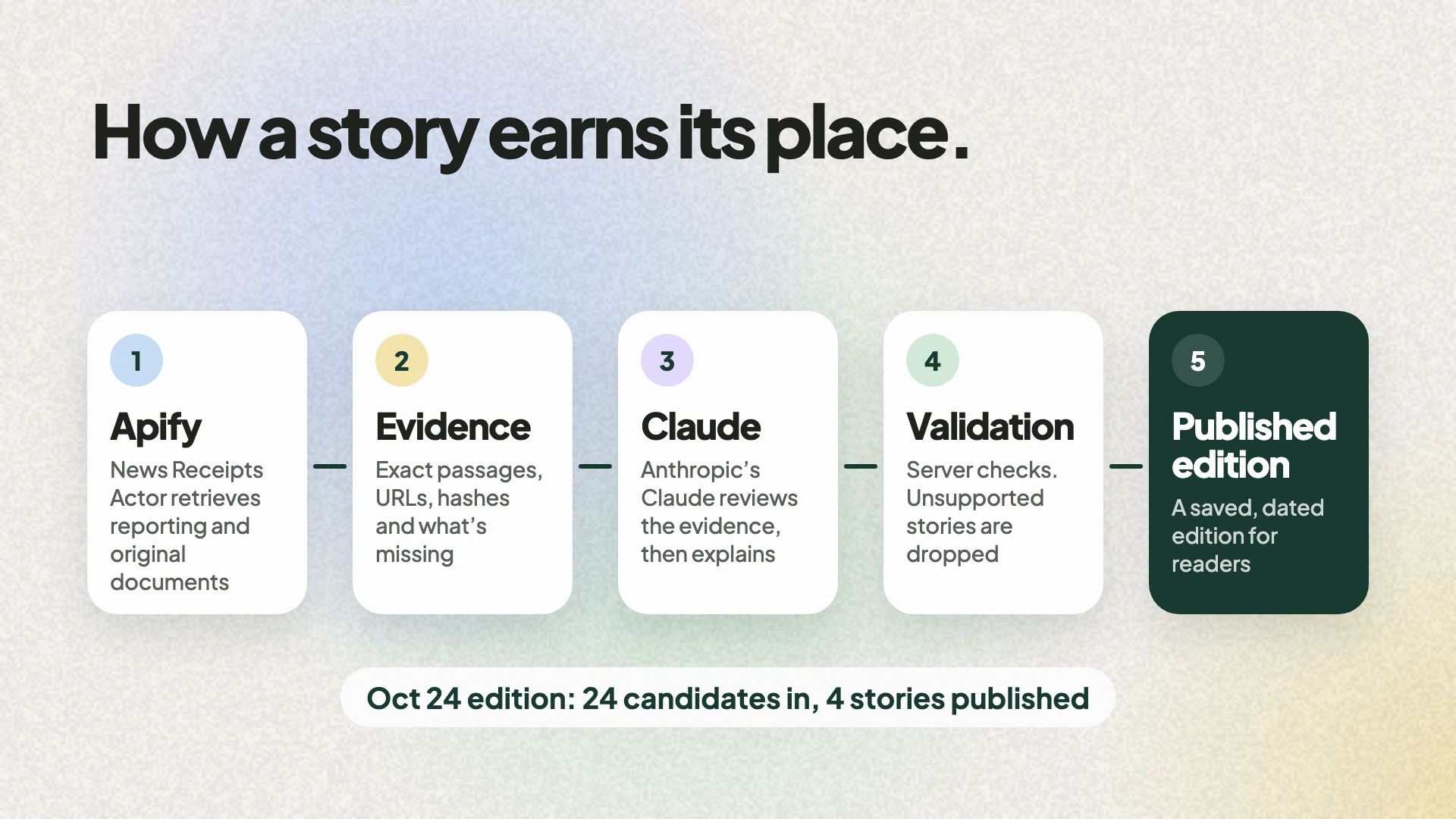
Apify — The research engine
Apify powers our news retrieval and source investigation. We developed a custom News Receipts Actor to help gather reporting, investigate supporting material, and track evidence provenance.
Published editions and their supporting data can be reused, allowing readers to access the same curated edition without regenerating everything.
Anthropic Claude — The editorial brain
Claude examines retrieved reporting, compares supporting evidence, and helps select a small set of stories worth understanding.
It also transforms complex reporting into accessible explanations and plans visual storyboards. We added structured validation and evidence requirements to reduce unsupported claims and reject stories when sufficient reporting isn't available.
Recraft — The visual identity
Recraft generates original, story-specific illustrations using a consistent half full art direction.
We wanted visuals that felt warm, expressive, and approachable rather than generic stock imagery.
We also experimented with Runway's image-to-video technology to explore how AI-generated motion could bring illustrated explanations to life.
Cartesia — The voice of half full
Cartesia powers our audio narration. Users can listen to news stories through natural-sounding voices, choose their preferred narrator, and control playback.
Firebase — The personal experience
Firebase Authentication and Firestore support optional Google sign-in, saved reading progress, and reactions. Guest reading remains available.
Next.js, Motion, and GSAP — The interactive experience
We built a responsive, gesture-driven interface with horizontal story navigation, fluid transitions, and interactive visual elements.
Our design combines Spotify-inspired media navigation with Tiimo-inspired warmth, expressive typography, and textured, dithered gradients.
Vercel — Deployment
Vercel hosts our application, while our external AI services support news discovery, editorial processing, illustrations, and narration.
Challenges we ran into
1. Making AI-generated news trustworthy
Generating a summary is easy. Making sure the summary reflects credible reporting is much harder.
We had to think carefully about source independence, publication dates, evidence quality, and what should happen when a story doesn't have enough supporting information.
Rather than forcing the system to produce an edition at any cost, we built safeguards that allow it to reject insufficiently supported stories.
2. Turning articles into compelling visual explanations
One of our biggest lessons was that a moving image isn't necessarily an animation that helps someone understand something.
Our early attempts used static AI illustrations with programmatic motion layered over them. They worked technically, but they didn't achieve the storytelling quality we envisioned.
This pushed us to experiment with actual AI image-to-video generation and rethink how illustrated scenes should be designed from the beginning.
3. Making complex technology feel effortless
Behind a simple swipeable interface are multiple services handling retrieval, editorial evaluation, illustration, audio, storage, and user progress.
Coordinating those systems while keeping the experience responsive was a significant engineering challenge.
4. Building for real mobile use
We worked through touch navigation, portrait layouts, audio synchronization, persistent preferences, PWA behavior, and the realities of different screen sizes.
We learned quickly that passing automated tests doesn't automatically mean an interface feels good to use.
Accomplishments that we're proud of
We're proud that half full is more than an AI chatbot summarizing headlines.
We built an evidence-assisted editorial pipeline with a custom Apify Actor, structured source review, and a behind-the-scenes Studio that helps make the process more transparent.
We connected real news retrieval, AI-assisted editorial analysis, custom illustrations, and voice narration into one consumer-facing product.
We created an original visual identity with illustrated reaction characters and a playful approach to reading progress.
We built a swipeable daily news experience, an optional crossword, historical editions, and personalized reading features.
And we began turning our illustrated stories into actual AI-generated video, moving toward our vision of short, animated explanations.
But the accomplishment we're most proud of is the idea behind the product:
We designed a news experience that doesn't measure success by how long it can keep someone scrolling.
Instead, we want people to leave feeling a little more informed, a little less overwhelmed, and ready to get on with their day.
What we learned
Building half full taught us that the most powerful AI experiences aren't necessarily the ones that generate the most content.
They're the ones that make complicated things feel simple without losing what makes them important.
We learned how to orchestrate multiple AI services, build evidence-aware workflows, design around external API limitations, and create interactive experiences that work across different devices.
We also discovered how much thoughtful design matters. The difference between a collection of technically functioning features and a product people actually want to use comes down to how everything feels together.
Most importantly, we learned that accessibility, accuracy, and engaging design don't have to compete with one another.
What's next for half full
We want to take half full beyond a hackathon prototype and make it an everyday companion for staying informed.
Our next steps include expanding our AI-generated animated explainers, improving video and narration synchronization, making visual storytelling more consistent across every edition, and continuing to refine our mobile experience.
We also want to strengthen source verification, improve historical news coverage, and make the experience even more accessible to different reading and listening preferences.
Long term, we imagine half full becoming a new kind of news platform: one that makes understanding the world feel natural, approachable, and even enjoyable.
Because staying informed shouldn't mean staying overwhelmed.
half full — The world is a lot. The news doesn't have to be.
Built With
- anthropic
- apify
- artificial
- cartesia
- claude
- figma
- firebase
- firestore
- gsap
- motion
- next.js
- node.js
- notability
- progressive-web-app
- react
- recraft
- runway
- typescript
- vercel


Log in or sign up for Devpost to join the conversation.