Halaldor
Inspiration
Most multiplayer strategy games reward players for collecting resources or completing repetitive tasks. We wanted to create something different-a game where information is more valuable than money and where every decision changes the political and economic landscape.
Halaldor was inspired by stock markets, political strategy, social deduction games, and negotiation-based board games. Instead of focusing on combat, players compete by building influence, trading shares, lobbying institutions, spreading or verifying rumors, and making strategic alliances. The goal is to create a living economy where trust, reputation, and market perception matter just as much as wealth.
What it does
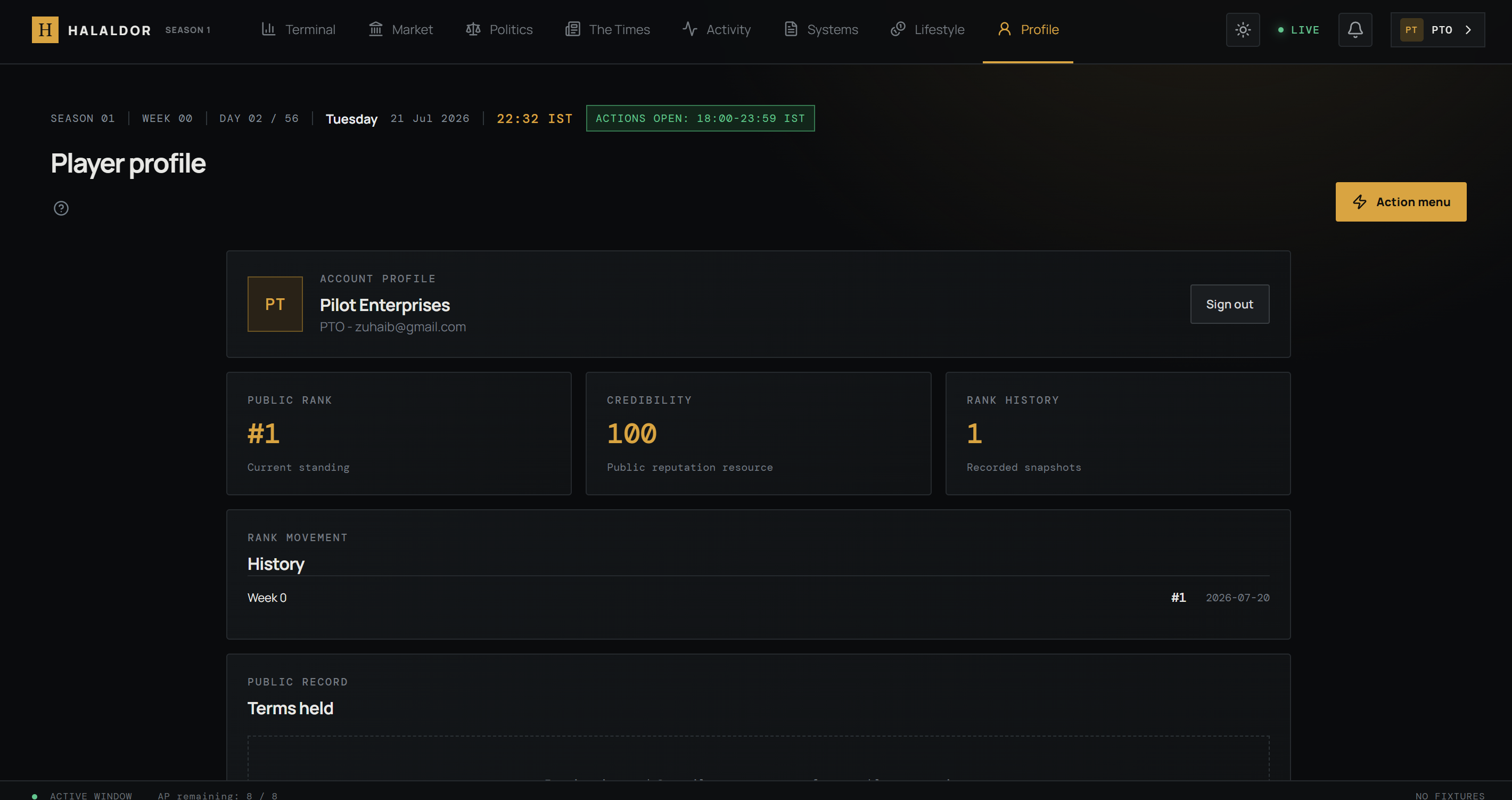
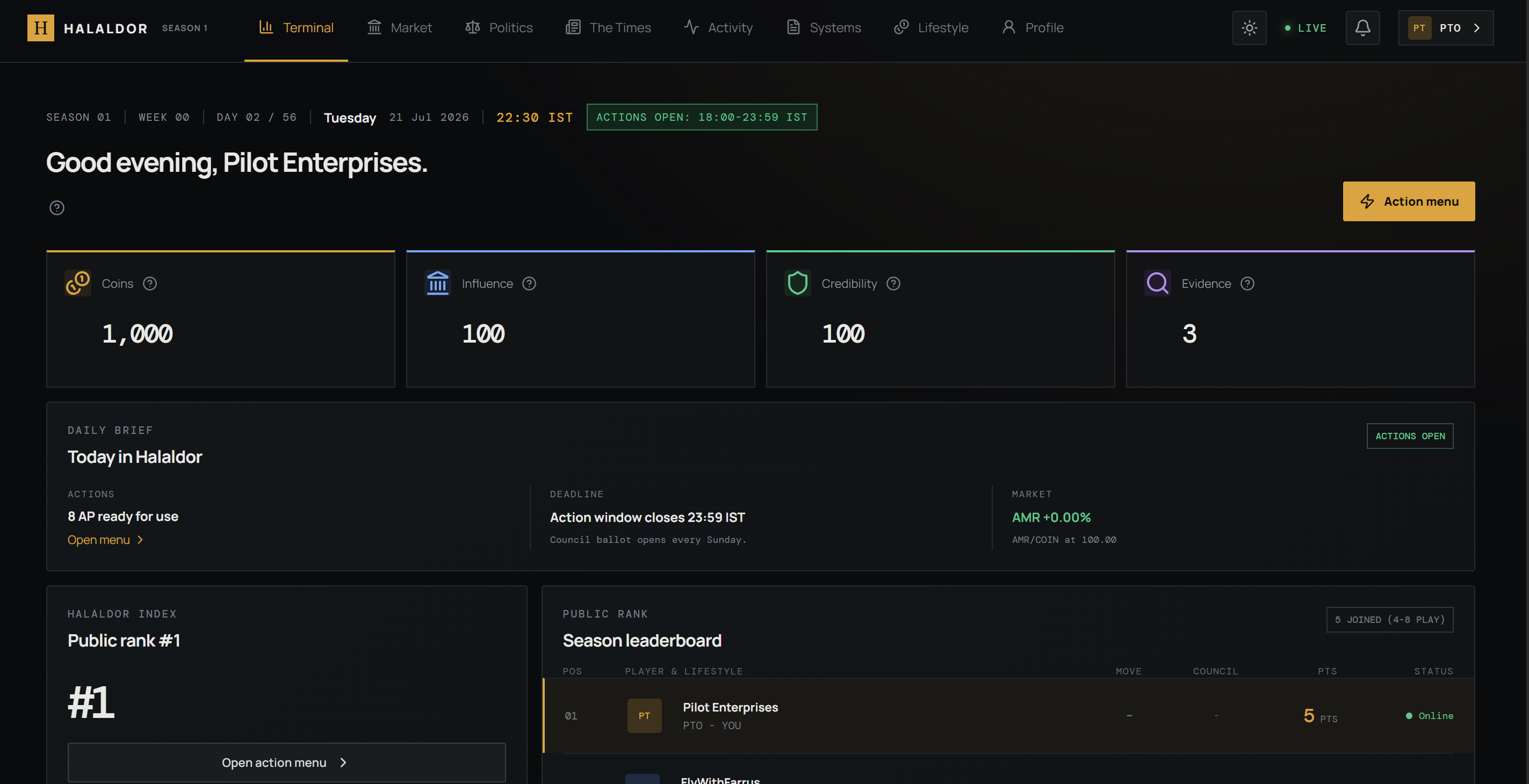
Halaldor is a multiplayer political-economic simulation where every player represents a publicly traded company competing for the top position on the Halaldor Index.
Players can:
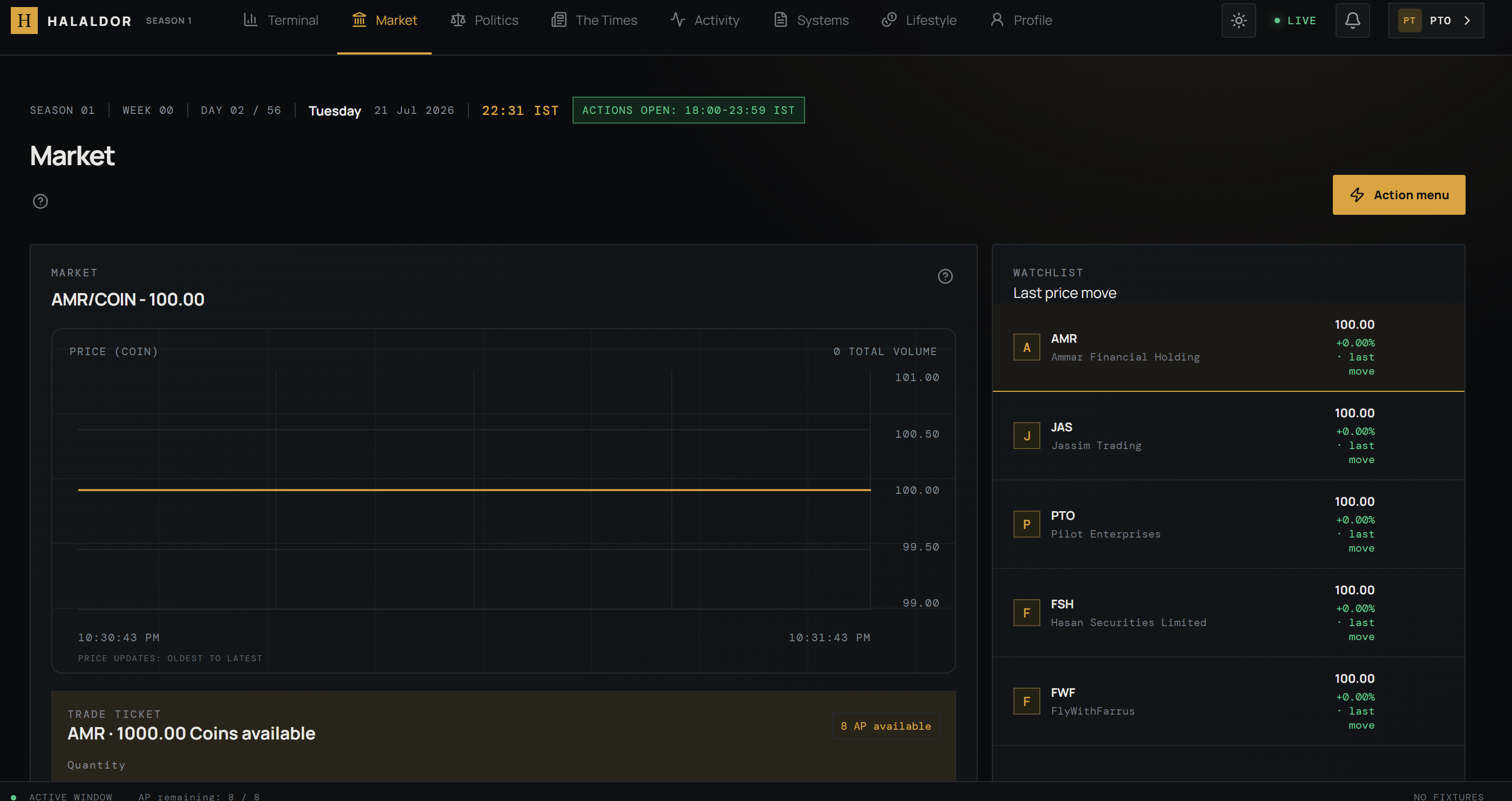
- Trade shares of other players.
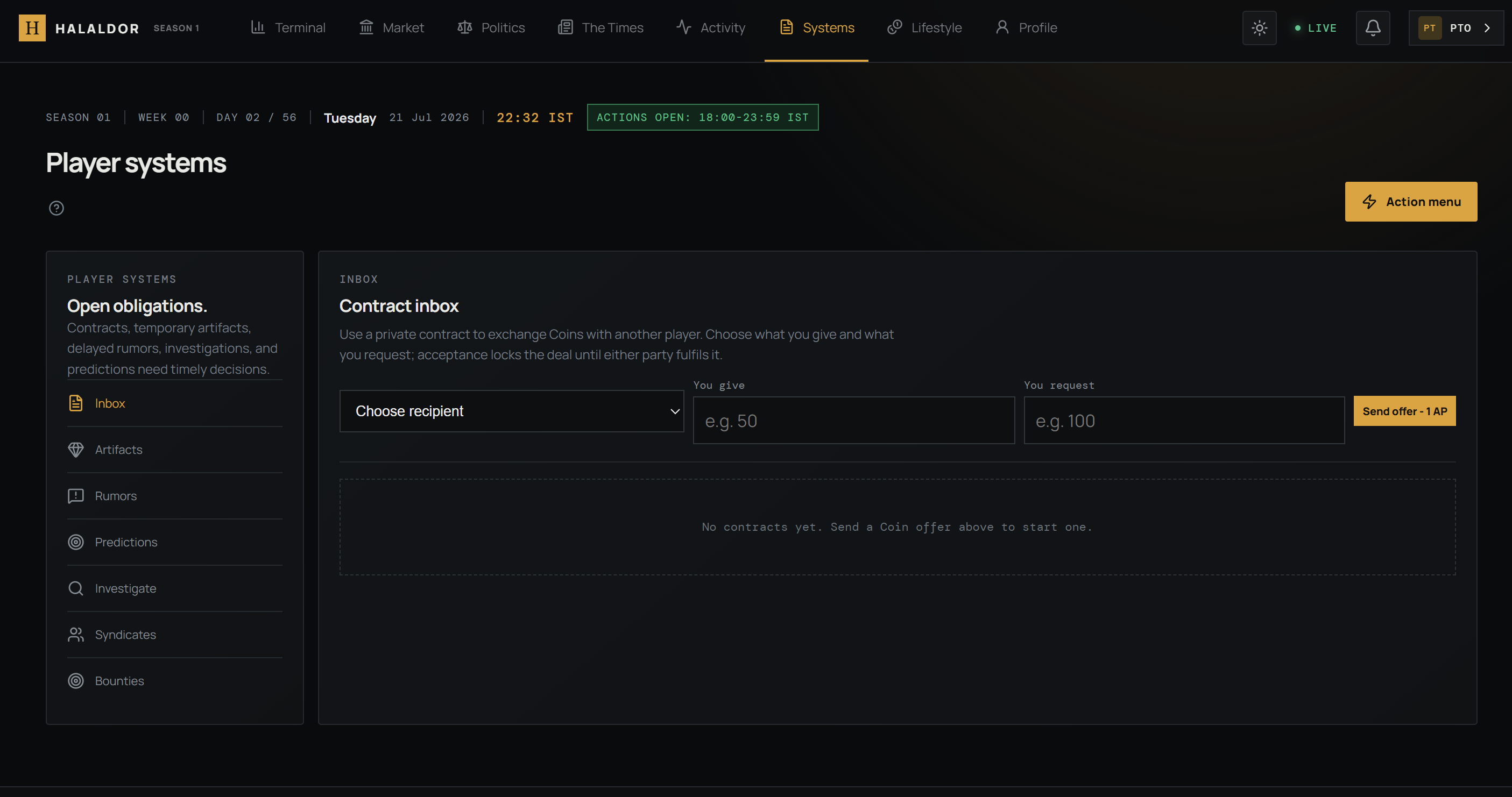
- Negotiate alliances and investment deals.
- Spread or verify rumors.
- Submit complaints and investigations.
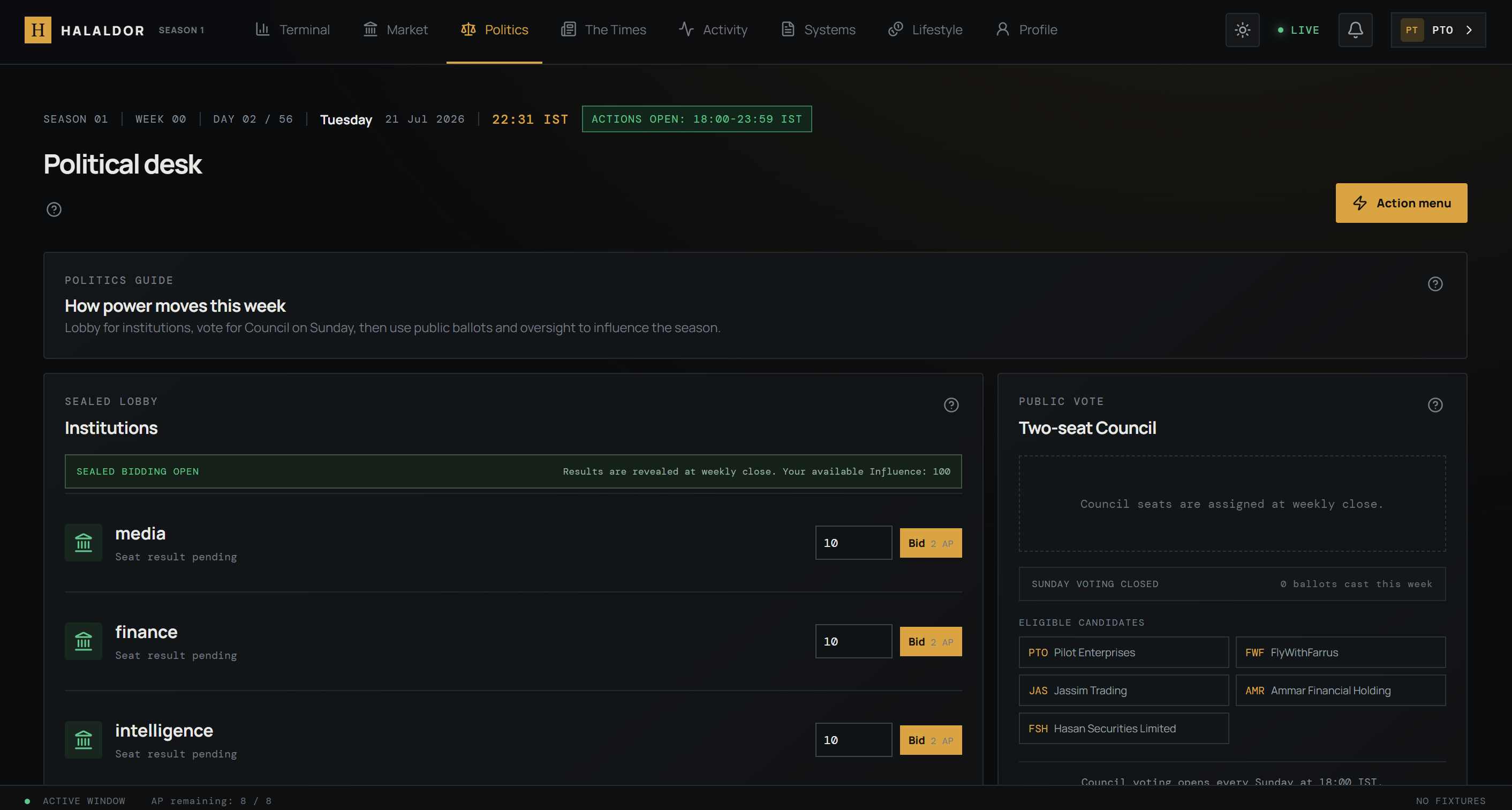
- Lobby institutions such as Media, Finance, and Intelligence.
- Participate in weekly council governance.
- Predict market movements and political outcomes.
Instead of simply earning points, players influence the world around them. Markets react, reputations change, investigations begin, and leadership shifts based on player decisions.
How I built it
I designed Halaldor around a deterministic game engine rather than relying on expensive AI systems.
The core engine processes player actions such as:
- Trading
- Lobbying
- Rumor credibility
- Investigations
- Institution control
- Reputation updates
These actions collectively update the Halaldor Index and the game's political landscape.
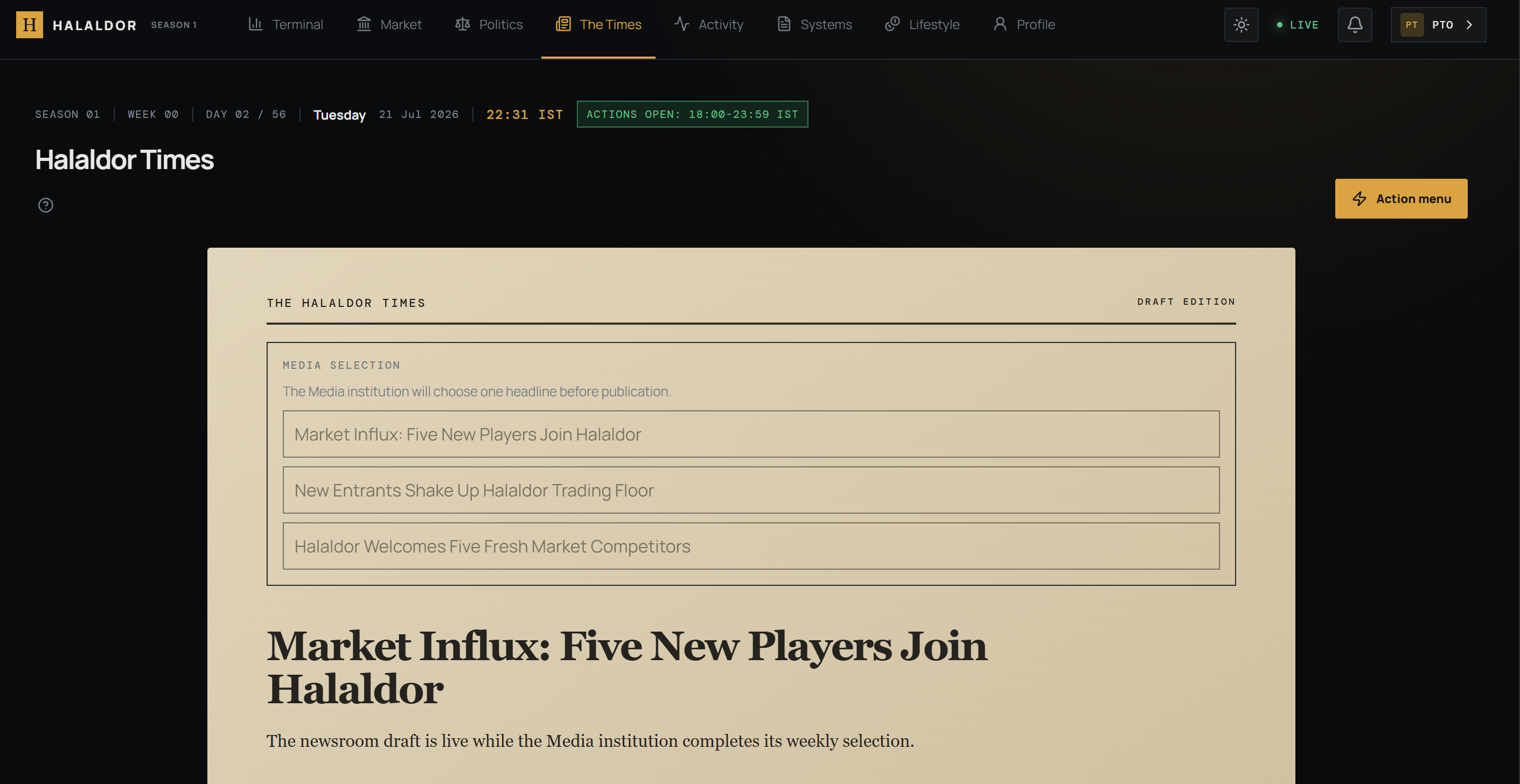
To keep operational costs low, AI is used only for enhancing storytelling, such as generating newspaper headlines and weekly summaries, while all gameplay mechanics remain rule-based and transparent.
Challenges faced
The biggest challenge was balancing strategy without making the game unfair.
Some of the questions we had to solve included:
- How do we prevent dominant players from becoming impossible to beat?
- How can rumors be impactful without encouraging spam?
- How do we reward negotiation without allowing permanent alliances to control the game?
- How can institutions feel meaningful without introducing excessive complexity?
- How do we keep players engaged every day without relying on repetitive reward systems?
Addressed these by introducing temporary institution control, limited daily actions, credibility-based rumors, public governance through the council, and a single dynamic leaderboard that reflects multiple aspects of player performance.
What I learned
Building Halaldor taught us that the most engaging multiplayer experiences aren't created by adding more mechanics, they emerge from meaningful player interactions.
Learned the importance of balancing economics, politics, psychology, and game theory to create a system where every action has consequences. Also discovered that a lightweight rule engine can create a dynamic and evolving world without requiring complex AI for every interaction.
What's next
Future plans include:
- Seasonal tournaments
- Advanced negotiation contracts
- Dynamic world events
- Mobile support
- Private communities and clubs
- Public APIs for statistics and analytics
- Enhanced newspapers and historical archives
- Additional institutions and special events
Long-term vision is to make Halaldor a living social strategy platform where every season tells a completely different story, driven entirely by the players.
Built With
- codex
- openai
- react
- shadedn
- supbase
- tailwind
- typescript

Log in or sign up for Devpost to join the conversation.