-
-
ss5
-
ss4
-
ss7
-
ss3
-
ss2
-
ss6
-
ss1
-
Logo
-
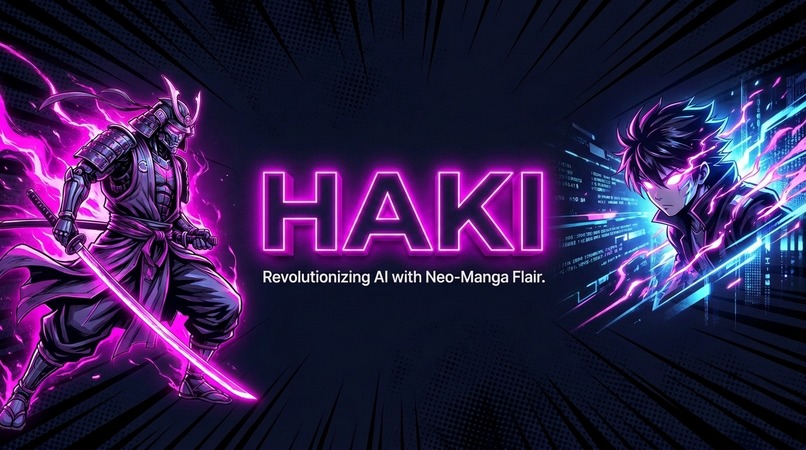
Feature graphic
The spark
I’ve always loved manga — the pacing of a good panel, the quiet beat before a twist, the way a single speech bubble can carry a whole chapter. For years I sketched ideas in notes apps and never finished them. Drawing every frame takes forever. Writing alone felt lonely.
I wanted something that lowered that first blank-page fear: pick a cast, write a prompt, get inked pages you can actually read, continue, and share. Not a toy that dumps one random image — a tiny studio for people who love stories and want to start telling them.
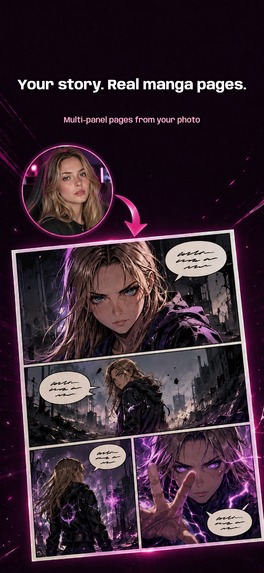
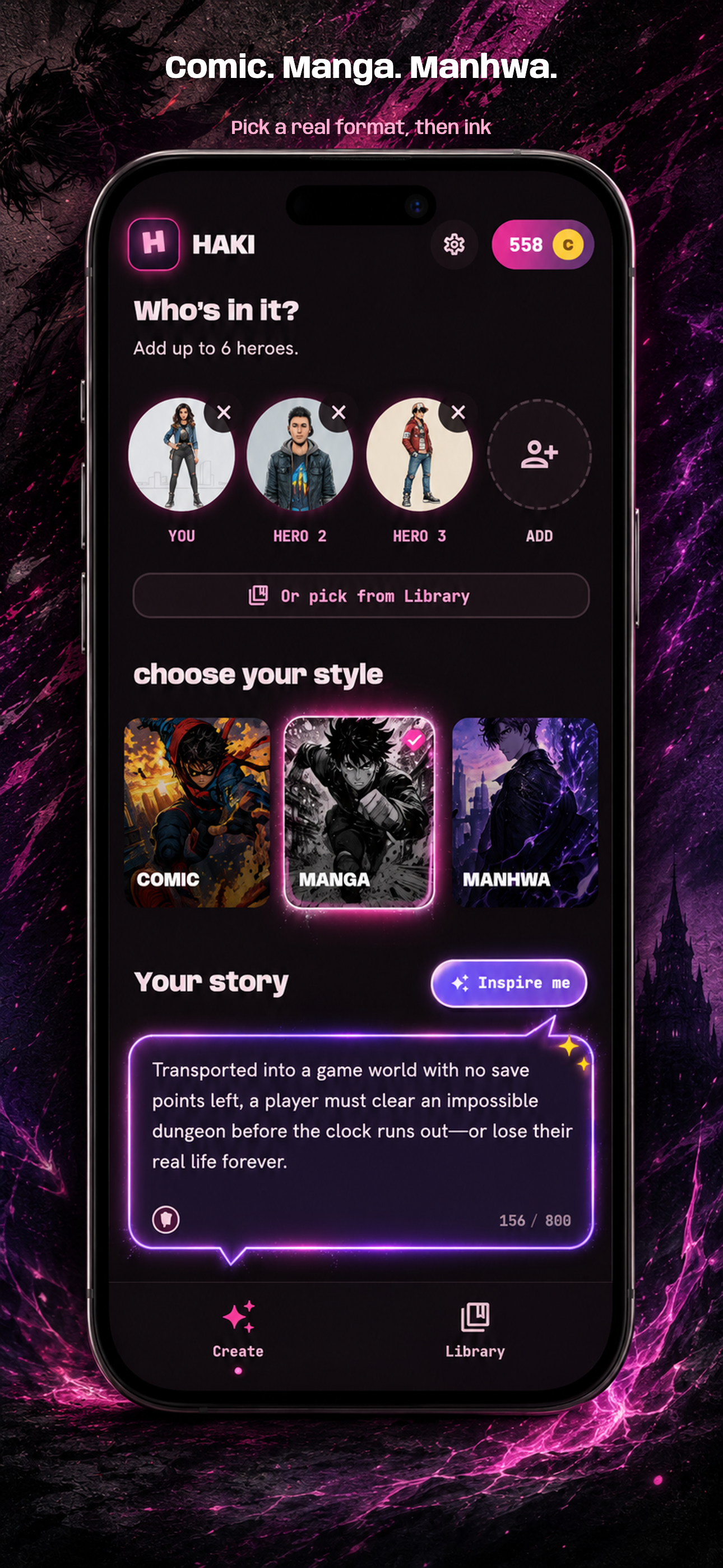
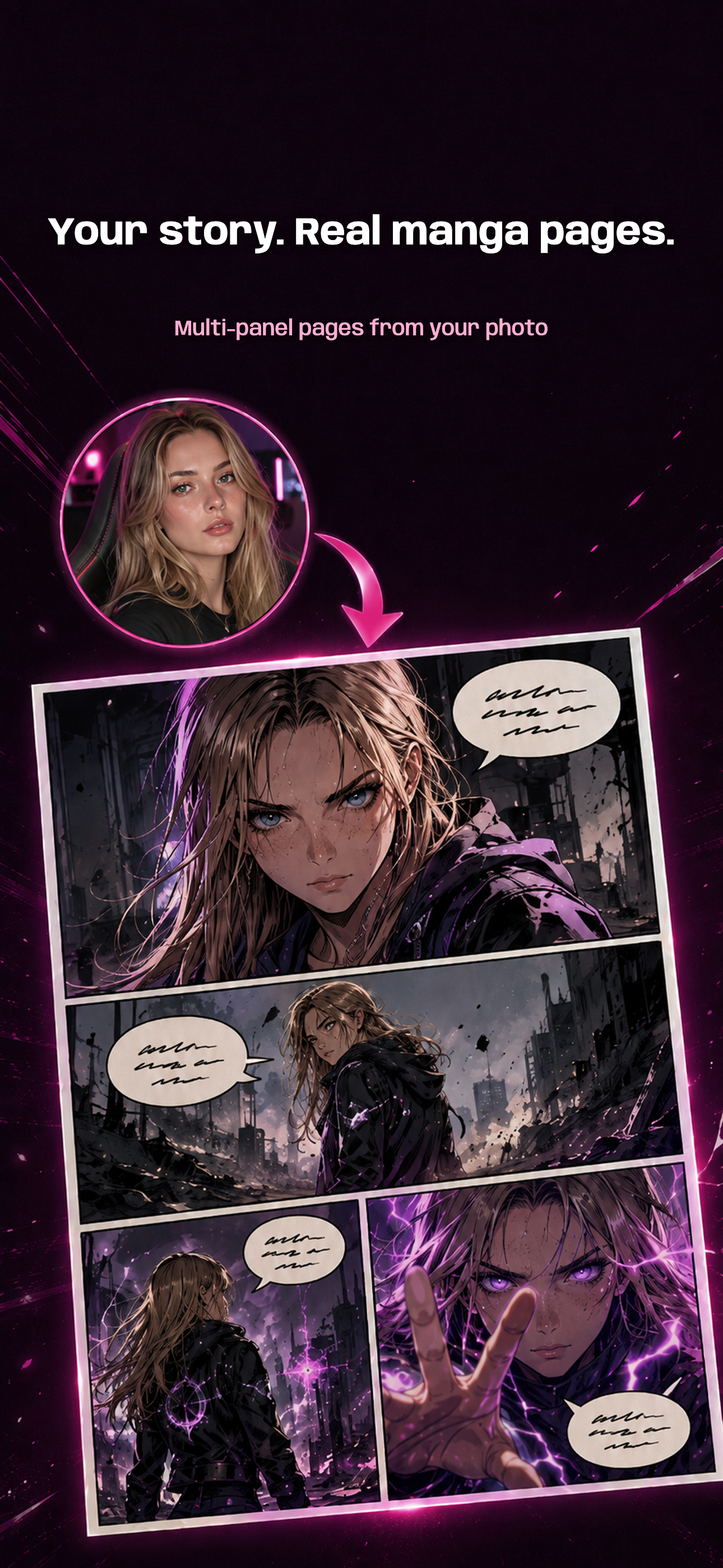
That’s HAKI: turn heroes + a story prompt into multi-panel manga, manhwa, manhua, or comics — then keep going.
Inspiration
The name nods to haki — presence, will, the energy that makes a character feel real. The product idea is simpler:
Everyone has a story. Most people never get past page one.
HAKI is built so someone who loves manga can:
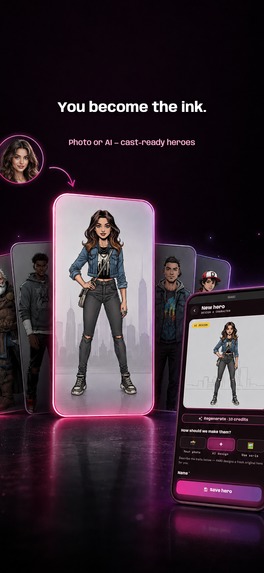
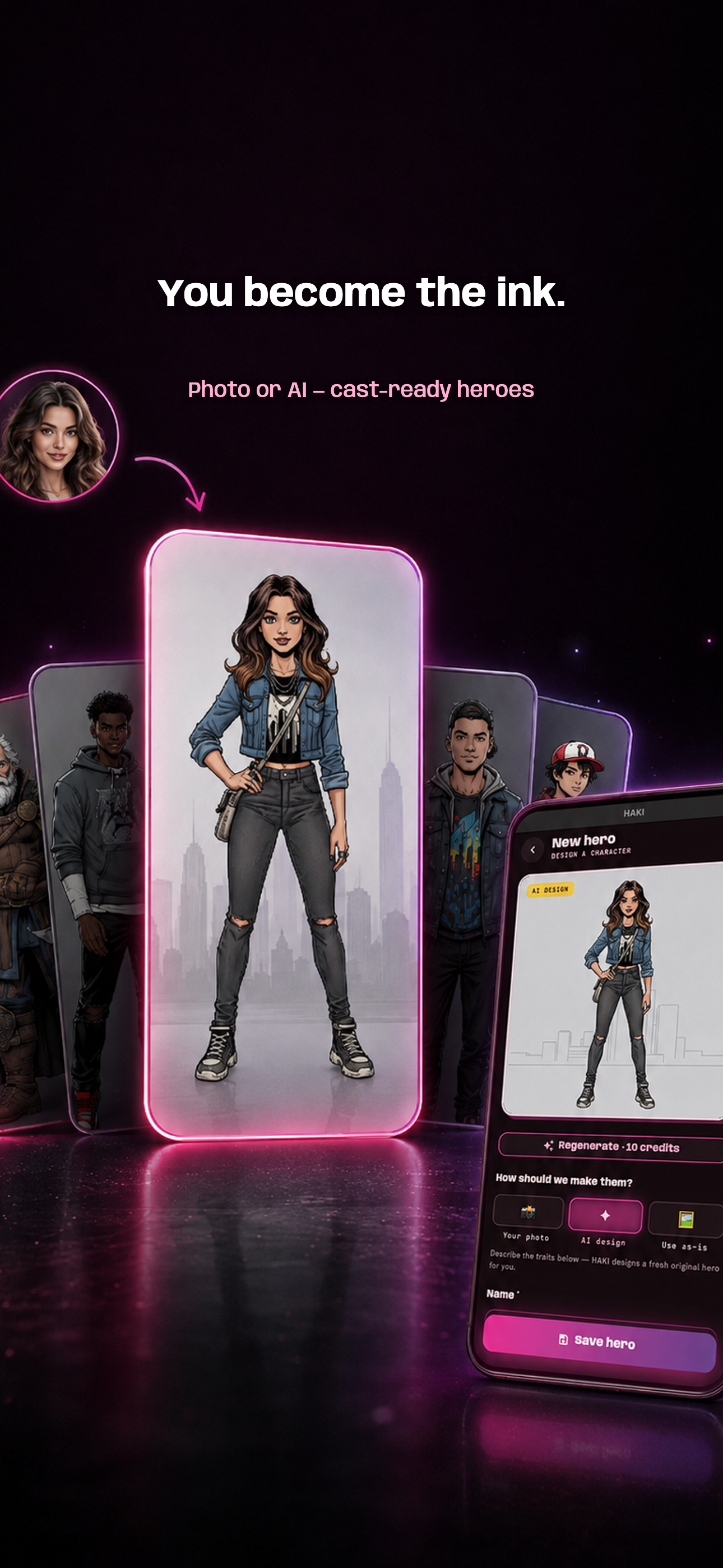
- Cast heroes (from a photo, AI design, or as-is)
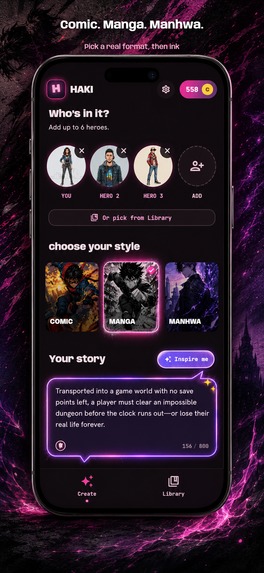
- Write a scene (or tap Inspire me)
- Generate a 3- or 6-panel page in the style they care about
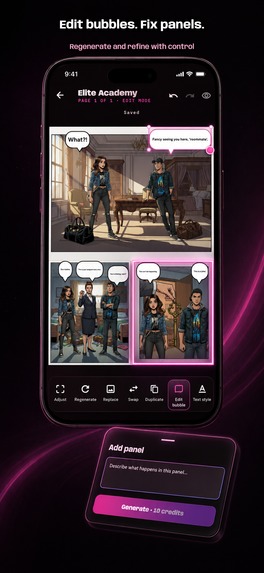
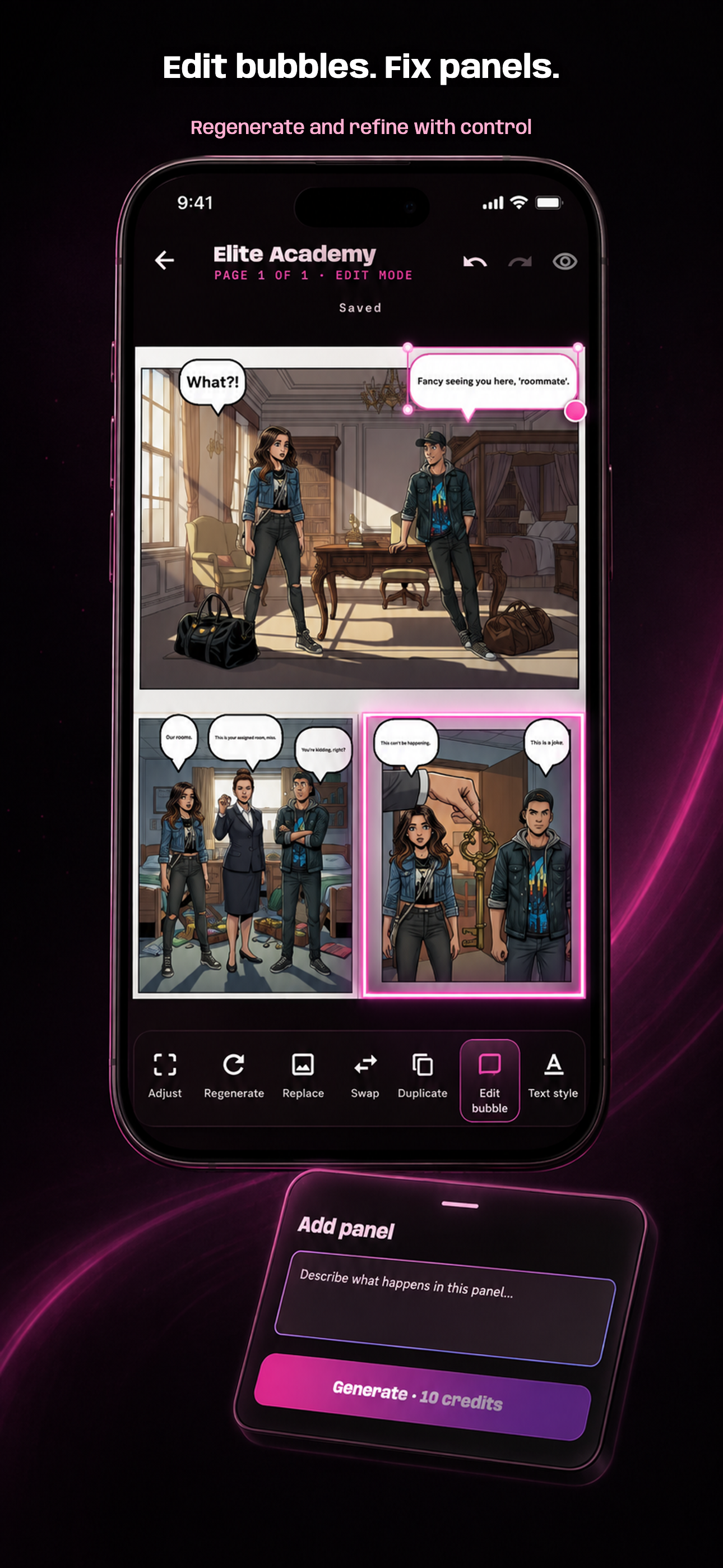
- Edit lettering and layout, continue the chapter, add a twist
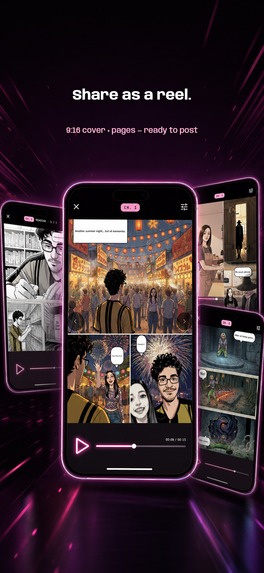
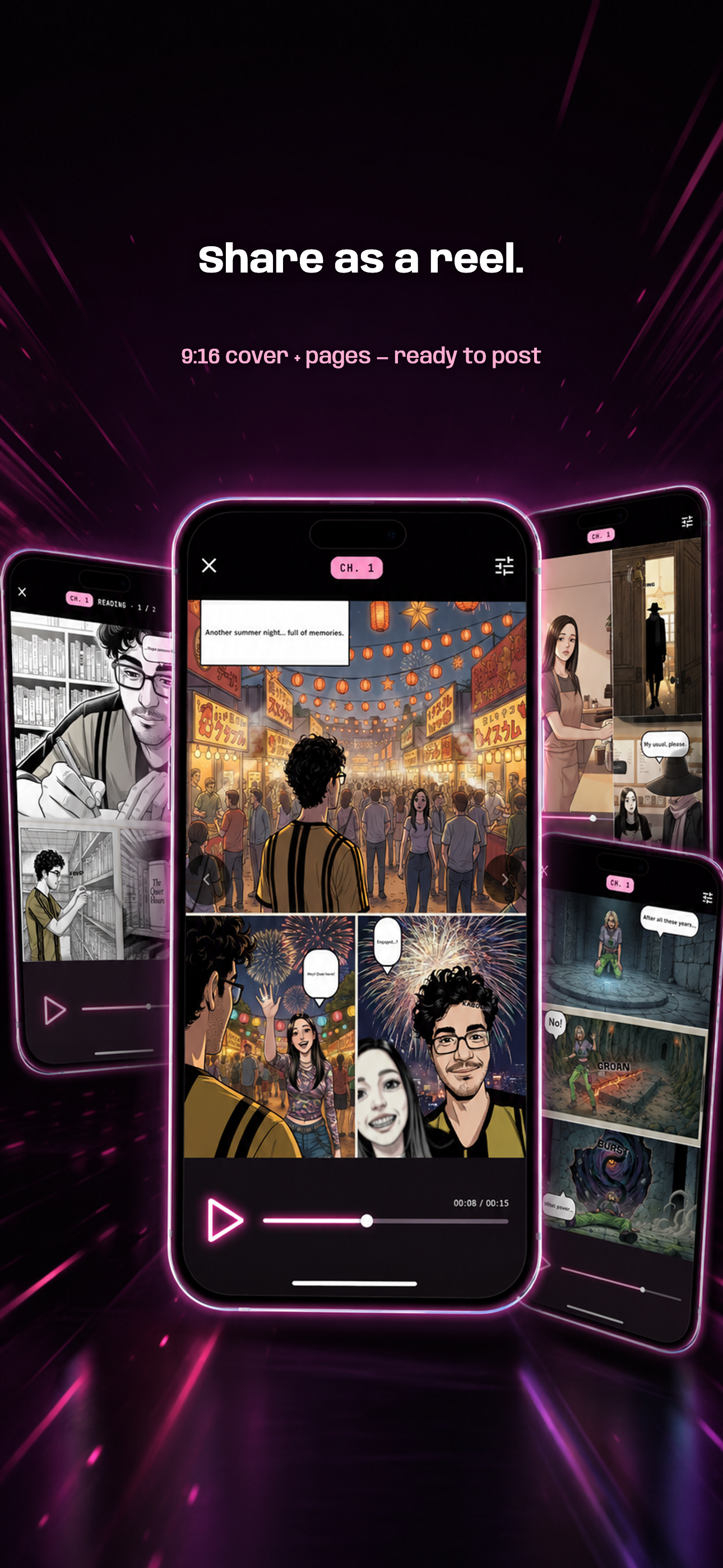
- Share a page, PDF, or a 9:16 reel
The goal isn’t “AI replaces artists.” It’s start writing and sharing — the same impulse that made me fall for manga in the first place.
What I built
HAKI is a Flutter app (iOS + Android) with:
- Create — cast, visual style (Manga / Comic / Manhwa / Manhua), audience tone (Shonen, Shojo, Seinen, Josei…), story prompt
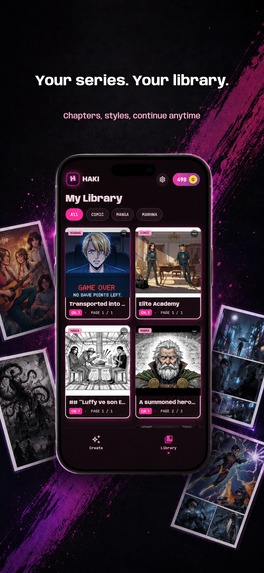
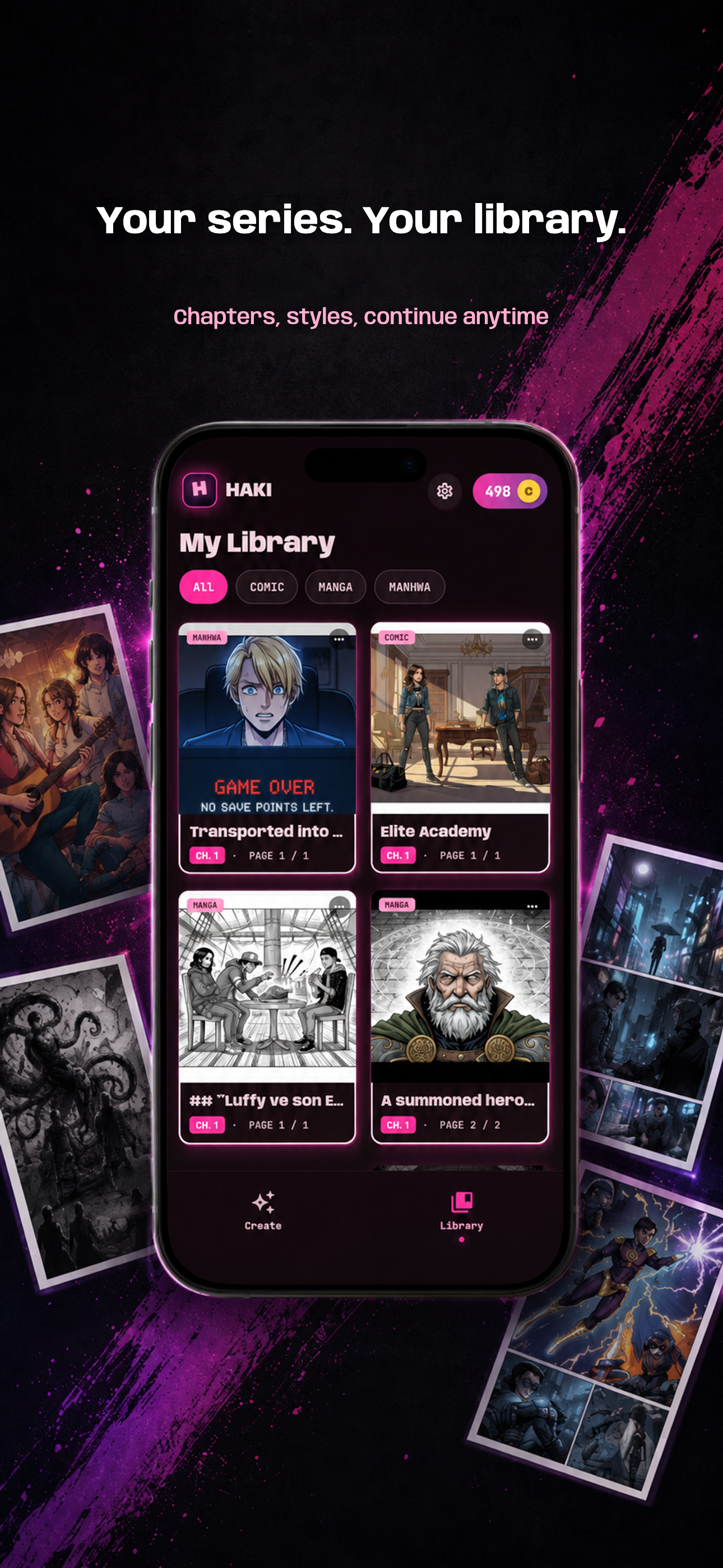
- Library — series with chapters, pages, and a cast bible for continuity
- Hero studio — design or stylize characters once, reuse them across stories
- Reader + editor — read RTL/LTR or long-strip; tweak panels, regenerate, continue
- Export — share images, save to gallery, PDF, vertical reel for social
Monetization runs through RevenueCat: Pro / credits paywalls, free trial path, and credit gates on avatar + panel generation so shipping and sustainability stay honest.
Rough credit model for a first page (panels only):
$$ C_{\text{page}} = n_{\text{panels}} \times c_{\text{panel}} \quad\text{with}\quad n_{\text{panels}} \in {3,6},\quad c_{\text{panel}} = 10 $$
so a first manga page costs (C = 30) or (C = 60) credits — clear in the CTA before you tap Create.
Under the hood: Firebase callables for storyboard → panel art → lettering, a cast bible so characters stay consistent, and client-side composition for layouts, export, and reels.
What I learned
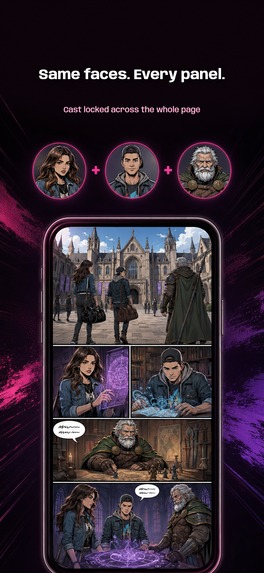
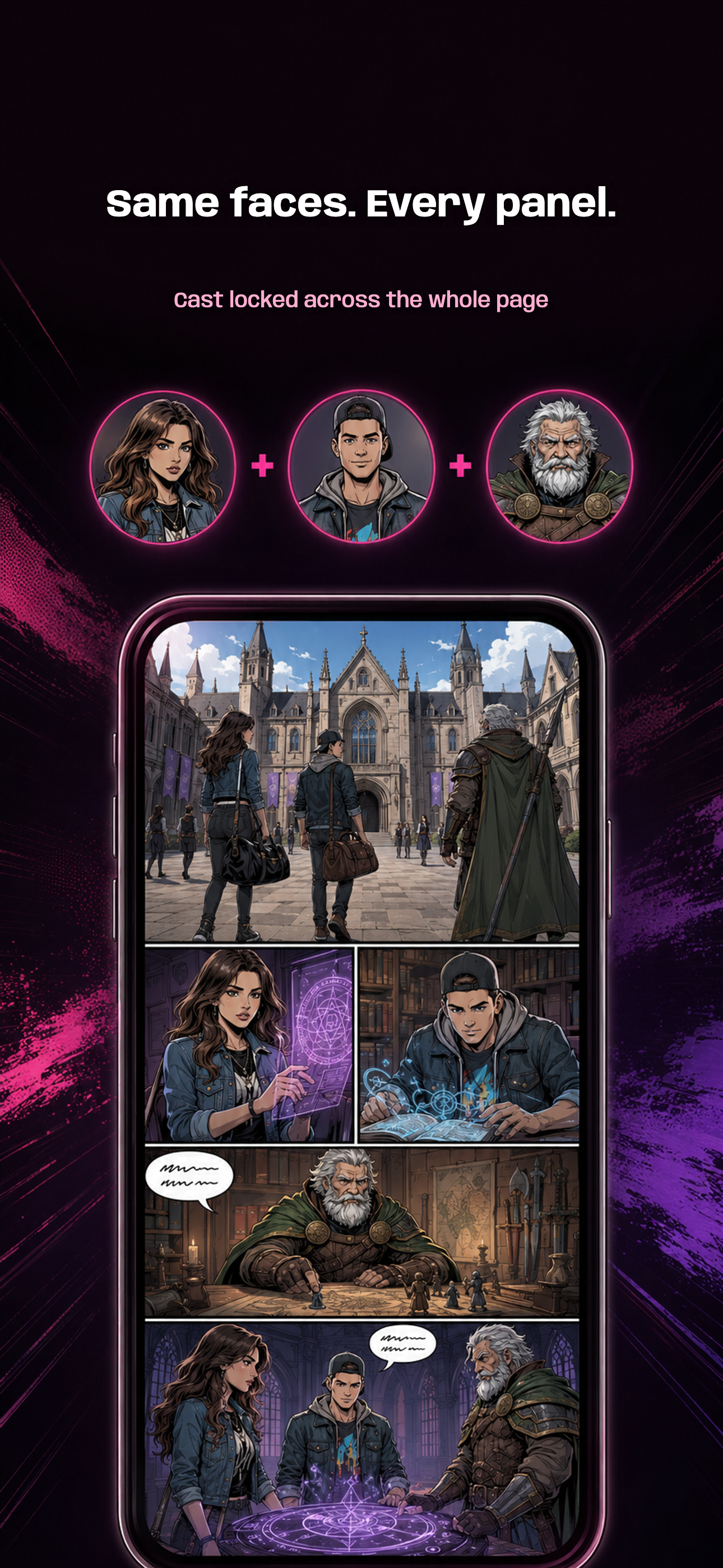
- Continuity matters more than a pretty single panel. A manga people want to share needs the same faces across pages. Casting heroes first changed everything.
- Style ≠ tone. Visual format (manga ink vs color manhwa) and audience tone (shonen vs shojo) are separate axes. Mixing them made prompts better and users happier.
- Shipping monetization early saves pain. RevenueCat + credit pre-checks on the client and deduction on the server kept “fun AI” from becoming an unbounded bill.
- Share is part of the product. If the loop stops at “nice preview,” people don’t come back. Page / chapter / series export and reels close the loop: write → generate → share.
How I built it
- Core loop first — cast + prompt → storyboard → panels → preview
- Make it a series — chapters, continue / twist, cast discoveries mid-story
- Make it yours — editor, reader prefs per style, library drafts
- Make it shippable — RevenueCat paywalls, quotas, AI consent, content reporting
- Make it shareable — compose, PDF, 9:16 reel, branded footer
Design was dark “comic deck” UI; copy and onboarding push one idea: be the hero of your story.
Challenges
Consistency. Early generations looked cool once, then the hero mutated. Fixing that meant a real cast bible in prompts and locking focal characters — harder than “one big image prompt.”
Latency & cost. A page is many model calls (script + (n) images + lettering). We charged per panel image, not for scripting, and showed cost up front so users aren’t surprised:
$$ T_{\text{page}} \approx T_{\text{script}} + n \cdot T_{\text{image}} + T_{\text{letter}} $$
Layout vs lettering. Bubbles and SFX have to land in real panel slots. Vision lettering + client layout mapping was fiddly; silent fallbacks when the script soft-fails kept the app usable.
Policy & trust. Photo → character needs clear consent; AI images need in-app reporting. That’s not glamorous, but it’s required to ship and keep the community safe.
Scope under Shipaton. Easy to drown in features. We cut a “Plan” tab and stayed brutal: Create, Library, generate, continue, share.
Why it matters
Manga culture is full of people who want to write — they just never get ink on the page. HAKI is for them: start a story tonight, star as the lead if you want, keep the cast consistent, and share a page or a reel before the idea fades.
If Shipaton is about shipping something people can use and pay for, this is ours: a small studio for big stories — powered by AI, sustained by RevenueCat, built for anyone who’s ever said “I should turn this into a manga.”

Log in or sign up for Devpost to join the conversation.