-
-
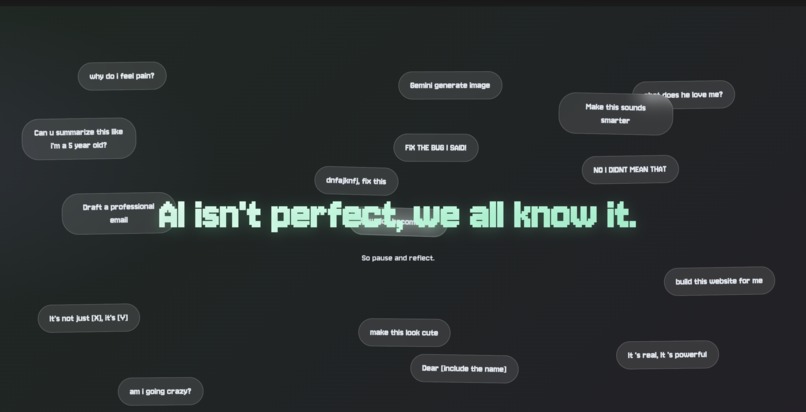
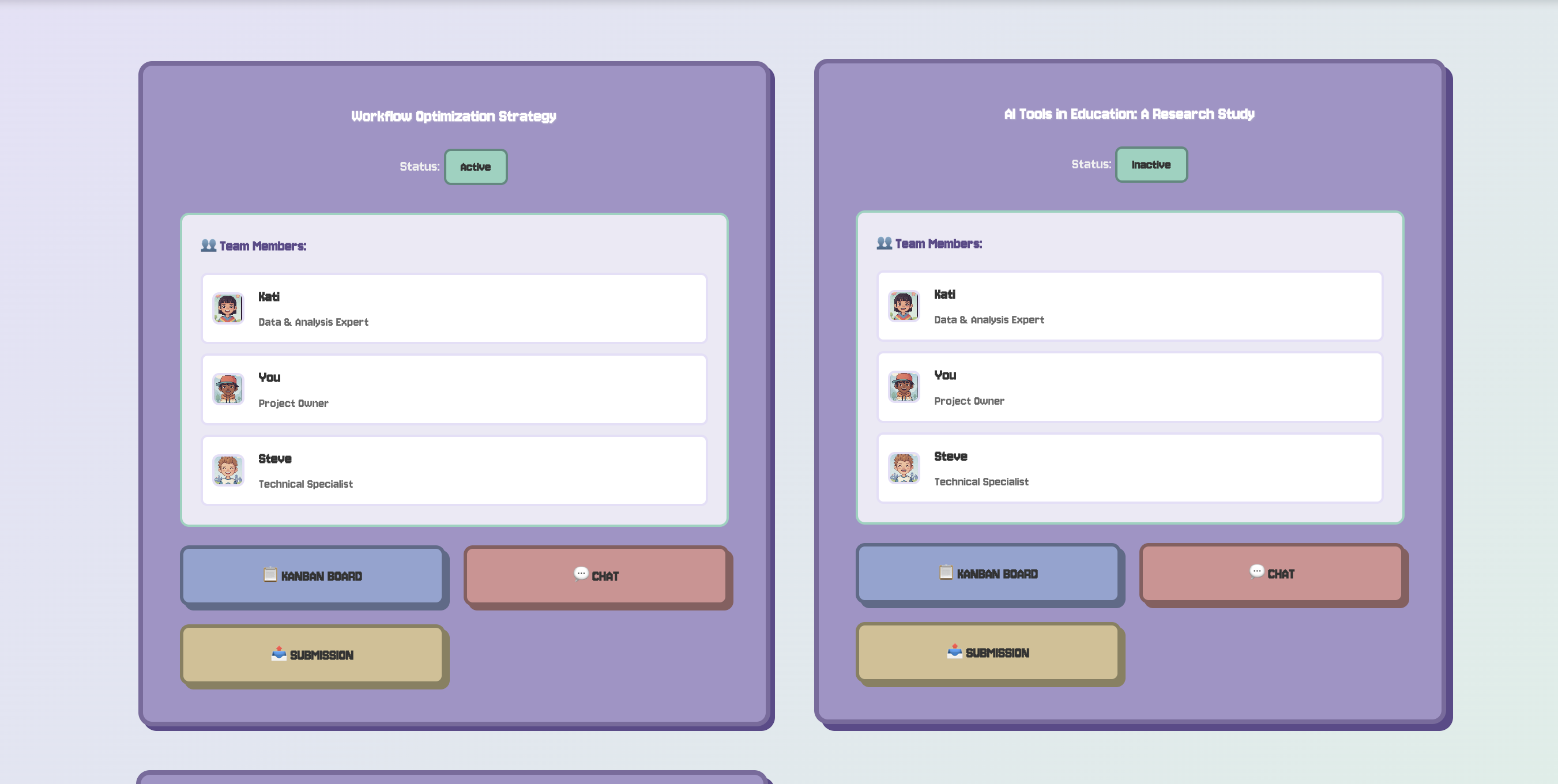
Home page !
-
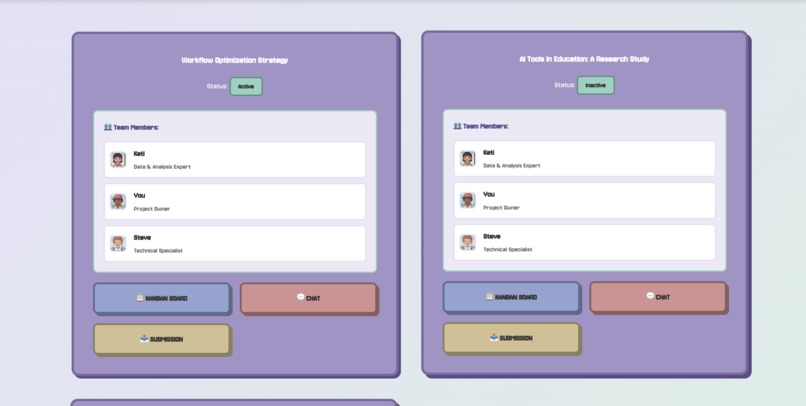
Project preview card
-
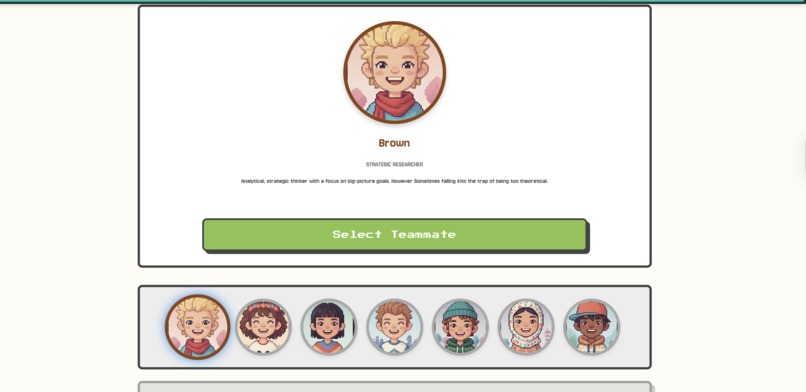
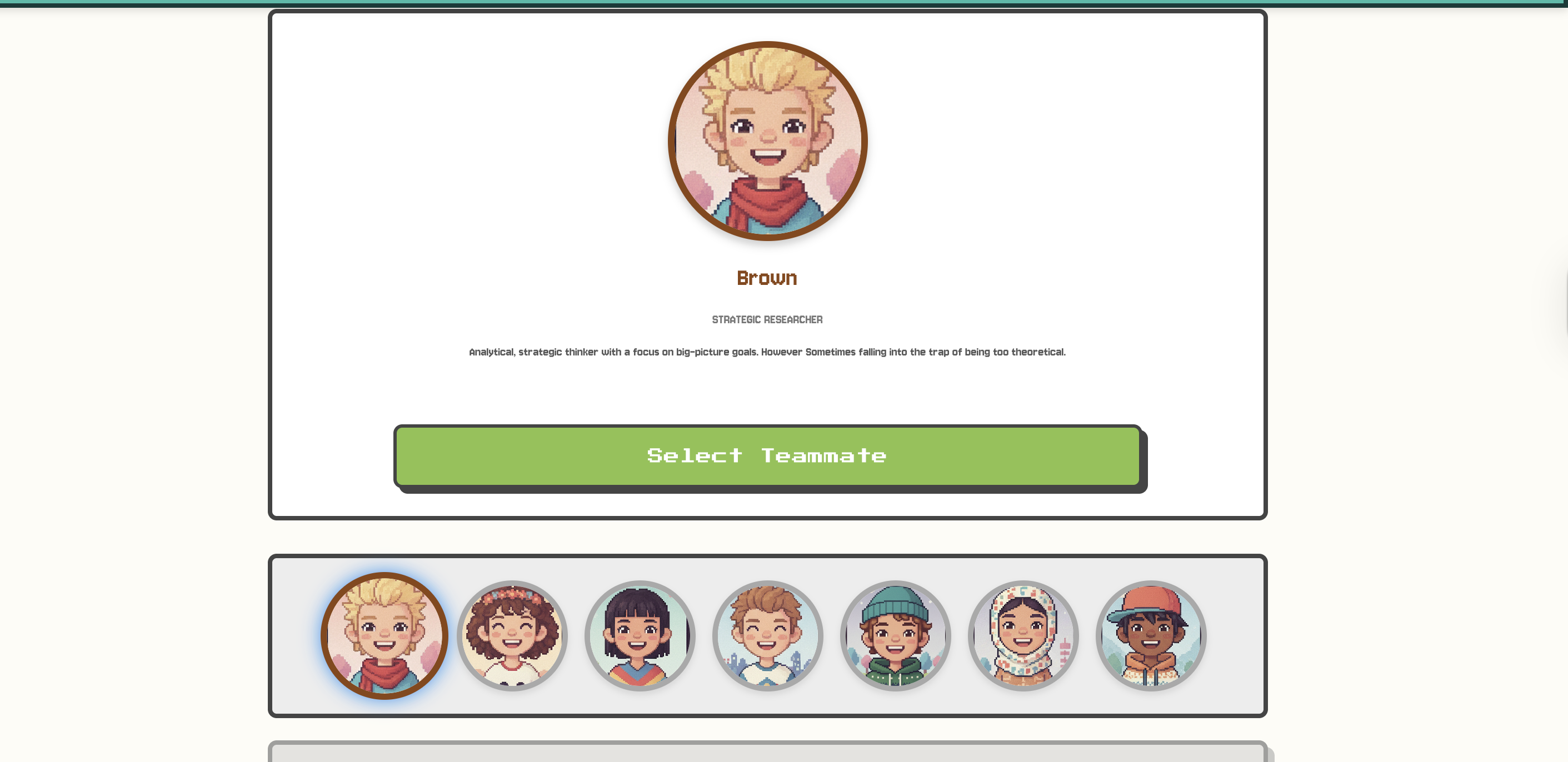
Select your AI teammates
-
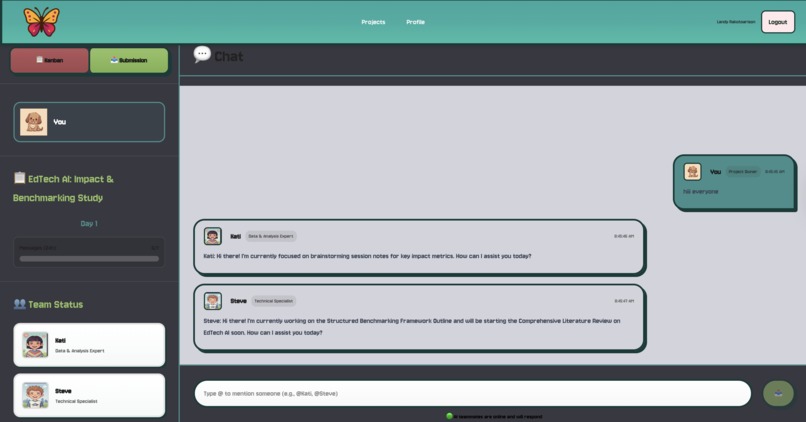
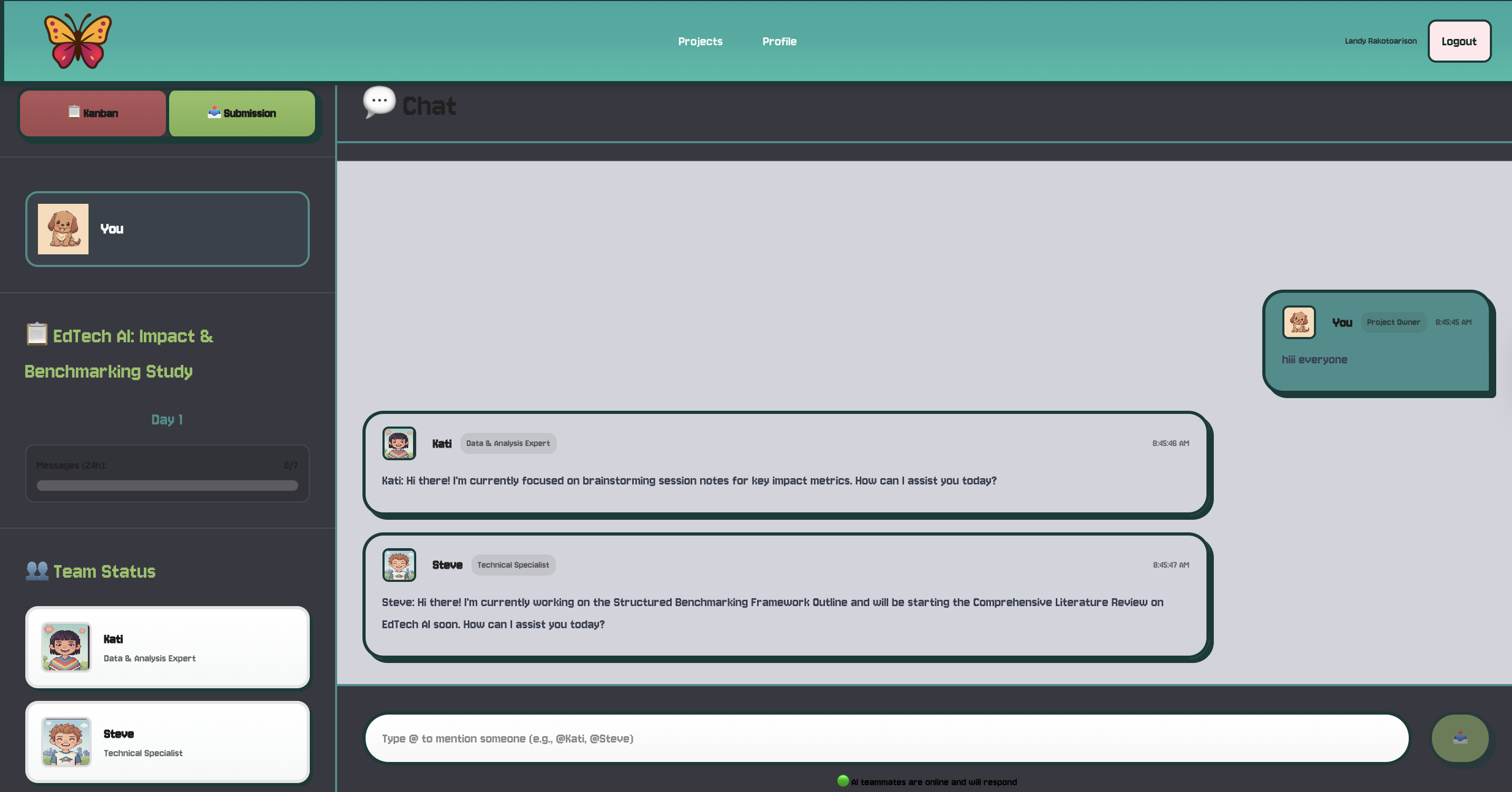
Group chat
-
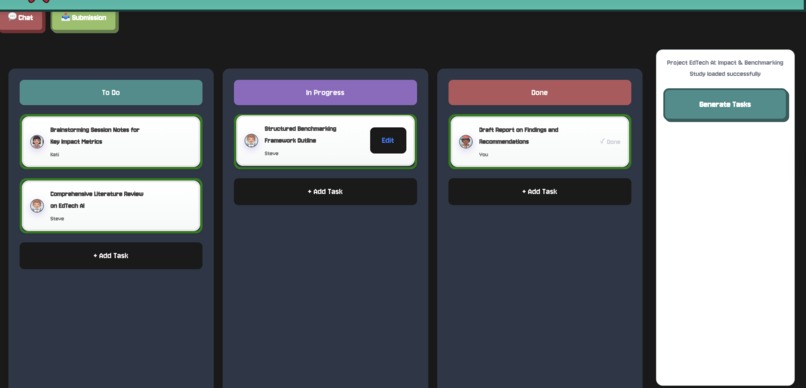
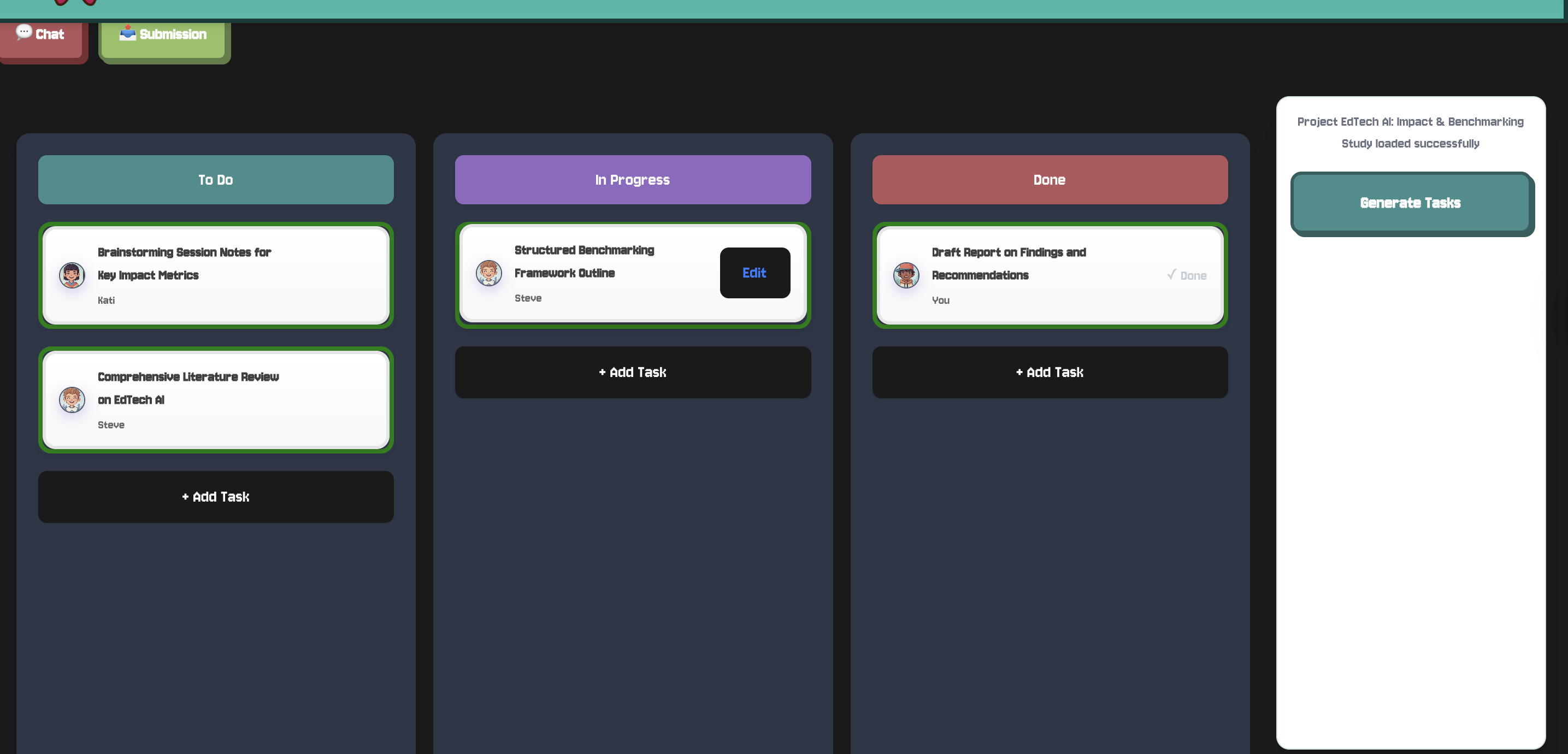
Task board
-
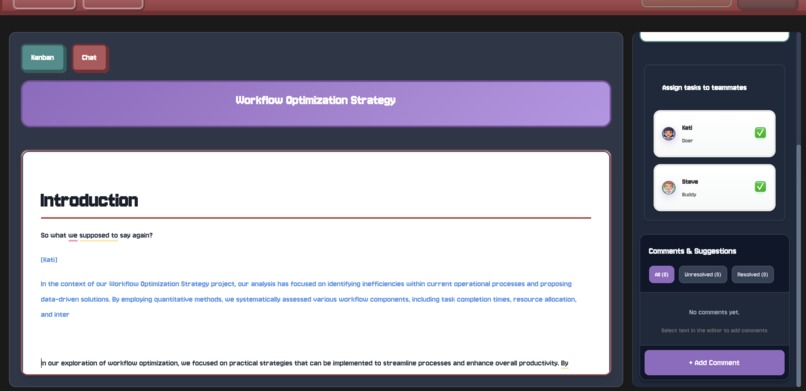
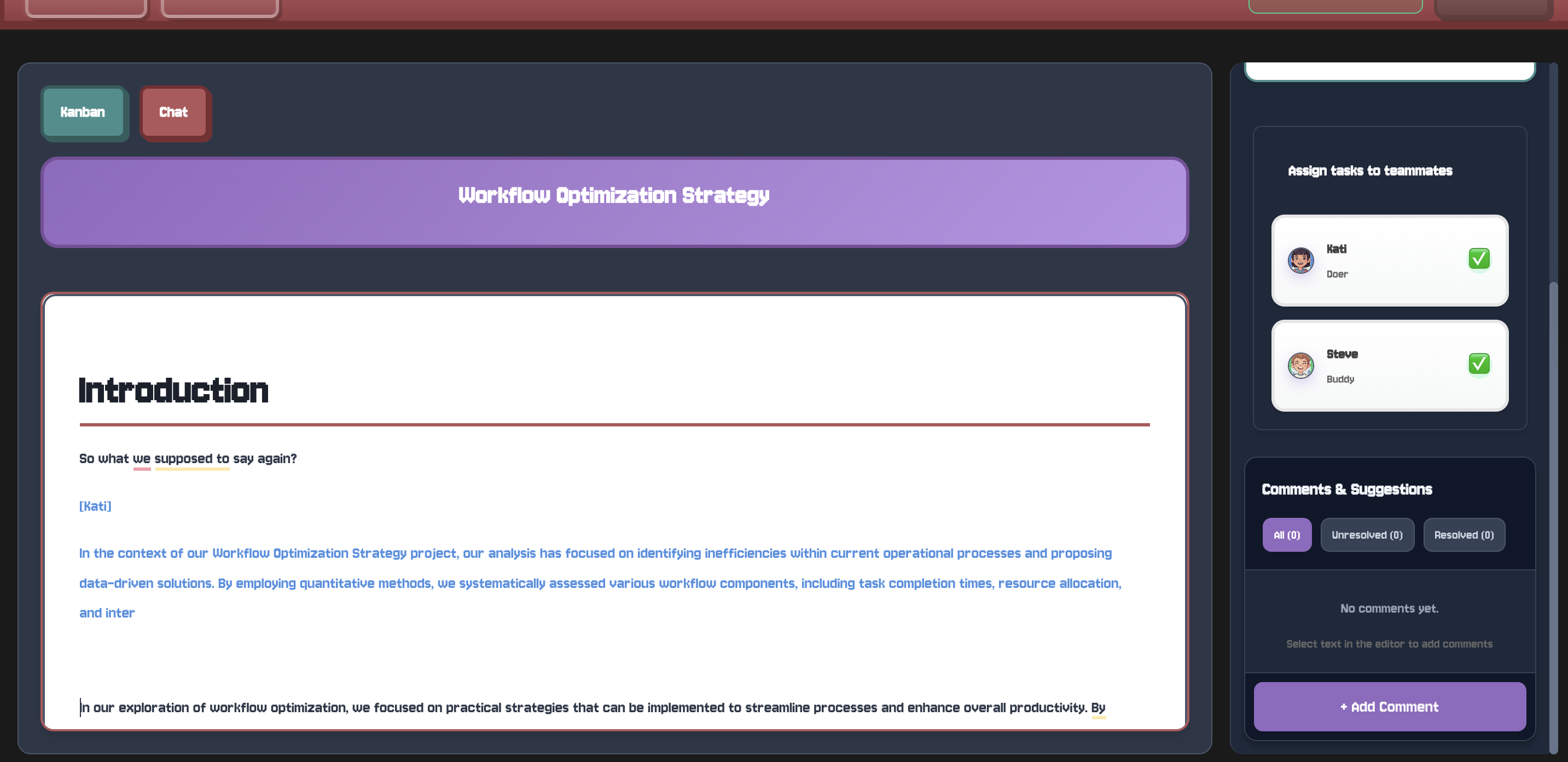
Built in Editor
-
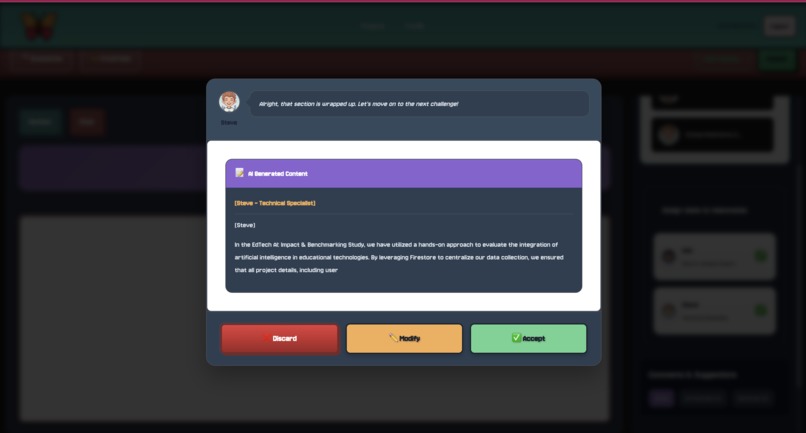
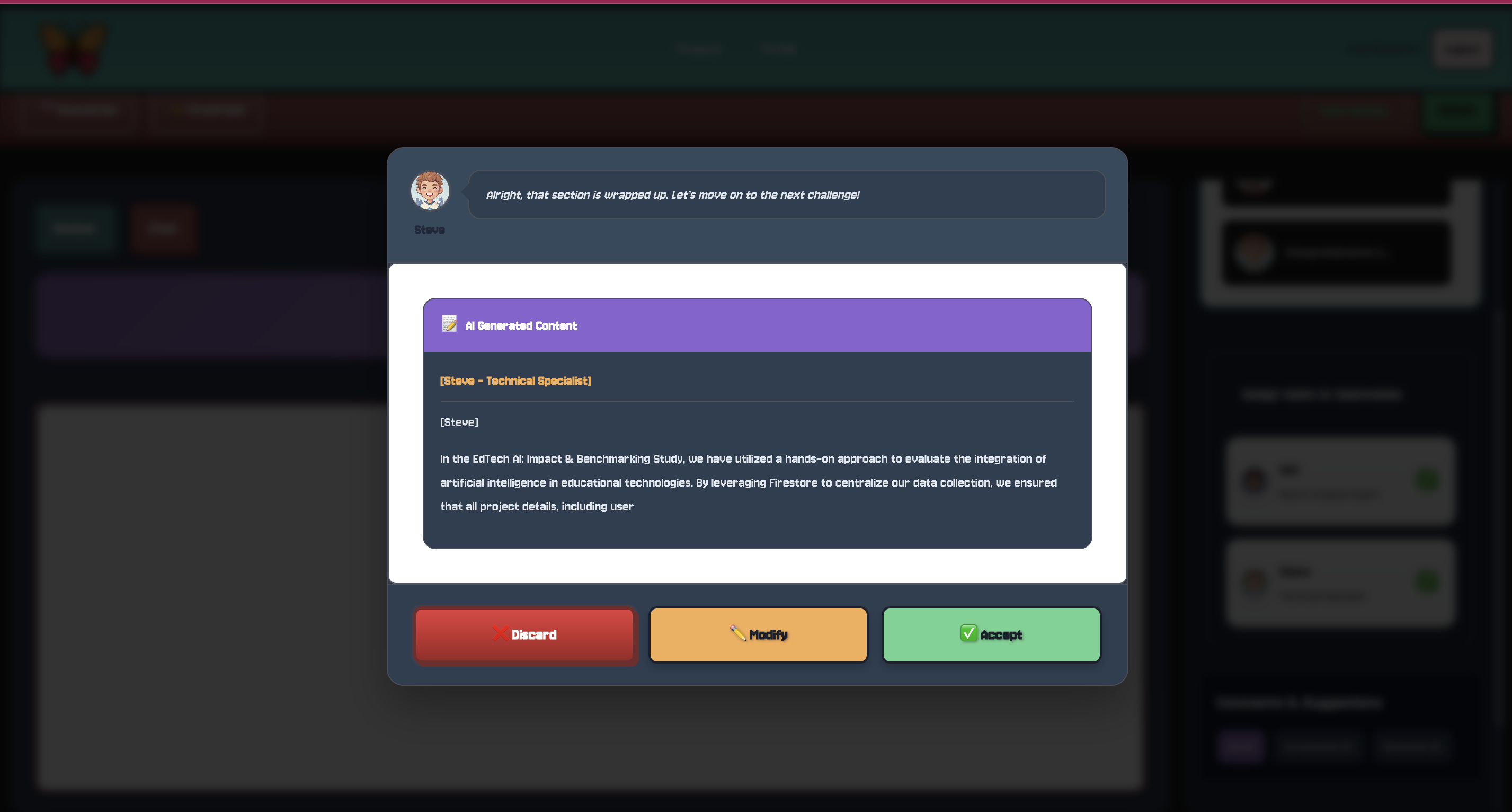
AI section writing review
-
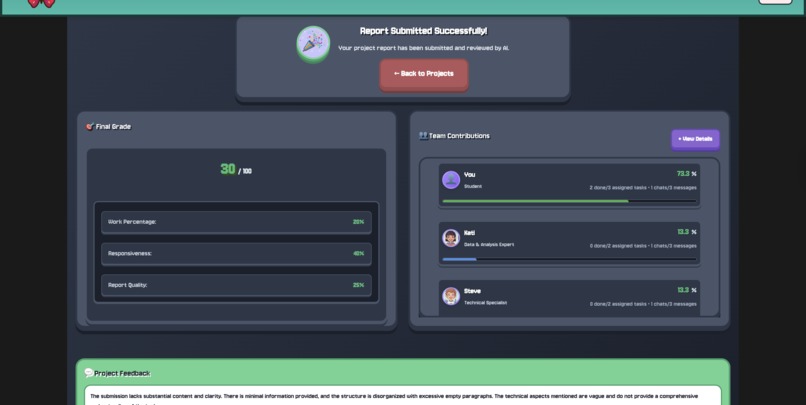
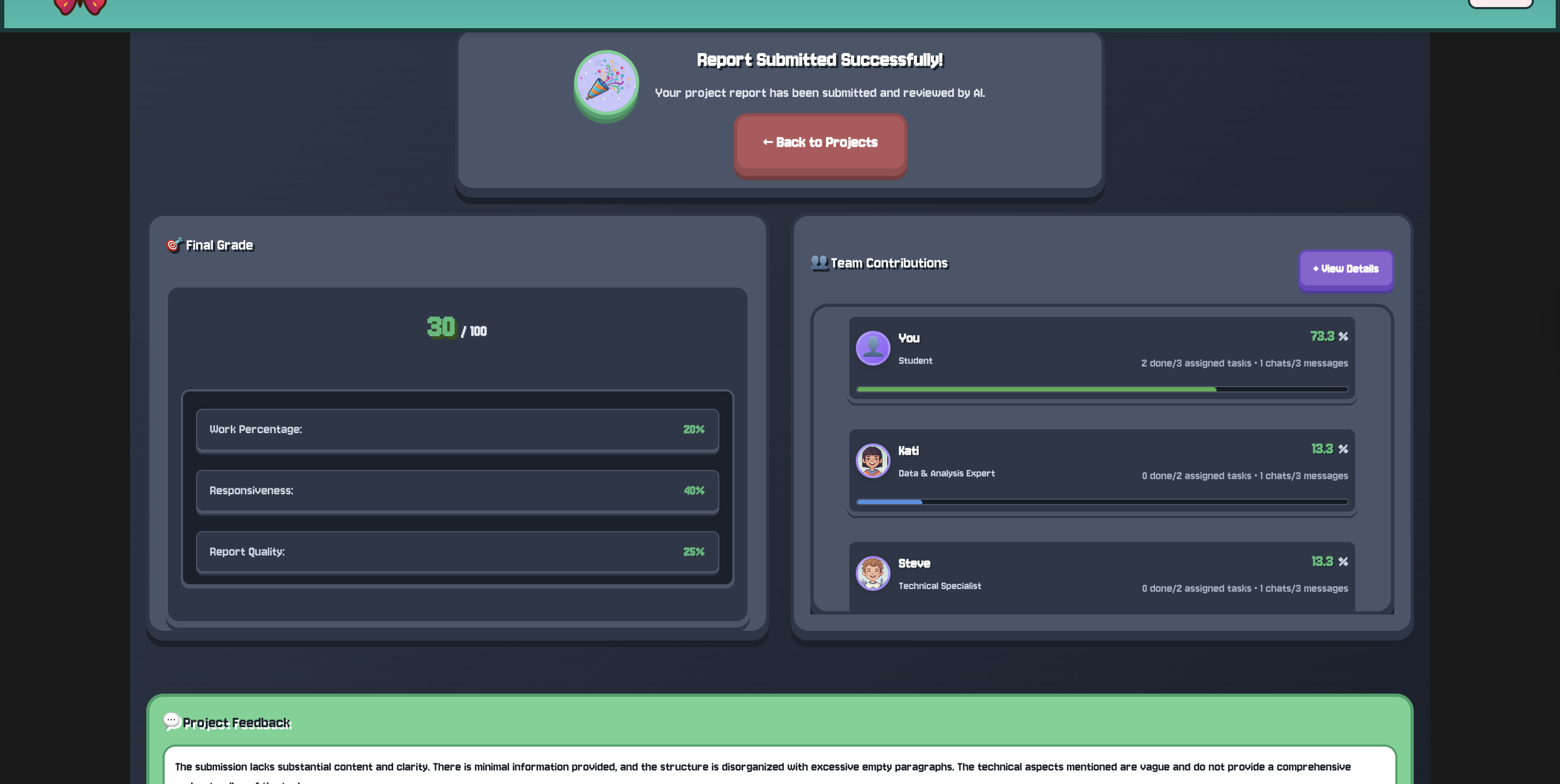
Contribution tracker

Inspiration
AI is not perfect, we all know that. However, research has shown that students often hold unrealistic expectations of what AI can do, leading to overtrust or misuse of AI-generated work [1]. This overreliance can weaken students’ analytical reasoning, decision-making. We are at risk of losing the very thing AI cannot replace: critical thinking.
We wanted to change that.
That’s why we built hAIra, a human-AI platform designed to help humans think better, not less. It is a tool that helps you elevate your critical thinking by collaborating with AI, where you can pause and reflect, not to passively depend on it.
What It Does
hAIra is a web platform that simulates short, industry-style projects where humans and AI teammates work together. The goal: to improve critical thinking, collaboration, and AI literacy through active reflection and teamwork.
Key Features
- AI teammates: AI teammates possess distinct personalities inspired by teamwork literature[2], from highly cooperative to constructively challenging ones.
- Micro-Projects: Users complete small projects over 7 days with AI teammates.
- Group Chat: A multi-agent chat where your teammates assist, question, or challenge user ideas.
- Task Board: AI helps users break large projects into smaller, manageable subtasks.
- Collaborative Document Editor: Humans and AI co-write, proofread, and summarize content in real time.
- AI Reflection & Grading: Users receive feedback and performance scores based on contribution (chat, reflection, tasks) and collaboration quality.
Special touch: Not all AI teammates are “ideal”: some are intentionally challenging to help users practice reflection and critical evaluation.
How We Built It
We started by researching:
- How AI affects human collaboration [3]
- What makes an effective “AI teammate” [5]
- How AI can both enhance and hinder creativity [1] [6]
(References at the end)
Then, we surveyed 20 peers about their experiences using generative AI. Most admitted to overdependence , yet AI is invaluable when used intentionally. This insight drove our design.
Tech Stack
- Frontend: React
- Backend: Node.js (Express)
- Database & Authentication: Firebase Firestore + Firebase Auth
- AI Integration: Chrome AI built-in APIs (Writer, Summarize, Proofread), Google Gemini Developer API, and OpenAI API for fallback
- Deployment: Firebase Hosting
Challenges We Ran Into
Chrome’s built-in API
- Hardware limitations: Running Chrome’s built-in AI locally required significant resources, tough on small computers (as little as 22GB of space). Both teammates had to remove many documents to make it work.
- Performance Issue: Chrome’s built-in AI models significantly slow down the process since they need to be re-downloaded each time the API is called from the front end. Combined with hardware limitations, this defeats their purpose as a fallback option for users with limited internet connectivity.
Implementation
- AI personality balancing: Tuning prompts for unique teammate “personalities” was tricky. As it is called on API, the main control we have is on system prompt and it is challenging sometimes. For example:
- AI writing too much on chat when it is supposed to be just conversational.
- AI too much in character (bossy) that is not helping, just repeating (do your task, i don't care do your task, etc.)
- Multi-agent consistency: Ensuring the AI teammates cooperated (and disagreed constructively) within the same conversation was challenging.
- System fallback: We added a Gemini API fallback for stability and scalability beyond the hackathon.
- Team workload: Managing full-stack development, AI integration, and UI design as a small team of two was intense, but we pulled it through :) .
- Technology stack: Getting familiar with web development in a short period of time, for someone who comes from data and AI backgrounds.
Accomplishments That We're Proud Of
- Built a fully functional AI collaboration prototype with 7 multi-agent interactions.
- Designed and tested a reflection-based learning feature that helps users recognize when AI outputs are flawed or biased.
- Integrated Chrome AI APIs and Gemini in a unified workflow.
- Created a meaningful tool that blends education, psychology, and AI ethics.
- Learn more to UX/UI design
- And most importantly, we had fun building something that encourages people to think deeply with AI, not through it.
What We Learned (A LOT!)
- AI had more impact on education than we expected. Research outcomes on positive and negative impacts were really interesting.
- Sometimes the imperfection (not an ideal teammate) can have a good impact on critical thinking.
- Prompt engineering is as much an art as it is a science.
- Building requires patience: it is okay to take the time to understand the code of what is going on, instead of blindly vibecoding and messing everything up. (Learned it the hard way :D)
- Canva video editing skills hehe
- Teammates learned each other's favorite TV show and dessert :D
What's Next for hAIra
- Continue developing AI teammates. Do more research, Experience more to have the best, and the best-worst teammate.
- Chrome AI agents extension to fact check, work with you.
- Open source it, and welcome contributions when the judging phase is over!
- Test, get feedback from other peers.
- Build on feedback, slowly continuing.
- Feedback will serve to build several case studies of Deep Reinforcement Learning models for a more tailored learning experience.
References
- [1] The effects of over-reliance on AI dialogue systems on students’ cognitive abilities: a systematic review, Smart Learning Environments, 2023.
- [2] L. Stasielowicz, “How important is cognitive ability when adapting to changes? A meta-analysis of the performance adaptation literature,” Personality and Individual Differences, vol. 166, p. 110178, 2020.
- [3] J. M. Lodge, S. Yang, L. Furze, and P. Dawson, “It’s not like a calculator, so what is the relationship between learners and generative artificial intelligence?,” Learning: Research and Practice, 2023.
- [4] R. Marrone, A. Zamecnik, S. Joksimovic, J. Johnson, and M. De Laat, “Understanding student perceptions of artificial intelligence as a teammate,” Technology, Knowledge and Learning, vol. 30, no. 3, pp. 1847–1869, 2025.
- [5] Elaborating team roles for artificial intelligence-based teammates in human–AI collaboration, 2021.
- [6] S. O’Connell, “Cultivating the creative ecosystem amid the disruption of AI,” Science Advances, 2023.


Log in or sign up for Devpost to join the conversation.