-
-
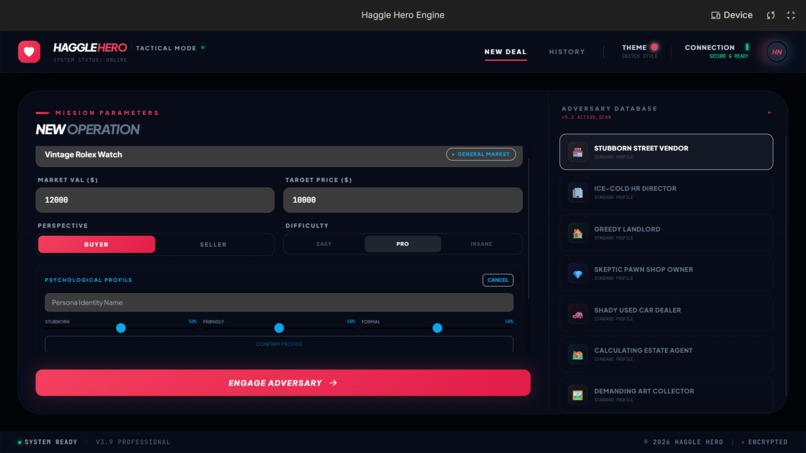
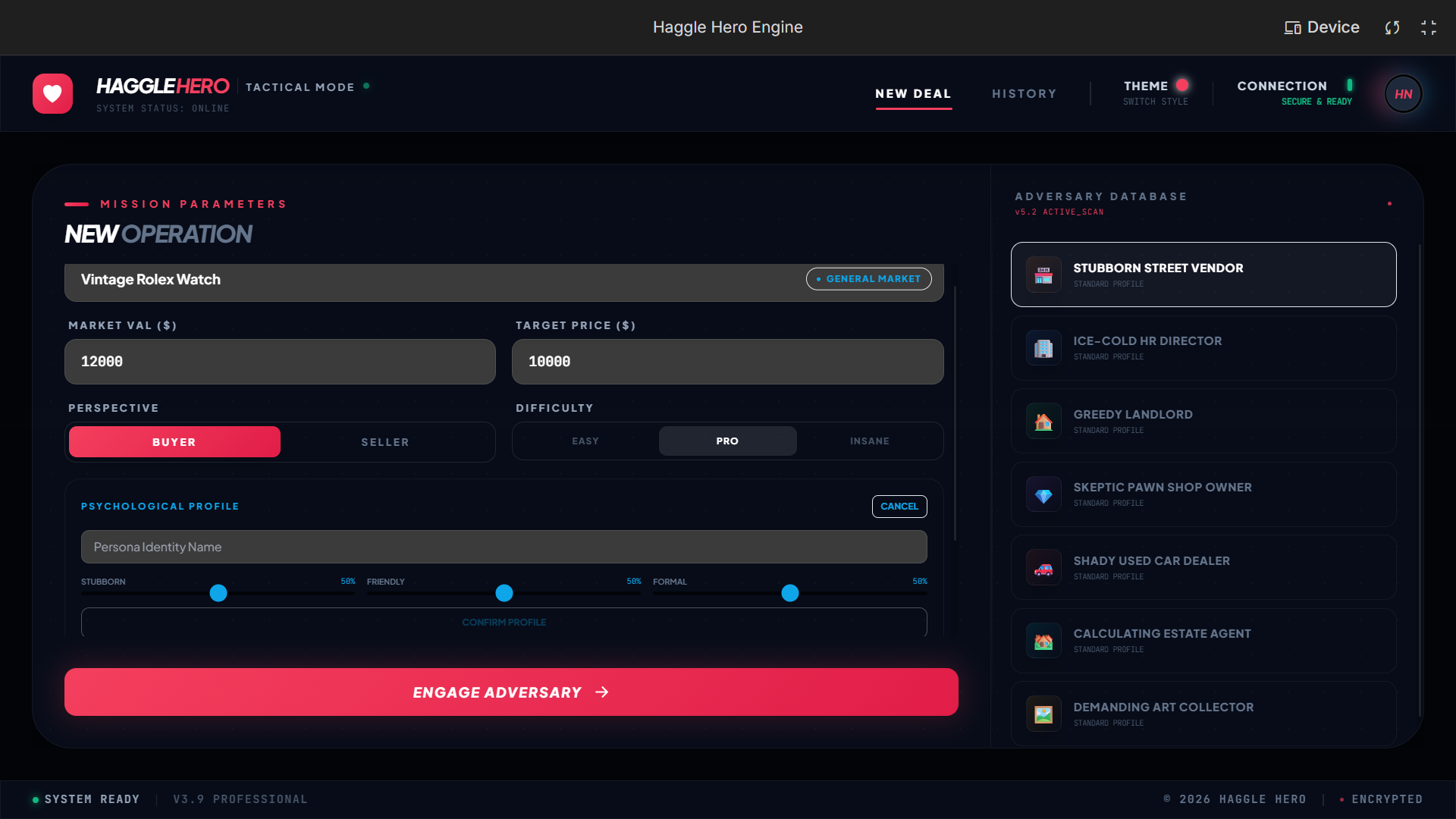
setup form/home screen
-
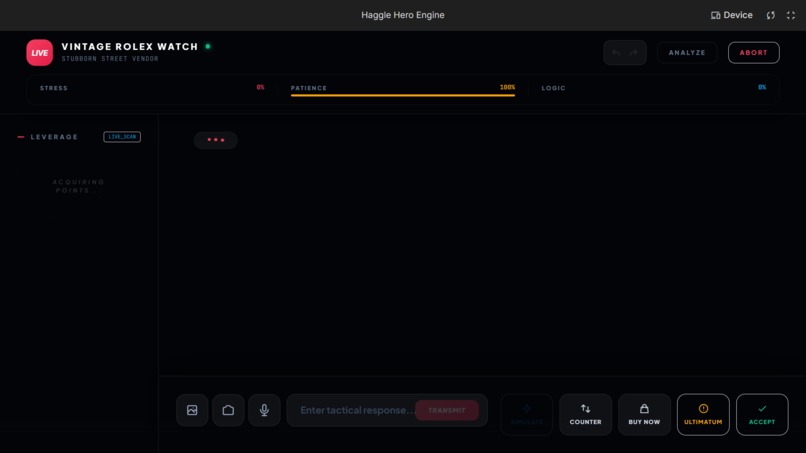
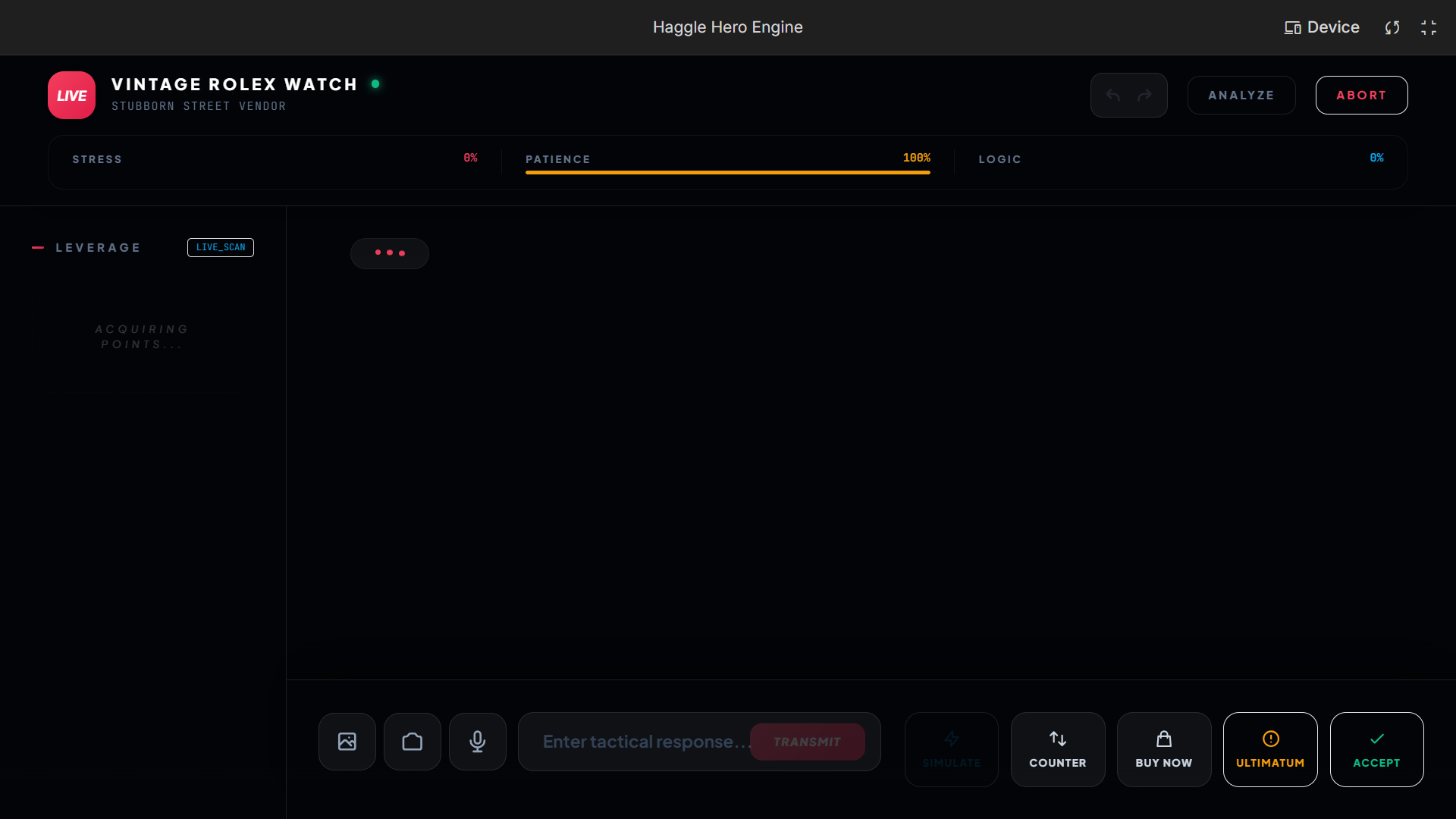
Chat/Negotiation interface
-
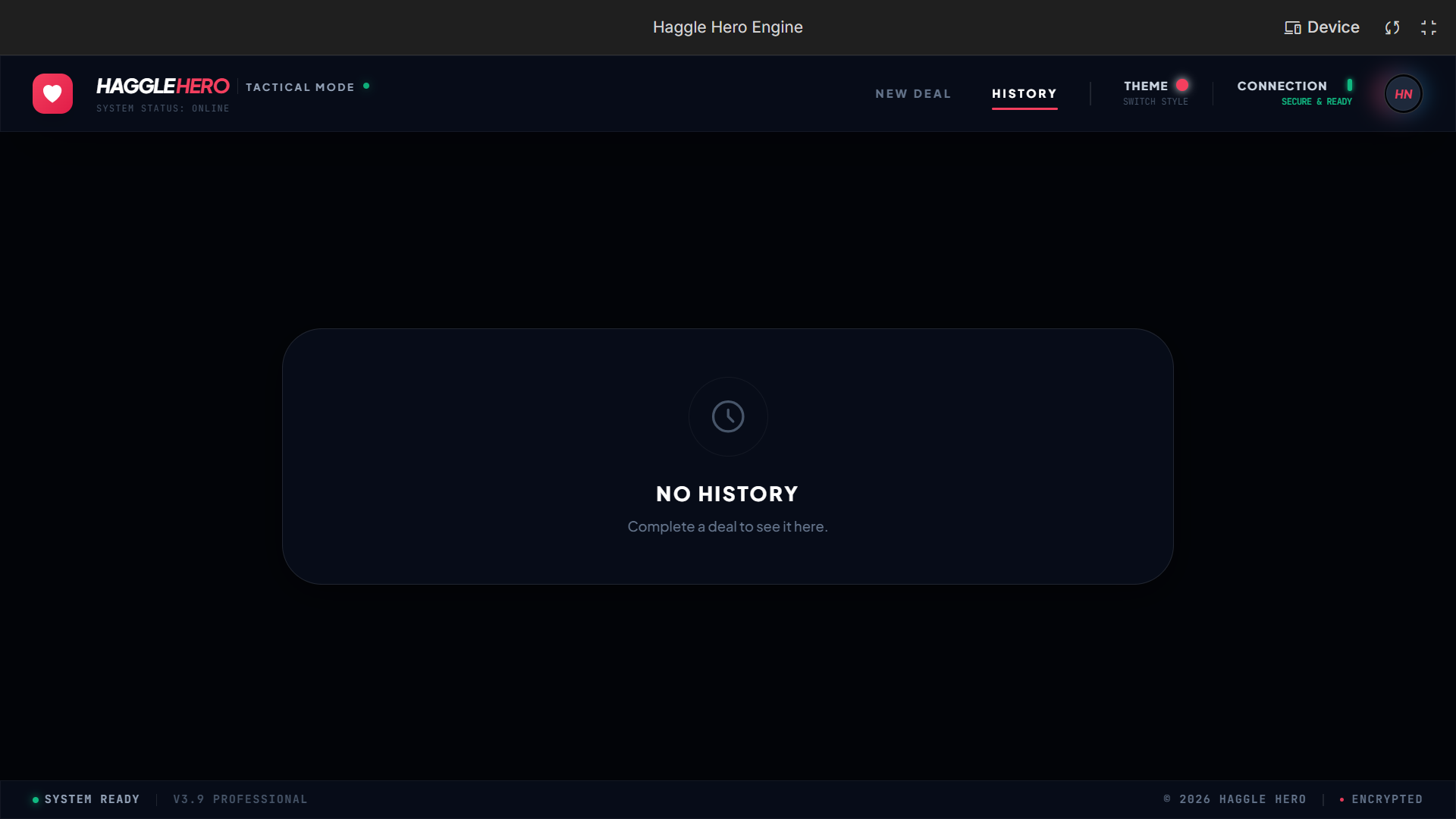
History
-
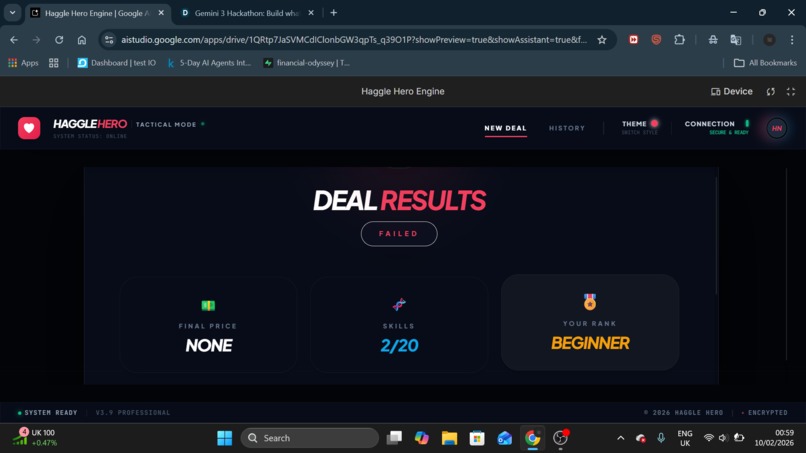
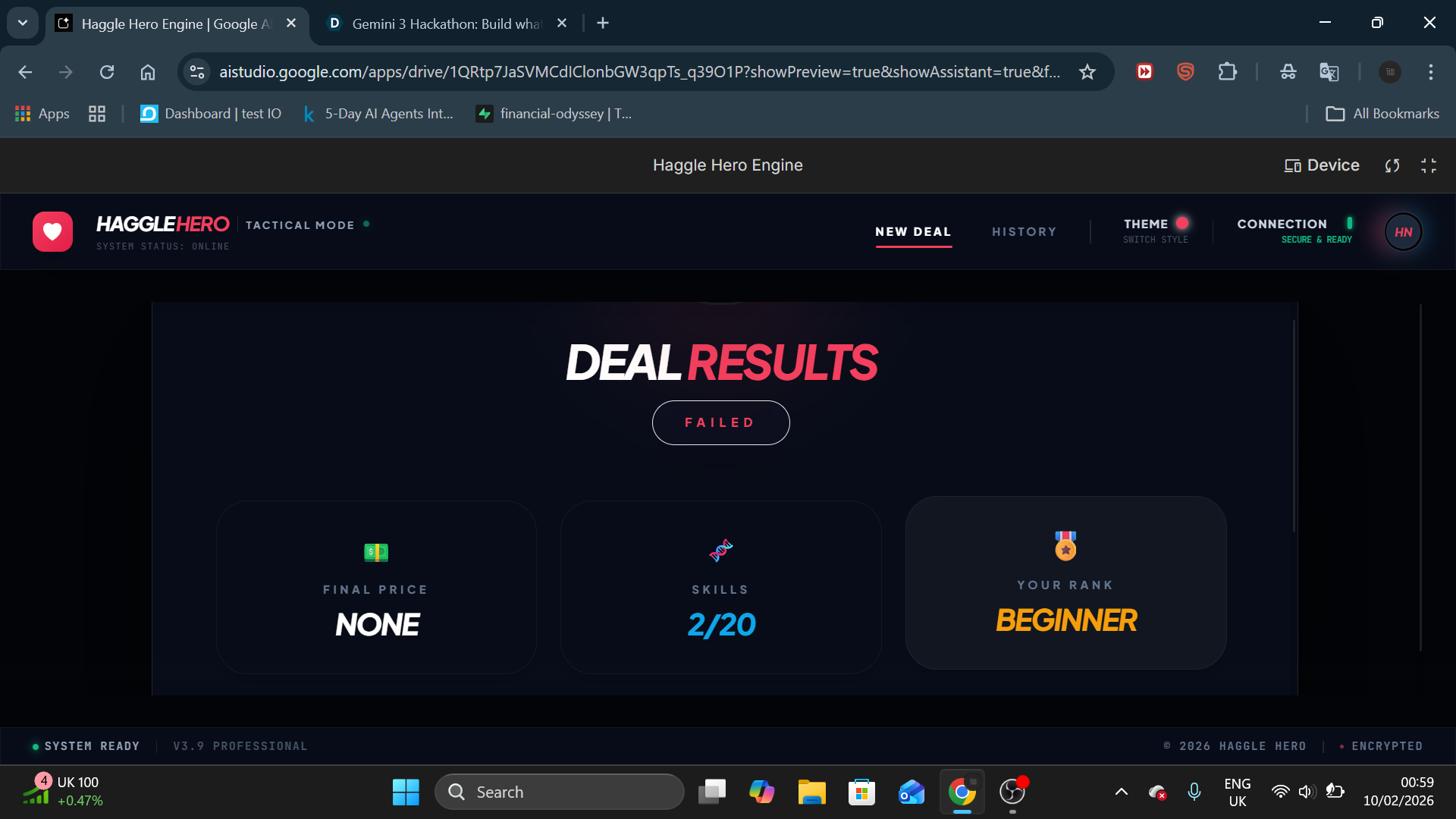
Results
Inspiration
Millions of people suffer from Negotiation Anxiety. Asking for a raise, haggling over a used car, or pushing back on rent can feel so uncomfortable that people walk away from real money just to avoid conflict. I wanted to create a safe, low-stakes environment where anyone could practice negotiating against a tough, realistic opponent—without fear, embarrassment, or financial risk.
What the Project Does
Haggle Hero is more than a chatbot—it’s a stateful negotiation agent designed to behave like a real seller.
Multimodal Inspection: Users can upload an image of an item (such as a used car or apartment). Using agentic vision, the model identifies leverage points like wear, damage, or missing features that the user can use during negotiation.
Stateful Logic: The agent maintains hidden internal variables, including a Patience Meter and a Floor Price. Aggressive language or unrealistic offers reduce patience, and if it drops too low, the agent may walk away from the deal.
Negotiation Scorecard: After each session, the system generates a structured scorecard revealing the agent’s hidden floor price and calculating how much money the user left on the table.
How I Built It
I built Haggle Hero using Google AI Studio’s Build Mode for rapid iteration. The core logic relies on Gemini 3 with a high thinking level, guided by strict system instructions. I implemented controlled internal monologues using tags, forcing the model to calculate its emotional state, patience, and acceptance probability before responding.
The acceptance logic is modeled as:
𝑃(0)= 1/1+e^-K(O-F) x t/10
Where 𝑂 O is the user’s offer, 𝐹 F is the agent’s floor price, 𝑡 t is remaining patience, and 𝑘 k represents the persona’s stubbornness.
Challenges
The biggest challenge was hallucination control—preventing the model from conceding too easily. I addressed this by enforcing strict validation on the agent’s internal state transitions. Any drop in price or shift in mood had to be justified internally before being reflected in the response, which dramatically improved realism.
What I Learned
This project taught me that agentic workflows outperform linear prompting when realism matters. Allowing the model to reason about hidden variables—like patience and emotional state—made the interaction feel human, challenging, and unpredictable, rather than scripted. Designing constraints around how the model thinks turned out to be just as important as what it says.
What's next for Haggle Hero: AI-Powered Negotiation Dojo
The next steps for Haggle Hero: AI-Powered Negotiation Dojo involve transitioning from a standalone practice tool to a sophisticated, real-time negotiation co-pilot. Future iterations will focus on multimodal sentiment analysis, utilizing computer vision to detect subtle facial expressions and tonal shifts during live video calls to provide "poker face" alerts and emotional intelligence coaching. Additionally, the roadmap includes an autonomous agent mode where the AI can execute standard low-stakes negotiations—such as office supply procurement or freelance service agreements—on the user's behalf. By integrating a long-term memory module, Haggle Hero will soon be able to build comprehensive "opponent profiles" based on historical interactions, allowing users to strategize for repeat negotiations with consistent data-driven benchmarks and personalized "winning moves."
Built With
- gemini
- gemini-api-(multimodal-vision
- github
- googleaistudio
- jsx(react)
- structured
- thought-signatures
- typescript

Log in or sign up for Devpost to join the conversation.